Bluefish AI Review 2026
Comprehensive GEO platform designed for enterprise brands to optimize and track visibility across AI-powered search engines and generative models.
Summary
- Enterprise-first platform: Built specifically for Fortune 500 brands with advanced security, custom audiences, and deep data segmentation that smaller GEO tools can't match
- Beyond monitoring: Focuses on influence and impact -- how AI models actually think and recommend -- not just surface-level visibility metrics
- Missing optimization tools: No content gap analysis, no AI writing agent, no crawler logs, and no traffic attribution that Promptwatch offers for brands that want to fix visibility gaps, not just track them
- Quote-based pricing: Enterprise-only model starting around $4,000/month makes it inaccessible for SMBs, agencies, and mid-market brands
- Best for: Large enterprise marketing teams with budget and resources who need deep customization, infosec compliance, and white-glove service
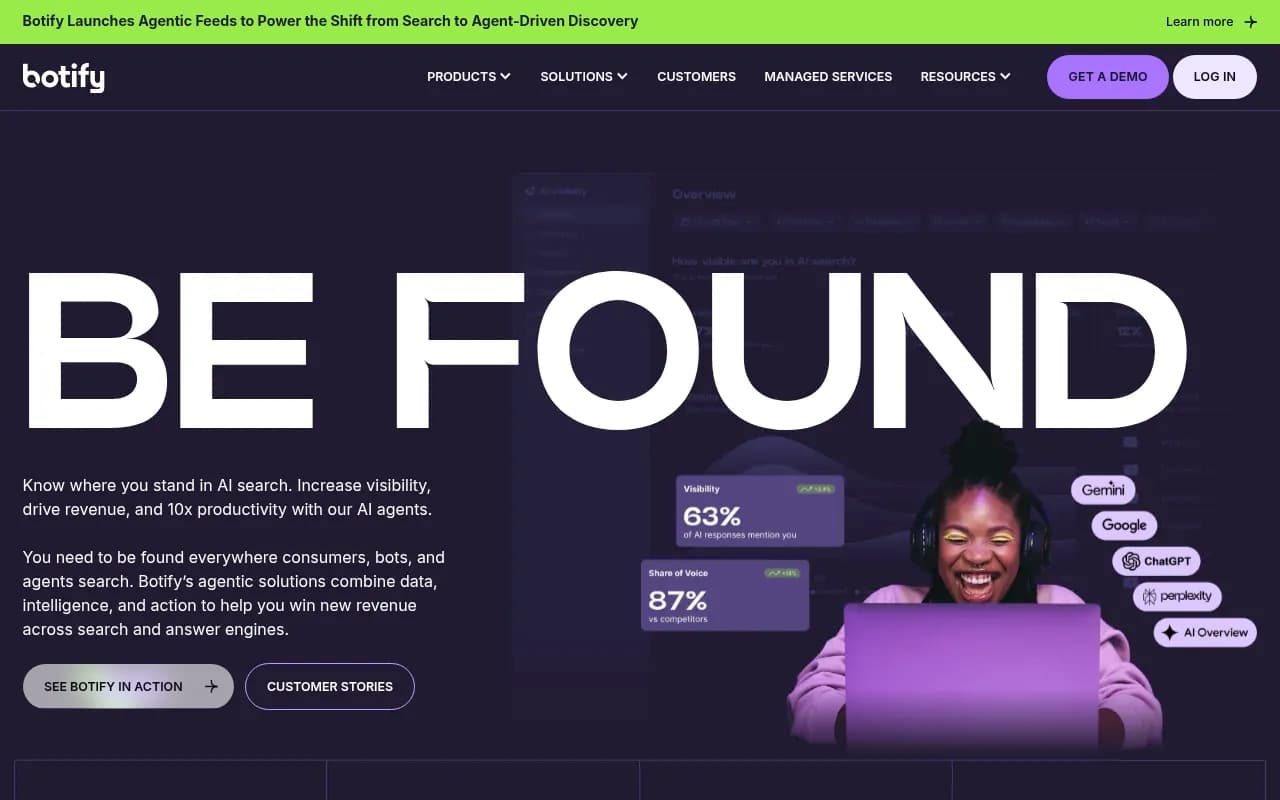
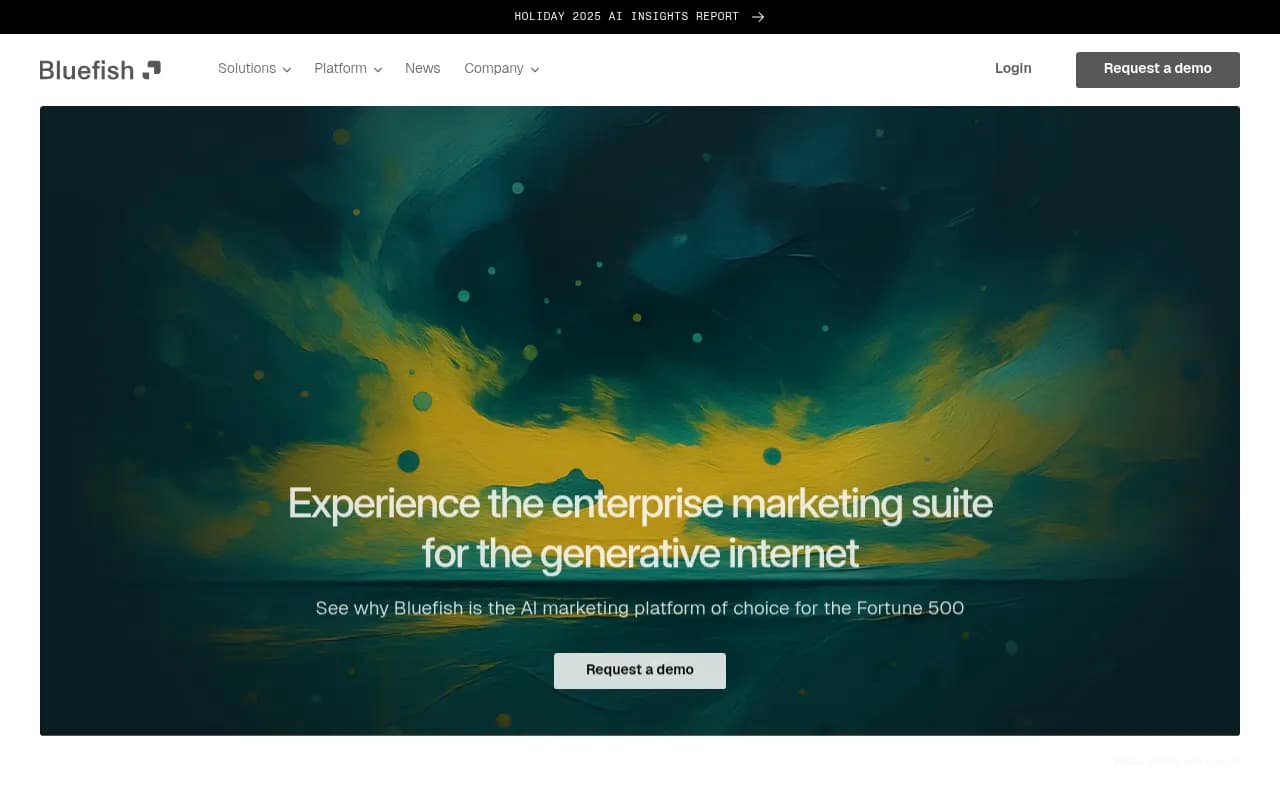
Bluefish AI positions itself as the enterprise marketing suite for the generative internet. It's not a tool for freelancers or small agencies -- this is a platform built for brands like those in the Fortune 500 who need institutional-grade infrastructure, custom data models, and the ability to pass rigorous infosec reviews. The company's pitch centers on authority, influence, and control in AI channels, which is a different angle than most GEO competitors who focus purely on visibility and share-of-voice.
What sets Bluefish apart is its emphasis on understanding how AI models think. Most GEO platforms show you where you rank or how often you're cited. Bluefish goes deeper -- it claims to help marketers understand the reasoning behind AI recommendations, which is valuable for brands trying to influence purchase decisions in agentic commerce scenarios (when AI models directly recommend products or services). This is a real differentiator in a market where most tools are still focused on basic monitoring.
The platform launched a "Collections" feature in early 2026 that lets marketers measure ROI of digital campaigns in the AI channel. This is a step toward attribution, though it's unclear how granular this gets compared to full visitor analytics. They also introduced what they call the industry's first measurement of authority in AI -- a metric that goes beyond simple citation counts to assess how much weight AI models give to your brand's recommendations.
Bluefish tracks performance across major AI channels including ChatGPT, Perplexity, Google AI Overviews, Claude, and others. They monitor AI search, agentic commerce (AI-driven product recommendations), and general brand reputation across AI-native experiences. The platform is organized into four main modules: AI Monitoring (real-time visibility), AI Optimization (GEO), GEO Measurement (ROI tracking), and AI Commerce (product recommendation tracking).
Key Features
Custom Audiences and Tailored Prompts: Bluefish lets enterprise clients define custom audience segments and test specific prompt sets that match their actual customer personas. This is more sophisticated than the fixed prompt libraries most competitors use. If you're a B2B SaaS company, you can model prompts around CFOs evaluating software, not generic consumer queries. This level of customization is rare in the GEO space and requires significant setup work, which is why Bluefish targets enterprise clients with dedicated account teams.
Impact and Influence Metrics: Instead of just tracking visibility percentage or citation count, Bluefish measures how AI models weight your brand's authority. Their "authority in AI" metric (introduced November 2025) attempts to quantify whether AI models treat your brand as a trusted source or just mention you in passing. This is conceptually similar to how SEO tools measure domain authority, but applied to AI model behavior. The exact methodology isn't public, but the idea is to distinguish between being cited and being influential.
Automated Optimization Workflows: Bluefish offers workflow automation for optimization tasks, though the specifics are vague. This likely means setting up alerts, scheduling reports, and triggering actions based on performance thresholds. It's not clear if this includes content generation or gap analysis -- the website emphasizes measurement and monitoring more than content creation.
Enterprise Data Segmentation: The platform is built for data teams who need to slice and dice performance by region, product line, audience segment, time period, and other dimensions. This is table stakes for enterprise software but a real advantage over simpler GEO tools that offer flat dashboards. Bluefish integrates with enterprise data stacks and passes infosec reviews, which matters for regulated industries.
AI Commerce Tracking: Bluefish monitors how your products appear in AI-driven shopping recommendations. This is similar to ChatGPT Shopping tracking but extends to other AI models that recommend products (Perplexity's shopping features, Google's AI-powered product suggestions, etc.). For e-commerce brands and CPG companies, this is a critical channel as AI models increasingly mediate purchase decisions.
Collections for Campaign ROI: The Collections feature (launched February 2026) lets marketers group content assets and track their collective impact on AI visibility. If you run a campaign with blog posts, videos, and social content, you can measure how that bundle performs in AI channels. This is a step toward attribution but still focused on visibility metrics rather than actual traffic or conversions.
Real-Time Monitoring: Bluefish provides real-time alerts when your brand's AI presence changes significantly. If a competitor suddenly dominates a key prompt or your visibility drops, you get notified. This is standard in the GEO space but executed at enterprise scale with SLA guarantees.
White-Glove Service and Expertise: Bluefish emphasizes deep expertise and hands-on support. Enterprise clients get dedicated account teams, custom research, and strategic consulting. This is less a product feature and more a service model, but it's a real differentiator for brands that need guidance on AI strategy, not just a dashboard.
Who Is It For
Bluefish is built for Fortune 500 marketing teams and large enterprise brands with significant budgets. The quote-based pricing (starting around $4,000/month based on third-party sources) and enterprise-first positioning make it inaccessible for small businesses, agencies, and mid-market companies. If you're a CMO at a publicly traded company or a VP of Marketing at a brand with 500+ employees, Bluefish is designed for you. If you're a solo marketer or a 10-person agency, this is not your tool.
The ideal customer is a brand that already invests heavily in traditional SEO, paid search, and brand monitoring, and now needs to extend that to AI channels. Think consumer packaged goods companies, financial services firms, healthcare brands, and large B2B SaaS companies. These are organizations where passing infosec reviews, integrating with enterprise data warehouses, and having dedicated account support are non-negotiable.
Bluefish is also a fit for brands in highly competitive categories where generic prompt datasets aren't enough. If you're competing with 10 other brands for AI recommendations in your space, you need custom audiences and tailored prompts to understand your specific competitive landscape. Bluefish's depth and customization are overkill for less competitive markets.
Who should NOT use Bluefish: SMBs, startups, agencies managing multiple clients, and anyone who needs self-service access or transparent pricing. If you want to sign up, add a credit card, and start tracking today, Bluefish is not the answer. If you need content gap analysis, AI writing tools, or crawler logs to actually fix visibility problems, Promptwatch is a better fit. Bluefish is a measurement and monitoring platform, not an optimization platform.
Integrations & Ecosystem
Bluefish integrates with enterprise data stacks and passes infosec reviews, which suggests API access and data export capabilities. The website mentions that data teams can customize and segment data in ways competitors can't, which implies integration with tools like Looker, Tableau, or Snowflake. However, specific integration names are not listed publicly.
There's no mention of browser extensions, mobile apps, or developer-friendly APIs for smaller teams. This is consistent with the enterprise focus -- integrations are handled through custom implementations with account teams, not self-service app marketplaces.
Pricing & Value
Bluefish operates on a quote-based pricing model. Third-party sources suggest pricing starts around $4,000/month, with some references to "Starter plans for small businesses" at $16/month (likely outdated or referring to a different product). The $4,000/month figure aligns with enterprise positioning and white-glove service.
There's no free trial or freemium tier. You request a demo, go through a sales process, and get a custom quote based on your needs. This is standard for enterprise software but a barrier for smaller teams who want to test before committing.
For Fortune 500 brands, $4,000-$10,000/month is reasonable if the platform delivers on influence measurement and ROI tracking. For everyone else, this is prohibitively expensive. Promptwatch offers similar AI visibility tracking starting at $99/month with content optimization tools included, making it a better value for SMBs and agencies.
Strengths & Limitations
Strengths: Enterprise-grade infrastructure and security. Custom audiences and tailored prompts for competitive differentiation. Focus on influence and impact, not just visibility. White-glove service and strategic consulting. AI commerce tracking for product recommendations. Named a GEO market leader by CB Insights in October 2025.
Limitations: No content gap analysis to identify what's missing from your site. No AI writing agent to generate optimized content. No AI crawler logs to see how models discover your pages. No traffic attribution or visitor analytics to connect visibility to revenue. Monitoring-focused -- doesn't help you fix problems, just shows you the data. Inaccessible pricing for SMBs and agencies. No self-service access or transparent pricing. Missing the action loop that Promptwatch provides: find gaps, create content, track results.
Bottom Line
Bluefish AI is the right choice for Fortune 500 brands that need enterprise-grade infrastructure, custom data models, and white-glove service to monitor and measure their AI presence. If you have the budget and resources for a $4,000+/month platform and your primary need is deep measurement and influence tracking, Bluefish delivers. However, if you want to actually optimize your AI visibility -- identify content gaps, generate optimized content, track crawler behavior, and attribute traffic -- Promptwatch is the stronger choice. Bluefish shows you the problem; Promptwatch helps you fix it.
Similar and alternative tools to Bluefish AI