Key takeaways
- Bluefish AI is an enterprise-only platform with pricing that starts around $4,000/month. Scrunch starts at $250/month and has a 7-day free trial. These tools are not competing for the same buyer.
- Scrunch has a unique "Agent Experience Platform" that serves AI-optimized content directly to AI crawlers -- a feature Bluefish doesn't publicly offer.
- Bluefish positions itself around understanding how AI "thinks" about your brand, with deeper influence analysis and custom audience segmentation. It's built for Fortune 500 marketing teams with dedicated data teams.
- Neither tool includes a built-in AI content generation engine. Both are primarily monitoring and optimization platforms, not content creation tools.
- Scrunch is more transparent about pricing, features, and supported models. Bluefish requires a sales demo to learn almost anything specific.
- If you're a mid-market brand or agency, Bluefish is practically inaccessible. Scrunch is the realistic option -- though it still has gaps in content optimization depth.
Overview
Bluefish AI
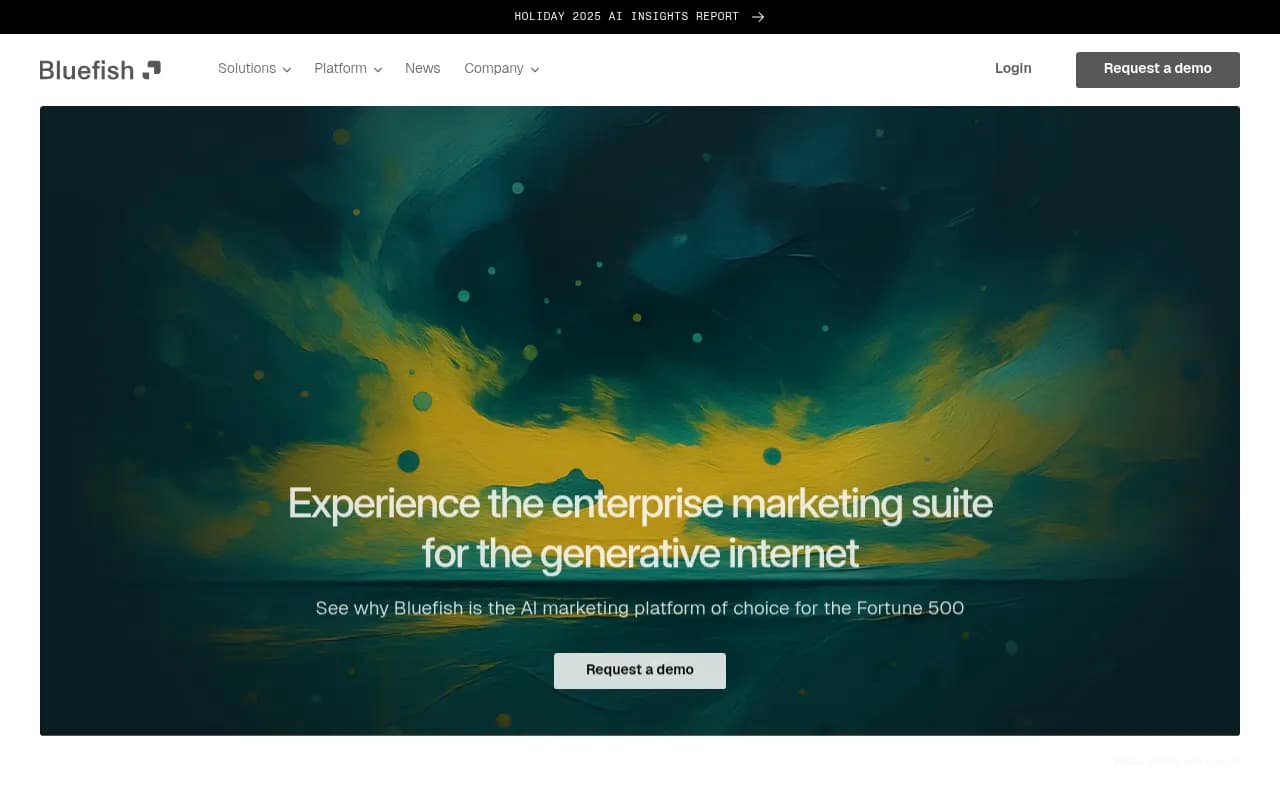
Bluefish AI markets itself as the AI marketing platform for the Fortune 500. The pitch is authority and control: not just tracking where your brand shows up in AI responses, but influencing how AI models "think" about your brand. The platform covers AI monitoring, GEO optimization, measurement, and AI commerce tracking. It passes enterprise infosec reviews, integrates with data teams, and supports custom audience segmentation. The catch is that none of this comes cheap or fast -- you're looking at a full enterprise sales cycle and a price tag that starts around $4,000/month.
Scrunch
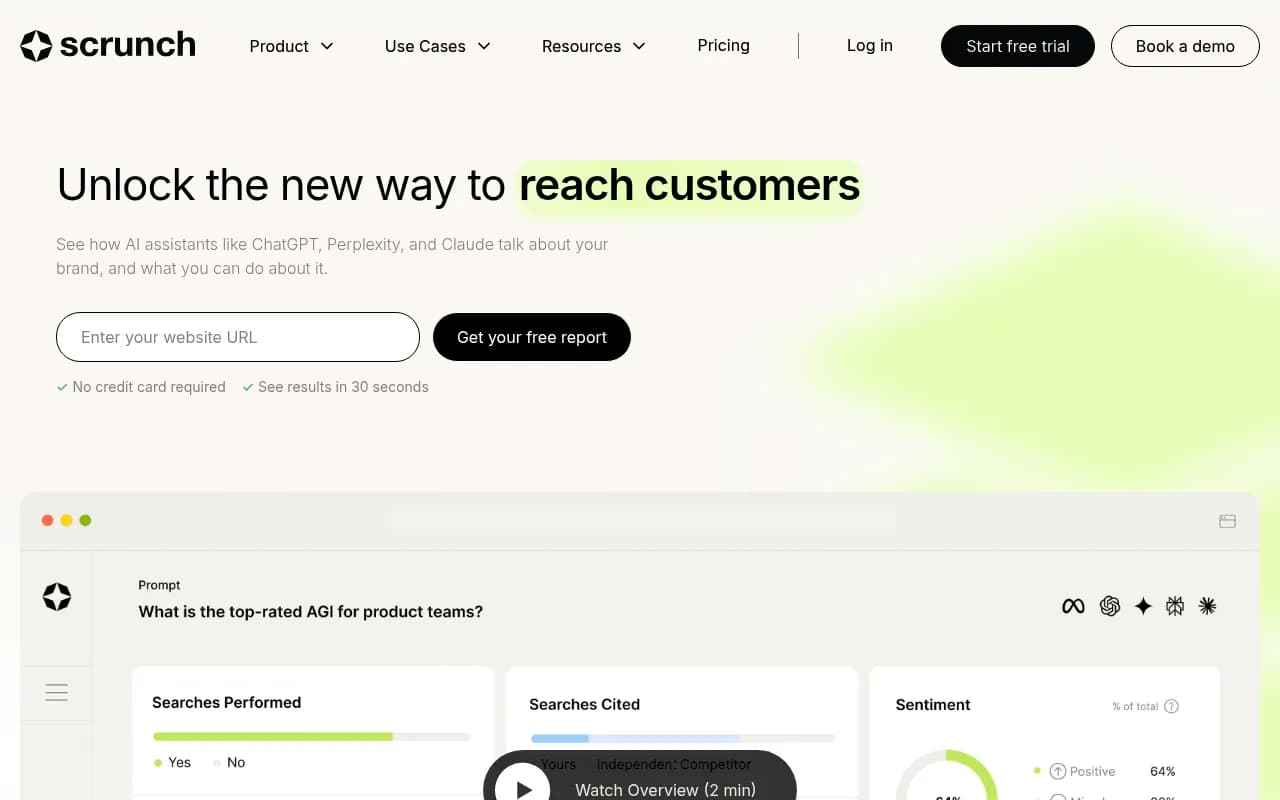
Scrunch calls itself an "AI Customer Experience Platform," which is a slightly different framing than most GEO tools. It monitors brand presence across ChatGPT, Perplexity, Claude, and other LLMs, tracks citations and rankings, and shows you how AI bots are crawling your site. What makes Scrunch stand out is the Agent Experience Platform (AXP) -- a layer that translates your site content into AI-readable formats without disrupting the human user experience. Over 500 companies use it, including Lenovo, Skims, and Crunchbase. Plans start at $250/month with a 7-day free trial.
Side-by-side comparison
| Feature | Bluefish AI | Scrunch |
|---|---|---|
| Starting price | ~$4,000+/month (quote) | $250/month (Starter, annual) |
| Free trial | No | 7-day free trial |
| Target audience | Fortune 500 / enterprise | SMB to enterprise |
| AI models monitored | Major AI channels (undisclosed list) | ChatGPT, Perplexity, Claude, others |
| AI crawler monitoring | Yes | Yes (real-time feed) |
| Content optimization | Workflow automation, GEO tools | Actionable tips + AXP |
| Agent Experience Platform | No | Yes |
| AI content generation | No | No |
| Competitor tracking | Yes | Yes |
| Custom audiences/personas | Yes (enterprise) | Yes |
| Citation tracking | Yes | Yes |
| AI commerce tracking | Yes ("Collections" feature) | Not listed |
| Pricing transparency | None (sales only) | Publicly listed |
| Infosec / enterprise compliance | Yes (passes reviews) | Not highlighted |
Head-to-head feature deep-dive
Pricing and accessibility
This is where the two tools diverge most sharply. Scrunch publishes its pricing: $250/month for Starter (billed annually), $417/month for Growth, and custom pricing for Enterprise. There's a 7-day free trial and a free instant brand report that requires no credit card. You can be up and running in 30 seconds.
Bluefish AI has no public pricing. Estimates from third-party sources put it at $4,000+/month for enterprise clients. Every interaction goes through a sales demo. For a Fortune 500 brand with a dedicated marketing ops team, that's normal. For anyone else, it's a wall.
Verdict: Scrunch wins on accessibility by a wide margin. Bluefish is only realistic for large enterprises with budget and procurement bandwidth.
AI monitoring capabilities
Both platforms track brand mentions, citations, and rankings across major AI models. Scrunch is explicit about which models it covers (ChatGPT, Perplexity, Claude) and shows real-time AI bot crawl feeds with traffic trends. You can filter by competitor, persona, topic, and geography.
Bluefish covers "all AI native experiences" but doesn't publish a specific list of supported models. Its monitoring goes deeper on brand reputation analysis and is designed for teams that need to segment data in custom ways -- by product line, region, or audience type. The enterprise-grade data infrastructure is a real differentiator for large brands with complex needs.
Verdict: Scrunch is more transparent and immediately usable. Bluefish likely goes deeper for enterprise teams, but you can't verify that without a demo.
Optimization and content tools
Neither tool has a built-in AI content generation engine, which is worth noting if you're comparing them to platforms that do. Both give you optimization guidance, but the approach differs.
Scrunch's optimization layer provides actionable tips to improve your AI rankings and surfaces the sites AI models love to cite. The standout feature is the Agent Experience Platform: it creates an AI-readable version of your site content that AI crawlers can consume directly, without changing anything for human visitors. This is a genuinely different approach to GEO -- instead of just optimizing existing content, you're creating a dedicated channel for AI agents.
Bluefish focuses on workflow automation and "advanced performance tools" that help teams prioritize the metrics that matter. It also has a "Collections" feature (launched February 2026) that measures the ROI of digital marketing campaigns in the AI channel -- essentially connecting your paid and owned media to AI visibility outcomes. That's a capability Scrunch doesn't appear to have.
Verdict: Scrunch's AXP is a unique and practical feature. Bluefish's campaign measurement and workflow automation are more sophisticated but require enterprise context to be useful.
Competitor and market intelligence
Scrunch lets you track competitors across prompts, see citation trends, and benchmark your visibility by topic and persona. It's solid competitive monitoring for most use cases.
Bluefish goes further with what it calls "impact and influence" analysis -- understanding not just where competitors appear, but how AI models are forming opinions about categories and brands. The custom audience and prompt segmentation tools are designed for brands operating in competitive markets where generic datasets aren't granular enough.
Bluefish also published research in February 2026 showing that Super Bowl ads influence AI recommendations -- which suggests their platform can detect and measure the downstream AI effects of offline marketing. That's a level of analysis Scrunch doesn't appear to offer.
Verdict: Bluefish has more sophisticated competitive intelligence for enterprise brands. Scrunch covers the basics well.
Ease of use and onboarding
Scrunch is built for speed. The free report takes 30 seconds, the trial requires no credit card, and the interface is designed for marketing teams who want answers quickly. The "light switch" metaphor from one of their customer quotes is apt -- it's meant to be immediately illuminating.
Bluefish requires a sales demo, an infosec review, and presumably a procurement process. Once you're in, the platform is designed for data teams and marketing ops professionals who want to customize everything. That depth comes with a steeper learning curve.
Verdict: Scrunch is much easier to get started with. Bluefish is for teams that have the resources to invest in setup and customization.
Enterprise features and compliance
Bluefish explicitly calls out that it "consistently passes infosec reviews with ease" -- a signal that it's built for enterprise IT requirements. Custom data segmentation, API access for data teams, and tailored measurement frameworks are core to the offering.
Scrunch doesn't highlight enterprise compliance features prominently, though it does offer custom Enterprise pricing. Its customer list (Lenovo, Penn State University) suggests it can handle larger organizations, but the emphasis is on speed and accessibility rather than enterprise-grade security.
Verdict: Bluefish is the clear choice for organizations with strict infosec requirements.
Pricing comparison
| Plan | Bluefish AI | Scrunch |
|---|---|---|
| Free tier / trial | None | 7-day free trial + free report |
| Starter | Not available | $250/month (annual) |
| Growth | Not available | $417/month (annual) |
| Enterprise | Quote-based (~$4,000+/month) | Custom pricing |
| Billing | Annual (assumed) | Annual (monthly available at higher rate) |
Pros and cons
Bluefish AI
Pros:
- Deep enterprise-grade data segmentation and customization
- Campaign ROI measurement in the AI channel (Collections feature)
- Influence analysis that goes beyond surface-level monitoring
- Passes enterprise infosec reviews
- Designed for Fortune 500 marketing and data teams
Cons:
- No public pricing -- requires a full sales process
- No free trial or self-serve option
- Pricing is out of reach for most companies
- Limited transparency about which AI models are supported
- No built-in content generation
Scrunch
Pros:
- Transparent, accessible pricing starting at $250/month
- 7-day free trial, no credit card required
- Agent Experience Platform is a genuinely differentiated feature
- Real-time AI crawler feed
- Covers ChatGPT, Perplexity, Claude, and other major LLMs
- Quick to set up and get value from
Cons:
- No built-in AI content generation
- Less depth on campaign ROI measurement
- Enterprise compliance features not prominently documented
- Optimization guidance is tips-based, not automated
- Smaller dataset than some competitors
Who should pick which tool
Pick Bluefish AI if:
- You're at a Fortune 500 or large enterprise brand with a dedicated marketing ops or data team
- You need custom audience segmentation and tailored measurement frameworks
- Your organization has strict infosec requirements
- You want to measure how offline campaigns (TV, events, paid media) influence AI recommendations
- Budget is not a constraint and you have time for a full enterprise procurement process
Pick Scrunch if:
- You're an SMB, mid-market company, or agency that needs to get started quickly
- You want to try before you buy (7-day free trial)
- The Agent Experience Platform concept appeals to you -- serving AI-optimized content directly to crawlers
- You need transparent pricing and predictable costs
- You want solid monitoring and optimization without a six-figure commitment
Worth noting: if you're also looking to track how your brand appears in AI search results AND generate content engineered to get cited by AI models, Promptwatch covers both angles -- it's one of the few platforms that closes the loop from gap analysis to content creation to traffic attribution.

Final verdict
These two tools aren't really competing for the same customer. Bluefish AI is a serious enterprise platform for brands that need deep customization, campaign measurement, and infosec compliance -- and can afford $4,000+/month to get it. Scrunch is a practical, accessible tool for companies that want real AI visibility monitoring and a unique crawler-serving layer without the enterprise price tag or sales process.
For most companies reading this comparison, Scrunch is the realistic choice. If you're running marketing at a Fortune 500 brand and need to connect your Super Bowl ad spend to AI recommendation outcomes, Bluefish is worth the call. Everyone else should start with Scrunch's free trial and see what they're working with.