Key takeaways
- Bluefish AI is enterprise-only with estimated pricing of $4,000+/month and no self-serve access. AIclicks starts at $59/month with a 3-day free trial and instant setup.
- AIclicks is the practical choice for SMBs, startups, and agencies. Bluefish AI is built for Fortune 500 marketing teams with dedicated infosec requirements and custom workflows.
- Both tools monitor AI visibility across ChatGPT, Perplexity, and Gemini, but Bluefish AI goes deeper into AI "influence" analysis and agentic commerce tracking, while AIclicks focuses on prompt-level citation tracking and actionable recommendations.
- AIclicks has a 4.9/5 rating on G2 and 1,000+ brands using it. Bluefish AI has no public reviews but counts Fortune 500 clients and has produced notable case studies (e.g., a Ramp case study showing a jump from 3.2% to 22.2% AI visibility in one month).
- Neither tool includes a built-in AI content writing agent. If content generation alongside tracking is a priority, that's a gap both share.
- Bluefish AI wins on depth and enterprise controls. AIclicks wins on accessibility, price, and speed to value.
Overview
Bluefish AI
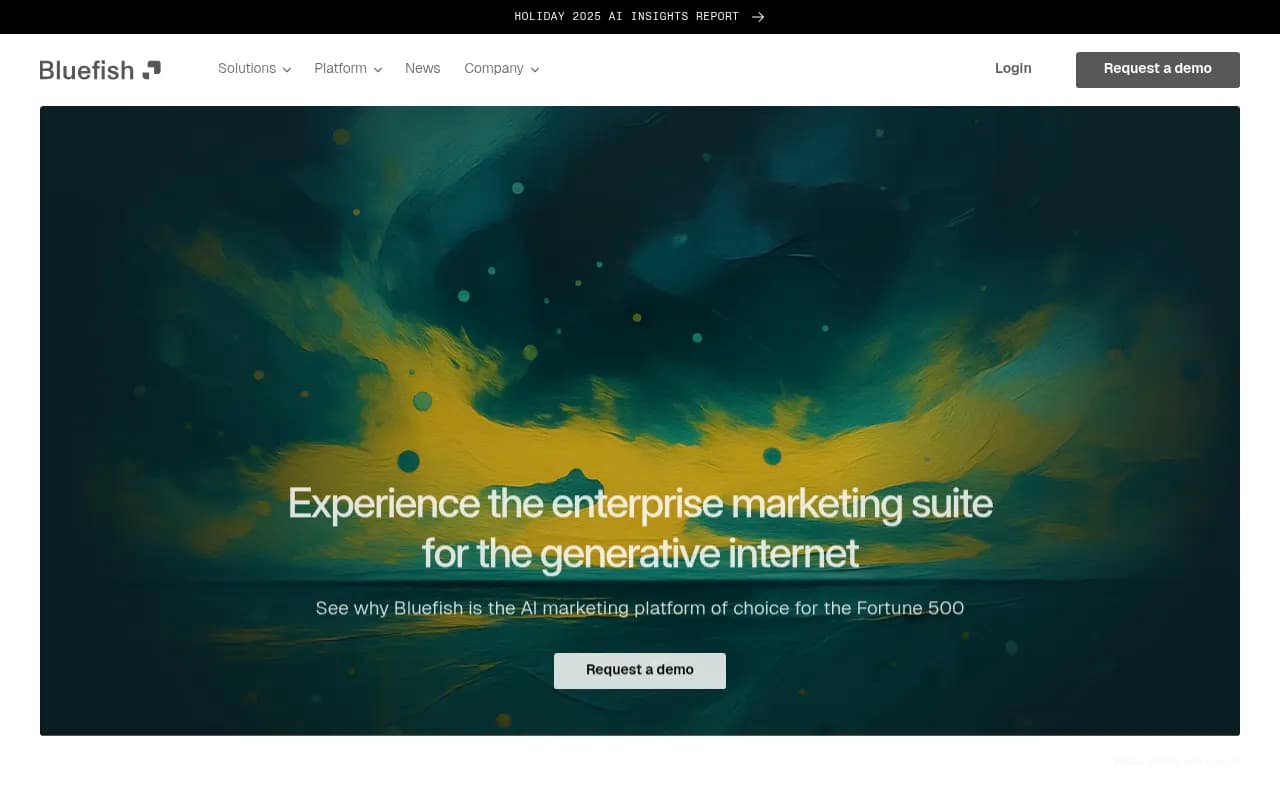
Bluefish AI positions itself as the enterprise GEO platform for brands that need more than a dashboard. The pitch is "authority, influence, and control" -- not just tracking where you show up in AI responses, but understanding how AI models form opinions about your brand and influencing that process. It's built for large marketing teams that have passed infosec reviews, need custom audience segmentation, and want to measure the ROI of campaigns in the AI channel (their "Collections" feature, launched in early 2026, does exactly this). The Fortune 500 framing is deliberate -- this isn't a tool you sign up for on a Tuesday afternoon.
AIclicks
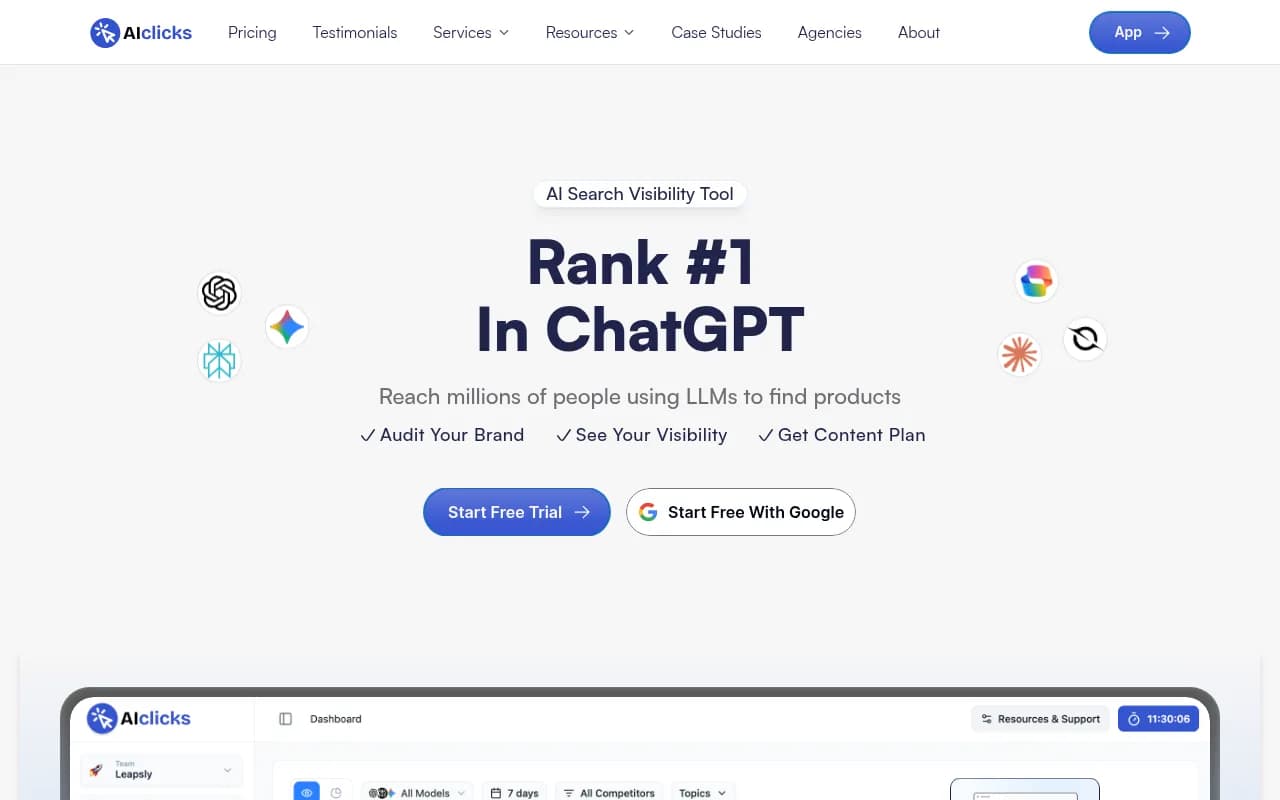
AIclicks takes the opposite approach: drop in your URL, and the platform starts crawling immediately. No sales call, no long onboarding. It finds the prompts your buyers are actually asking in ChatGPT, Perplexity, and Gemini, tracks where your brand appears (or doesn't), identifies the citation sources driving those mentions, and gives you an action plan to improve. The 4-step formula -- enter URL, discover prompts, track visibility, take action -- is designed to get teams moving fast. At $59/month for the starter plan, it's accessible to solo marketers and agencies alike.
Side-by-side comparison
| Feature | Bluefish AI | AIclicks |
|---|---|---|
| Starting price | ~$4,000+/month (quote) | $59/month (Starter) |
| Free trial | No (demo only) | 3-day free trial |
| Self-serve signup | No | Yes |
| Target audience | Fortune 500 / enterprise | SMBs, agencies, growth teams |
| AI models tracked | ChatGPT, Perplexity, Gemini + others | ChatGPT, Perplexity, Gemini + others |
| Prompt tracking | Yes (custom, tailored) | Yes (30-300+ prompts by plan) |
| Competitor analysis | Yes (custom audiences) | Yes (prompt-level mention tracking) |
| Citation source analysis | Yes | Yes |
| Content generation | No | Partial (action plans, agents) |
| AI commerce tracking | Yes (agentic commerce) | Not specified |
| Campaign ROI measurement | Yes (Collections feature) | Limited |
| Infosec / enterprise compliance | Yes (passes reviews) | Not specified |
| API / data export | Yes (enterprise) | Not specified |
| G2 rating | No public reviews | 4.9/5 |
| Setup time | Weeks (sales process) | Minutes |
Head-to-head feature deep-dive
Pricing and accessibility
This is the starkest difference between the two tools. Bluefish AI doesn't publish pricing -- you request a demo, go through a sales process, and get a custom quote. Based on available market data, enterprise clients are looking at $4,000+ per month. That's not a criticism for what it is, but it does mean Bluefish AI is simply not an option for most companies.
AIclicks publishes its pricing openly:
| Plan | Price | Prompts |
|---|---|---|
| Starter | $59/month | 30 prompts |
| Growth | $149/month | ~100 prompts |
| Pro | $299/month | ~200 prompts |
| Business | $499/month | 300+ prompts |
Annual billing gets you two months free. There's a 3-day free trial. You can be up and running in under ten minutes.
Verdict: AIclicks wins on pricing and accessibility by a wide margin. Bluefish AI's price point is only justifiable for large enterprises with dedicated GEO budgets.
AI monitoring and prompt tracking
Both platforms track brand visibility across the major AI search engines. The approach differs significantly though.
Bluefish AI emphasizes custom audiences and tailored prompts -- the idea being that generic datasets aren't enough for competitive markets. Enterprise clients can segment by audience type, customize the prompts being tracked, and get deeper data on how AI models "think" about their brand. The platform also covers agentic commerce, which is increasingly relevant as AI agents start making purchasing decisions.
AIclicks works from a prompt discovery model. You enter your URL, and the platform surfaces the real prompts buyers are asking in ChatGPT, Perplexity, and Gemini. You then track your visibility for those prompts over time, see which competitors are mentioned, and identify the citation sources (websites, Reddit threads, etc.) that are driving AI recommendations.
Verdict: Bluefish AI has more depth for enterprise use cases. AIclicks is faster to set up and more practical for teams that don't have months to configure a custom data model.
Competitor analysis
Both tools let you track competitor visibility in AI responses. Bluefish AI's approach is more sophisticated -- custom audience segmentation means you can compare visibility not just broadly but within specific buyer personas or market segments. This matters for enterprise brands competing in complex, multi-segment markets.
AIclicks tracks competitor mentions at the prompt level. You can see which competitors appear in AI responses for the same prompts you're targeting, and identify the citation sources that are helping them rank. It's straightforward and actionable.
Verdict: Bluefish AI has more granular competitor analysis for enterprise needs. AIclicks covers the basics well and is easier to act on quickly.
Actionability and optimization
This is where both tools have room to grow compared to more full-stack platforms.
Bluefish AI's "actionability" pitch centers on automating optimization workflows and customizing measurement frameworks. The Collections feature (launched February 2026) lets you measure the ROI of digital marketing campaigns in the AI channel -- useful for proving that a Super Bowl ad or content push actually moved your AI visibility numbers. That's genuinely useful for enterprise marketing teams justifying spend.
AIclicks has an action plan feature and AI agents that generate optimization recommendations based on your visibility data. It identifies the sources driving citations and tells you where to focus. It's more prescriptive than Bluefish AI's workflow automation angle, but it stops short of actually writing content for you.
Neither tool includes a full AI content writing agent. If you want to close the loop from "I know I'm invisible for this prompt" to "here's the article that will get me cited," you'd need to look elsewhere. Promptwatch covers that angle with a built-in writing agent grounded in citation data -- worth knowing about if content generation is part of your GEO workflow.

Verdict: AIclicks is more immediately actionable for most teams. Bluefish AI's workflow tools are powerful but require enterprise-level setup to use effectively.
Enterprise features and compliance
Bluefish AI is built specifically for enterprise environments. It passes infosec reviews, supports custom data segmentation, and gives data teams more ways to slice and analyze visibility data. For a Fortune 500 brand with strict data governance requirements, this matters a lot.
AIclicks doesn't make specific claims about enterprise compliance or infosec certifications. It's a self-serve SaaS product -- fine for most teams, but potentially a blocker for large enterprises with procurement requirements.
Verdict: Bluefish AI wins clearly here. This is its home turf.
AI commerce and emerging channels
Bluefish AI explicitly covers "agentic commerce" -- tracking how brands appear when AI agents are making or influencing purchase decisions. This is forward-looking and relevant as AI shopping assistants become more common.
AIclicks focuses on AI search visibility (ChatGPT, Perplexity, Gemini) and doesn't specifically call out agentic commerce tracking.
Verdict: Bluefish AI is ahead on emerging AI commerce channels.
Setup and ease of use
AIclicks wins this category outright. You enter a URL, and the platform starts working. No sales call, no onboarding, no configuration. The 3-day free trial means you can evaluate it with real data before spending a dollar.
Bluefish AI requires a demo request, a sales process, and likely a multi-week onboarding. That's appropriate for enterprise software but means you can't evaluate it quickly.
Verdict: AIclicks is dramatically easier to get started with.
Pricing comparison
| Plan | Bluefish AI | AIclicks |
|---|---|---|
| Free trial | No | 3-day free trial |
| Entry-level | ~$4,000+/month (estimated) | $59/month (30 prompts) |
| Mid-tier | Custom | $149-$299/month |
| Business | Custom | $499/month (300+ prompts) |
| Enterprise | Custom quote | Custom |
| Annual discount | Unknown | 2 months free |
| Pricing transparency | None (quote only) | Fully public |
Pros and cons
Bluefish AI
Pros:
- Deep enterprise controls -- custom audiences, tailored prompts, custom measurement frameworks
- Agentic commerce tracking is ahead of most competitors
- Collections feature measures campaign ROI in the AI channel
- Passes infosec reviews -- important for large enterprises
- Proven results (Ramp case study: 3.2% to 22.2% AI visibility in one month)
Cons:
- No public pricing -- you're going in blind until the sales call
- Estimated $4,000+/month puts it out of reach for most companies
- No self-serve trial -- you can't evaluate it without talking to sales
- No public G2 or review site presence to validate user experience
- Setup takes weeks, not minutes
AIclicks
Pros:
- Starts at $59/month -- genuinely accessible
- 3-day free trial with no credit card friction
- Self-serve setup in minutes
- 4.9/5 on G2 with 1,000+ brands using it
- Prompt discovery surfaces real buyer queries automatically
- Action plans and AI agents give optimization direction
Cons:
- No built-in content generation (recommendations only)
- Prompt limits per plan (30 on Starter) can feel restrictive
- Less depth than enterprise tools for custom audience segmentation
- No specific infosec or compliance certifications mentioned
- Agentic commerce tracking not covered
Who should pick which tool
Choose Bluefish AI if:
- You're a Fortune 500 or large enterprise brand with a dedicated GEO budget
- You need custom audience segmentation and tailored prompt tracking
- Infosec compliance is a hard requirement
- You want to measure campaign ROI in the AI channel (TV ads, content pushes, etc.)
- You have the time and resources for a proper enterprise onboarding
Choose AIclicks if:
- You're an SMB, startup, or agency that needs to get started quickly
- Budget is a real constraint -- $59/month vs $4,000+/month is not a close call
- You want to evaluate the tool before committing (3-day free trial)
- You need prompt-level visibility tracking with actionable recommendations
- You don't have months to spend on a sales and onboarding process
Final verdict
These two tools are barely competing for the same customer. Bluefish AI is enterprise infrastructure for brands with large budgets, dedicated GEO teams, and complex compliance requirements. AIclicks is a self-serve tracker that gets you real data in minutes for under $60/month.
If you're a Fortune 500 marketing team trying to understand how AI models "think" about your brand and measure the impact of your campaigns in the AI channel, Bluefish AI is worth the conversation. If you're anyone else -- an agency, a growth-stage startup, a mid-market brand -- AIclicks gives you 80% of the value at a fraction of the cost, and you can start today without talking to a salesperson.