Key takeaways
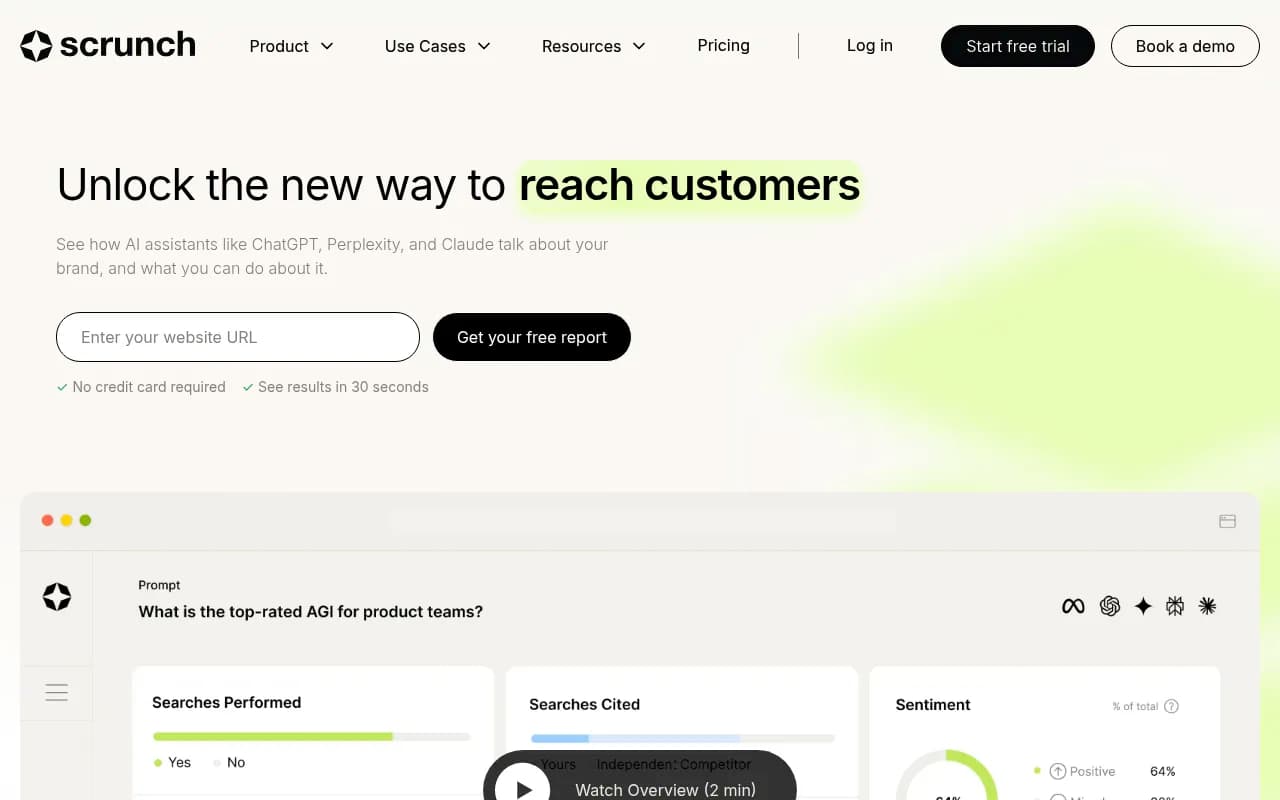
- Three large platforms bought into AI visibility in under a year: Adobe (Semrush, about $1.9B), HubSpot (XFunnel), and Sitecore (Scrunch, which had raised about $26M).
- Basic tracking is turning into a feature that big platforms can bundle. Standalone dashboards are the most exposed companies.
- The hard part is measurement infrastructure, because AI engines change behavior without notice and every baseline has to be rebuilt.
- Venture funding priced GEO like AI infrastructure, but revenue is still small. That gap is what pushes startups toward sales.
- If you are a buyer rather than an acquirer, pick a vendor that does work beyond reporting, and plan for the possibility that your tool gets bought.
The short version of why this keeps happening
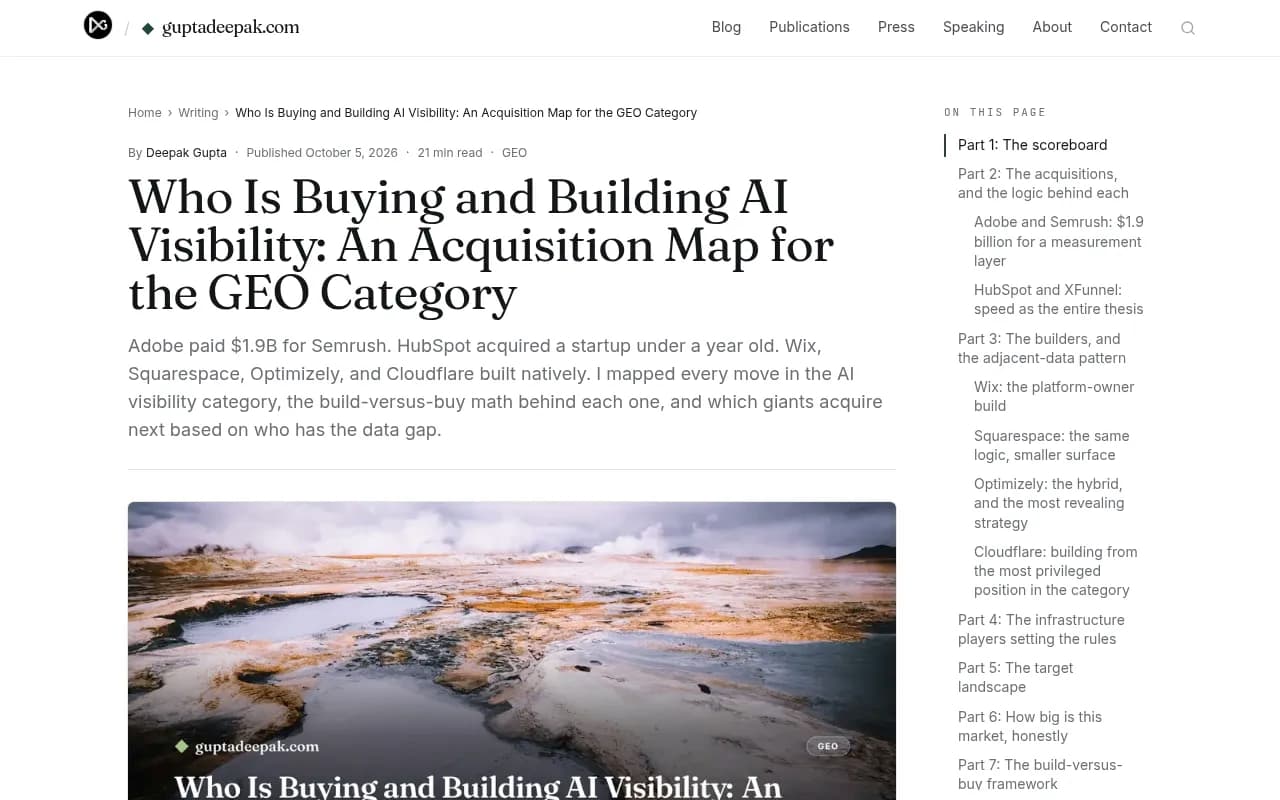
The term GEO came out of a 2023 Princeton-led paper. By late 2026, a public software company had spent roughly $1.9 billion on the category, a marketing platform had bought a startup less than a year old, and several website platforms had built their own visibility dashboards. That is a fast consolidation curve.
There are three forces behind it. Tracking is easy to bundle. Venture money arrived at infrastructure-style valuations before revenue caught up. And the genuinely hard piece, stable measurement across engines that shift constantly, is cheaper to buy than to build for most acquirers.
A caveat on sourcing before we go further. Much of the deal map below comes from a single author's roundup, and that author sells a competing GEO product. Where I could check a deal against a primary source (Adobe's and Sitecore's own announcements), I say so. Treat the rest, including funding totals and predictions, as claims.
The scoreboard: who bought, who built, who sat out
According to that roundup, large-platform responses fall into four buckets as of September 2026.
| Response | Companies | Notes |
|---|---|---|
| Acquired | Adobe (Semrush), HubSpot (XFunnel), Sitecore (Scrunch) | Adobe's deal was announced Nov 19, 2025, all cash at $12.00 per share |
| Built natively | Wix, Squarespace, Cloudflare, Optimizely | Mostly dashboards on top of data they already owned |
| Partnered | Optimizely with Conductor | The one hybrid strategy |
| Nothing native yet | Contentful, Sanity, Drupal, Salesforce | Webflow reportedly has an AEO product in beta |
Two details matter here. First, HubSpot bought XFunnel, an Israeli startup under a year old, and shipped HubSpot AEO about six months after close, tracking ChatGPT, Gemini, and Perplexity. Second, Adobe's press release describes Semrush as a "brand visibility platform" with GEO and SEO tools. Adobe was not buying a dashboard. It was buying distribution and an installed base.
You can see the acquirers' products in our catalog if you want to compare what the buyers now ship: [tool:adobe-brand-visibility]

Economics one: tracking is a feature, not a business
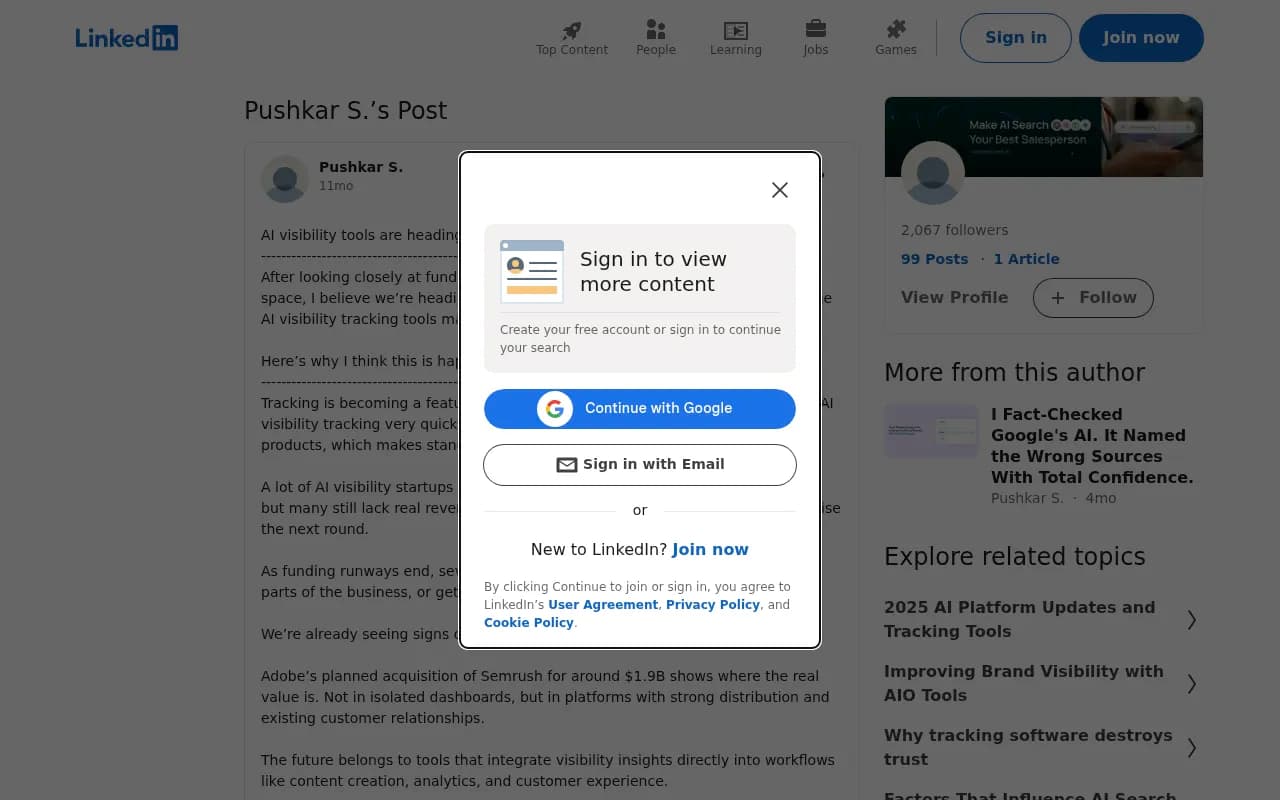
Pushkar Sinha, co-founder of VisibilityStack.ai, made the argument bluntly in a December 2025 LinkedIn post: large platforms can build basic AI visibility tracking very quickly, and many are already bundling it. Standalone tools are hard to justify when the thing they sell comes free inside the suite a customer already pays for.
I think he is mostly right, with one correction. Bundled tracking is good enough for a marketing manager who wants a number in a weekly report. It is not good enough for someone who needs to know why the number moved. The startups that survive will be the ones that answer the second question.
This also explains who the likely sellers are. Products that only monitor prompts, sold at low price points, have the thinnest moat. A few names from the directory that sit in the monitoring-first group:


None of these is failing. Peec AI, for example, reportedly passed 1,300 customers within ten months and about $4 million ARR. But fast customer growth at a low price is exactly what an acquirer wants when it is buying distribution rather than technology.
Economics two: capital priced the category like AI infrastructure
The funding numbers are large. One count put venture money into pure-play GEO startups at $255 million or more over about eighteen months, with Profound accounting for roughly $155 million before a further reported $180 million raise. An Everything-PR piece says Lightspeed marked Profound at $1 billion in February 2026, when the company was eighteen months old. I could not verify that mark, so hold it loosely.
The bull case for those valuations runs like this:
- Traditional SEO software is a $5 to $7 billion market, but the digital marketing spend flowing to Google, Meta, and similar surfaces is closer to $300 billion. A small migration of that budget toward AI-mediated discovery makes GEO far larger than SEO tooling.
- Platform shifts reward early winners for a decade.
- Early customers reportedly show stickiness tied to revenue, which looks more like infrastructure than marketing software.
The bear case is just as simple. The revenue base today is small, a few enterprise contracts move the percentages, and many startups raised in 2024 and 2025 without clear ROI. When runways end, companies sell, shut down, or sell parts at lower prices. Lorelight, a GEO startup whose founder shut it down and concluded there is no GEO strategy separate from brand building, is the cautionary example.
Put those together and you get the pressure that drives consolidation. High valuations need a growth story. Slow revenue makes the growth story hard to tell. A strategic buyer offers a clean exit.

Economics three: measurement is the real moat
The best argument for buying instead of building is not the dashboard. It is the infrastructure underneath it.
AI answers are nondeterministic. The same prompt gives different outputs, and engines change behavior in steps, with no announcement. Promptwatch Data's ChatGPT query fanouts report shows what that looks like in practice: searches per response fell from about 2.15 in early December to about 1.84 by early March, then fanouts came back in April at exactly 1.0 per response, and average query length dropped from roughly 117 characters to the high 80s, then to about 53. Any visibility score built on top of those queries has to be re-baselined every time that happens.
That is expensive, specialized work. Collecting data from the real interfaces of each engine, in each country, with stable methodology, takes a team that most CMS and marketing-suite vendors do not have. The roundup's claim, which I find plausible, is that every company that built a credible product from scratch already owned an adjacent data position. Cloudflare has crawler traffic. Wix and Squarespace have site and visitor data. Nobody started cold and caught up.
It also explains the infrastructure players. Bing Webmaster Tools now has an AI Performance dashboard showing which URLs get cited and the grounding queries behind them. Microsoft can see citation patterns almost nobody else can. When the engine owner gives away basic visibility data, third-party tools have to justify themselves with more than a chart.
What makes a startup acquirable
From the pattern so far, acquirers are paying for one of three things.
| Asset | Example buyer logic | What it means for the startup |
|---|---|---|
| Measurement depth | Buy per-engine data pipelines and methodology | Strong exit, but price depends on engine coverage |
| Distribution | Buy a fast-growing user base | Lower technology moat, still attractive |
| Enterprise logos | Buy contracts and relationships | Works if retention is real |
The roundup names Bluefish AI, Evertune, and AthenaHQ as plausible targets: real technology, enterprise customers, not yet priced out of reach. It also predicts Salesforce moves next, since it has no native product and a corporate venture arm on several cap tables. That is speculation from someone with a competing product. Reasonable people can disagree.
What the consolidation means for tools that do the work
The uncomfortable lesson for monitoring-only tools is that they get absorbed. The tools that look safer are the ones that connect measurement to action: finding the gap, producing the fix, and checking whether it worked.
Promptwatch is built around that loop. It monitors the real interfaces of ChatGPT, Gemini, Perplexity, Google AI Overviews, and others, traces which pages and third-party sources get cited, then uses an Action Board and a Content Agent to close the gaps and measures the result with IP-verified AI crawler logs and visitor analytics. Compare that with the bundled tracking now appearing inside suites, and you can see why the market is splitting into "dashboard" and "does the work" camps.

If you want to see how that stacks up against specific rivals, the 2026 side-by-side GEO platform comparison is a reasonable starting point, and there are head-to-head pages such as Promptwatch vs Profound and Promptwatch vs Semrush. Prices change, so confirm on promptwatch.com/pricing, and the free AI visibility report is the cheapest way to test it on your own brand.
How to pick a tool when your vendor might get bought
Vendor risk is a real procurement question now. Here is a practical checklist.
- Ask what happens to your data and pricing if the vendor is acquired. Look for export options (CSV, API) so you are not locked in.
- Prefer tools with their own data collection over tools that resell someone else's.
- Check whether the product does anything after the report. If it only shows scores, a suite can replace it.
- Avoid long prepaid commitments with early-stage tools. Monthly billing is annoying but cheap insurance.
- Keep your own source of truth. Google Search Console and your server logs belong to you regardless of what happens to a vendor.
If you want to browse the wider field, the GEO software directory at bestgeosoftware.com lists dozens of options by category.
What the buyers and sellers each get wrong
Acquirers tend to assume the dashboard is the product. Then they discover that keeping the numbers trustworthy across a dozen engines is the product, and the dashboard is the thin part. HubSpot's six-month ship time suggests the buy-then-integrate path works when the startup's core measurement is already solid.
Founders tend to assume a high round means a durable business. The Everything-PR piece lists the real risks plainly: one engine could dominate and make multi-engine optimization less valuable, and buyers may eventually want an integrated agency that does the work, which turns the tool into a feature inside a services business. Either would compress multiples.
Both sides underestimate how little we know. Business Insider quoted a McKinsey figure that only about 16% of brands systematically track their AI search performance, and noted that some GEO gains may be fleeting because models are constantly retrained. A small, unstable market is a bad place to hold a lot of leverage.
If you are not buying anything
Most readers are not in corp dev. The useful takeaway is simpler. Every one of these deals is a large organization deciding that the answers AI engines give about brands are worth owning infrastructure for. Whether your tool gets bought changes your invoice, not whether your brand needs to show up in those answers.
If you work with an outside team on this, an agency can handle both strategy and the work of getting cited. 1001 SEO Media is one example: it combines technical SEO, content, and generative engine optimization, and uses Promptwatch for AI visibility tracking.
Predictions, with the appropriate level of doubt
- More small trackers will be absorbed or quietly wound down over the next year, particularly those competing on price alone.
- At least one more large suite vendor will buy rather than build. Salesforce is the obvious candidate, but I would not bet money on timing.
- Tools that publish content, read crawler logs, and measure traffic will keep a separate identity longer than pure monitors.
- Pricing for tracking will drift down as it gets bundled. Pricing for measurement depth and execution will not.
The pricing decision, as one analyst put it, has already been made. What remains open is whether revenue grows into it. Until then, expect the acquisitions to keep coming.
Frequently asked questions
Why did Adobe pay about $1.9 billion for Semrush?
Adobe's own release frames Semrush as a brand visibility platform with GEO and SEO tools. The reported value is in distribution and an existing customer base, not an isolated dashboard.
Is AI visibility tracking becoming free?
Basic tracking is being bundled into suites and website platforms, and Bing Webmaster Tools now shows AI citation data directly. Deeper work like crawler analysis, content production, and attribution is harder to bundle.
Should I avoid startups that might be acquired?
No, but choose ones with data export, monthly billing options, and a product that does more than report scores.
Are the funding totals reliable?
They are estimates from third-party roundups, including one by an author who sells a competing product. Use them as direction, not exact figures.
For related category directories, see ai-rank-tools.com for AI rank trackers.