Key takeaways
- A free audit is a hook. A pitch workspace (a prospect brand set up inside the platform, with real tracked prompts) is what actually wins the meeting.
- One-off graders such as HubSpot's AI Search Grader or Prismic's GEO audit are fine for a cold email, but they give you a single snapshot, not a trend or a plan.
- Agency plans that include unlimited projects and pitch projects matter more than the headline price per prompt.
- A single prompt tells you almost nothing. Pitch with dozens of prompts, positions, and sentiment, not "you were not mentioned once."
- Check card requirements, trial length, and usage limits on any vendor's free option before you promise a prospect a deliverable. I did not run live tests of every tool below; claims about free tiers come from vendor and third-party roundups, so verify them on the pricing page.
Why pitching AI visibility is different from pitching SEO
Classic SEO pitches lean on a keyword gap report. AI visibility pitches have a harder job. The prospect's CMO has probably typed their own brand into ChatGPT and gotten something wrong or flattering, and that anecdote shapes the conversation more than any dashboard. Your audit needs to replace the anecdote with a pattern.
Promptwatch Data helps here. In its report on unique domains per ChatGPT response (Sep 28 to Oct 4, 2026), 47.6% of responses cited 10 or more different domains, and for organic prompts with no brand named it was 52.5%. The practical lesson for a pitch: a brand shares almost every answer with many other sites, so "are we cited?" is the wrong question. Position in the answer, how the brand is described, and which third-party pages carry it into the answer are the right ones. Brand-specific prompts behave differently, with five domains the most common count, so your own site and a few review sites carry more weight there.
One caveat so you don't embarrass yourself in a meeting. Promptwatch's older average sources per response page says ChatGPT cites about 5 sources per web-search answer, while Google AI Overviews and Perplexity sit near 10. That counts citations per answer, a different measure and period than unique domains in cited responses, so don't quote the two side by side without explaining the difference.
What a good agency pitch audit includes
Before comparing tools, decide what the audit has to produce. These are the criteria I would score against:
- Pitch workspace or pitch project: can you create a prospect brand without paying for a full client slot?
- Real tracked prompts, not a canned five-question scan.
- Competitor visibility: who shows up next to the prospect, and in what order.
- Source and citation data: which pages and domains shape the answers, because that is your actual work plan.
- Shareable output: a PDF, link, or white-label report you can send without screenshots.
- Path from audit to delivery: content, outreach, or at least a prioritized to-do list.
- Card, time, and usage limits on the free part.
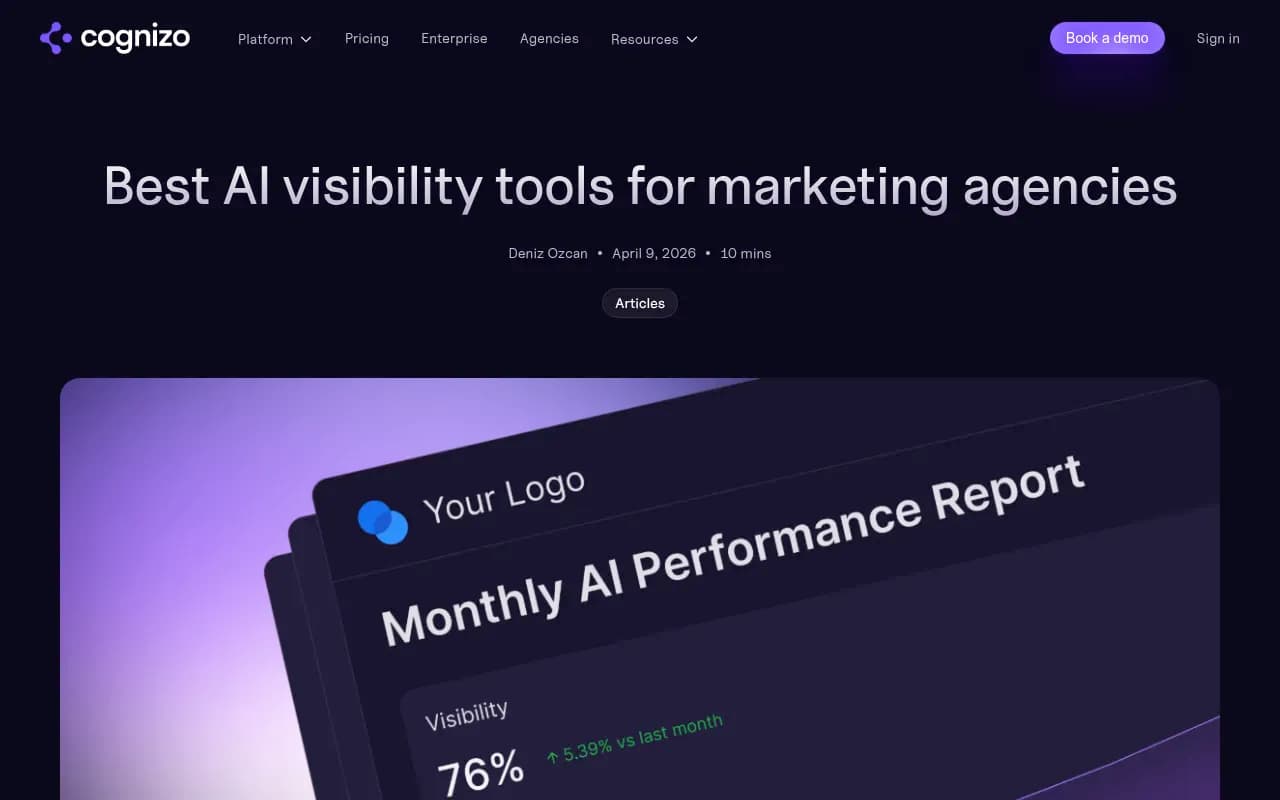
The Cognizo roundup of agency tools frames the biggest category gap well: knowing a client appears in 12% of AI answers is useful, but fixing it in the same platform is what keeps clients.
Free audit options compared
The table separates three kinds of "free": one-off graders, time-limited trials, and pitch workspaces. Details come from vendor pages and the roundups cited in my research, so confirm current limits before you build a sales process on them.
| Tool | Free option | What you get | Best used for |
|---|---|---|---|
| Promptwatch | Free AI visibility report (no login) and 7-day trial on monthly billing; pitch projects on agency plans | Scan of ChatGPT, Gemini, and Perplexity with a visibility score and crawler access check | Cold outreach hook, then a full pitch project |
| Profound | 7-day trial reported on 3 answer engines with 50 daily prompts; Agency mode with pitch environments | Pitch environments per prospect | Larger agencies selling AEO at scale |
| Glim AI | Free pitch workspaces, no card (per its own page; check monthly limit) | Prospect audit, reports, and pitch decks | New-business campaigns |
| Otterly.AI | Free account for basic audits, reported | Domain and URL audits, 25+ factors | Small agencies starting out |
| Insites | Free audit on its site, no sign-up | Fast, plain-English report for local SMBs | Sales teams selling to local businesses |
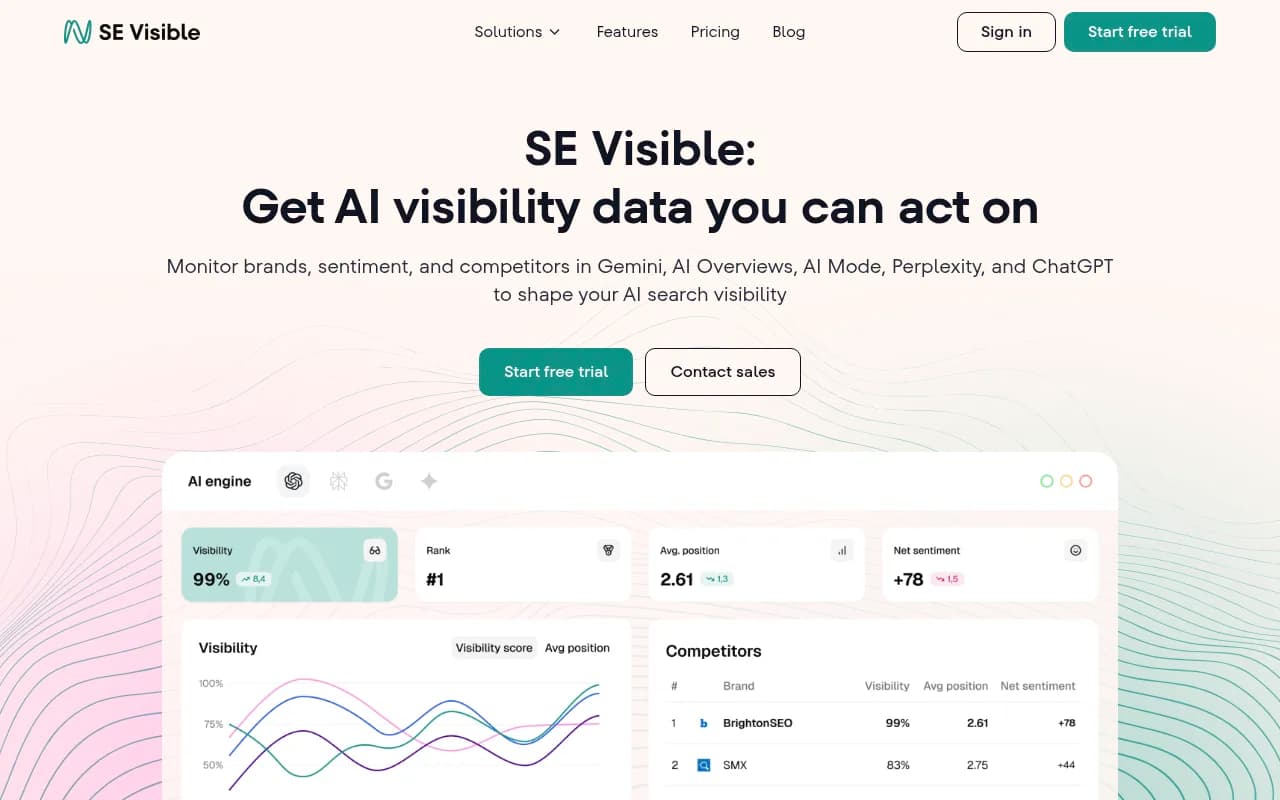
| SE Visible | Free tier with 300 credits, reported | Brand visibility and sentiment sample | Testing data before budget |
| HubSpot AI Search Grader | Free, one-time diagnostic | Single snapshot | Quick email attachment |
| Prismic Free GEO Audit | Free, one-off | Snapshot of AI answer presence | Cold outreach |
| AnswerGist | Free audit with prioritized fixes | Fix list | Lightweight prospect teardown |
The tools, in the order I would evaluate them
Promptwatch
Promptwatch is the one I would start with if the goal is to pitch and then deliver. The free AI visibility report needs no login and scans ChatGPT, Gemini, and Perplexity for a visibility score, plus a check on whether AI crawlers can read the prospect's site. That crawler check is a good pitch line on its own, because an access problem is easy for a prospect to understand and easy for you to fix.
On the paid side, agency plans include unlimited projects, pitch projects, prompts, and team seats, with all AI models, Agent Chat, Brand Narrative, crawler logs, and visitor analytics. Kick-off is $199/mo, Growth $399/mo, and Scale $799/mo, and there is a 7-day free trial on monthly billing. Confirm current numbers at promptwatch.com/pricing. Agency plans don't include the Content Agent or a white-label client portal; agencies that need those go to Enterprise.
What I like for pitching: it collects answers from the real interfaces of ChatGPT, Google AI Overviews, AI Mode, and others in the country and language you pick, so a Dutch prospect gets Dutch answers. Brand Narrative pulls out the individual claims AI makes about the prospect ("expensive for small teams"), which makes a vivid slide. Monks, a Promptwatch agency customer, uses the Answer Gap Report to build content roadmaps for enterprise clients.

The honest downside: it is a broader product than a lightweight score generator, so if you only need a one-page teardown for an SMB, a simpler grader is faster.
Profound
Profound's own agency roundup puts itself first, which you should read with a raised eyebrow. Its claims are specific, though: Agency Mode with client workspaces and pitch environments, daily tracking across the main engines, and content creation plus crawler-to-conversion attribution in one platform. Its trial is reported at 7 days on three engines with 50 daily prompts. It is strong for agencies running AEO as a scaled service, and probably more than you need for a first pitch.
For a direct comparison, see Promptwatch vs Profound.
Otterly.AI
Otterly is the budget starting point. Reported strengths are domain and URL audits across 25+ factors, location-based tracking, and a free account for basic audits. The agency roundups note it lacks real prompt-volume data and in-platform content generation. Fine for a solo consultant; you will outgrow it when clients ask what to do next.

Scrunch
Scrunch pitches agencies on referral economics (commission, prospecting licenses, co-marketing funds) and a distinct approach of serving AI-optimized pages to crawlers. Its pricing is reported from $250/mo for 125 prompts. Prompts are configured rather than pulled from real conversations, and content generation is missing in the roundups I read.
Peec AI
Zapier picks Peec AI for smart prompt suggestions and notes a pitch-project style report sharing feature. It is a monitoring tool without optimization, which is fine if your deliverable is reporting and someone else writes the content.

Glim AI, Insites, and SE Visible
Glim's page is the most explicit about pitching: free pitch workspaces with no card, and per-active-client pricing of $129, $249, or $449 a month with no agency base fee. That is the vendor's own description, so check the monthly pitch limit. Insites is built for sales teams selling to local SMBs, with a 60-second audit that needs no sign-up and a report a non-expert can read. SE Visible reports a free tier with 300 credits.
One-off graders
If you just need a cold-email attachment, these work, and each is free:
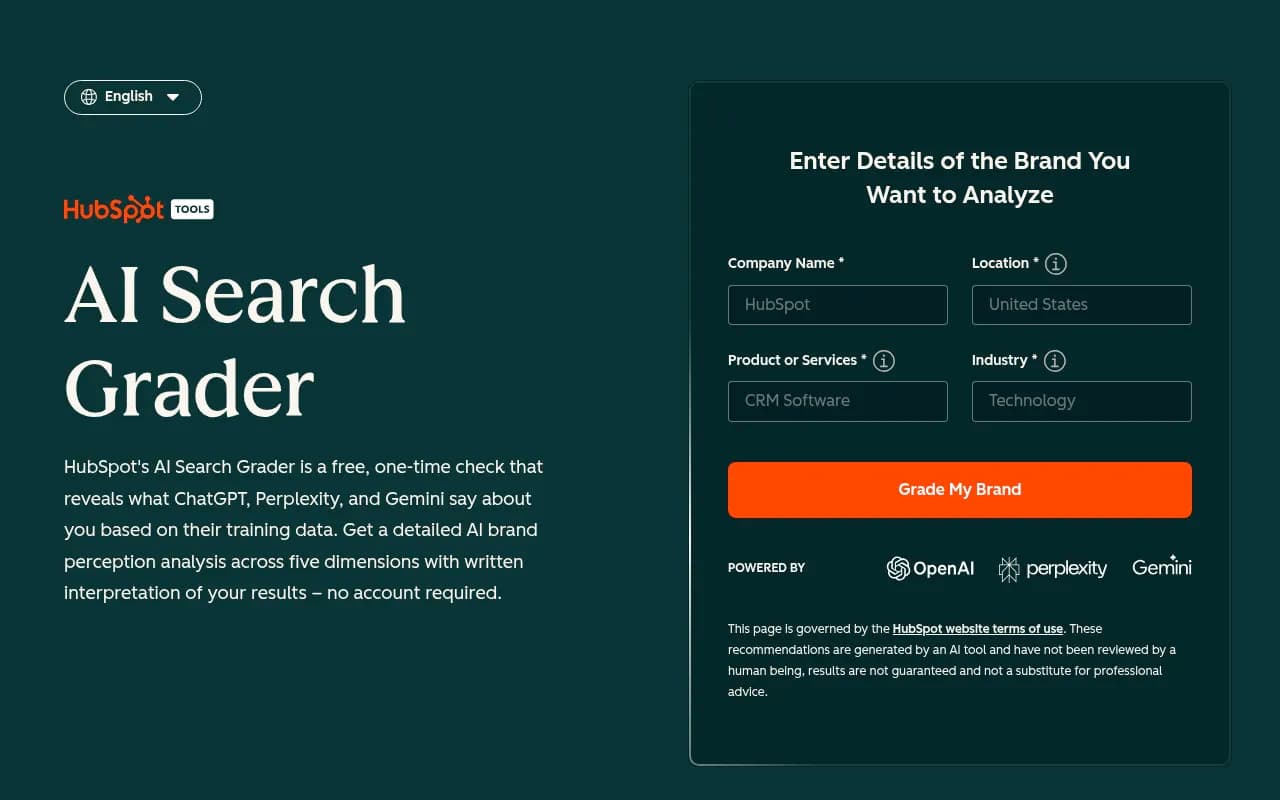
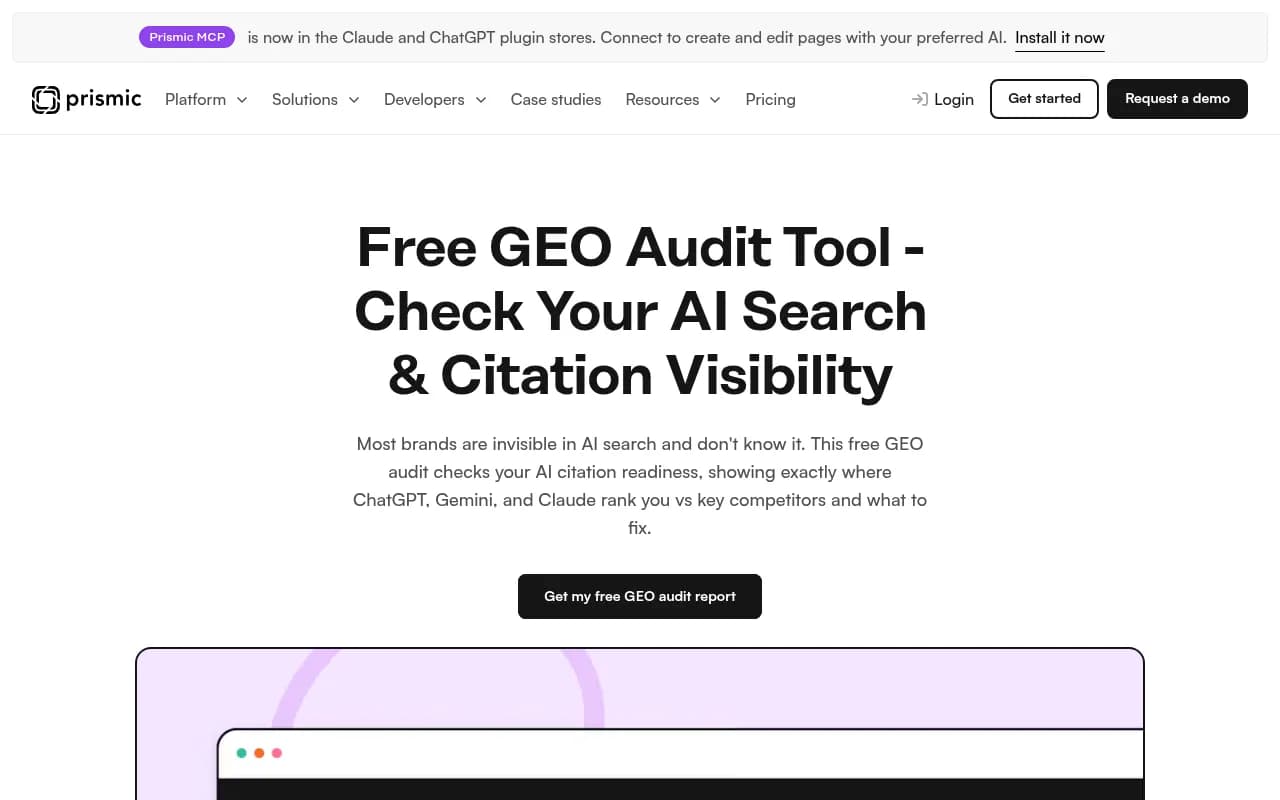

Treat them as hooks. None gives you tracked prompts over time.
Existing SEO suite add-ons
[tool:semrush] adds AI Overviews tracking, share of voice, and LLM referral analytics to a workflow you may already pay for. Convenient, but the roundups describe it as an add-on rather than a purpose-built pitch tool. [tool:athena-hq] lists unlimited seats on every plan, which helps when clients want logins.
A free-audit workflow that wins meetings
- Run a free grader on the prospect before the first email. Attach a one-line finding, such as a crawler access issue or a competitor named first.
- After a reply, create a pitch project in a platform that supports it and load 30 to 60 prompts. Mix organic prompts (no brand), brand-specific prompts, and competitor comparisons. Promptwatch's data shows these behave differently, so one prompt type will mislead you.
- Track more than mentions: position, sentiment, and the claims AI makes. A mention buried fifth in a list is a different story from a first-place recommendation.
- Pull the cited sources. If third-party listicles, review sites, or forums carry competitors into answers, that is your proposal's backbone. Content-type shares help too: Promptwatch's ChatGPT citation share by content type report found product pages the most cited at 22.4% (Sep 28 to Oct 4, 2026).
- Check freshness. Per Promptwatch's content half-life report, news lost half its cited pages within 36 days while landing pages and docs stayed cited longest. If a prospect relies on news-style posts, say so.
- Do not promise a social strategy blindly. In the week of Sep 28 to Oct 4, 2026, ChatGPT got 0.46% of citations from social platforms while AI Overviews got 12.2%. Which engine matters to the prospect changes your plan.
- Finish with three actions and a baseline number, not 40 findings.
What to ask before you commit
| Question | Why it matters |
|---|---|
| Does the free audit require a card? | Prospects will not hand you theirs; you will not want to either |
| Is the pitch brand counted against client slots? | Hidden costs appear at 10 prospects |
| Can I export a branded report? | White-label limits differ by plan |
| Are answers from real interfaces or APIs? | User-facing answers and citations can differ from API output |
| What happens after the audit? | Monitoring alone leaves you doing the work by hand |
Which to pick
- Solo consultant on a tight budget: start with a free grader and Otterly's free account, then move up once a client signs.
- Agency selling AI visibility as a retainer: Promptwatch or Profound, both with agency plans and pitch projects. Promptwatch's head-to-head comparison list is a decent place to check feature gaps.
- Sales team selling to local SMBs: Insites for readability.
- Already deep in Semrush: use its add-on first, and upgrade when clients ask for crawler data or content actions.
If you want a wider catalog, the GEO software directory lists far more options than any roundup. And if you would rather hire the work out than build the service, 1001 SEO Media runs GEO programs for agencies and brands.
The cheapest test is also the best one: pick three current clients, run a free audit on each, and see whether the gaps are big enough to price a project around. Do that before paying for anything.