Key takeaways
- Brandlight is built for large enterprise programs and says so itself. It has no public pricing, and it pairs software with a strategist, analyst and customer success lead. Agencies that want to run delivery in-house often need something else.
- The enterprise criteria that separate platforms are SSO, multi-client workspaces with real data isolation, white-label output, API and MCP access, seat limits, and how many prompts, models and regions you get.
- Promptwatch is the strongest option if you want a platform that tracks, fixes and measures, rather than a dashboard. Profound, Scrunch, Bluefish, Evertune and BrightEdge are the closest enterprise-style alternatives. Peec AI, Otterly and LLM Pulse suit mid-market client rosters.
- Most "best Brandlight alternatives" lists are written by competing vendors, including Brandlight itself. Treat every ranking as marketing and run your own trial.
- Pricing in this category moves fast. Confirm everything on vendor pages before you quote a client.
Why agencies look past Brandlight
Brandlight is a legitimate enterprise product. Its own agency guide is refreshingly blunt: it is enterprise-only, and if your roster is SMB or mid-market, the per-client math doesn't work. It positions itself as a platform plus a partner team, with a train-the-trainer model so your agency presents the findings.
That works if your retainer is governance, market rollout and publisher or retailer execution. It works less well if you want to:
- run delivery with your own team and your own process
- see transparent pricing before a sales call
- spin up pitch workspaces for prospects
- publish content directly rather than hand a scope of work to a partner
- keep margins on a mixed roster of enterprise and mid-market clients
None of that makes Brandlight bad. It means the fit depends on who does the work. If you want the platform and your team to own delivery, shortlist the tools below.
A caveat on sources. The research behind this guide includes lists from LLM Pulse, Mentionova, Orchly, Amadora and Brandlight, and every one of them ranks its own product first or near it. Take those lists as a way to discover names, not as verdicts.
What enterprise clients actually need from an agency tool
Standard comparison pages count features. Enterprise procurement asks different questions. Test each of these in a demo, not on a marketing page.
Governance and security
SSO, audit logs, role-based access and a security certification. Enterprise clients' security teams will ask for ISO/IEC 27001 or SOC 2 evidence and data residency details before they let you connect anything. SSO is often gated to top tiers (Peec AI, for example, reserves it for Enterprise), so check which plan you need.
Multi-client workspaces
Client A's competitive set must never leak into Client B's dashboard. Ask how projects are isolated, whether seats are unlimited, and whether pitch workspaces exist for prospects.
Reporting and white-labeling
Scheduled PDF reports, Looker Studio connectors, CSV and Excel exports, and branded output. Some vendors reserve white-label dashboards for enterprise contracts.
API and MCP access
Large clients want AI visibility data inside their own BI stack. Check request limits per hour and whether the API covers prompts, responses, citations and sentiment.
Data quality
Does the tool collect answers from the real interfaces of ChatGPT, AI Overviews and Gemini, or from APIs? User-facing answers and citations can differ from API outputs, and clients will notice if your numbers don't match what they see.
Execution
Monitoring is the commoditized part. What clients pay agencies for is the fix: content, citations on third-party pages, technical access for AI crawlers. Tools that connect findings to publishing save real hours.
Quick comparison
| Platform | Best for | Multi-client | Execution tooling | Pricing visibility |
|---|---|---|---|---|
| Promptwatch | Agencies that want to track, fix and measure | Agency plans, unlimited projects | Content Agent (Enterprise), crawler logs, Action Board | Public |
| Profound | Technical delivery teams, like-for-like enterprise | Agency Growth plan | Monitoring-led | Partly public, unstable |
| Scrunch | Enterprise monitoring and AI-readable site delivery | Yes | Some | Mostly sales-led |
| Bluefish | Large brand programs | Enterprise | Some | Sales-led |
| Evertune | Fortune 500 brand perception | Enterprise | Measurement-led | Sales-led |
| BrightEdge / Conductor | Clients already on an enterprise SEO suite | Yes | SEO suite workflows | Sales-led |
| Peec AI | Mid-market roster economics | Agency plans | Monitoring only | Public |
| LLM Pulse | Agencies wanting API, MCP and white-label options | Yes | Limited | Public |
The alternatives
Promptwatch
Promptwatch is the option I would put first for agencies that want to own delivery. It is an AI visibility platform that covers the whole loop. It monitors prompts and responses from the real interfaces of ChatGPT, Google AI Overviews, AI Mode, Gemini, Perplexity, Copilot, Meta AI and others, in any country and language. It traces which pages and third-party sources AI cites. It then gives you an Action Board of prioritized work, and for Enterprise and Business customers a Content Agent that writes and publishes to WordPress, Webflow or Framer. Finally it measures whether the fix worked, using IP-verified AI crawler logs, page tracking and visitor analytics.

For enterprise-client work specifically, these are the pieces that matter:
- ISO/IEC 27001 certification and GDPR compliance, with an EU-based company handling data. That shortens security reviews.
- Agency plans with unlimited projects, pitch projects, prompts and team seats. Kick-off is $199/mo (10,000 responses), Growth is $399/mo (25,000 responses), Scale is $799/mo (65,000 responses, hourly tracking options, local GEO/SEO targeting, Fact Check and an audit log). Confirm current numbers at promptwatch.com/pricing.
- Brand Narrative, which pulls out the individual claims AI makes about a client ("expensive for small teams", say) and scores themes such as pricing and support against competitors. Fact Check, on higher plans, finds the page AI is learning a wrong claim from.
- A hosted MCP server and REST API v2, plus Looker Studio and scheduled PDF reports.
- Agent Chat, which acts as an analyst over the live data and can build dashboards and reports on request.
The honest limits: agency plans do not include the Content Agent, the Knowledge Base, 360 Insights or ChatGPT Shopping, and white-label dashboards, the client portal and SSO sit with Enterprise. If your agency needs content generation or a branded client portal, plan for an Enterprise conversation. The agency solutions page lays out the setup, and the Monks case study shows how a large agency turned citation gaps into client content roadmaps.
There are head-to-head pages if you are weighing it against the others, including Promptwatch vs Profound and Promptwatch vs Brandlight. Next step: the 7-day free trial on monthly billing, or the free AI visibility report for a quick client pitch.
Profound
Profound is the most common like-for-like enterprise alternative, and several of the research sources name it first for agencies with large accounts.

Published figures put its self-serve Agency Growth plan at $99/mo with 10 pitch workspaces (25 prompts each across ChatGPT, Perplexity and AI Overviews, for 7 days), and each full client workspace at $399/mo. That works out to about $498/mo for one client and $2,094/mo for five. But earlier self-serve prices were reported in August 2026 and then vanished from comparisons, so treat this as unstable and ask for a quote. Strength: depth of monitoring and enterprise credibility. Weakness: cost climbs per client, and it is monitoring-led rather than execution-led.
Scrunch
Scrunch tracks how AI assistants describe a brand and also works on making sites readable to AI agents. It fits enterprise clients where the question is both measurement and technical delivery.
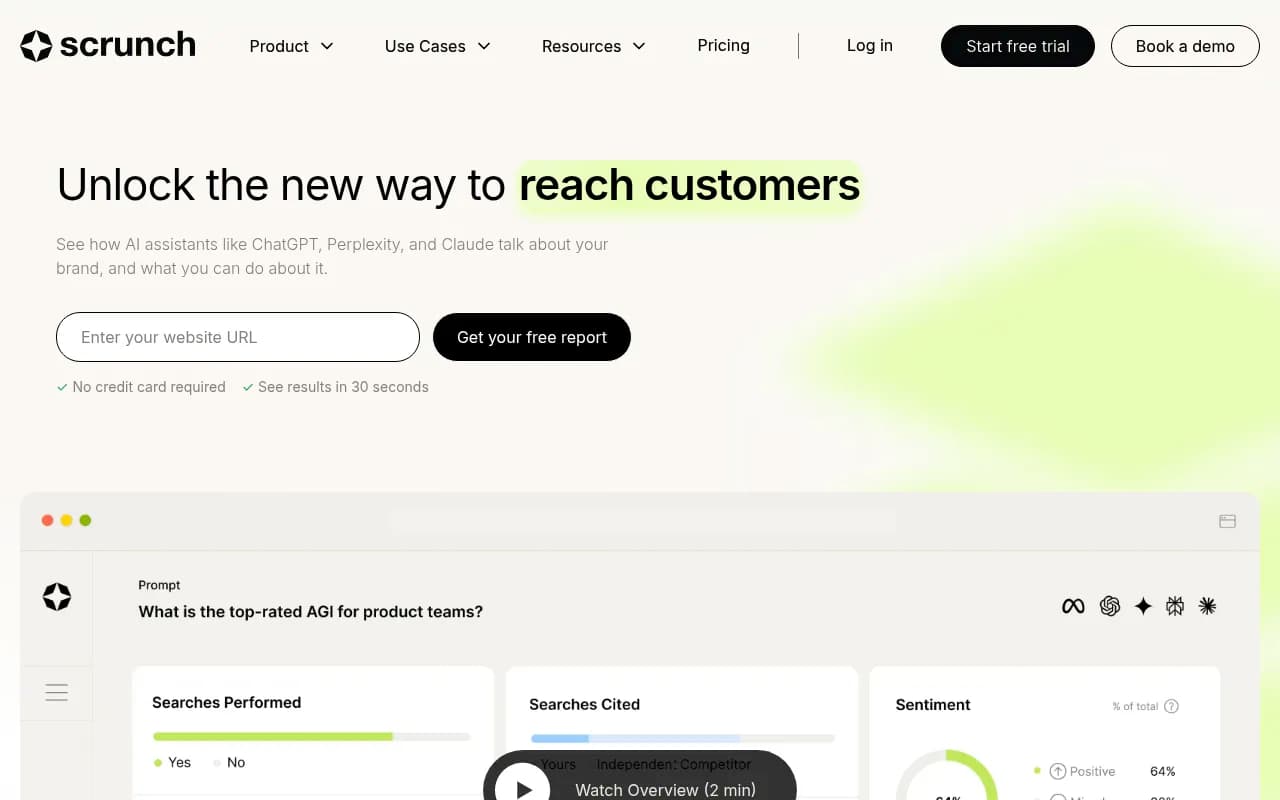
Pricing is mostly sales-led, so budget time for demos.
Bluefish AI
Bluefish is positioned as an enterprise GEO platform for large brand programs. Expect a sales process and an enterprise contract, similar in shape to Brandlight but without the same partner-delivery emphasis. Verify agency workspace features in the demo.
Evertune
Evertune sells to Fortune 500 brands and leans on measurement of how AI models perceive a brand. It is a reasonable pick when a client's CMO wants statistical rigor in the board deck. Check how much of it is actionable for your delivery team.
BrightEdge and Conductor
If your enterprise clients already run BrightEdge or Conductor for SEO, adding AI visibility inside the same suite avoids another procurement cycle. The trade-off is that suites tend to bolt AI tracking onto existing workflows, so check prompt-set flexibility, crawler data and citation depth.
Peec AI
Peec AI is the mid-market favorite. Brand plans run Starter $95/mo, Pro $245/mo and Advanced $495/mo, with Enterprise custom, and daily tracking on every plan. Agency tiers are credit-based, with Essential at $245/mo for 10,000 credits. The scraped agency pricing page was garbled, so confirm the middle tiers directly. Note that Brandlight's guide quotes Peec at $205 with unlimited seats, which looks stale. SSO is Enterprise-only. It is a monitoring tool, so pair it with your own content process.

LLM Pulse
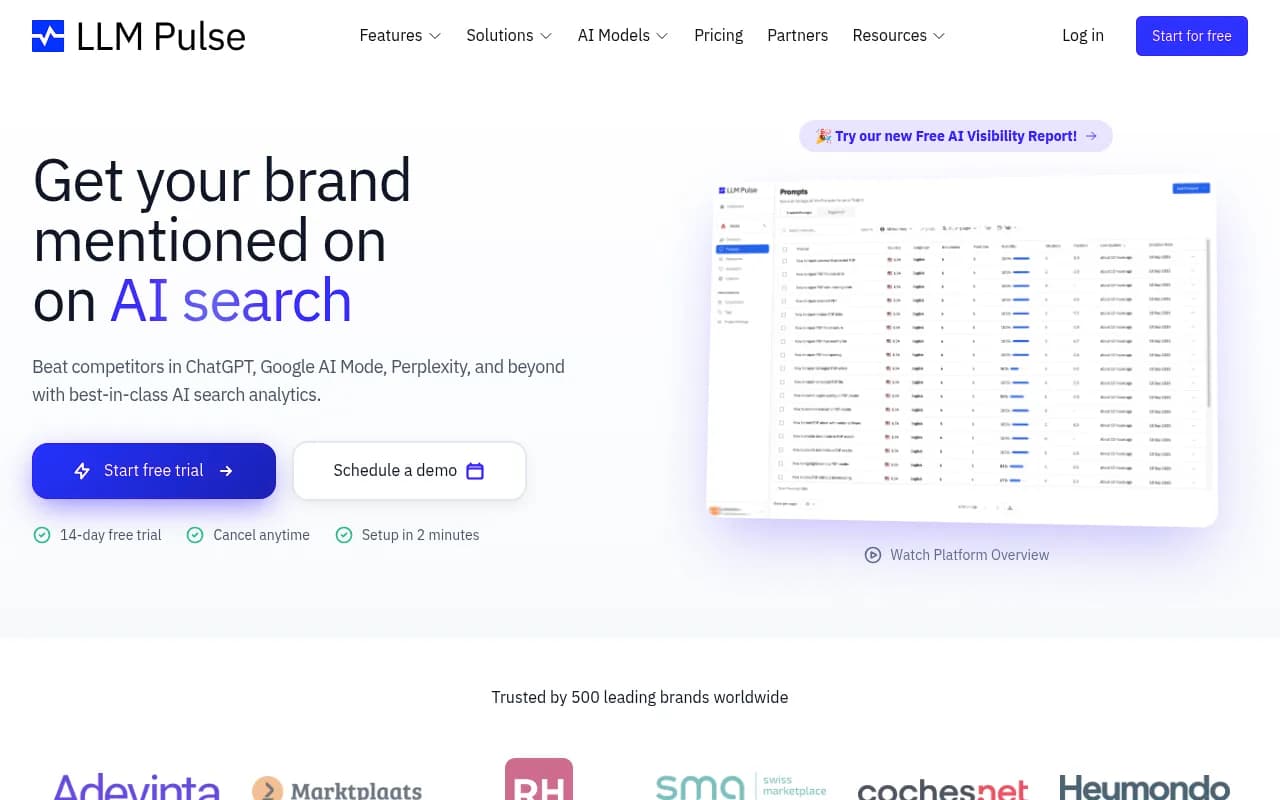
LLM Pulse sells itself on unlimited team seats, MCP, multi-project management, exports, a REST API, a Looker Studio connector and white-label or embed options for agencies. That is a good feature list on paper, and it comes from LLM Pulse's own article, so test it.
Others worth a look
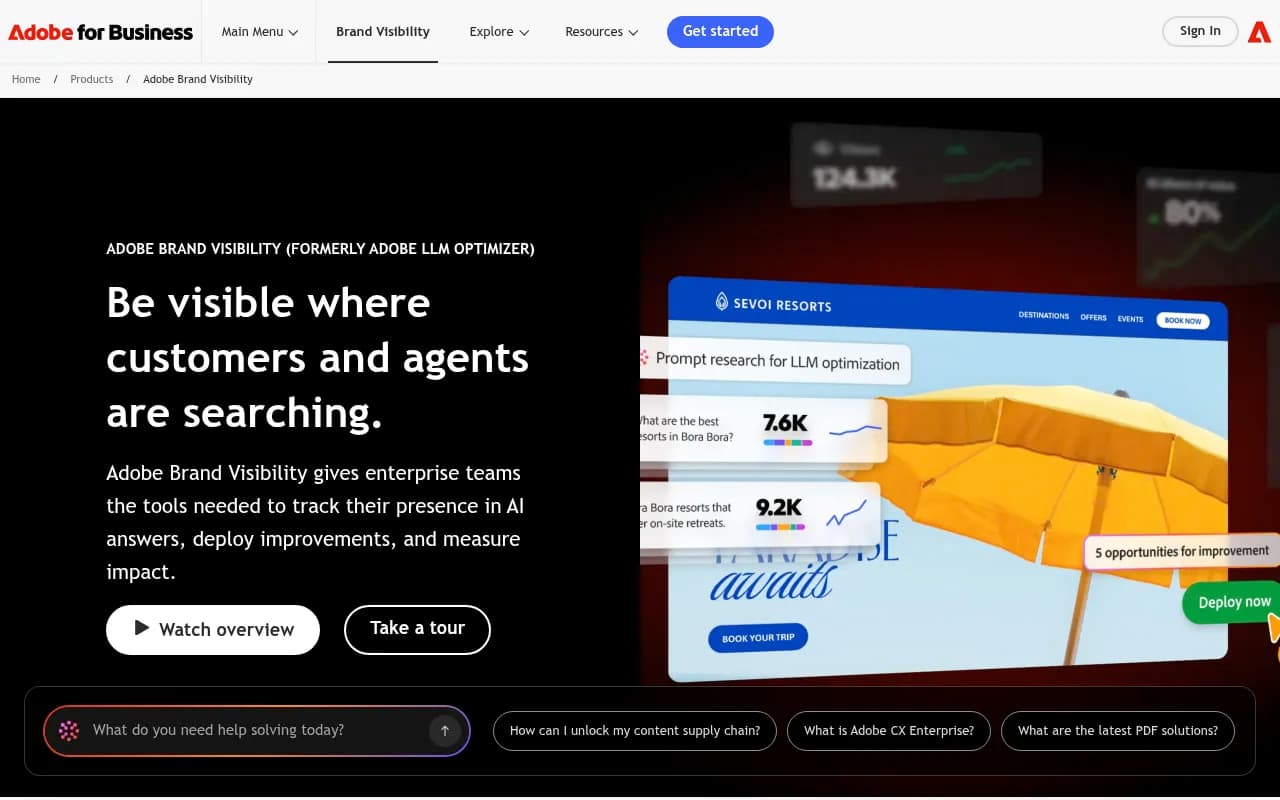
AthenaHQ, Otterly.AI, Adobe Brand Visibility and Amadora AI also show up on these lists. I did not verify their pricing or agency features, so check them yourself.

For a wider scan, the GEO software directory at bestgeosoftware.com catalogs more platforms by category.
How to choose
If your retainer is execution
Choose a platform that connects findings to publishing and then measures the result. That points to Promptwatch. If you prefer a partner team to do the work with you, Brandlight stays on the list.
If your clients are strictly Fortune 500
Shortlist Profound, Scrunch, Bluefish, Evertune and Promptwatch, then let security review and API requirements cut the list. Ask each vendor for their security documentation before the demo, not after.
If your roster is mixed
The per-client math matters most here. Compare cost for 5, 15 and 30 client workspaces on each pricing model. Seat-based, credit-based and per-workspace pricing give very different totals.
If clients already have an SEO suite
Check whether the incumbent's AI module is deep enough. If it is not, run a standalone tool beside it.
Scope reporting around how AI answers are built
Whatever tool you pick, the data shape should drive your reports. Promptwatch Data found that 47.6% of ChatGPT responses cite 10 or more unique domains (Sep 28 to Oct 4, 2026), and that share rises to 52.5% for organic prompts that name no brand. For brand-specific prompts the picture reverses: 40.7% cite five or fewer domains, so a handful of sources shapes how ChatGPT describes your client. See the unique domains per response report.
The practical consequence: report position and sentiment inside shared answers, not just whether the client is cited, and track the third-party listicles, reviews and forums that get a brand into crowded answers. Platforms also differ in how many sources they show. Promptwatch's average sources per response data puts ChatGPT near 5 sources per web-search answer and Google AI Overviews and Perplexity near 10, and Copilot's average swung from under 2 to nearly 17 within weeks, so judge it on monthly trends. This is why a weekly snapshot is a poor basis for a client report.
If you want a broader view of tracking tools, the AI rank tracking directory is a useful pointer.
A short evaluation checklist
- Ask for security documentation (ISO 27001 or SOC 2) and SSO availability by plan.
- Create two test workspaces and confirm data isolation.
- Run the same 25 prompts on two tools and compare against what you see in the live ChatGPT and AI Overviews interfaces.
- Export data through the API and into Looker Studio or Excel.
- Price 5, 15 and 30 client workspaces.
- Test the fix workflow: can you go from a gap to a published page, and then see whether that page was crawled and cited?
- Get written confirmation of any white-label claim.
Final thoughts
Brandlight is a fair choice for an enterprise program where a partner team delivers alongside you. If you would rather run delivery yourself, the real question is whether you want a dashboard or a system that also does the work. Promptwatch is the one I would trial first for that, with Profound, Scrunch, Bluefish and Evertune as the enterprise comparison set, and Peec AI or LLM Pulse for lighter rosters. Run a two-week trial with real client prompts before you commit to any of them.
If you are also weighing whether to outsource the strategy, 1001 SEO Media, which publishes this site, runs AI search and GEO work for brands and uses Promptwatch as its visibility platform.