Key takeaways
- GEO is not a single tool purchase — it's a staged workflow: monitor first, find gaps second, create content third, then track results.
- Most tools on the market only cover stage one (monitoring). You need to know which ones go further.
- AI citation rates can vary 40-60% month to month as models retrain, so ongoing tracking matters more than a one-time audit.
- Schema markup, entity clarity, and prompt-aligned content are the three highest-leverage technical levers in 2026.
- A lean stack of 3-4 purpose-built tools will outperform a bloated suite of 10 overlapping ones.
There's a strange irony at the center of GEO right now. Ask ChatGPT, Perplexity, or Google's AI Overview to recommend the best Generative Engine Optimization tools, and they'll confidently point you toward ArcGIS and QGIS — geographic mapping software. The entire category of platforms built to help brands get cited in AI search is itself invisible to the AI engines those platforms are designed to optimize for.
That's not just a funny anecdote. It's a useful reminder that AI visibility is genuinely hard to earn, and that the tools you use to pursue it matter a lot.
This guide maps the GEO tool stack by stage. Not by vendor, not by price tier — by what you actually need to do and when. If you're trying to figure out which tools are worth your budget and attention in 2026, this is the framework to start with.
What a GEO workflow actually looks like
Before picking tools, it helps to be clear about what GEO involves. The research from FrictionAI describes it well: a complete GEO program runs as five sequential stages, each addressing a different layer of how AI engines find, evaluate, and choose to cite your content.
In practice, most teams collapse this into three phases:
- Understand your current visibility — where are you being cited, by which models, for which prompts?
- Find and fix the gaps — what are competitors being cited for that you're not? What content is missing?
- Create and track — publish content engineered to fill those gaps, then watch whether AI models pick it up.
The problem is that most tools on the market only cover phase one. They show you a dashboard of citations and sentiment scores, then leave you to figure out the rest. That's useful, but it's not optimization — it's monitoring.
The tools worth investing in are the ones that help you move through all three phases.
Stage 1: Monitoring your AI visibility
You can't optimize what you can't measure. The first layer of any GEO stack is a tool that tracks how often your brand appears in AI-generated responses, which models are citing you, and what sentiment those citations carry.
This category has gotten crowded fast. There are now dozens of monitoring tools, ranging from lightweight trackers to enterprise-grade intelligence platforms. Here's how the main options break down:
Lightweight monitoring tools
These are good entry points if you're just getting started or working with a small budget. They track brand mentions across a handful of AI models and give you a basic visibility score.


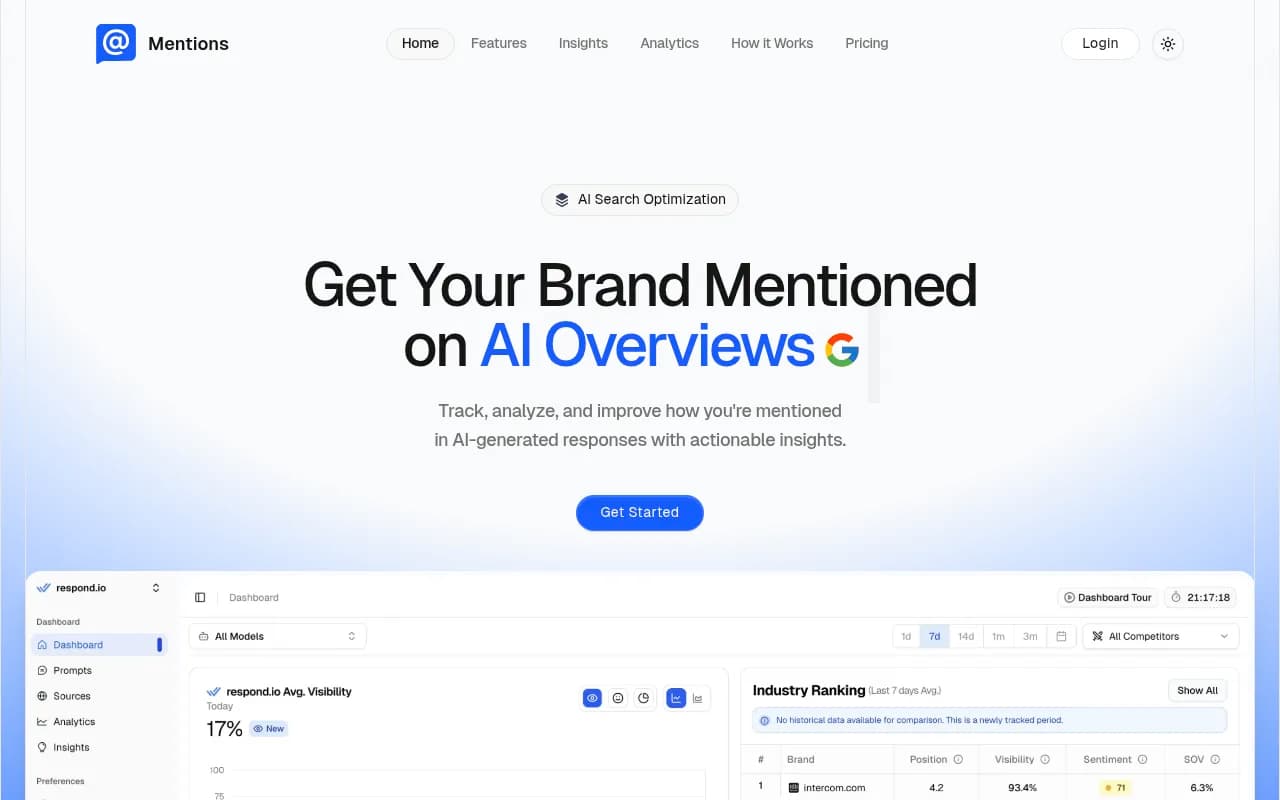
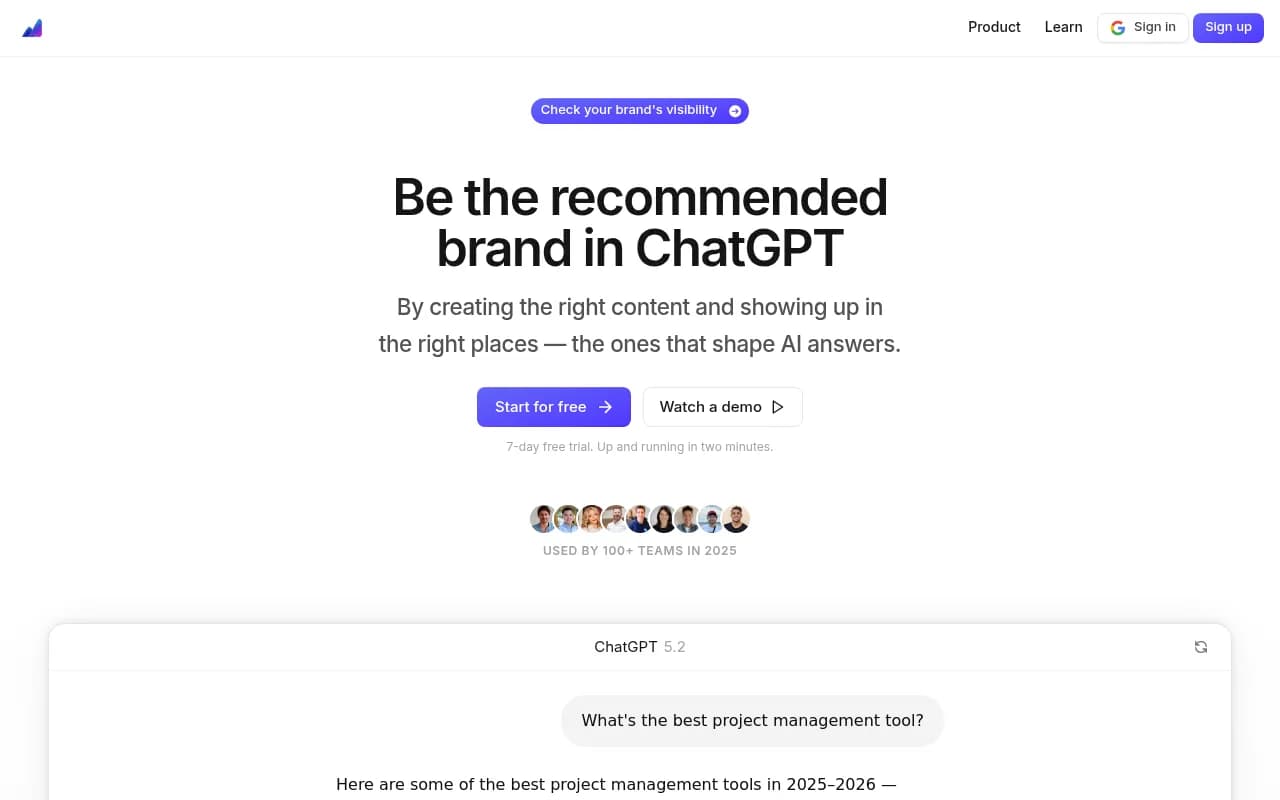
Otterly.AI and Peec AI are the most commonly recommended starting points. They're affordable, easy to set up, and give you a quick read on where you stand. The limitation is that they stop there — no content gap analysis, no crawler logs, no path to actually improving what you're tracking.
Mid-tier and specialist monitors

SE Ranking has built out a solid AI visibility layer on top of its existing SEO infrastructure, which makes it a natural fit for teams already using it for traditional search. Authoritas is worth a look if you need to track both AI search and conventional rankings in one place.
Enterprise-grade monitoring

Profound and Evertune are the names that come up most often in enterprise conversations. Both offer deep analytics, multi-model tracking, and the kind of reporting infrastructure that large marketing teams need. The tradeoff is price — these are not tools you buy to run a quick experiment.
The full-stack option
Promptwatch sits in a different category from pure monitoring tools. It tracks visibility across 10 AI models (ChatGPT, Perplexity, Google AI Overviews, Claude, Gemini, Grok, DeepSeek, Mistral, Meta AI, and Copilot), but the monitoring is built to feed directly into the optimization workflow rather than being an end in itself. More on that in stages 2 and 3.

Stage 2: Finding the gaps
This is where most monitoring tools drop off, and where the real optimization work begins.
Gap analysis in GEO means identifying the specific prompts and questions where your competitors are getting cited but you aren't. It's not enough to know your visibility score is 34% — you need to know which prompts are driving that gap and what content you'd need to create to close it.
Prompt intelligence
Understanding which prompts matter is its own discipline. Not all prompts are equally valuable — some have high query volume, some are highly competitive, some are "winnable" with the right content. Tools that give you volume estimates and difficulty scores for individual prompts are genuinely useful here.
Promptwatch's Prompt Intelligence feature does this: it shows volume estimates and difficulty scores per prompt, plus query fan-outs that map how one prompt branches into sub-queries. That kind of data lets you prioritize instead of guessing.
Competitor heatmaps and citation analysis
You also need to understand where AI models are pulling their citations from. Which pages on your site are being cited? Which Reddit threads, YouTube videos, or third-party listicles are driving visibility for your competitors?

This is an underrated part of GEO. If a competitor is getting cited because they have a strong presence in a particular Reddit community or because a popular YouTube video mentions them favorably, that's actionable intelligence. Most monitoring tools don't surface this.
Content gap analysis
Once you know which prompts you're missing, the next step is mapping your existing content against those gaps. What topics are you not covering? What angles are competitors taking that you haven't addressed?
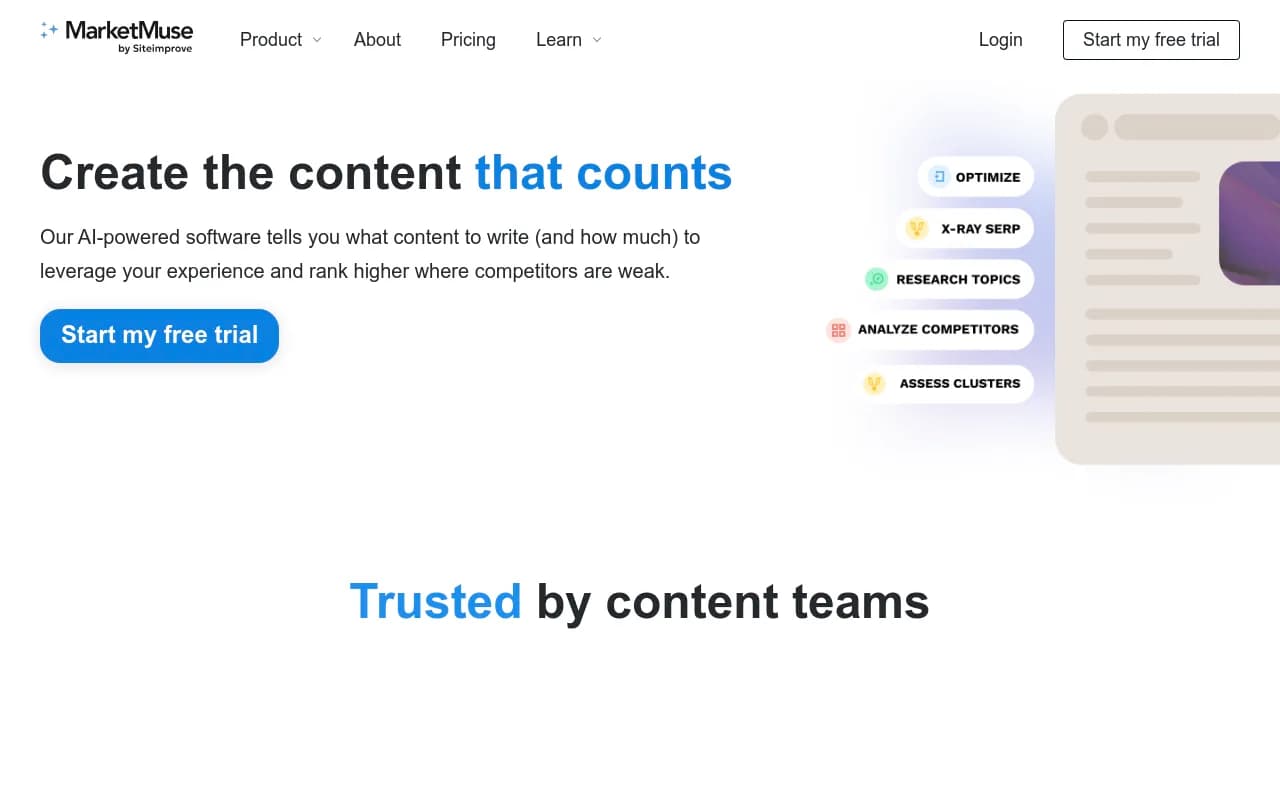
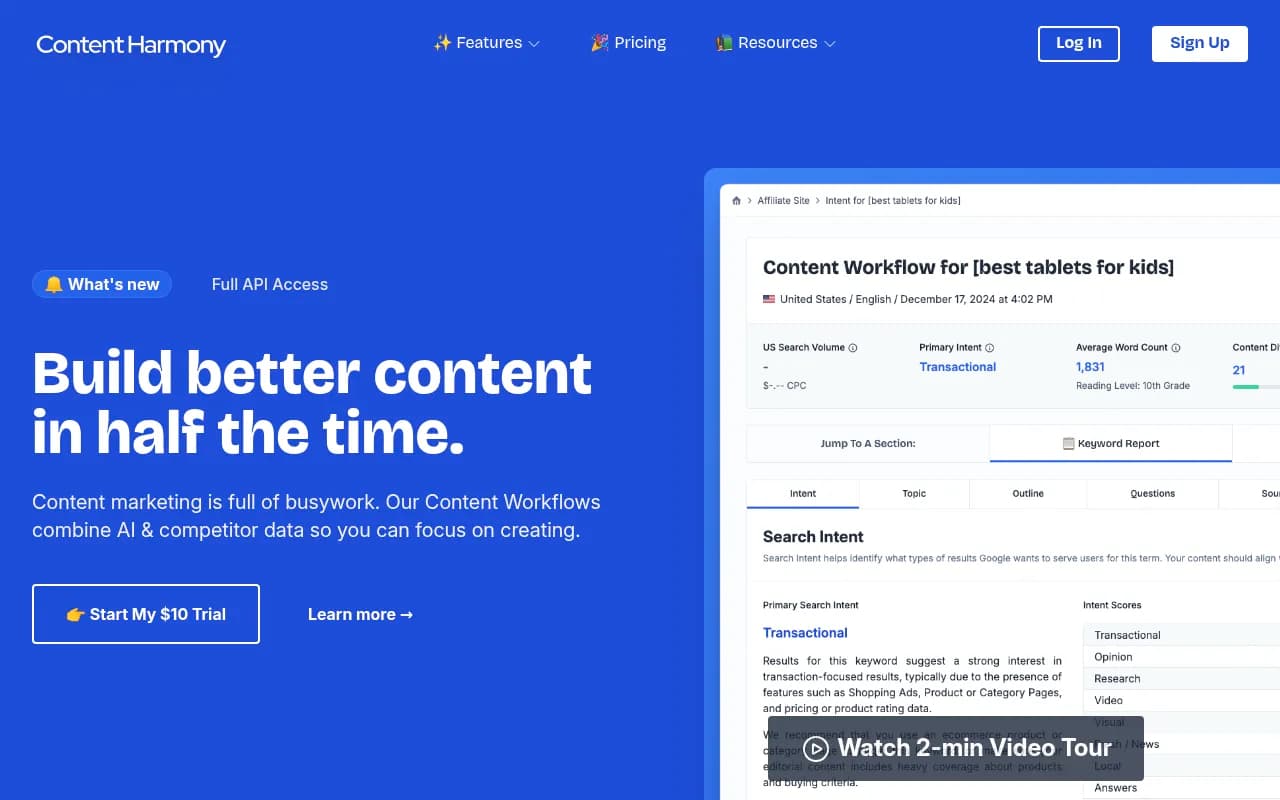
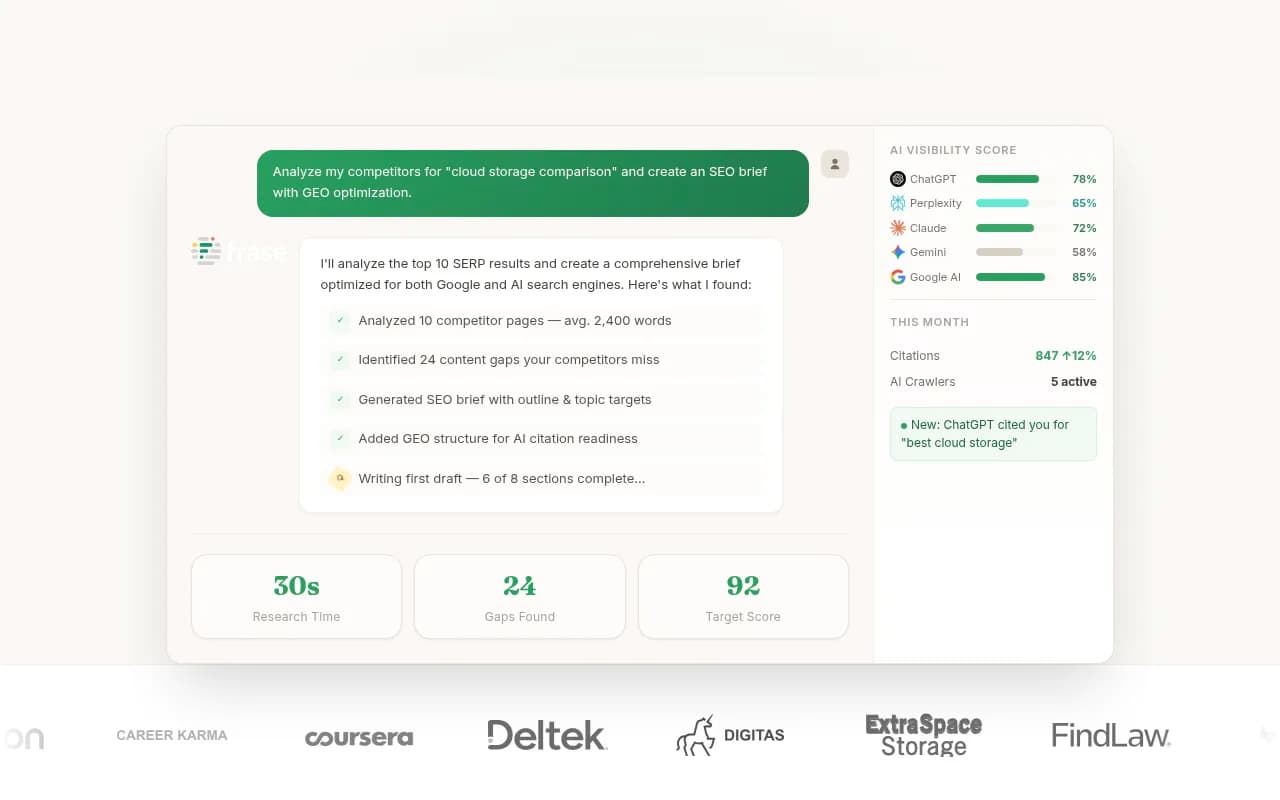
MarketMuse and Content Harmony are both strong here for traditional content gap analysis. They're not GEO-native tools, but the underlying logic — map your content against what's needed, find the holes — transfers directly.
Stage 3: Creating content that AI models will cite
This is the stage most GEO guides skip over, which is strange because it's the most important one. Monitoring tells you where you stand. Gap analysis tells you what's missing. But neither does anything unless you actually create content that fills those gaps.
The key insight from the research is that AI models don't cite content randomly. They cite content that clearly and authoritatively answers specific questions. That means GEO content isn't just SEO content with a different name — it needs to be structured around the exact prompts and questions AI users are asking.
Schema and technical foundations
Before you create new content, your technical foundation needs to be solid. Schema markup is consistently cited as the highest-leverage technical action for 2026. LLMs rely on structured data even more than traditional search engines do, and most sites are still underimplementing it.

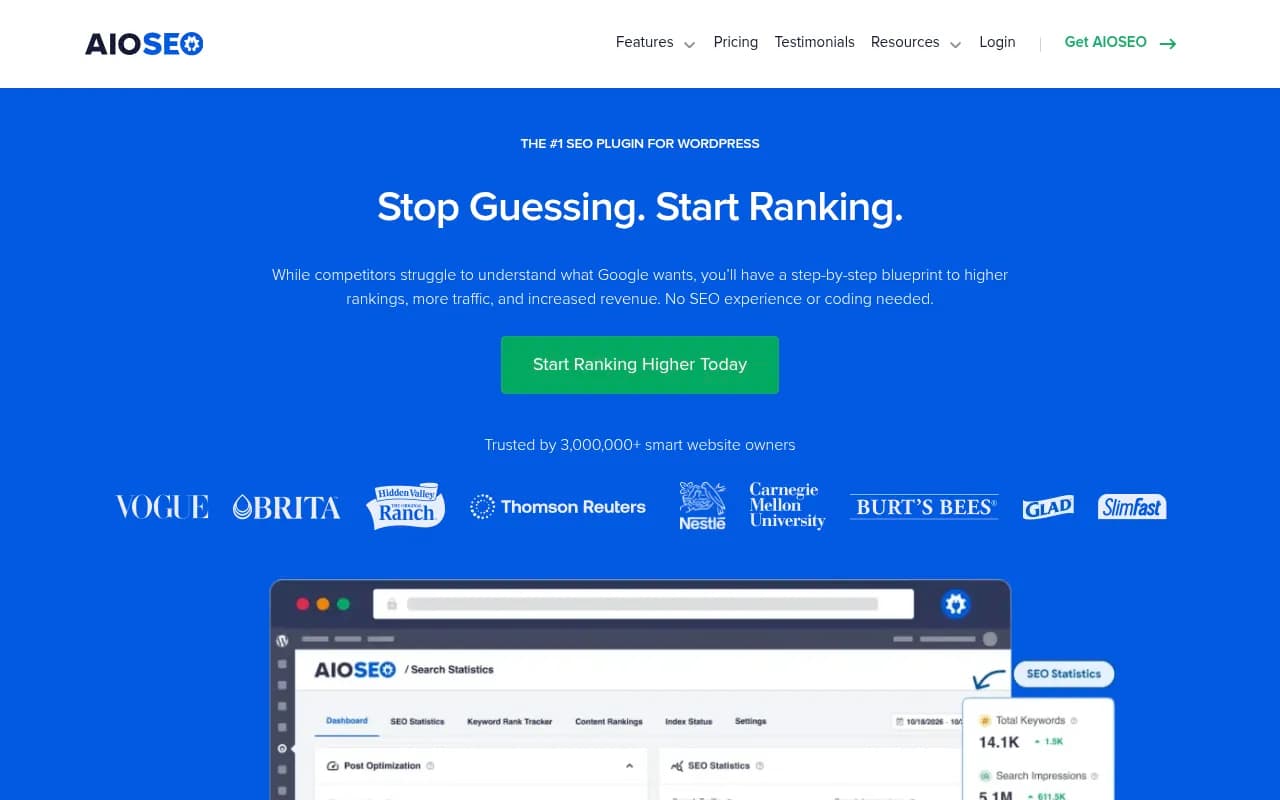
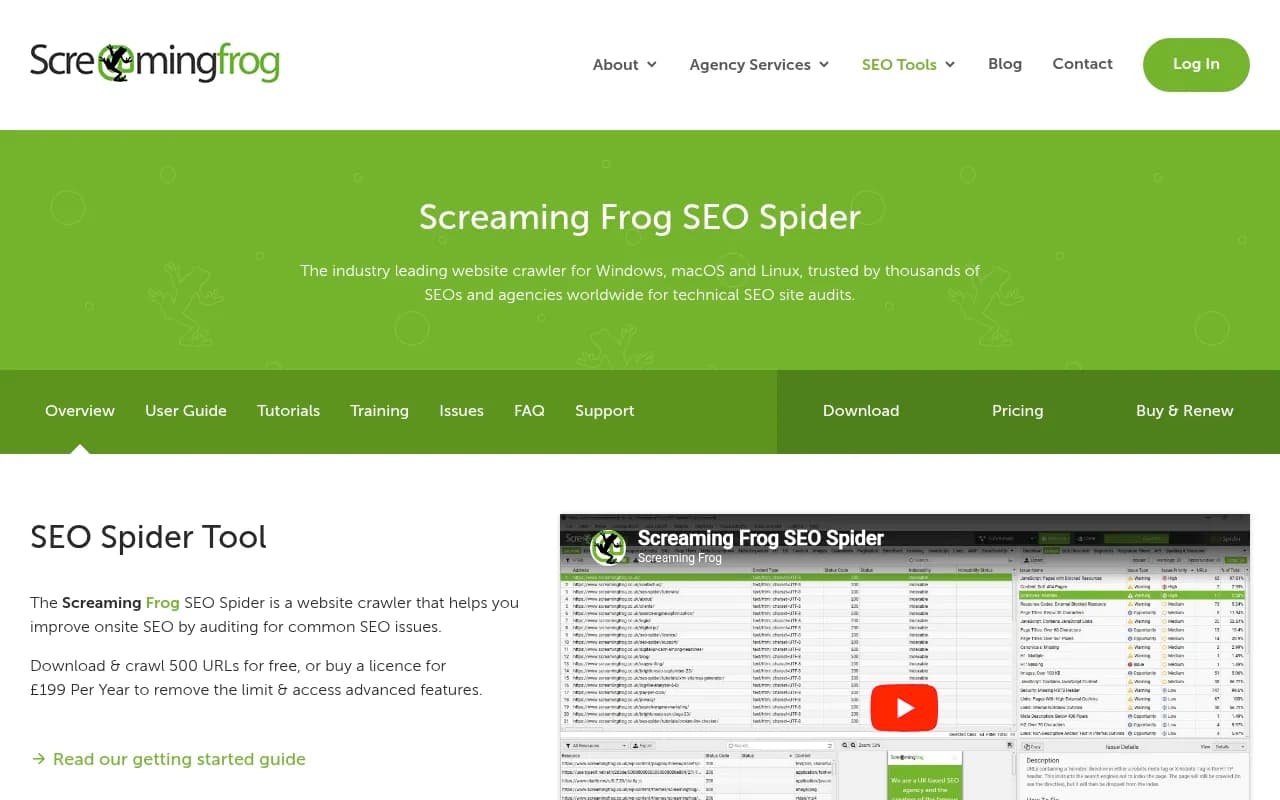
Yoast and AIOSEO handle schema implementation well for WordPress sites. Screaming Frog is the standard tool for auditing what's already there and finding gaps.
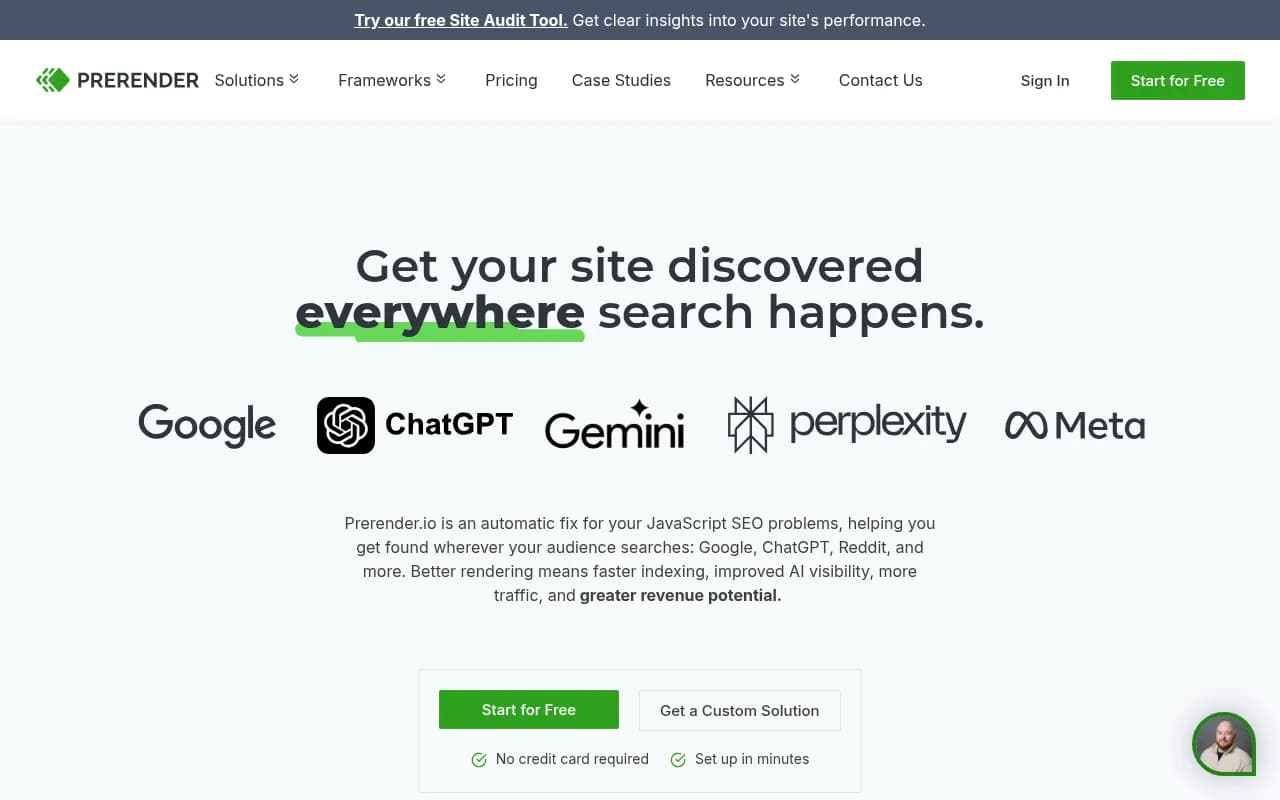
Prerender.io is worth mentioning specifically for JavaScript-heavy sites. If AI crawlers can't render your pages properly, your content doesn't exist as far as they're concerned.
AI-native content generation
The distinction between generic AI content and GEO-optimized content matters. Generic AI writing tools produce content that sounds fine but isn't grounded in prompt data, citation patterns, or competitor analysis. GEO-optimized content is engineered around the specific gaps AI models are exposing.
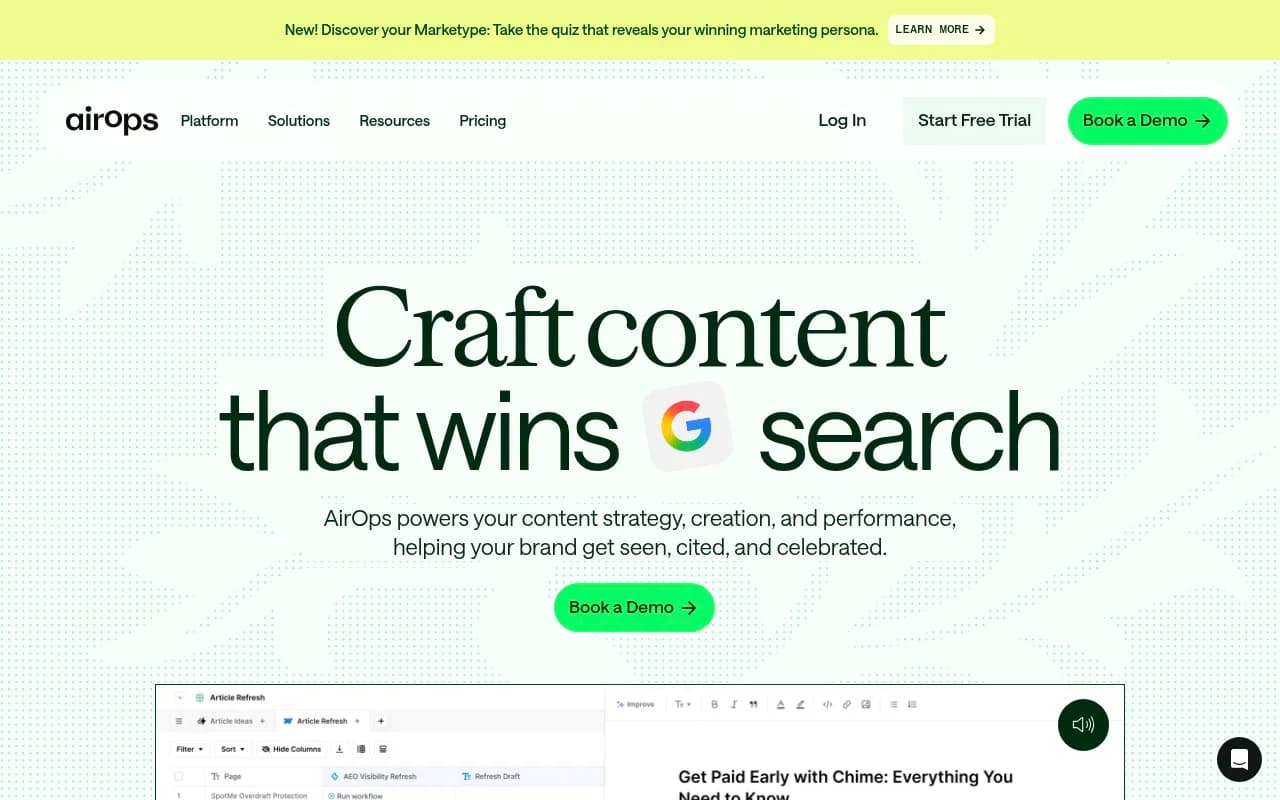
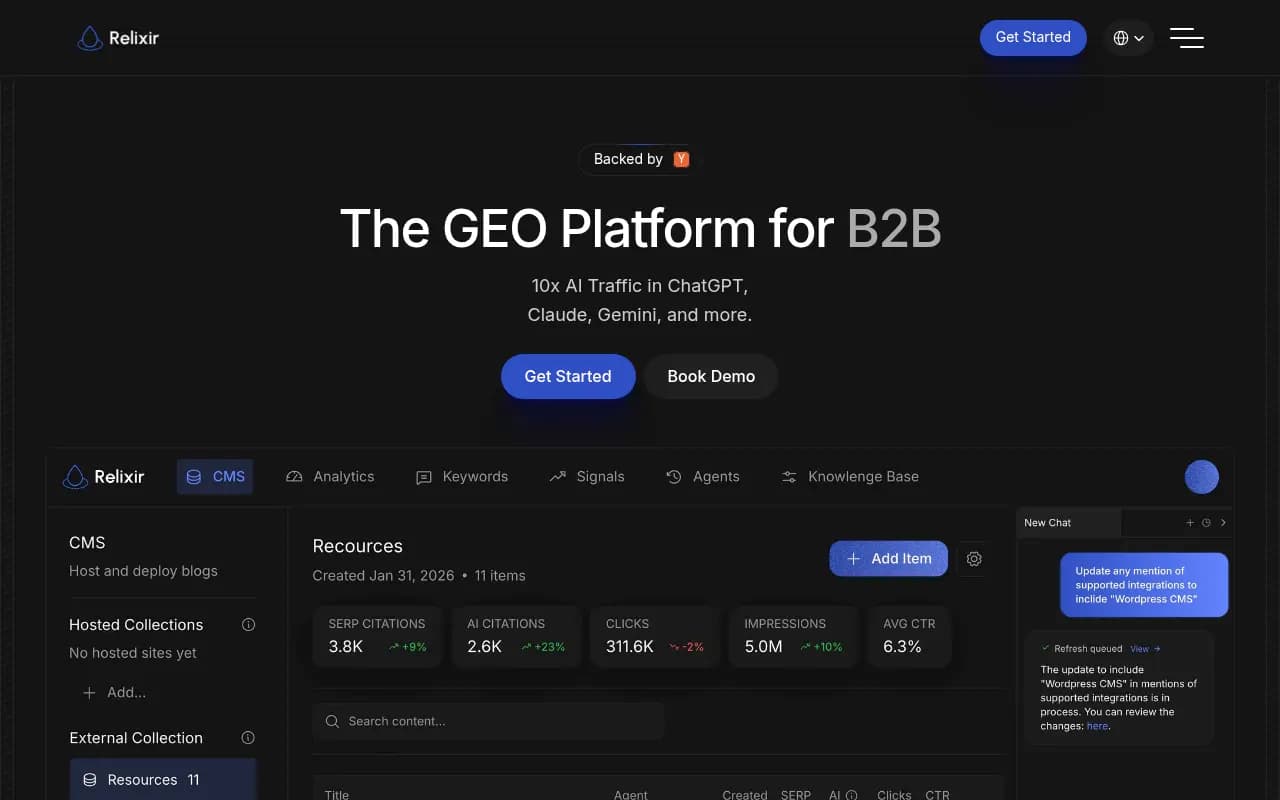
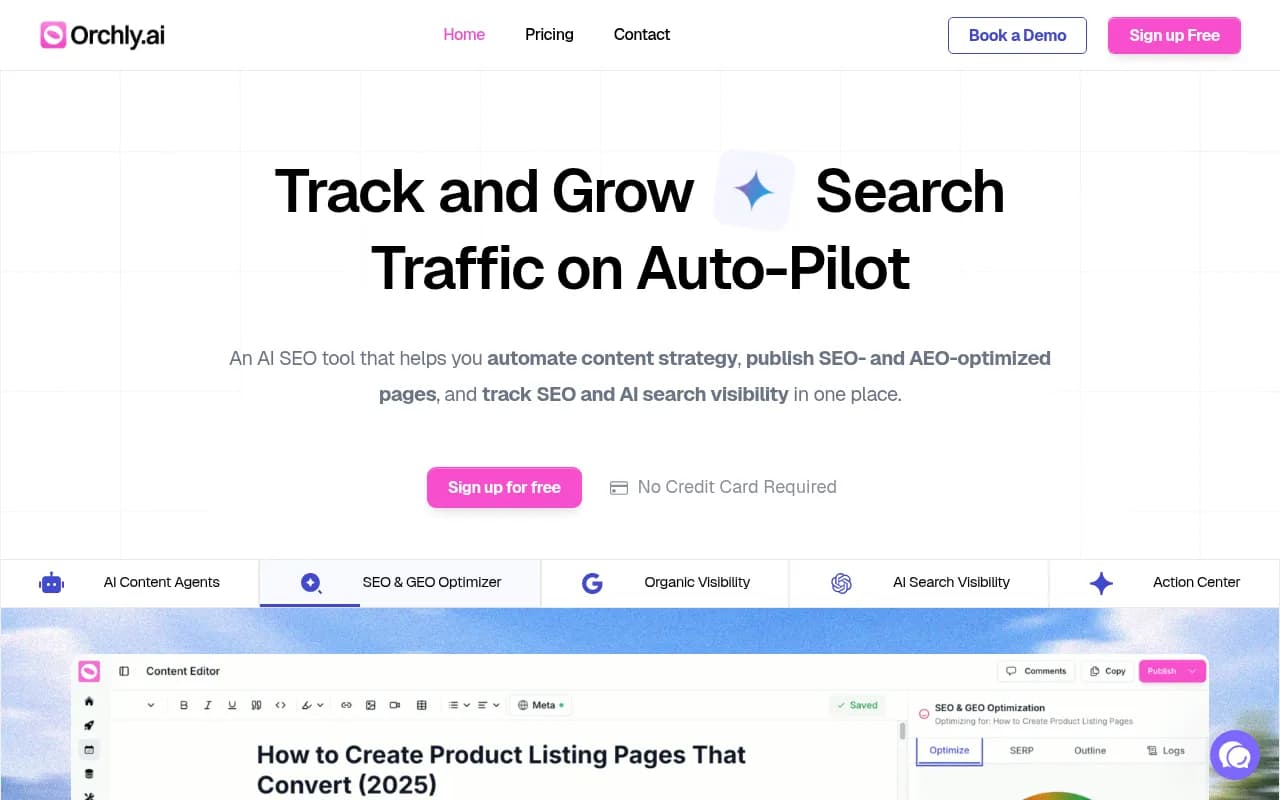
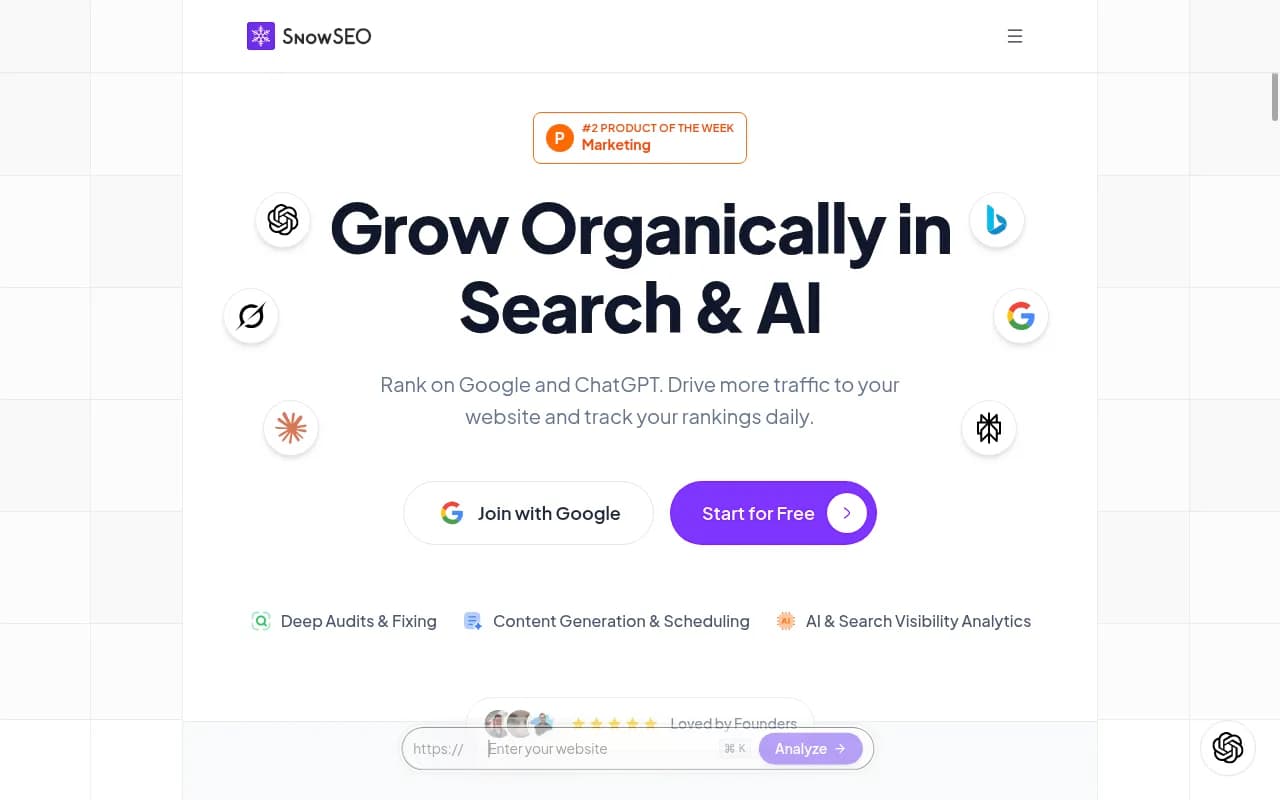
AirOps has built a strong reputation for AI workflow automation that can be configured for GEO content production. Relixir positions itself as an all-in-one GEO platform with content generation built in.
Promptwatch's Content Agents generate articles, listicles, comparisons, and briefs grounded in real prompt data, citation patterns, prompt volumes, and competitor analysis. The output is tied directly to the gap analysis from stage 2, which is what makes it different from a general-purpose AI writer.
Content optimization tools
If you're optimizing existing content rather than creating new pieces, these tools help you identify what to change:
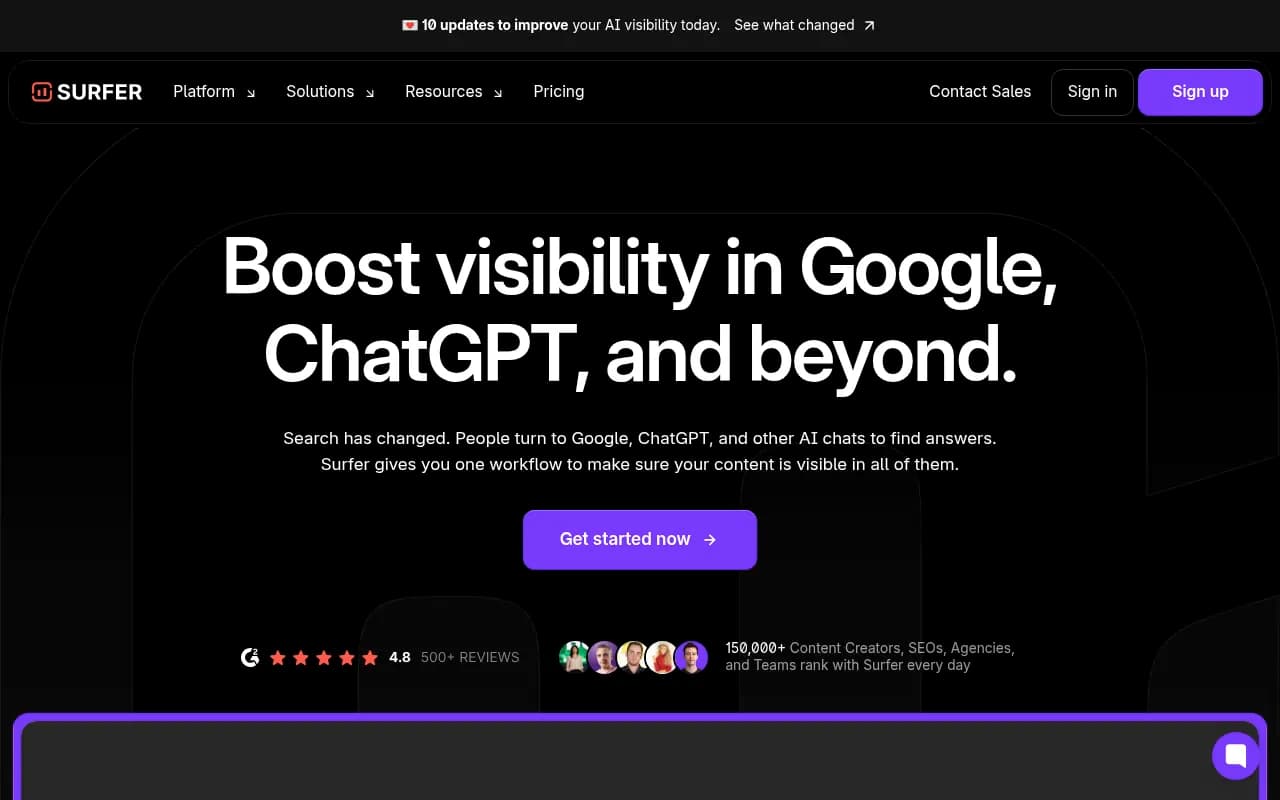

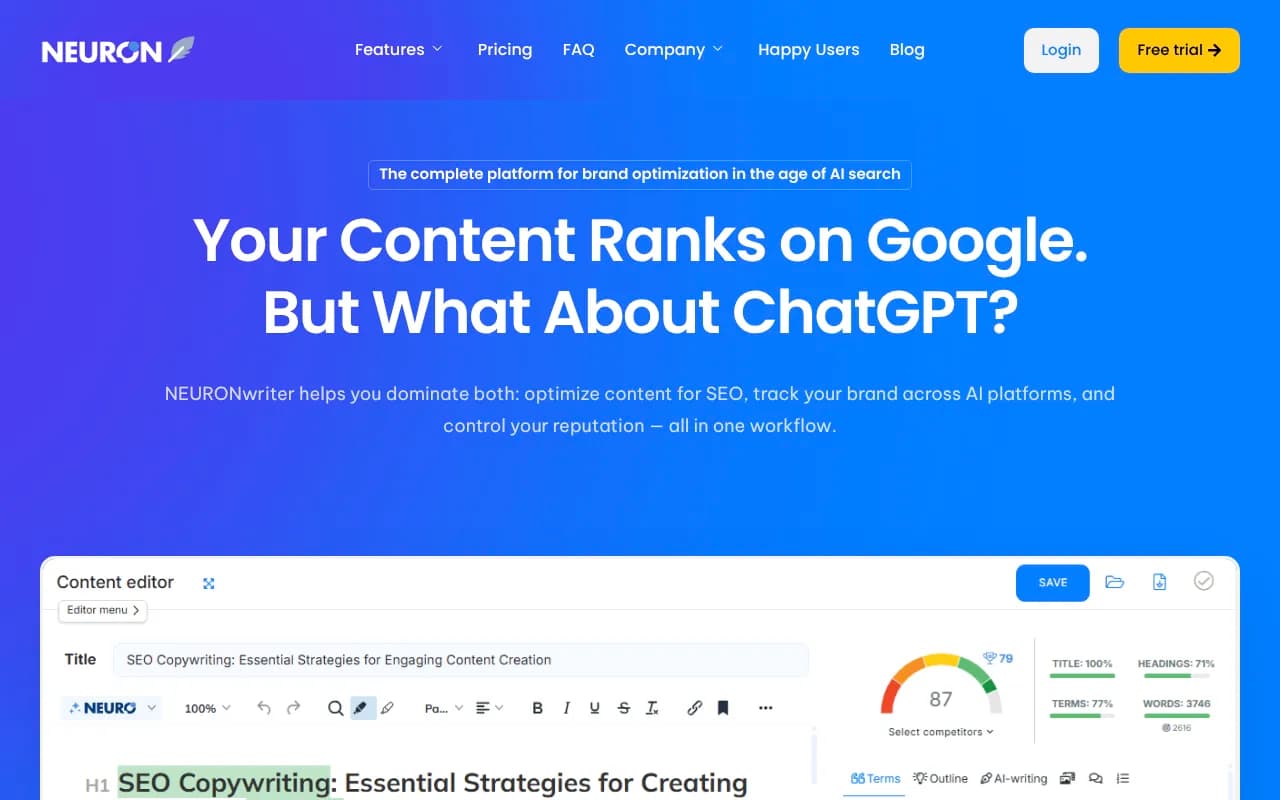
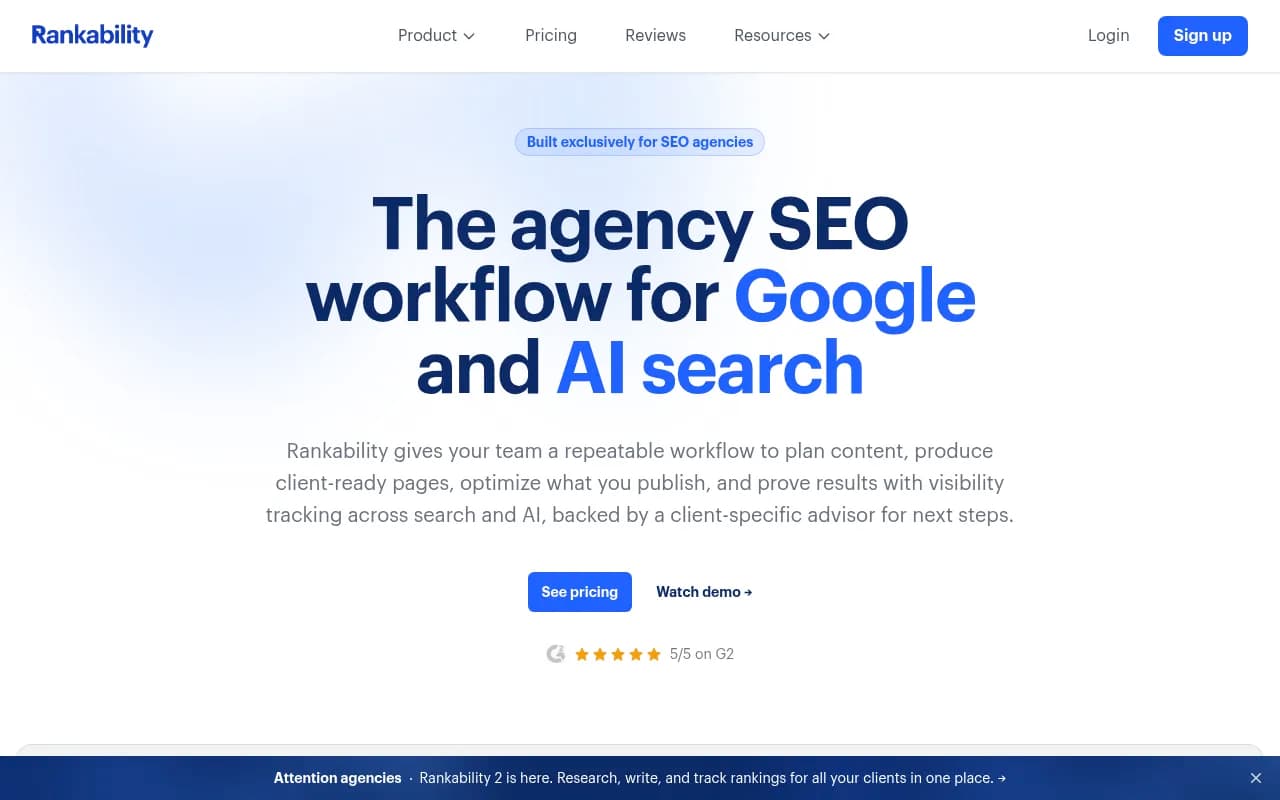
Surfer SEO and Clearscope are the most widely used for content optimization. They're primarily SEO tools, but the semantic coverage they push you toward also helps with AI citation rates. NeuronWriter has been building out more explicit GEO features.
Stage 4: Tracking results and connecting to revenue
Publishing content is not the end of the workflow. You need to know whether AI models are actually picking it up, how long that takes, and whether the visibility is translating into traffic and revenue.
Crawler log analysis
This is a capability that very few tools offer, and it's more valuable than it sounds. AI crawler logs show you which pages the AI engines are reading, how often they return, what errors they're encountering, and — critically — when a page moves from "crawled" to "cited."
Without this data, you're publishing content and hoping for the best. With it, you can diagnose why certain pages aren't getting cited and fix the issues.
Promptwatch's AI Crawler Logs feature tracks real-time activity from ChatGPT, Claude, Perplexity, and other AI crawlers hitting your site. It connects through Cloudflare, Fastly, Vercel, server logs, Google Search Console, or a tracking snippet.
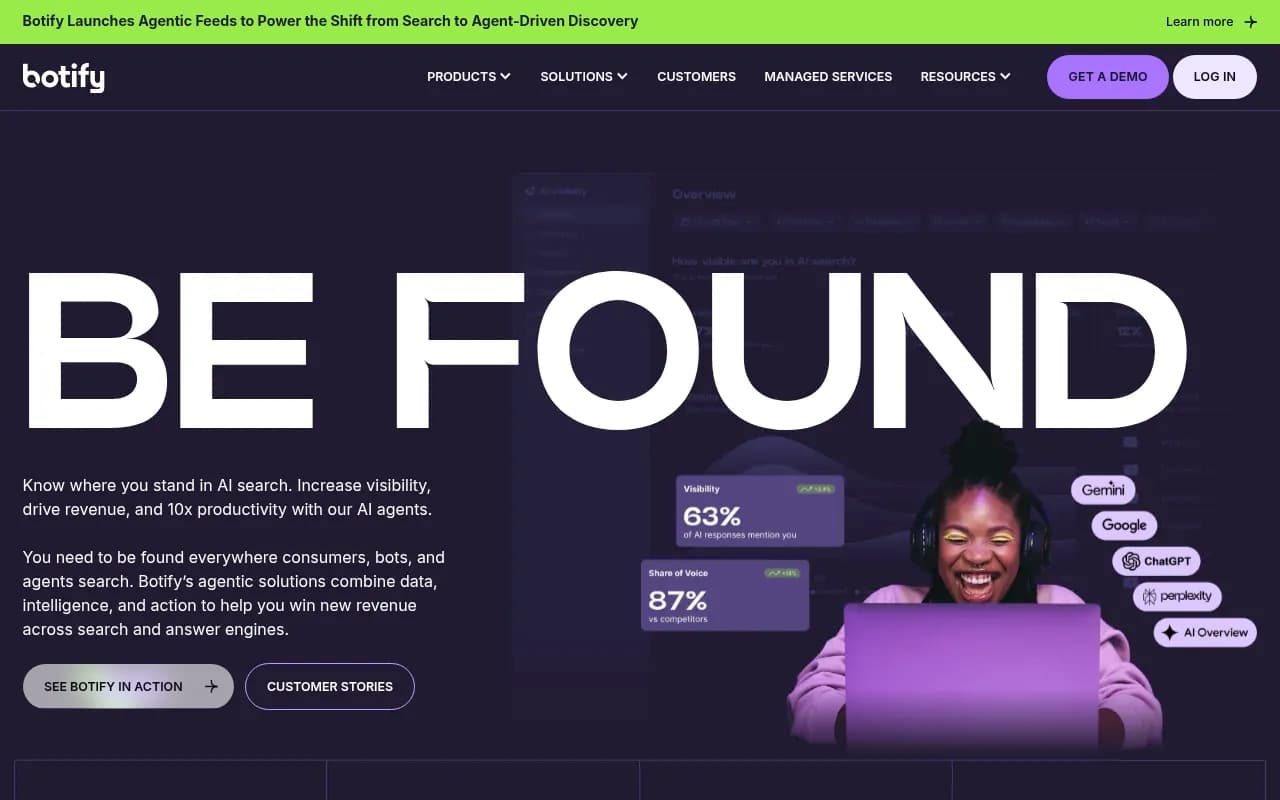
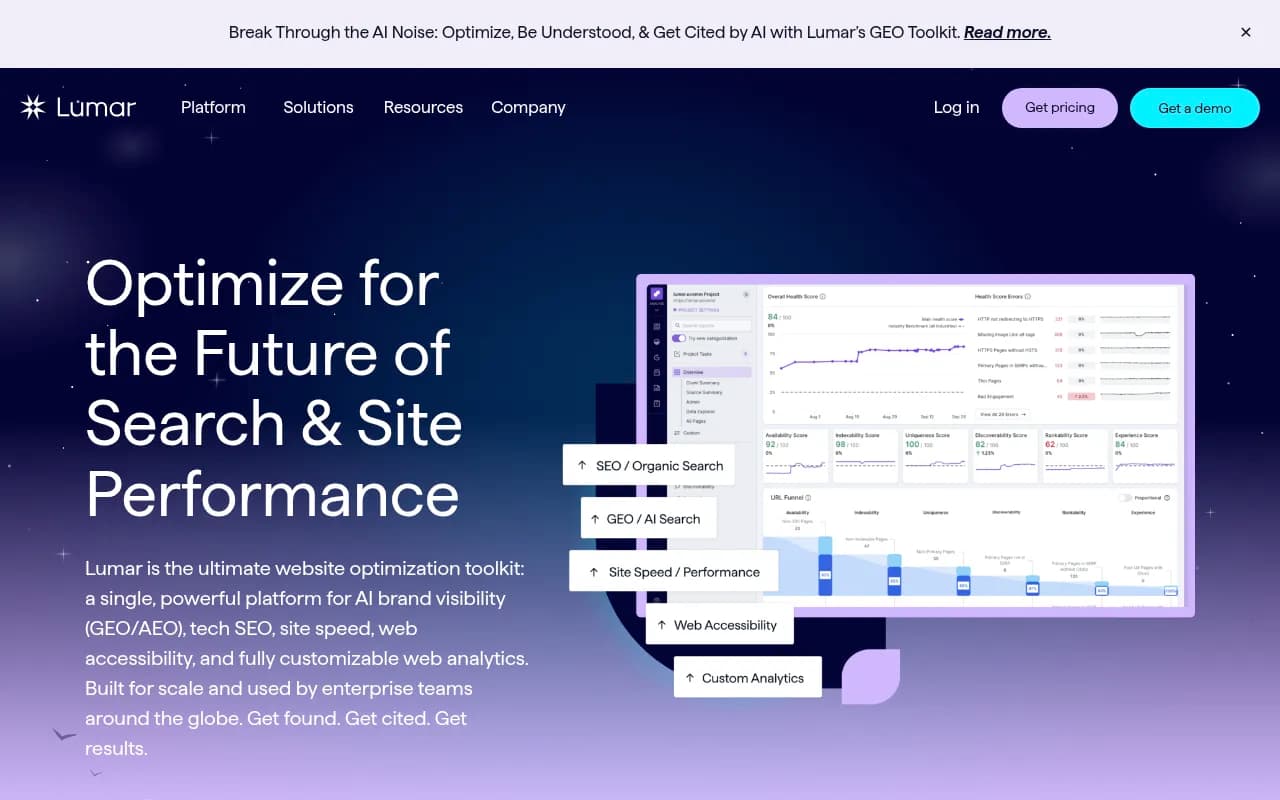
Botify and Lumar are enterprise-grade crawling platforms that have added AI visibility layers. They're overkill for most teams but genuinely powerful for large sites with complex technical architectures.
Traffic attribution
The hardest problem in GEO right now is connecting AI visibility to actual business outcomes. When someone asks ChatGPT a question, gets your brand mentioned, and then visits your site, that session often shows up as direct traffic — invisible to standard attribution models.
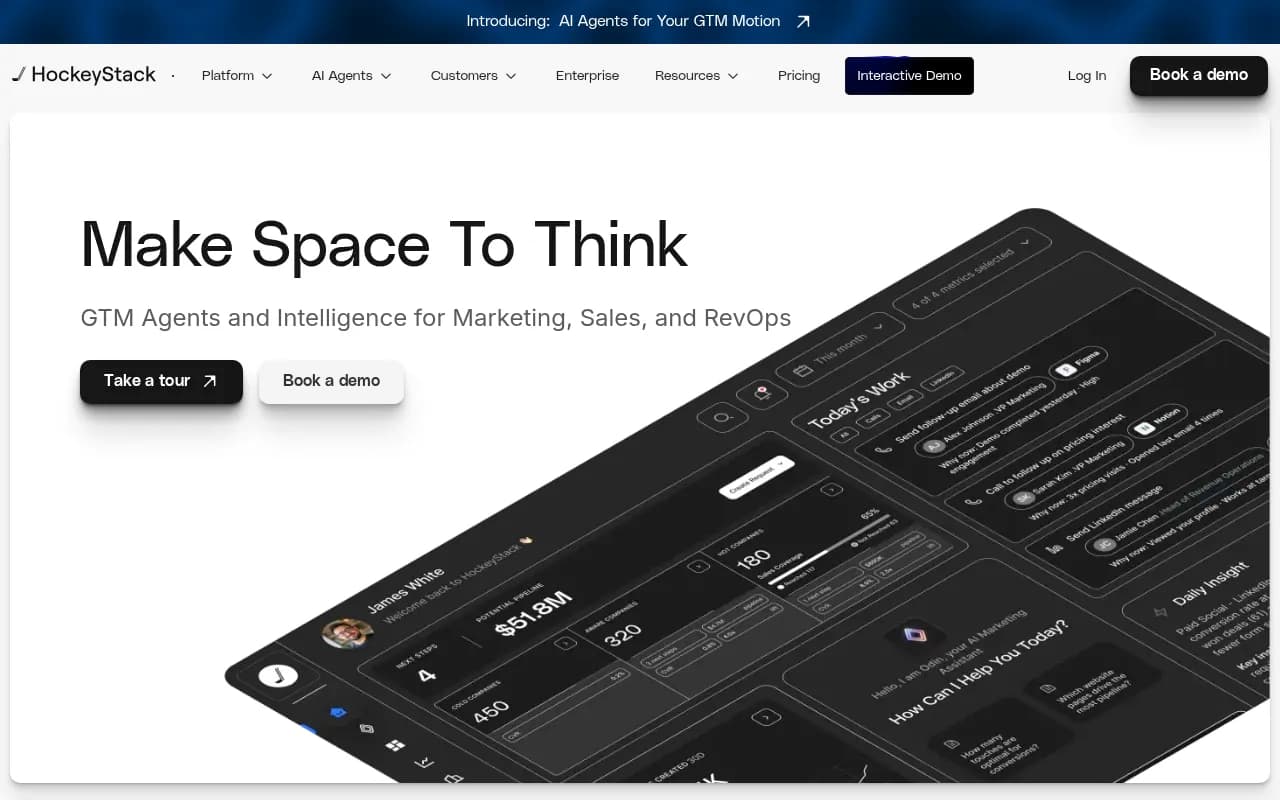
HockeyStack has been building out multi-touch attribution that can capture some of this dark traffic. It's not a perfect solution, but it's better than flying blind.
Promptwatch's traffic attribution connects visibility scores to actual revenue by tracking the path from AI citation to site visit to conversion.
Putting the stack together
Here's a practical view of how these stages map to tools, depending on your team size and budget:
| Stage | What you need | Lean stack (small team) | Full stack (agency/enterprise) |
|---|---|---|---|
| 1. Monitor | AI citation tracking across models | Otterly.AI or Peec AI | Promptwatch or Profound AI |
| 2. Find gaps | Prompt intelligence + competitor analysis | Promptwatch (Essential) | Promptwatch + MarketMuse |
| 3. Create content | GEO-optimized content generation | Promptwatch Content Agents | Promptwatch + Surfer SEO |
| 4. Technical | Schema, crawlability, rendering | Yoast/AIOSEO + Screaming Frog | Botify or Lumar |
| 5. Track results | Crawler logs + traffic attribution | Promptwatch (Professional+) | Promptwatch + HockeyStack |
The honest answer is that most small-to-mid-sized teams don't need a 10-tool stack. They need one platform that covers stages 1-3 and 5, plus a technical SEO tool for stage 4. The rest is noise.
The tools that only monitor vs. the tools that help you act
It's worth being direct about the distinction that matters most when evaluating GEO tools in 2026.
A monitoring-only tool shows you a dashboard. It tells you your visibility score is 34% and that competitor X is at 61%. That's useful context, but it doesn't tell you what to do next. You still have to figure out which prompts to target, what content to create, and whether your changes are working.
A full-stack optimization platform takes you from that 34% to something higher by giving you the specific prompts to target, the content to create, and the crawler data to confirm it's working.
Most tools in this space are monitoring tools. A smaller number — Promptwatch, Relixir, AirOps, SearchAtlas — are trying to build the full loop.

The category is moving fast. Tools that were monitoring-only six months ago are adding content features. Tools that started as content generators are adding tracking. The landscape will look different again by the end of 2026.
A note on the technical foundations that matter most
Whatever tools you use, a few technical fundamentals will determine whether your GEO efforts pay off:
Schema markup is the single highest-leverage action right now. FAQ schema, HowTo schema, Article schema, and Organization schema all help AI models understand what your content is about and who you are. Most sites are still underimplementing this.
Entity clarity matters more than keywords. AI models reason about entities — brands, people, products, concepts — and their relationships. If your site doesn't clearly establish what your brand is, what it does, and how it relates to the topics you want to be cited for, no amount of content will fix that.
Crawlability for AI agents is a real issue, especially for JavaScript-heavy sites. AI crawlers don't always render JS the way browsers do. If your content lives behind a JS wall, it may not be getting read at all.
Prompt-aligned content structure means writing content that directly answers the questions AI users are asking, not just content that covers a topic broadly. The difference is specificity — a page that answers "what is the best [product category] for [specific use case]" will get cited more often than a page that generally discusses the product category.
The one thing most teams get wrong
They treat GEO as a monitoring exercise. They set up a tracking tool, watch their visibility score, and call it a strategy.
The teams getting real results are treating GEO as a content production system. They use monitoring data to identify gaps, they create content specifically designed to fill those gaps, and they track whether it's working at the page level. The monitoring is just the input — the output is content that AI models actually want to cite.
That shift in framing — from "track our visibility" to "build a system that improves our visibility" — is what separates the teams seeing results from the ones watching dashboards.
The tools exist to support that system. Pick the ones that cover the full loop, not just the first step.