
Key takeaways
- A good AI content pipeline has five stages (strategy, brief, draft, review, publish and measure), and every stage has one owner and one pass/fail check.
- Let AI do the first draft and the mechanical checks. Keep humans responsible for facts, positioning, original insight and the final publish decision.
- Quality gates only work if they are written down and can fail a piece. A gate nobody can say "no" at is a formality.
- Content decays. Promptwatch Data shows product pages, how-tos and reviews lose roughly half their ChatGPT citations in 74 to 77 days, so a refresh cadence belongs inside the pipeline, not after it.
- Start small: one content type, one reviewer, three gates. Add automation only once the manual version works.
Why a pipeline beats "just prompt it"
Most teams that adopt AI writing go through the same arc. Week one is thrilling: ten articles in a day. Week six is a pile of drafts that sound the same, repeat the same claims, and need so much editing that nobody is saving time. The problem is rarely the model. It is that there is no system around it.
A pipeline fixes that by making the work boring and predictable. Every piece goes through the same stages, the same people touch it, and the same questions get asked before anything goes live. Human review is not a bolt-on at the end. It is built into the structure, with specific people checking specific things.
I would rather ship four pieces a week that pass every gate than forty that nobody trusts. If you are also worried about search policy, keep in mind that low-value content produced at scale without oversight is exactly the pattern search engines say they target. I did not find verified current policy wording while researching this guide, so read Google's own documentation on scaled content and helpful content before you set your volume targets.
The five stages of the pipeline
Stage 1: strategy and topic selection
This is where humans should do the most thinking and AI the least typing. Decide what you are publishing and why. Good inputs include Search Console queries, sales questions, support tickets, competitor gaps and, increasingly, the prompts people ask AI assistants in your category.
AI is useful here for clustering topics and spotting gaps, but a person should approve the list. The output of this stage is a prioritized backlog where each item has a target reader, a goal (rank, get cited, convert) and a business reason.
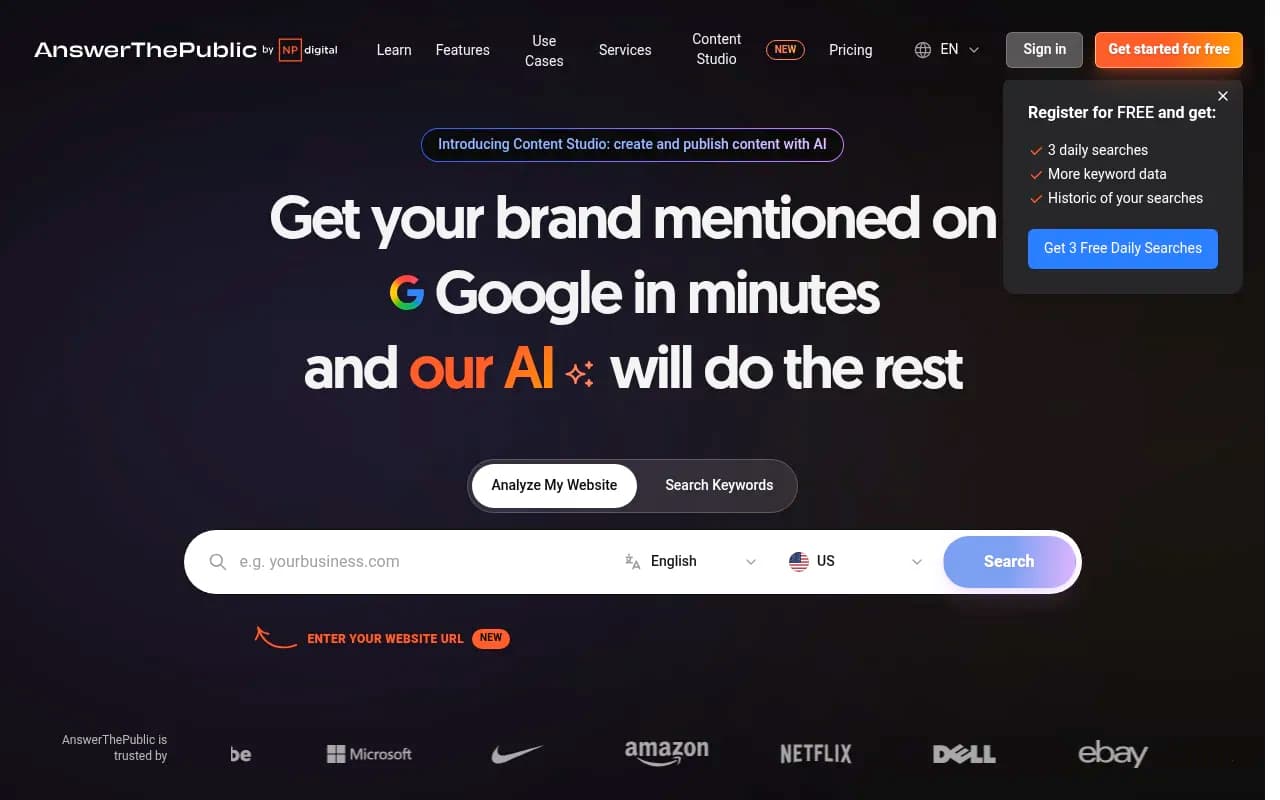
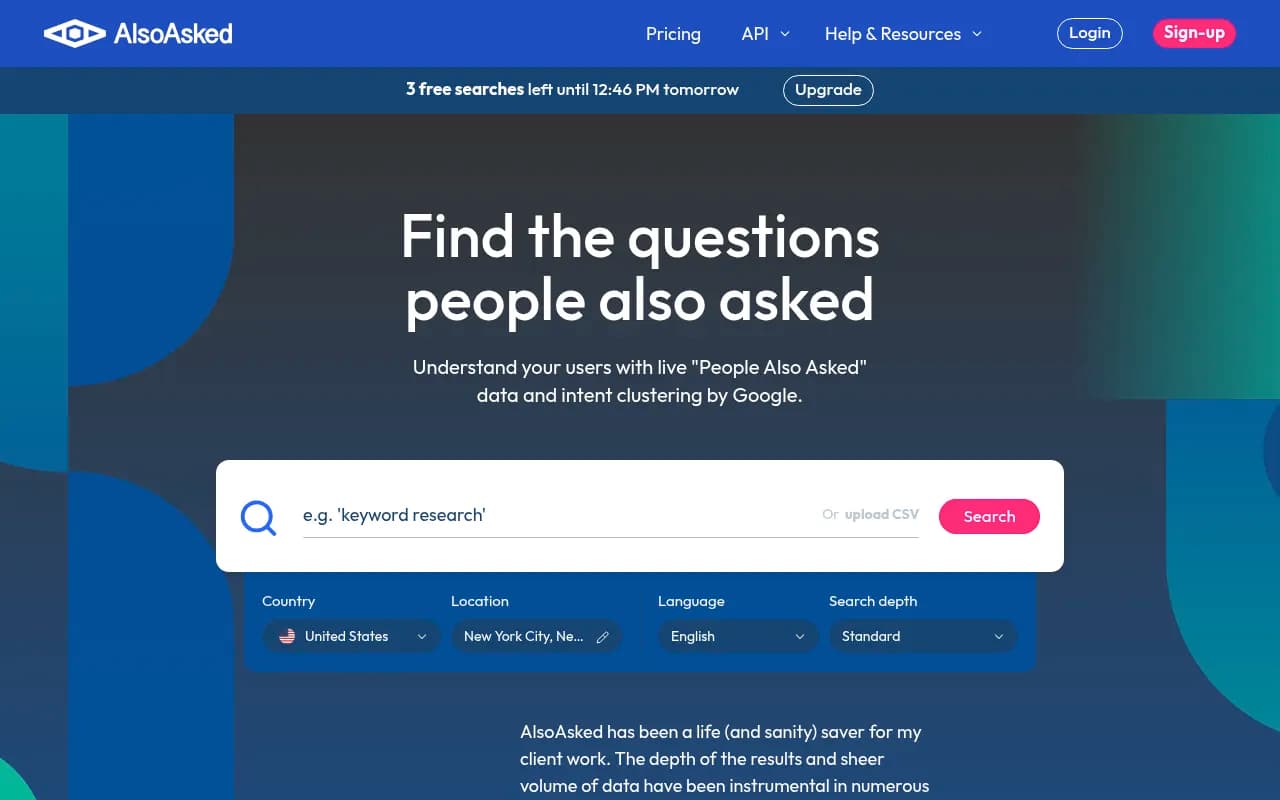
Tools that help: Google Search Console for real query data, AnswerThePublic and AlsoAsked for question research, and Topical Map AI if you want help structuring clusters.
Stage 2: the brief
The brief is the most underrated part of the pipeline. A weak brief produces a generic draft no matter how good the model is. A strong brief contains the angle, the reader, the questions to answer, the sources to use, the claims you must make, the claims you must avoid, internal links, and any original material (data, quotes, screenshots) the writer should include.
Briefs can be generated by AI and then edited by a strategist. That edit is gate one, covered below.
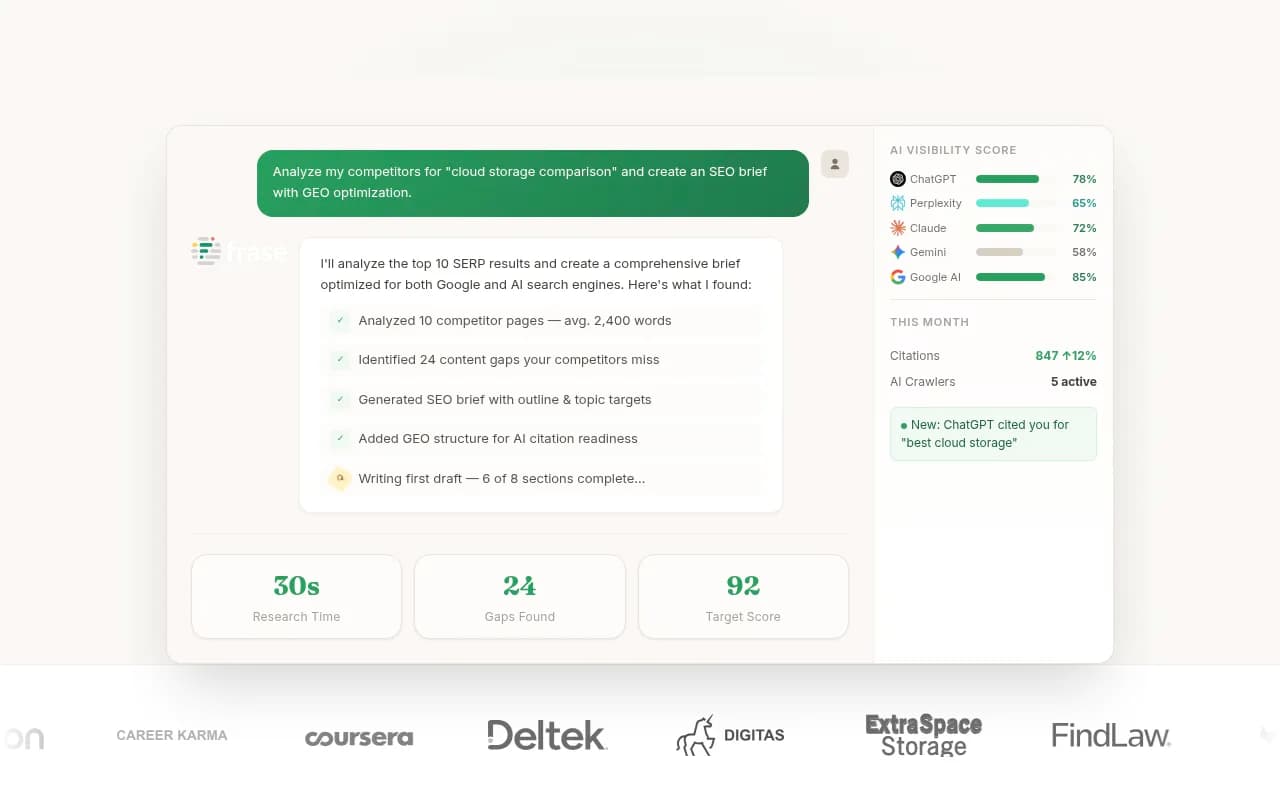
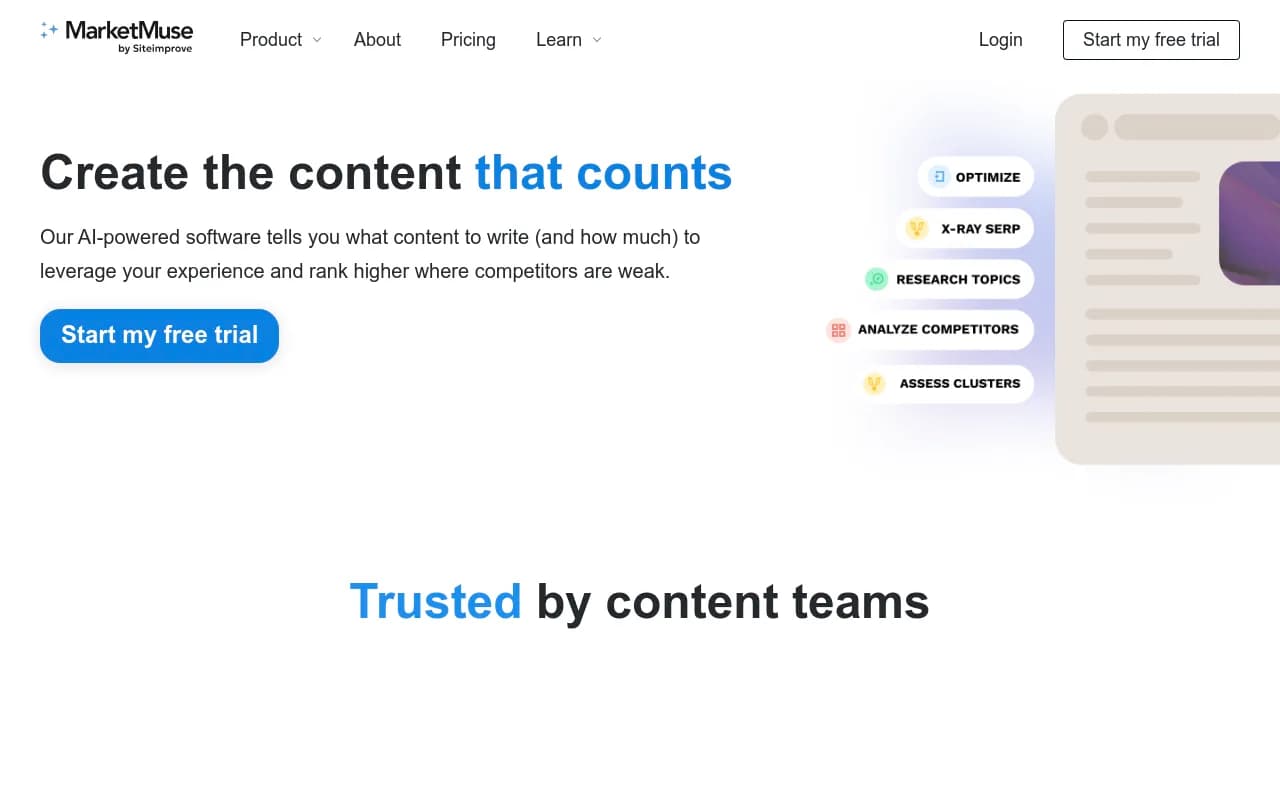
Tools that help: Frase, Clearscope, MarketMuse, Content Harmony and Dashword all produce research-backed briefs. Pick one; they overlap heavily.

Stage 3: the AI draft
Now the model writes. Give it the brief, your style guide, a few examples of your best published pieces, and a clear structure. The more of your voice and knowledge you supply, the less editing you do later.
A few habits make drafts better:
- Feed in your own facts, product details and quotes rather than asking the model to recall them.
- Ask for an outline first and approve it before the full draft.
- Tell the model what not to do: no invented statistics, no unsourced claims, no filler intros.
- Keep a living list of phrases that make your drafts sound machine-written, and ban them.
Tools that help: ChatGPT and Jasper for general drafting, Writer when you need enterprise governance and style enforcement, and Copy.ai for shorter marketing copy. If you want a pipeline that bundles research, writing and publishing, AirOps and Orchly.ai are built for that kind of workflow.


Stage 4: human review
This is the stage that separates a content operation from a content mill. It is not one pass. It is three different jobs, and they should not all fall to the same person in the same sitting.
- Fact check: every number, name, date, quote and product claim is verified against a primary source.
- Editorial pass: structure, clarity, voice, repetition, and whether the piece says anything the reader could not get from the first page of results.
- Subject-matter or brand review: does this reflect what we actually believe and sell? Is anything risky, outdated or off-brand?
Small teams can combine the second and third jobs, but I would keep fact checking as its own step because it is the one people skip when they are in a hurry.
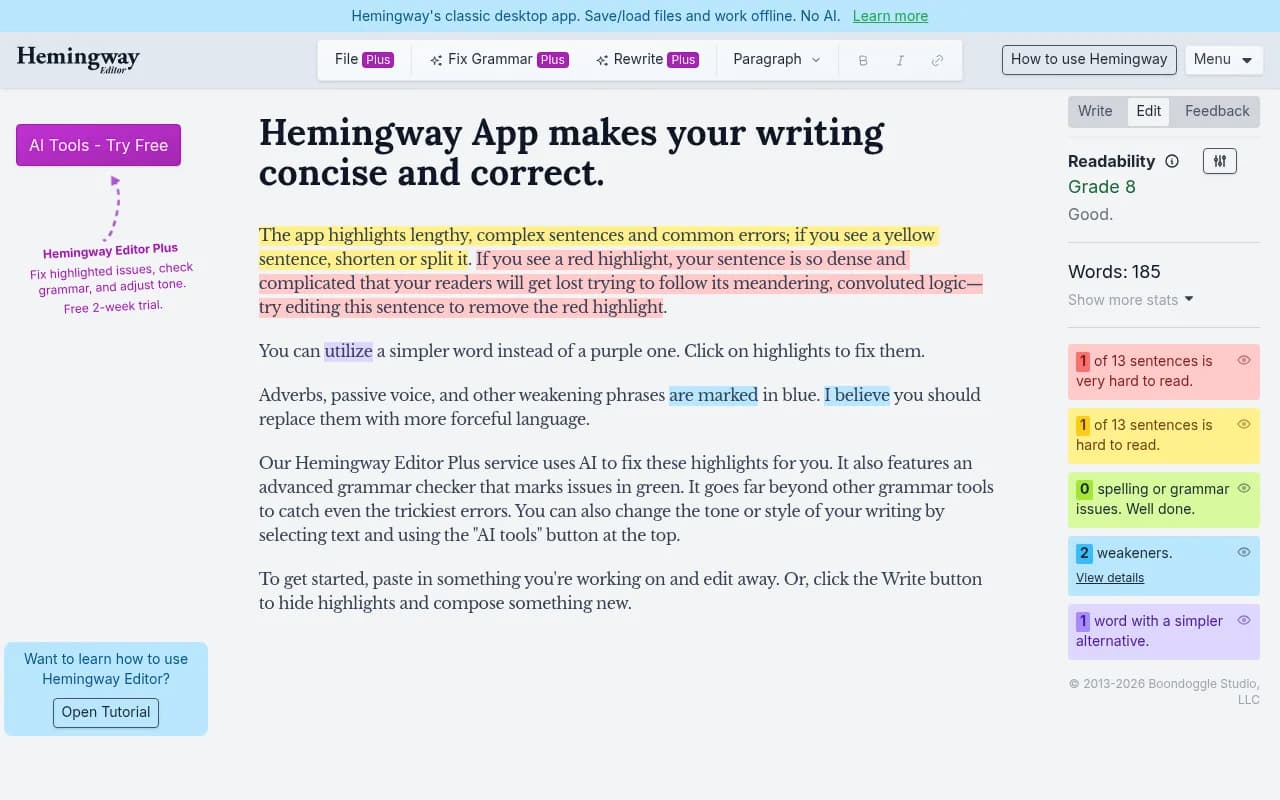
Tools that help the reviewer: Grammarly, LanguageTool and Hemingway App catch mechanical and readability issues so humans can spend their attention on substance. Perplexity is handy for tracing a claim back to a source, though you still need to open the source and read it.
Perplexity
Stage 5: publish, measure and refresh
Publishing is a gate of its own: formatting, metadata, internal links, schema, images and a final read on the live page. After that, measurement decides what happens next. Did the page get crawled, indexed, cited, clicked? Pages that underperform go back into the backlog for a rewrite.
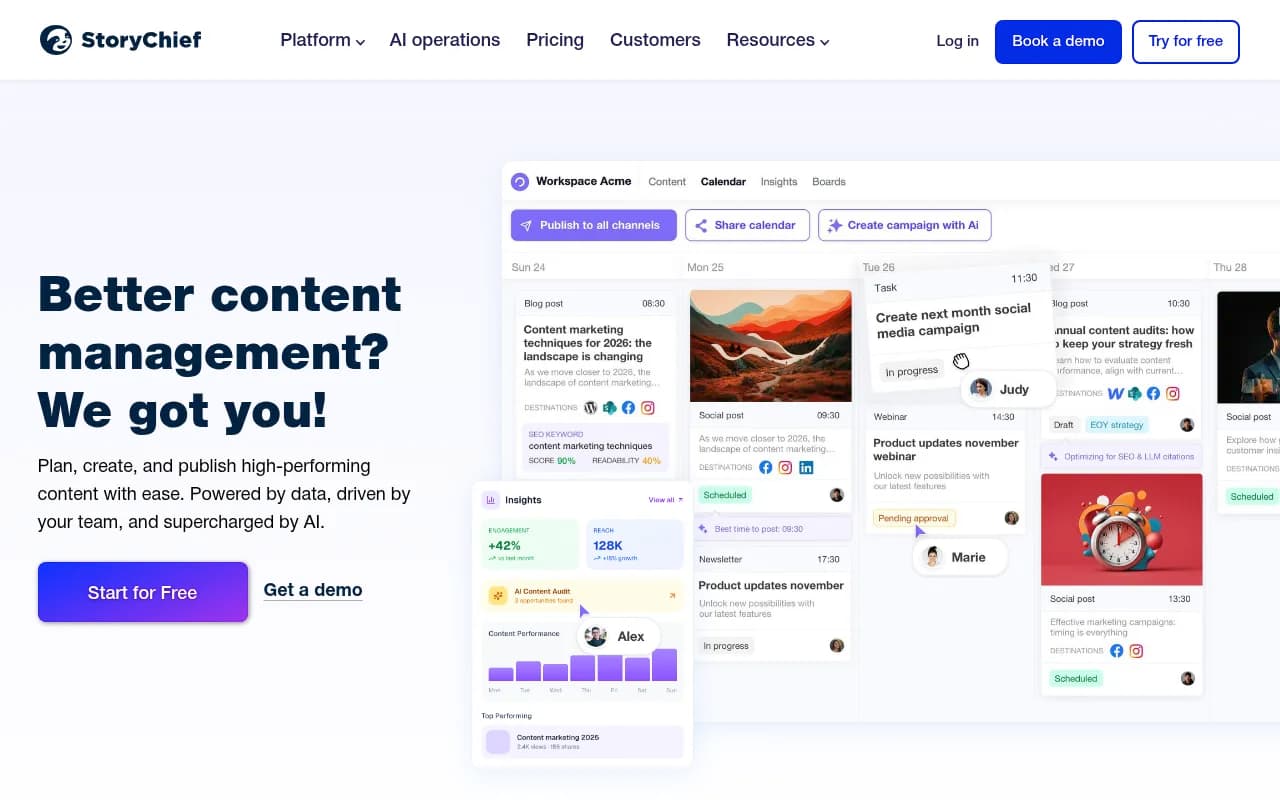
Tools that help: Yoast SEO or AIOSEO for WordPress checks, StoryChief or Kontent.ai for editorial workflow and approvals, and Notion AI or Wrike for tracking where each piece sits in the pipeline.


Roles: who does what
You do not need seven people. You need every responsibility to have a name next to it. On a small team, one person may hold several roles, but write them down anyway.
| Role | Owns | Typical gate |
|---|---|---|
| Content strategist | Topic list, briefs, goals | Brief approval |
| Prompt and workflow owner | Templates, style guide, model settings | Draft spec check |
| Writer or editor | Rewrites, structure, voice, original insight | Editorial pass |
| Fact checker | Claims, numbers, sources, quotes | Fact check |
| Subject-matter expert | Accuracy in specialist topics, nuance | SME sign-off |
| Publisher or ops | CMS, metadata, links, schema | Pre-publish checklist |
| Analyst | Performance, decay, refresh queue | Refresh trigger |
One rule I would hold firm on: the person who approves a piece for publication should not be the same person who prompted it. Fresh eyes catch the problems the author has stopped seeing.
Quality gates: what to check and when
A quality gate is a checkpoint with explicit criteria and the authority to send work back. Here is a workable set of four, which is enough for most teams.
Gate 1: brief approval
Before any drafting, a strategist confirms the topic has a reason to exist, the angle is different from what already ranks, and the brief lists sources and original material. If you cannot name what this piece adds, do not write it.
Gate 2: draft acceptance
A quick check that the draft follows the brief and the style guide. Reject drafts that wander off-structure, invent sources, or repeat themselves. Rejecting at this stage costs minutes. Rejecting after a full edit costs hours.
Gate 3: editorial and fact review
This is the heavy gate. A reviewer works from a checklist:
- Every statistic has a source link, and the source says what the draft says it says.
- Every product claim matches current pricing, features and policies.
- Quotes are real and attributed to real people.
- The piece contains at least one thing only your company could write: data, an example, an opinion, a screenshot.
- Tone matches the brand, with no stock phrases and no hedging filler.
- Nothing is medical, legal or financial advice without expert sign-off.
Gate 4: pre-publish check
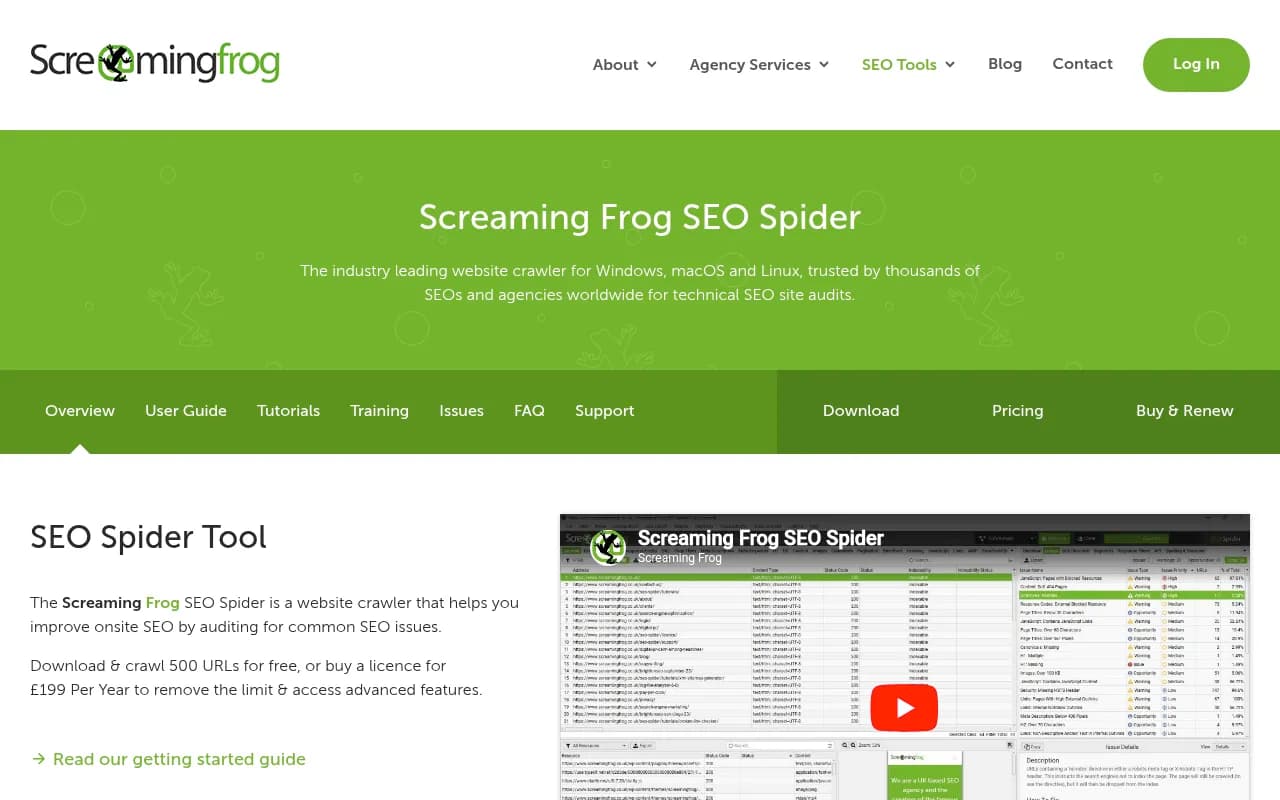
Technical and formatting checks on the staged page: title and description, headings, internal links, alt text, schema, canonical tags, mobile rendering. Much of this can be automated with a plugin or crawler. Screaming Frog SEO Spider is useful for catching broken links and missing metadata across a batch.
How strict should each gate be?
Match scrutiny to risk. A glossary entry needs less review than a pricing comparison. A health or finance page needs an expert. A pillar page that will drive revenue deserves a second editor.
| Content type | Review depth | Why |
|---|---|---|
| Glossary and definitions | Light edit, fact check | Low risk, easy to verify |
| How-to guides | Editor plus tested steps | Steps must actually work |
| Comparisons and reviews | Full fact check, SME | Claims about competitors and pricing go stale |
| Product and pricing pages | Product owner sign-off | Errors cost trust directly |
| Regulated topics | Qualified expert required | Legal and safety exposure |
Optimization tools: use them as a check, not a target
Content optimization tools score drafts against competitors. They are useful for spotting missing subtopics. They are bad at telling you whether the piece is any good. Treat a score as one input at Gate 3, not a pass mark.
| Tool | Best at | Where it fits |
|---|---|---|
| Surfer SEO | On-page term and structure guidance | Brief and review |
| Clearscope | Topic coverage grading | Review |
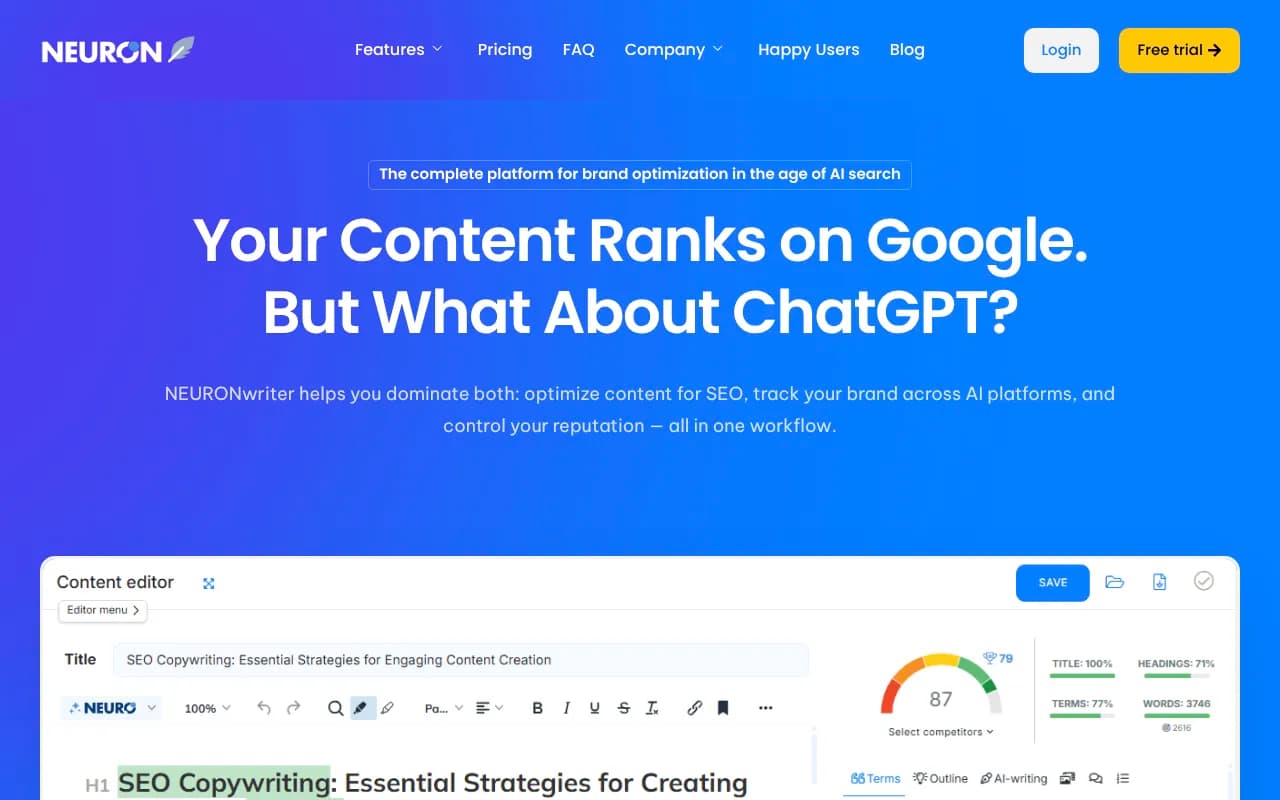
| NeuronWriter | Semantic suggestions at a lower cost | Brief and review |
| MarketMuse | Topic authority planning | Strategy and brief |
| SEMrush Writing Assistant | Quick checks inside Semrush data | Review |
Pricing changes often and I have no verified figures for these tools, so check each vendor's site before you budget.
Automation: connecting the stages
Once the manual process works, glue it together. A typical flow: a brief is approved in your project tool, a workflow sends it to the model with your style guide, the draft lands in a document with the reviewer assigned, and approval triggers a push to the CMS as a draft. Never push live automatically unless the content is low-risk and you are sampling it afterward.
Zapier, Make and n8n all handle this kind of routing. n8n is the pick if you want self-hosting and code-level control. Zapier is the easiest to hand to a non-technical teammate.


Closing the loop with AI search data
One more reason to measure carefully: your content now has two audiences, search engines and AI assistants. What AI cites is not random, and the formats differ from what you might assume. In Promptwatch's data on ChatGPT content types (Sep 28 to Oct 4, 2026), product pages were the most cited type at 22.4% of classified citations, landing pages followed at 16.8%, and listicles at 13.6%. For informational prompts, how-tos (10.7%), docs (8.5%) and articles (7.7%) earn a bigger share than they do overall.
That should shape your pipeline in two ways. First, map each brief to prompt intent: a commercial query wants a complete, factual product or comparison page, an informational one wants a step-by-step guide. Second, keep factual pages accurate, because specs, prices and positioning are exactly what gets quoted.
Decay matters too. In Promptwatch's content half-life study (pages ChatGPT cited on July 6, 2026, tracked to Oct 4), landing pages and docs held up best: 78% and 76% were still cited after 30 days. Product pages, reviews and how-tos had a half-life of 74 to 77 days, and about 55% were still cited at day 60. News fell fastest, with half of pages gone after 36 days.
Translate that into a refresh schedule:
- Product pages, how-tos and reviews: re-review quarterly, or sooner if anything changes.
- Landing and pricing pages: verify prices and specs on a fixed date every month or quarter.
- News and trend pieces: treat as short-lived, and do not pour review hours into them.
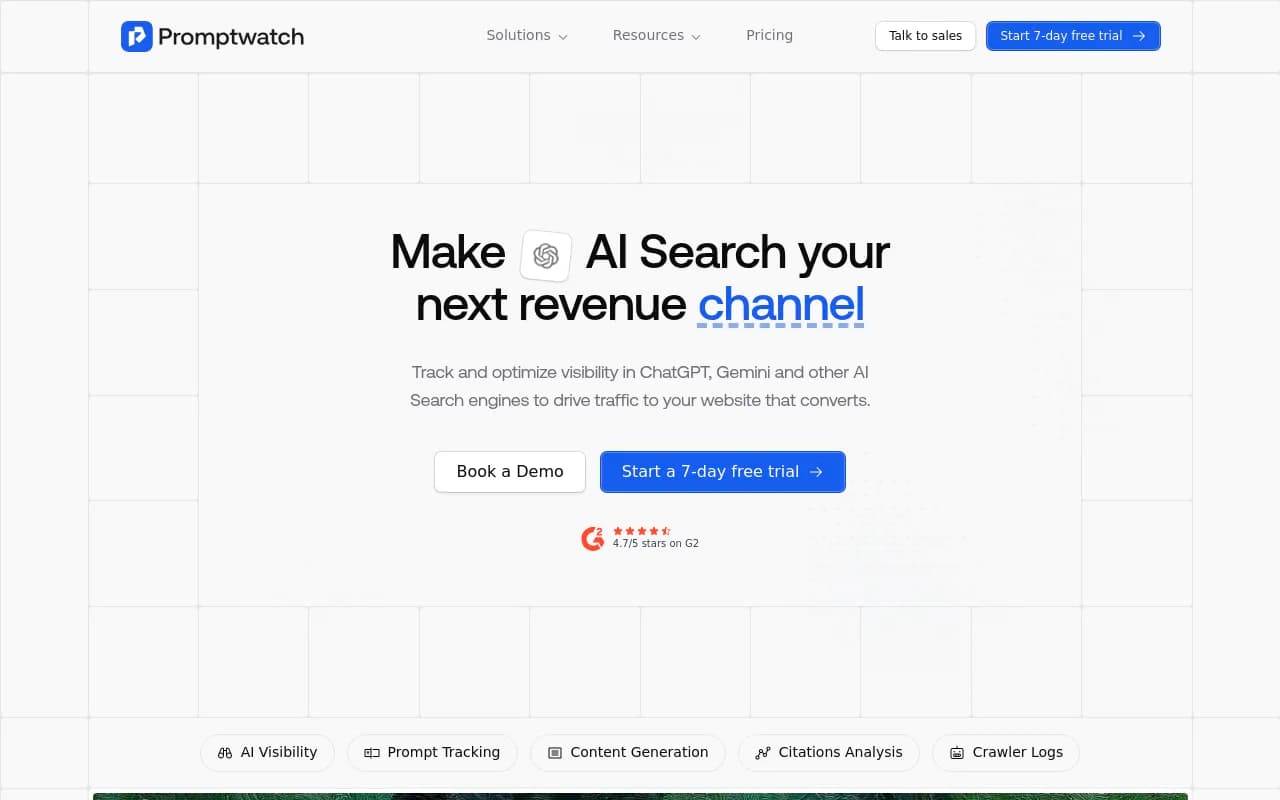
To see whether published pages are being crawled, cited and clicked, you need tooling that tracks AI search, not just Google rankings. Promptwatch does this end to end: it monitors prompts across ChatGPT, Gemini, Perplexity, Google AI Overviews and others, shows which of your pages get cited, logs AI crawler visits, and can draft refreshes through its Content Agent. Its Action Board turns the gaps into a to-do list your reviewers can work through. Confirm current plans on promptwatch.com/pricing.
If you want to compare options, the GEO software directory at bestgeosoftware.com lists the main platforms.
A starter setup you can run next week
Do not build the full machine on day one. Here is a minimal version.
- Pick one content type, such as how-to guides.
- Write a one-page style guide with banned phrases, tone examples and a source policy.
- Create a brief template with angle, reader, questions, sources, original material and links.
- Name one drafter, one reviewer and one publisher. They can be three people or two.
- Build the Gate 3 checklist above into a shared document and require a signature.
- Track three numbers per piece: time to publish, revision count and whether it was cited or clicked after 30 days.
- Review the numbers monthly and tighten whichever gate lets the most problems through.
Common failure modes
- Reviewers who only proofread. If your review catches typos but never kills a piece, it is not a review.
- Briefs that say "write about X." The model fills the gap with the average of the internet.
- No source policy. Drafts invent plausible citations, and nobody notices until a reader does.
- Optimizing for the tool's score. You get articles that look complete and say nothing.
- Skipping the refresh. Old pages with stale prices quietly cost you trust and citations.
- Over-automating publishing. Automatic drafts are fine; automatic live posts need a sampling plan.
Frequently asked questions
How much human review does AI content need?
Enough that a named person can stand behind every claim. For low-risk content that may be a fact check and a light edit. For anything about money, health, law or competitors, add an expert or a second editor.
Can the same person draft and review?
On a tiny team, yes, but separate the sessions by a day if you can and use a checklist. Better still, swap pieces with a colleague.
Which part of the pipeline should I automate first?
The mechanical checks: grammar, metadata, broken links and formatting. They are tedious, easy to define and low risk. Automate drafting and routing after that.
How often should published content be refreshed?
Based on Promptwatch Data, quarterly for product pages, how-tos and reviews is a sensible default, with monthly price and spec checks on landing pages. Treat news as short-lived.
Do I need an agency to run this?
Not necessarily. If you lack the in-house people for strategy, review or technical SEO, an agency such as 1001 SEO Media can run parts of the pipeline, but the quality gates described here work whoever operates them.