
Key takeaways
- Google's guidance doesn't mention AI detectors. It cares about whether content is useful and original, not how it was produced. Its page on generative AI content was last updated October 1, 2026.
- The real SEO risk is scaled, low-effort publishing, which Google treats as spam (scaled content abuse), whether a human or a model typed it.
- Detector scores are probabilistic guesses. Treat them as a rough editorial signal, never as proof or as a ranking predictor.
- Detectors still matter outside Google: client contracts, publisher submission rules, academic settings and internal quality control.
- For AI search, content type and factual completeness matter more than authorship. Promptwatch Data shows product pages, landing pages and listicles earning the largest share of ChatGPT citations.
The short answer
No, a detector score is not a ranking factor you need to chase. Yes, you should care about the thing detectors are clumsily trying to measure: whether a page was produced with little effort and adds nothing.
I want to be upfront about the limits here. I have no independent accuracy study, no false-positive benchmark and no SEO-correlation dataset to quote for 2026, and I'm not going to invent numbers. What I can do is walk through what Google has said publicly, how detectors work in principle, and how to build a workflow that doesn't depend on any of it.
What Google actually says about AI content
Google's guidance on using generative AI content, last updated October 1, 2026, is more useful than most blog posts about the topic. The key points:
- Generative AI is fine for researching a topic and adding structure to original content.
- Using AI to generate many pages without adding value for users may violate the spam policy on scaled content abuse.
- You should manually fact-check and review AI output before publishing, including titles, meta descriptions, structured data and image alt text.
- Generative models don't retrieve facts, and they can hallucinate.
- Telling readers how content was created, for example how automation was used, is a suggested practice.
Notice what is missing. The page never mentions detectors. It frames the whole issue as quality and value, not production method.
Google also points to the Search Quality Rater Guidelines. Section 4.6.5 covers scaled content abuse, and section 4.6.6 covers main content created with little to no effort, originality or added value. Google states that rater ratings don't directly influence ranking, so those sections are best read as a description of what Google considers low quality, not as a scoring formula.
Merchant Center is stricter
If you sell products, the rules are more specific. Google's Merchant Center policies ask for IPTC DigitalSourceType metadata set to TrainedAlgorithmicMedia on AI-generated images, and AI-generated product titles and descriptions must be labeled as AI-generated. That is a disclosure requirement, not a quality judgment, and no detector is involved.
How AI detectors work (and why they disagree)
Most detectors are classifiers trained to tell machine-like text from human-like text. They look at things like how predictable each word is given the words before it, and how much sentence structure varies. Some also use trained models on labeled samples of human and AI writing.
This creates a few well-known problems, independent of any specific vendor:
- Plain, formulaic human writing can look machine-like. Technical docs, legal copy and non-native English writing are common false-positive candidates.
- Light editing of AI output can change the score a lot, which means the score reflects style, not provenance.
- Different tools use different training data, so the same text can get conflicting results.
- A score is a probability. "85% likely AI" doesn't mean 85% of the text was written by AI.
I haven't verified current accuracy or false-positive rates for GPTZero, Originality.ai, Turnitin or others in 2026, so check each vendor's published methodology and run your own tests on text you know the origin of before relying on any of them.
Do detectors matter for SEO?
There is no evidence in Google's published guidance that it uses third-party detectors, and Google has no reason to depend on a tool anyone can buy. What it describes is a quality and spam-policy approach: does the page help people, is it original, and is it mass-produced to manipulate rankings?
That gives you a clear way to think about it:
| Scenario | Detector score likely to matter? | What actually matters |
|---|---|---|
| Single expert-reviewed article drafted with AI | No | Accuracy, original insight, usefulness |
| Hundreds of thin AI pages published in bulk | Indirectly, as a symptom | Scaled content abuse risk |
| Client deliverable with a no-AI clause | Yes, contractually | The contract, plus your disclosure |
| Guest post submitted to a publisher | Sometimes | The publisher's own policy |
| Academic or compliance setting | Yes | Institutional rules |
| Product descriptions in Merchant Center | No, but labeling does | AI-generated label requirement |
The pattern: detectors matter where a human gatekeeper has made them matter, not because Google ranks on them.
The risk detectors point at, and the one they miss
Here is the honest reason to care. Low-effort content is easy to spot even without software. It has no first-hand detail, repeats what the top ten results already say, hedges everything, and ends with a vague summary. A detector sometimes flags it, but you can catch the same problem faster by reading it.
The flip side is that a page can pass every detector and still be useless. If you swap a few words, add typos, or run text through a "humanizer," you have optimized for the wrong thing. You've made text that fools a tool without making it better for a reader.
Hallucinations are the bigger danger
Google itself warns that generative models don't retrieve facts. A confident wrong statistic or invented quote does more damage to trust than a high detector score ever will. Fact-checking is the step most teams skip, and it's the one Google explicitly tells you to do.
What to check instead of a detector score
A short editorial checklist beats a percentage:
- Does the page include something a model could not produce on its own: your data, screenshots, first-hand testing, a named expert's opinion?
- Is every number and claim traceable to a source you've opened?
- Does the page answer the query better than what already ranks, or just restate it?
- Are titles, meta descriptions, structured data and alt text reviewed by a person?
- Have you disclosed AI use where a client, publisher or policy requires it?
- Would you publish this page if nobody ever ran a detector on it?
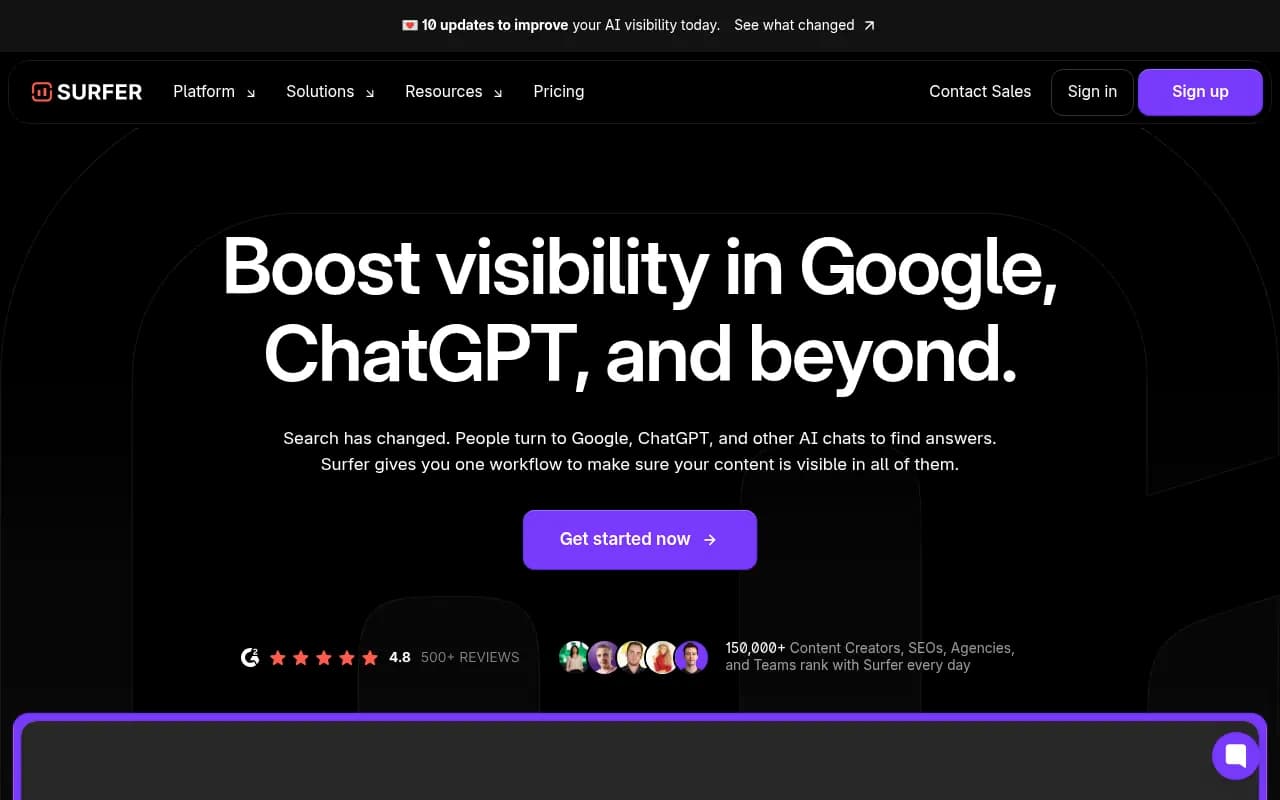
If you want tooling support for the quality side rather than the detection side, content optimization tools help you compare coverage against what already ranks. Clearscope and Surfer SEO are common choices, and the cards below show what each does.

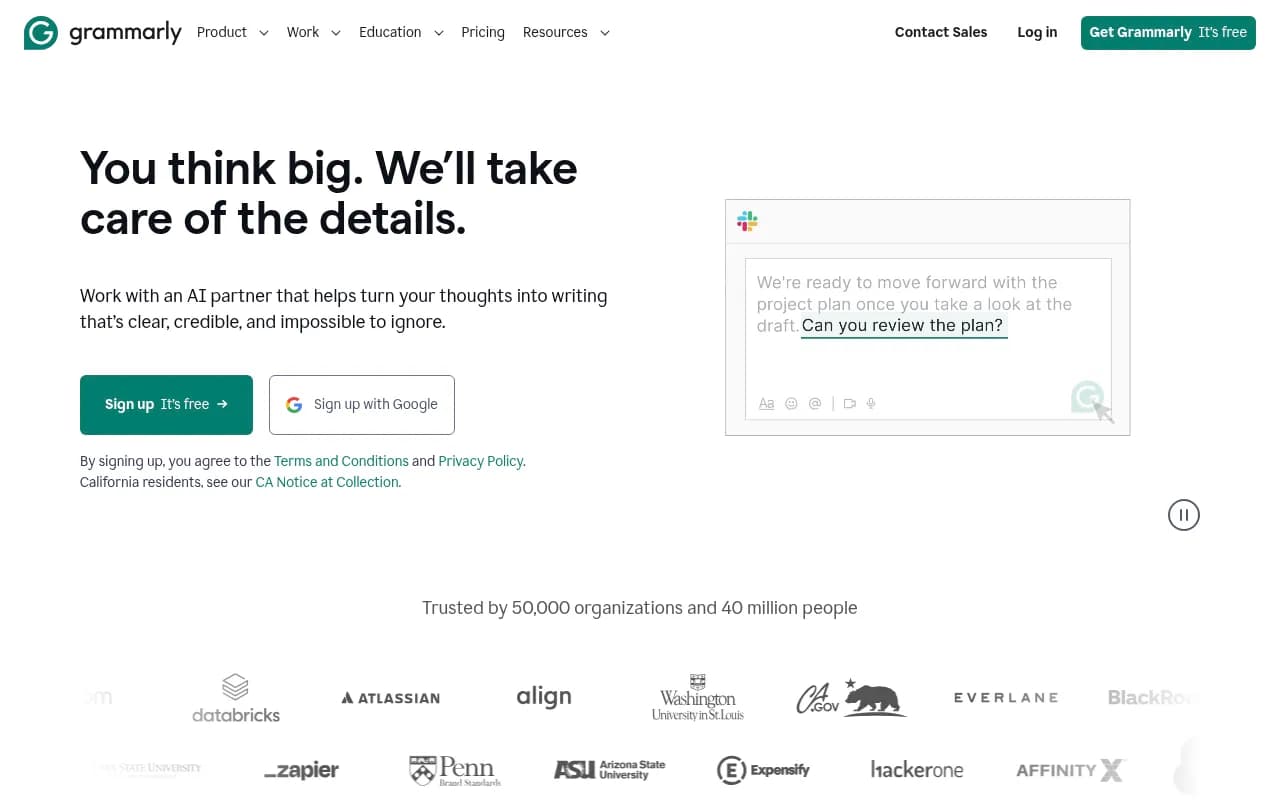
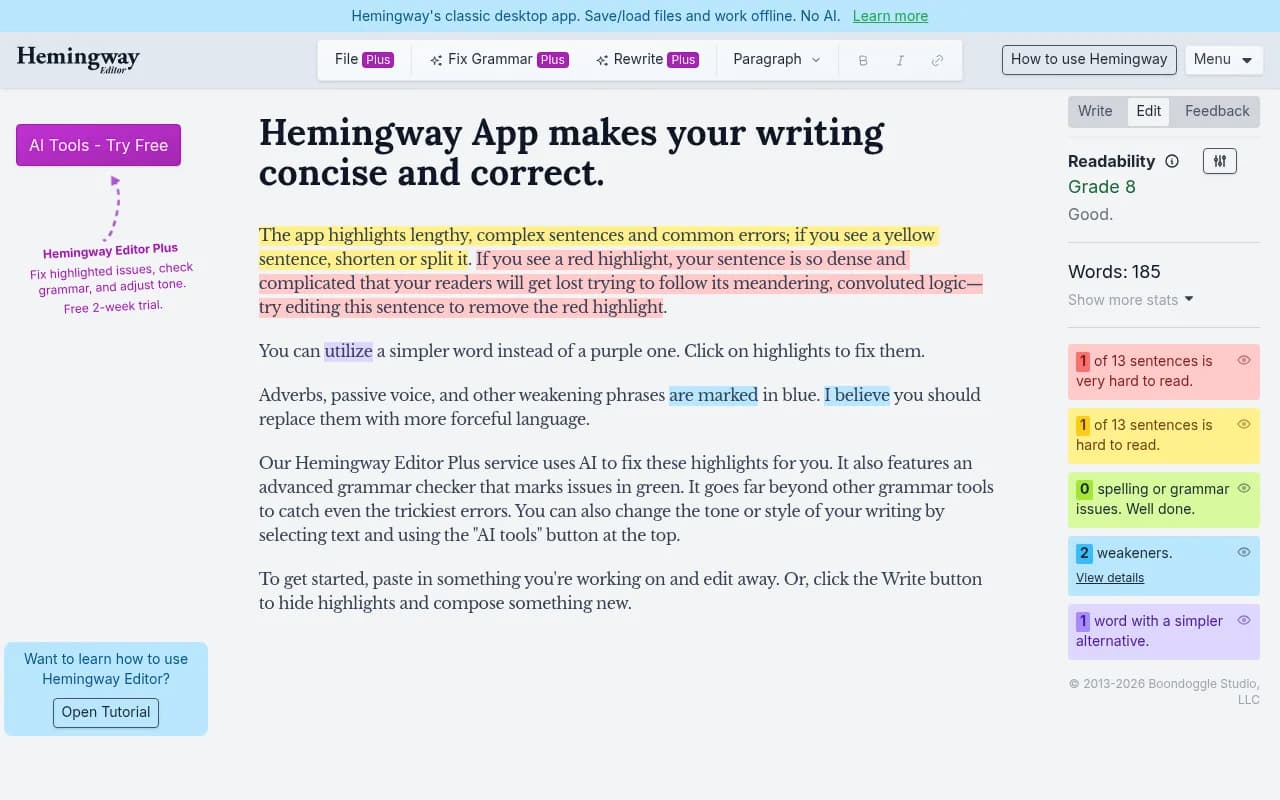
For grammar and readability passes on human or AI drafts, Grammarly and the Hemingway App are low-risk additions.
AI writing tools and the scale problem
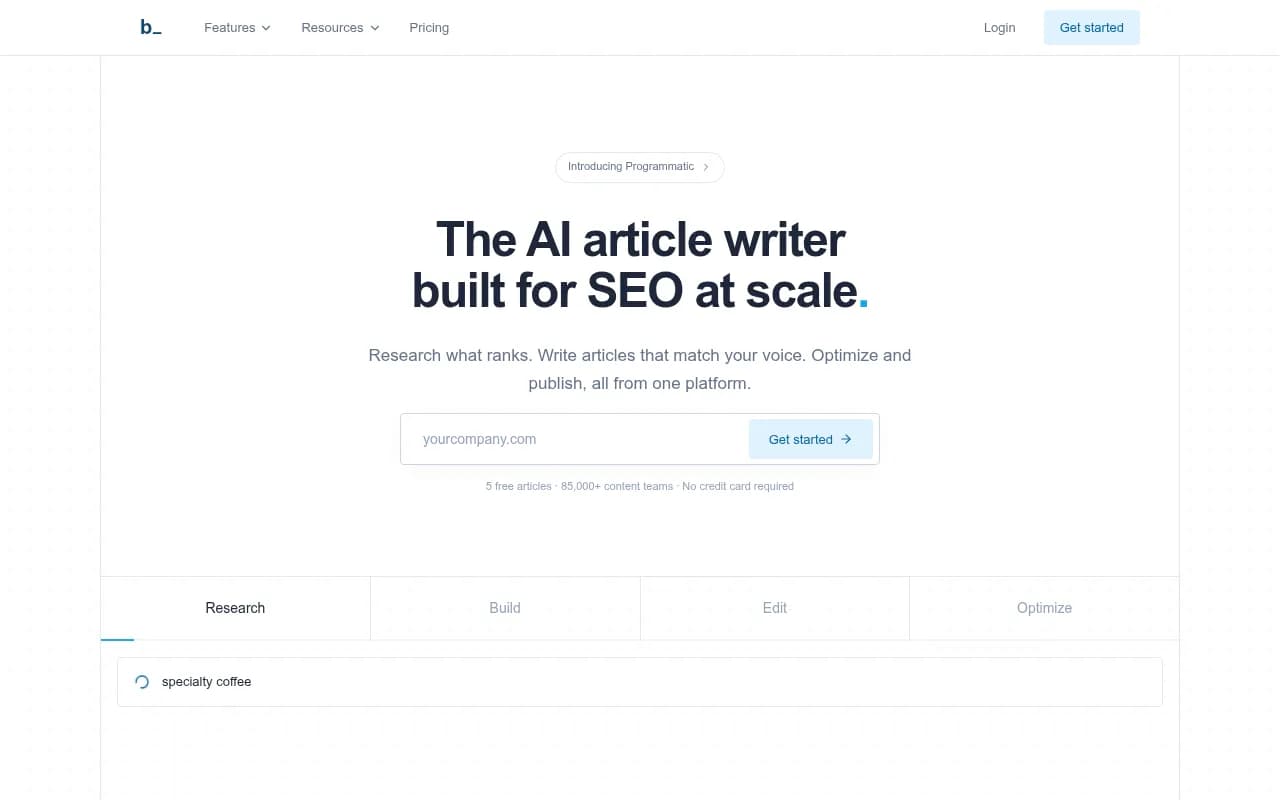
Some tools in the catalog are built to publish at volume, such as Byword, Content at Scale and Jasper. Volume itself is not the violation. Google's concern is generating many pages without adding value. A team that uses these tools to draft, then adds original data and expert review, is in a very different position from one that pushes raw output live on a schedule.


My rule of thumb: the more automated the pipeline, the more you need a human review step with real authority to reject pages. If nobody can say no, you are running a content spam machine with extra steps.
The shift that matters more: AI search citations
A growing share of discovery happens inside ChatGPT, Perplexity, Gemini and Google's AI features. Here the detector question mostly dissolves. AI engines choose sources by relevance, structure and how well a page answers the underlying query, and the evidence we have is about content type, not authorship.
Promptwatch Data's report on which content types ChatGPT cites most (Sep 28 to Oct 4, 2026) breaks citations down by format:
| Content type | Share of ChatGPT citations |
|---|---|
| Product pages | 22.4% |
| Landing pages | 16.8% |
| Listicles | 13.6% |
| How-to guides | 8.7% |
| Documentation | 7.5% |
| General articles | 6.1% |
| Comparisons | 5.9% |
| News | 5.7% |
| FAQ pages | 3.3% |
| Reviews | 1.7% |
Two caveats. First, this report classifies content by type and format, not by whether a human or a model wrote it, so it can't tell you whether AI-written pages get cited more or less. Second, it covers a single week. Still, it shows the practical lesson: factual, complete product pages and landing pages, step-by-step guides and public, crawlable docs are what get cited. Those are qualities you can build with or without AI help.
Citation durability also varies by format. In Promptwatch's content half-life data, landing pages and docs stayed cited longest while news lost half its pages within 36 days. If you publish AI-assisted news-style content, expect a short shelf life regardless of who wrote it.
How to measure whether your content gets cited
Since a detector score tells you nothing about citations, measure the outcome directly. Promptwatch tracks how ChatGPT, Gemini, Perplexity, Google AI Overviews and other engines mention and cite your brand, shows which of your pages get cited, and uses IP-verified AI crawler logs to show whether bots can even read a page. That separates a crawl-access problem from a content problem, which is more actionable than any authorship percentage.
If you're comparing options, the GEO software directory at bestgeosoftware.com lists many alternatives, and Promptwatch's free AI visibility report is a no-login way to see a baseline first.
A practical 2026 policy for your team
If you manage a content team or agency, write a one-page policy. Mine would look like this:
- AI can draft, outline, summarize and restructure. A named human owns every published page.
- Every statistic needs a source link checked by a person.
- Every page needs at least one element of original value: data, experience, a quote, a tested screenshot.
- Disclose AI use where contracts, publishers or Merchant Center require it.
- Run a detector only as an optional smoke test on content from outside contributors, and never use a score alone to reject someone's work. False positives are real and people get hurt by them.
- Review performance in Google Search Console and in AI citation data, and prune pages that earn neither.
If you'd rather hand the strategy and quality control to specialists, an agency can build this workflow for you. 1001 SEO Media works on content strategy and AI search optimization with senior specialists, and that kind of review process is exactly what it covers.
When you should still run a detector
I don't want to be dismissive. There are fair reasons to check:
- You buy content from freelancers and your contract bans unreviewed AI output.
- You're an editor screening submissions at volume and need a first-pass filter.
- You suspect a vendor is reselling raw model output as custom work.
- You operate in education or a regulated setting with explicit rules.
In each case, treat the score as a reason to ask questions, not a verdict. Ask for drafts, sources and notes. A writer who really wrote something can show their process.
What I'd stop worrying about
Stop trying to make text "undetectable." Humanizer tools and manual rewording for the sake of a score burn time and often make writing worse. Spend that time on reporting, original examples and fact-checking. Those are the things Google's guidance rewards, and they are the same things that make a page worth citing in an AI answer.
FAQ
Does Google penalize AI-generated content?
Google's guidance says using AI to generate many pages without adding value for users may violate its scaled content abuse policy. It does not say AI use alone is penalized. The page frames the issue as value and effort, not production method.
Does Google use AI detectors?
Google's published guidance doesn't mention detectors, and I found no evidence that it relies on third-party tools. Don't assume a particular score has any ranking effect.
Are AI detectors accurate?
I have no verified 2026 accuracy data to quote. In general they are probabilistic and can misflag formulaic human writing, so test any tool on text you know the origin of before trusting it.
Should I disclose AI use?
Google suggests telling readers how content was created. Merchant Center requires labels on AI-generated product titles and descriptions and specific metadata on AI-generated images. Follow any client or publisher rules too.
Does AI-written content get cited by ChatGPT?
No data I have answers that directly. Promptwatch Data shows what content types ChatGPT cites, such as product pages at 22.4% and landing pages at 16.8%, but doesn't split by author type. Focus on factual completeness and crawlability instead.