
Key takeaways
- Adjectives like "friendly but professional" do nothing for an AI writer. Rules, banned phrases and before/after examples do.
- A good brief has seven parts: audience, positioning, voice rules, vocabulary, structure, examples, and a review checklist.
- Keep the brief short enough to paste into a system prompt (about 800 to 1,500 words), and keep the long version in a reference doc.
- Test the brief with the same three prompts every time you change it, then compare outputs side by side.
- Treat the brief as a living file. Every edit you make to a draft should become a rule or an example.
Why most brand voice docs fail with AI
I have read a lot of brand guidelines. Most of them say something like "We are warm, confident, and approachable." That is fine for a human designer who has met the founders and absorbed the culture. An AI writer has met nobody. Give it "warm, confident, approachable" and it will produce the same bland, upbeat copy it produces for every other brand that typed those words.
The core problem is that adjectives describe a feeling, not a behavior. A model follows behavior. "Never open with a question" is something it can do and something you can check. "Be engaging" is neither.
So the goal of a brief is to convert taste into instructions. Anything you cannot turn into an instruction, an example, or a checklist item is probably noise.
Start with the job the brief has to do
Before writing anything, decide where the brief will live. There are three common cases:
- Pasted into a chat tool like ChatGPT as a system or custom instruction
- Stored in a content platform's brand settings, such as Jasper, Writer or Copy.ai
- Handed to a freelancer or agency who will feed it to their own AI workflow
Each has a different length limit. Custom instructions in chat tools are short. Brand voice fields in writing platforms are usually short too, though they often accept uploaded documents. If you write for the tightest case first, you can always expand. Going the other way is painful.
My recommendation: write two versions. A one-page core brief that gets pasted everywhere, and a longer reference doc with examples that gets attached or retrieved when the tool supports it.
The seven parts of a brief an AI can follow
1. Audience and situation
Name who is reading and what state they are in. "Marketing managers at 50 to 500 person SaaS companies, skimming between meetings, skeptical of vendor claims" is useful. "Business professionals" is not.
Include what the reader already knows. If they know what a CRM is, say so, and the model will stop explaining it. This one line removes a surprising amount of padding.
2. Positioning in two or three sentences
What do you do, for whom, and what do you believe that competitors do not? Keep it plain. The model needs this to make judgment calls, such as which benefit to lead with, but it does not need your mission statement.
3. Voice rules written as behaviors
This is the heart of the brief. Translate every adjective into two or three rules.
| Adjective in your old doc | Rule an AI can follow |
|---|---|
| Friendly | Use "you" and "we". Contractions are fine. No exclamation marks except in event announcements. |
| Confident | State claims directly. Remove "might", "could potentially", "may help". Back every claim with a number or an example, or cut it. |
| Expert | Use the correct technical term, then define it once in plain words. Never explain basics the audience already knows. |
| Witty | One light joke or aside per 500 words, maximum. Never at the reader's expense. Never in headings. |
| Honest | Name tradeoffs and who the product is not for. Do not use superlatives like "best" or "ultimate". |
Notice that each rule can be checked by reading the draft. That is the test. If a reviewer cannot say yes or no, rewrite the rule.
4. Vocabulary: use, avoid, and replace
Three short lists do more work than a page of description.
- Words and phrases we use: the product category names, the terms customers use, your preferred spellings ("log in" as a verb, "login" as a noun)
- Words and phrases we never use: your banned list
- Replacements: "utilize" becomes "use", "solutions" becomes the actual product noun
The banned list is where you should be most aggressive, because it is where AI writing gives itself away. Add the usual offenders: "in today's fast-paced world", "unlock", "leverage", "game-changer", "delve", "it's important to note". Then add your own pet peeves. Every time a draft contains a phrase that makes you wince, the phrase goes on the list.
One practical caution. Long banned lists sometimes cause a model to fixate on the words. If you see it dodging a banned term with an awkward synonym, replace the ban with a positive instruction about what to write instead.
5. Structure and formatting defaults
Voice is not only word choice. It is also how a piece is built. Specify:
- Typical sentence length ("mix short sentences with the occasional long one; aim for an average under 20 words")
- Paragraph length ("two to four sentences, one idea each")
- How openings work ("start with the point, not with context")
- Heading style (sentence case, descriptive, no clever puns)
- List usage ("use bullets only for parallel items, never to break up an argument")
- Point of view and tense
- How to end ("finish on a concrete next step, never a summary of what you just said")
If you want a specific house format, such as key takeaways at the top and a FAQ at the bottom, put it here.
6. Before and after examples
If I could keep only one section, it would be this one. Models imitate examples much more reliably than they obey descriptions.
Include four to six pairs. Each pair has a generic version, a version in your voice, and a one-line note on what changed.
Generic:
"Our powerful platform helps teams unlock new levels of productivity."

On-brand:
"Teams using Acme close their weekly reports about two hours faster, mostly because nobody has to chase spreadsheets."

Why: specific outcome, plain verbs, no hype adjectives.
Pick examples that cover different situations: a headline, an intro paragraph, a product description, an apologetic or sensitive message, and a call to action. Voice usually breaks at the edges, in the awkward moments, so include at least one of those.
Also add one or two full-length samples of the best content you have ever published. Label them "this is the standard". If you have a bad example that shows what to avoid, label that too.
7. A review checklist
End the brief with a short checklist the model can run on its own draft, and a human can run afterward. Five to eight yes/no questions is plenty:
- Does the first paragraph make the main point?
- Is every claim backed by a number, example or source?
- Are there any words from the banned list?
- Does any sentence explain something the audience already knows?
- Does the ending give a concrete next step?
You can instruct the model to produce the draft, then audit it against the checklist, then revise. Two passes usually beat one.
A compact template you can copy
Here is a skeleton. Fill it in with specifics, not adjectives.
ROLE
You are a writer for [Brand]. You write for [audience], who [situation, knowledge level, attitude].

POSITIONING
[Brand] helps [who] do [what]. We believe [belief]. We are not for [who].

VOICE RULES
1. [Behavior rule]
2. [Behavior rule]
3. [Behavior rule]
(5 to 8 total)

VOCABULARY
Use: [...]
Never use: [...]
Replace: [x] -> [y]

STRUCTURE
Sentences: [...]
Paragraphs: [...]
Opening: [...]
Closing: [...]
Headings: [...]

EXAMPLES
[3 to 6 before/after pairs]
[1 to 2 gold-standard excerpts]

CHECKLIST
Before finishing, verify: [5 to 8 yes/no items]. Fix any failures.

WHEN UNSURE
If a fact is missing, write [NEEDS INPUT] instead of guessing. Never invent statistics, quotes or customer names.
That last block matters more than people expect. Telling the model what to do when it lacks information reduces made-up numbers, which are the fastest way for an AI draft to damage a brand.
Build the brief from real content, not from memory
The laziest approach is to sit down and describe your voice. The better approach is to extract it.
- Collect 10 to 20 pieces you consider on-brand and 5 you consider off-brand.
- Ask a model to analyze the on-brand set: sentence length, common openings, recurring words, how it handles claims. Treat the output as a hypothesis, not gospel.
- Read the off-brand set yourself and write down what exactly is wrong. This produces your banned list faster than brainstorming.
- Draft the rules, then check them against the samples. If a rule is violated by your best piece, the rule is wrong or the piece is an exception you should note.
If your team produces content in a shared workspace, Notion AI is a handy place to keep the brief and samples side by side so writers and editors see the same version.
Test it before you trust it
A brief is untested until it has produced something you would publish. Use a fixed test set so you can tell whether a change helped.
- Test 1: a straightforward piece, such as a 300-word blog intro on a topic you know well
- Test 2: a hard-edged piece, such as an apology email or a pricing change announcement
- Test 3: a short-form piece, such as three social posts or a meta description
Run the same three prompts after every edit to the brief. Put the outputs next to the previous round and mark what improved and what broke. Change one thing at a time, otherwise you will not know what caused what.
Two failure patterns show up again and again:
- The output is correct but flat. You probably have rules but not enough examples. Add pairs.
- The output sounds like a parody of your brand. Your rules are too extreme or too numerous. Cut them back to the five that matter most.
Use editing tools as a second layer
A brief steers the draft. It does not catch everything. A lightweight editing pass helps with the mechanical stuff.
| Tool | What it helps with | Good fit when |
|---|---|---|
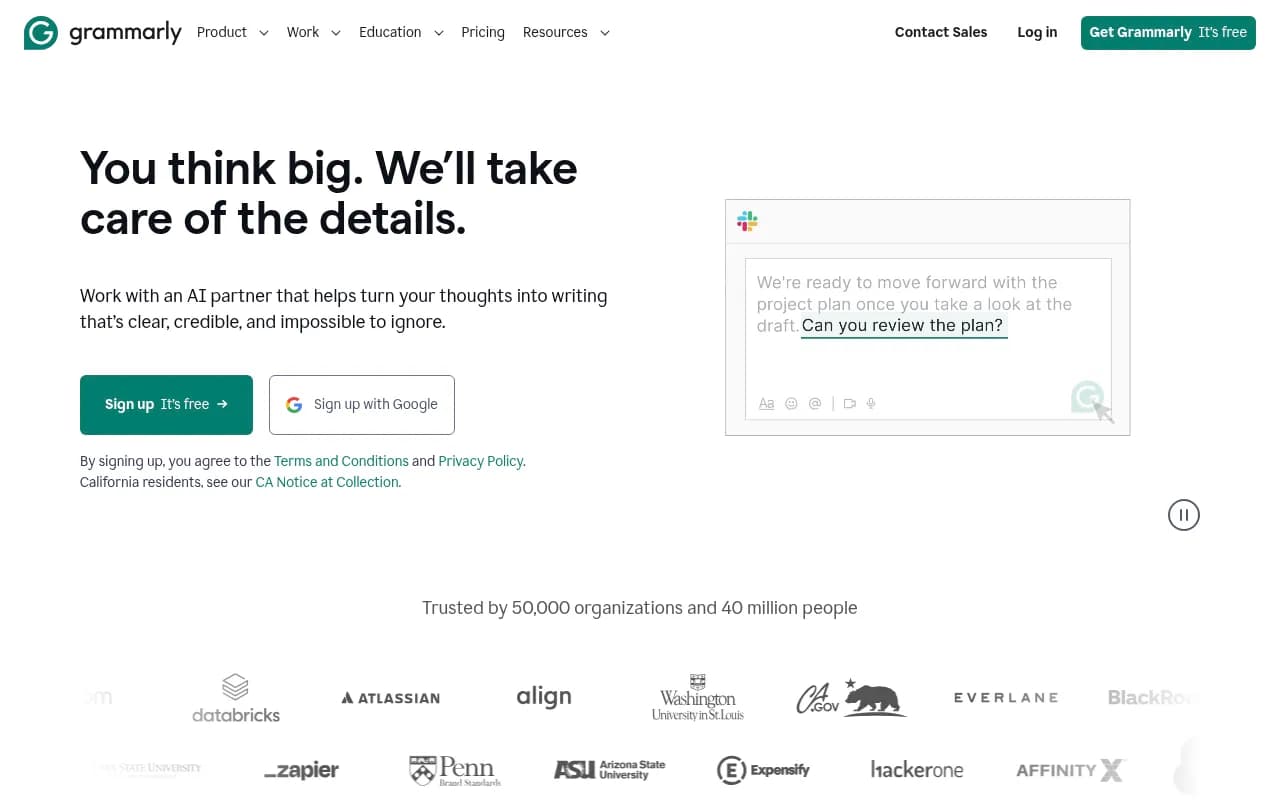
| Grammarly | Tone detection, style rules, custom brand terms on paid plans | You need consistency across many contributors |
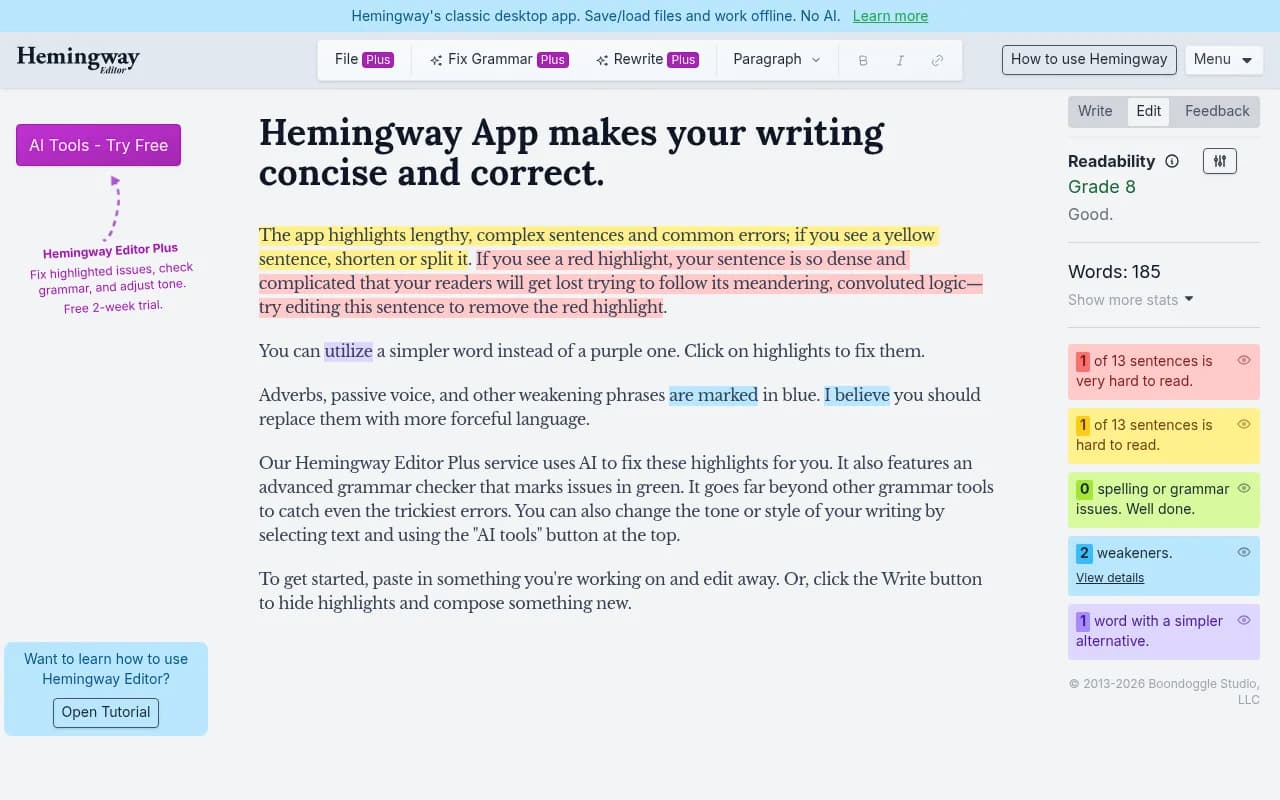
| Hemingway App | Flags long sentences, adverbs and passive voice | Your rule is "short and direct" |
| LanguageTool | Grammar and style across many languages | You publish in more than one language |
| Writer | Enforces terminology and style rules inside the writing flow | You want governed, enterprise-wide voice control |
Check current plan details on each vendor's site, since features move between tiers.
Keep the brief alive
Voice briefs rot. Products change, the audience shifts, and last year's phrasing starts to sound dated. A few habits keep yours useful:
- Every time an editor rewrites a sentence, ask why. If the reason will recur, add a rule or an example.
- Version the file and date it. When output quality changes, you can trace it.
- Review the banned list quarterly. AI writing clichés change as models change.
- Give one person ownership. Briefs edited by committee turn back into adjectives.
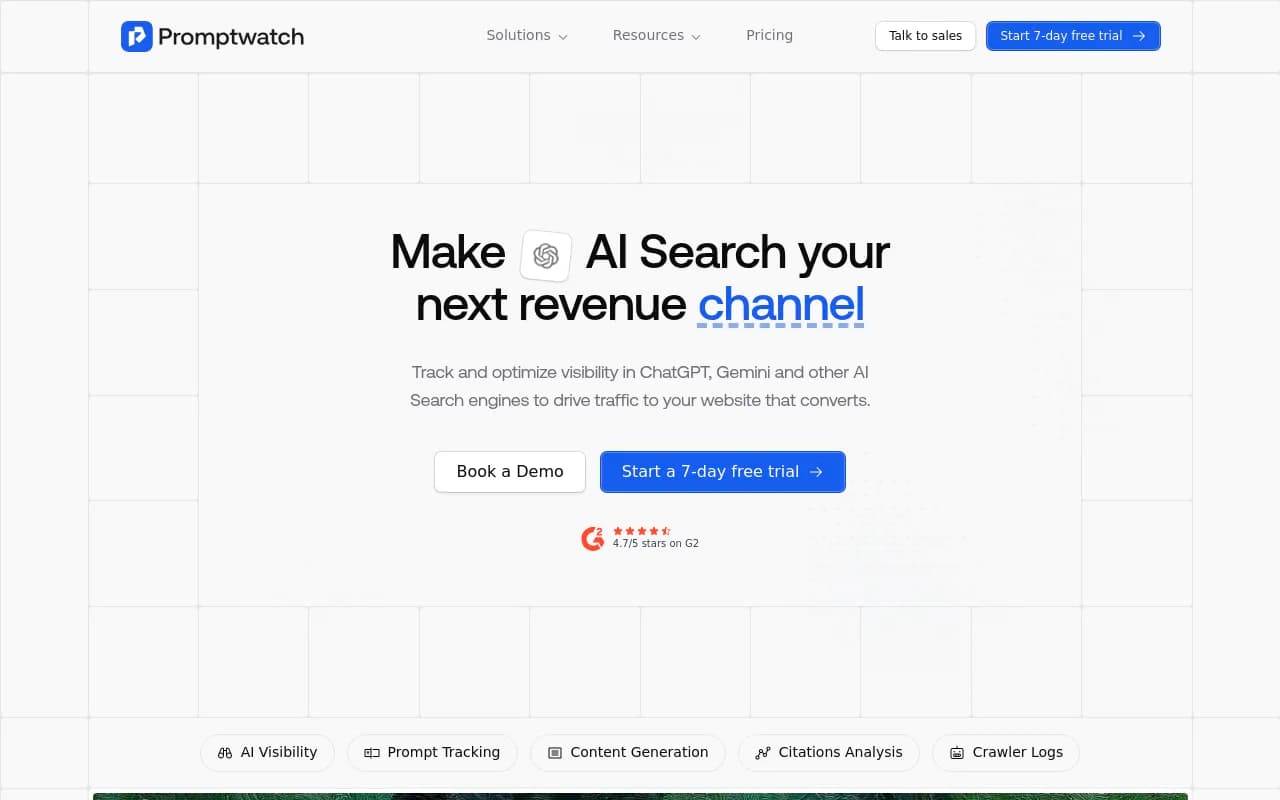
If your content now needs to show up in AI answers as well as in search results, the brief should also say how to state facts about your brand consistently, since models repeat what they find. Platforms like Promptwatch can show what AI engines currently say about your brand and which pages they pull it from, which tells you which claims your brief needs to reinforce.
Common mistakes to avoid
- Writing a brand manifesto instead of instructions
- Using more than eight or so voice rules, so the model averages them all into mush
- Giving only positive examples, with nothing to contrast against
- Leaving out the audience, so the model defaults to a generic reader
- Skipping the "when unsure" rule and getting invented statistics
- Never testing, then blaming the model
A quick checklist before you ship the brief
- Could a stranger follow every rule and check compliance by reading a draft?
- Are there at least four before/after pairs, including one awkward situation?
- Is there a banned list with replacements?
- Does the brief say what to do when information is missing?
- Have you run the three-prompt test and compared rounds?
- Does one named person own the file?
If you can answer yes to all six, you have a brief that works. If not, fix the first no and test again. It usually takes three or four rounds before the output stops needing heavy edits, and that is a normal amount of work for something you will reuse hundreds of times.