
Key takeaways
- Jasper is a brand-governed content production tool. Its strengths are voice consistency, templates, agents and team workflows, not SERP research.
- It does not replace an SEO optimization tool. Most teams that rank pair it with Surfer, Clearscope, Frase or similar for briefs and scoring.
- Jasper now markets GEO and AEO features, including a GEO Score and citation monitoring. Treat these as a starting point, and test them against a dedicated AI visibility platform before relying on them.
- Jasper's own pricing page lists Pro and Business plans plus a 7-day free trial. I could not verify current prices, seat limits or credit allowances, so confirm them on jasper.ai/pricing before budgeting.
- It is worth it for teams that publish a lot across many formats and need everything to sound like one brand. It is hard to justify for a solo blogger who mainly needs ranking help.
What Jasper is in 2026
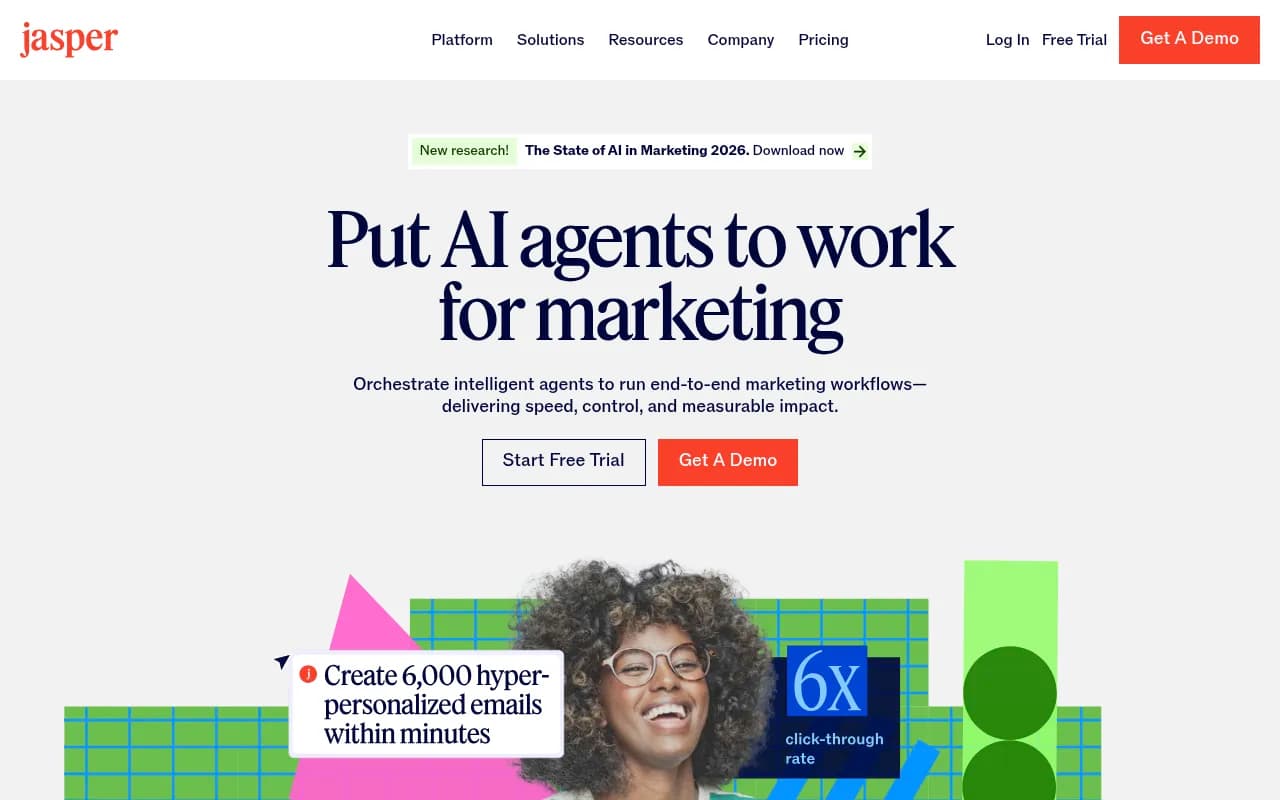
Jasper started as a copywriting assistant and has been repositioning for years as a marketing platform. The current pitch centers on context. Jasper IQ is described as turning brand, product and audience information into context that governs every output. It bundles Brand IQ (brand voice, visual guidelines, style guide), Product IQ and a Knowledge layer.
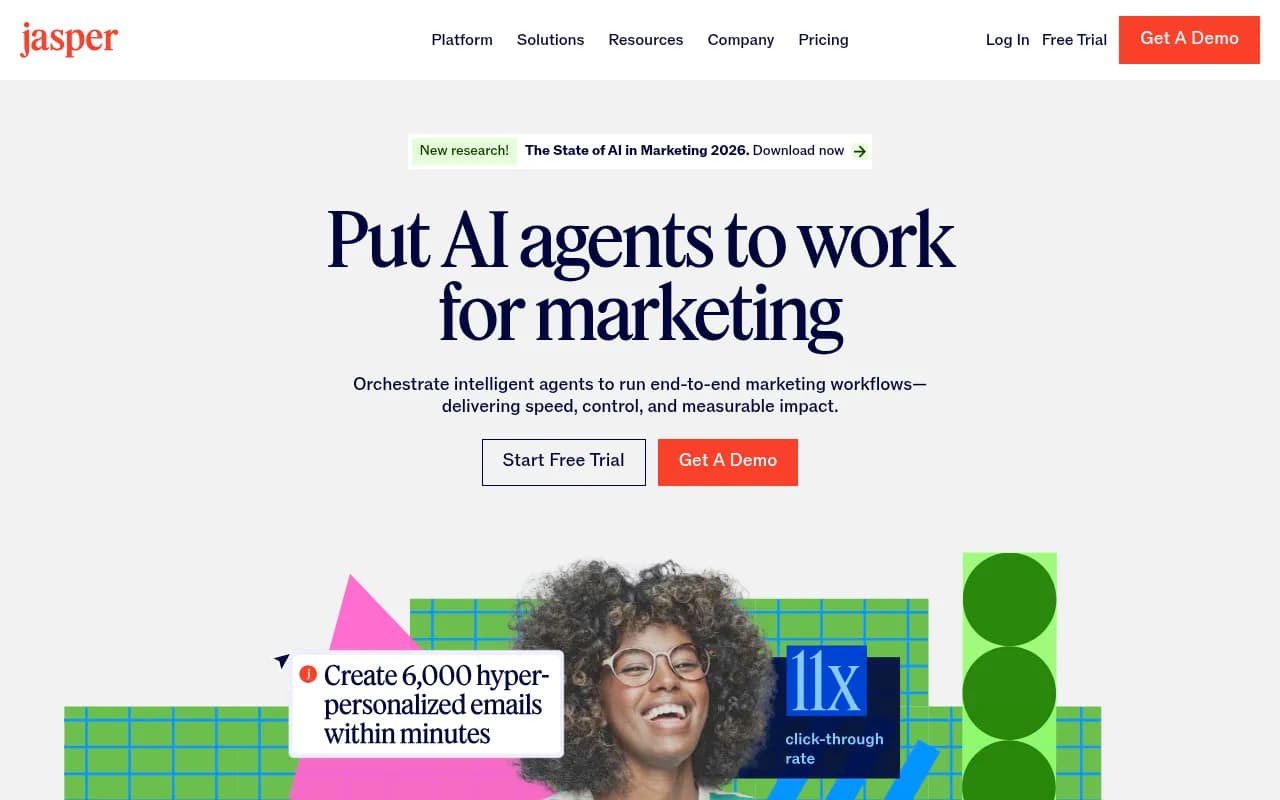
On top of that sits a library of agents, including newer ones for GEO, research and translation, plus a "Strategy" service in which forward-deployed experts build AI workflows for marketing teams. Jasper also publishes a dedicated SEO, AEO and GEO solution page with the tagline "Create content that ranks, drives traffic & strengthens authority at scale."
A caveat on sourcing. Everything in this section comes from Jasper's own marketing and navigation copy. Independent reviews were thin when I researched this, so read the feature claims as what the vendor says, not as verified performance.
The catalog also lists a second entry, Jasper AI, for long-form SEO content. It is the same company, so the review below covers both.
What Jasper does well for SEO teams
Brand voice at volume
This is still the reason to buy it. If you have five writers, three freelancers and a product team all producing content, the hard problem is not getting words on a page. It is getting them to sound like your company. Brand IQ and the style guide layer are built for exactly that. Generic ChatGPT prompts with a pasted style guide work for one person. They get messy across a team.
Many formats from one source of truth
SEO teams rarely write only blog posts. You also need landing page copy, meta descriptions, email snippets, social posts and product descriptions. Jasper handles that range, and Product IQ means feature descriptions stay consistent across them.
Agents and workflows
The agent library is useful when a task repeats: translating a page, researching a topic, drafting a brief. I would not expect agents to replace an editor. They remove the blank-page step and the copy-paste busywork.
Team governance
Roles, shared knowledge and brand compliance checks matter more at 10 writers than at 2. Jasper advertises a Brand Compliance diagnostic, which is the right kind of feature for agencies and in-house teams worried about off-brand output.
Where Jasper falls short
It is not a SERP-driven tool
Tools like Surfer SEO, Clearscope and Frase build their value on analyzing what currently ranks: term coverage, headings, length, entities, competitor gaps. Jasper's core is generation with brand context. It can integrate with optimization workflows, but you should not assume it tells you what the top ten results look like for your keyword.
In practice that means a content team using Jasper alone writes well-branded articles without much evidence that they match search intent. That is fine for thought leadership and a poor fit for competitive commercial keywords.
Pricing is a moving target
Jasper's pricing page describes two plans, Pro and Business, and a 7-day trial, with a demo path that implies custom pricing at the top. I have not verified current figures, so I will not quote any. Check the page yourself, and ask specifically about seats, brand voice limits, how many knowledge items you can store, and whether the agents are included in your tier.
Draft quality still needs editing
Every AI writer produces plausible filler. Jasper is no exception. Plan an editor pass for facts, examples and anything resembling a claim. Teams that skip this publish pages that read fine and say little, which is a poor trade in an environment where AI engines favor pages with specific, citable information.
Jasper's GEO and AI visibility features
This is the biggest change in the product story. Jasper says it can measure brand performance across AI answer engines, monitor citation rates, find content gaps and generate brand-governed content. It offers a free GEO Score diagnostic to get you started.
I like that the vendor is taking AI search seriously. I would still be careful. A free score and a gap list is not the same as tracking hundreds of prompts daily across ChatGPT, Gemini, Perplexity and Google AI Overviews with real interface data, and then connecting it to crawler logs and traffic. I did not find evidence that Jasper's GEO tooling matches dedicated platforms, so test it side by side before you cut a second tool.
What the data says content should look like
If you are going to produce content for AI citation, it helps to know what gets cited. According to Promptwatch Data's report on which content types ChatGPT cites most (Sep 28 to Oct 4, 2026), product pages made up 22.4% of classified ChatGPT citations and landing pages 16.8%. Listicles earned 13.6%, how-tos 8.7%, articles 6.1%, comparisons 5.9% and news 5.7%.
A few takeaways for a content team:
- For commercial prompts, product pages (26.0%), landing pages (20.6%), listicles (15.0%) and comparisons (7.9%) made up almost 70% of citations. A blog-only strategy leaves most of that on the table.
- For informational prompts, how-tos (10.7%), docs (8.5%) and articles (7.7%) all earned a larger share than they do overall.
- Freshness matters by type. Promptwatch's content half-life data shows news pages losing half their citations within about five weeks, while landing pages and docs held most of theirs for months.
This is where a tool with brand governance helps. A good product page and a good comparison page both need consistent claims. Writing them with Jasper's Product IQ is a reasonable use of the platform.
How Jasper compares
I could not find independent head-to-head testing, so the table below reflects each tool's positioning and my own read of where each fits, not benchmark results.
| Tool | Core strength | SERP data and scoring | Brand voice controls | Best for |
|---|---|---|---|---|
| Jasper | Branded content at scale | Limited, check integrations | Strong | Multi-format teams |
| Surfer SEO | On-page optimization and AI writing | Strong | Basic | Ranking-focused blogs |
| Clearscope | Content grading and briefs | Strong | None | Editorial teams that write by hand |
| Frase | Research and briefs | Strong | Moderate | Small teams on budget |
| Writesonic | Writing plus AI search tracking | Moderate | Moderate | Teams wanting one cheaper tool |
| Copy.ai | Go-to-market workflows | Limited | Moderate | Sales and marketing copy |
Surfer SEO
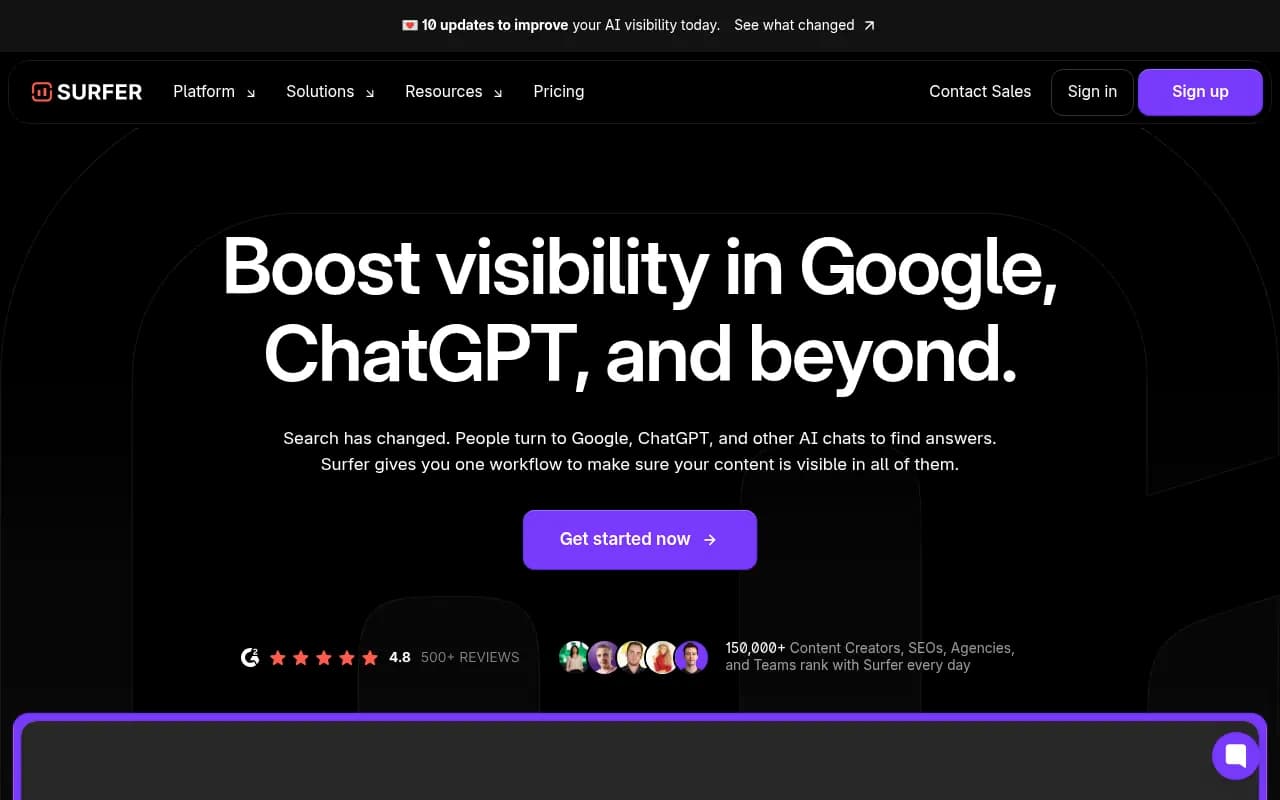
If your goal is rankings on competitive keywords, Surfer is the more direct tool. It scores your draft against what ranks and has its own writing assistant.
Clearscope and Frase
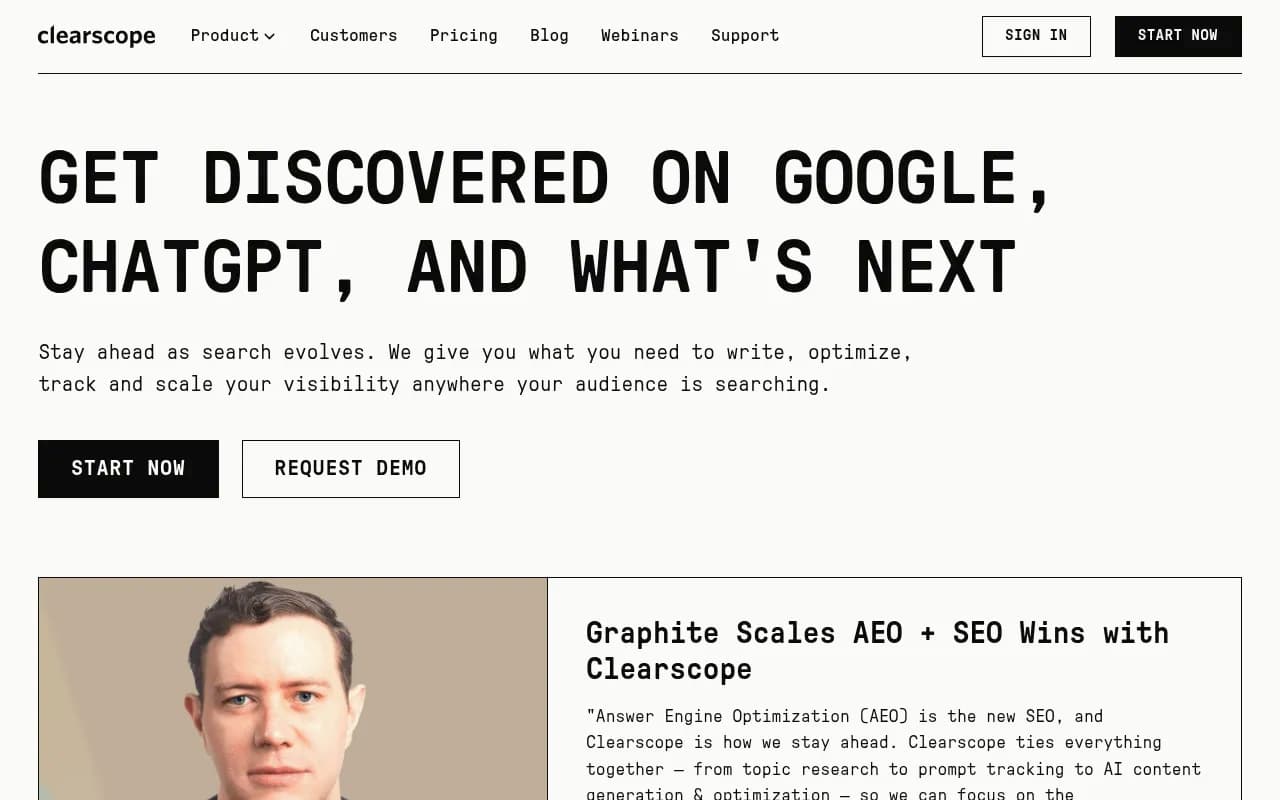
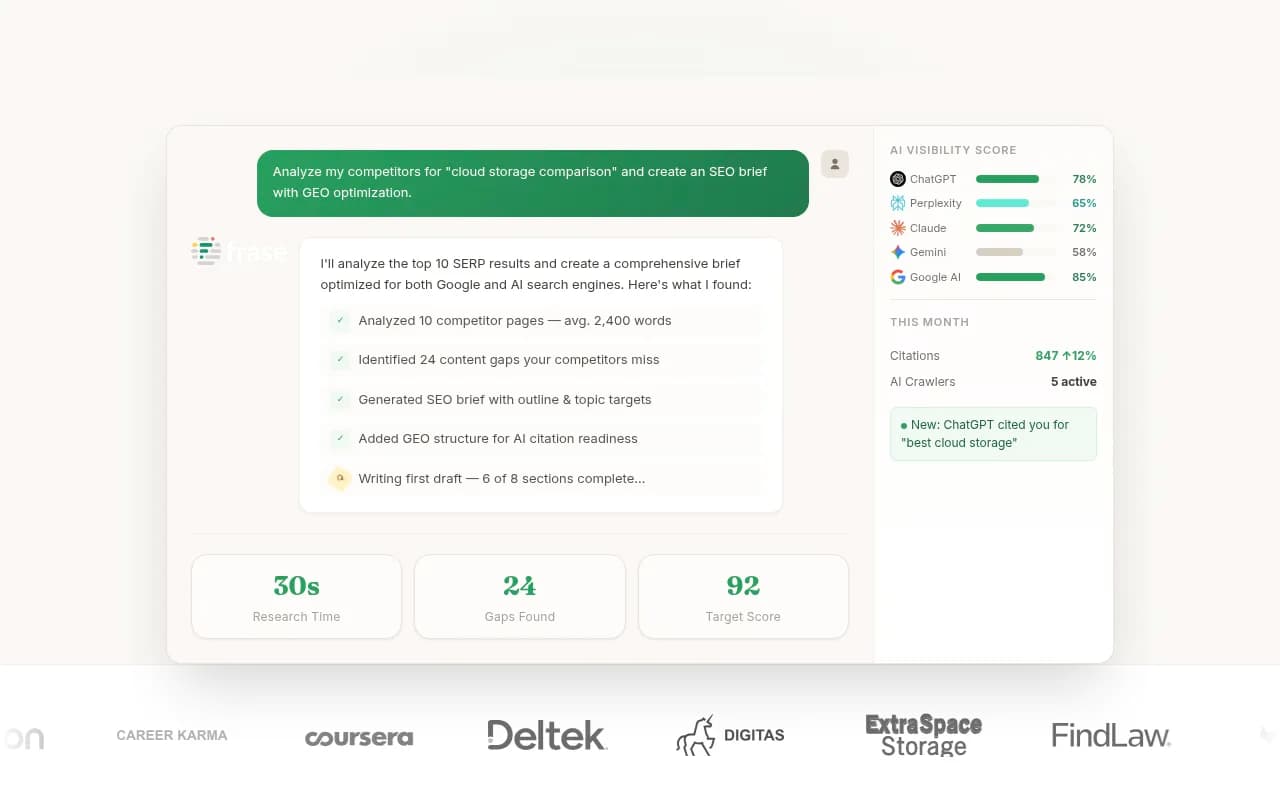
Clearscope is the polished option for teams with human writers who want a grade and a term list. Frase is cheaper and leans on research and briefs.
Writesonic and Copy.ai
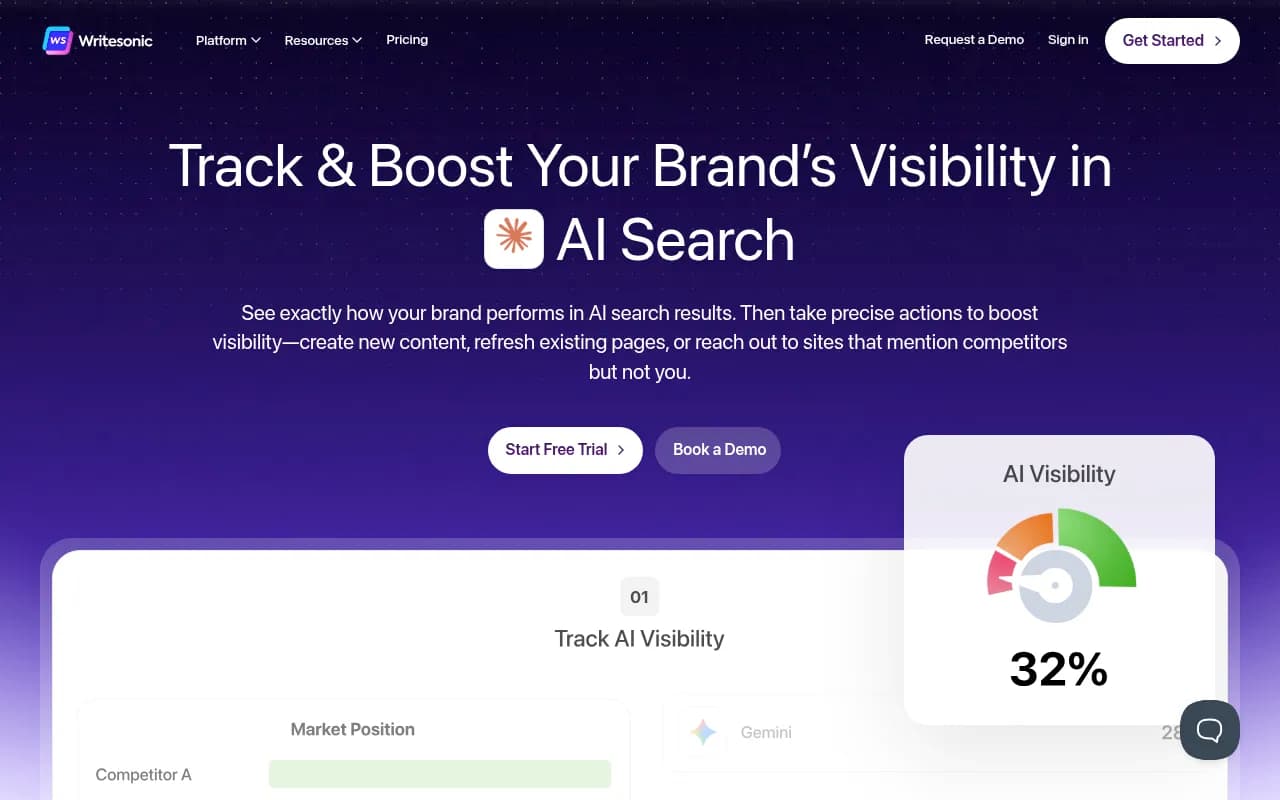
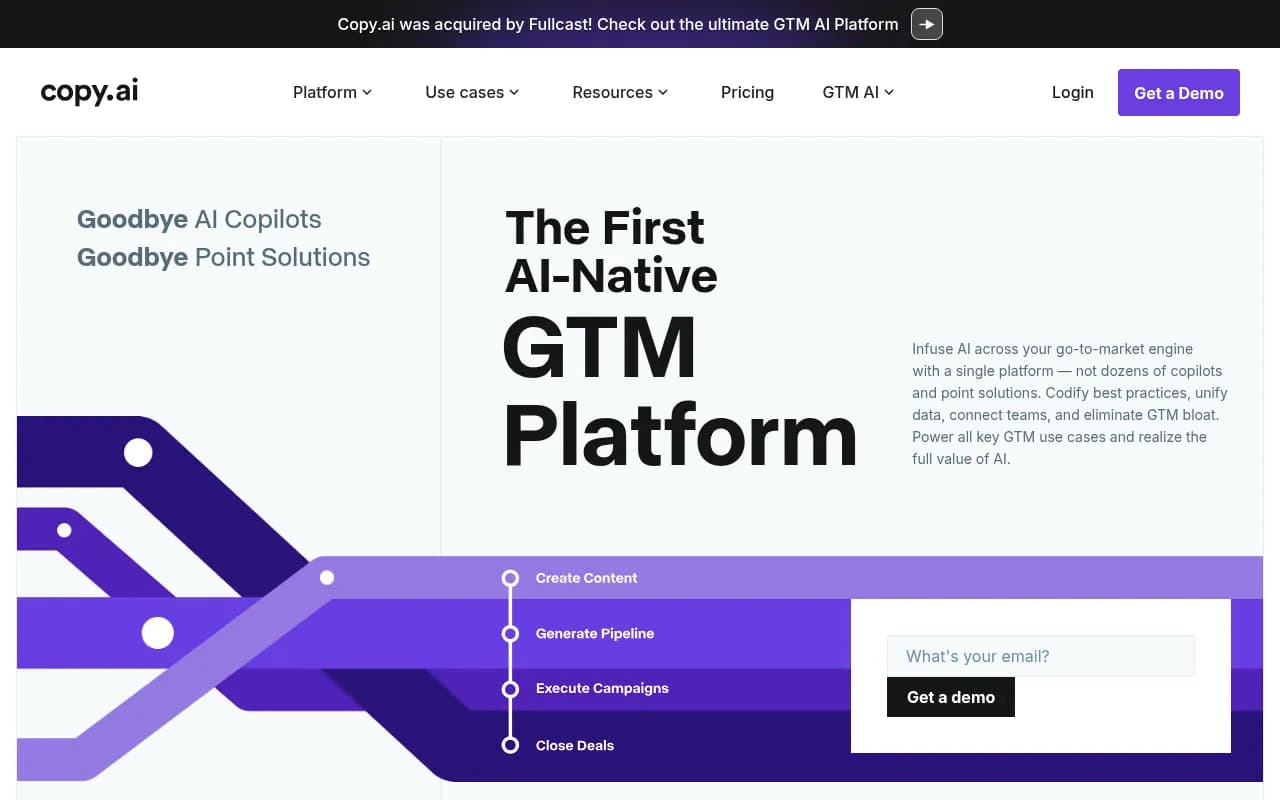
Writesonic has pivoted toward AI search visibility alongside writing, which overlaps with Jasper's new direction. Copy.ai is closer to Jasper in its marketing copy roots.
A workable stack for SEO content teams
The teams I see getting results tend to split the job instead of asking one tool to do everything:
- Research and briefs: Frase, Surfer or Clearscope for what the SERP rewards.
- Drafting and brand governance: Jasper, or another tool with strong voice controls.
- Human edit: add original data, quotes, screenshots and opinions.
- Measure AI visibility: a dedicated platform, because rankings tell you nothing about whether ChatGPT cites you.
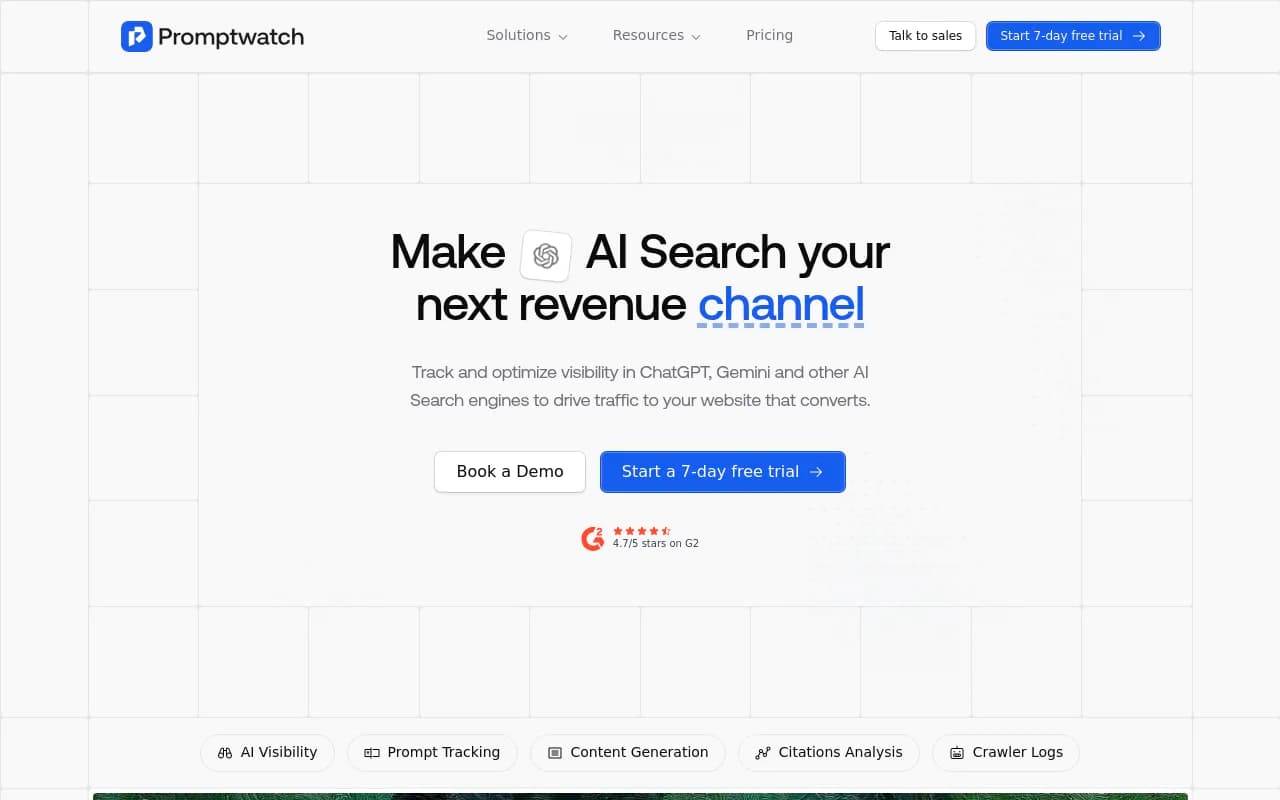
For step four, tools like Promptwatch track how ChatGPT, Gemini, Perplexity and Google AI Overviews mention and cite your brand, then use content gap analysis and a Content Agent to produce pages for the gaps. Its AI crawler logs also show whether AI bots can read the pages you publish, which a writing tool cannot tell you.
If you want to compare options before committing, the GEO software directory lists dedicated trackers in one place.
Who should buy Jasper
Good fit
- Marketing teams with several writers or agencies that struggle to keep one voice.
- Companies producing many content types (product, email, social, web) from the same product facts.
- Teams that already have an SEO optimization tool and want a better drafting layer.
Poor fit
- Solo bloggers and affiliate publishers whose main need is ranking data.
- Teams that want one tool to research, optimize and track AI citations. Jasper's GEO features are new and I could not verify them independently.
- Anyone who has not budgeted editor time. Output without review is where AI content programs fail.
How to trial it properly
The 7-day trial is short, so plan it.
- Load your brand voice and style guide on day one, using real examples of your best pages.
- Pick three tasks: a product page, a comparison article and a how-to. These match the formats ChatGPT cites most.
- Write the same pieces in your current process and compare editing time, not just draft quality.
- Run the Jasper GEO Score on your domain and compare it to a free report from a dedicated tool such as Promptwatch's free AI visibility report.
- Ask sales for the real price at your seat count before the trial ends.
Verdict
Jasper is still worth it in 2026 if your problem is consistency and volume. It is a branded production line. It is not a ranking engine, and its AI search features are too new for me to recommend as your only way to measure visibility.
For a team that publishes weekly and already uses Surfer or Clearscope, adding Jasper can cut drafting time and tighten voice. For a team that mostly needs to know why competitors outrank it, spend on research and visibility tooling first. Verify pricing on Jasper's site, run the trial against a real content calendar, and keep an editor in the loop.
FAQ
Is Jasper good for SEO?
It is good for producing on-brand content quickly. It is weaker at SERP analysis, so most SEO teams pair it with an optimization tool.
Does Jasper have a free plan?
Its pricing page describes a 7-day free trial rather than a permanent free tier. Confirm current terms on jasper.ai/pricing.
Can Jasper track AI search visibility?
Jasper says it offers GEO features, including a GEO Score and citation monitoring. Dedicated platforms go further with daily multi-engine prompt tracking, crawler logs and traffic attribution.
What are the best Jasper alternatives for SEO?
Surfer SEO, Clearscope, Frase, Writesonic and Copy.ai are the most common alternatives, depending on whether you need optimization, research or cheaper drafting.