
Key takeaways
- Writesonic now sells itself as an AI search visibility platform, not just an AI writer. Tracking, site audits and article generation live in one dashboard.
- Plans start around $79/mo billed annually (the pricing page also mentions $99/mo, likely the monthly rate). Confirm on writesonic.com/pricing before you buy.
- The cheaper tiers are limited. Perplexity, Claude, Grok and Google AI Mode tracking is Enterprise-only, and the Action Center and agentic workflows are capped trials below Enterprise.
- Article volume is modest: 15 to 50 AI articles per month on self-serve plans. That matters because ChatGPT cites far more than blog posts.
- Best fit: small teams that want writing and basic AI tracking under one roof. Teams that need deeper tracking or execution should compare it with dedicated GEO platforms.
What Writesonic is in 2026
Wriesonic started as a copywriting tool. You typed a prompt, picked a template, and got a blog intro or an ad. It later added long-form article generation and chat-style products, and competed with Jasper AI and Copy.ai for marketers' budgets.
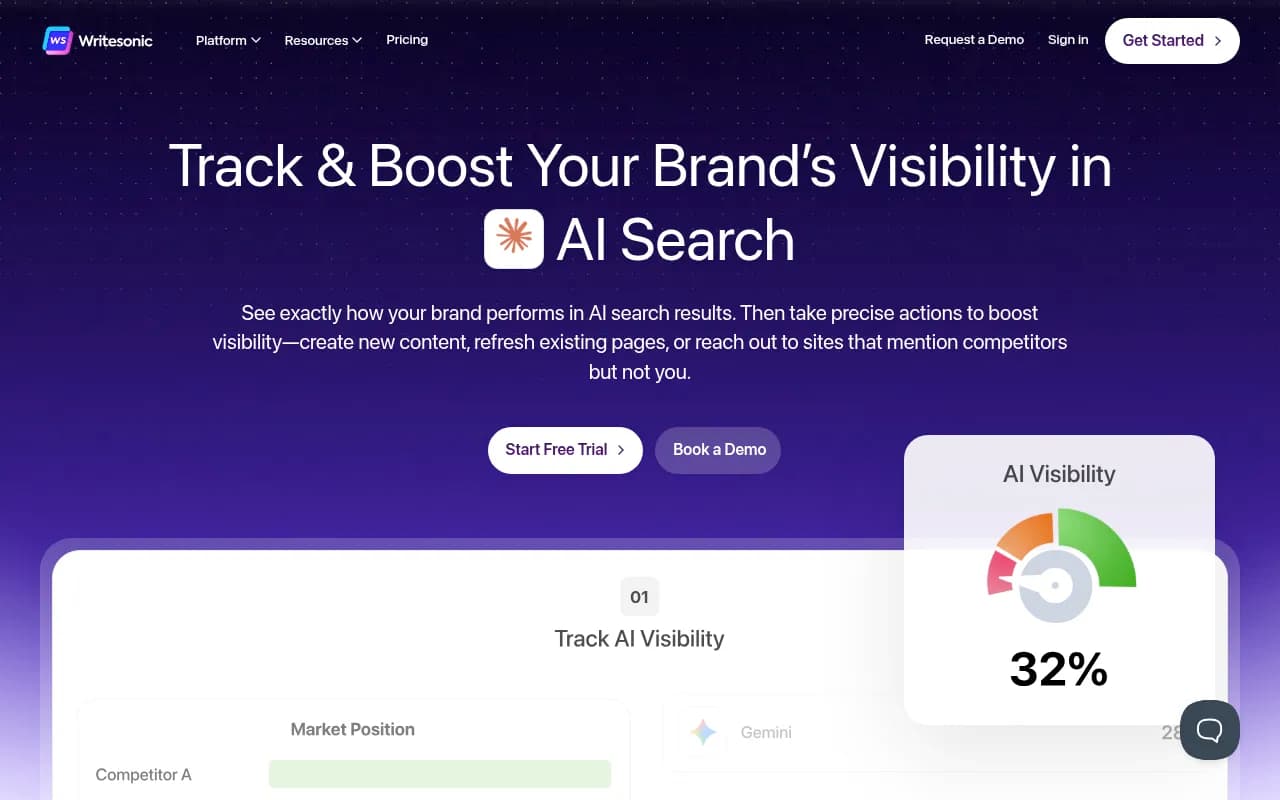
The 2026 version looks different. The official pricing page now calls it an "AI Search Visibility Platform": track how your brand shows up across AI platforms, then "fix it from the same dashboard." That is the same pivot many writing tools have made, because the money moved from keyword-ranked blog posts to being cited in ChatGPT, Gemini and Google AI Overviews.
I think the pivot is sensible. A writing tool that can't tell you what AI engines currently say about you is guessing. The open question is how deep the tracking and the fixing go at each price point, so that is what this review focuses on.
What you get: the feature set
AI visibility tracking
You enter prompts, and Writesonic checks the answers on a daily basis. It records whether your brand appears and which sources get cited. The Enterprise tier covers 10 platforms: ChatGPT, Perplexity, Claude, Gemini, Grok, Google AI Mode, Google AI Overviews, Muse Spark, Bing and Meta AI. Lower tiers cover three: ChatGPT, Gemini and Google AI Overviews.
That gap is the biggest thing to understand before buying. If your buyers use Perplexity or Claude, the self-serve plans will not show you those answers.
Site audits and content creation
Audits check pages for issues that hold back both search and AI crawlers. The writer generates articles, and the plans cap them at 15, 25 and 50 per month depending on the tier. Quality is what you would expect from a modern LLM-based writer: a solid first draft that needs a human editor, fact-checking and your own data.
Action Center and agentic workflows
This is the "fix it" part of the pitch. The Action Center suggests on-page and off-page actions. On Growth you get a trial allowance of 5 off-page and 5 on-page actions per month. The full version is Enterprise only. Agentic workflows are likewise limited to "trial runs" (10, 50 and 100 on the three self-serve plans).
Enterprise-only extras
The Enterprise tier adds Fact Check and Citation Decay, social citations from YouTube, LinkedIn and Reddit, AI search volume, Brand Explorer, Page Tracker, Prompt Explorer, alerts, shopping and agentic commerce, Looker Studio, an outreach agent and an AI search strategist. It also adds SSO/SAML, SOC 2 Type II, HIPAA and GDPR compliance.
Writesonic also runs an AI Ads Library of real ChatGPT ads, and ads monitoring is on all plans. That is a nice research resource if you want to see what advertisers are saying in AI answers.
Writesonic pricing in 2026
Prices below come from the official pricing page and are billed annually, which saves 20%. There is a 7-day free trial. Check the page yourself, because the scraped cards and the page description disagree on the entry price.
| Plan | Price (annual billing) | Prompts tracked | AI articles/mo | Users / projects | Notable limits |
|---|---|---|---|---|---|
| Starter | $79/mo | 50 | 15 | 1 / 1 | ChatGPT, Gemini, AI Overviews only; 10 trial workflow runs |
| Basic | $199/mo | 100 | 25 | 2 / 1 | 50 trial workflow runs |
| Growth | $399/mo | 200 | 50 | 3 / 2 | Sentiment analysis; Action Center trial; priority email support |
| Enterprise | Custom | Custom | Custom | Custom | All 10 platforms, full Action Center, Fact Check, SSO |
Where the pricing gets awkward
- The jump from Starter to Basic is $120/mo for 50 more prompts and 10 more articles. That is not a lot of extra product.
- Sentiment analysis does not arrive until Growth at $399/mo.
- If you want the features that make a GEO platform an execution tool, such as the full Action Center and complete agentic workflows, you have to talk to sales.
- Prompt limits are tight. 50 prompts is enough for a brand check, not for covering a product line across personas and markets.
Does AI-written content match what ChatGPT cites?
This is the question I would ask of any writer that now sells GEO. Promptwatch Data has a report on exactly this: which content types ChatGPT cites the most, covering Sep 28 to Oct 4, 2026.
The breakdown by share of ChatGPT citations:
| Content type | Share of ChatGPT citations |
|---|---|
| Product pages | 22.4% |
| Landing pages | 16.8% |
| Listicles | 13.6% |
| How-to guides | 8.7% |
| Documentation | 7.5% |
| General articles | 6.1% |
| Comparisons | 5.9% |
| News | 5.7% |
| FAQ pages | 3.3% |
| Reviews | 1.7% |
Product and landing pages together are 39% of citations. For commercial prompts, product pages, landing pages, listicles and comparisons add up to almost 70%. Generic blog articles are just 6.1%.
My takeaway, and this is my inference rather than something the report says: a tool that mainly produces 15 to 50 blog articles a month covers a minority of what AI engines cite. To use Writesonic well for GEO, you would aim its writer at listicles, comparisons and how-tos, and fix your product and landing pages by hand. The report's own advice is to treat product and landing pages as the main citation surface, keep docs and FAQs public and crawlable, and collect reviews for branded prompts.
Content also decays. Promptwatch's content half-life data shows news losing half its cited pages within 36 days, while landing pages and docs last longest. Pushing out lots of news-style posts is a poor use of a capped article quota.
Strengths
- One login for tracking, audits and writing, which suits a small team without a dedicated GEO person.
- A free 7-day trial and annual discount make testing cheap.
- Ads monitoring on every plan, which many trackers charge extra for or skip.
- Enterprise security credentials (SOC 2 Type II, HIPAA) are better than what many young GEO vendors offer.
Weaknesses
- Three-platform coverage on self-serve tiers leaves out Perplexity, Claude, Grok and AI Mode.
- The "fix" side is mostly trial-capped below Enterprise.
- Low prompt and article ceilings relative to the price.
- I found nothing in the pricing page about IP-verified AI crawler logs or visitor analytics that tie AI traffic to conversions. If that matters to you, ask Writesonic directly.
How Writesonic compares with alternatives
There are three groups worth comparing: other AI writers, SEO content optimizers, and dedicated GEO platforms.
| Tool | Type | Best for |
|---|---|---|
| Writesonic | Writer plus AI tracking | Small teams that want drafts and basic visibility in one place |
| Jasper | AI writer | Brand-voice marketing copy |
| Surfer SEO | Content optimizer | Optimizing drafts to rank in Google |
| Frase | Research and optimization | Briefs and SERP-driven outlines |
| Promptwatch | GEO platform | Tracking, content, crawler logs and traffic in one loop |
| Profound | Enterprise tracking | Large brands that want monitoring |
| Peec AI | Tracker | Straightforward monitoring |
If you mainly want a writer
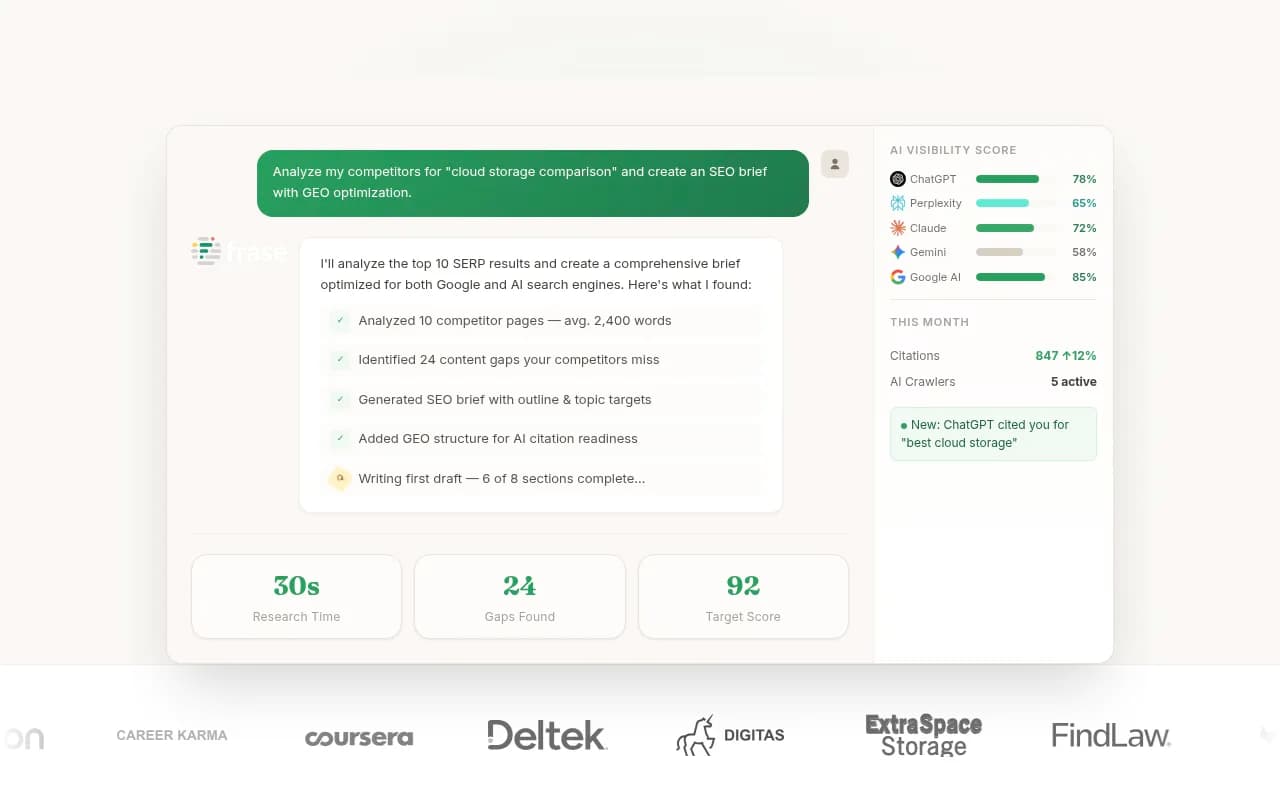
For pure writing, Jasper, Copy.ai and Rytr are the usual comparisons. Rytr is the cheap option. Jasper leans on brand voice. For ranking-driven editing, Surfer SEO, Frase and Clearscope tell you what to cover based on top-ranking pages.
If you mainly want AI visibility
If tracking and fixing AI visibility is the job, a dedicated platform is the better starting point. Promptwatch is the one we use at 1001 SEO Media and recommend. It tracks ChatGPT, Gemini, Claude, Perplexity, Google AI Overviews, Google AI Mode, Copilot and more from the real interfaces, and covers the whole loop: content gap analysis, a Content Agent that publishes to WordPress, Webflow or Framer, IP-verified AI crawler logs, and visitor analytics showing what traffic AI sends. All AI models are available on every paid plan, with the Content Agent starting at the Business tier. Pricing starts at $95/mo for Essential and there is a 7-day free trial; confirm on promptwatch.com/pricing. A head-to-head page is not listed for Writesonic, but the GEO platform comparison covers the field.
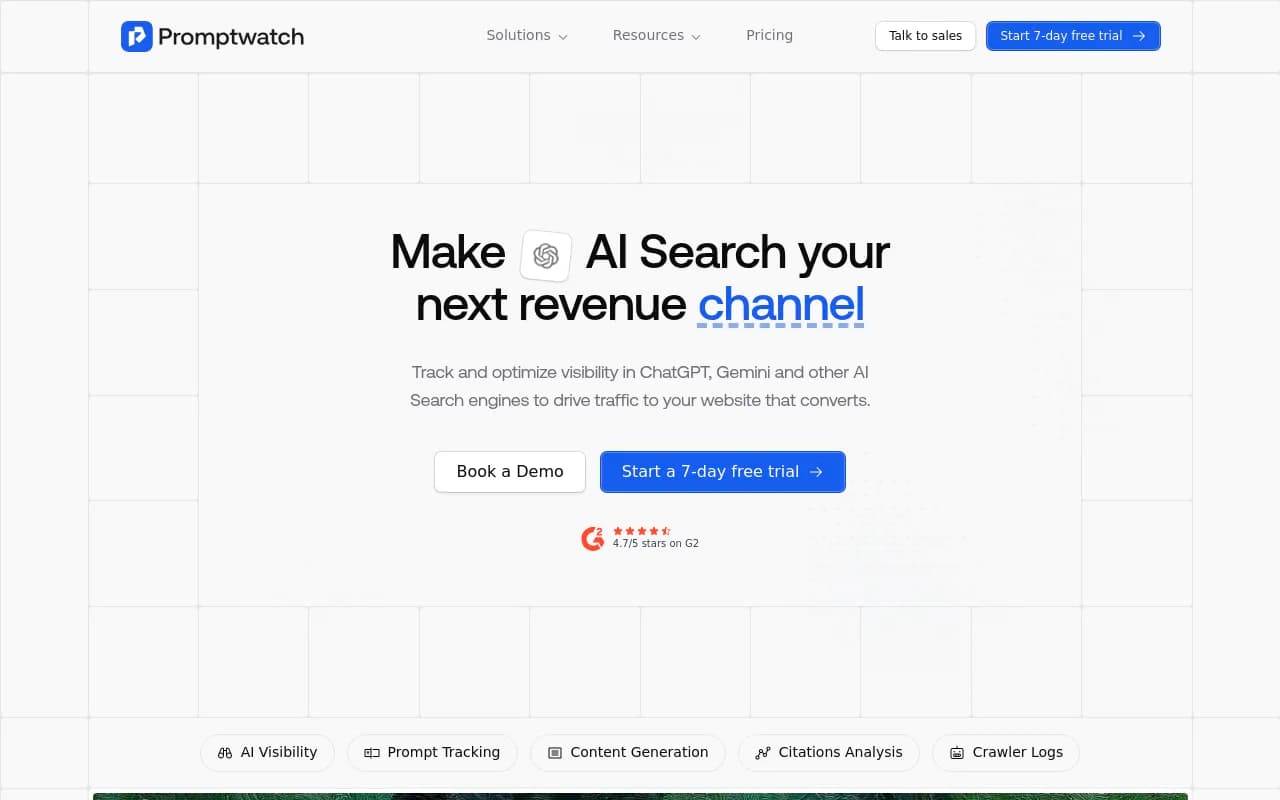
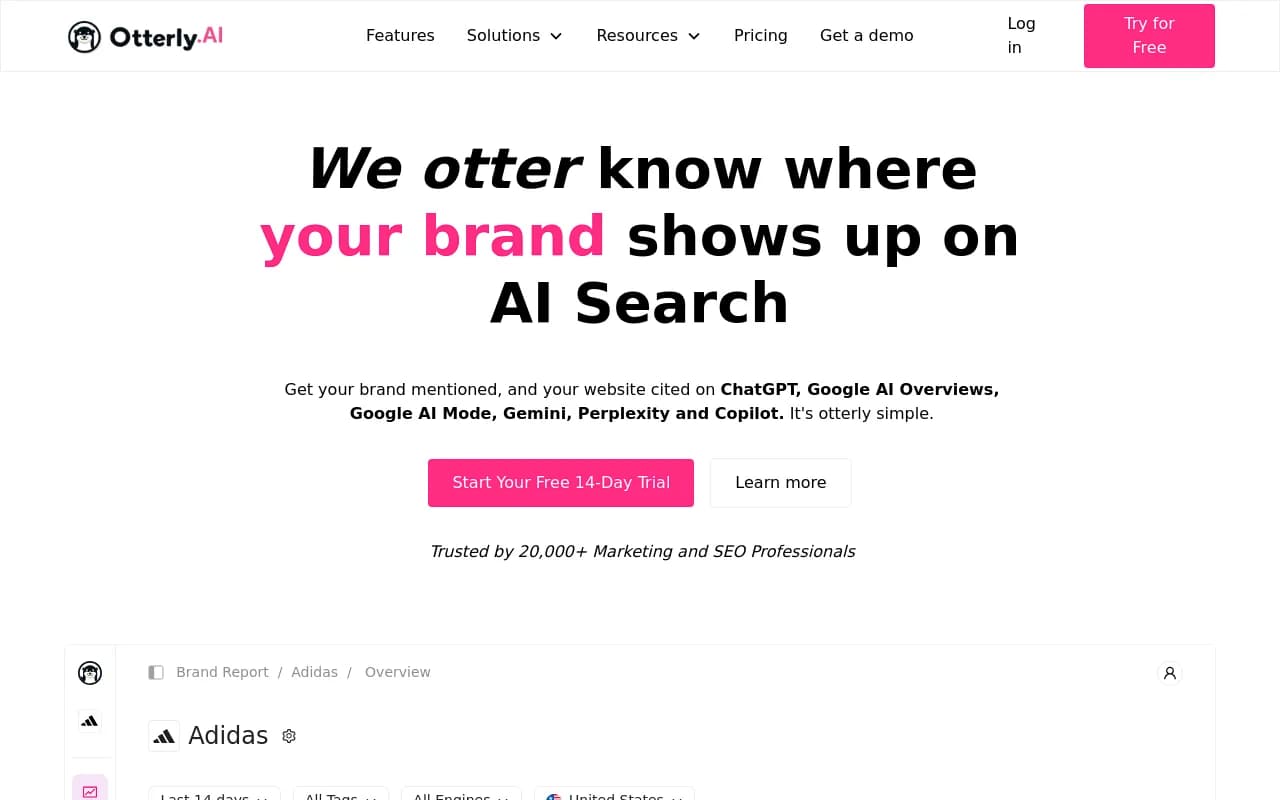
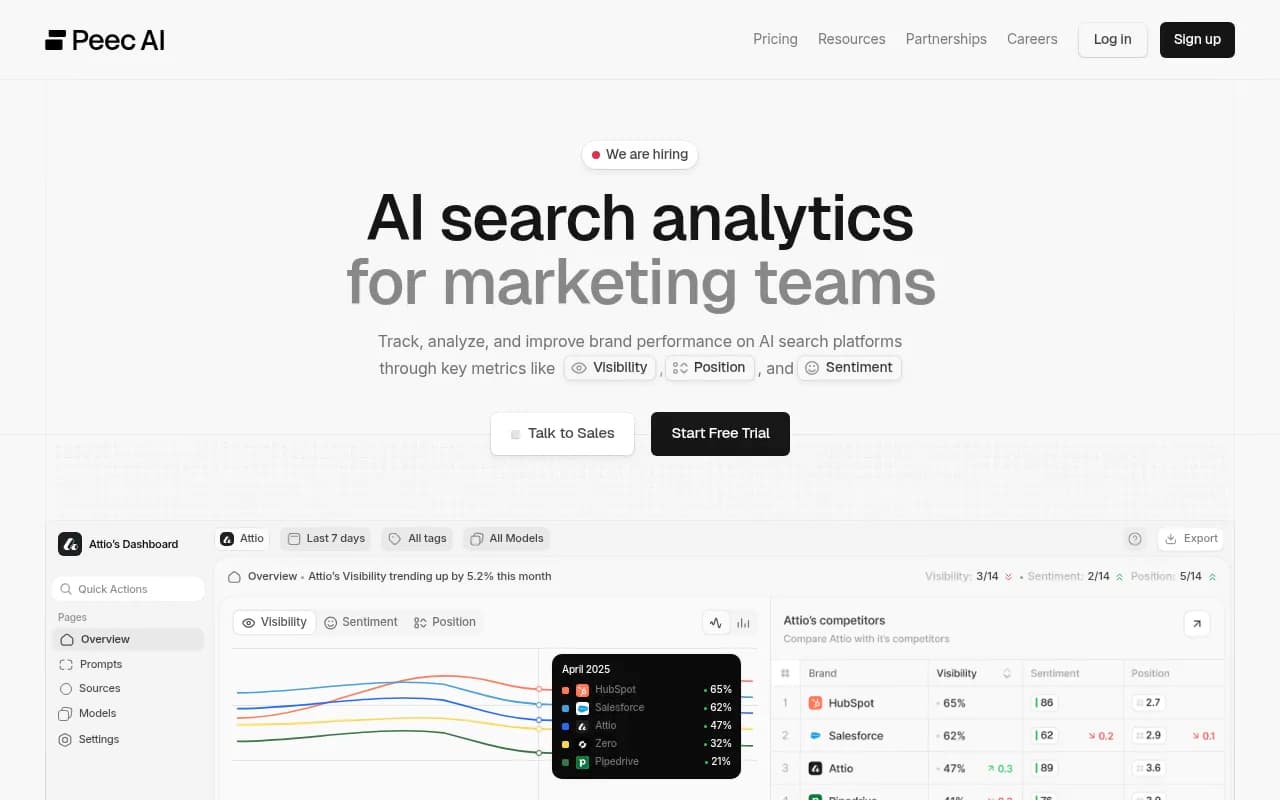
Other trackers worth a look include Profound, Otterly.AI, Peec AI and AthenaHQ. Most stop at monitoring. For a wider shortlist, the GEO software directory at bestgeosoftware.com lists more options.
Who should buy Writesonic
Good fit
- A small marketing team that already needs an AI writer and wants a basic read on ChatGPT, Gemini and AI Overviews.
- A founder or lean content team who values a single bill and a single login more than depth.
- Brands comfortable with the Enterprise tier if they need security certifications.
Weaker fit
- Agencies that need many projects and clients. The self-serve plans cap projects at 1 or 2.
- Teams whose buyers use Perplexity or Claude heavily.
- Anyone who wants to prove that published content got crawled, cited and clicked. Ask Writesonic what it offers there before signing.
How to evaluate it in the 7-day trial
- Load your 20 most important commercial prompts and 10 branded ones. See whether the dashboard separates them.
- Check whether the answers match what you see in ChatGPT yourself. Real-interface collection and API collection can differ.
- Generate one listicle, one comparison and one how-to, not generic blog posts, based on the citation data above.
- Run a site audit on your real site and see whether the findings are specific enough to hand to a developer.
- Ask support which features are trial-capped on your plan and what the limits become after the trial ends.
- Cross-check one tracked prompt in a second tool, such as the free AI visibility report, to see if visibility numbers agree.
Verdict
Wriesonic in 2026 is a reasonable writer with a GEO layer attached. For a small team, the combination is convenient, and the 7-day trial costs nothing. But the layer is thin where it counts: three platforms on self-serve plans, trial-capped actions, and a modest article quota against what ChatGPT really cites, where product and landing pages beat blog posts. If you are buying to improve AI visibility rather than to write faster, test a dedicated GEO platform side by side before committing, and verify Writesonic's current pricing on its own site first.
FAQ
How much does Writesonic cost in 2026?
Self-serve plans run $79/mo (Starter), $199/mo (Basic) and $399/mo (Growth) billed annually, with custom Enterprise pricing. The page description also mentions $99/mo, probably the monthly rate for Starter. Check writesonic.com/pricing.
Does Writesonic track Perplexity and Claude?
Only on Enterprise. Starter, Basic and Growth track ChatGPT, Gemini and Google AI Overviews.
Is Writesonic still an AI writer?
Yes. All plans include monthly AI article quotas, from 15 to 50 on the self-serve tiers.
Is there a free trial?
Yes, a 7-day free trial on self-serve plans.
What content does ChatGPT cite most?
According to Promptwatch Data for Sep 28 to Oct 4, 2026, product pages (22.4%), landing pages (16.8%) and listicles (13.6%) lead. See the full report.