
Key takeaways
- No public dataset, including Promptwatch Data, tracks whether a cited page was written by AI or a human. Any claim that "Tool X gets cited more than Tool Y" is unsupported.
- ChatGPT cites by content type and source quality. In Promptwatch's Sep 28 to Oct 4, 2026 data, product pages (22.4%) and landing pages (16.8%) took 39% of citations.
- Page types decay at different speeds. News lost half its cited pages within 36 days, while landing pages and docs held on past 60 days.
- The writer matters less than the inputs: real facts, a format ChatGPT likes, and a refresh schedule. Pick tools for workflow and measure citations yourself.
The question nobody can answer yet
People keep asking which AI content writer produces pages that ChatGPT cites. I'd love to give you a leaderboard. I can't, and neither can anyone else with honest data.
Promptwatch's research reports classify every ChatGPT citation by content type, such as product page, listicle or how-to. They do not classify by authorship. So there is no first-party number for "AI-written pages get cited X% of the time" and none for "Jasper beats Writesonic." Treat any vendor claiming otherwise with suspicion, unless they show their method.
What we do have is solid data on what ChatGPT cites and for how long. That is more useful than a fake leaderboard, because it tells you what to ask your writing tool to produce.
What ChatGPT actually cites
In Promptwatch Data's content type report (Sep 28 to Oct 4, 2026), citations broke down like this across all prompts:
| Content type | Share of ChatGPT citations |
|---|---|
| Product pages | 22.4% |
| Landing pages | 16.8% |
| Listicles | 13.6% |
| How-to guides | 8.7% |
| Documentation | 7.5% |
| General articles | 6.1% |
| Comparisons | 5.9% |
| News | 5.7% |
| FAQ pages | 3.3% |
| Reviews | 1.7% |
Two things stand out. First, 39% of citations go to pages describing what a company sells. Second, editorial formats (listicles, how-tos, comparisons, articles) add up to roughly 43%. The blog post is not the whole game.
That matters for AI writers, because most of them are built to churn out blog articles. If your whole content plan is 1,500-word posts, you are competing for less than half the citation pool.
It changes by prompt intent
The same report splits by intent:
- Commercial prompts like "best CRM for small businesses": product pages 26.0%, landing pages 20.6%, listicles 15.0%, comparisons 7.9%. Those four make up almost 70%.
- Informational prompts: how-to guides rise to 10.7% and documentation to 8.5%.
- Branded prompts: reviews reach 5.6%, more than three times their overall share, and FAQ pages hit 4.8%.
So "which writer?" is the wrong first question. "Which page type for which prompt?" comes first, then pick a tool that can produce it well.
How long AI-written pages stay cited
Publishing is not the finish line. Promptwatch tracked every page ChatGPT cited on July 6, 2026 for 90 days (half-life report). Share of pages still cited:
| Content type | After 30 days | After 60 days |
|---|---|---|
| Landing pages | 78% | 69% |
| Docs | 76% | 67% |
| Comparisons | 72% | 63% |
| Listicles | n/a | 60% |
| Product pages | n/a | 55% |
| Reviews | n/a | 55% |
| How-to guides | n/a | 55% |
| News | n/a | 41% |
Product pages, reviews and how-tos hit half-life at roughly 74 to 77 days. News hits it at 36 days. ChatGPT cited 93% of docs again later, against 77% of news pages, and almost a quarter of news pages were never cited again after day 0.
The practical lesson: bulk-generated news-style posts are the worst bet for durable citations. Comparisons, landing pages and documentation last. If your AI writer's default output is trend commentary, you are making the shortest-lived thing.
What this means for AI-written content
I can't prove AI-written pages are cited less or more. What I can say from the data is where AI drafts usually go wrong relative to what gets cited.
Product and landing pages need real facts
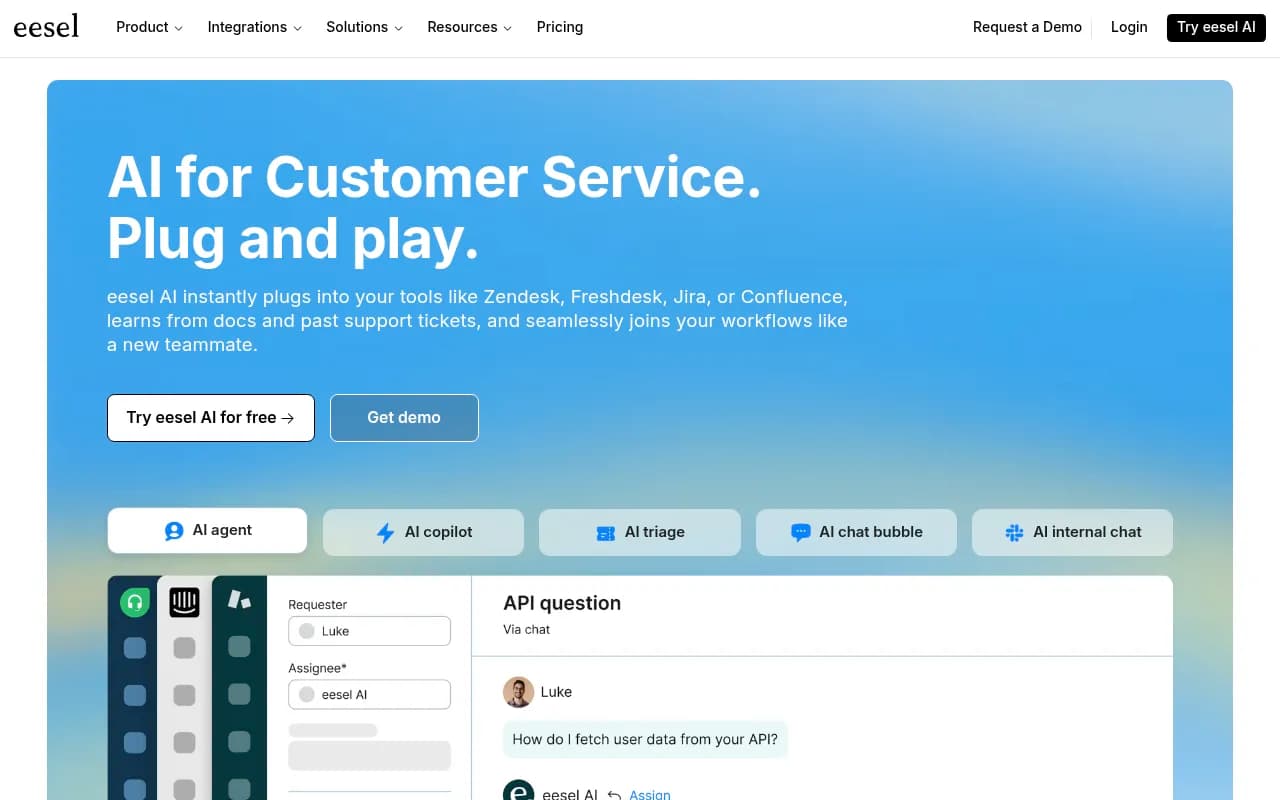
Product and landing pages lead citations, and Promptwatch's recommendation is to keep specs, prices and positioning complete and factual. A generic model does not know your pricing, integrations or limits. A writer that is fed a knowledge base or your existing content has a better shot than one working from a keyword alone. Tools such as eesel AI, which trains on your existing content, are built around that idea, though I have no citation data on them.
Comparisons and listicles are worth the effort
Comparisons are among the longest-lived types and listicles are the third biggest citation source. These need genuine judgment: who is it for, where does each option fall short. Drafting with AI is fine. Publishing the unedited draft is how you end up with a page that says nothing a competitor's page doesn't.
Refresh is a strategy, not a chore
Product pages decay about as fast as how-tos. If an AI tool lets you regenerate a hundred pages but offers no way to see which ones lost citations, you have solved half the problem.
Skip markdown tricks
Markdown files are just 0.05% of AI search citations in Promptwatch's markdown report. Formatting for the bot rather than the reader isn't where citations come from.
Choosing an AI writer when no citation data exists
Since nobody can rank writers by citations, choose on things you can verify. Here are the dimensions I would compare. I have not benchmarked these tools' citation outcomes, so read this as a workflow guide.
| Tool | Strength | Watch out for |
|---|---|---|
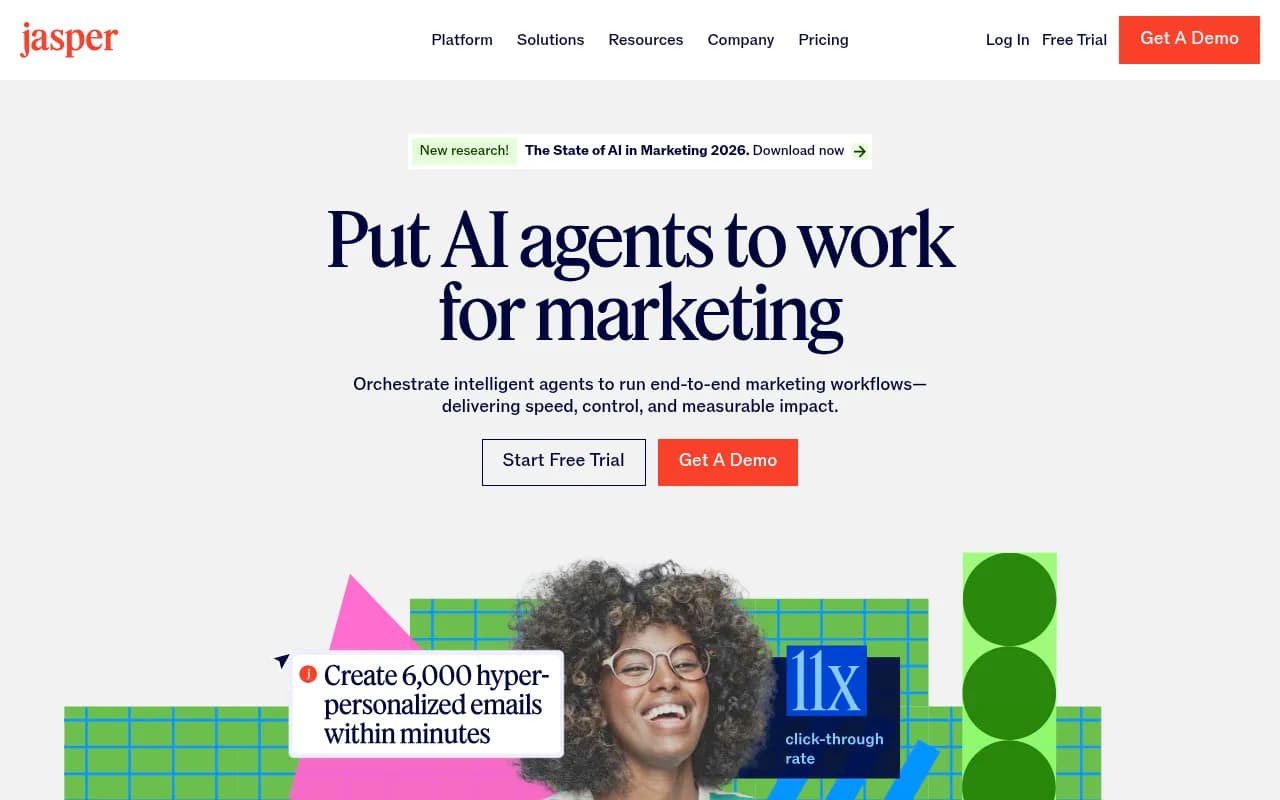
| Jasper | Brand voice and marketing copy | Needs your facts supplied |
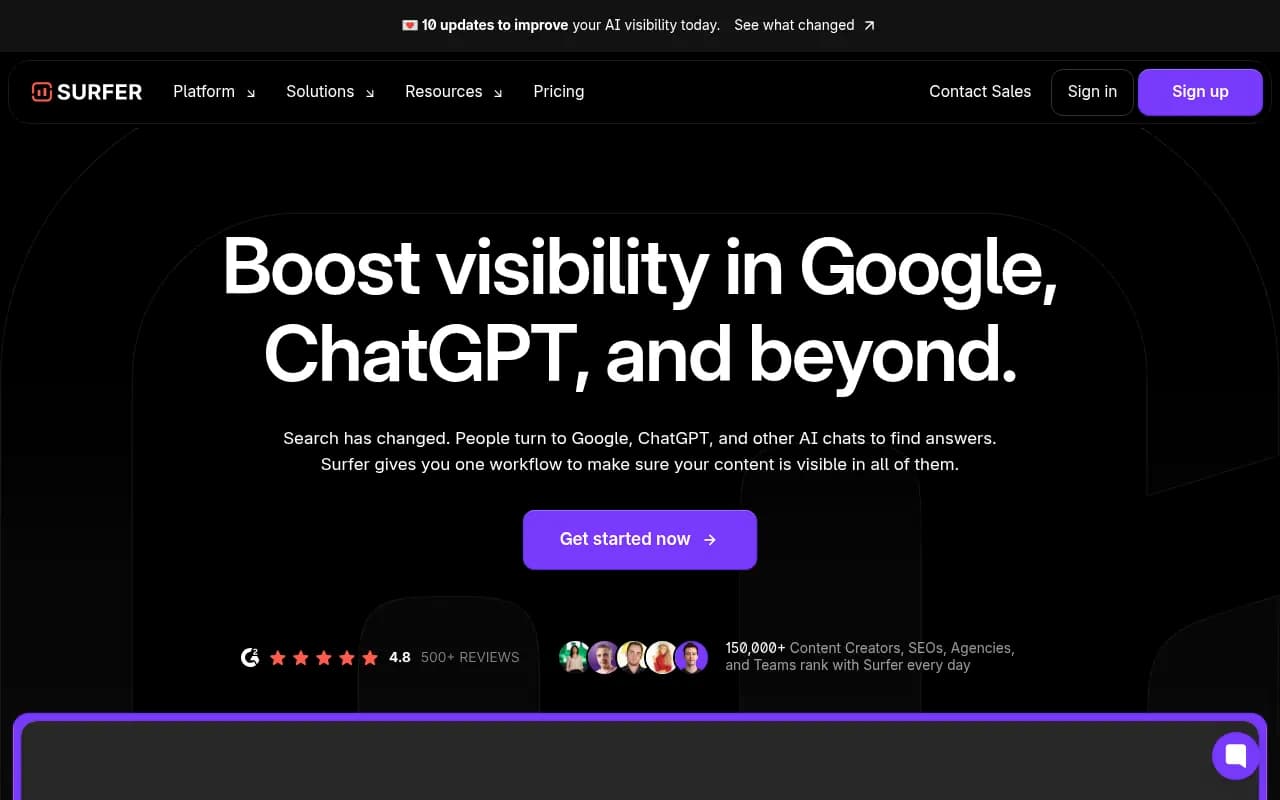
| Surfer SEO | Content scoring against ranking pages | Optimizes for Google patterns first |
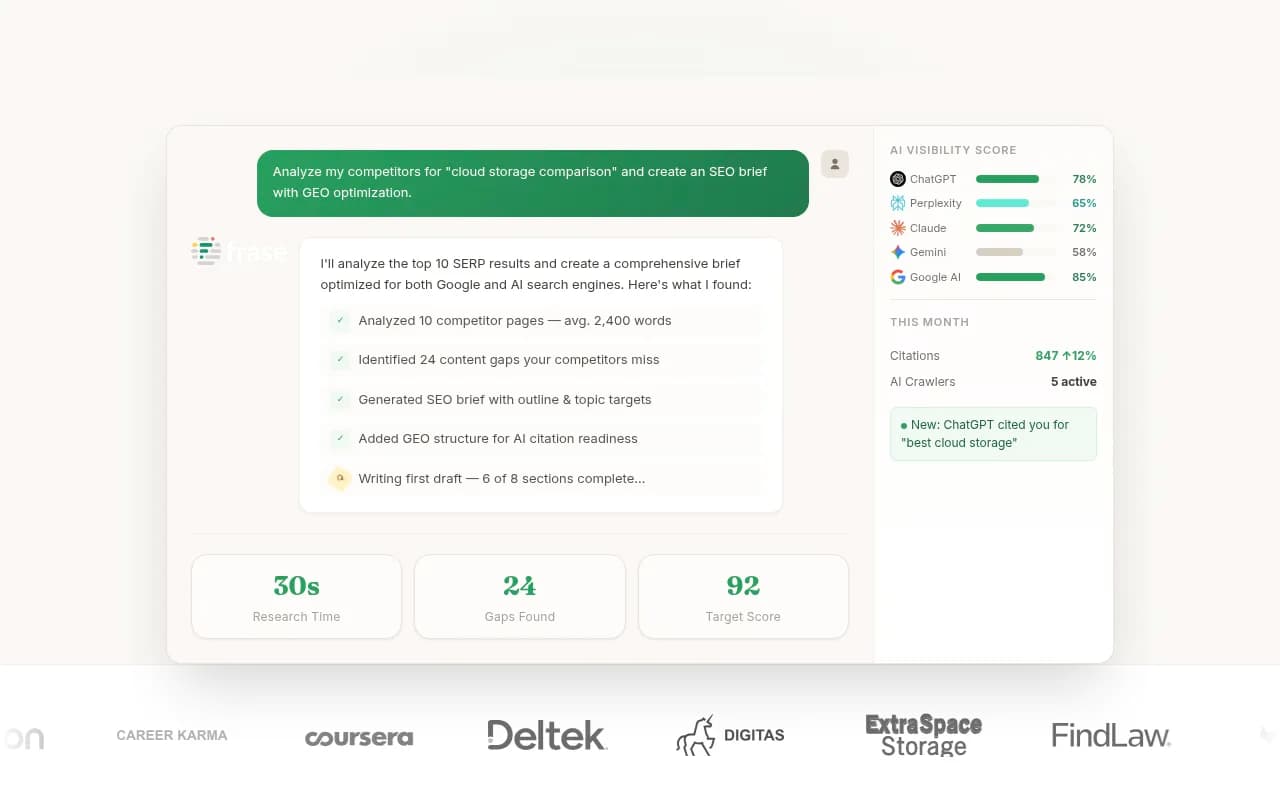
| Frase | Research and briefs from live results | Briefs still need original input |
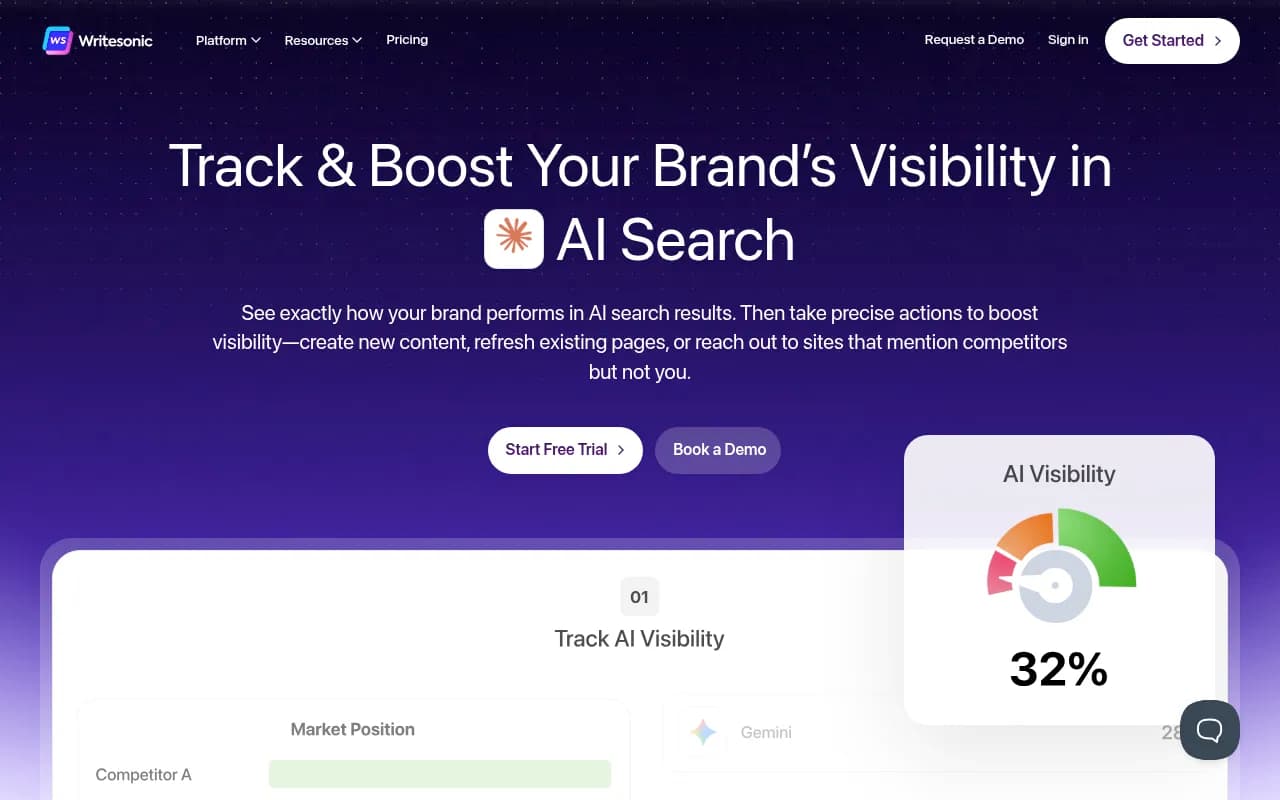
| Writesonic | Writing plus AI visibility tracking | Check what is tracked vs written |
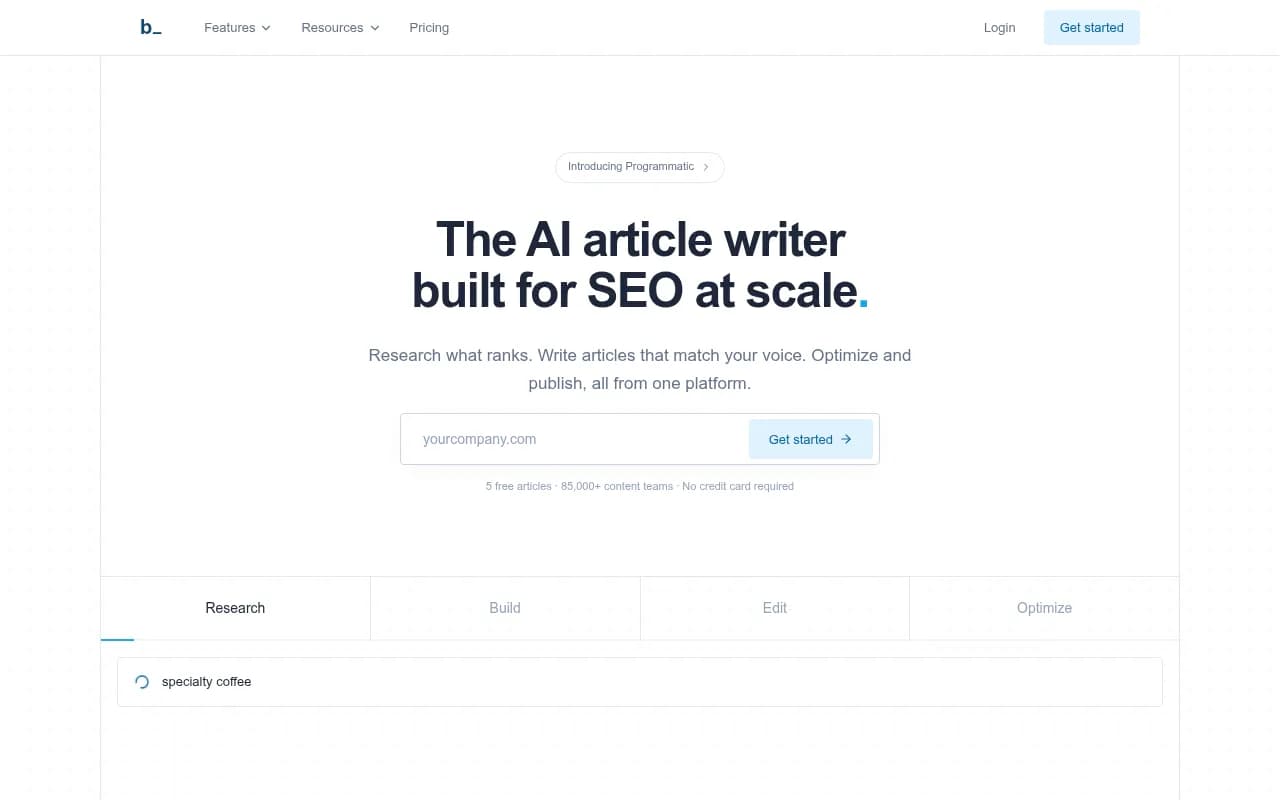
| Byword | Fast bulk articles | Easy to publish thin pages at scale |
My rule of thumb: bulk tools are fine for drafts of how-tos and glossary-style pages. They are risky for product, comparison and landing pages, the types with the highest citation share, because those need accurate, specific claims.
A practical workflow
- Pick prompts your buyers actually ask, and sort them by intent (commercial, informational, branded).
- Map each to a page type from the tables above. Commercial prompts get landing pages, comparisons and listicles. Informational ones get how-tos and docs.
- Draft with whatever AI writer you like, but feed it real specs, prices, quotes and your own data.
- Have a human check every factual claim. ChatGPT can repeat wrong claims it finds on your own pages.
- Publish, then track which pages get crawled and cited.
- Refresh product pages and how-tos around the 60 to 75 day mark, before half of them drop out.
Measuring whether your pages get cited
The only way to answer the AI-written question for your own site is to measure it. Tag pages by how they were produced (AI draft, AI plus heavy edit, human), then compare citation rates by page type, not across types.
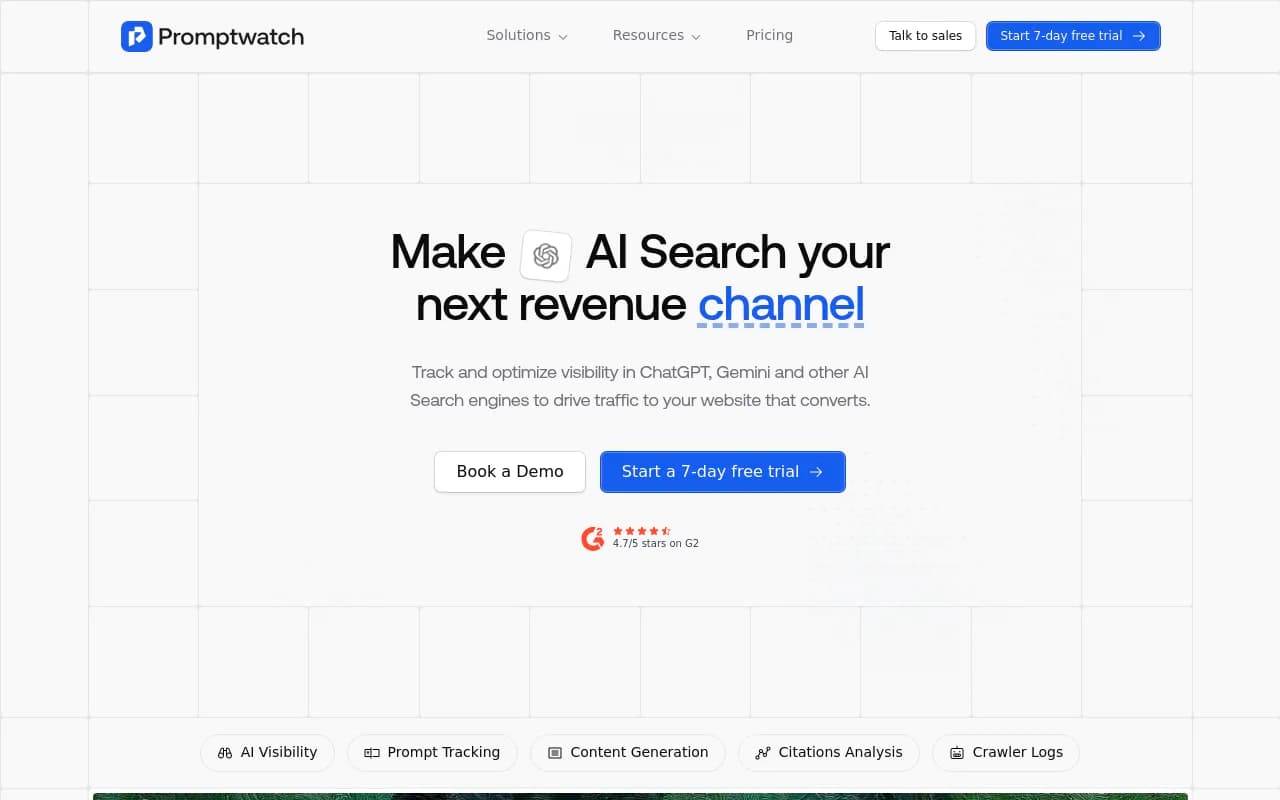
Promptwatch is built for this loop. It tracks which of your pages ChatGPT and other engines cite, shows IP-verified AI crawler logs so you can tell an access problem from a content problem, and its Content Agent can write and publish pages against the gaps it finds, with page tracking afterwards to check whether they were cited. See the Content Agents and prompt tracking pages for details, and confirm current plans at promptwatch.com/pricing.
If you only want a check before spending anything, the free AI visibility report scans how ChatGPT, Gemini and Perplexity talk about your brand. For more trackers to compare, the GEO software directory at bestgeosoftware.com lists many.
Caveats about the data
- The Promptwatch reports cover specific windows (Sep 28 to Oct 4, 2026 for content type; July 6 to Oct 4, 2026 for half-life). Shares shift month to month. The August 2026 data, for example, showed product pages slipping to about 25% while how-tos more than doubled (August report).
- Content type is not authorship. A page can be a product page and be AI-written, or not. The data cannot tell.
- Almost half of ChatGPT responses cite 10 or more domains (unique domains report), so there are many slots. Being one of ten sources is realistic. Being the only one is not.
FAQ
Does ChatGPT penalize AI-written content?
There is no published citation data that says so, and Promptwatch Data doesn't measure authorship. What the data shows is a strong preference for specific page types, not for a particular writer.
Which AI content writer gets cited most?
No one knows. Be wary of any ranking that doesn't disclose method and sample size.
What page type should I write first?
For commercial queries, product and landing pages, then comparisons and listicles. For informational queries, how-to guides and documentation.
How often should I refresh pages?
Product pages, reviews and how-tos reach half-life at about 74 to 77 days in the July to October 2026 data, so a refresh every two months is a sensible starting point. Use news pages only for short bursts.