Key takeaways
- Agencies don't need one magic AI app. They need a stack covering reporting, content production, automation and AI search visibility, with governance across all of it.
- For reporting, AgencyAnalytics now has a single per-client price ($20 per client per month on annual billing), while Databox starts at $64/month annual. Confirm current pricing on their sites before you budget.
- Content tools like Jasper and Copy.ai work best when you sell productized deliverables. The format mix matters as much as volume: Promptwatch Data shows product and landing pages are ChatGPT's most cited content types.
- AI visibility is now a billable service line. Pick a platform that fixes problems, not just a dashboard that reports them.
- Automate the boring glue (Make, Zapier, n8n) before you buy a fifth content tool.
What agencies actually need from AI tools
Most "best AI tools" lists are written for solo marketers. Agencies have different problems. You switch between ten clients a day, quality drops when a junior writer is rushed, approvals live in email threads, and every client wants a monthly report that looks custom but costs you almost nothing to produce.
So the filter I'd use is simple. A tool earns a place in the stack only if it does at least one of these things:
- Raises throughput (faster production, less admin)
- Raises quality (better research, fewer errors, consistent brand voice)
- Makes results measurable (reporting, attribution, learning loops)
If it doesn't, it's a distraction with a subscription fee. The sources I reviewed for this guide, including a stack breakdown from Gend and a 2026 roundup from The Rank Masters, land on the same idea: the winning setup is a stack, not a single product.
The agency constraints worth designing around:
- Context switching across clients without quality falling off a cliff
- Approvals that don't depend on screenshots and email chains
- Brand consistency across writers, designers and account managers
- Reporting at scale, with templates and rollups
- Governance: who can publish, what's allowed, what's auditable
The stack at a glance
| Job | Tools worth a look | Best for |
|---|---|---|
| Client reporting | AgencyAnalytics, Databox | Multi-client dashboards and monthly reports |
| Content production | Jasper, Copy.ai, Writer | Repeatable deliverables across clients |
| SEO content optimization | Surfer SEO, Clearscope, MarketMuse | On-page quality standards |
| Assistants and research | ChatGPT, Perplexity, Notion AI | Drafting, research with citations, internal docs |
| Social | Hootsuite, Agorapulse, Sprout Social | Scheduling and social reporting |
| Automation | Make, Zapier, n8n | Connecting the stack, building report packs |
| CRM and client ops | HubSpot, HighLevel, Vendasta | Closed-loop reporting and white-label delivery |
| AI search visibility | Promptwatch, Profound, Peec AI, Otterly.AI | Selling and proving GEO work |
You won't need all of it. Most agencies I'd consider well run use five or six of these and know exactly why.
Client reporting tools
Reporting is where agencies bleed hours. A good tool turns it into a templated, 20-minute job. A bad one turns it into a monthly argument with a spreadsheet.
AgencyAnalytics
AgencyAnalytics is built for exactly this job: automated client dashboards and reports, pulling from 80+ data sources (Google Analytics, social platforms, SEO tools) with AI summaries through features like Ask AI.
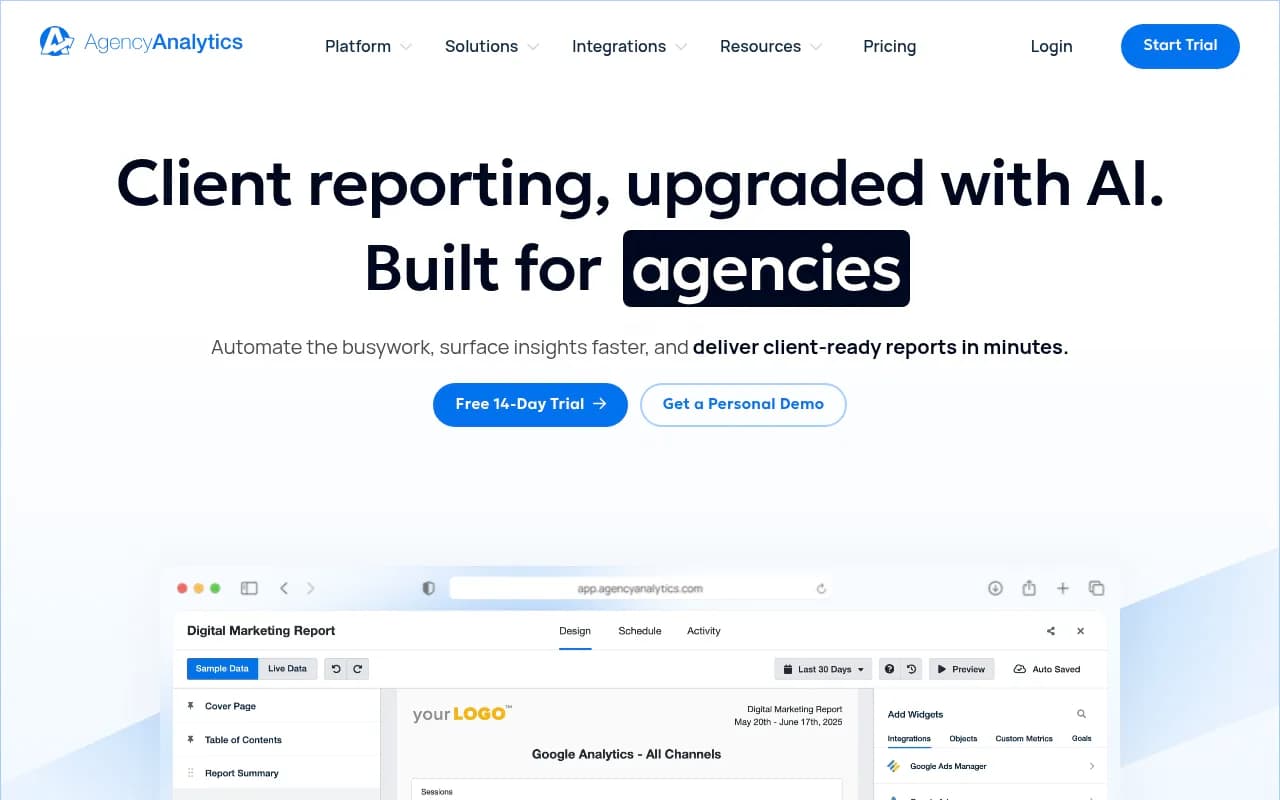
The pricing changed, so older articles are wrong. Per the vendor's pricing page, there is now a single plan at $20 per client per month on annual billing (roughly $25 on monthly billing). It includes unlimited users, data sources, reports and dashboards, plus white-label branding and a custom domain. Agencies with 25 or more clients get quote-based pricing. The old Freelancer, Agency and Plus tiers are gone, even though some third-party blogs still quote "from $79."
A client counts as one client regardless of how many ad accounts they have. At those rates, 10 clients costs about $200 a month and 50 about $1,000 on annual billing. Cost scales linearly, which is simple but means it gets expensive for large rosters. Competitor blogs also list read-only reports and no MCP support as limitations. Treat those with some salt, since they come from a rival vendor.
There are add-ons too: an AI Tracker (beta) at about $20.83/month per 250 credits and Rank Tracker at about $41.67/month per 500 keywords, both billed annually.
Databox
Databox suits agencies that want flexible dashboards and metric-level goals rather than a templated report-per-client model. It starts at $64/month on annual billing ($76.80 monthly) with a free tier of three data sources. Extra sources cost $5.60 each, and white-label is a paid add-on below the Custom plan. Those numbers come from a competitor's comparison page, so check Databox directly.
My take: if your clients want a polished monthly PDF with commentary, AgencyAnalytics is the more natural fit. If your account managers live in live dashboards and goal tracking, Databox is worth a trial.
Other reporting options
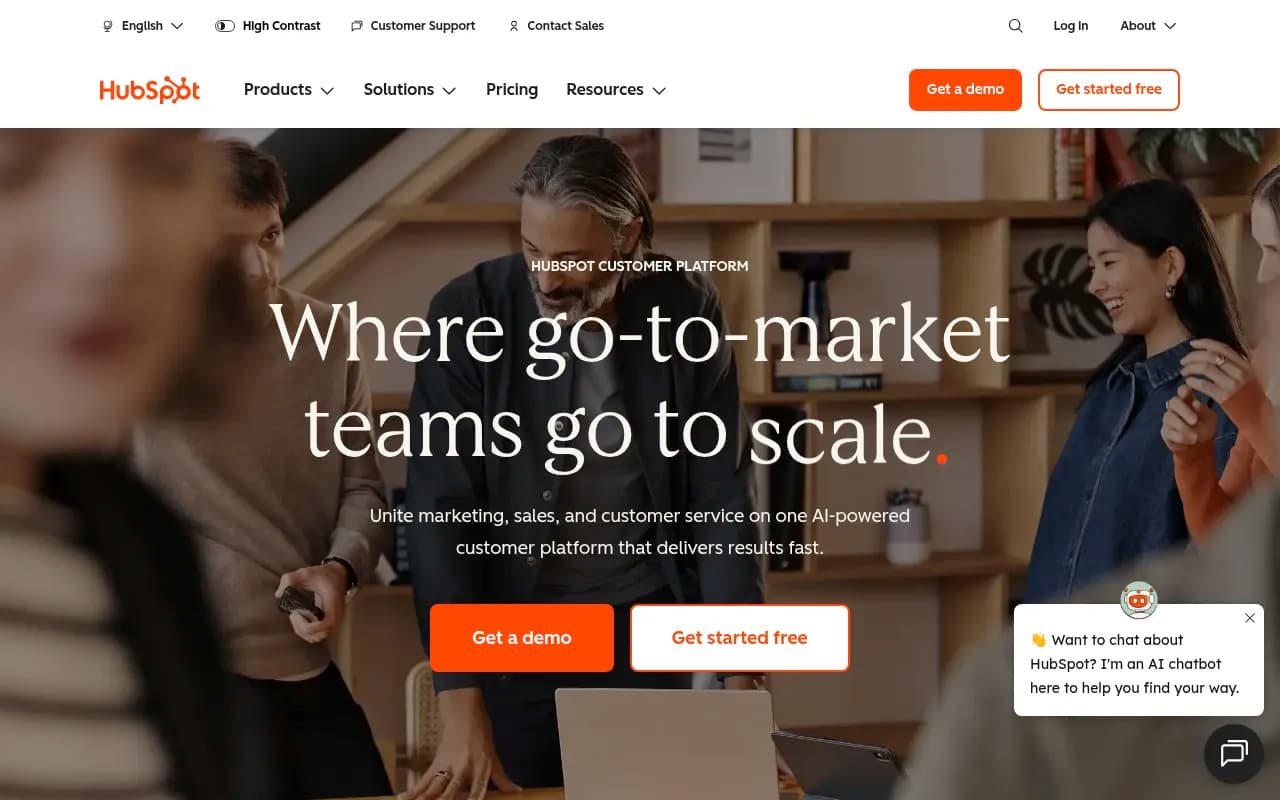
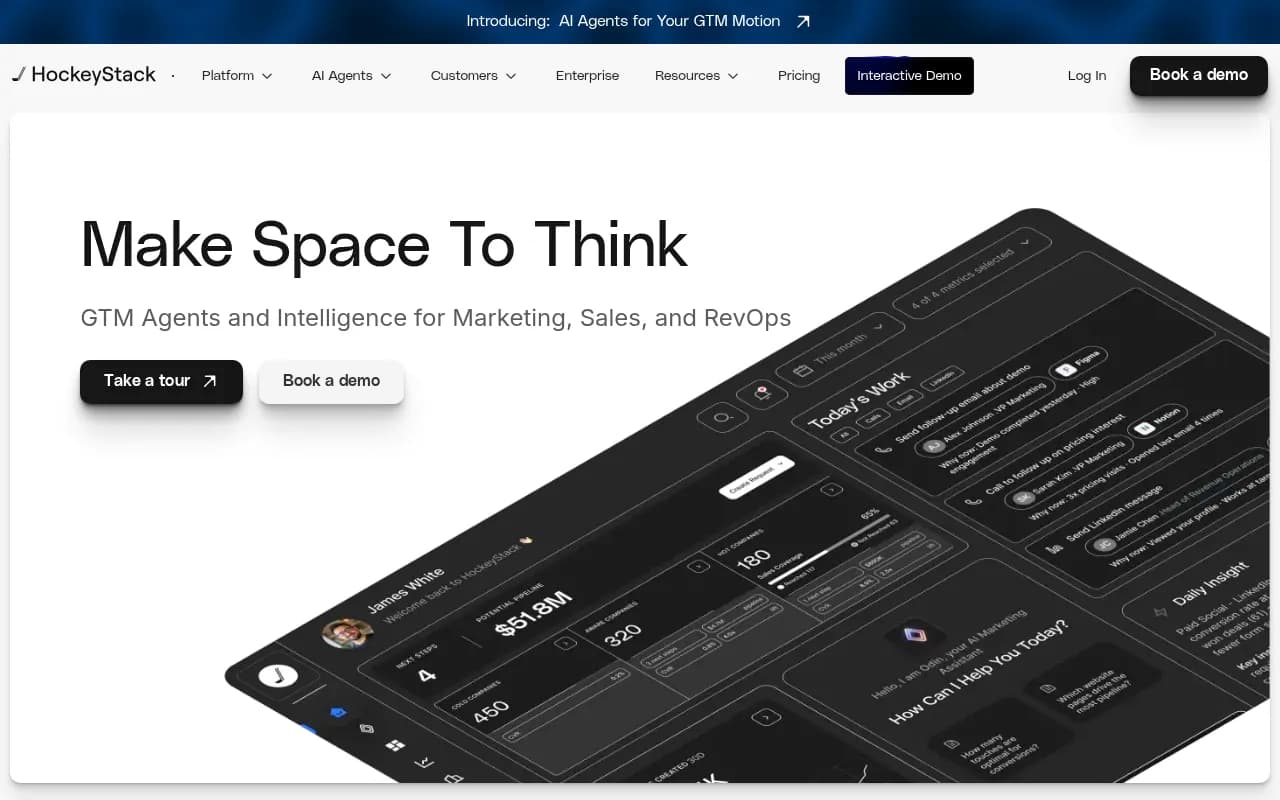
Oviond is often cited at around $5 per client per month, but that's a vendor claim, so verify it. If you're already in the HubSpot ecosystem, HubSpot's Breeze AI layer gives you CRM-based reporting for clients on that platform, and HockeyStack is worth a look for attribution-heavy work.
Content production tools
The trap with content AI is volume. Everyone can now produce 50 articles a month. Very few can produce 50 articles a client will actually be happy to put their name on.
Jasper and Copy.ai
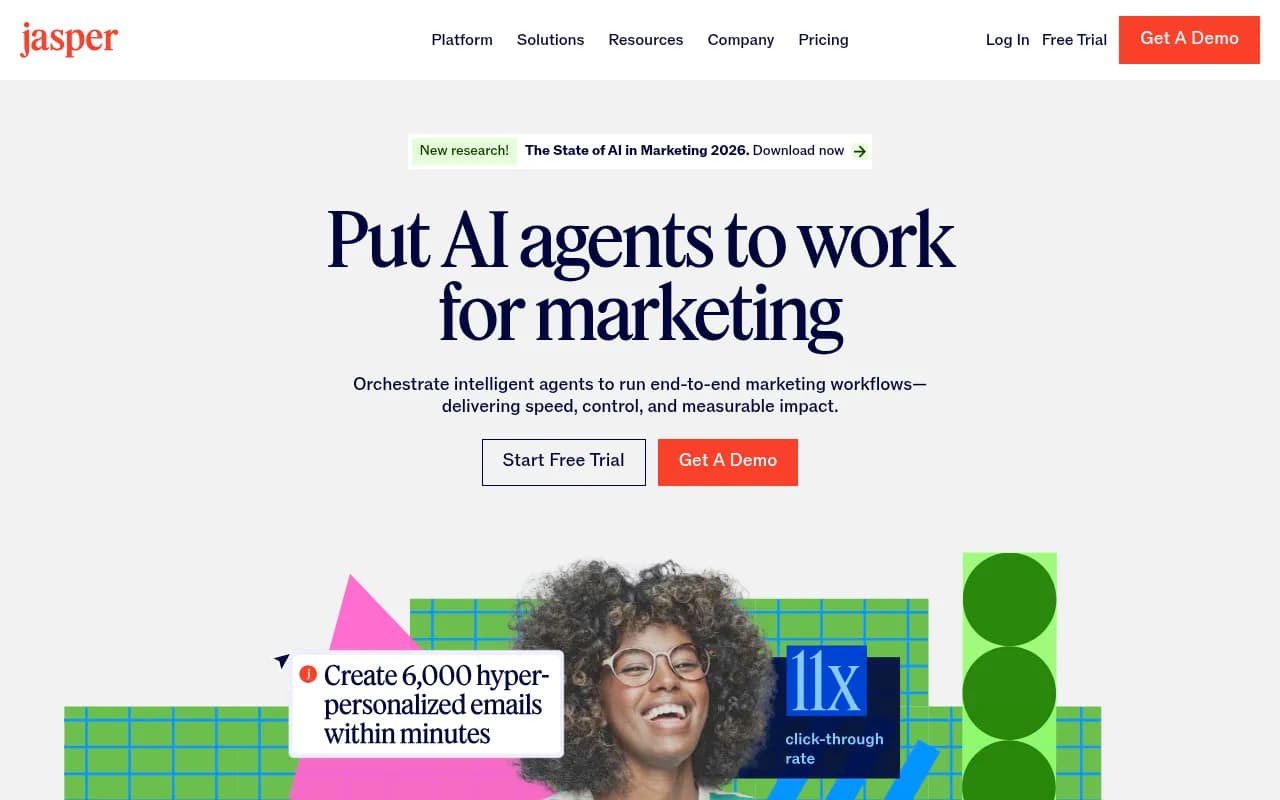
Jasper is the incumbent for brand-voice-aware content: blog posts, landing pages, ads and email copy, with reusable workflows so a new writer doesn't start from a blank page.
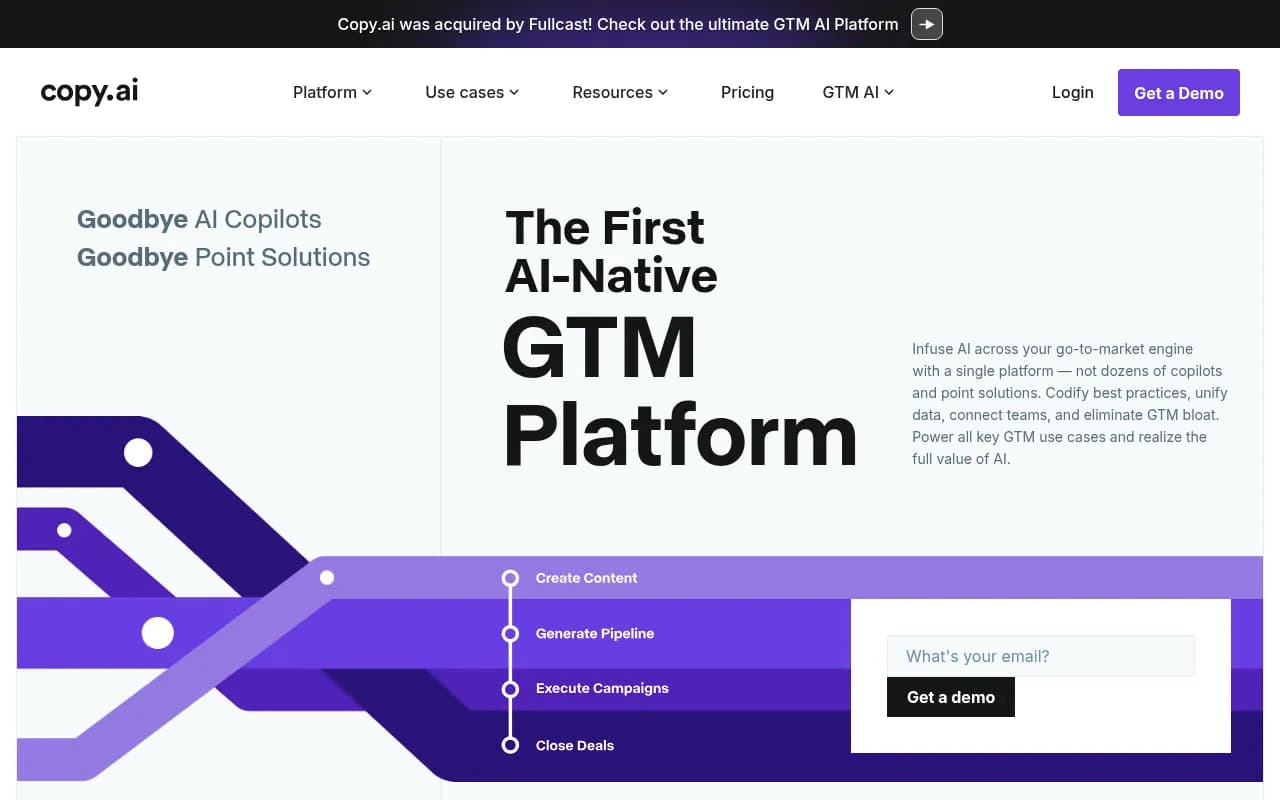
Copy.ai takes a different angle. You feed it a brief, an offer or a webinar, and it turns that into multiple deliverables (blog, social, ad variants, email) through structured workflows. It's strongest when you sell the same service across many clients and need consistent throughput.
I haven't verified current pricing for either, so check their pricing pages. The honest summary: Jasper is better when brand voice is the sticking point, Copy.ai when process repeatability is.
Writer for governed workflows
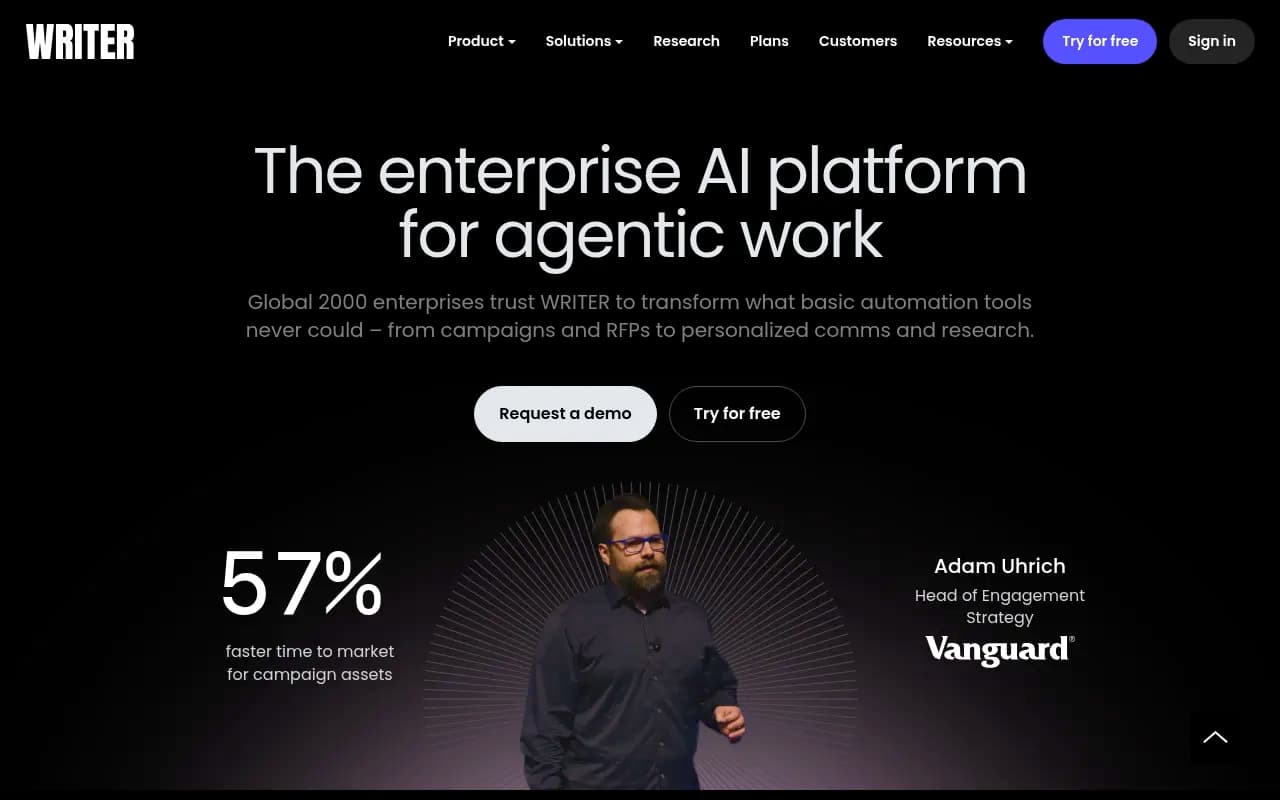
If you serve regulated or enterprise clients, Writer is built around governed, agentic workflows, which matters when a client's legal team wants to know what the AI is allowed to say.
SEO content optimization
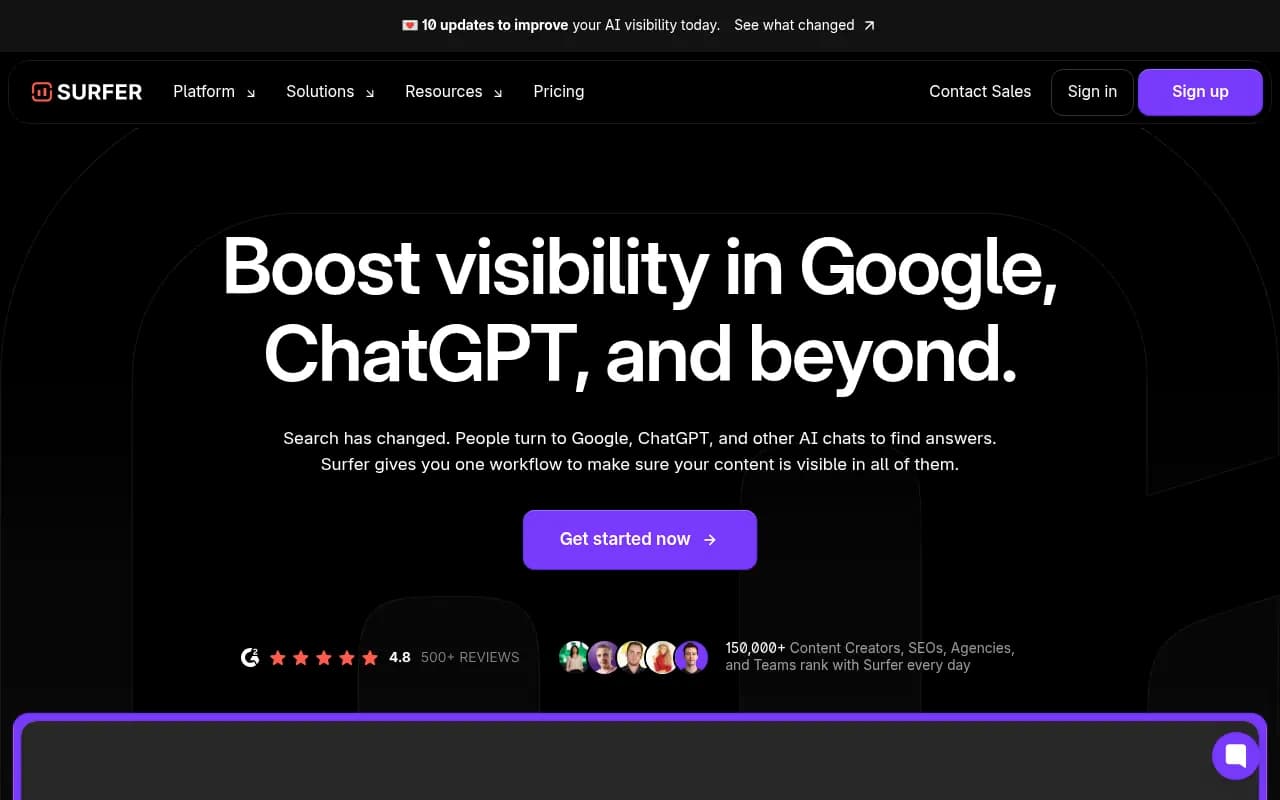
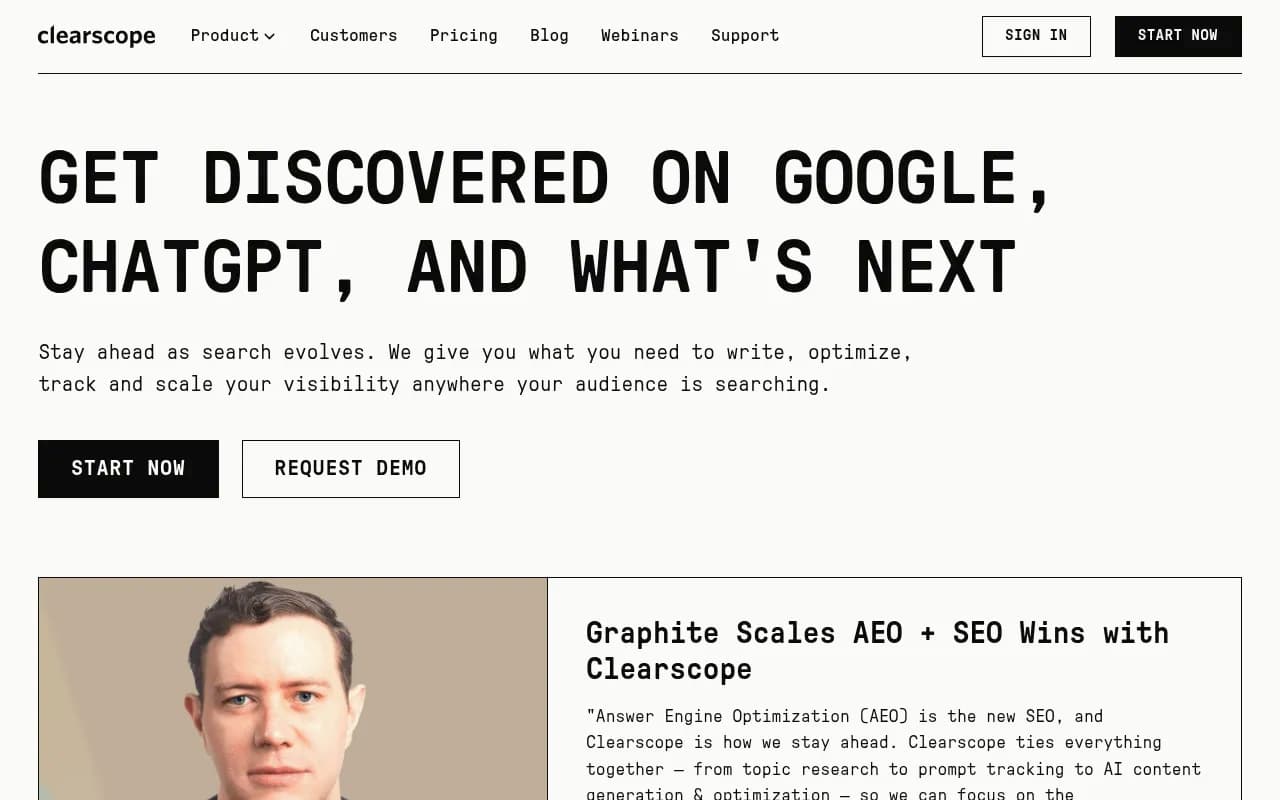
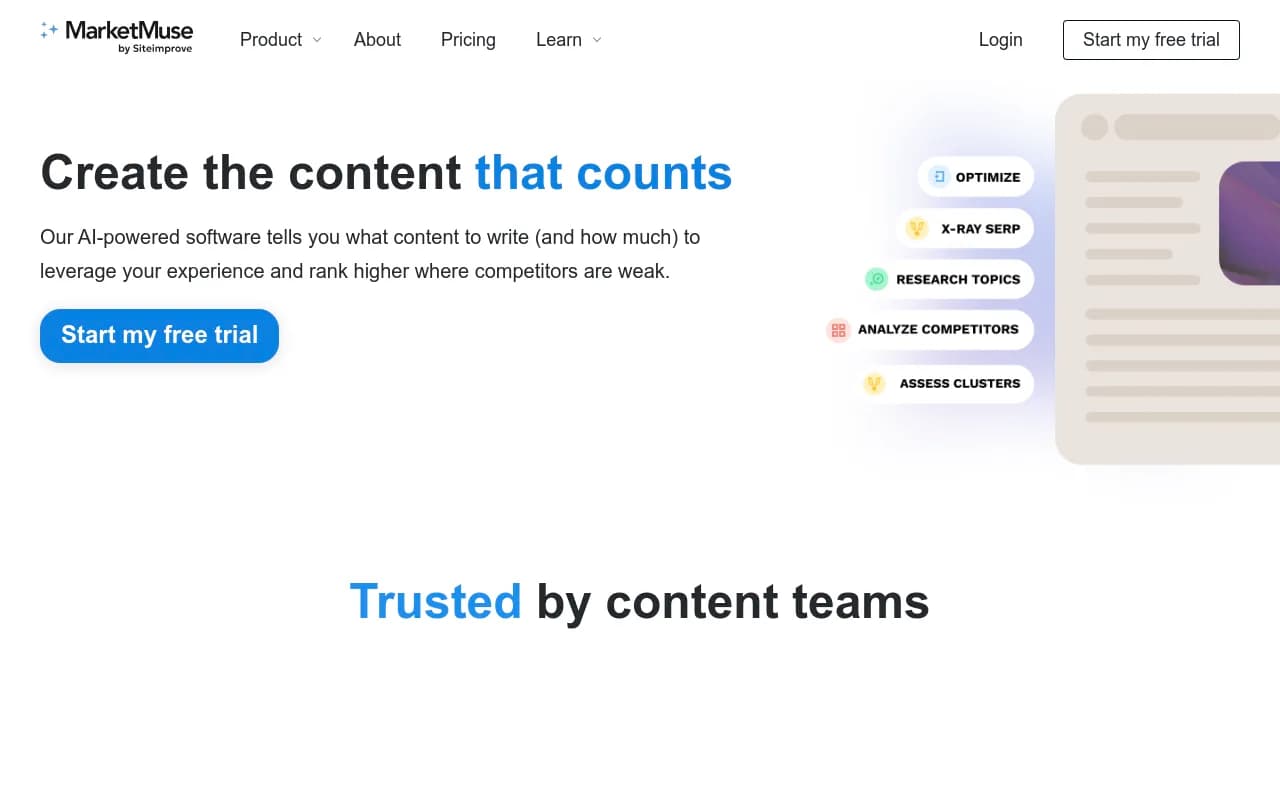
For on-page standards, Surfer SEO, Clearscope and MarketMuse remain the usual picks. Surfer's Content Editor and templates help standardize quality across writers, which is the real agency problem.
Think about format, not just volume
Here's where first-party data helps. Promptwatch's report on ChatGPT citations by content type (Sep 28 to Oct 4, 2026) found product pages are the most cited type at 22.4%, with landing pages at 16.8%. That means about 39% of citations go to pages describing what a company sells. Listicles came in at 13.6%, how-tos at 8.7% and comparisons at 5.9%.
The practical takeaway for agency content plans: don't pour the whole budget into blog posts. Treat product and landing pages as the main citation surface, then add listicles, how-tos and comparisons around them. For branded prompts, reviews climb to 5.6%, more than three times their overall share, so review collection belongs in the plan too.
Also be careful about stale advice on social. In the October 2026 social citations report, ChatGPT drew just 0.46% of its citations from social platforms (Sep 28 to Oct 4), while Google AI Overviews drew 12.2%. The Reddit drop in ChatGPT was sharp: reddit.com fell from about 4% to 0.5% of ChatGPT citations on August 14, 2026. If a pitch deck still says "seed Reddit to win ChatGPT," it's out of date. YouTube, Facebook and Instagram matter more for AI Overviews, and LinkedIn is the top social source for ChatGPT, if a small one.
Assistants and research
ChatGPT is still the workhorse for campaign concepts, messaging matrices, outlines and summarizing long documents and call notes. For client work, use the business or enterprise plans, where OpenAI states it doesn't train on your data. That's a governance decision, not a preference.
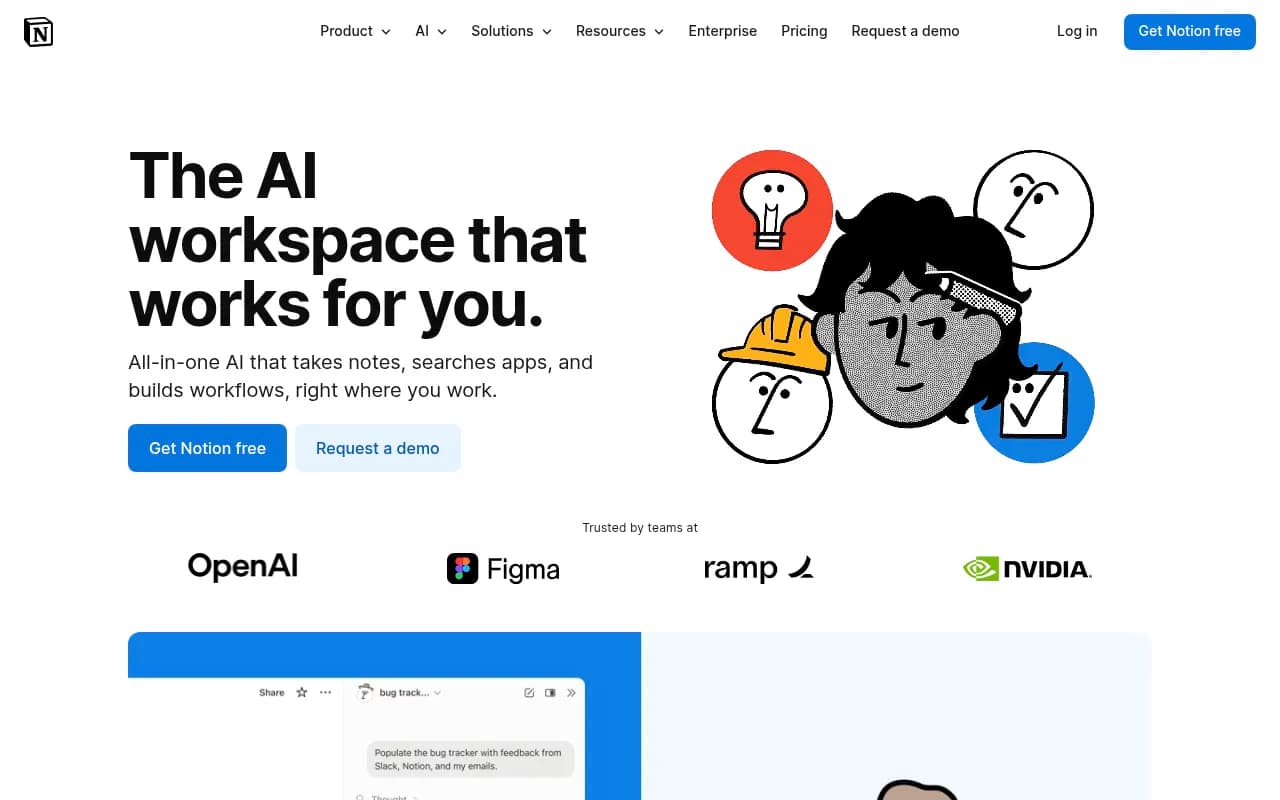
Perplexity is better when you need research with citations you can check before they go into a client deck. Notion AI is a decent home for campaign briefs and internal documentation.
Perplexity
Social media management
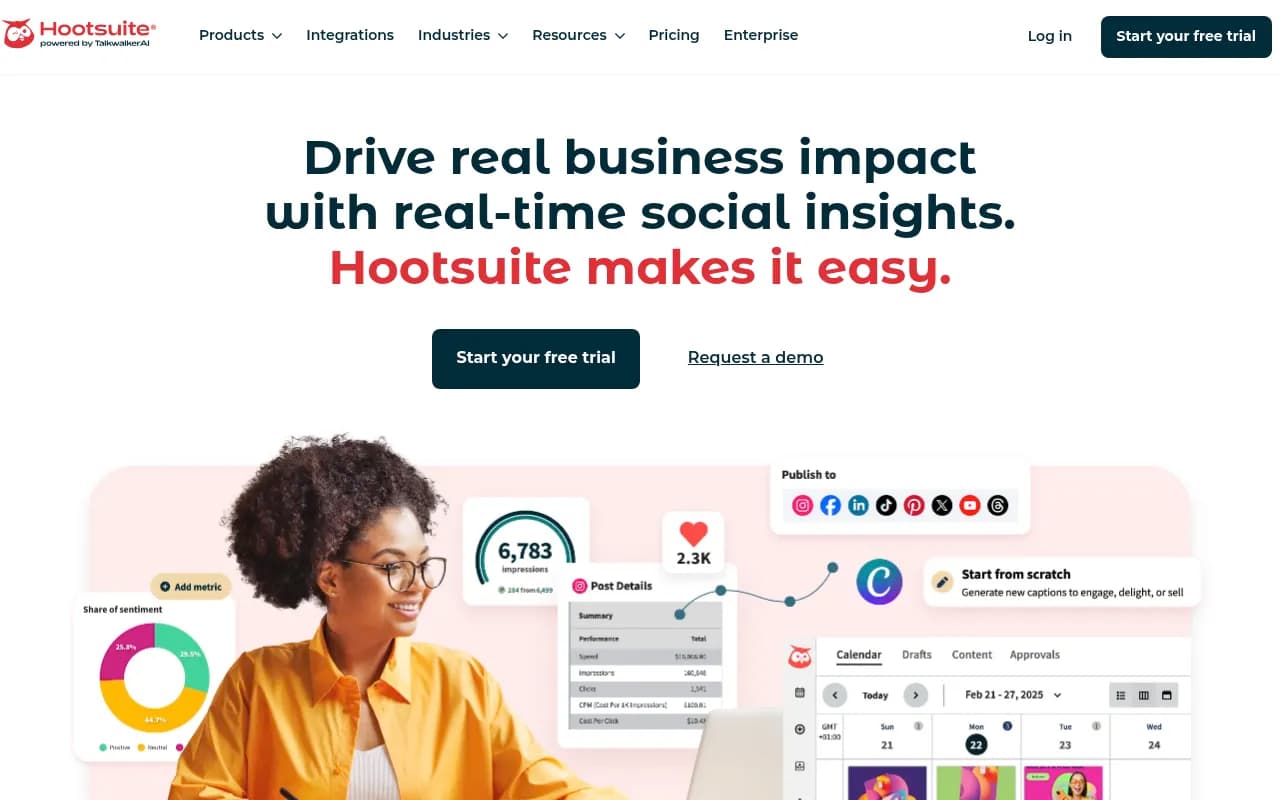
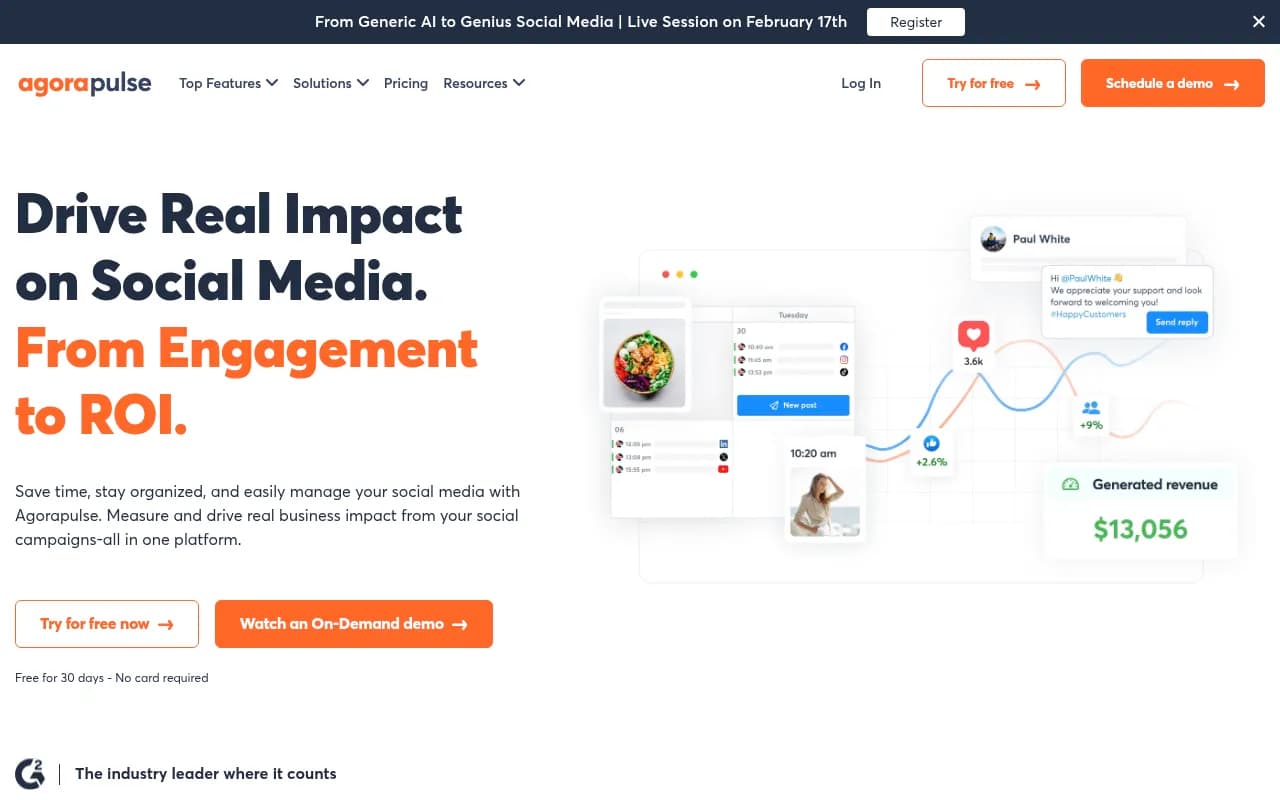
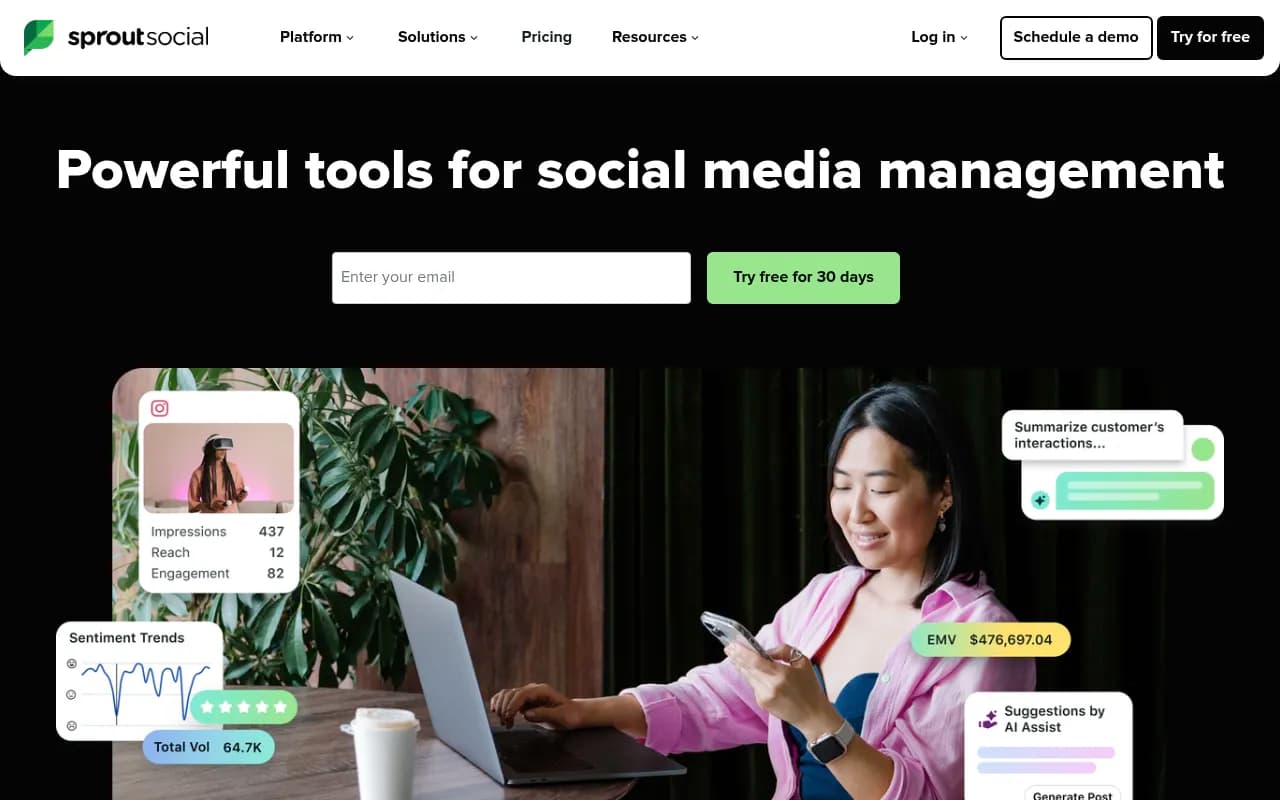
If social is part of your retainers, you want scheduling, approvals and reporting in one place. Hootsuite pitches its OwlyWriter AI features as a way to ideate, create, schedule and report without leaving the dashboard. Agorapulse is strong on the unified inbox, and Sprout Social suits agencies that need heavier analytics.
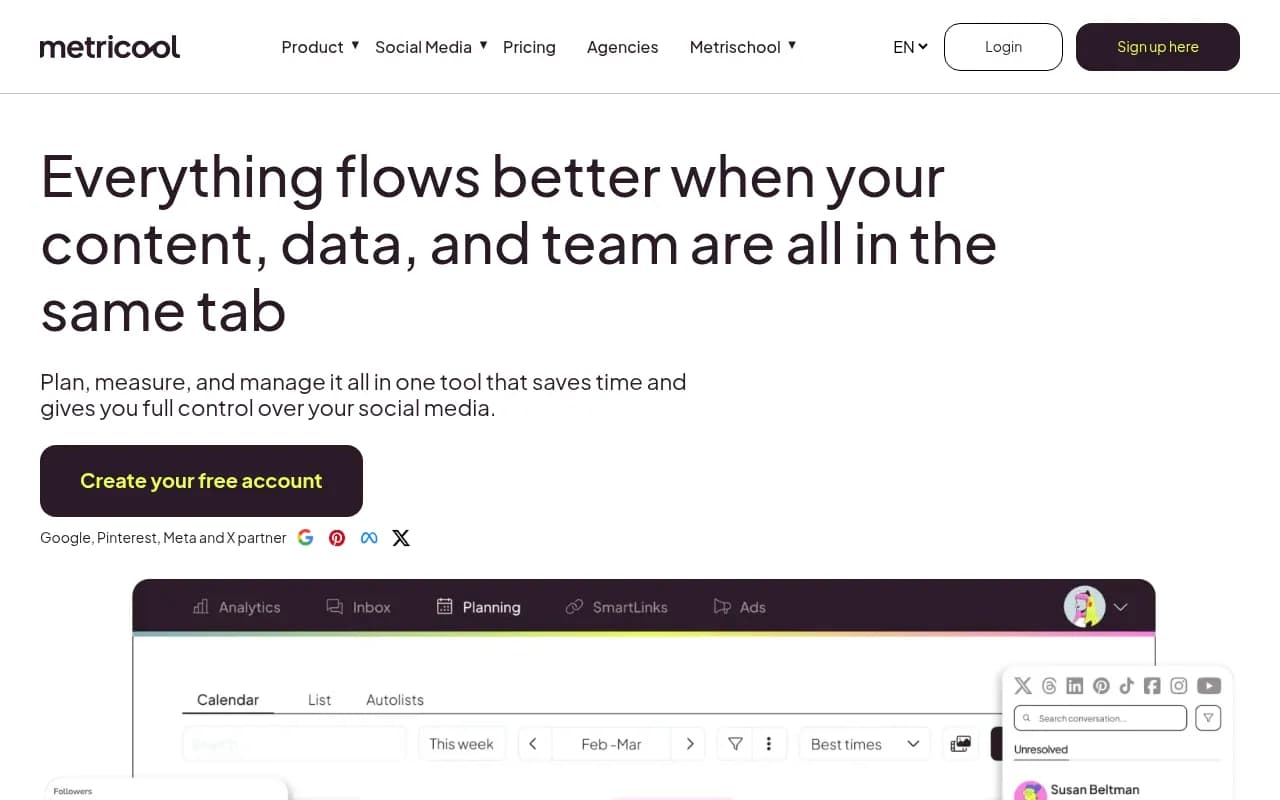
For smaller budgets, Metricool and SocialPilot cover planning and analytics without the enterprise price tag.
Automation: the real scaling lever
This is the category I'd invest in before another writing tool. Automation connects reporting, CRM, project management and content, and it removes the tasks nobody wants to do by hand, like assembling report packs from analytics sources.
Make gives you visual workflows with complex branching. Zapier is the easiest to get started with and has the broadest app coverage. n8n is open source and suits teams comfortable with a little code.
A practical workflow you could run next week: pull analytics into your reporting tool, have automation draft the executive summary, route it to the account manager for review, then send it through the client portal. The human step stays. The collation disappears.
AI visibility: the new service line
Clients are asking where they show up in ChatGPT, Google AI Overviews and Perplexity. That's now something agencies sell, and it needs its own tooling.
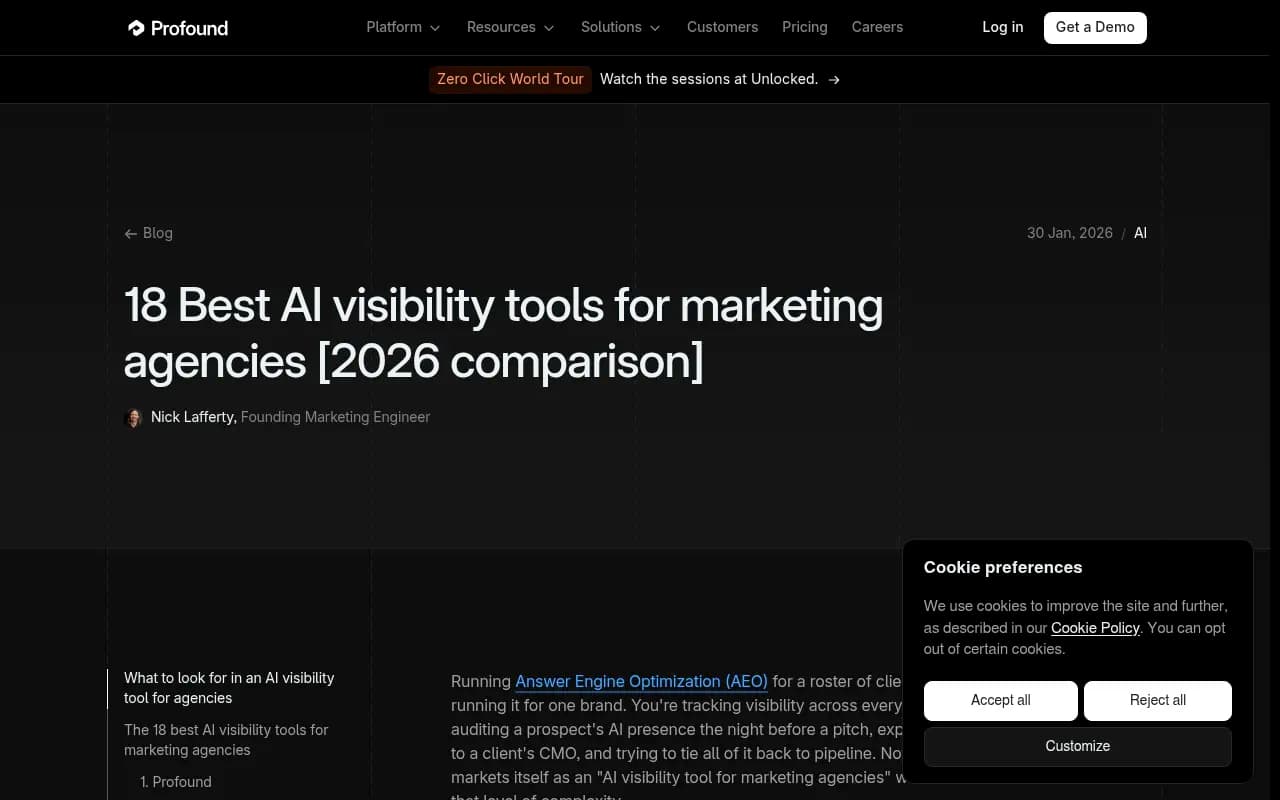
The Profound agency guide to AI visibility tools lists what to look for: client workspaces and pitch environments, data from real prompts, content workflows, and clean reporting and integrations (Looker Studio, GA4, a BI stack). Its own point is a good one: monitoring names the problem, but content workflows let you fix it. Keep in mind the guide is vendor-published, so read its rankings with that in mind.
There's a real split in this category between trackers and platforms. Trackers tell you whether a brand was mentioned. Platforms tell you why, and help you act.
Promptwatch sits on the second side, and it's the one 1001 SEO Media's own team uses. It monitors the actual interfaces of ChatGPT, AI Overviews, AI Mode, Gemini, Perplexity and others, shows IP-verified AI crawler logs, tracks AI-referred visitors, and has a Content Agent that can plan, write and publish to WordPress, Webflow or Framer. For agencies specifically, the Agency plans cover unlimited projects and prompts, pitch projects, 10 seats, white-label PDF reports and branded read-only client access, starting at $199/month (Kick-off) and going to $799/month (Scale). Confirm at promptwatch.com/pricing, and note that Agency plans don't include the Content Agent or AEO articles; those are on Business and Enterprise.

How the main alternatives stack up:
| Tool | Strength | Limitation for agencies |
|---|---|---|
| Promptwatch | Tracking plus crawler logs, traffic attribution and content execution | Content Agent is on Business and Enterprise, not Agency plans |
| Profound | Deep monitoring with an Agency Mode and client workspaces | Heavier and pricier than lightweight needs call for |
| Peec AI | Clean client dashboard, daily tracking | Monitoring only, no content generation |
| Otterly.AI | Fast, low-cost setup | No in-platform content generation |
| Scrunch | Strong referral economics for partners | No content generation yet |
| Writesonic | High-volume content production | Content isn't grounded in real prompt-demand data |




I haven't verified current pricing for any of the AI visibility tools above, so treat the table as positioning, not a quote. If you want to browse more options, the GEO software directory covers the category.
How to choose without overbuying
A short process I'd follow:
- List what you sell: pitch, plan, produce, deliver, report. Map one tool to each.
- Count clients. Per-client pricing like AgencyAnalytics' $20 punishes large rosters, while flat-fee tools reward them.
- Check white-labeling. Many tools gate it behind higher tiers or add-ons.
- Test on two real clients for a month, not on a demo account.
- Write a one-page AI policy covering data handling, approvals and what clients are told.
That last step is boring and worth doing. Clients increasingly ask which tools touch their data, and "we use business plans that don't train on your inputs" is a much better answer than a shrug.
Common mistakes
- Buying separate tools for every task, then spending the savings on switching between tabs.
- Measuring AI content by output volume instead of citations, traffic and conversions.
- Skipping human review on client-facing copy. Heavy editing is still normal for AI drafts.
- Quoting stale pricing in proposals. Plenty of reporting-tool comparisons online still list plans that no longer exist.
Final recommendation
If I were setting up an agency stack from scratch today, I'd start with AgencyAnalytics or Databox for reporting, ChatGPT Business plus Jasper or Copy.ai for production, Make or Zapier to wire it together, and an AI visibility platform that can fix problems rather than just chart them. Add Surfer or Clearscope once you have enough writers to need a standard. Everything else is optional until a client pays for it.
For wider tool discovery, the SurferStack directory has reviews and alternatives across all these categories.