Key takeaways
- No mainstream AI SEO tool I could verify has a true claim-level fact-checker. Most offer plagiarism checks, brand voice, scoring or approval steps, which are editorial controls, not fact-checking.
- The closest thing to built-in fact-checking today is vendor-claimed: TheSEOAgent says it runs a fact-check pass with citations on each defensible claim. Treat that as a vendor claim until you test it.
- Clearscope, Surfer, Frase and MarketMuse help with editorial quality and consistency. Perplexity helps you verify claims by returning sourced answers.
- Accuracy matters more than it used to. Promptwatch Data shows ChatGPT quotes product pages directly, and those are 22.4% of its citations.
- The safest setup is a layered one: a drafting tool, a scoring tool, a sourcing tool and a human sign-off before publish.
What "fact-checking" actually means in an AI SEO tool
Let me be blunt about the category first. When vendors say "fact-checked," they mean one of four different things, and they are not equal.
- Claim-level verification. The tool breaks a draft into individual claims and checks each against a source. Rare. I found only vendor-reported examples.
- Source-grounded drafting. The model writes from live search results or your own documents, so claims come with citations. Common in research tools.
- Originality checks. Plagiarism and AI-detection scans. Useful, but they tell you nothing about whether a statistic is true.
- Editorial controls. Brand voice, approval queues, roles, style rules, content scores. These govern process, not truth.
Most of what is marketed as fact-checking in 2026 is number 2, 3 or 4. That is not a criticism. It just means you should be clear about which gap you are buying a tool to close, and which gap stays with a human.
Why this matters more in 2026
AI answer engines quote what they find. Promptwatch Data's report on which content types ChatGPT cites the most (Sep 28 to Oct 4, 2026) found product pages are 22.4% of classified citations, landing pages 16.8%, listicles 13.6% and how-tos 8.7%. The report's advice is to keep specs, prices and positioning complete and factual, because ChatGPT quotes them directly.
So a wrong price or an invented spec on a page written by an AI tool does not just sit there. It can get repeated back to people in an answer.
Freshness is the second problem. Promptwatch's content half-life data shows news pages losing half their citations in about five weeks, while landing pages and docs stay cited for months. Facts decay at different rates by page type, so your verification cycle should too.
If you track how your brand shows up in AI answers, a platform like Promptwatch can show you which of your pages are being cited, which is a good way to decide where fact re-checks are worth the time.

How I'd evaluate these tools
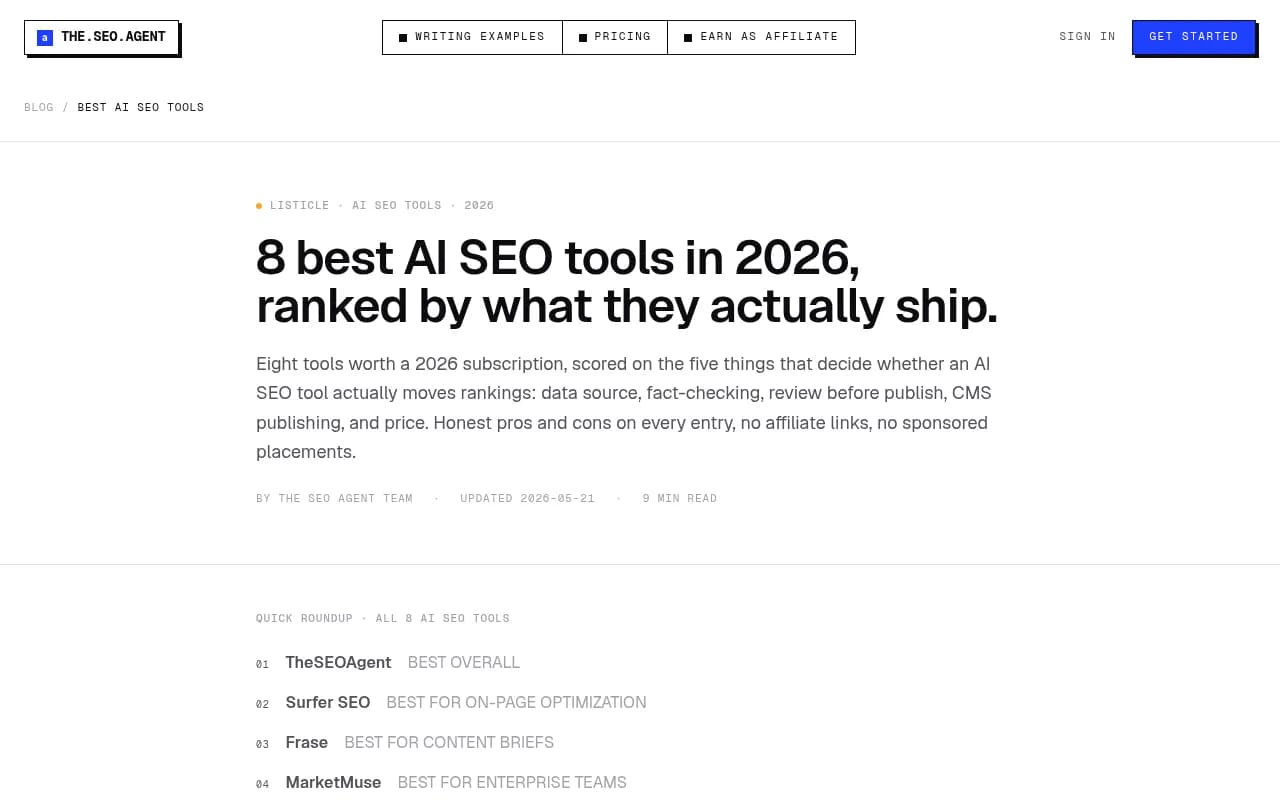
The SEO Agent's own review scores tools on five dimensions: data source, fact-checking, review before publish, CMS publishing and cost. It is a vendor ranking its own product first, so take the order with salt. But the dimensions are sensible, and I would add one more: whether a human can see and override what the tool did.
My checklist:
- Does the tool pull live data or guess from training data?
- Does it show sources next to claims?
- Can an editor hold, edit or reject content before anything goes live?
- Are there roles and brand rules, or is it one shared login?
- Does it keep a record of what changed?
Comparison table
| Tool | Closest thing to fact-checking | Editorial controls | Best for |
|---|---|---|---|
| TheSEOAgent | Vendor-claimed fact-check pass with citations | Hold-for-approval before publish | Hands-off publishing with a review gate |
| Clearscope | None claimed | Editorial quality scoring, Content Inventory monitoring | Editorial consistency and refreshes |
| Surfer SEO | Plagiarism check | Content Editor scoring, Content Audit | On-page optimization |
| Frase | None verified | Briefs, audit pages | Research briefs on a budget |
| MarketMuse | None verified | Topic planning | Enterprise strategy |
| Perplexity | Cited answers from live search | None | Verifying individual claims |
| Jasper | Not claimed | Brand voice, governance positioning | Marketing teams with brand rules |
| Writer | Not claimed | Governed workflows | Enterprise governance |
Prices and feature lists change often. Confirm on vendor pages before you buy.
The tools, one by one
TheSEOAgent
This is the only tool in my research that puts fact-checking in its pitch. The SEO Agent's roundup says it runs a fact-check pass with citations on every defensible claim and holds articles for approval before publishing. It picks keywords, writes and publishes.
The caveat is obvious. That claim comes from the vendor's own article, and I found no independent test of it. If you try it, run a small batch and check the citations yourself: open each source and confirm it says what the article says it does.
Clearscope
Clearscope is the tool people reach for when the problem is editorial quality rather than speed. BrandGhost frames Surfer and Clearscope as optimization and editorial scoring tools, and Clearscope's Content Inventory monitoring suits refresh workflows. Reported pricing is $129/mo for Essentials and $399/mo for Business (checked by Coursiv in October 2026). Ignore older figures floating around, including some on Clearscope's own blog, which conflict with current pricing.
It does not verify facts. What it does is keep a team's output consistent and flag thin coverage, which means your human fact-checker spends time on the right pages.
Surfer SEO
Surfer's Content Editor uses 500+ web and AI signals, and its plan page lists a plagiarism check, the Surfy AI assistant, a Content Audit, a Topical Map and AI visibility tracking. Discovery starts around $49/mo billed yearly, per Coursiv.
Plagiarism checking is an originality control, not a truth control. I would still switch it on. Verify the exact scope on Surfer's site before relying on it.
Frase
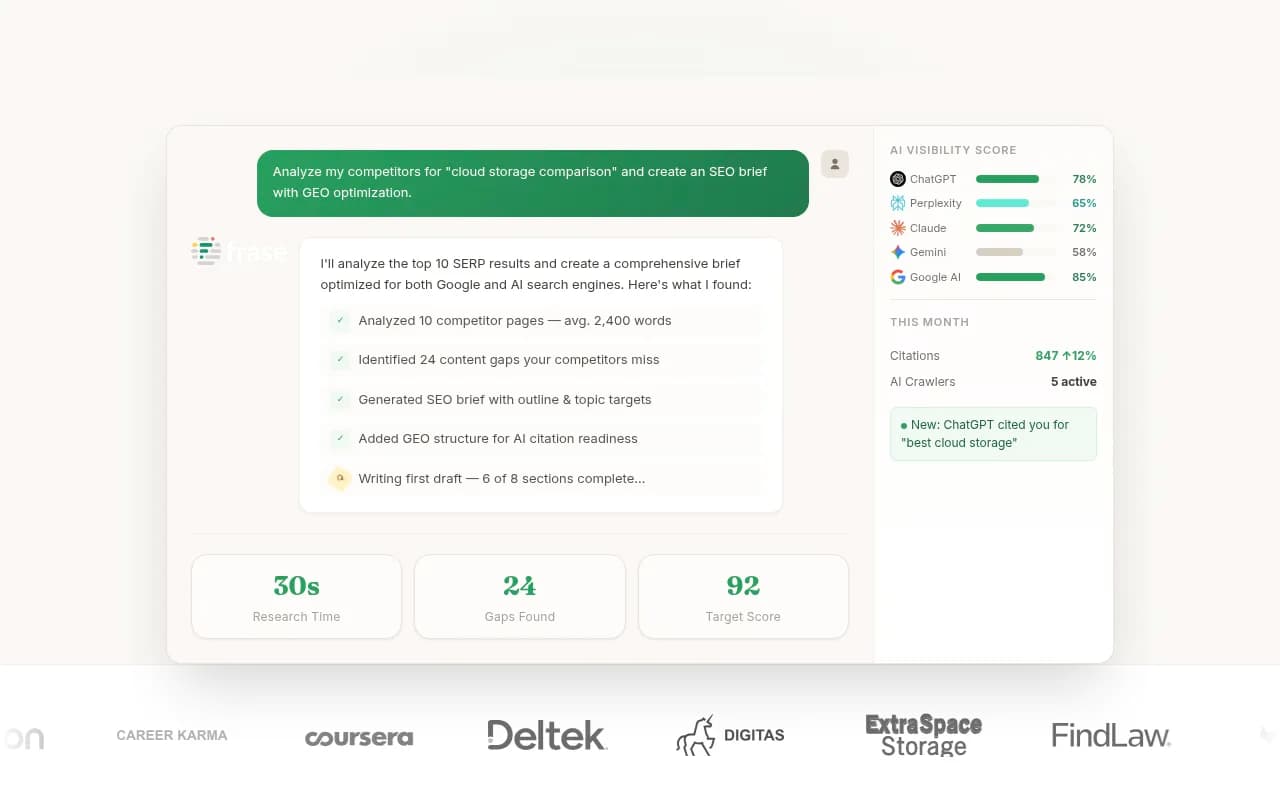
Frase is a consolidation product more than a category leader, per Greenflag Digital. Starter is about $39/mo yearly or $49 monthly, and Professional is $103 yearly or $129 monthly. It is good at research briefs and cheap to start with. I did not find a claim-level checker or a documented approval workflow, so check that before assuming one exists.
MarketMuse
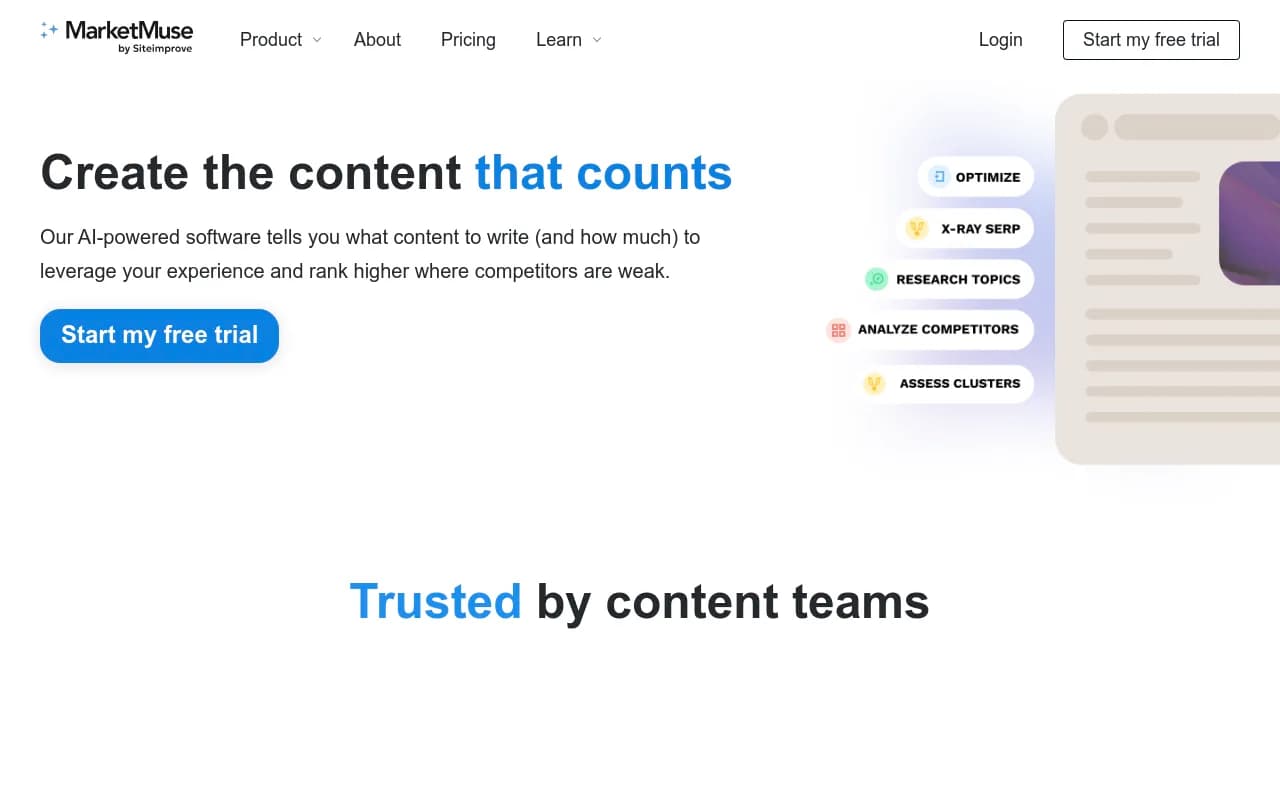
MarketMuse is a topic-authority and planning tool, not primarily a writer. That matters for this topic: since it does less drafting, it creates less factual risk. Its tiers are Free, Optimize, Research and Strategy, and public paid prices were hard to find. Enterprise teams use it to decide what to write, then something else handles the fact work.
Perplexity
Perplexity is not an SEO tool, but it is the most practical fact-checking helper on this list. Storyflow ranks it best for sourced research and fact-checking, with cited answers from live web search, free or $20/mo for Pro. Paste a claim, ask for sources, then open them.
Do not take the citation list as proof. Models can cite a page that does not contain the quoted number. You still click through.
Perplexity
Jasper and Writer
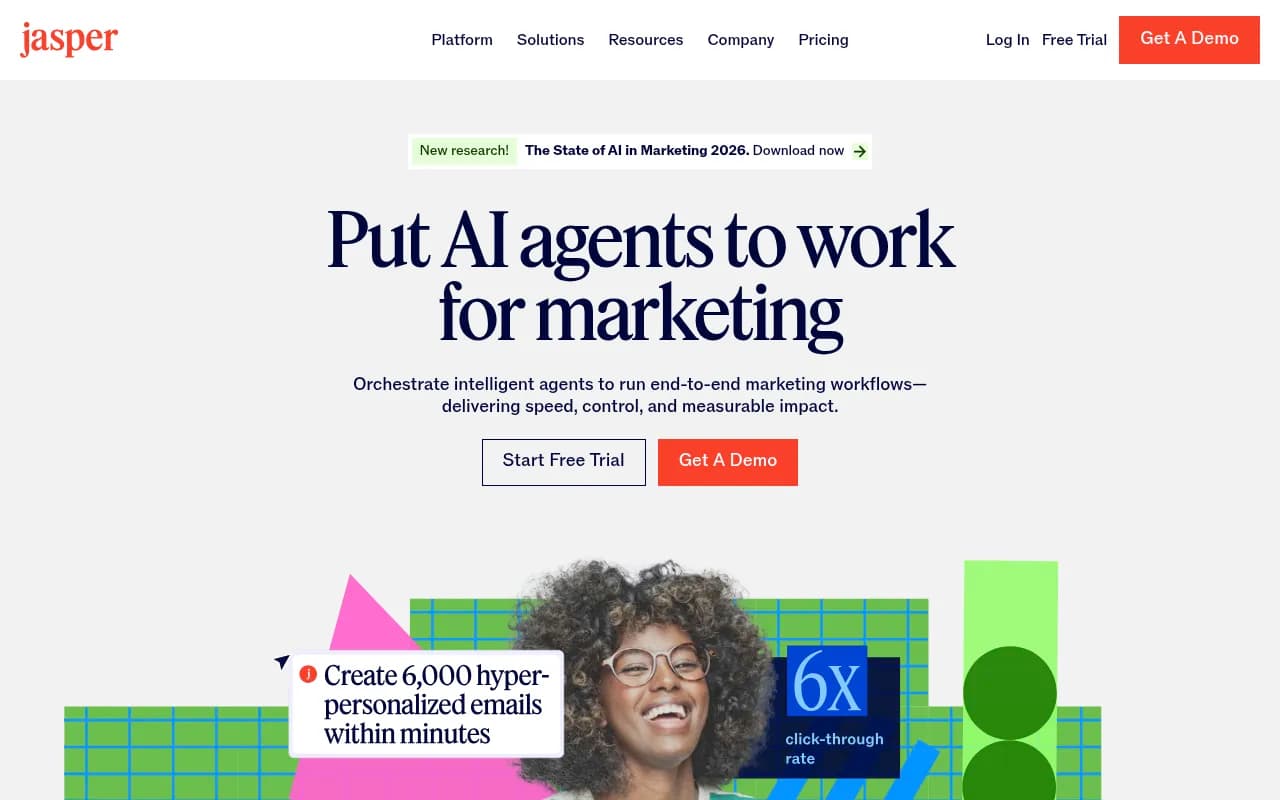
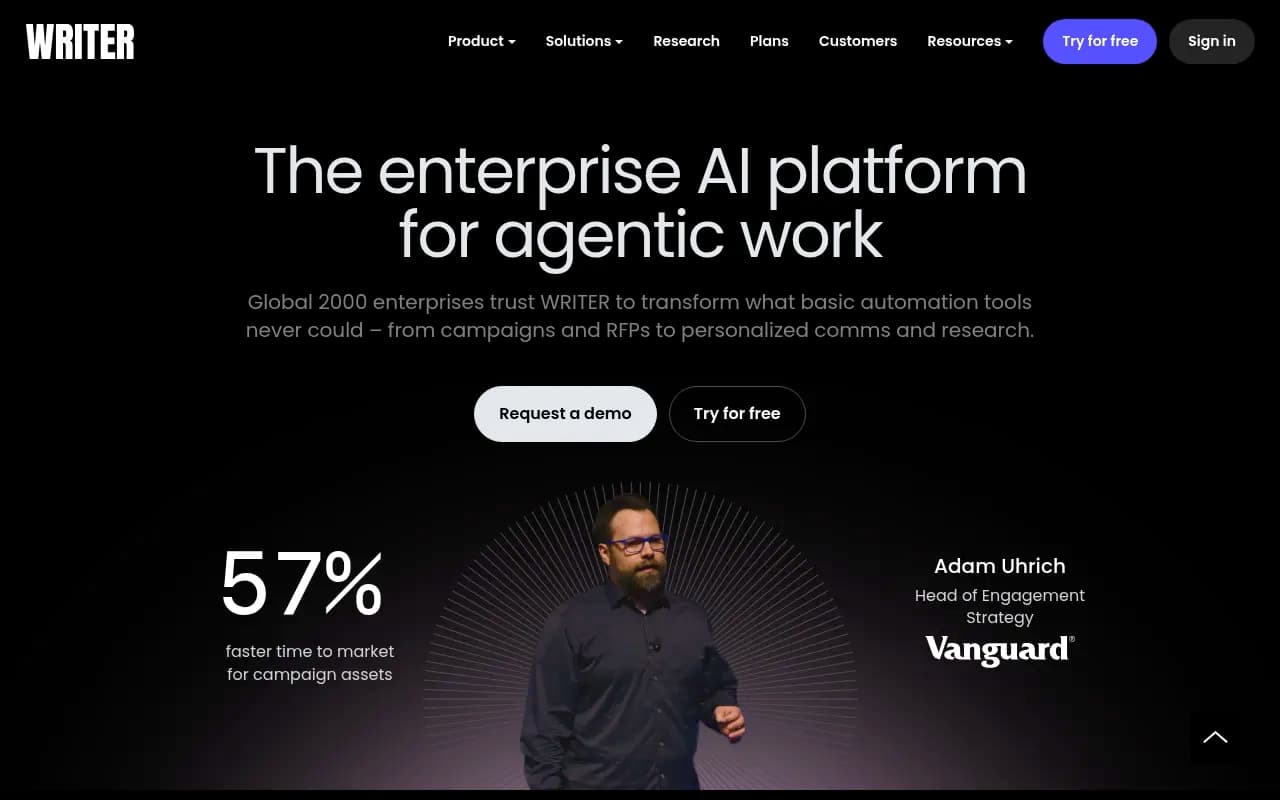
Both lean on governance. BrandGhost describes Jasper as a platform with agents, brand voice and governance, and Writer sells governed, agentic workflows to enterprises. These are the tools to look at if your worry is process: who can publish, what tone is allowed, what gets reviewed. I could not independently confirm the specifics of their approval controls, so ask for a demo and test the review flow with a deliberately wrong draft.
Cheaper add-ons worth knowing
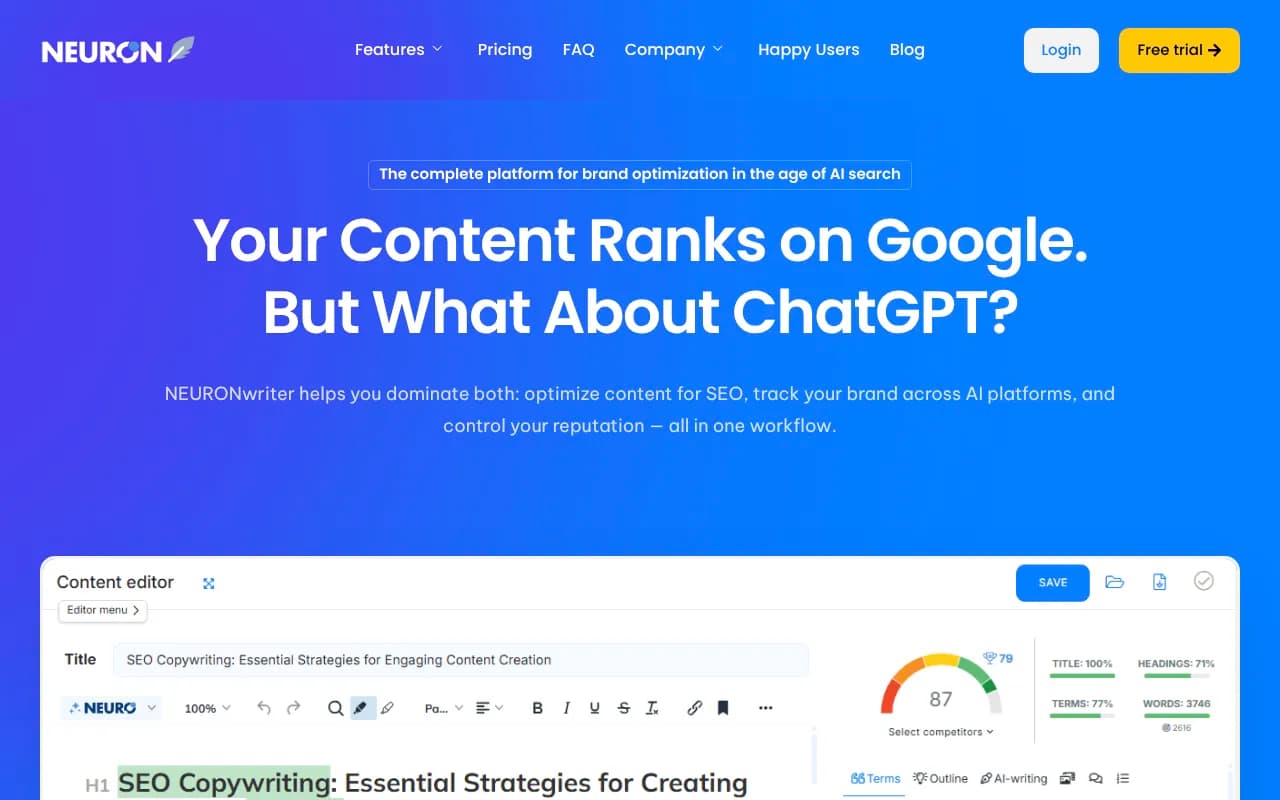
NeuronWriter has a Bronze plan at $19/mo yearly with 25 analyses a month and is the budget pick in the SEO Agent's roundup. Originality.ai, which Storyflow lists for AI and plagiarism detection, and Grammarly cover the originality and language-polish end.
Autopilot tools and the review problem
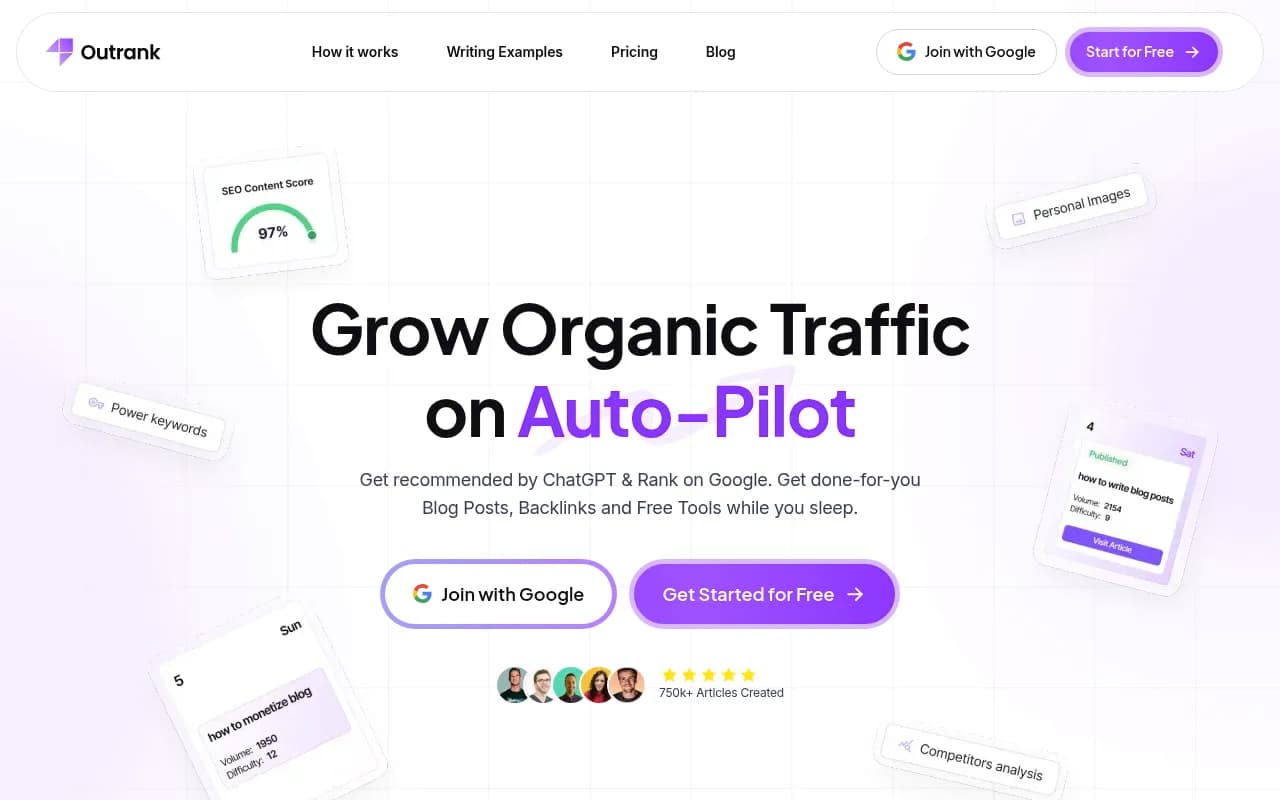
Outrank is labelled the best full-autopilot option in the SEO Agent's list. Byword, Gentura and a few others in the catalog pitch similar volume. Autopilot is where factual errors scale fastest, because nobody reads the output before it ships.
If you use any of them, I would insist on three things: a review inbox rather than auto-publish, a way to see sources, and a sample audit every month where someone fact-checks 10 published pages at random.
Promptwatch's Content Agent takes a middle path: it can publish to Webflow, Framer or WordPress on a schedule, with a review inbox where you approve, edit or decline, or you can run it hands-off. It is grounded in your tracked prompts and citation data rather than just keywords. That is relevant if your goal is AI visibility, not just rankings.
A layered workflow that works
Greenflag Digital argues for proprietary data plus AI reasoning plus automation plus human judgment. I agree, and here is how I would wire it up.
- Brief. Use Frase, Clearscope or MarketMuse to decide the topic and coverage.
- Draft. Use a drafting tool with live data. A general model does not know today's SERP deterministically.
- Source pass. Run every number, date and named claim through Perplexity or the original source. Keep a simple log.
- Score. Use Clearscope or Surfer for coverage and consistency. Do not treat the score as the goal. A page can score highly and still say nothing original.
- Human sign-off. One named editor approves. No approval, no publish.
- Refresh. News-style pages get re-checked in weeks. Docs and landing pages get re-checked quarterly.
- Monitor. Watch which pages get cited by AI answers and prioritise those for verification.
A simple claim log
A spreadsheet is fine. Columns: claim, source URL, date checked, checker, next review date. It sounds dull, and it is, but it is the one piece of fact-checking infrastructure no tool here gives you for free.
Which one should you pick?
| If you need | Start with |
|---|---|
| A built-in citation pass and approval gate | TheSEOAgent (test it hard) |
| Editorial consistency across writers | Clearscope |
| On-page scoring plus plagiarism check | Surfer SEO |
| Cheap briefs | Frase or NeuronWriter |
| Enterprise topic strategy | MarketMuse |
| Sourced answers to verify claims | Perplexity |
| Brand governance at scale | Jasper or Writer |
| AI-citation tracking to prioritise checks | Promptwatch |
If you want to compare more options, the GEO software directory at bestgeosoftware.com and the agentic SEO tools directory at agenticseotools.com are good places to browse.
What I would not do
I would not buy a tool because the landing page says "fact-checked." Ask for the mechanism. Does it check each claim? Against what? What happens when it cannot find support: does it remove the claim, flag it, or ship it anyway? If the vendor cannot answer in plain words, you have your answer.
And one more honest note. The research behind this guide found vendor claims and general positioning, not independent tests of claim-level checkers. That gap is the real finding. Until it closes, build the human step into your process and treat any tool-based fact-check as a first filter, not a verdict.
Sources and pricing note
Pricing above comes from Coursiv (checked October 13, 2026) and BrandGhost (June 12, 2026). Vendors change plans often, so confirm on their pricing pages.