Key takeaways
- An AI security review is a standard SaaS review plus a set of questions about models, data flows, training rights and prompt injection. A clean SOC 2 alone will not carry you through it.
- Reviewers check whether your AI feature is inside the SOC 2 boundary, whether the audit period covers the feature's launch, and whether your model provider is carved out.
- Evidence beats attestation. Dated tenant configurations, contractual training prohibitions and adversarial test summaries close deals faster than policy PDFs.
- 2026 changed the questionnaires: the SIG added ISO/IEC 42001 mappings and the CAIQ is moving to v4.1. Answer one well and reuse it.
- EU AI Act dates moved with the Digital Omnibus, but transparency duties and documentation expectations did not disappear.
Why the AI review is harder than the normal one
Most startups prepare for enterprise procurement by getting SOC 2, writing a security page and filling in whatever spreadsheet arrives. That works for a project management app. It falls apart for an AI search tool, because the reviewer's real worry is not your database encryption. It is where their data goes once your product sends it to a model.
Rework defines an AI security review as the formal check an enterprise buyer runs on a vendor's AI product before it can touch company data. Reco frames the gap well in its 40-question AI vendor questionnaire: a vendor can hold a clean SOC 2 and encrypt everything at rest, and still send customer records to a third-party model, keep embeddings indefinitely, or let any employee build automations on a CRM. The standard review never asks about those things. The AI review asks about nothing else.
SecureFLO argues most startups fail these reviews, and the questions it lists are the ones you should be able to answer cold: model provenance, training data rights, prompt injection defenses, hallucination controls and ISO 42001 alignment.
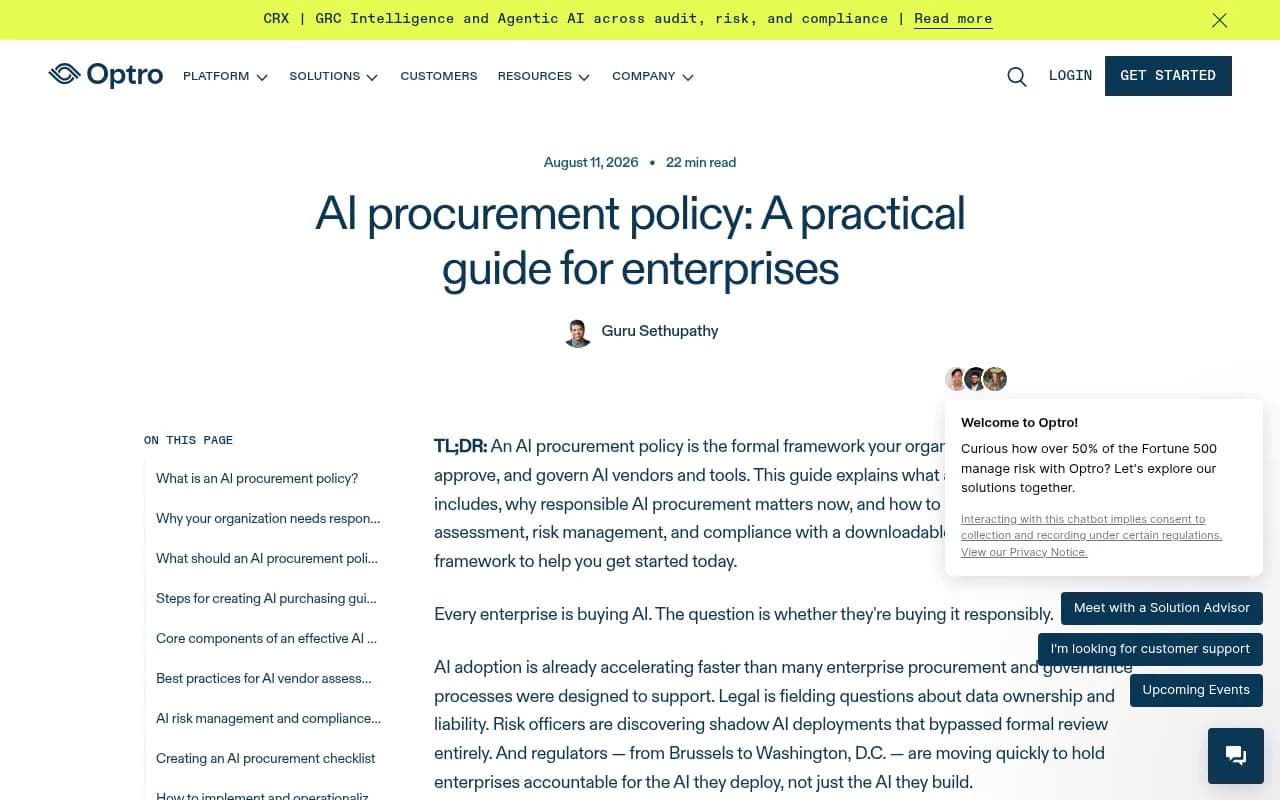
Optro's August 2026 guide to AI procurement policy is worth skimming before your first review. It shows the buyer's side: what an enterprise policy includes and how vendor assessment gets operationalized. If you know their checklist, you can answer it before they ask.
What reviewers check that you probably have not prepared for
SOC 2 scope and timing
Cranium lists three checks that catch startups out. First, is the AI feature inside the SOC 2 boundary? Second, does the report period end before or after the AI feature launched? A report that ended in March says nothing about a feature shipped in May. Third, is the model provider carved out of scope?
A red flag Reco calls out directly is certification scope that excludes AI processing. If your report was written for the core app and you bolted on the AI search layer later, tell the buyer upfront and offer a bridge letter or a timeline for the next audit period. Hiding it is worse than the gap.
Model providers and subprocessors
Buyers want a named list of model providers and subprocessors. Cranium's sharper question is whether that list is a contractual commitment or a product decision you can change without telling anyone. If it is the latter, expect pushback. Commit to notice periods for provider changes, in the contract, and publish a subprocessor list. GoSearch, for example, publishes one and states that data sent to an LLM is used only to generate the answer and is never retained or used to train models.
I would treat a zero-retention arrangement with your LLM provider as table stakes for enterprise search. Get it in writing, know exactly which endpoints and settings it covers, and be ready to show it. I did not verify the specific terms of any provider's zero data retention program for this guide, so confirm them with your provider before you put them in a response.
Training and data rights
The question is simple: will you train on our data? The answer must be no, and it must be contractual, not a line in a help article. Cranium recommends reviewers demand a contractual training prohibition rather than accept an attestation. Beat them to it by putting the clause in your standard DPA.
Adversarial testing
Prompt injection is the one that makes reviewers nervous about search tools specifically, because search tools ingest untrusted content by design. Have a short summary of adversarial testing ready: what you tested, when, what you fixed. A one-page summary with dates is stronger than a paragraph claiming you are robust. The OWASP LLM Top 10 and NIST AI RMF are the usual frameworks to map against, though I have not verified their latest versions here, so check them before citing specifics.
Permissions and tenancy
For enterprise search, permission-aware retrieval is the heart of it. If a user cannot see a document in the source system, the AI must not surface it in an answer. Reviewers will ask how you sync access controls, how fast revocations propagate, and whether tenants are isolated. Enterprise buyers comparing search vendors now line up exactly these columns.
What the competition publishes
The GoSearch 2026 buyer guide compares enterprise search vendors on security, and it shows what a procurement team sees when they put you in a table next to others. Here is the shape of it:
| Platform | SOC 2 | HIPAA | SSO / SCIM | Hosting |
|---|---|---|---|---|
| GoSearch | Type II | Supported | SSO, SAML, SCIM (Enterprise) | Bring your own cloud: AWS, Google Cloud, Azure |
| Glean | Type II | Yes | SSO | Customer cloud tenant option |
| Gemini Enterprise | Supported | Supported | Google Cloud identity | Data residency with limits; customer-managed keys in US and EU |
| Atlassian Rovo | Yes | Specific features | SSO via Atlassian Guard | Atlassian Cloud on AWS |
| Guru | Type II | BAA available | SAML SSO, SCIM | AWS |
| Notion AI | Type II | Enterprise plan with BAA | SAML SSO, SCIM (Enterprise) | Not listed |
The pattern is obvious. Everyone has Type II. The differences are SCIM, hosting choice and healthcare terms. If your column has blanks, buyers will notice before they read your pitch. Notion AI is one of the vendors in that table; you can see it in our catalog:
The questionnaires: SIG, CAIQ and what changed in 2026
You will get one of two spreadsheets, sometimes both. Per Compyl's comparison, 2026 changed both.
| Item | SIG | CAIQ |
|---|---|---|
| Owner | Shared Assessments | Cloud Security Alliance |
| 2026 change | Added ISO/IEC 42001 and operational resilience mappings; browser-based SIG EV platform launched March 2026 | Cutover to CAIQ v4.1 set for December 2027 |
| AI coverage | AI is one of 21 risk control areas | Part of the STAR program |
| Cost to you | Depends on how the buyer licenses it | Free download; STAR Level 1 self-assessment submission is free |
| Assurance level | Buyer-driven assessment | Level 1 is a claim; Level 2 needs an independent audit (ISO 27001 or SOC 2 based) |
Mitratech adds that the 2026 SIG deepens the NIST SP 800-171 mapping without adding domains. Practical advice: complete a CAIQ once, publish it to the STAR Registry at Level 1 since it costs nothing, and keep a current SIG-aligned answer library. Compyl notes that sending both a SIG and a CAIQ to the same vendor duplicates effort without adding meaningful assurance, so if a buyer sends both, point them to your published CAIQ and offer to fill only the gaps.
Treat your own CAIQ the way Compyl says buyers will: as a claim that needs evidence. Attach the evidence.
The evidence pack to build before the first request
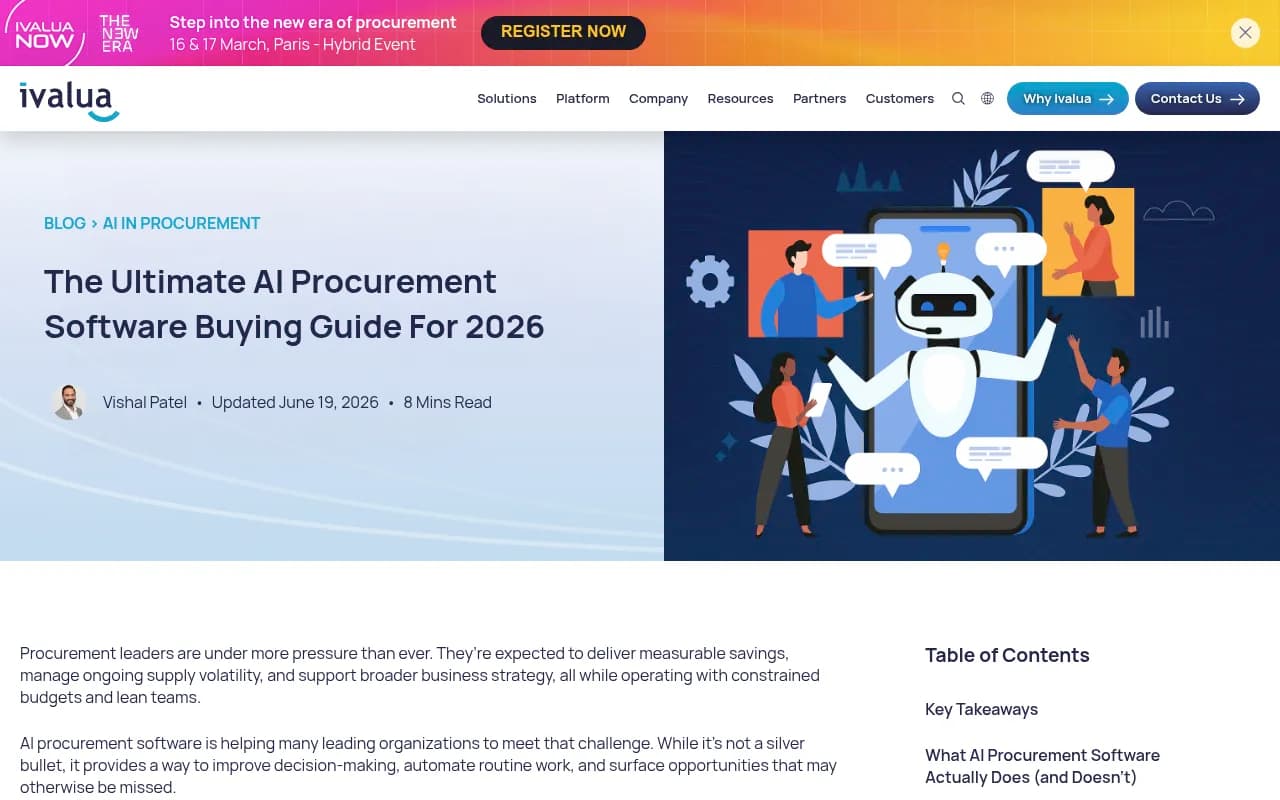
A review goes quickly when you can answer with documents instead of promises. Here is what I would assemble, roughly in order of how often it gets asked for:
- SOC 2 Type II report with the period and product scope stated, and a note on whether the AI feature is covered. Rework's vendor checklist for enterprise AI visibility buyers puts attestations at 20% weight and asks for exactly this.
- Penetration test summary, plus a dated adversarial test summary covering prompt injection and data exfiltration through the AI layer.
- Data flow diagram showing every point where customer data reaches a model provider, with retention settings.
- Subprocessor and model provider list, with the notice commitment.
- DPA with a no-training clause and deletion timelines for embeddings, indexes and logs.
- SSO, SAML and SCIM documentation, and your role-based access model.
- Completed CAIQ at STAR Level 1, and a SIG-style answer library.
- ISO/IEC 42001 gap assessment if you do not hold the certification. A candid gap assessment beats silence.
I did not verify current prices or timelines for SOC 2 Type II, ISO 27001 or ISO 42001 for this guide, and they vary widely by auditor and company size, so get quotes rather than trusting a blog. Trust center tools such as Vanta, Drata and Secureframe are common for collecting this evidence in one place, but check them yourself.
If your tool crawls or fetches web content
Some AI search products fetch pages from the open web. Buyers will ask how your crawler can be identified and controlled. Promptwatch Data's AI crawler traffic report (weekly data from June 8 to September 6, 2026) counts only requests whose source IP matches the operator's published IP ranges, which excludes spoofed user agents. In that data OpenAI made up 79.8% of verified AI crawler requests in the week of Aug 31 to Sep 6, down from 94.8% in Jun 8 to 14.
The lesson for you is an inference rather than something the report says: publish your bot's user agent and IP ranges, honor robots.txt, and document it. If big operators are verified by IP, reviewers will expect the same transparency from you.
EU AI Act timing: what to tell European buyers
The dates are messy, so be precise. According to Jones Walker, the European Parliament and Council approved the Digital Omnibus in June 2026. It moves Annex III high-risk obligations (employment, credit, education, essential services) from Aug 2, 2026 to Dec 2, 2027, and Annex I high-risk AI in regulated products to Aug 2, 2028. The delay only takes effect once the amendments are published in the Official Journal, so confirm publication before you rely on the new dates. The EU's official timeline page reflects the amendments.
Two points matter for an AI search tool:
- The high-risk rules were delayed because standards and national authorities were not ready, not because requirements were dropped. Conformity assessment, technical documentation and human oversight remain. Prepare the documentation anyway.
- Most Article 50 transparency obligations still applied from Aug 2, 2026, covering EU-facing chatbots and generative AI, synthetic media and emotion recognition. Winston & Taylor adds that Article 50(2) watermarking applies from Dec 2, 2026 for systems already on the market on Aug 2, 2026, while new systems must comply on placement. Morgan Lewis has a summary of what took effect on Aug 2.
If your search tool generates answers shown to EU users, you are likely in Article 50 territory. Have a one-paragraph position ready on how users are told they are interacting with AI and how generated content is marked.
Running the review itself
Before the questionnaire arrives
Put up a trust page with your certifications, subprocessors, and the evidence pack above available under NDA. Pre-answering is the cheapest way to shorten a sales cycle. The Coursiv guide to AI in procurement even describes buyers running 30-day pilots with a tool evaluation framework, which tells you the buyer is evaluating you alongside a stack of alternatives.
During the review
Assign one owner, usually a security lead or technical founder. Answer in writing, link to evidence, and never fudge scope. If an answer is "not yet", say so and attach a date. Reviewers read many of these and can smell inflated claims. A candid gap with a roadmap tends to pass; a contradicted claim kills the deal.
After a pass
Keep the answers in a library, update them quarterly, and log the date of every change to your model provider list. Rework's closing advice to buyers is to send vendors seven RFP questions in writing and ask for the SOC 2 report; expect that kind of written, evidence-first process and prepare for it.
Readiness checklist
| Area | Ready when you can say |
|---|---|
| Attestation | Our SOC 2 Type II covers the AI feature and the period includes its launch |
| Model providers | Here is the named list, the retention settings and our notice commitment |
| Training | The DPA prohibits training on customer data |
| Testing | Here is a dated adversarial test summary |
| Permissions | Retrieval respects source-system access, and revocations propagate within a stated window |
| Questionnaires | CAIQ is published at STAR Level 1 and SIG answers are current |
| Regulation | We have a documented position on Article 50 and our high-risk status |
Where to go from here
If you sell an AI search or visibility product and need a security story that holds up with enterprise buyers, study how vendors in the category present theirs. The GEO software directory at bestgeosoftware.com lists tools you can compare on exactly these trust signals. Promptwatch, for instance, is ISO/IEC 27001 certified and GDPR compliant, which is the sort of line a procurement team looks for first.

Start with the evidence pack, not the questionnaire. Build the data flow diagram this week, because every other answer depends on it.