Key takeaways
- The biggest real improvement in 2026 is measurement: tools now track whether ChatGPT, AI Overviews, Perplexity and others cite you, and the better ones connect that to crawler logs and AI-referred traffic.
- Content tools improved when they started working from prompts and citation gaps instead of keyword density scores.
- What bloated: every classic SEO suite added an "AI visibility" tab, and many content tools added auto-publishing that produces volume without evidence it gets cited.
- Product pages and landing pages, not blog posts, are the most cited content types in ChatGPT, so tools that only optimize articles are aiming at the wrong target.
- Pay for the jobs you do weekly. Anything you open twice a quarter is bloat for your team, however good it is.
What actually changed
Two years ago, an "AI SEO tool" mostly meant a writing assistant with an SEO score bolted on. In 2026 the term covers at least four different product types: classic suites with AI features, content optimizers, AI visibility trackers, and agents that plan and publish content. They solve different problems, and the marketing for all of them sounds identical.
The underlying shift is simple. Adobe's team put it as visibility depending less on page position and more on whether a brand is cited inside AI-generated responses. If you want the full argument, the Adobe piece on SEO in 2026 is a reasonable read, even if it is written for enterprise buyers.
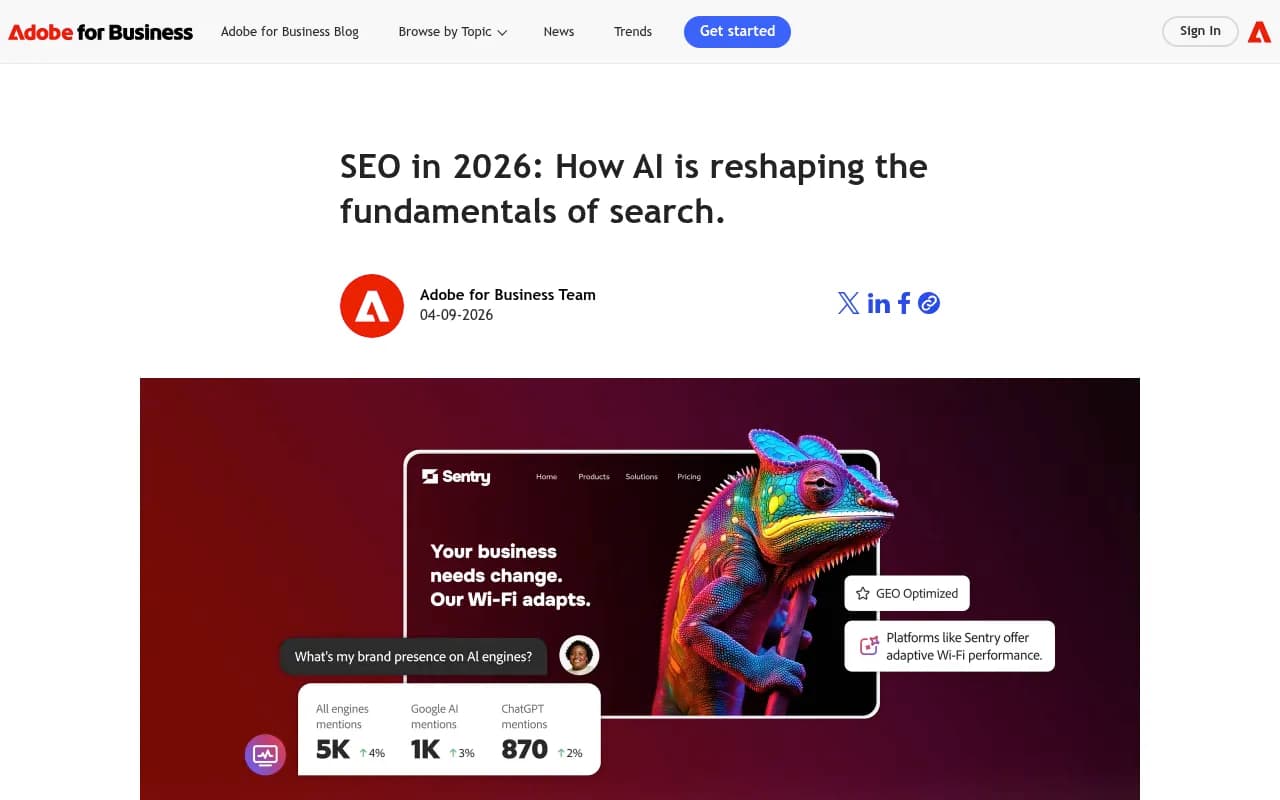
That reframing created a new category of software almost overnight. Our catalog now lists well over a hundred tools that track brand mentions in AI answers. Some are excellent. Many are the same prompt tracker with a different logo.
What got better
Measuring citations, not just rankings
This is the clearest win. A year or two ago you had no systematic way to know whether ChatGPT named your brand. Now you do, and the data is granular: which prompts, which models, which pages got cited, and where you sat in the source list.
The good tools monitor the real user interfaces of the AI products rather than only calling APIs, because what a user sees in ChatGPT or AI Overviews can differ from API output. Promptwatch does this across ChatGPT, AI Overviews, AI Mode, Gemini, Perplexity, Copilot and others, and layers on prompt volumes and difficulty so you can pick what to chase.

Other trackers worth knowing about in the pure-monitoring tier include Otterly.AI, Peec AI, Profound and AthenaHQ.



AI crawler visibility
This one surprised me. Tracking mentions is useful, but knowing whether AI bots can even read your site is more actionable, and it barely existed as a product feature before. Crawler logs now show which bots hit which pages and where they hit errors.
The mix is also shifting. According to Promptwatch Data's weekly AI crawler traffic report (June 8 to September 6, 2026), OpenAI's share of IP-verified AI crawler requests fell from 94.8% to 79.8% over the period. Meta's crawler grew from about 2% to nearly 38% of tracked requests between mid-July and August 9, per the Meta-WebIndexer report. If your robots.txt or CDN rules were written for 2024's bot list, you may be blocking things you want.
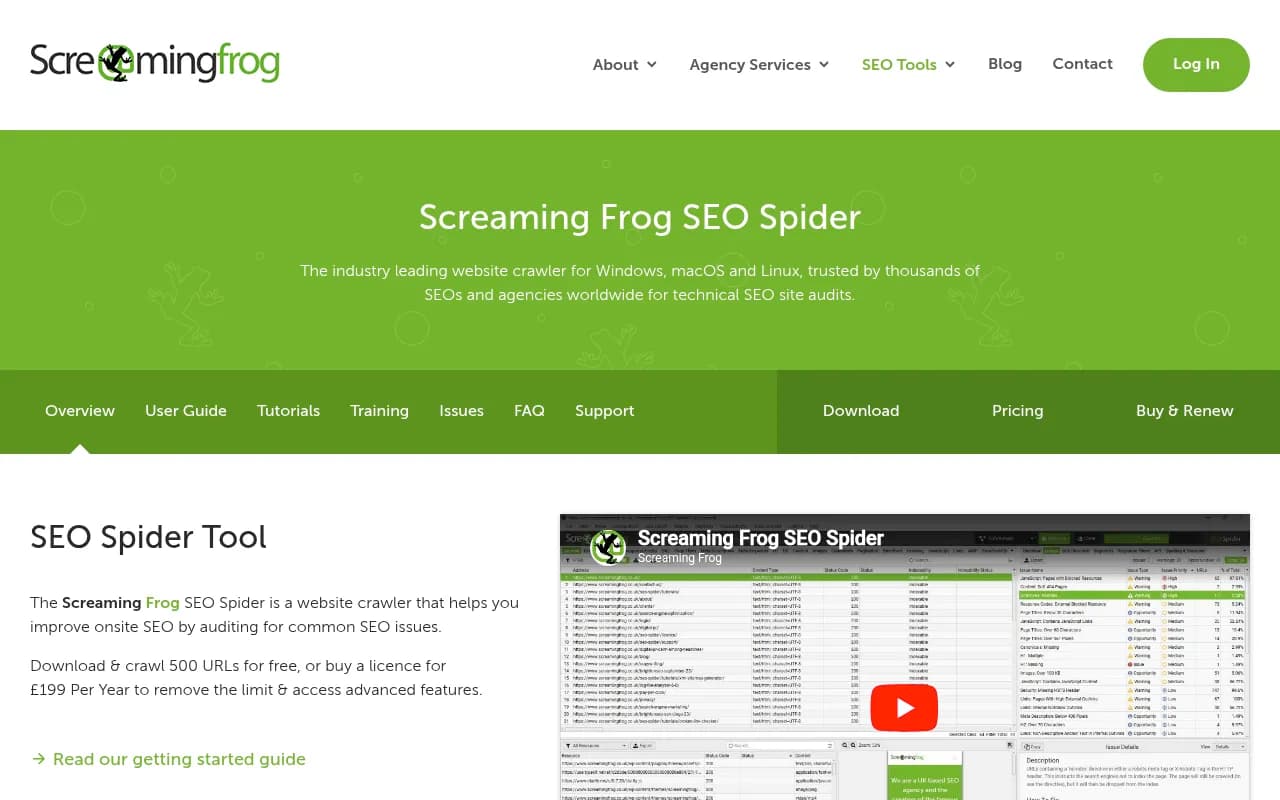
A practical check: compare your own logs with that mix. If a provider is large in the data but near zero in your logs, you are probably blocked. Tools in this space include Promptwatch (IP-verified logs that filter spoofed bots), Botify, and Screaming Frog's log tooling for traditional technical SEO.
Content tied to prompts and gaps
Older content tools asked "what keywords do top-ranking pages use?" Newer ones ask "which questions do AI models answer without citing you?" That is a better question. Content gap analysis that maps your pages against the prompts AI answers is the feature I would weight most heavily when evaluating anything new.
It also changes what you write. Promptwatch Data's ChatGPT citation share by content type (Sep 28 to Oct 4, 2026) found product pages are the most cited type at 22.4%, with landing pages at 16.8%. Listicles are 13.6% and how-tos 8.7%. So roughly 39% of citations go to pages describing what a company sells. A blog-only content strategy misses the biggest citation surface.
Shelf life matters too. The content half-life study shows news pages losing half their citations in about five weeks, while landing pages and docs keep most of theirs for months. Tools that nudge you toward refreshing evergreen pages beat tools that nudge you toward more news-style posts.
Traffic attribution from AI
Adobe's research notes that AI-referred visitors engage at levels comparable to or better than traditional sources. Whether or not that holds for your site, you can now check. Visitor analytics that separate ChatGPT, Perplexity and Claude referrals from everything else let you stop arguing about whether AI traffic matters and just look. Google Search Console still can't do this on its own, so a tracking snippet or a platform that includes one is needed.
What got bloated
The tab that every suite added
Semrush, Ahrefs, Moz, seoClarity, BrightEdge, Conductor and others all added AI visibility modules. Some are decent. The common problem is shallow data: a fixed set of tracked prompts, little visibility into crawlers, and no connection between a mention and a revenue outcome. If you already pay for a suite, the add-on is a fine starting point. Buying a suite only for the AI tab is rarely sensible.

Prompt trackers that stop at a chart
A dashboard that tells you "you were mentioned in 23% of responses" is a reading, not a plan. I have seen teams pay monthly for these, nod at a trend line, and change nothing. The gap between "was my brand mentioned?" and "what do I do Monday morning?" is where most cheap trackers stop, and it is why the category feels crowded without feeling more useful.
Content scores that reward the wrong thing
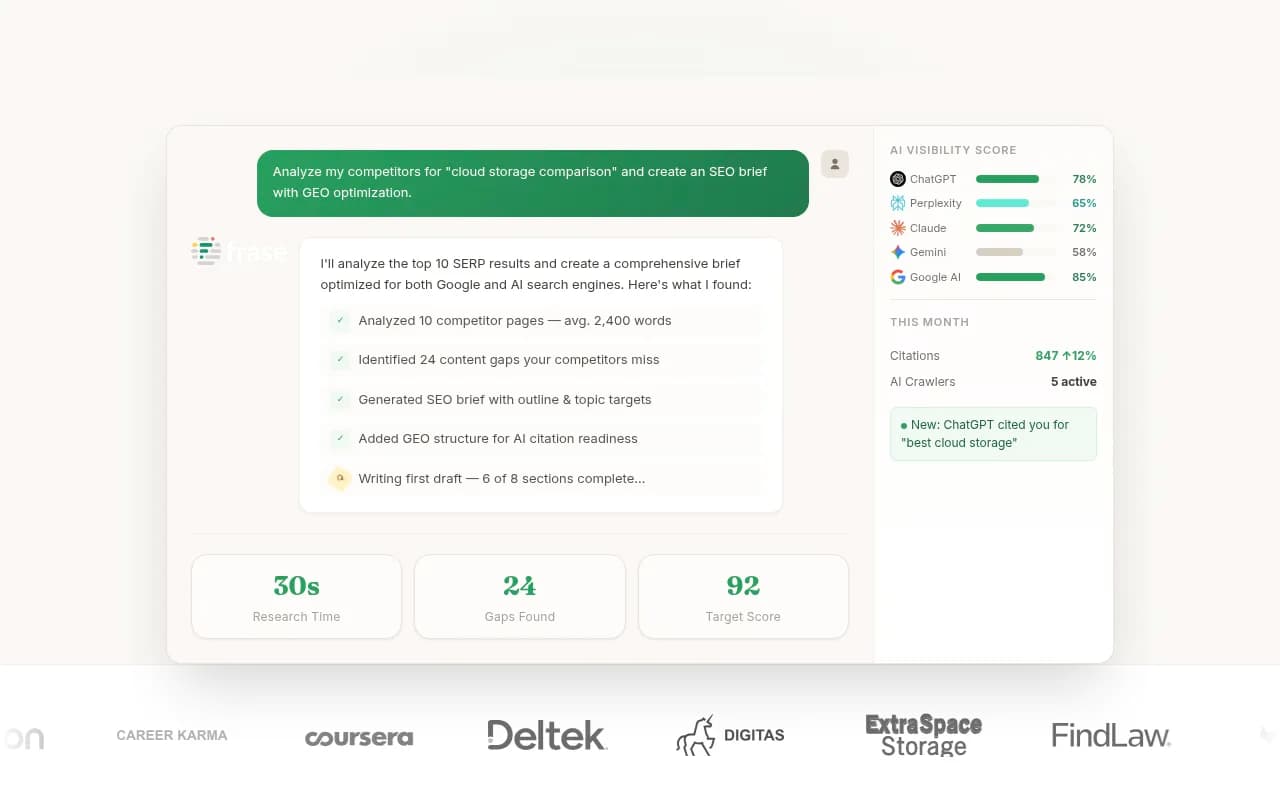
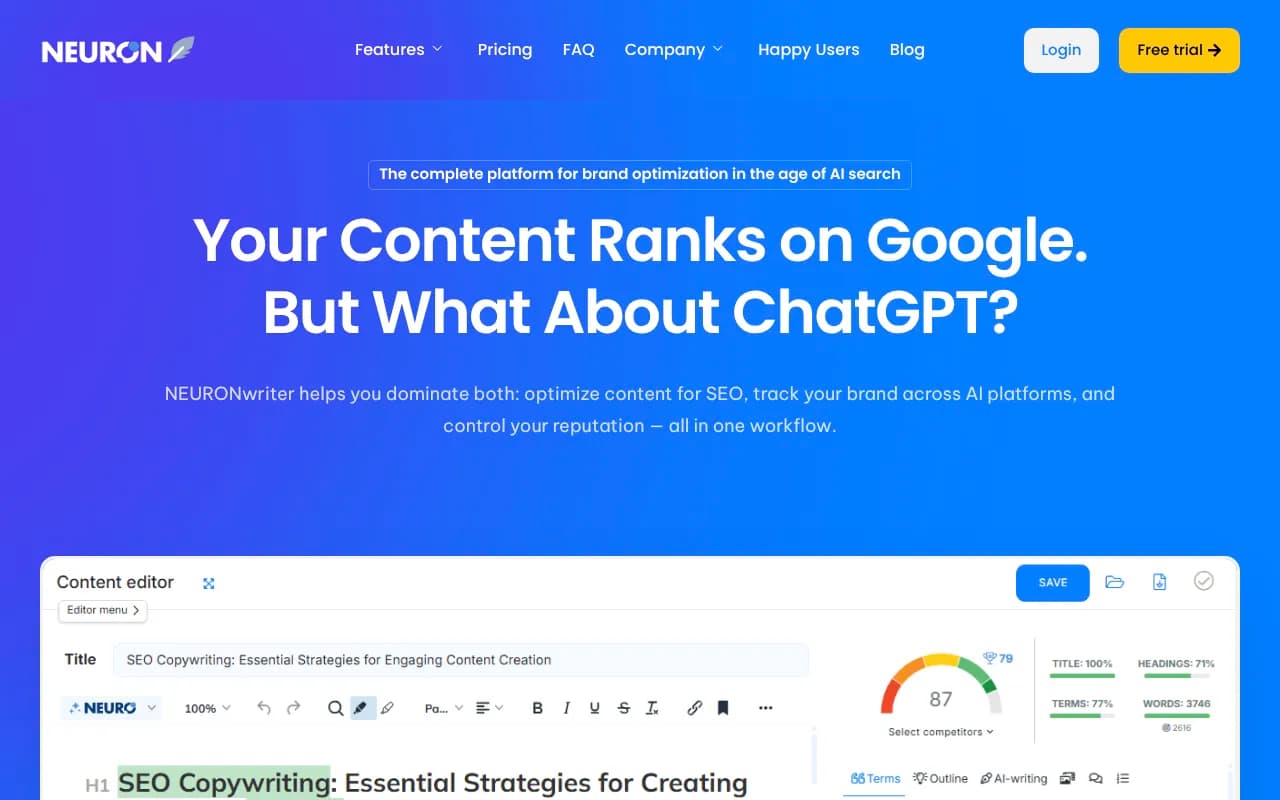
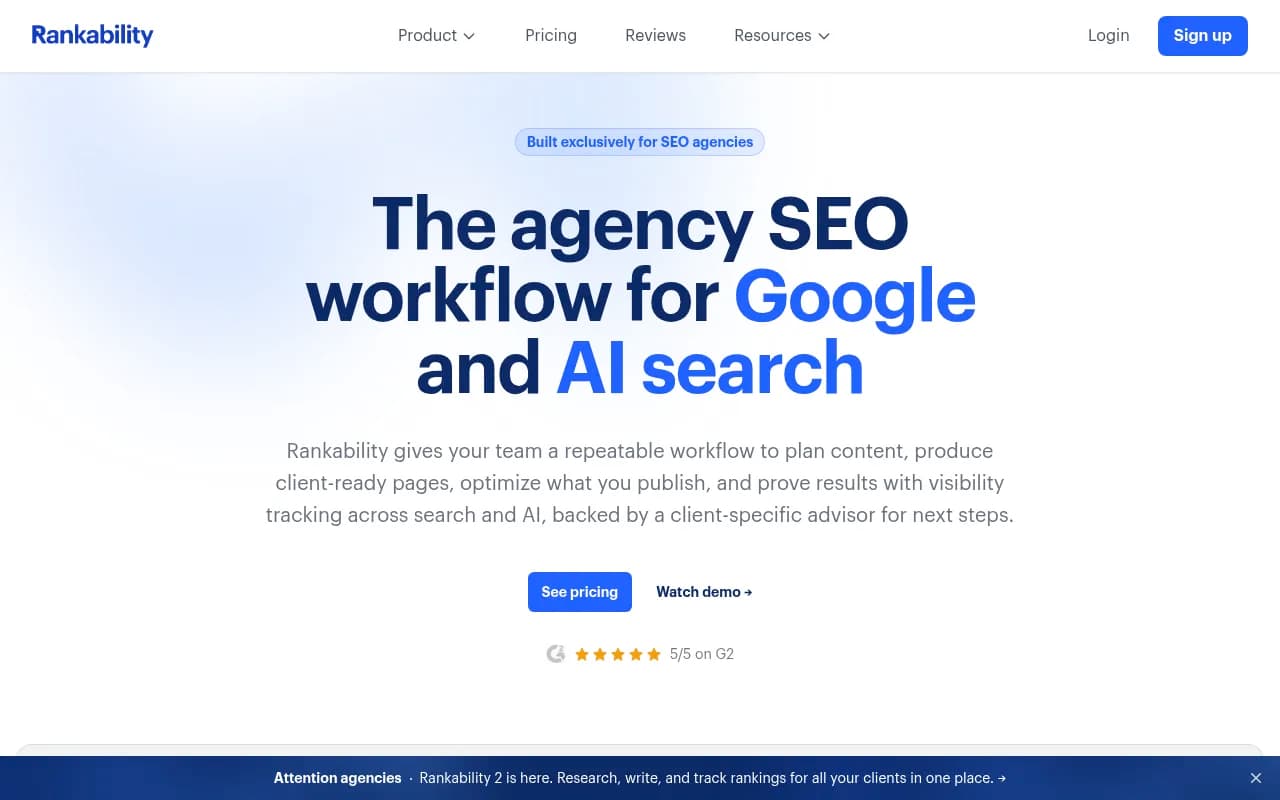
Surfer, Clearscope, MarketMuse, Frase, NeuronWriter and Rankability all still do useful work for classic on-page optimization. But a green score is not a citation. I would not trust any editor score as evidence that an AI model will cite the page. Use them as a checklist for coverage and readability, then judge the result by crawls, citations and traffic.

Autopilot publishing without feedback
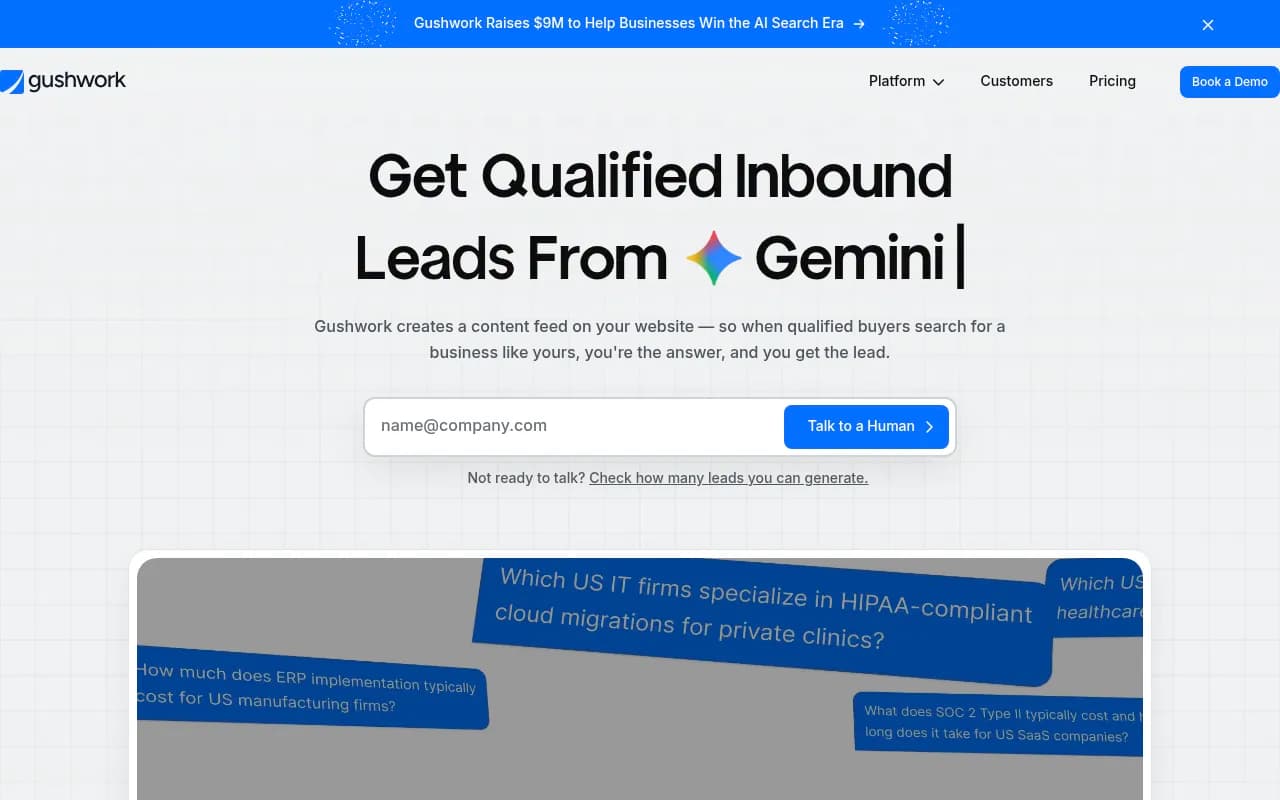
Byword, Outrank, SEObot, Gushwork and a long list of newer agents will publish articles daily. Volume is easy now. The hard part is learning whether any of it gets crawled and cited. Publishing at scale with no feedback loop is how sites end up with hundreds of thin pages. The version that works pairs generation with tracking: write against a documented gap, publish, then watch whether that page gets visited by AI crawlers and cited, and send underperformers back for revision.
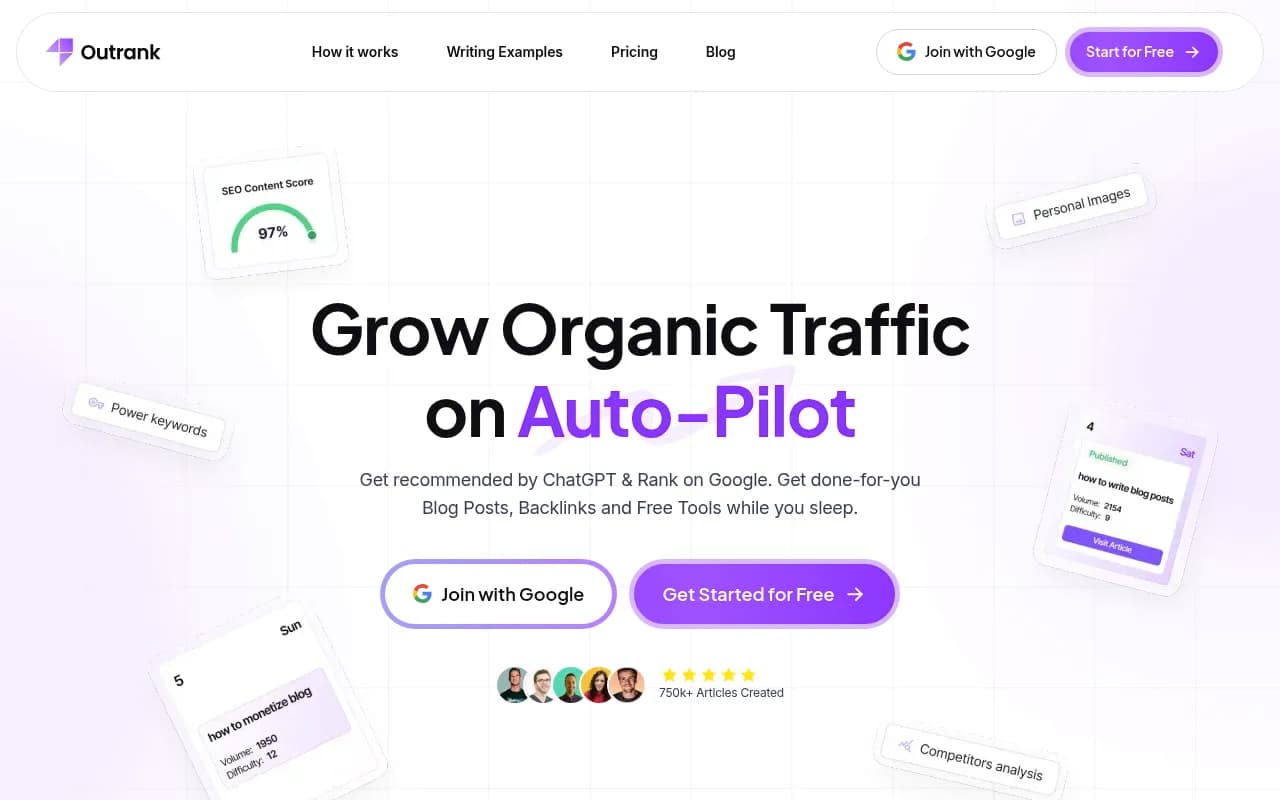
Gushwork
Schema and markdown hype
PBJ Marketing's recent piece notes Google says AI search needs no special schema, which matches my experience: structured data is good hygiene, not a ranking lever for AI answers. Similarly, Promptwatch Data's markdown report found markdown files are only 0.05% of AI search citations. Markdown serves coding agents, not AI search. Be skeptical of tools selling "AI-ready file" features as the main event.
A quick map of the categories
| Category | What improved in 2026 | What bloated | Examples |
|---|---|---|---|
| Suites | Added AI visibility modules | Shallow, fixed prompt sets | Semrush, Ahrefs, Moz Pro, BrightEdge |
| Content optimizers | Better briefs and topical coverage | Score-chasing, no citation link | Surfer, Clearscope, MarketMuse |
| Prompt trackers | Real-UI data, multi-country | Charts without actions | Otterly.AI, Peec AI, Profound |
| Crawler and technical | Bot-level logs, error explanations | Often missing entirely | Promptwatch, Botify, Screaming Frog |
| Auto-publishing agents | Faster drafts, CMS push | Volume with no feedback | Byword, Outrank, SEObot |
| End-to-end GEO platforms | Gap analysis to publishing to tracking | Pricing complexity | Promptwatch, Gradial GEO, Relixir |
Where the end-to-end platforms fit
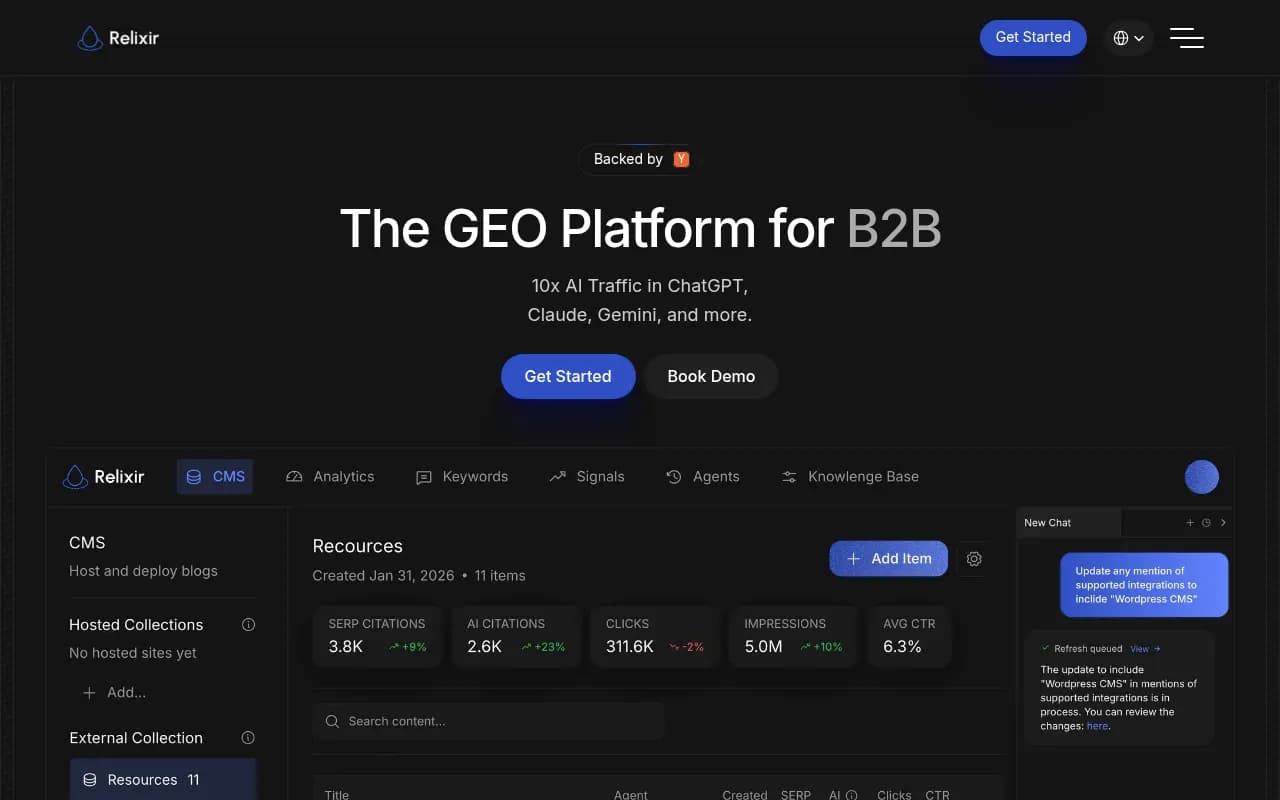
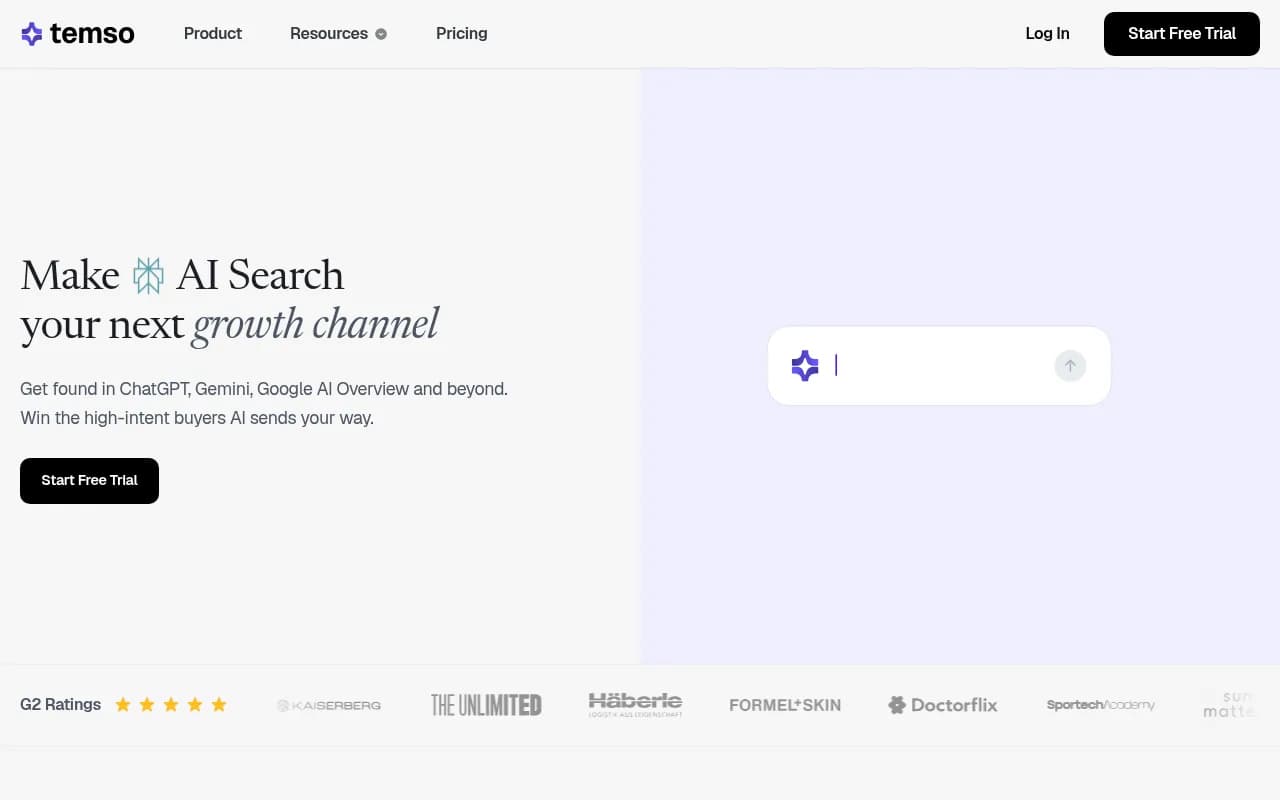
The most interesting movement is tools trying to close the loop: find a gap, create content for it, publish, and verify whether it worked. Promptwatch's Content Agent and Action Board do this, and its published customer results (Crisp reporting 2x higher conversion from AI traffic, TreeHouse reaching roughly 25% of organic conversions from AI search) are the kind of evidence I would ask any vendor for. Competing options in the "visibility plus execution" camp include Relixir, Gradial GEO and Temso AI.

A caveat: I have not verified pricing for all of these, and pricing changes quickly. Confirm on each vendor's site before you commit. For Promptwatch, pricing runs from a free Explore tier through Essential at $95 a month, so check promptwatch.com/pricing.
If you want to browse more options, the GEO software directory lists them by category.
How to audit your own stack
Pull up every SEO and AI tool you pay for and ask four things.
- When did someone last open it and act on what it showed?
- Does it show crawling, citations and traffic, or only mentions?
- Does it tell you what to do next, or only what happened?
- Is there overlap with a suite you already own?
Cut anything that fails the first question. Merge anything that fails the fourth.
A workable lean stack for most teams looks like this: Google Search Console for baseline search data, one suite or keyword tool for classic research, one content optimizer if you write a lot, and one AI visibility platform that includes crawler logs and a path to action. Adding a fifth thing needs a stronger reason than "it has AI in the name."
What to do about the shift in practice
StudioHawk's Harry Sanders frames modern SEO around entities, topical depth, author authority and machine-readable sites. That is sound advice and tools help with it, but the tools are secondary. A few habits matter more than any purchase:
- Treat product and landing pages as your main citation surface and keep them crawlable.
- Map content to prompt intent: commercial, informational, branded. The citation mix differs for each.
- Collect reviews on trusted third-party sites. Branded prompts lean harder on reviews than other prompt types.
- Check robots.txt, CDN and WAF rules for each major AI crawler, since training bots and answer-time fetchers are separate.
- Do not over-index on any one platform's behavior. ChatGPT cites social media for 0.46% of citations while AI Overviews pulls 12.2% from social platforms, per Promptwatch's social citation data (Sep 28 to Oct 4, 2026). Reddit's share of ChatGPT citations also dropped from about 4% to 0.5% on August 14, per the Reddit citations report. Strategies built on one platform's quirks age badly.
And if you would rather hand some of this to people, an agency like 1001 SEO Media covers technical SEO, content and generative engine optimization together. That is a legitimate alternative to buying five tools.
The verdict
AI SEO tools in 2026 got genuinely better at three things: measuring citations, reading crawler behavior, and finding content gaps. They got bloated everywhere else: duplicate dashboards, scores that don't predict anything, and publishing engines with no feedback. Buy for the weekly job, demand evidence that a feature changes an outcome, and cancel anything you have not touched in a quarter.