Key takeaways
- Product descriptions and category pages need different tools. Bulk description work is a catalog workflow problem. Category pages are an SEO research and copy problem.
- Jasper, Hypotenuse AI, Describely and Copy.ai suit descriptions at scale. Surfer SEO, Frase, Clearscope and NeuronWriter suit category pages and buying guides.
- AI should never invent specs, materials, compatibility or guarantees. Keep your product data as the source of truth and review before publishing.
- ChatGPT leans heavily on product and landing pages. Promptwatch Data shows product pages at 22.4% of classified citations (Sep 28 to Oct 4, 2026), so complete, factual pages matter more than clever copy.
- Add a measurement layer. Writing the page is half the job; the other half is knowing whether AI systems crawl and cite it.
Why product and category pages need different tools
Most "best AI tools for ecommerce" lists mash everything together: email, chatbots, photo generation, descriptions. That is not much help if your actual job is to rewrite 2,000 product pages and fix 60 thin collection pages before the holiday season.
The two page types behave differently.
Product descriptions are structured. You have attributes (size, material, color, compatibility), a handful of benefits, and a very low tolerance for errors. A wrong dimension is a return. A made-up certification is a legal problem. The tool needs to take a spreadsheet row and produce something accurate and on-brand, 500 times in a row.
Category pages are about search intent. Someone types "waterproof hiking boots women" and Google (or ChatGPT) decides which collection page deserves to answer that. The tool needs to help you understand what the SERP rewards, which subtopics to cover, which questions to answer, and how to write intro copy and buying guidance without turning the page into a wall of text above the products.
A tool that is great at one is often mediocre at the other. So build a small stack instead of looking for one winner.
What to look for before you buy
Describely makes a point I agree with: most comparisons score tools on writing quality alone. They paste a product name into six generators and judge the tone. That is the wrong test for anyone with a real catalog. The questions that matter:
- Can it process a whole catalog in one run, or one product at a time?
- Can it fill gaps in sparse supplier data before generating?
- Does it connect to Shopify, WooCommerce or your PIM and publish back?
- Can you enforce brand voice, vocabulary and structure across every SKU?
- Does pricing hold up as your SKU count grows?
For category pages, swap those for: does it show competitor SERP data, does it give you a brief with headings and questions, and does it score a draft against what ranks?
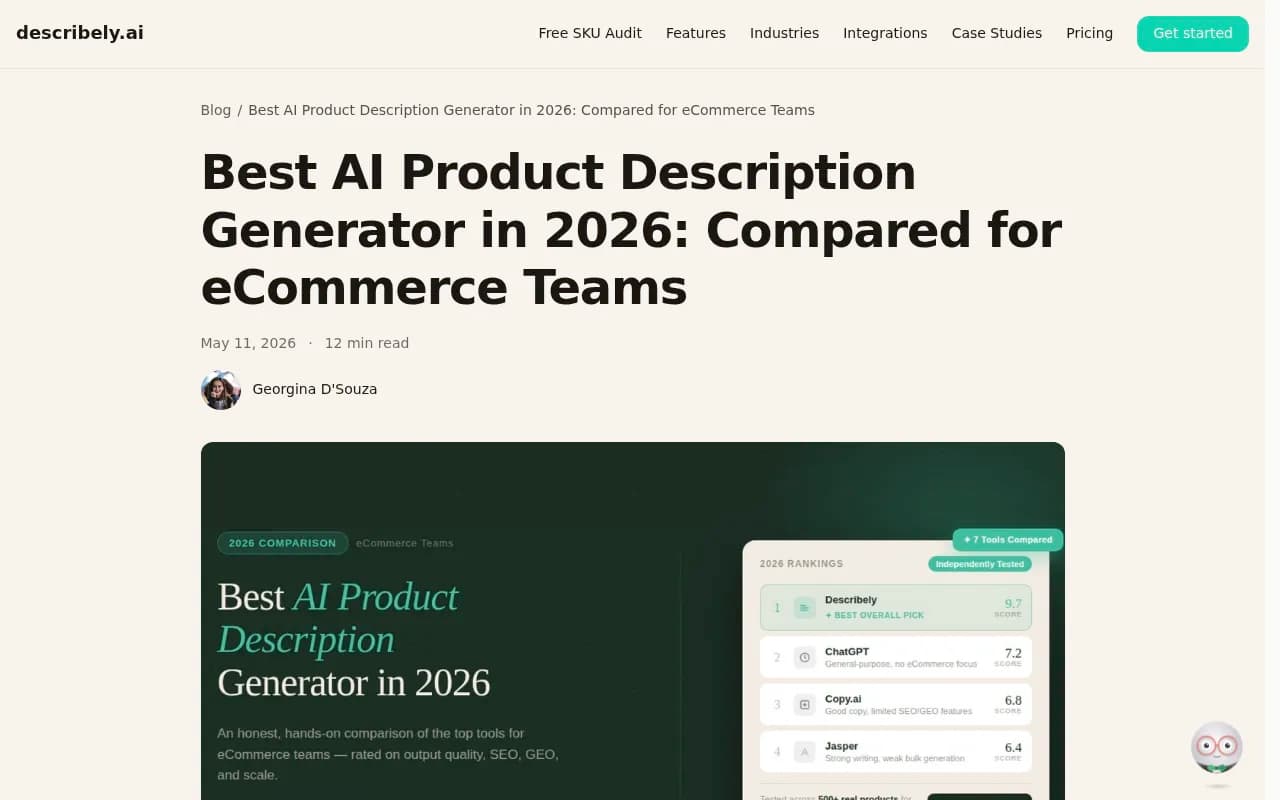
The screenshot above is from Describely's comparison. It is vendor-published, so read it with that in mind, but the evaluation criteria it lays out are a solid checklist.
Best AI tools for product descriptions
Jasper
Jasper is the safe pick when brand consistency is the main worry. You feed it brand voice, product facts and examples of approved copy, and it keeps PDPs, collection copy, ads and email blocks sounding like the same company. The catch is the one every reviewer repeats: it is only as good as your inputs. Vague specs in, vague copy out.
There is also a separate Jasper AI listing in our catalog focused on long-form SEO content.
Copy.ai
Copy.ai works well for launch variants: five angles on the same product, different lengths for different channels. It is less about catalog operations and more about quickly producing options you then edit.
Writesonic
Writesonic suits small stores that want descriptions, ads and landing page copy in one place without an enterprise workflow. Treat SEO claims and product facts as review steps. Generated copy should not invent materials, certifications or guarantees.
ChatGPT
For a store with 30 products, ChatGPT with a good prompt and a pasted spec sheet is genuinely enough. Give it the attributes, the tone, a banned-claims list, and an example. The downside is no batch workflow and no store connection, so it stops being fun around product 80.
Hypotenuse AI and Describely
These two are built for catalog teams: bulk generation, data enrichment for sparse supplier feeds, marketplace-ready variants and publishing back to the store. Describely cites Target Australia generating over 1,000 complete product descriptions a week at 98% first-pass accuracy. That is a vendor claim, but it illustrates the point: at scale you are buying a workflow, not a model.
Neither is in our catalog yet, so check their sites directly. Hypotenuse is at hypotenuse.ai and Describely at describely.ai.
Rytr for tight budgets
If you are a one-person shop and just need clean short descriptions at low cost, Rytr does the job.
Best AI tools for category and collection pages
Category pages usually rank for the highest-volume commercial terms in a store, and they are the pages most often left with two sentences of filler. The SEO-brief tools earn their money here.
Surfer SEO
Surfer scores a draft against the pages currently ranking for your target term and suggests terms, headings and length. For a category page, use it on the intro block and the buying-guide section beneath the product grid, not to stuff keywords into the whole page.
Frase
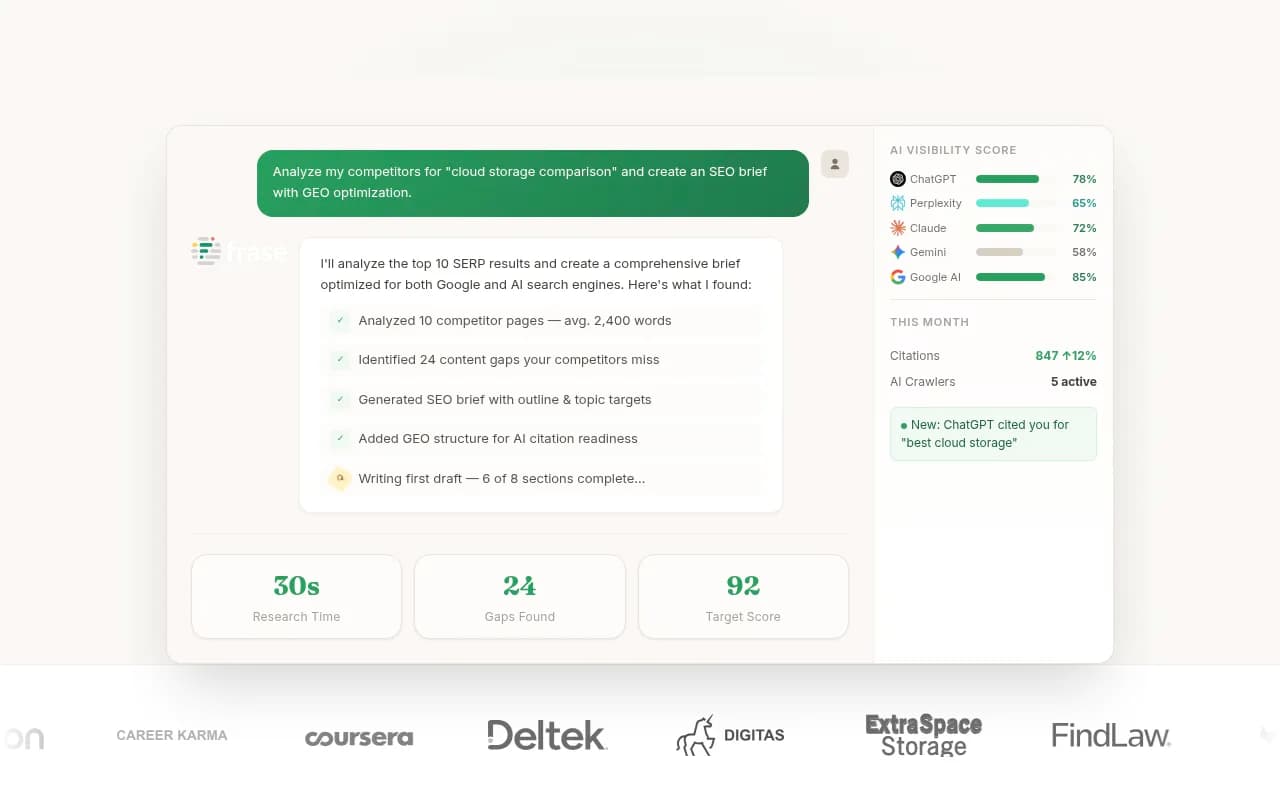
Frase is strong on SERP research and briefs, and works well for the supporting buying guides that link into your categories. It is not a catalog tool, so keep product data in your source system.
Clearscope
Clearscope is the premium, editor-friendly option. It is pricier, but teams with in-house writers often prefer its cleaner recommendations.
NeuronWriter
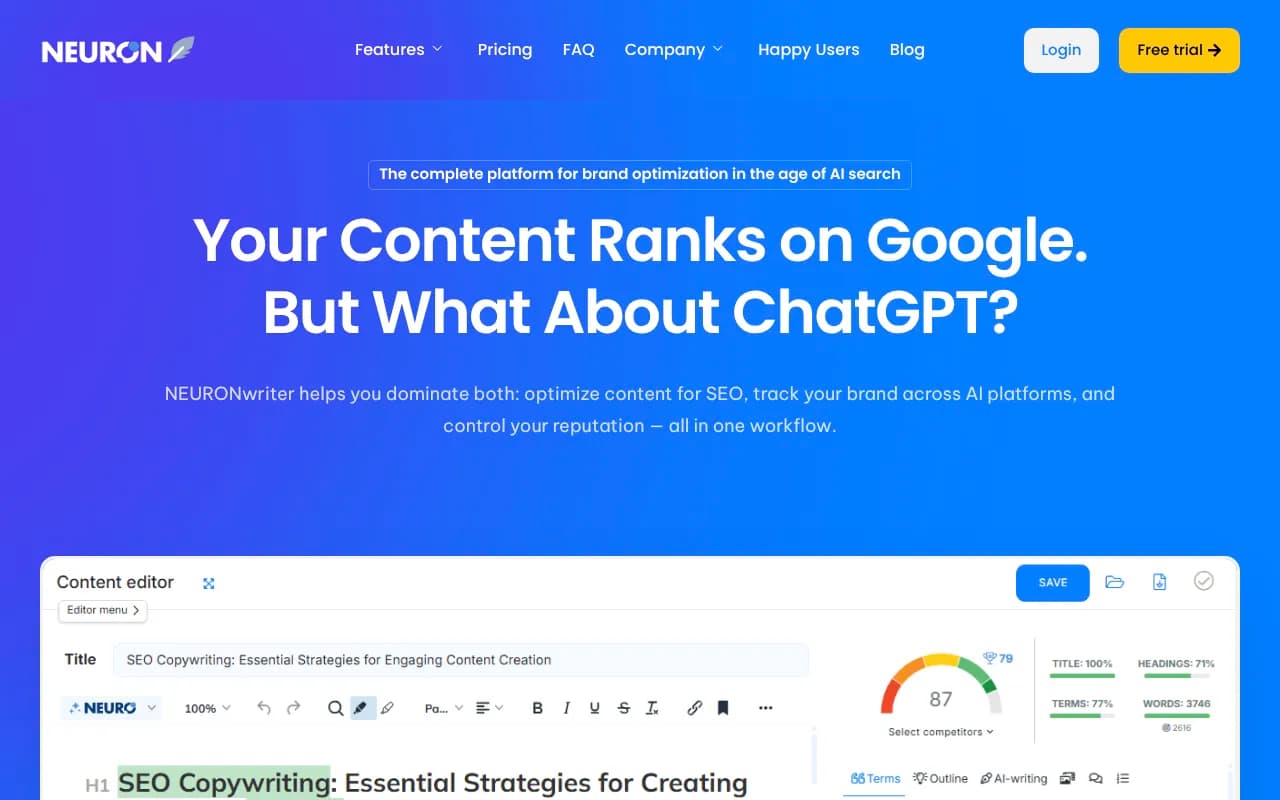
NeuronWriter covers similar ground to Surfer at a lower price, with semantic suggestions and competitor analysis. A reasonable pick for smaller stores.
Semrush
Semrush is the all-rounder for keyword research, site audits and competitor analysis. Use it to decide which category pages to prioritize before you write a word.
AlsoAsked and AnswerThePublic
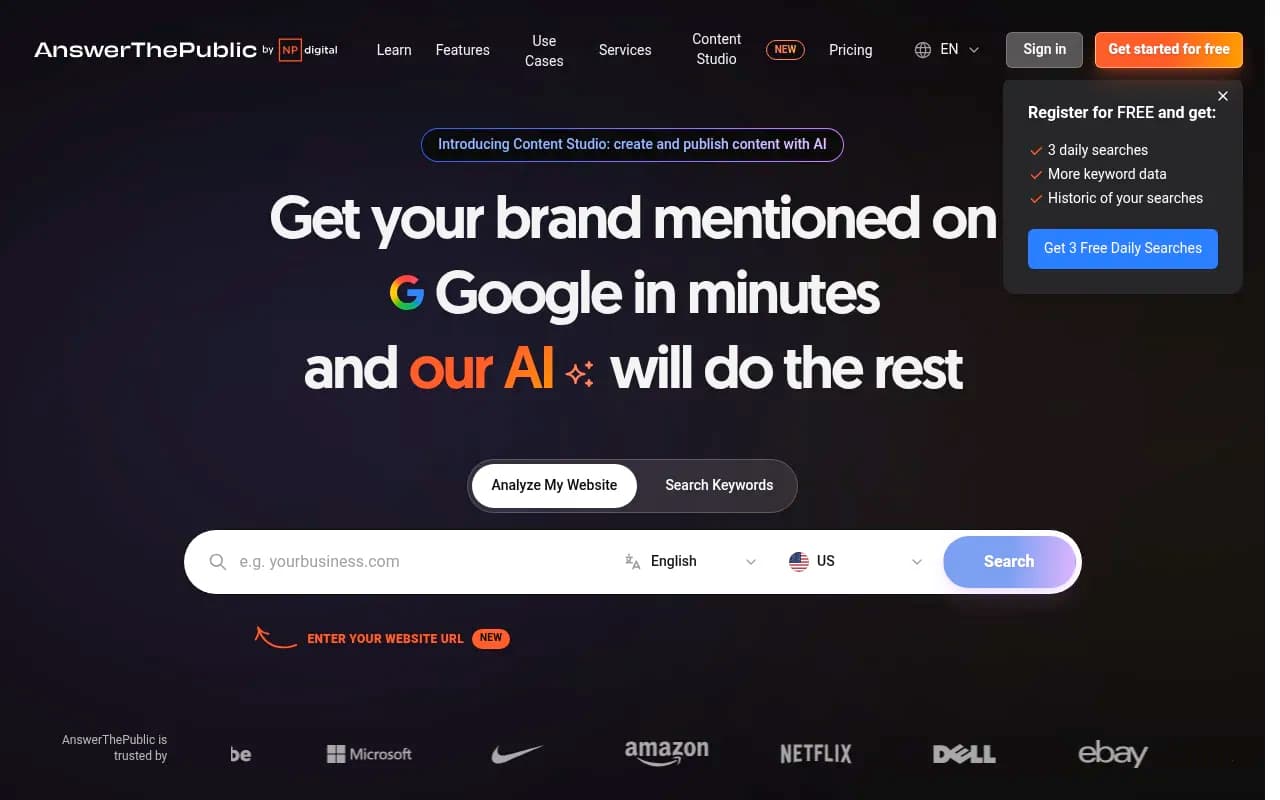
Both help you find the questions shoppers ask about a category ("what size tent for four people"). Those questions become short FAQ blocks on the page, which are also easy for AI systems to quote.
Technical and on-page tools that matter for stores
Writing is not the whole job. Ecommerce SEO has its own mess: faceted URLs, duplicate variants, out-of-stock pages and missing schema. Ryze's test of 14 ecommerce SEO tools ran each against Shopify and WooCommerce test stores, and its main question is a good one: does the tool only report problems, or does it ship fixes?
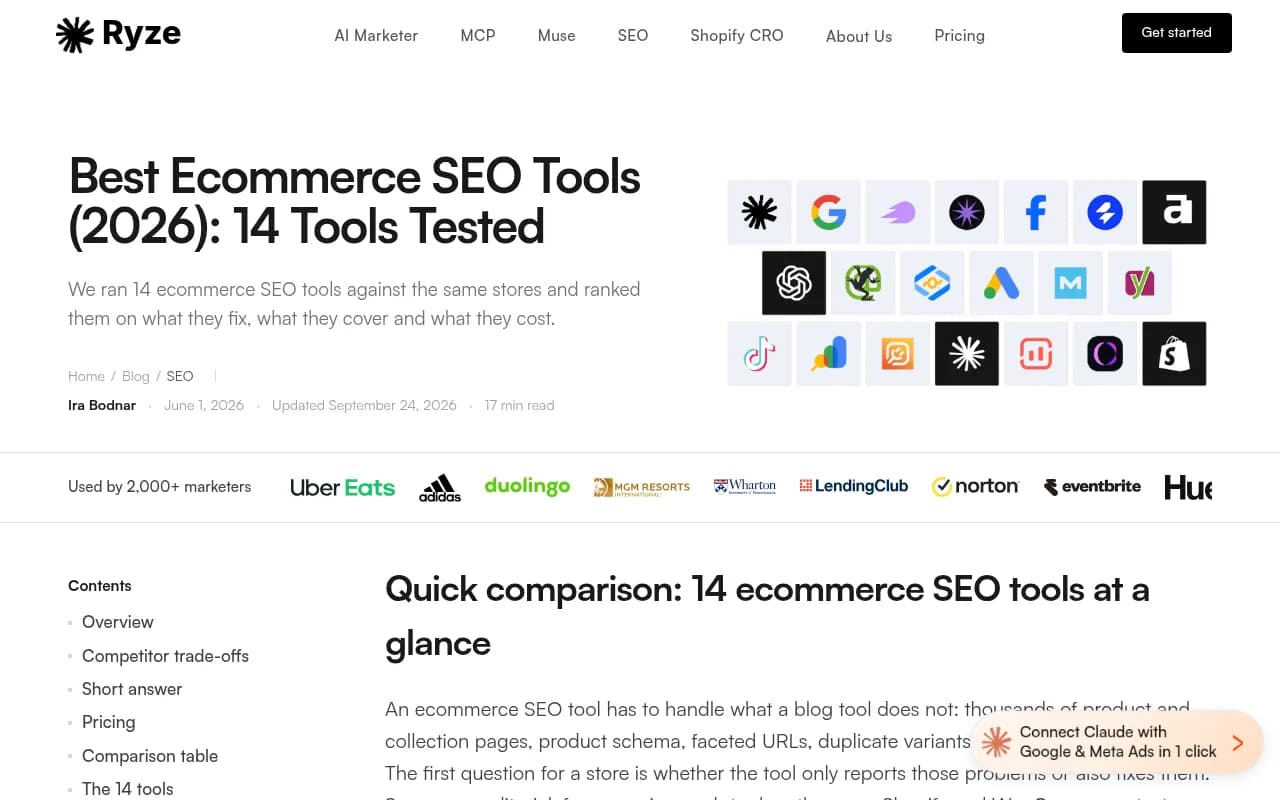
Treat that ranking as one vendor's editorial view (Ryze ranks itself first), but the scoring framework is useful. A few tools worth a look:
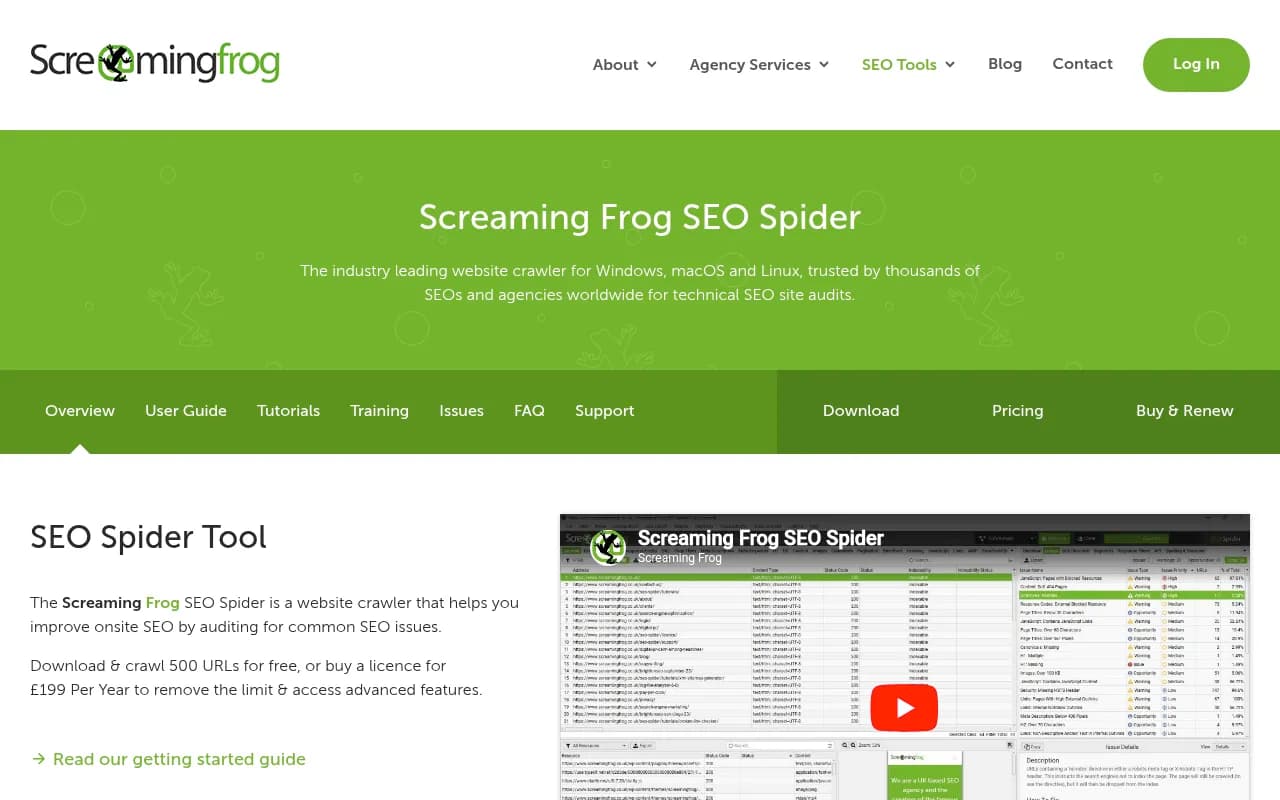
- Screaming Frog SEO Spider for crawling thousands of product URLs and finding duplicate titles, thin pages and broken links.
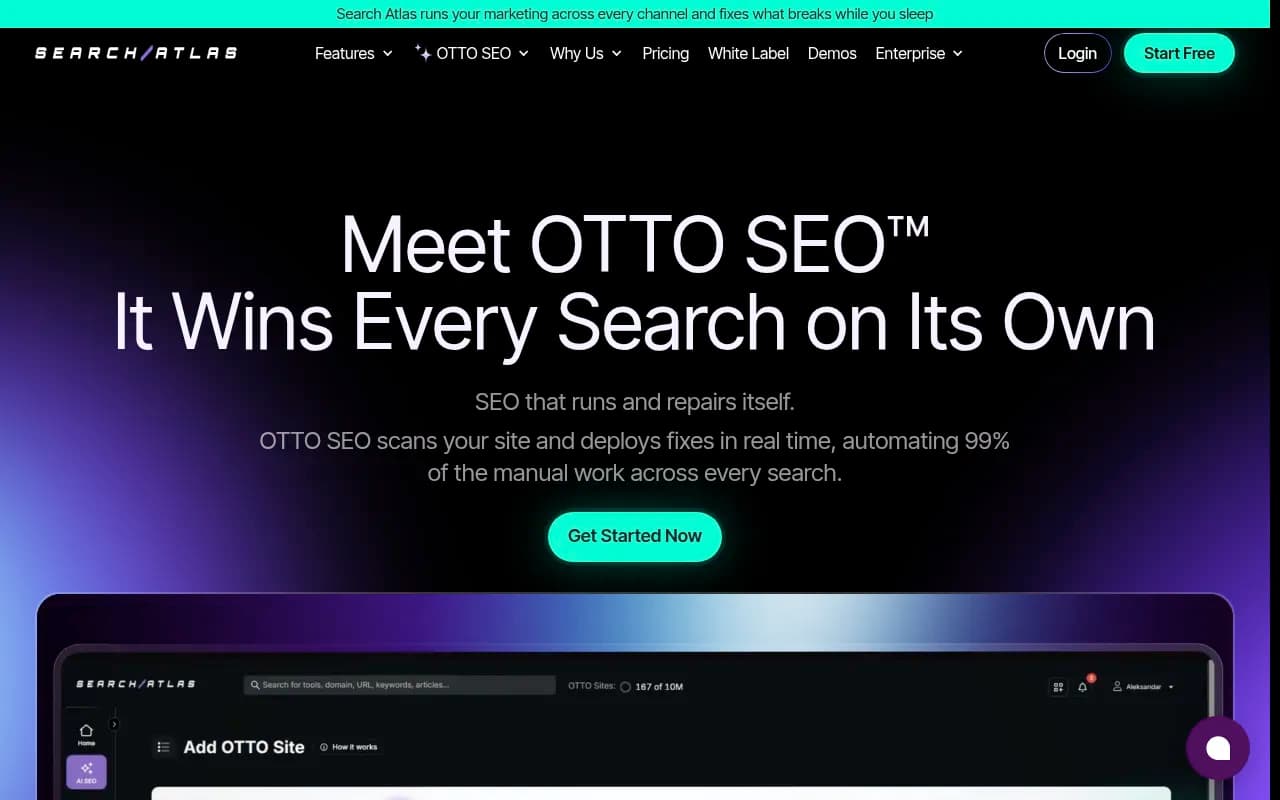
- OTTO SEO (from Search Atlas) for pixel-deployed on-page fixes.
- Schema App for structured data at scale.
- Google Search Console, which is free and tells you which category pages already have impressions but weak click-through.
Comparison table
| Tool | Best for | Product descriptions | Category pages | Watch out for |
|---|---|---|---|---|
| Jasper | Brand-consistent copy across channels | Strong | Good | Needs strong inputs and approved voice samples |
| Copy.ai | Launch variants, quick options | Good | Basic | Less catalog-oriented |
| Writesonic | Small teams, all-purpose | Good | Good | Verify facts and SEO claims |
| Hypotenuse AI / Describely | Bulk catalog generation, data enrichment | Strong | Limited | Not for SEO research |
| ChatGPT | Low-cost flexible drafting | Good for small catalogs | Good drafts | No batch or store sync |
| Surfer SEO | Scoring drafts against SERPs | Limited | Strong | Easy to over-optimize |
| Frase | SERP briefs and buying guides | Limited | Strong | Not a PIM |
| Clearscope | Editorial teams | Limited | Strong | Higher price |
| NeuronWriter | Budget content optimization | Limited | Good | Smaller ecosystem |
| Semrush | Research and prioritization | Basic | Strong research | Writing tools are secondary |
Choose by job
| Job | Shortlist |
|---|---|
| Bulk descriptions from SKU attributes | Hypotenuse AI, Describely, Jasper |
| A few dozen products, tight budget | ChatGPT, Rytr, Writesonic |
| Category page intros and buying guides | Surfer SEO, Frase, NeuronWriter |
| Deciding which categories to fix first | Semrush, Google Search Console |
| Finding technical problems across variants | Screaming Frog, OTTO SEO |
A workflow that works
Here is the order I would do it in.
- Pull Search Console data and list category pages with impressions but low click-through or average position between 5 and 20. Those are your fastest wins.
- Build a brief for each in Frase or Surfer. Note the questions and subtopics the top results cover.
- Draft a short intro (80 to 150 words), a buying-guide section below the grid, and 3 to 5 FAQs. Keep the product grid near the top; do not bury it under copy.
- For product descriptions, export attributes to a clean sheet. Fill gaps first. Generate in batches of 50 and spot-check each batch.
- Add a banned-claims list to every prompt: no invented materials, certifications, compatibility, health claims or guarantees.
- Add Product schema, accurate price and availability, and unique titles and meta descriptions.
- Publish, then track what happens.
Avoid duplicate-content traps
AI makes it very easy to produce 500 near-identical descriptions. Vary structure by product type, include genuinely distinct attributes, and do not publish the supplier's boilerplate with a light rewrite. Variants that share a parent should usually share one canonical description, not 12 slightly different ones.
Optimizing for AI search, not only Google
Shoppers now ask ChatGPT, Perplexity and Google AI Mode what to buy. The pages those systems cite look a lot like the pages you are already writing.
Promptwatch Data on which content types ChatGPT cites (Sep 28 to Oct 4, 2026) found product pages are the most cited type at 22.4% of classified citations, with landing pages next at 16.8%. For commercial prompts like "best X for...", product pages rise to 26.0% and landing pages to 20.6%. Listicles add another 15.0%. In other words, ChatGPT quotes pages that describe what you sell, so specs, prices and positioning need to be complete and factual.
Shopping cards are a smaller piece. Promptwatch's ChatGPT shopping data shows product cards and price comparisons appear in only a low single-digit percentage of web-search responses, and the rate jumps around as OpenAI tunes it. The recommended prep is dull but effective: complete Product schema, accurate prices and availability, and a clean merchant feed.
Practical implications for your copy:
- Put specs in plain text and tables, not only in images or tabs that do not render.
- Make comparison easy: clear pricing, size ranges, who the product is for.
- Publish your own comparison and "best for" pages for your categories. Listicles and comparisons are cited often.
- Keep category page FAQs short and direct. They are easy to lift into an answer.
Measuring whether it worked
Once pages are live, you want to know whether AI crawlers can read them and whether they get cited. Tools like Promptwatch can track which prompts your store appears in, show IP-verified AI crawler activity on your product and category URLs, and flag content gaps against the prompts shoppers actually ask. That is useful for catching pages that rank in Google but never get cited by ChatGPT.

If you want to compare options in this space, the GEO software directory at bestgeosoftware.com lists a wide range of trackers and optimization platforms.
Common mistakes
- Letting the model fill in specs. It will, confidently. Always supply data and review output.
- Writing the same keyword-stuffed paragraph on every category page.
- Putting 600 words of copy above the product grid. Shoppers leave.
- Ignoring out-of-stock and discontinued pages, which pile up as thin or duplicate content.
- Skipping measurement. If you cannot tell which pages gained clicks or citations, you cannot tell which prompts and templates worked.
Quick recommendations
- Solo store under 100 products: ChatGPT or Writesonic for descriptions, NeuronWriter or Frase for your top five category pages, Search Console for prioritization.
- Growing store with a team: Jasper for brand-governed copy, Surfer or Clearscope for category pages, Semrush for research.
- Catalog of thousands of SKUs: Hypotenuse AI or Describely for bulk work, Screaming Frog for audits, a human review step for every batch.
- Any size, if AI search matters to you: add citation and crawler tracking so you can see what is landing.
For a broader look at software in adjacent categories, the directory at surferstack.com has reviews and alternatives. Pricing changes quickly in this market, so confirm current plans on each vendor's site before committing.