Key takeaways
- A workable GEO stack for a European startup has four layers: AI visibility tracking, content production, privacy-friendly analytics, and crawler or technical checks. You can cover all four for under $500 a month.
- Tracking is the biggest line item. Budget $95 to $250 for a platform that also tells you what to fix, or $29 to $100 for a monitoring-only tracker.
- Cookieless analytics like Plausible, Simple Analytics, or Fathom cost $9 to $59 a month and remove most consent-banner headaches.
- Pricing and compliance claims change fast. Verify every price and every DPA or hosting detail on the vendor's page before you sign anything.
- Crawler access matters as much as content. If AI bots can't read your site, no tool will fix that for you.
Why a European startup needs a different stack
Most GEO tool roundups are written for US teams with US budgets. Read a few and you'll see the same pattern: enterprise platforms with custom pricing, then a long tail of cheap trackers that show you a dashboard and leave you to work out the rest.
European startups have two extra constraints. First, procurement and legal. Someone will ask where the data is processed, whether there's a data processing agreement, and whether the vendor holds a security certification. Second, analytics. If your analytics tool drops cookies, you need consent banners, and consent banners wreck your data in markets like Germany and the Netherlands.
This guide is a stack, not a ranking. The goal is to spend under $500 a month and end up with something you can defend to a lawyer and a CFO.
One caveat up front. Pricing here comes partly from vendor blogs, which are not neutral sources. I've flagged where that applies. Check the pricing pages yourself.
The four layers of the stack
| Layer | What it answers | Typical monthly cost |
|---|---|---|
| AI visibility tracking | Does ChatGPT, Perplexity or AI Overviews mention us, and where? | $29 to $250 |
| Content | What do we publish to close the gaps? | $0 to $200 |
| Analytics | Is AI traffic actually arriving and converting? | $9 to $60 |
| Crawler and technical checks | Can AI bots read our site? | $0 to $50 |
A sensible split for a seed-stage team: roughly 45% tracking, 30% content, 10% analytics, and the rest as buffer for add-ons like extra prompts or seats.
Layer 1: AI visibility tracking
This is where most of the budget goes and where the tools differ most. There are two kinds. Prompt trackers answer "were we mentioned?" Optimization platforms also tell you why you weren't and help you fix it.
Monitoring-only options
If all you need is a pulse check, cheap trackers are fine. Otterly.AI is listed from $29 a month in ReachLLM's roundup (a vendor blog, so verify it). It tracks mentions, citations, and share of voice across several AI platforms.

Peec AI is popular with European marketing teams for clean visibility, position, and sentiment dashboards. It's a monitoring tool, so you'll need to supply the content strategy yourself.

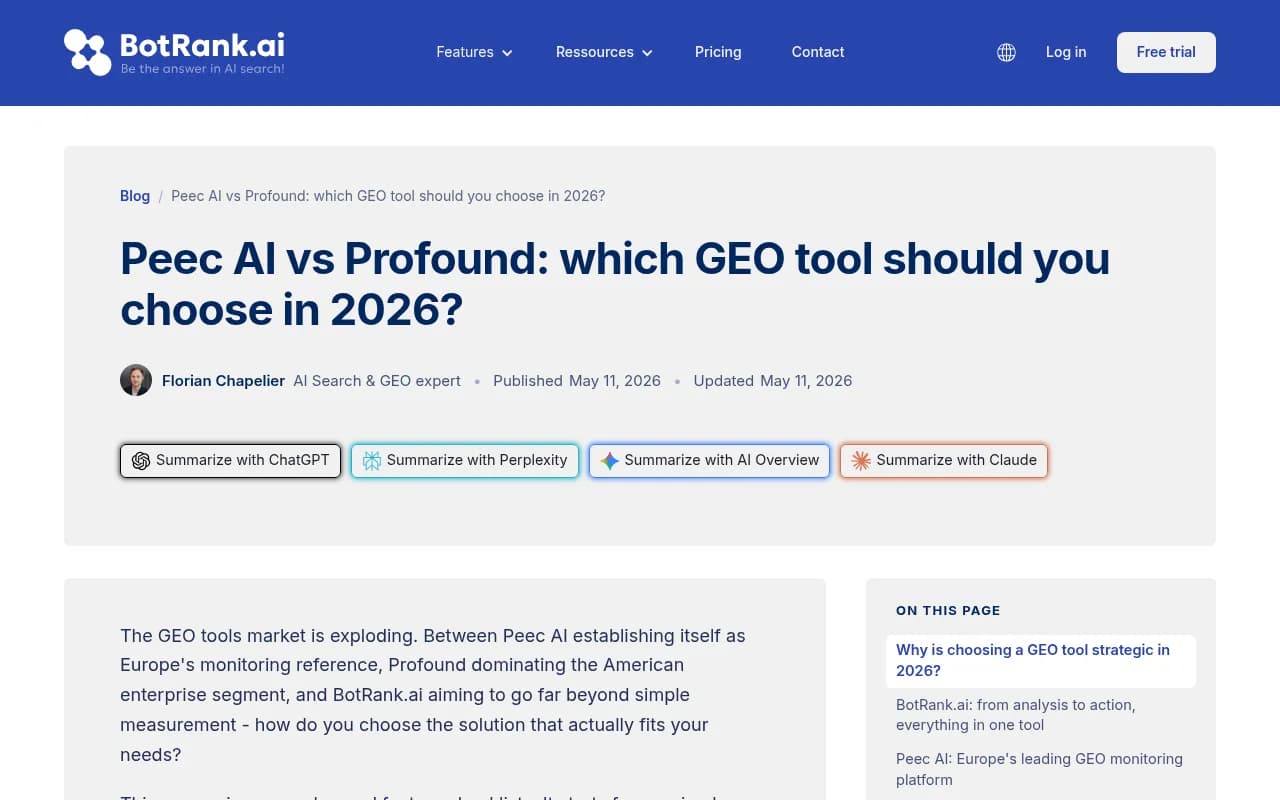
Profound is the American enterprise reference. BotRank's comparison, itself a competitor's claim, puts real use at around $399 a month minimum. That would eat most of a $500 budget before you've published a word.

An optimization platform that fits the budget
The issue with a monitoring-only tracker is that you pay $29 to $100 for a chart, then spend your own hours working out what to do about it. For a startup with one marketer, that time is the real cost.
Promptwatch sits at the other end of that spectrum and still fits under $500. Essential is $95 a month (EUR 85) and includes 50 prompts, all AI models, country tracking, a site audit, content gap analysis, and API and MCP access. Professional at $245 a month (EUR 205) adds 150 prompts, 5 AEO articles, and a Knowledge Base. It is also ISO/IEC 27001 certified and GDPR compliant, which answers the first two questions your procurement person will ask. Confirm current pricing at promptwatch.com/pricing.

The reason I'd lean this way for a lean team: it tracks the real interfaces of ChatGPT, AI Overviews, AI Mode, Gemini, Perplexity and others rather than just API outputs, and it ties findings to actions via an Action Board. Most trackers stop at the chart.
Tracking comparison
| Tool | Starting price (verify) | Optimization help | Compliance notes |
|---|---|---|---|
| Otterly.AI | From about $29 | Monitoring | Check DPA and hosting |
| Peec AI | Check vendor page | Monitoring | Check DPA and hosting |
| Profound | Around $399 for real use (vendor claim) | Strong analysis | Check DPA and hosting |
| Promptwatch | $95 Essential, $245 Professional | Content gaps, content tools, Action Board | ISO/IEC 27001, GDPR compliant |
I did not verify EU hosting or DPA terms for Otterly, Peec, or Profound. Ask each vendor directly and get the answer in writing.
For wider browsing, the GEO software directory at bestgeosoftware.com lists many more options.
Layer 2: content that earns citations
Tracking tells you the gap. Content closes it. The good news is that you don't need a $300 writing platform to do this well.
Promptwatch Data is useful here. In its analysis of ChatGPT citations from Sep 28 to Oct 4, 2026, product pages were the most cited content type at 22.4%, with landing pages at 16.8%. That means roughly 39% of citations go to pages describing what a company sells. Listicles got 13.6% and how-tos 8.7%.
For a startup, that flips the usual advice. Before you start a blog, make sure your product and landing pages are clear, specific, and crawlable. Then add comparisons and how-tos around them.
Another data point worth knowing: Promptwatch's analysis of content half-life in ChatGPT found landing pages and docs stayed cited longest, while news lost half its pages within 36 days. Evergreen beats timely for a small team.
Content tooling options
| Need | Tool | Cost range | Notes |
|---|---|---|---|
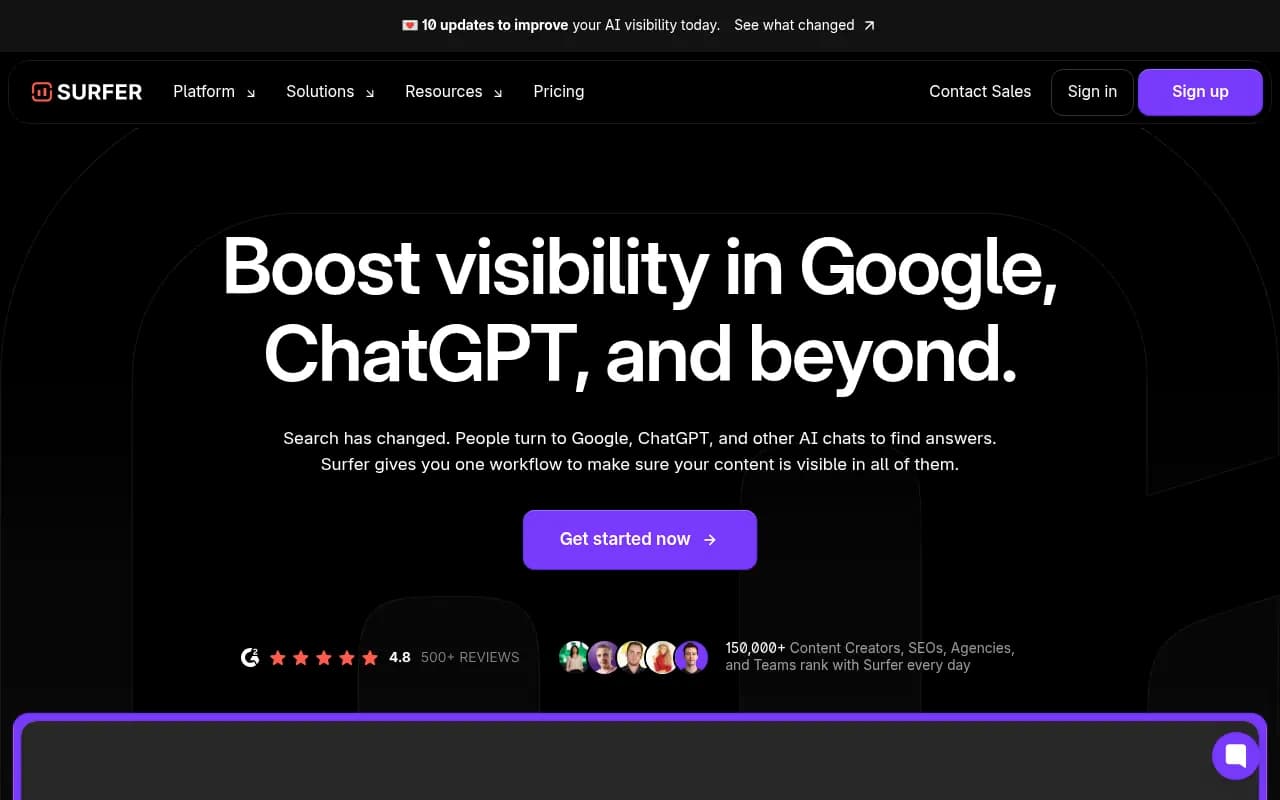
| Content briefs and optimization | Surfer SEO | From $99 | Strong SEO workflow, growing AI search support (per ReachLLM) |
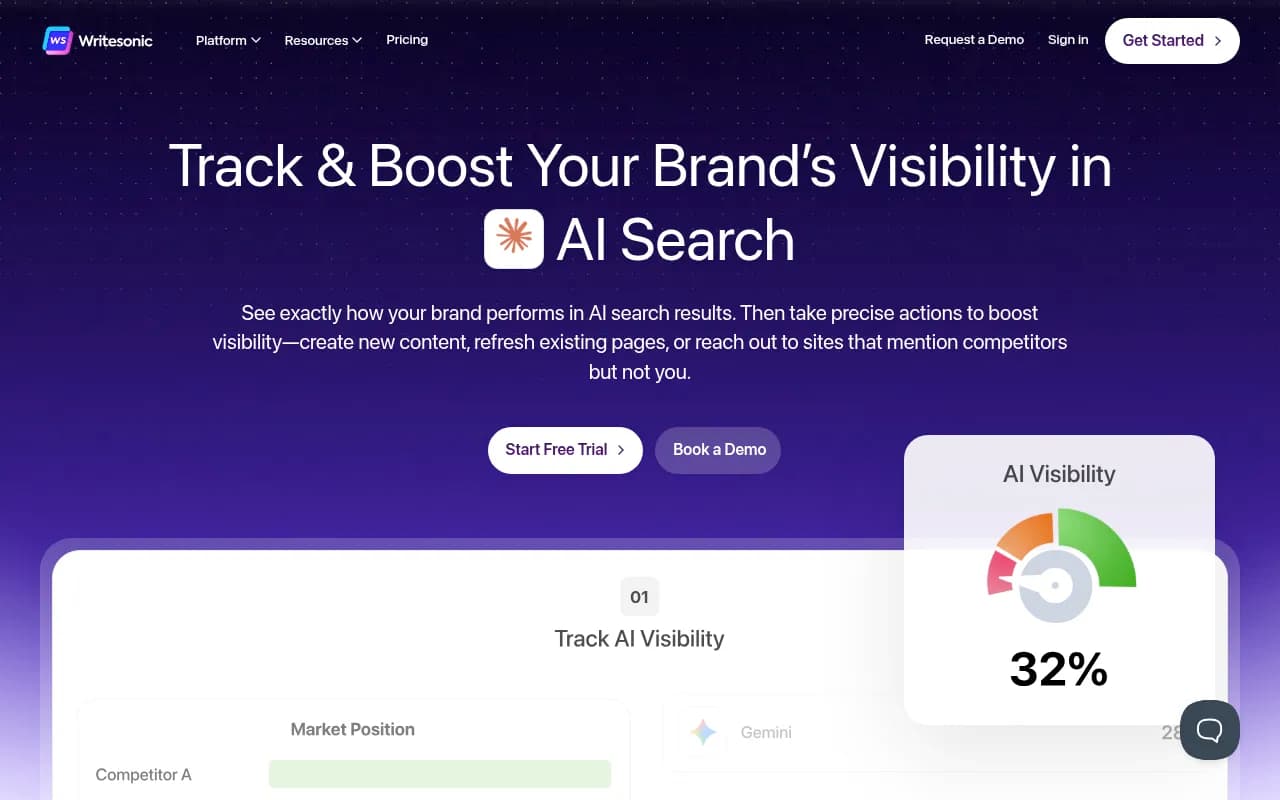
| Fast drafting | Writesonic | From $12 | Basic AEO support |
| Grammar, multilingual editing | LanguageTool | Low cost or free tier | European-built, useful for non-English content |
| Questions people ask | AnswerThePublic | Varies | Good for how-to topics |
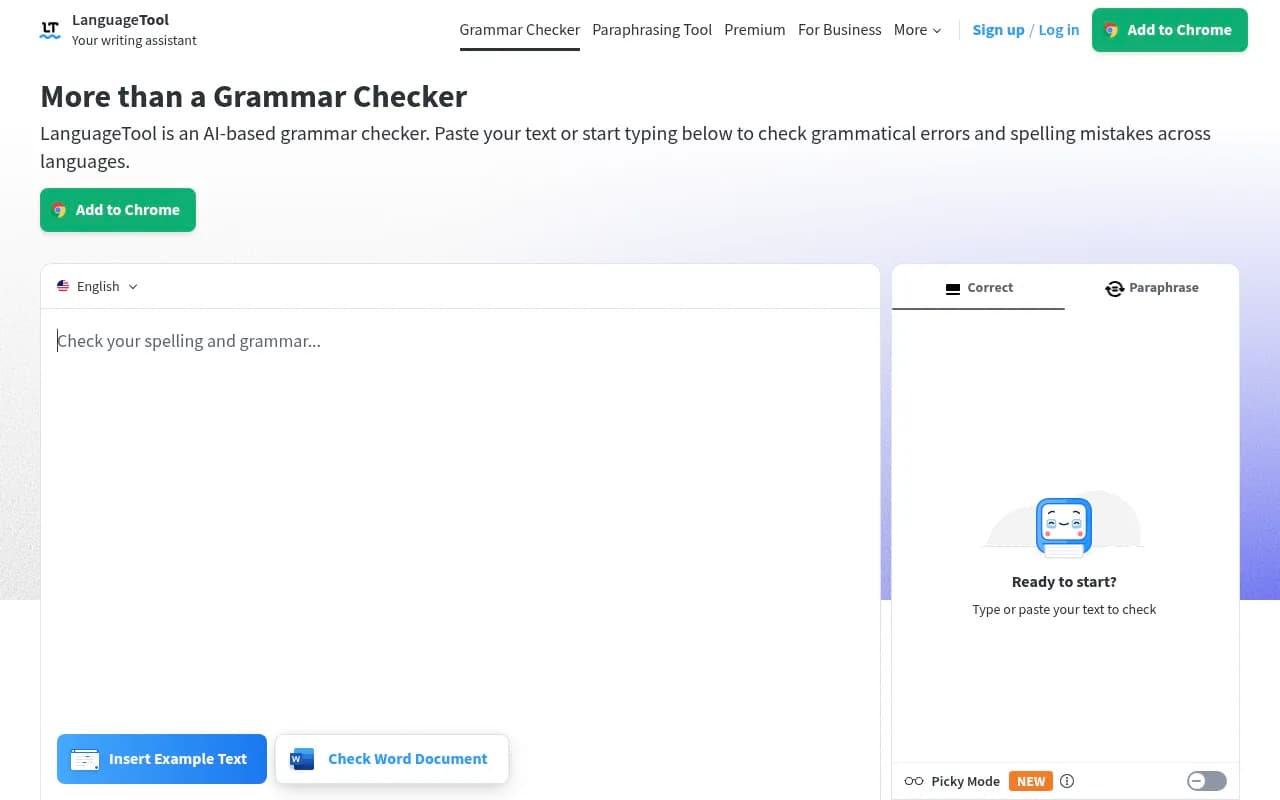
If you're publishing in several European languages, LanguageTool is a quiet workhorse. Machine-written copy in Dutch or German with subtle errors reads badly, and it won't earn trust.
If you use Promptwatch Professional, the five included AEO articles and Knowledge Base cover a good share of this layer. On Business ($579) the Content Agent automates publishing, but that is over this guide's budget.
Layer 3: privacy-friendly analytics
This is the layer European teams often get wrong. If you track AI referral traffic with a cookie-heavy tool, you need consent, and many visitors will decline. You then lose the exact data you wanted: how much traffic ChatGPT and Perplexity actually send you.
Cookieless tools solve most of that. Per Improvado's GDPR analytics comparison:
- Plausible and Umami are around $9 a month.
- Simple Analytics is $19 a month for 100k pageviews, or $59 for 1M with API access and custom events.
- Fathom is positioned for bootstrapped startups on sub-$500 budgets.
Pick one. They overlap heavily, so don't stack them.
Two practical tips. First, whichever you use, set up a segment or filter for referrers like chatgpt.com, perplexity.ai, and gemini.google.com. Second, pair it with Google Search Console, which is free and shows what Google surfaces.
Promptwatch's visitor analytics also tracks AI-referred traffic and conversions, so if you're on a paid plan you may not need a separate tool for that specific job. A cookieless general analytics tool still earns its $9 for everything else.
Layer 4: crawler access and technical checks
This is the cheapest layer and the most overlooked. If GPTBot, ClaudeBot, or PerplexityBot are blocked by your robots.txt, CDN, or WAF, you're invisible and no tracker can change that.
Promptwatch Data shows why this matters now. In its AI crawler traffic report (IP-verified requests, June 8 to Sep 6, 2026), OpenAI made up 79.8% of verified crawler requests in Aug 31 to Sep 6, down from 94.8% in June. Anthropic, Google, Perplexity and Mistral are gaining share. Their advice is to compare your own logs against this mix: a provider that's large in the data but near zero in your logs probably means you're blocked.
A basic checklist:
- Open your robots.txt and look for blanket disallow rules on AI user agents.
- Check Cloudflare or other CDN bot protections, which often block AI crawlers by default.
- Make sure docs and pricing pages aren't behind a login or JavaScript-only rendering.
- Run a weekly site audit so you catch regressions.
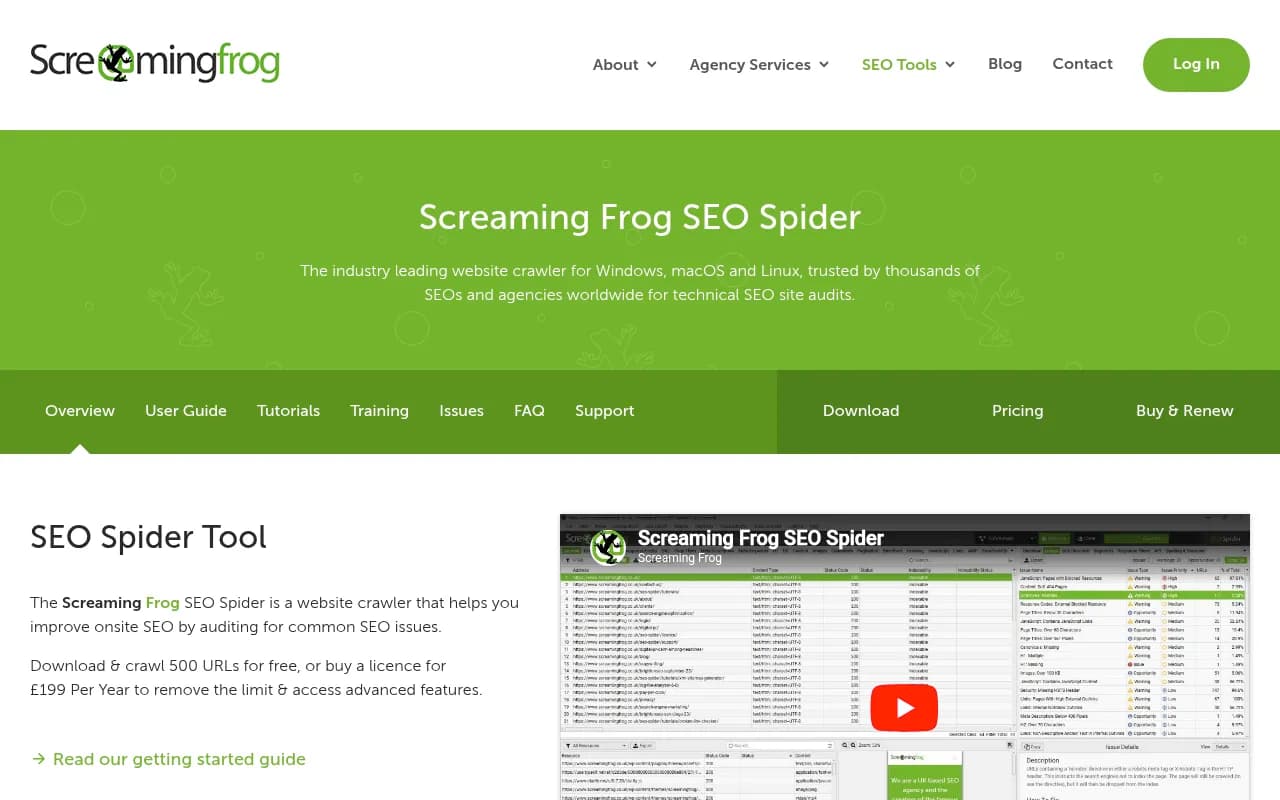
Free options include Screaming Frog SEO Spider (free up to a page limit) for crawling, and Promptwatch's free Agentic Readiness Check and AI Crawler URL Inspector.
Three sample stacks under $500
Prices are approximate and should be checked. All figures in USD per month.
The lean stack (about $135)
| Layer | Tool | Cost |
|---|---|---|
| Tracking and audits | Promptwatch Essential | $95 |
| Analytics | Plausible | $9 |
| Technical | Screaming Frog free, Search Console | $0 |
| Content editing | LanguageTool | about $0 to $20 |
Best for a pre-seed team with one person doing marketing part-time.
The balanced stack (about $360)
| Layer | Tool | Cost |
|---|---|---|
| Tracking, content gaps, AEO articles | Promptwatch Professional | $245 |
| Analytics | Simple Analytics Starter | $19 |
| Content optimization | Surfer SEO | $99 |
Best for a seed-stage startup with a content person and a few hundred pounds of runway to spare for tooling.
The minimal-monitoring stack (about $200)
| Layer | Tool | Cost |
|---|---|---|
| Tracking | Otterly.AI | about $29 |
| Analytics | Fathom or Plausible | about $15 to $20 |
| Content | Writesonic or Surfer SEO | $12 to $99 |
| Spare | Reserved for hours of manual analysis | n/a |
This one is cheapest on paper. It's also the one where you do the most work, because nothing tells you what to publish next.
A compliance checklist before you buy
I haven't audited each vendor's legal terms, and you shouldn't take any roundup's word for it. Before signing:
- Ask for a data processing agreement and read it.
- Ask where data is stored and processed, and whether sub-processors are outside the EU.
- Ask whether the vendor holds ISO/IEC 27001 or SOC 2.
- Check what prompts and responses are stored. Tracking tools generally store AI answers about your brand, not your customers' personal data, but confirm.
- If you use an AI content tool, check whether your inputs train the vendor's models.
- Note that I did not research EU AI Act obligations here. If you build or deploy AI features, get proper legal advice on that separately.
Mistakes to avoid
Buying the enterprise tool too early is the common one. At $399 a month before you've fixed your product pages, you're paying for analysis you can't act on.
The second is tracking too many prompts. Start with 30 to 50 that reflect real buying questions, then expand.
The third is ignoring Reddit and other citation sources. Promptwatch Data found that reddit.com's share of ChatGPT citations fell from about 4% to 0.5% on August 14, 2026, and that ChatGPT drew just 0.46% of citations from social platforms while AI Overviews drew 12.2% (Sep 28 to Oct 4, 2026). Where you invest depends on which engine your buyers use.
If you'd rather hire help
A tooling budget doesn't replace strategy. Teams without in-house SEO sometimes bring in an agency for the first quarter. 1001 SEO Media is a full-service SEO and GEO agency with no long-term contracts, and it uses Promptwatch for AI visibility work. That is optional, and the stack above works without it.
Bottom line
For most European startups, the best value is one optimization platform that covers tracking, audits, and content gaps, plus a cookieless analytics tool for about $9 to $19. That is roughly $105 to $265 a month, leaving real headroom under $500. Spend the leftover on content, not on a second tracker. Then verify every price and every DPA before you commit.