Key takeaways
- Writing one good article is easy. Publishing 30 a month that AI models actually cite is an operations problem, and the tool stack should mirror that: gap analysis, brief, draft, publish, measure, refresh.
- Most tools cover one or two of those steps. Writers write, trackers track, and the handoff between them is where programs stall.
- Promptwatch Data (Sep 28 to Oct 4, 2026) shows product pages and landing pages take about 39% of ChatGPT citations, so a GEO program that only publishes blog posts is aiming at the wrong targets.
- Content decays at different speeds. Plan refreshes for product pages and how-tos at roughly 60 to 75 days, and treat landing pages and docs as long-term assets.
- Pick a closed-loop platform if you want less glue work, or build a hybrid stack if you already own good research and CMS tooling.
What "GEO content at scale" actually means
GEO content is content built to be found, read, and cited by AI systems like ChatGPT, Perplexity, Gemini, and Google AI Overviews. At scale means you are doing it weekly, not as a one-off experiment.
The workflow most teams end up with looks like this:
- Find prompts where competitors get cited and you do not.
- Turn those gaps into a prioritized backlog.
- Brief and write pages in the format that wins that kind of prompt.
- Publish to the CMS without copy-pasting.
- Check that AI crawlers fetch the page, that it gets cited, and that it drives traffic.
- Refresh what decays.
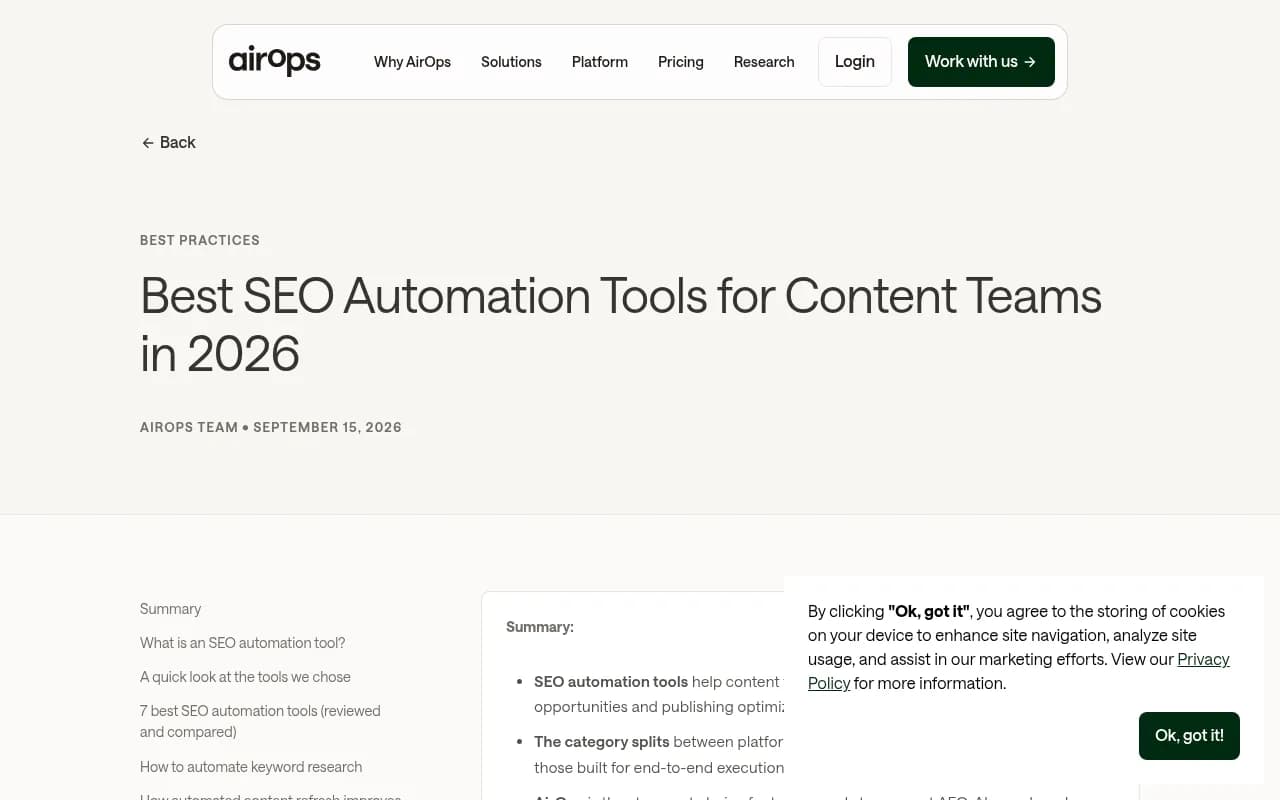
An AirOps piece on SEO automation describes the pain well: you export keywords from one tool, build briefs in another, write in a third, get approval over email, then publish manually. Every handoff leaks time. That is the problem worth solving, and it is why this guide is organized by workflow stage rather than as a flat list of writers.
A caveat on the sources around this topic: most "best automation platform" roundups are published by vendors who rank themselves first. I would read them for feature ideas, not verdicts, and check pricing on each vendor's own page before buying anything.
What the data says you should be writing
Before picking tools, decide what to produce. Promptwatch Data analyzed ChatGPT citations from Sep 28 to Oct 4, 2026, and the split is not what most blog-heavy content calendars assume.
| Content type | Share of ChatGPT citations |
|---|---|
| Product pages | 22.4% |
| Landing pages | 16.8% |
| Listicles | 13.6% |
| How-tos | 8.7% |
| Documentation | 7.5% |
| General articles | 6.1% |
| Comparisons | 5.9% |
| News | 5.7% |
| FAQ | 3.3% |
| Reviews | 1.7% |
Intent changes the mix. For commercial prompts like "best CRM for small businesses", product pages (26.0%), landing pages (20.6%), listicles (15.0%), and comparisons (7.9%) make up almost 70% of citations. For informational prompts, how-tos (10.7%), docs (8.5%), and articles (7.7%) earn more than they do overall. Branded prompts lean on product and landing pages, with reviews at 5.6%, more than triple their overall share.
So your tooling needs to produce more than 1,500-word blog posts. It should help you generate comparison pages, FAQ sections, documentation, and landing pages too, and keep them factual and complete.
Content also expires
The content half-life report tracked pages ChatGPT cited on July 6, 2026 through Oct 4. After 60 days ChatGPT still cited 69% of landing pages and 67% of docs, but only 55% of product pages and 60% of listicles. Product pages, reviews, and how-tos reach half-life after 74 to 77 days. News is the fastest to fade: half its pages were gone after 36 days.
Practical implication: your publishing tool needs a refresh loop. Scheduling a refresh at 60 to 75 days for product pages and how-tos is a sensible default. Landing pages, docs, pricing, and comparisons behave more like long-term assets.
Stage 1: gap analysis
Gap analysis answers "what should we write?" There are two kinds, and they are not interchangeable.
- Keyword gaps: terms competitors rank for in Google that you do not. Ahrefs and Semrush are the strongest starting points here.
- AI visibility gaps: prompts where AI models cite competitors and not you. This needs a tool that tracks real AI answers.
Traditional suites are excellent at discovery but weak at execution. The SAGEOBOT comparison of gap analysis tools makes the same point: Ahrefs is strongest at discovery, and teams still need prioritization, briefing, writing, and publishing processes around it.
Semrush and Ahrefs Brand Radar cover the keyword side and bolt on some AI tracking.

For first-party gaps, Google Search Console is free and underrated. It is great for finding pages already close to ranking, though weak for net-new competitor gaps.
For AI-specific gaps, Promptwatch is the one I would look at first, because its content gap analysis ties directly to what AI models cite, shows prompt volumes and difficulty, and exposes query fan-outs (the web searches a model runs behind a single answer). Those fan-outs are a good source of subtopics to cover on a page.

Other trackers that surface visibility gaps include Profound, Peec AI, Otterly.AI, and AthenaHQ. They are fine for answering "was my brand mentioned?", but most stop before the writing and publishing steps.



Stage 2: briefs and optimization
Once you have a gap, a brief turns it into something a writer (human or AI) can execute. This is the territory of classic content optimization tools, which score a draft against top-ranking pages.
| Tool | Best for | Notes |
|---|---|---|
| Surfer SEO | Human-led optimization | Scoring against SERP competitors, with AI writing |
| Clearscope | Editorial teams | Clean, term-focused grading |
| MarketMuse | Topic strategy | Shows what to write and how deeply |
| Frase | Research to optimization | Accessible for smaller teams |
| Content Harmony | Brief production | Cuts research time per brief |
| NeuronWriter | Semantic optimization | Budget-friendly |
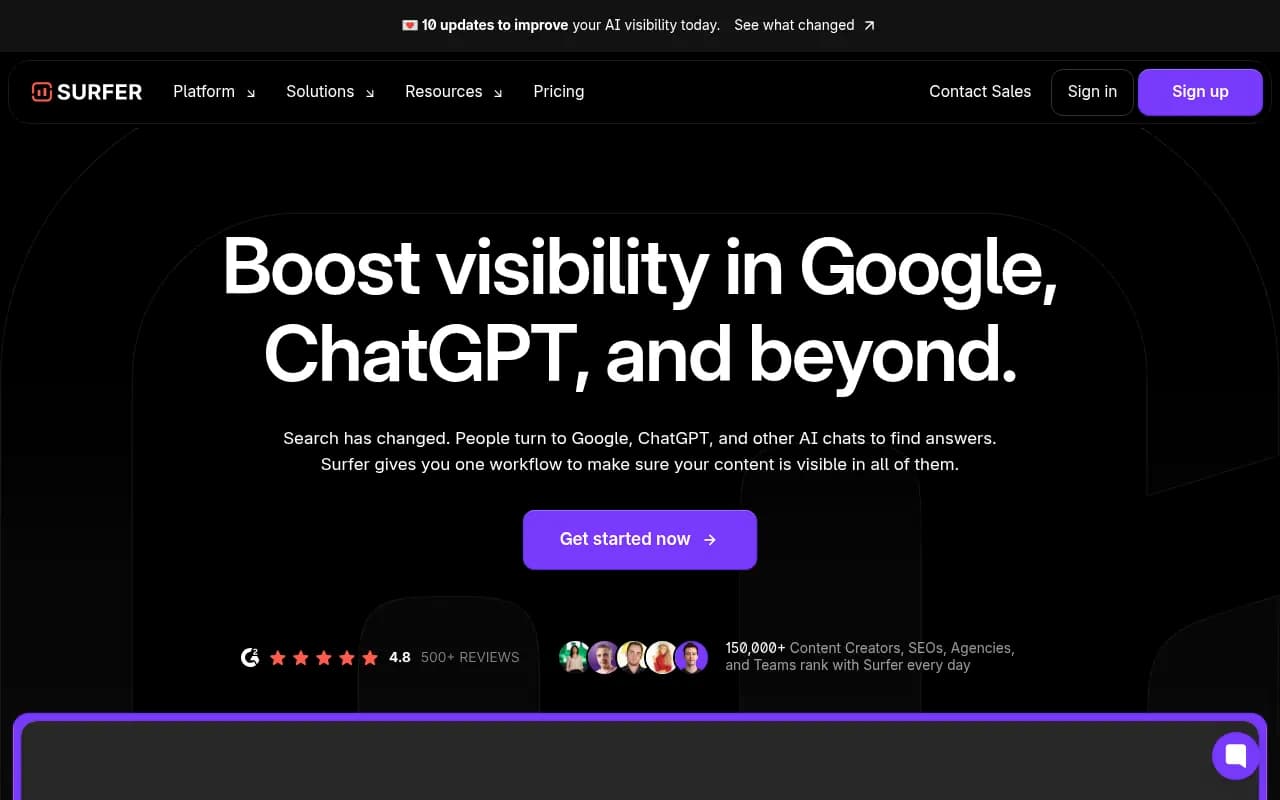

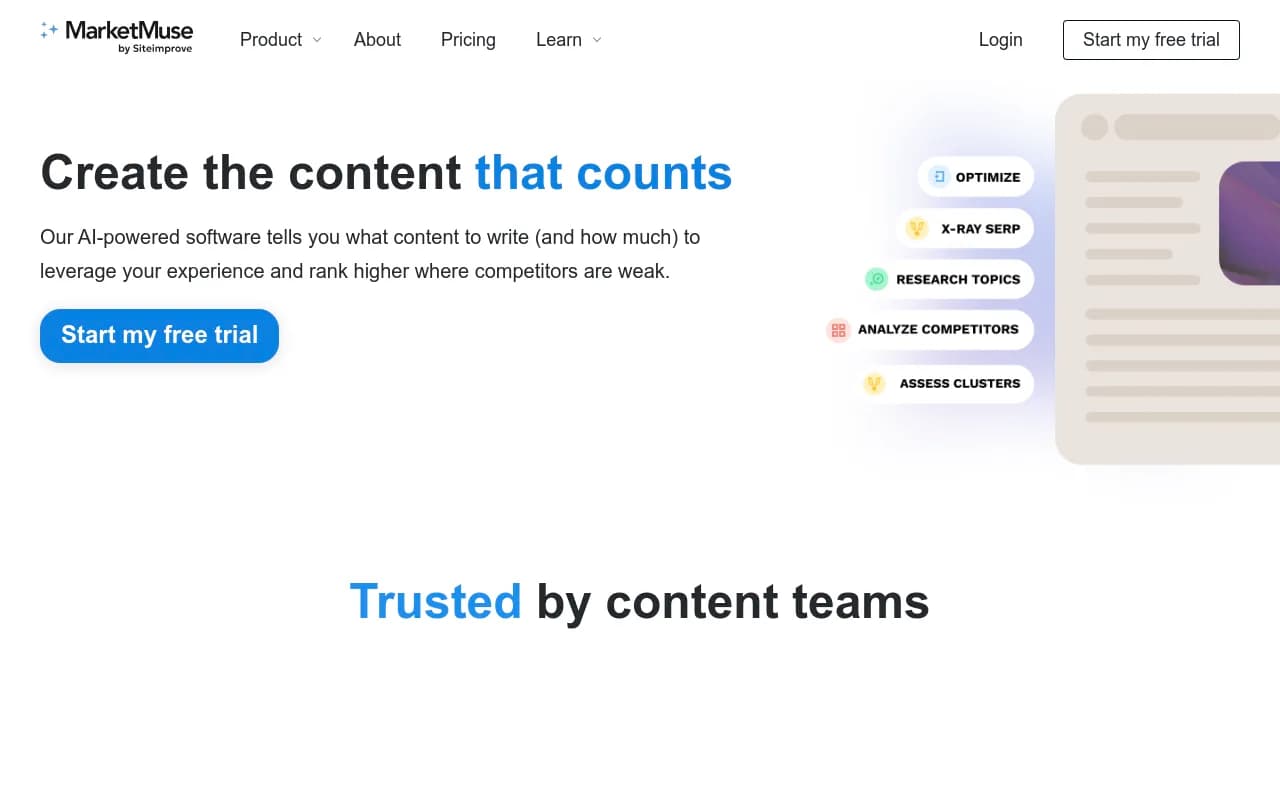
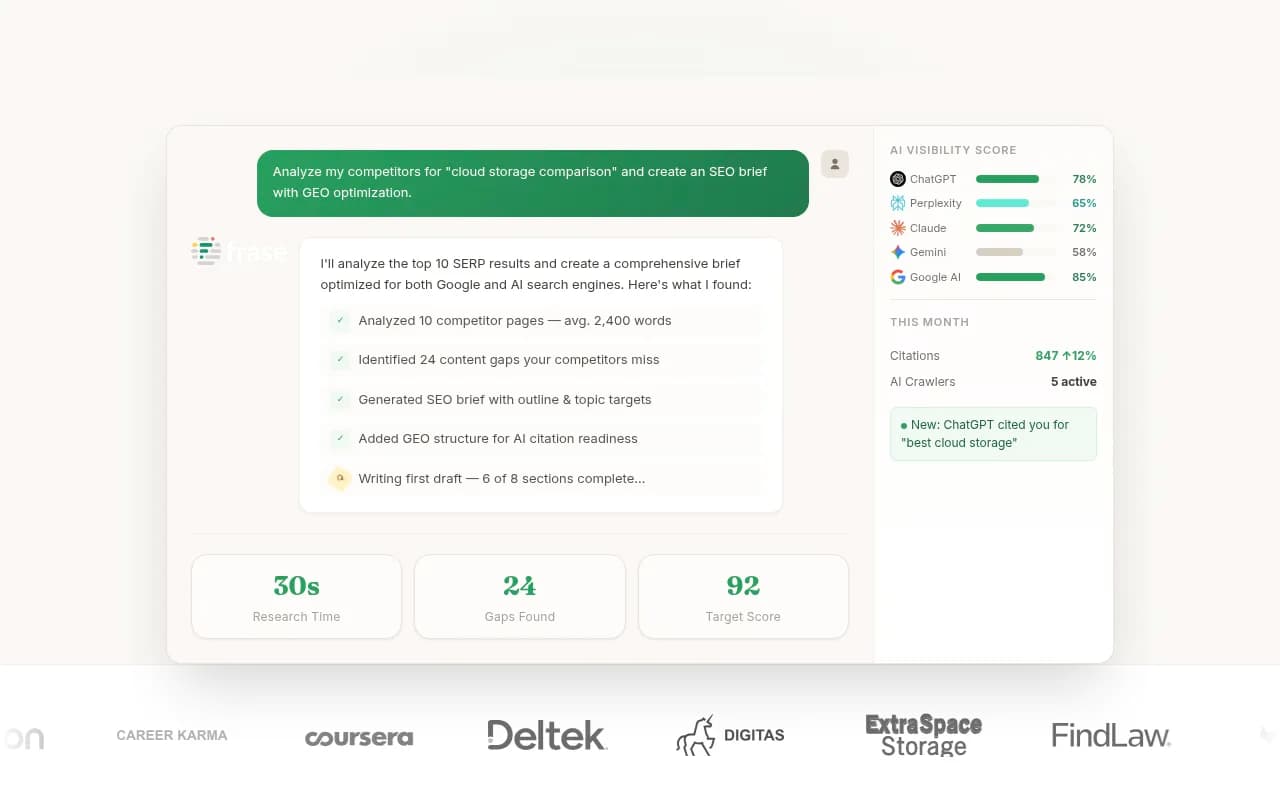
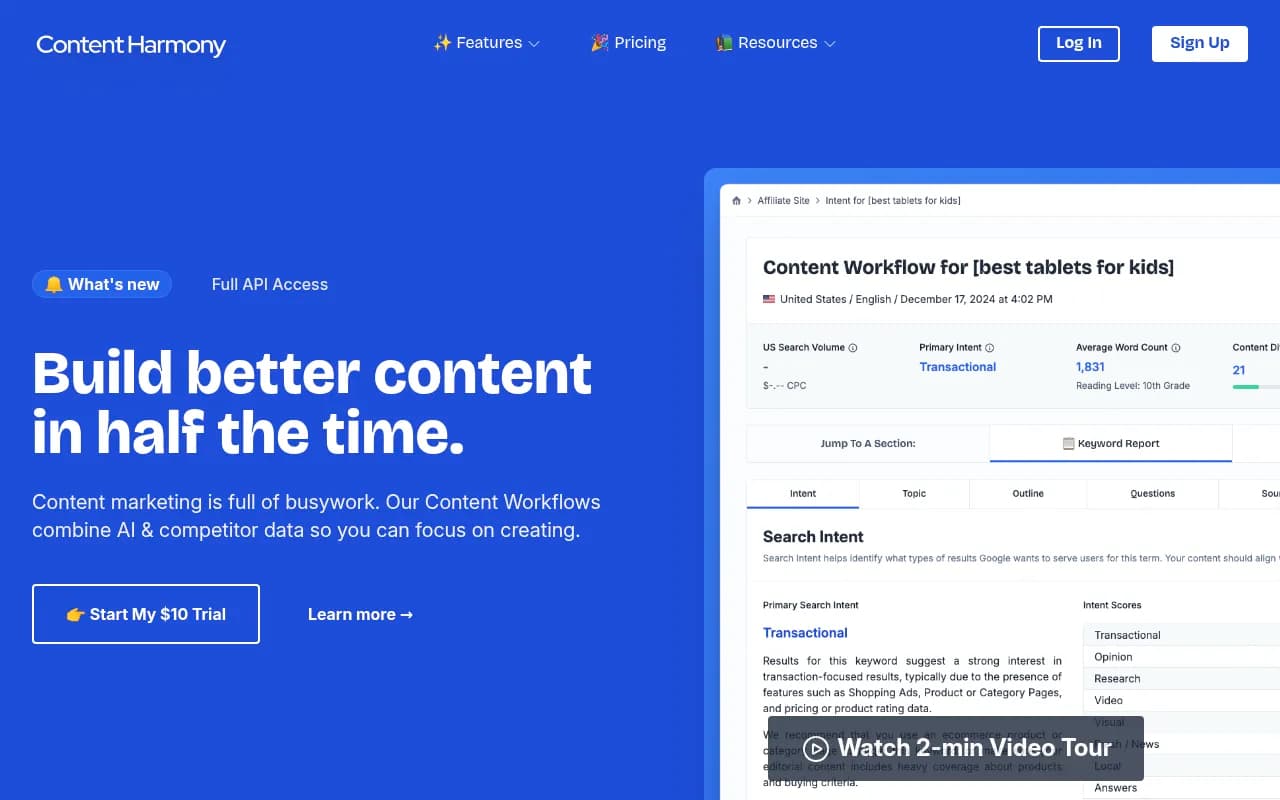
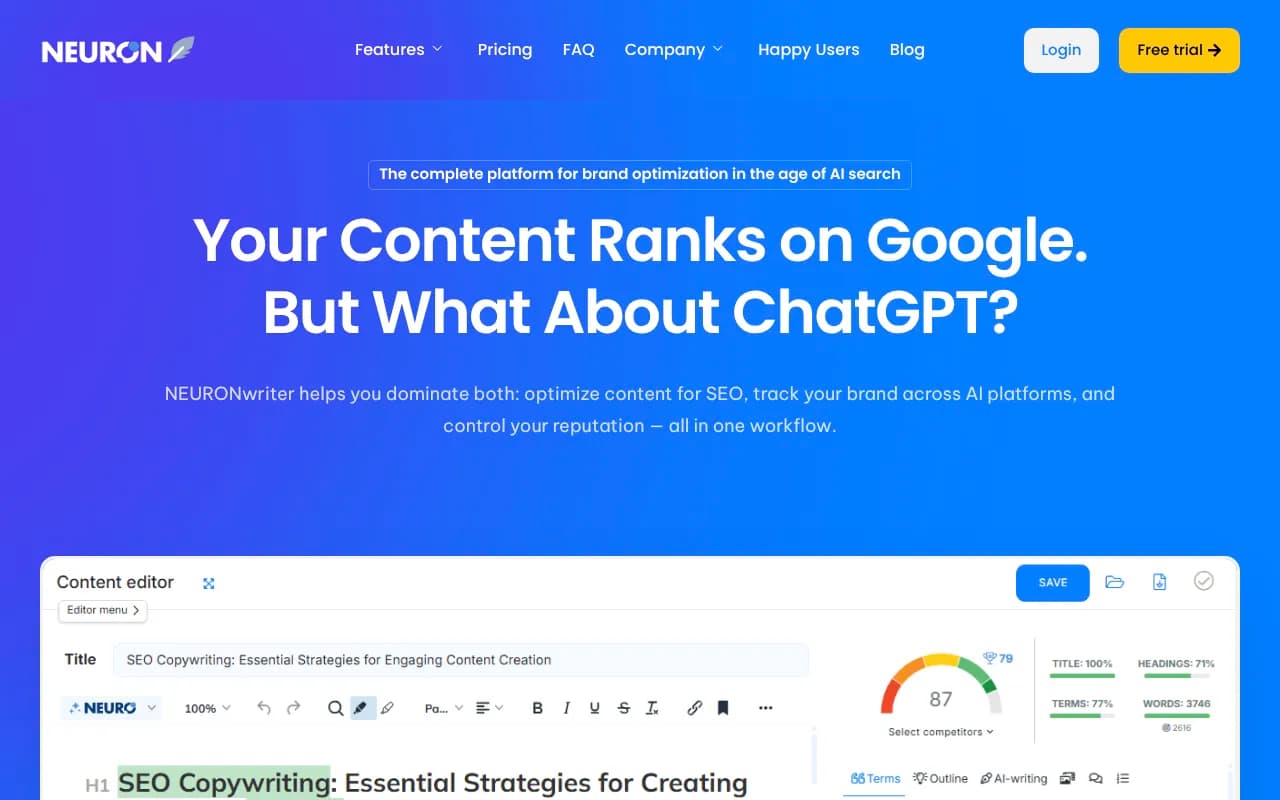
These tools were built around Google rankings. They still help with structure and coverage, but a score tells you nothing about whether ChatGPT cites the page. If GEO is the goal, treat them as a quality check, not the finish line.
Stage 3: writing at volume
This is the most crowded category. Roughly three groups exist.
Pure generators
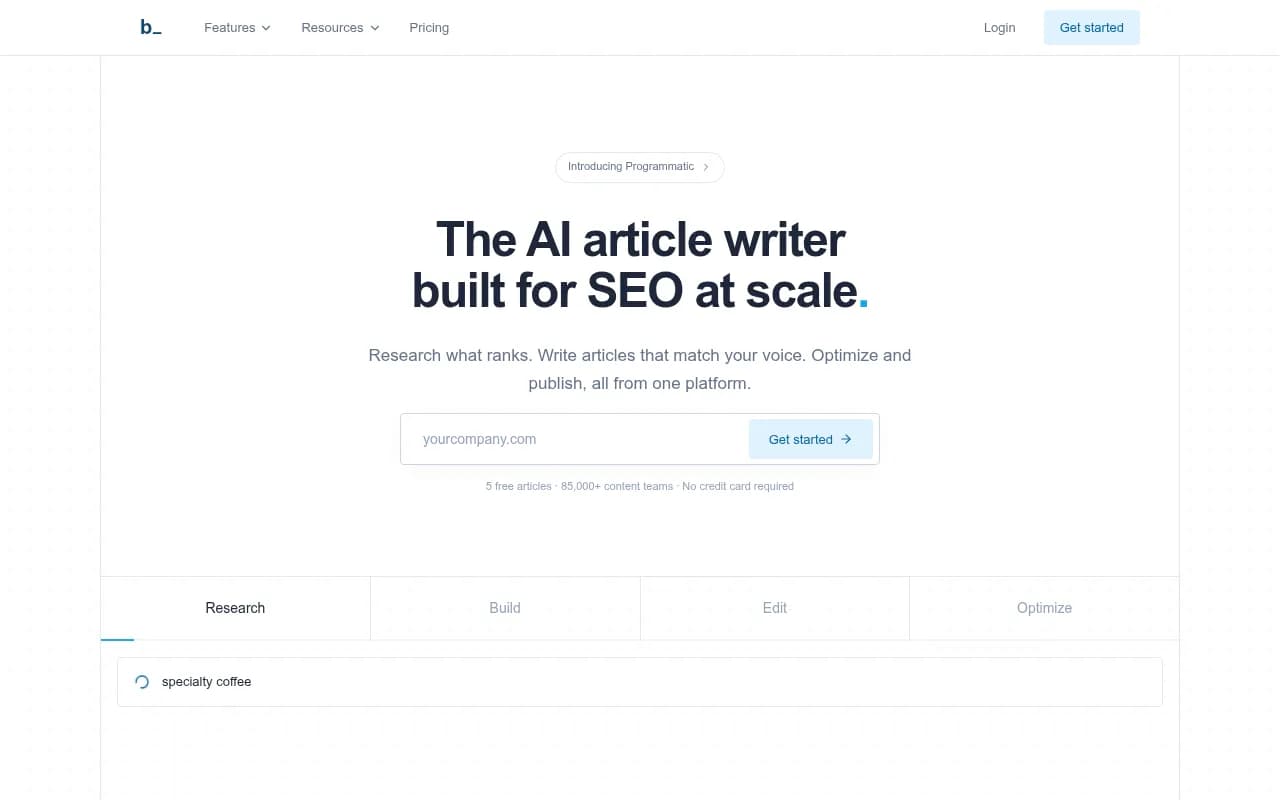
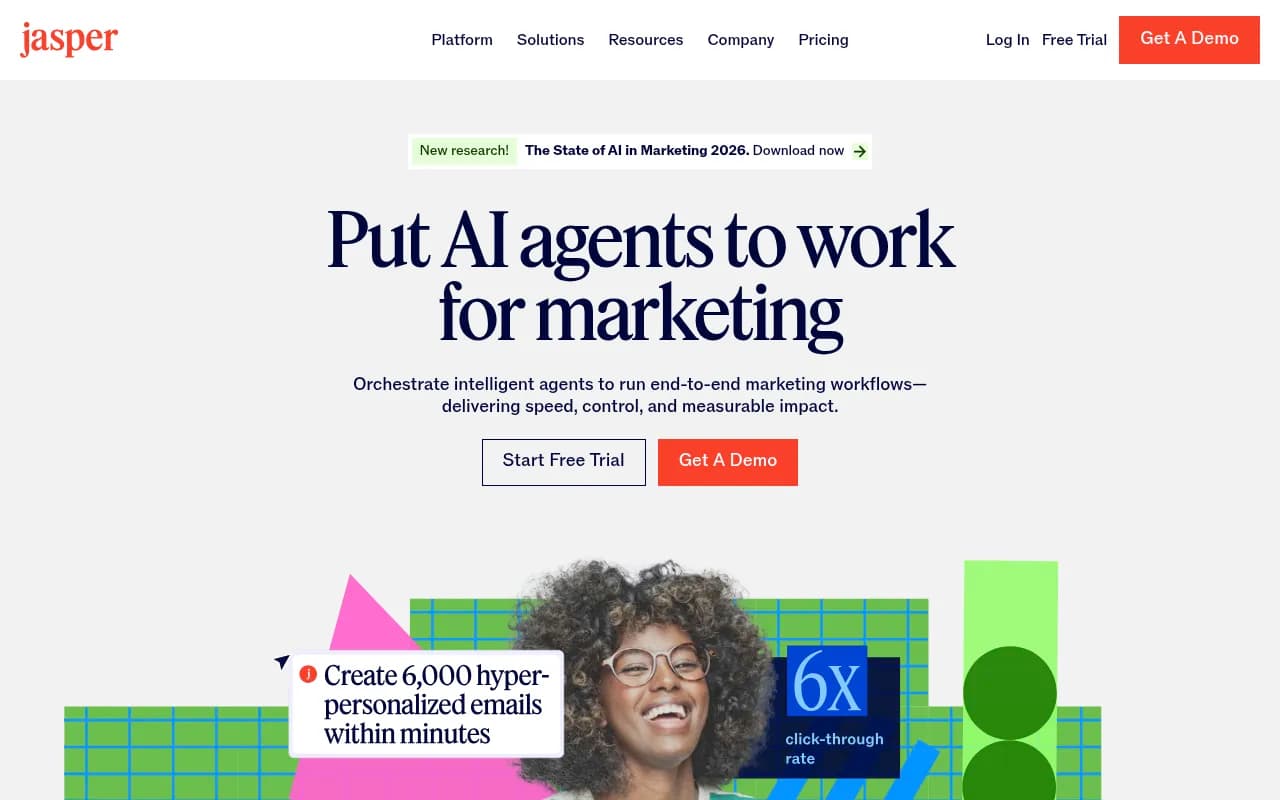
Byword, Content at Scale, Jasper, Copy.ai, Rytr, and Writesonic produce drafts quickly. Byword in particular targets high-volume informational articles with direct CMS publishing. The weakness is grounding: without visibility data, they write what is easy, not what gets cited. Jasper has been criticized in one vendor roundup for lacking CMS publishing and workflow automation that connects writing to measurement, which is a fair general description of this group.

Autopilot SEO content platforms
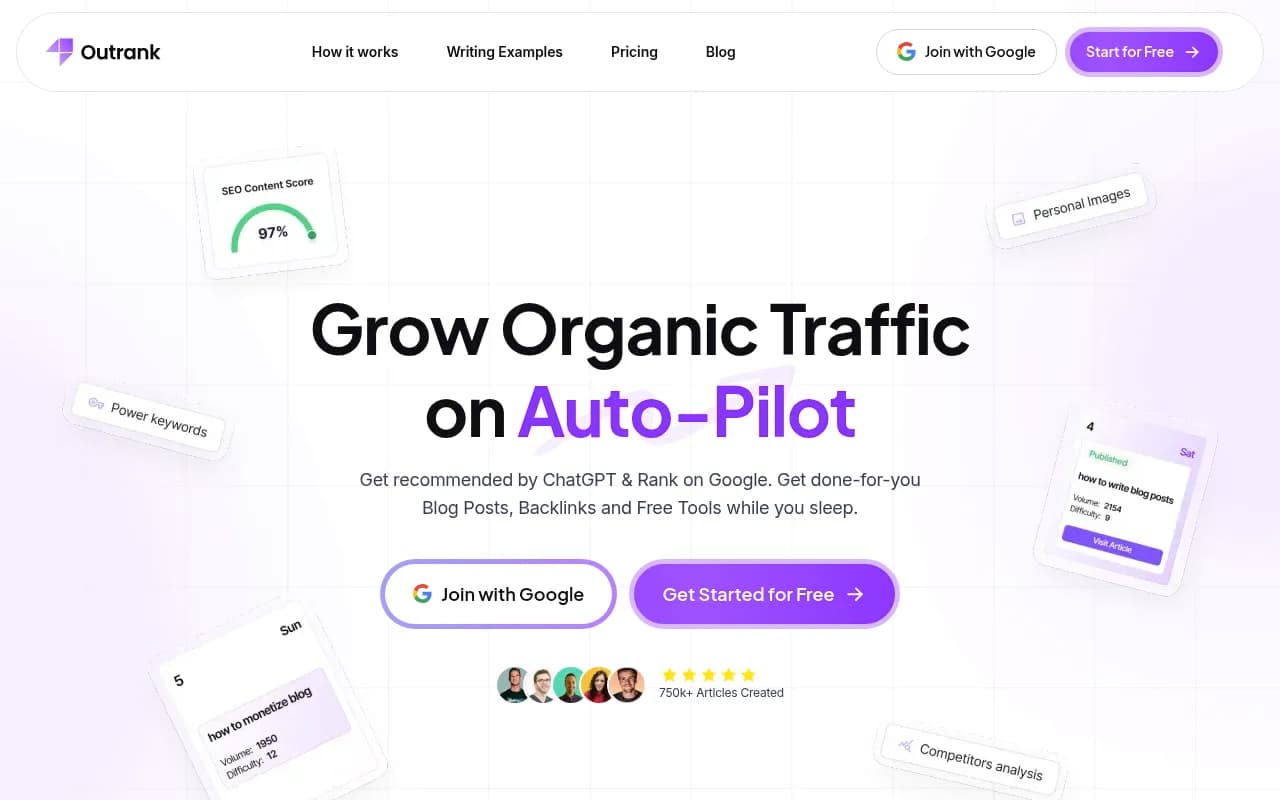
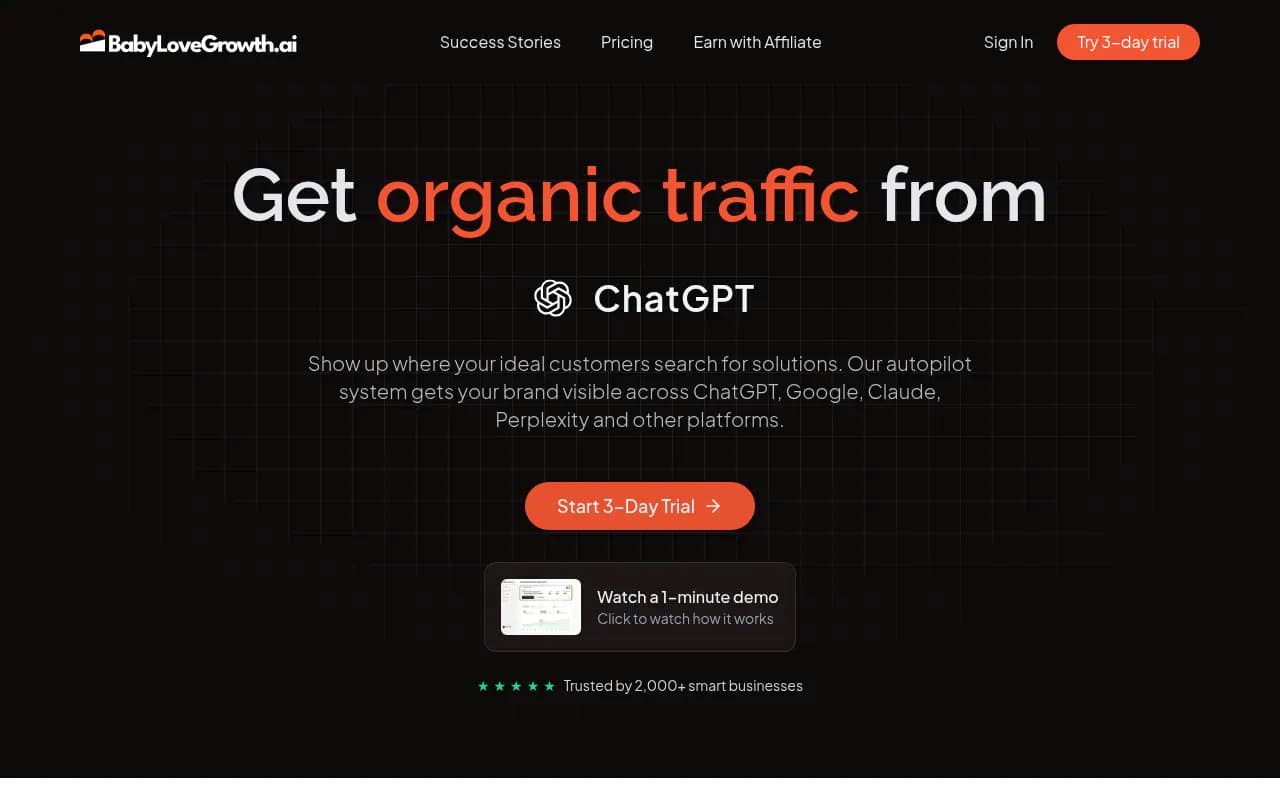
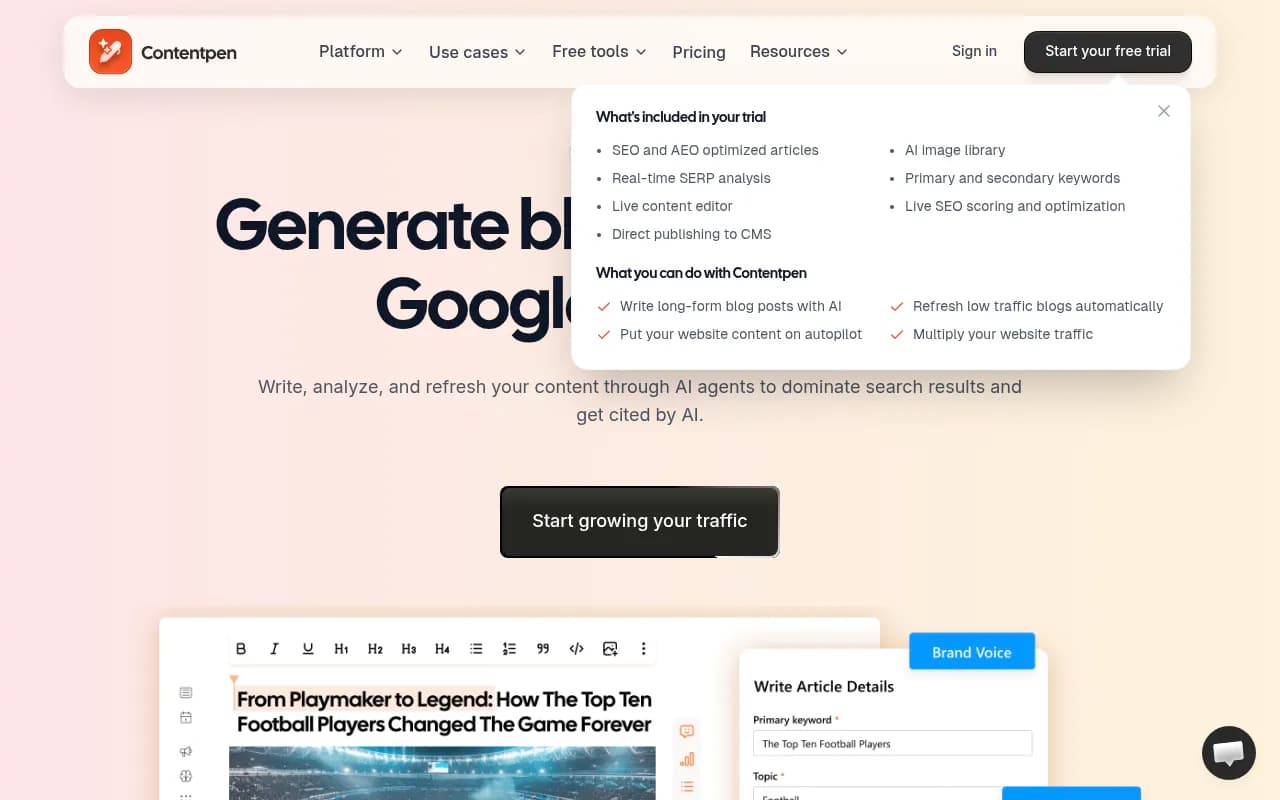
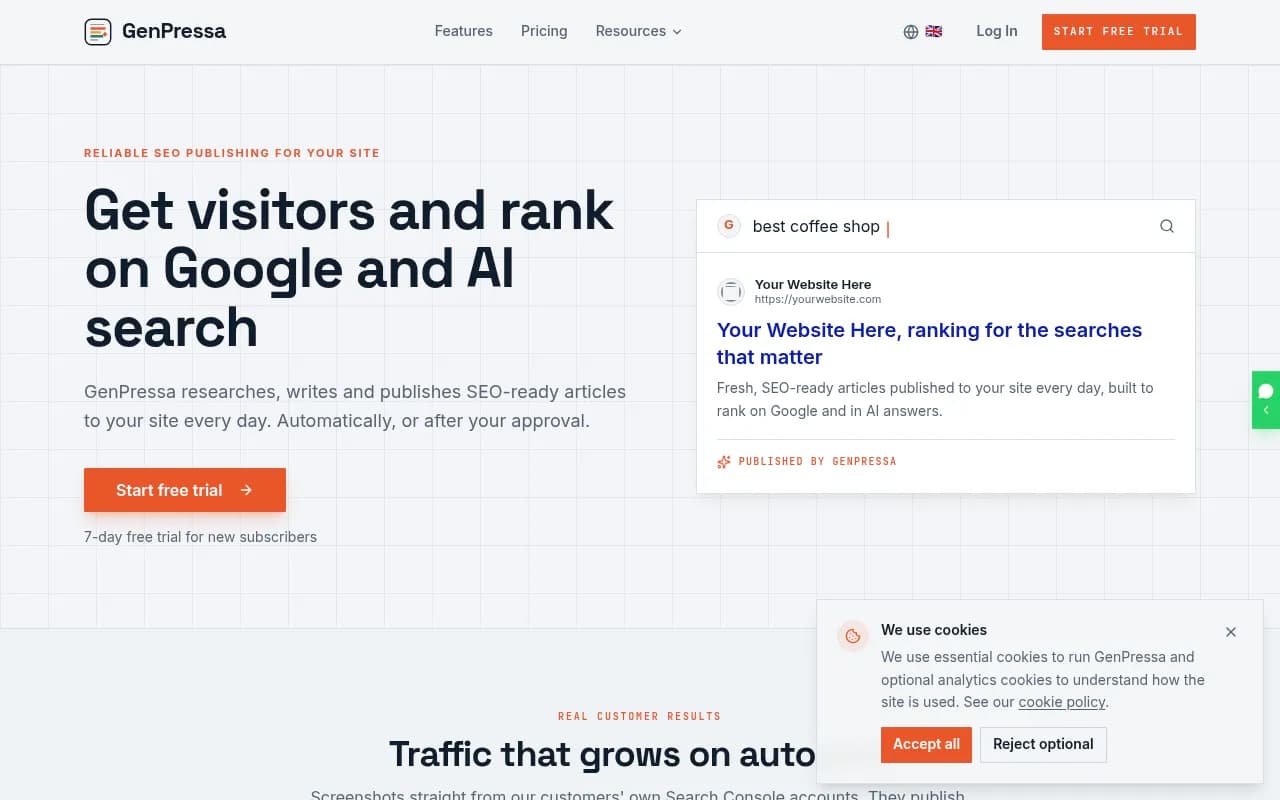
Outrank (content plus backlinks), BabyLoveGrowth (content, publishing, backlinks, audits, AI visibility), Keytomic (strong on Shopify and CMS publishing), Contentpen, GenPressa, and Gentura sit here. They pick topics, write, and post on a schedule.
I would be cautious about full autopilot for anything that touches product claims, pricing, or regulated topics. Hands-off publishing is great for a long tail of low-risk pages. For core pages, keep a review step.
GEO-aware content platforms
A smaller set ties writing to AI visibility data. Gauge describes a flow of gap identification, calendar, brief, outline, article, grade, CMS publish, then measure, with publishing to Webflow, Framer, GitHub, and Sanity. AirOps focuses on workflows for content execution for SEO, AI search, and AEO. Gradial GEO, Peakfai, and RankSpot pitch similar detect-then-publish loops.

Promptwatch belongs here too. Its Content Agent plans, writes, and publishes against your visibility gaps, working from a Knowledge Base and Brand Book so the output keeps your facts and tone. You can set a publishing calendar, monthly budget, and publish windows, and either review drafts in an inbox or run it fully hands-off. Crisp scaled to 5 to 10 articles per day this way and saw 2x higher conversion from AI traffic compared with other channels, per Promptwatch's case study.
Stage 4: publishing to your CMS
Copy-pasting between a draft tool and the CMS is where formatting breaks, internal links vanish, and publishing stalls. Check three things when you evaluate publishing support:
- Which CMSs are supported natively (WordPress, Webflow, Framer, Shopify, Sanity, GitHub, Contentful)
- Whether it supports scheduling and a review step before going live
- Whether it handles internal links, meta fields, and schema
| Tool | CMS publishing | Review step |
|---|---|---|
| Promptwatch Content Agent | WordPress, Webflow, Framer | Review inbox or hands-off |
| Gauge | Webflow, Framer, GitHub, Sanity | Grade before publish |
| AirOps | WordPress, Webflow, Contentful, Shopify | Workflow approvals |
| Keytomic | CMS and Shopify, plus indexing workflows | Verify with vendor |
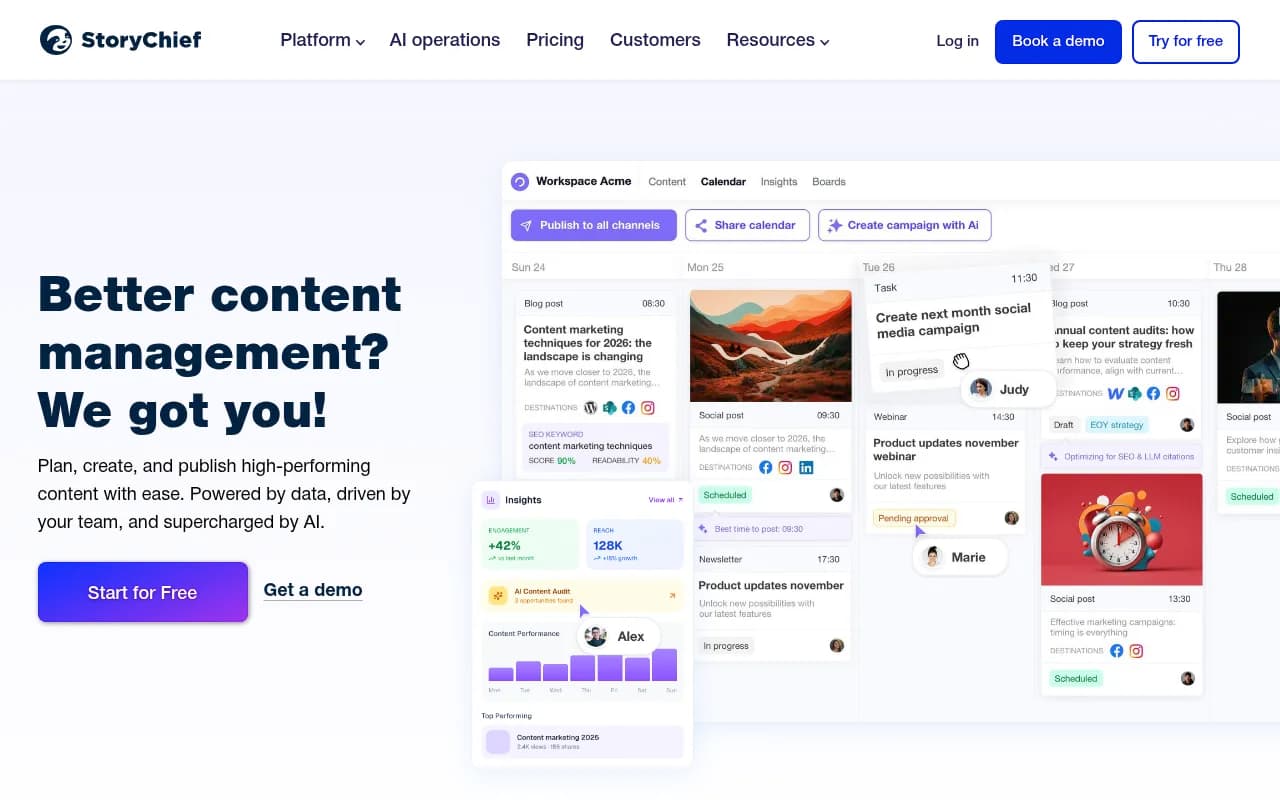
| StoryChief | Multi-channel, including CMS and social | Collaboration and approvals |
| Byword | Direct CMS publishing | Verify with vendor |
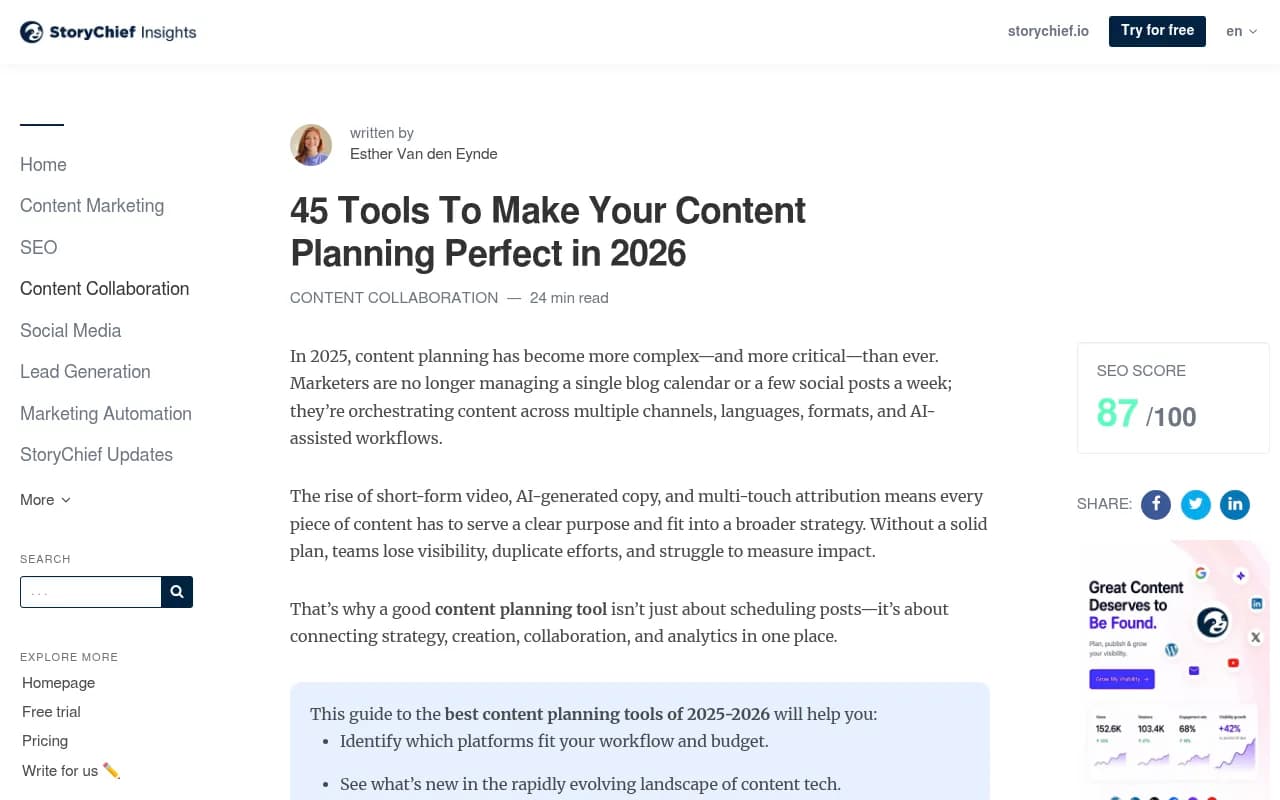
StoryChief deserves a separate note. It is a planning and distribution platform rather than a GEO tool, and its roundup of 45 content planning tools is a useful way to see where planning software ends and publishing software begins.
If none of these fit your CMS, glue tools like Zapier, Make, and n8n can move approved drafts into almost anything. They add maintenance, so use them only when native publishing is unavailable.
Don't forget indexing
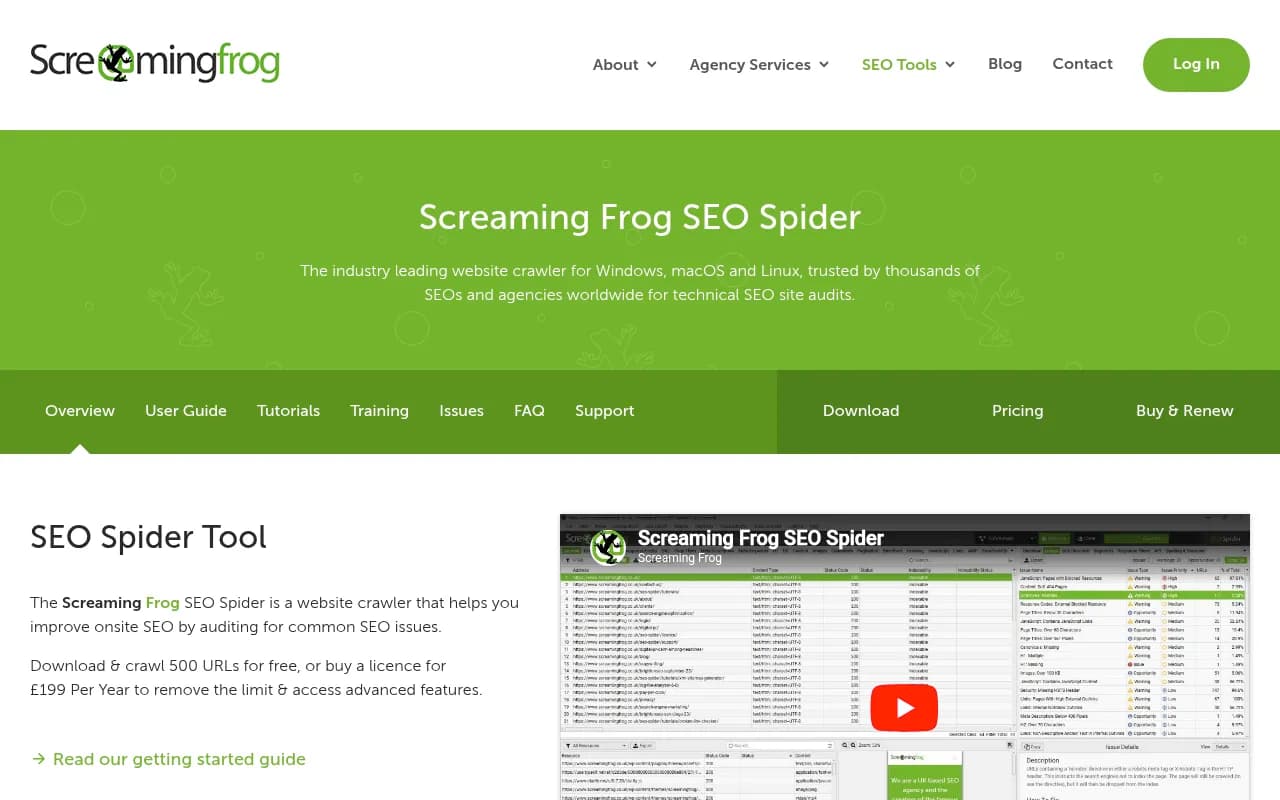
Publishing is not the same as being found. Tools like IndexerNow (which pushes URLs through IndexNow) and MonkeyIndexer speed up discovery, and your own crawler logs tell you whether AI bots actually showed up. If GPTBot or OAI-SearchBot never request the page, no amount of content polish matters. Promptwatch's IP-verified crawler logs cover this, and Screaming Frog is handy for checking technical problems on your own site.
Stage 5: measure whether it worked
This is where most scaled content programs go quiet. A page ships, nobody checks it, and six weeks later you cannot tell what is working.
The questions to answer per page:
- Did AI crawlers fetch it?
- Is it cited, and for which prompts?
- Does it send visits, and do they convert?
- Does it rank in Google and Bing but never get cited?
Trackers like Otterly.AI, Peec AI, and LLM Pulse answer the second question. Promptwatch is built to answer all four, joining crawler logs, citations, visitor analytics, and Search Console and Bing data per page, then feeding underperformers back into its Action Board as prioritized to-dos. TreeHouse, the company behind Pararius, reports AI search at about 25% of organic conversions after fixing crawler access, publishing proprietary data, and automating weekly reporting.
For more tools in this category, the GEO software directory lists dozens of options, and agenticseotools.com covers the agentic end of the spectrum.
Comparing the approaches
| Approach | Strength | Weakness | Fits |
|---|---|---|---|
| Closed-loop GEO platform (Promptwatch, Gauge) | Gap to publish to measure in one place | Less flexible if you love your existing tools | Teams short on ops capacity |
| Autopilot content tools (Outrank, Keytomic, BabyLoveGrowth) | Cheap, fast volume | Weak grounding in AI citation data | Long-tail, low-risk pages |
| Workflow builders (AirOps) | Customizable pipelines | Setup and upkeep | Content ops teams |
| Classic SEO suites (Semrush, Ahrefs) | Best keyword gap discovery | Little execution, shallow AI data | Research and planning |
| Hybrid stack | Best signal from multiple sources | Needs clear ownership | Mature teams |
Three example stacks
Lean team, under 20 pages a month
Search Console for first-party gaps, Promptwatch Essential for AI gaps and tracking, and a human editor. Keep the Content Agent on a review inbox so nothing goes live unchecked. Confirm current pricing at promptwatch.com/pricing.
Content team scaling to daily publishing
Promptwatch Business with the automated Content Agent, plus Surfer or Clearscope as a second-opinion quality check on high-value pages. Map each brief to the intent you want to win, using the content-type split above.
Agency running many clients
Promptwatch's agency plans give unlimited projects, white-label reporting, and a client portal. Monks, for example, uses the Answer Gap Report and Visibility Score to build content roadmaps for enterprise clients. Pair it with your existing keyword research suite for competitor discovery.
If you would rather hand strategy and execution to specialists, an agency like 1001 SEO Media runs GEO programs end to end and uses Promptwatch for its own AI visibility work.
A practical publishing checklist
- Pick prompts by intent. Commercial prompts need product, landing, comparison, and listicle pages. Informational prompts need how-tos, docs, and articles.
- Keep specs, prices, and positioning complete and factual on product and landing pages.
- Publish your own comparison pages and add FAQ and documentation sections. Keep docs public and crawlable.
- Pitch for inclusion in the best-of roundups ChatGPT cites in your category.
- Allow AI crawlers in robots.txt, then verify in crawler logs that they arrive.
- Put refresh dates in the calendar: 60 to 75 days for product pages, how-tos, and reviews.
- Review citations weekly. Pages that get crawled but not cited usually have a content problem, not a technical one.
Final thoughts
The tool matters less than the loop. If your gap analysis lives in one place, your drafts in another, and your results in a third, you will publish less and learn slower. Pick the stack with the fewest handoffs you can live with, keep a human reviewing the pages that carry real claims, and measure citations and AI traffic per page. For most teams that means starting with a closed-loop platform and adding specialist tools only where it falls short.
For a broader view of how AI models choose sources, browse Promptwatch Data, which updates its citation research regularly.