Key takeaways
- A voice guide for AI has to be more explicit than one for humans: short rules, real examples, banned phrases and before/after pairs.
- Voice and knowledge are two separate jobs. The voice guide controls how you sound. The knowledge base controls what is true.
- Smaller beats bigger. A tight 1-3 page document retrieves better than a 40-page brand manual.
- Jasper, Writer, Copy.ai, Claude Projects and custom GPTs all work. They differ mostly in governance, setup effort and cost.
- Test before you scale, then version the guide and review it on a schedule.
Why AI content drifts off-brand
Generative models are trained on a huge average of the internet, so their default output sounds like everyone else. Contentstack puts it as a "sameness problem": brands that spent years building a distinct perspective get flattened into generic prose when they hit generate. Their fix is to ground the model in brand data before it writes anything, and I think that framing is right.
There are two separate failure modes, and teams tend to blur them:
- Voice drift. The content is accurate but sounds generic, or too salesy, or stuffed with phrases you would never say.
- Fact drift. The content sounds great but invents a feature, misstates pricing, or cites a customer you do not have.
A voice guide fixes the first. A knowledge base fixes the second. Mixing them into one giant document is the most common mistake I see, and it makes both jobs worse.
What an AI-ready voice guide contains
Glean defines a brand voice guide for AI as a structured document that turns tone, vocabulary, rhythm and point of view into explicit rules an AI system can retrieve and follow. The key word is explicit. A human writer can absorb "warm but professional" over a few weeks of Slack messages. A model needs to be told what that looks like on the page.
1. Start with the job your voice has to do
Before listing adjectives, decide what the voice is for. A support article, a LinkedIn post and a product launch email all need different things from the same personality. Write one or two sentences per content type: who is reading, what they want, and what you want them to do next.
2. Audit content that already sounds like you
Pull 5 to 10 pieces your team would proudly put next to the brand name. Include a mix of formats. These become your reference examples, and they matter more than any adjective list. If nobody agrees which pieces are the good ones, you have found the real problem, and no tool will solve it.
3. Define voice, tone and audience separately
Glean recommends splitting these, and it is worth doing:
- Voice is constant. It is the personality across everything you publish.
- Tone shifts by context. A pricing page and an apology email should not feel identical.
- Audience changes the vocabulary and assumed knowledge. Writing for a CFO is not writing for a developer.
The Airfleet piece makes a related point: without that distinction, the AI picks the wrong interpretation every time.
4. Turn the voice into rules a model can execute
Oxford College of Marketing suggests distilling the voice into three to five adjectives, then explaining what each means in practice. That is the right size. More than five and the model averages them into mush.
Then write the mechanics as do and don't lists:
- Use short sentences and active voice.
- Use contractions.
- Start with the point, not a warm-up.
- No corporate jargon such as "leveraging" or "synergies".
- No press-release phrasing.
The most useful part is the before/after pair. For example:
- Incorrect: "A new feature was launched to improve operational efficiency."
- Correct: "We launched a small fix that saves teams hours every week."
One pair like that teaches a model more than a paragraph of description.
5. Add vocabulary and banned phrases
Keep two lists. Phrases we use ("in practice", "what this means for you") and phrases we never use ("we're beyond thrilled to announce"). Add product names with exact capitalization, and a short list of words that get swapped for competitors' terms. If your product is called a "workspace" and never a "dashboard", say so.
6. Write it as a template the AI can retrieve
Format for machines. Use clear headings, short bullets and labeled examples. A sample structure:
VOICE SNAPSHOT
Adjectives: direct, practical, a little dry
We sound like: a senior colleague explaining something over coffee
We never sound like: a press release

STYLE RULES
- Sentences under 20 words where possible
- Active voice, contractions allowed
- One idea per paragraph

VOCABULARY
Use: workspace, in practice, what this means for you
Avoid: leverage, synergy, innovative solutions, thrilled to announce

EXAMPLES (do this / not this)
...

AUDIENCE NOTES
Readers know AI tools exist. Do not explain what an LLM is.
Write it as a standing brief for a reader with zero history, not as a one-off prompt. That advice from a Claude Projects setup guide holds for every tool.
Building the knowledge base
The knowledge base is your source of truth. It is what lets the model say true things about your company. The Airfleet guide recommends covering your offering, proof points, positioning and market context, and adds that it does not need to be polished. I agree. Accurate and current beats pretty.
What to put in
- Product and feature descriptions, written in plain language
- Pricing, plans and limits (with a date)
- Approved claims and proof points: stats, case studies, customer quotes you have permission to use
- Positioning, ICPs and personas
- Competitor comparison notes, kept factual
- Legal and compliance wording you must reuse verbatim
- A glossary of terms and product names
What to leave out
- Old decks and superseded positioning
- Meeting notes and raw Slack exports
- Anything you would not want quoted back to a customer
- Unverified stats
One Claude Projects walkthrough from July 2026 names the common mistake: dumping the entire brand manual, months of notes and a 40-page strategy deck into the knowledge base. Its recommendation is to keep each document to roughly 1-3 pages, because a 3-page voice guide beats a 40-page manual when signal density matters. That is one author's guidance rather than a tested benchmark, but it matches how retrieval works in practice: smaller, single-topic files are easier to match to a query.
Structure for retrieval
- One topic per file, with a clear title
- Put the answer first, context second
- Date every file and name an owner
- Mark what is approved versus draft
- Keep the voice guide separate from the facts
Run a retrieval test
Silent failures are the dangerous ones. After uploading, ask 10 questions you know the answers to, including a few edge cases like "what does the Pro plan cost?" or "do we integrate with X?". Check whether the model uses your files or confidently improvises. If it improvises, the file is too long, badly titled or not being retrieved at all.
Picking a tool: dedicated platforms vs DIY
There are two broad routes. Dedicated marketing platforms bundle brand voice, a knowledge layer and workflows. General assistants let you build the same thing yourself with project files and custom instructions.
Dedicated platforms
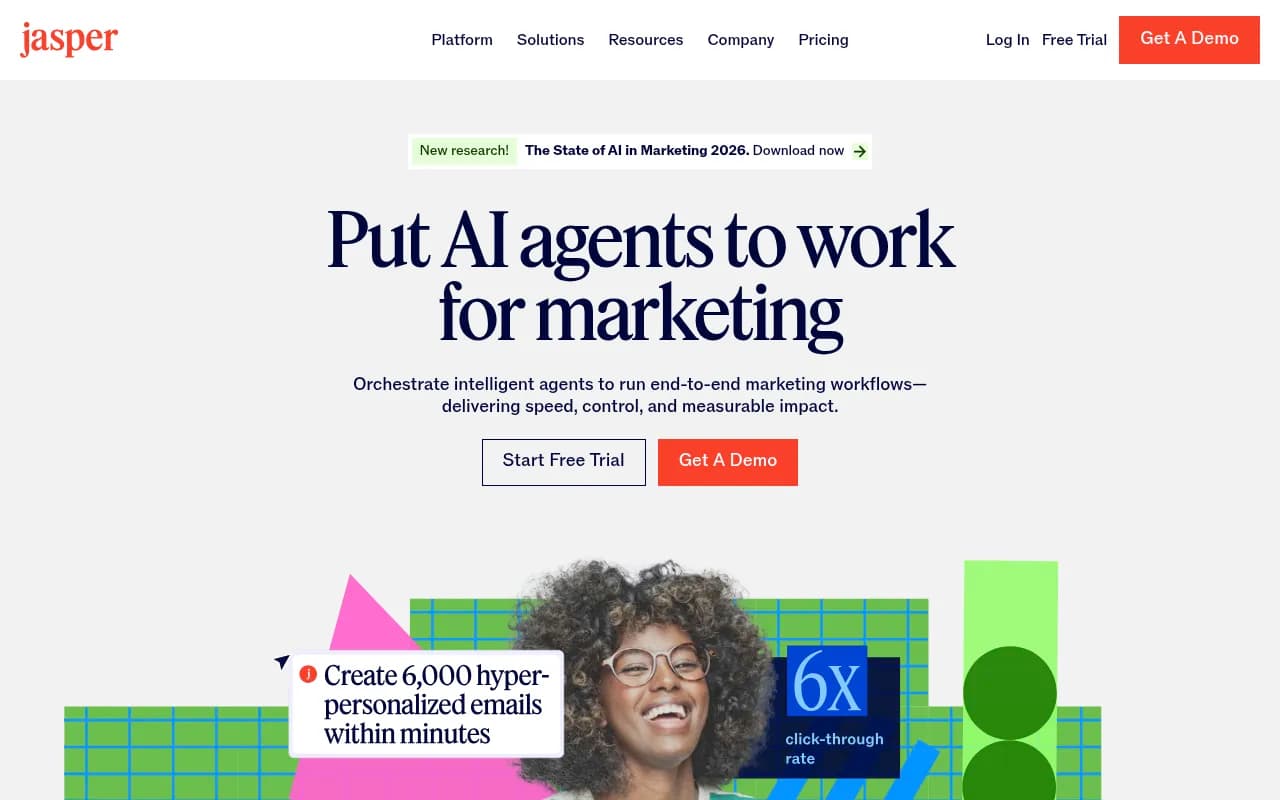
Jasper stores brand voice, style guide, audience profiles and a knowledge base in what it calls Jasper IQ. You can keep multiple voices for different audiences, sub-brands or regions, and style guide rules cover terminology, capitalization, grammar and punctuation. A Unite.AI reviewer generated a voice by feeding the agent a couple of blog posts and got back "analytical, authoritative, confident, measured." Pricing details shift often, but a roundup dated October 7, 2026 lists Pro at $69 per seat monthly ($59 billed yearly), with 2 brand voices and 5 knowledge assets. Check Jasper's own pricing page before buying.
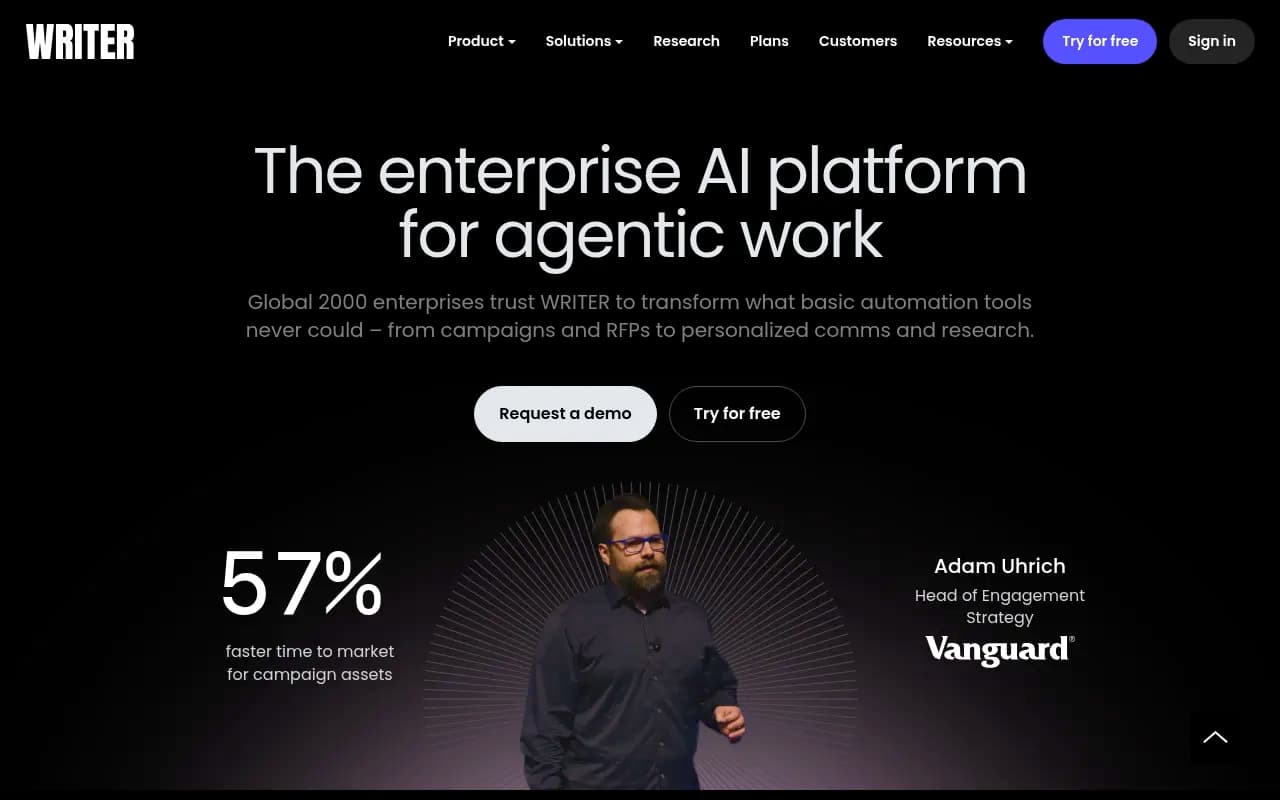
Writer leans toward governance. It enforces voice through style guides, terminology management and custom rules that flag off-brand language, plus a knowledge graph tied to source-of-truth documents, SSO, role-based access and audit logs. The trade-off is a steeper setup and custom enterprise pricing.
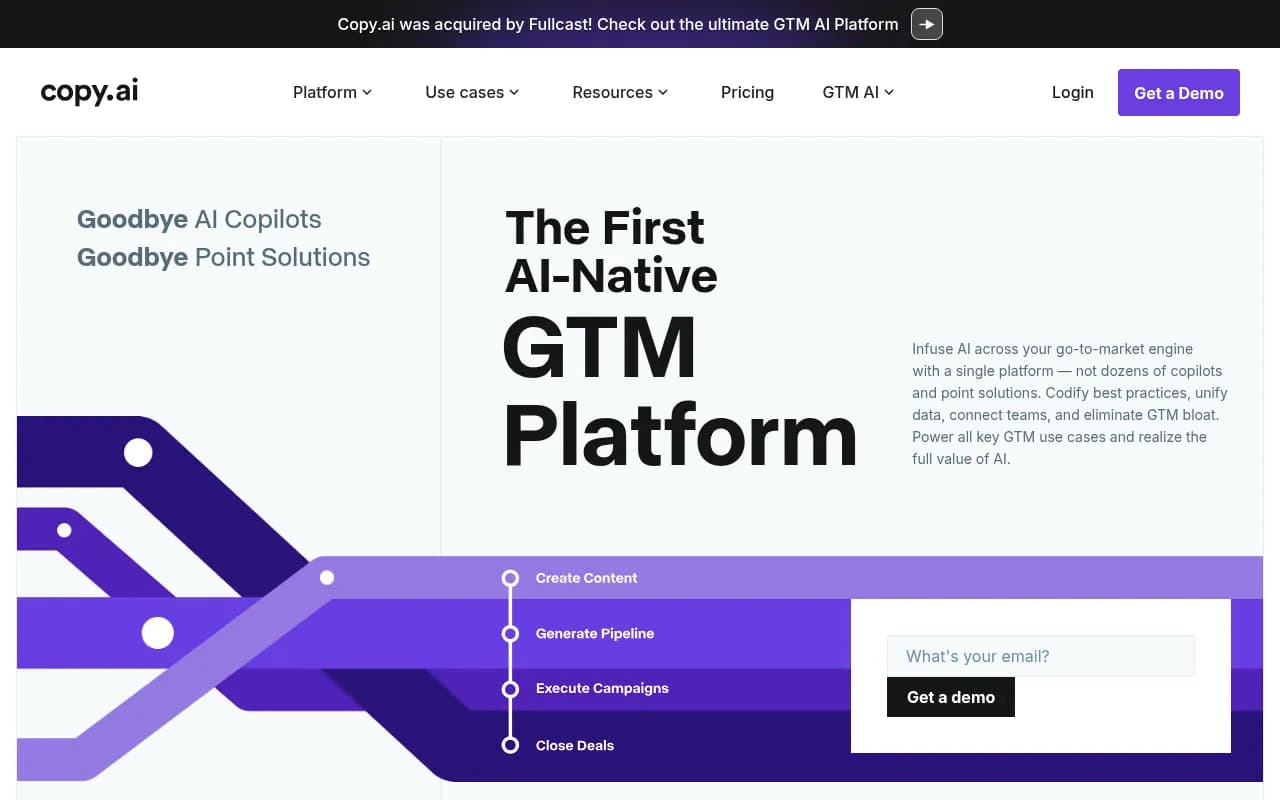
Copy.ai can analyze existing on-brand content or take a manual definition, supports multiple voices per audience, and pairs with its Infobase store for proprietary information. One comparison piece rates it strongest on workflows, including human-approval gates. Published pricing across roundups conflicts, so treat any figure as provisional.
One analyst's summary line is memorable: "Jasper is what marketing buys. Writer is what IT approves." It is a generalization, but it captures where each tool sits.
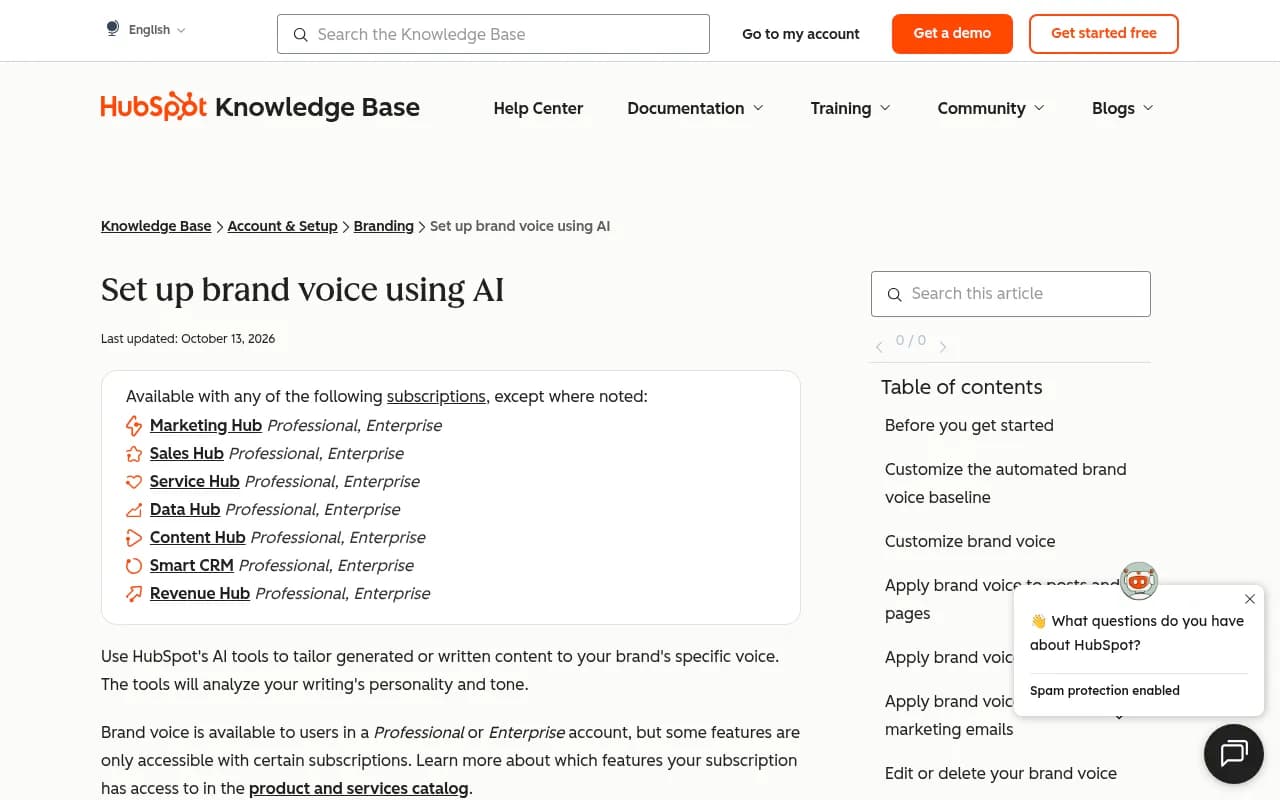
HubSpot users have a built-in option. In Marketing > Brand > Brand Voice you can upload a writing sample and click Generate brand voice, or upload a custom guide, and the baseline is applied to generated content across HubSpot.
Contentstack takes a CMS-centered approach. Its Brand Kit combines Knowledge Vaults (brand assets, approved messaging and reference material) with Voice Profiles (rules for tone, style and language), so constraints travel with the content rather than the person.
DIY with general assistants
You can get surprisingly far without buying a marketing platform.
- Custom GPTs. Demand Spring suggests building a "Brand Voice Guardian" in ChatGPT by uploading your style guide and approved examples as the knowledge base.
- Claude Projects. A project combines custom instructions, a file knowledge base and scoped conversations that inherit both. Demand Spring notes Claude is well regarded for nuanced B2B thought leadership.
- Gemini Gems. Same idea, inside Google's ecosystem.
A common pitfall is oversized uploads. One OpenAI community thread describes a user uploading 20 PDFs of 300+ pages each, which is almost guaranteed to give poor retrieval. I did not verify current file limits for each product, so check the vendor docs for the plan you use.
Quick comparison
| Option | Voice control | Knowledge grounding | Governance | Setup effort | Best for |
|---|---|---|---|---|---|
| Jasper | Strong, multiple voices | Knowledge base, shallower graph | Moderate | Low | Marketing teams |
| Writer | Style guides, flagging rules | Knowledge graph on source docs | Strong (SSO, RBAC, audit logs) | High | Regulated or enterprise teams |
| Copy.ai | Voice from samples or manual | Infobase | Approval gates in workflows | Low to medium | Workflow-heavy teams |
| HubSpot Brand Voice | Sample-based generation or uploaded guide | Limited | Within HubSpot | Low | Teams already in HubSpot |
| Custom GPT / Claude Project | As good as your instructions | Your uploaded files | Manual | Low, but needs discipline | Small teams and pilots |
Several tool categories lean on this same setup, so if you are still choosing an AI writing platform, the software directory at surferstack.com is a decent place to compare options.
Making the AI actually use the guide
Having a guide and having the model follow it are different things.
Prompt like a brief
"Write a blog post about burnout" gives the model nothing to work with. Oxford College of Marketing's advice is to brief it the way you would brief a freelancer: audience, goal, tone, length and how to end. Pair that with your voice guide and a reference example.
Use examples, including anti-examples
Good examples teach more than rules. Anti-examples ("never write like this") help just as much, and Demand Spring specifically recommends uploading them alongside your voice guidelines. Include a short paragraph of content you reject and explain why.
Ground factual claims
Tell the model explicitly: use only facts from the knowledge base, and if a fact is missing, leave a placeholder like [NEEDS FACT] instead of guessing. That one instruction prevents a lot of embarrassing output.
Edit like a creative, not an approver
Treat the draft as 80% of the way there. Shape the rhythm, rework the key lines, and add what only you know: first-hand experience, a real customer story, an opinion. This also keeps you aligned with what Google says it wants, which is helpful, reliable, original content regardless of how it was produced.
Test, score and govern
Glean's final step is to test and score outputs before you scale, and I would not skip it.
A simple scoring test
- Pick five prompts that represent your real work.
- Generate output with the guide and knowledge base active.
- Mix those outputs with your best existing human content and have two colleagues guess which is which.
- Score each piece 1-5 on voice match, factual accuracy and usefulness.
- Fix the guide, not just the output. Each failure points to a missing rule or example.
One marketing blog claims that with proper voice training, hybrid content lands within 5 to 10% of fully human performance. That comes from a vendor-adjacent source, and I would not rely on it. Run your own tests against your own metrics.
Governance basics
Airfleet's framework adds governance as its own step. The pieces worth copying:
- Define review stages: draft, fact check, voice check, publish.
- Separate roles so the person who generates content is not the only one approving it.
- Create a feedback loop: reviewers log recurring problems, and those become new rules.
- Version the voice guide, and make sure everyone uses the current one.
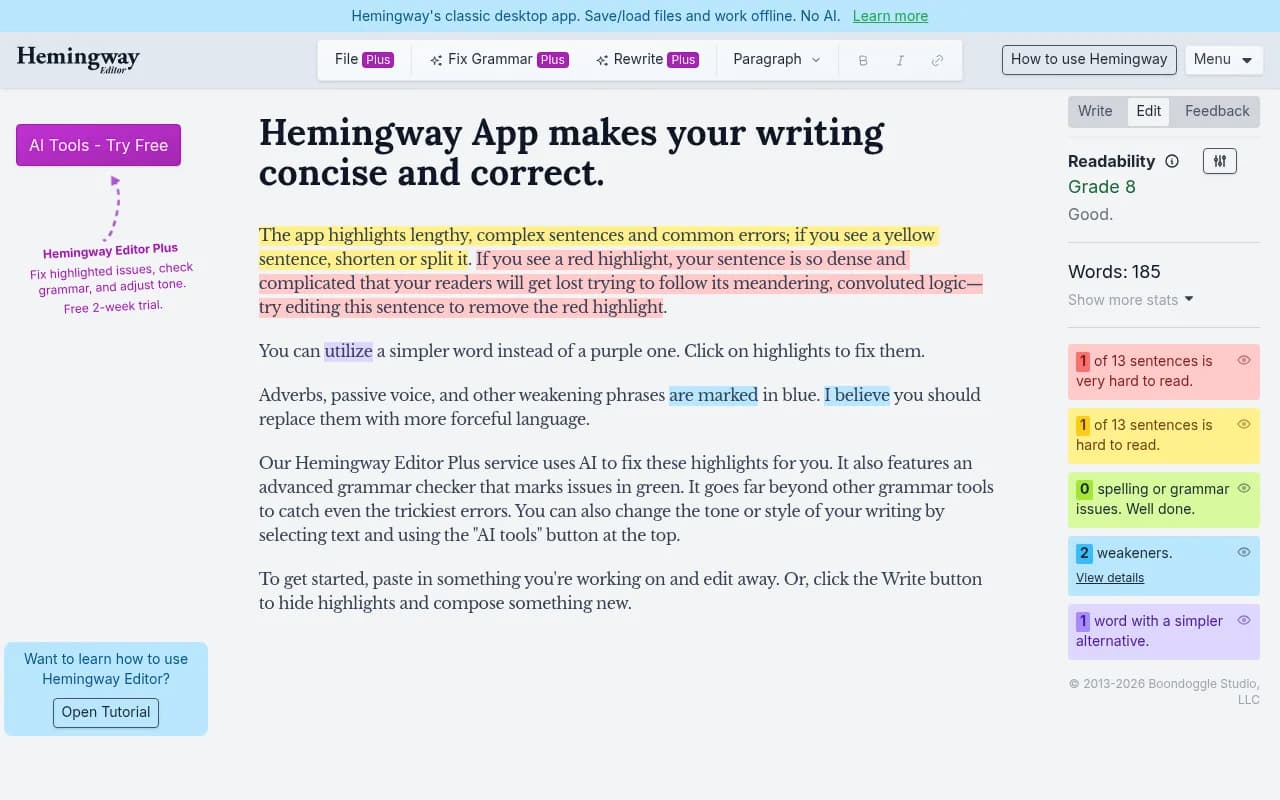
Grammar and style checkers can catch some mechanical drift cheaply. Tools like Grammarly and Hemingway App are not brand-voice systems, but they catch passive voice and long sentences automatically.
Maintenance schedule
| Task | Frequency | Owner |
|---|---|---|
| Update pricing, plans, product facts | Whenever they change | Product marketing |
| Review knowledge base for stale files | Monthly | Content lead |
| Re-run retrieval test (10 questions) | Quarterly | Content ops |
| Review voice guide against best new content | Twice a year | Brand lead |
| Log reviewer corrections into the guide | Ongoing | Editors |
Does AI visibility connect to this?
If the content you produce is meant to be found and cited by ChatGPT, Perplexity or Google AI Overviews, brand consistency matters outside your own site too. Models learn who you are from how you describe yourself everywhere. That makes a single approved description and a consistent set of facts worth the effort. Tools like Promptwatch can show how AI systems currently describe and cite your brand, which is a useful reality check on whether your messaging is landing.

The same data shows what kinds of pages get cited. In Promptwatch's ChatGPT citation data for Sep 28 to Oct 4, 2026, product pages were the most cited content type at 22.4% of citations. Accurate, well-structured product information in your knowledge base is therefore worth more than another round of brand adjectives.
If you want outside help connecting content, voice and AI search visibility, 1001 SEO Media works on content strategy and generative engine optimization. For a wider list of options in that space, the GEO software directory at bestgeosoftware.com is a good starting point.
A 10-day rollout plan
- Days 1-2: Define the job of your voice per content type. Pick 5-10 reference pieces.
- Days 3-4: Write the voice guide: 3-5 adjectives, do/don't lists, vocabulary, before/after pairs.
- Days 5-6: Build a lean knowledge base. One topic per file, dated, with owners.
- Day 7: Load both into your chosen tool and write standing instructions.
- Day 8: Run the retrieval test and fix what fails.
- Day 9: Run the blind scoring test on five real prompts.
- Day 10: Set review stages, assign owners and schedule the maintenance cadence.
Common mistakes
- Writing adjectives without examples.
- Putting voice rules and facts in the same file.
- Uploading everything you have.
- Never testing retrieval.
- Letting the guide go stale after a repositioning.
- Publishing AI drafts without a named human accountable for accuracy.
Start small. A one-page voice guide with six good examples and a short, accurate fact sheet will outperform an elaborate brand manual nobody maintains. You can always expand it once the first test shows you where the gaps are.