Key takeaways
- ChatGPT ads showed up in an average of 20.1% of web-search responses between May 20 and Aug 17, 2026, with a peak day of 43.9% (Promptwatch Data).
- ChatGPT usually shows one ad per answer. Google's AI surfaces show a carousel averaging 3.53 items per ad-bearing answer (Adthena).
- Legal, pharma, banking and nonprofit returned zero ChatGPT ads in Adthena's dataset, while Google still served them.
- Google lets existing text, shopping, local and app ads run above or below AI Overviews in 200+ markets, with in-answer ads limited to English and a set of countries.
- Organic AI visibility and paid presence are now two halves of the same job. Track both.
Why this matters now
Two years ago, ads in AI answers were a rumor and a few experiments. In 2026 they are a line item. ChatGPT runs an ad pilot, Google has extended Search ads into AI Overviews and AI Mode, and Microsoft Copilot has its own conversational formats. Perplexity, by most accounts, walked away from ads.
The numbers come from different sources, measured in different ways, and they do not always agree. That is the first thing to know. I will flag where figures are not comparable, because most of the hot takes online mash them together.
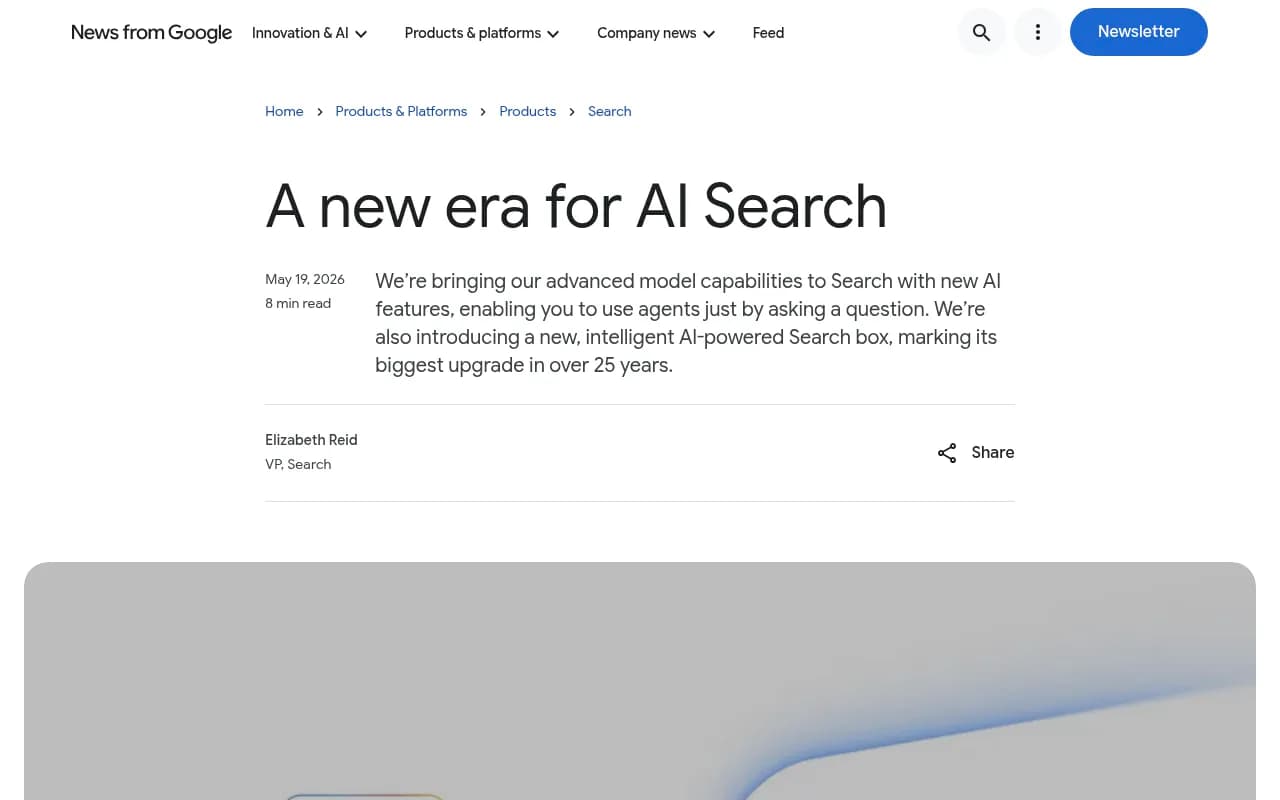
Google's own scale explains the stakes. At I/O on May 19, 2026, Google said AI Mode has passed one billion monthly users, with queries more than doubling every quarter, and that Gemini 3.5 Flash became its default model. Ads follow attention, and attention has moved into these interfaces.
ChatGPT ads: what the data shows
Frequency
Promptwatch Data tracked how often ads appeared in ChatGPT responses that ran a web search and returned citations. Its ChatGPT Ads Over Time report covers May 20 to Aug 17, 2026:
- No ads appeared in tracked prompts until May 27, when they showed up in 1.69% of responses.
- A brief spike came on June 25 to 26, then a jump past 30% on July 1 that held.
- Since July 1 the daily rate has mostly sat between the low 20s and high 30s, peaking at 43.9%.
- The 90-day average was 20.1%. The 30-day average was 29.6%, up 22.6% on the previous 30 days.
There is a gap worth flagging. Digital Applied reports that OpenAI's ad pilot began in February 2026 and reached $100M in annualized revenue within two months. Promptwatch saw nothing in its tracked prompts until late May. The likeliest explanation is a limited pilot, with cohorts or markets that its prompt set did not hit, but that is my inference, not something I could verify.
Which prompts get ads
Of ad-bearing responses in Promptwatch's 7-day average, 73.3% came from organic prompts, 18.0% from brand-specific prompts and 8.6% from competitor comparison prompts. Read that carefully: it reflects the mix of prompts being monitored, not how likely each type is to trigger an ad. Add more organic prompts to a monitor and organic's share rises.
The practical advice from that report is sound. Check across several days, because a single run can land on an outlier day. Record which advertisers and landing pages win the slot, and compare them per prompt segment.
Format and geography
Adthena analyzed nearly 850,000 AI search queries across 20 industries and five markets between March 14 and May 26, 2026. Its findings on ChatGPT:
- ChatGPT served ads on 4.47% of queries, and the US accounted for around 90% of placements.
- The average ad-bearing answer carried 1.06 ad items. One sponsored slot, not a carousel.
- The UK returned zero ads during that window. OpenAI switched the pilot on in the UK on June 6, 2026, to Free and Go users, with access by registration rather than open self-serve.
- Digital Applied counts 52 self-serve countries as of September 3, 2026.
Adthena's 4.47% and Promptwatch's 20 to 30% differ widely. They use different samples, windows and definitions (all queries versus web-search responses with citations). Do not average them. Use each to see direction, not an absolute truth.
Blocked verticals
Four industries returned zero ChatGPT ads in Adthena's data: legal, pharma, banking and nonprofit. Google's AI surfaces served ads in those same US verticals, with legal at 5.62%. Adthena reads this as a deliberate OpenAI policy choice. Policies change, so I would not plan around the block lasting.
Pricing and money
Digital Applied cites roughly $60 CPMs and $100M ARR early on, and a later ledger mentions a $1B run rate. I could not verify OpenAI's pricing independently, so treat CPM numbers as reported, not confirmed. What seems clear is that ChatGPT ads are impression-based, unlike Google's click-based auctions, and that measurement is thin. A separate Digital Applied playbook notes that ChatGPT Ads Manager reports limited metrics and clicks can be undercounted in GA4.
Google AI Overviews and AI Mode ads
What Google says
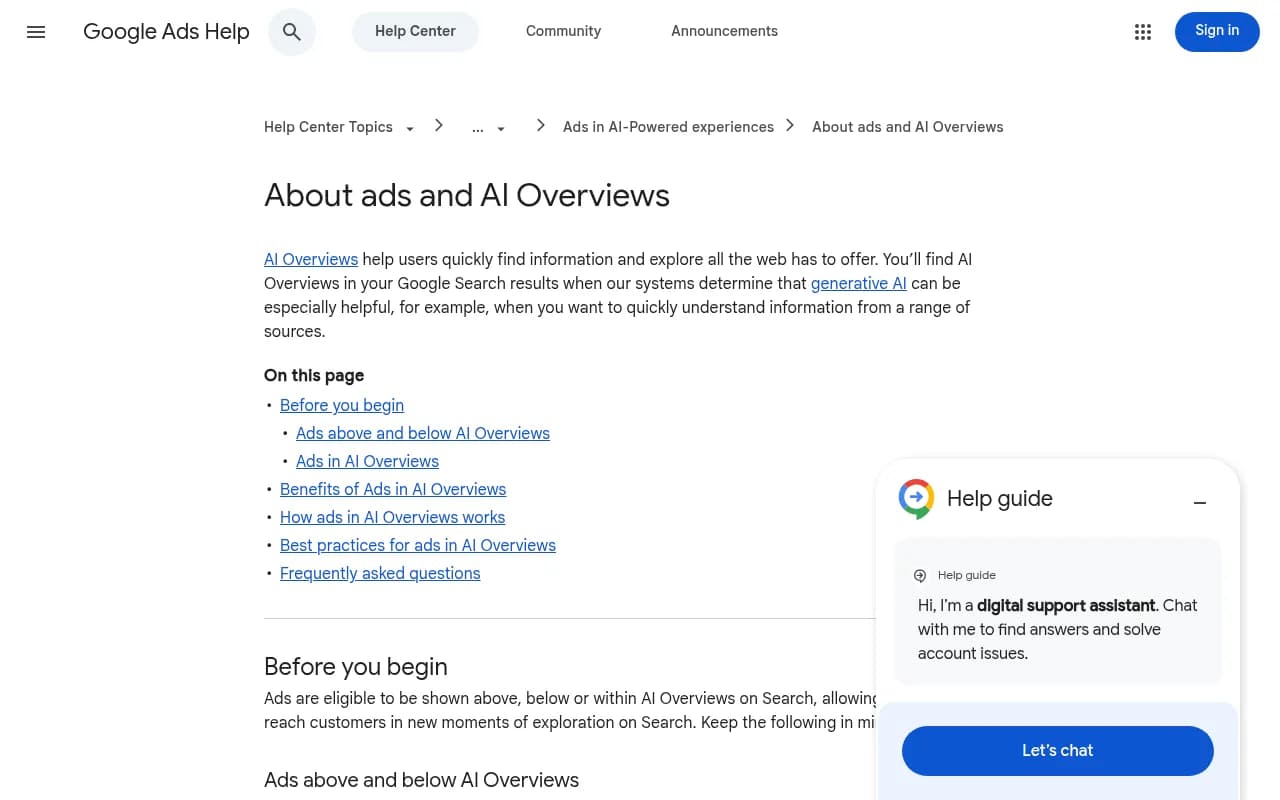
Google's Ads Help page on AI Overviews lays out the mechanics:
- Ads are eligible above or below AI Overviews in all 200+ markets where Overviews are available, following the existing auction ranking system.
- Existing text, shopping, local and app ads in Search, Shopping, Performance Max and App campaigns are eligible there.
- Ads inside AI Overviews are available in English on mobile and desktop in a list of countries including the US, Australia, Canada, India, Singapore and New Zealand. Both the user query and the content of the Overview are considered.
- Google notes that AI Overviews trigger on complex, answer-seeking queries that advertisers rarely target with keywords, which is why it requires AI-powered matching such as broad match, or keywordless targeting through AI Max for Search, Performance Max, Shopping campaigns or Dynamic Search Ads.
How often ads appear
Digital Applied reports ads alongside 25.5% of AI Overview responses, up from 5.17% in early 2025. Adthena measured Google's AI surfaces at 4.1% of US queries in its sample, just behind ChatGPT's 4.5%. SE Ranking's 50K-keyword study, summarized by Digital Applied, found a text ad on 29.45% of ad-eligible AI Mode queries, rising to 53.6% at CPC $10 and above.
Three numbers, three denominators: all queries, ad-eligible queries, and AI Overview responses. All are true, none are interchangeable. The consistent signal is that commercial, high-CPC queries get the most ads.
Carousels, shopping and Direct Offers
Google's AI ads behave like a carousel, averaging 3.53 items per ad-bearing answer versus ChatGPT's 1.06. Digital Applied reports that Google launched shopping ads with Direct Offers inside AI Mode in February 2026. Adthena also noted that over 50,000 ads were served in AI Mode pharma queries with none from prescription brands, which fits Google's regulated-category rules.
A more recent and more controversial development: Digital Applied reports Google is testing AI Mode ads for people who connect Gmail and Photos through Personal Intelligence. At I/O Google expanded Personal Intelligence to nearly 200 countries and 98 languages with no subscription required. Check Google's current help pages for what is and is not used for ad targeting before you build a strategy on it.
The cost to existing paid search
A Search Influence write-up reports Google Ads CTR falling from 19.70% to 6.34% when an AI Overview appears. That is one source's figure, so I would run your own AIO-present versus AIO-absent comparison before acting. The direction matches what most PPC managers report: informational queries get answered on the page, impressions hold, CTR slips, and spend concentrates on high-intent terms.
Microsoft Copilot and Perplexity
Microsoft has expanded contextual conversation ads, which look at the whole session rather than the last query. Microsoft's own figures claim Copilot ads deliver 69% higher CTR and 76% higher conversion rates than traditional search ads. These are platform-reported and early.
Perplexity is the contrarian. After testing sponsored follow-up questions in 2024 and 2025, Digital Applied reports it pulled ads in February 2026 over trust concerns and is pushing subscriptions. An Ipsos survey cited in the same piece found 63% of US adults say ads in AI search make them trust results less. I did not independently verify the Perplexity details beyond that report.
Perplexity
Platform comparison
| Platform | Ad format | Reported frequency | Pricing model | Notable limits |
|---|---|---|---|---|
| ChatGPT | Single sponsored slot | 4.47% of queries (Adthena); 20.1% of web-search responses (Promptwatch, 90 days) | Impression-based, ~$60 CPM reported | Legal, pharma, banking, nonprofit blocked; US-heavy, expanding |
| Google AI Overviews | Ads above, below and within the answer | 25.5% of AI Overview responses (Digital Applied) | Existing auction | In-answer ads limited to English and select countries |
| Google AI Mode | Text ads, shopping carousels, Direct Offers | 29.45% of ad-eligible queries (SE Ranking) | Existing auction | Personal Intelligence ad use still being tested |
| Microsoft Copilot | Contextual conversation ads | Not independently measured here | Microsoft Advertising | Performance claims are platform-reported |
| Perplexity | None | None | n/a | Reported exit from ads |
What advertisers are doing
On Google
- Moving to broad match, AI Max for Search, Performance Max and Shopping so campaigns are eligible for AI surfaces at all.
- Cleaning product feeds and structured data, since Google leans on asset quality for placements inside answers.
- Bidding harder on conversion-intent terms like pricing, demo, book and near me, and less on informational terms an Overview will swallow.
- Pushing offline conversions into Google Ads and Microsoft Advertising so Smart Bidding optimizes for revenue.
- Segmenting reports into AIO-present and AIO-absent queries.
On ChatGPT
- Starting with small tests in markets where self-serve is open, because US advertisers have months of learning on which prompts convert.
- Converting existing Google campaigns into conversational keyword lists and creative. Adthena sells a tool for this called AdBridge.
- Fixing measurement. That means passing click identifiers properly and not trusting GA4 click counts alone.
- Watching competitors. The native ad managers only show your own spend, impressions and clicks, not who else is in the slot.
The organic side still decides a lot
Paid placement sits next to an answer. If the answer names a competitor and not you, your ad is fighting the narrative. This is where organic AI visibility work matters, and the sources behind AI answers are shifting fast.
Promptwatch Data shows ChatGPT's citation share by content type led by product pages at 22.4% (Sep 28 to Oct 4, 2026), which means your product and landing pages are doing double duty. Its social media citation report found ChatGPT drew just 0.46% of citations from social platforms in the same week, versus 12.2% for Google AI Overviews. A Reddit-heavy strategy suits one surface and barely registers on the other. And ChatGPT's own search behavior moves: on August 8, 2026 it began using the site: operator at scale, taking those queries from about 0.4% to about 17% of fanouts.
For tracking who is winning the answer and the ad slot, tools like Promptwatch monitor prompts across ChatGPT, AI Overviews, AI Mode and others, and its Ads Radar shows which advertisers bid on your prompts and what their copy and landing pages say.

Other options exist for the monitoring side, including Profound and Otterly.AI, and the GEO software directory at bestgeosoftware.com lists more. Adthena is the name to look at if your need is paid-media specific.


A practical plan for the next quarter
- Audit eligibility. Check that your Google campaigns use broad match, AI Max, Performance Max or Shopping, and that feeds are clean.
- Split your reporting. Compare queries where an AI Overview appears against ones where it does not.
- Map ad exposure for your category. Run your top 50 commercial prompts across several days in ChatGPT and Google and log who appears.
- Test ChatGPT cautiously. Treat it as a learning budget, not a performance channel, until measurement improves.
- Check vertical rules. If you are in legal, pharma or banking, plan for Google first.
- Fix the organic answer. Make sure product, pricing and comparison pages are crawlable, accurate and cited.
- Re-check monthly. The rate of ChatGPT ads moved from 1.69% to above 30% within about five weeks. Any snapshot goes stale quickly.
What I would not trust yet
Most of the headline numbers come from vendors selling tools, trackers or consulting. Microsoft's CTR lift is Microsoft's. The $100M ARR comes via a secondary write-up. The 63% trust drop is a survey, not a behavior measurement. Use them to form hypotheses, then test inside your own account.
The cleanest takeaway is structural. Google is monetizing AI answers with the machinery it already has. OpenAI is building a slower, sparser, premium format. Perplexity opted out. A sensible 2026 budget leans on Google for volume, uses ChatGPT to learn, and invests in organic visibility everywhere, because that part does not depend on anyone's ad policy.