Byword Review 2026
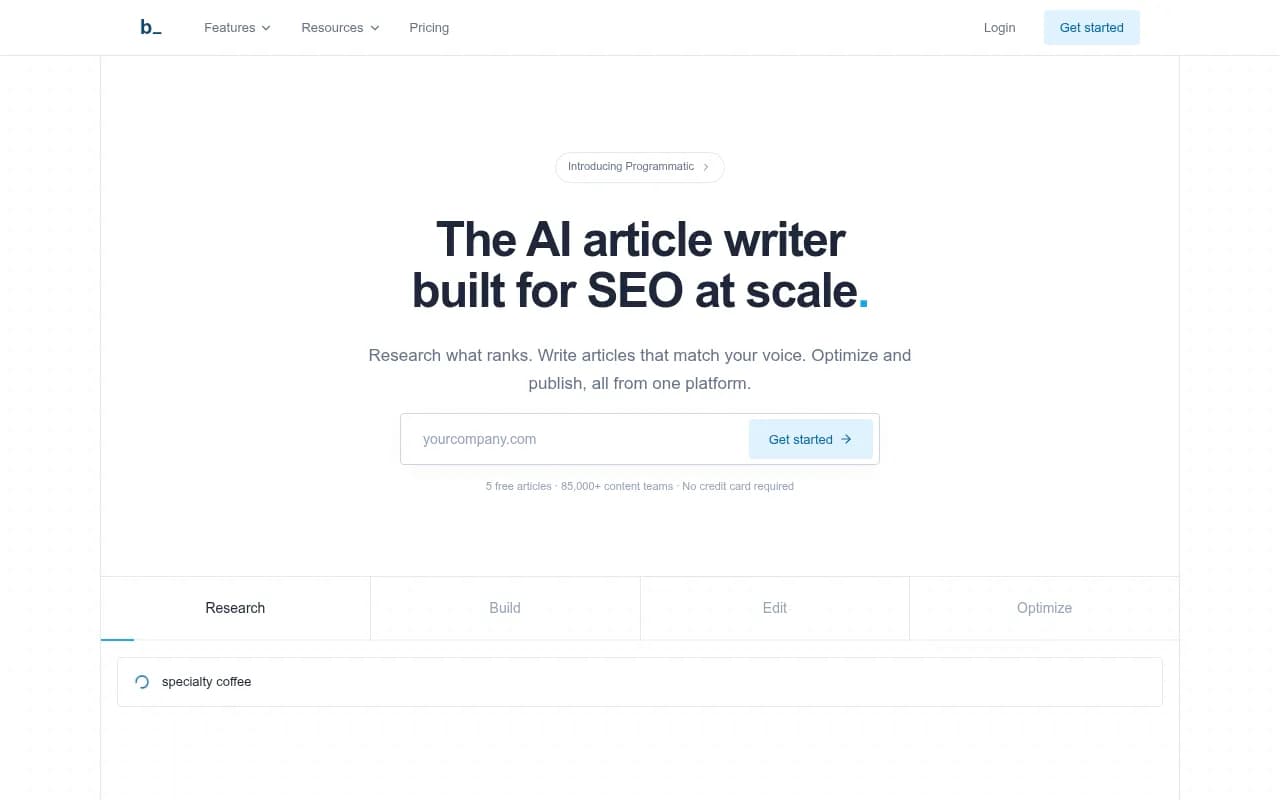
Byword is an AI article writer built for SEO at scale. It handles keyword research, brand voice matching, multi-model generation (GPT, Claude, Gemini), real-time optimization, and one-click publishing to WordPress, Webflow, Shopify, and more. Used by 85,000+ content teams.
Key takeaways
- Byword is a full-cycle AI content platform: keyword research, article generation, SEO optimization, and CMS publishing in one workflow
- Supports multiple AI models (GPT-5.4, Claude Opus 4.6, Gemini 3.1 Pro) and learns your brand voice from existing content
- Trusted by 85,000+ content teams including Coursera, Capgemini, and Ramp; 17M+ articles generated to date
- Pricing starts at $99/month for 25 articles -- reasonable for solo operators, but agencies will need the $299+ tiers
- Strong for traditional SEO content production; does not monitor or optimize for AI search visibility (GEO/AEO) -- if that's your goal, a dedicated platform like Promptwatch is a better fit
Byword is an AI-powered article writing platform designed specifically for SEO content production at scale. Where general-purpose tools like ChatGPT require you to manually set context every session, Byword is built around a persistent workflow: it learns your brand voice once, handles keyword research automatically, generates structured articles using your choice of AI model, and pushes the finished piece directly to your CMS. The pitch is speed without sacrificing quality -- most articles are ready in 60 to 90 seconds.
The platform has been around long enough to have generated over 17 million articles for more than 607,000 users across 1,156 countries. That's not a small operation. Customers include recognizable names like Coursera, Capgemini, Chanel, Blinkist, and Ramp, which gives it more enterprise credibility than most AI writing tools at this price point. The 85,000+ content teams figure is the headline stat they lead with, and given the scale of articles generated, it's plausible.
The target audience is clear: content marketers, SEO teams, and digital agencies who need to produce a high volume of articles without proportionally scaling headcount. If you're managing a content calendar that demands 50+ articles a month, or running an agency where content production is a margin problem, Byword is built for that exact situation.
Key features
Research intelligence
Before writing a single word, Byword analyzes SERPs to understand what's ranking and why. You enter a topic or seed keyword, and it surfaces related keyword opportunities with volume data, trend direction, difficulty scores, and search intent classification (informational, commercial, transactional). The interface shows you 12-month trend data and competition level, so you're not flying blind when choosing what to write about.
The research layer also pulls People Also Ask questions and competitor content signals to inform the article brief. This is meaningfully different from just asking an AI to "write about X" -- the output is grounded in what's actually performing in search, not what the model thinks sounds good.
Multi-model AI generation
Byword supports GPT-5.4, Claude Opus 4.6, and Gemini 3.1 Pro. You can choose which model generates your content, which matters because different models have different strengths -- Claude tends to produce more nuanced prose, GPT handles structured listicles well, and Gemini can be useful for technical content. Having the choice at the article level is a genuine advantage over tools that lock you into one model.
Generation includes title selection (Byword proposes multiple options with quality scores), heading scaffolding, and a draft snippet preview before you commit. Quality checks run automatically: intent match, coverage, originality, and readability scores are shown before you finalize.
Brand voice matching
Upload your existing content and Byword learns your writing style -- tone, vocabulary, sentence structure, formatting preferences. This persists across sessions, so you're not re-explaining your brand every time you start a new article. For agencies managing multiple clients, this means you can maintain separate voice profiles per client, which is a practical necessity at scale.
Programmatic SEO
There's a dedicated Programmatic feature for generating large batches of articles from structured data. If you're building location pages, product category pages, or any content type that follows a template pattern, this is where Byword earns its keep for agencies. You can feed it a spreadsheet or connect via API and generate hundreds of articles with consistent structure and variable content.
Real-time SEO optimization
As articles are generated (and as you edit them), Byword scores them across keyword density, heading structure, readability, and internal link opportunities. The scoring is live, so you can see the impact of edits in real time. This is table stakes for any serious SEO writing tool, but Byword's implementation is clean and actionable rather than just decorative.
CMS publishing and integrations
One-click publishing to WordPress, Webflow, Ghost, HubSpot, Medium, Wix, and Shopify. Beyond CMS connections, Byword integrates with Zapier, Make, Airtable, Google Sheets, Slack, Notion, Monday, Asana, Trello, Intercom, Salesforce, and Mailchimp. There's also a full API and webhook support for custom workflows. The integration list is genuinely broad -- most competing tools support 2-3 CMSs and call it done.
Bulk generation and parallel processing
You can queue dozens of articles at once and Byword generates them in parallel, notifying you when they're ready. For content teams running weekly or monthly publishing sprints, this is a significant time saver. The Scale plan supports 300 articles per month with 10 team seats, and there's an Unlimited tier for agencies generating 500+ articles monthly.
Article quality checks
Before publishing, Byword runs automated checks for intent match (does the article actually answer the query?), content coverage (are the key subtopics addressed?), originality, and readability. These aren't just vanity scores -- they're tied to the research data from the SERP analysis, so "coverage" means coverage relative to what's ranking, not an arbitrary benchmark.
Who is it for
Byword fits best for content marketers and SEO teams at growth-stage companies who need to publish consistently but don't have the budget or headcount to hire a full writing team. Think a 5-10 person marketing team at a SaaS company trying to build out a 200-article content library, or an e-commerce brand that needs product category pages and buying guides across dozens of SKUs. The workflow is fast enough that a single person can realistically manage 50-100 articles per month without burning out.
Digital agencies are the other obvious fit, particularly those running SEO retainers where content volume is part of the deliverable. The programmatic SEO feature, multi-client voice profiles, and API access make it workable for agencies serving 10+ clients simultaneously. The Standard plan at $299/month with 3 team seats and unlimited domains is probably the entry point for most agency use cases.
Solo operators and freelance SEO consultants will find the Starter plan ($99/month, 25 articles) a reasonable starting point, especially if they're managing a handful of client sites or building out their own content properties. The 5 free articles with no credit card required is a low-friction way to test whether the output quality meets your bar.
Who should probably look elsewhere: anyone whose primary goal is optimizing for AI search engines (ChatGPT, Perplexity, Claude, Gemini). Byword is built for traditional Google SEO -- it doesn't track how your content performs in AI-generated answers, doesn't analyze AI citations, and doesn't help you understand why an AI model recommends a competitor over you. For that use case, you need a GEO-focused platform.
Integrations and ecosystem
The integration story is one of Byword's stronger selling points. On the CMS side: WordPress, Webflow, Ghost, HubSpot, Medium, Wix, and Shopify all have direct connections. Shopify support is particularly useful for e-commerce teams building out blog content alongside product pages.
For workflow automation, Zapier and Make connections open up essentially unlimited integration possibilities -- you can trigger article generation from a Google Sheet row, push completed articles to a Slack channel for review, or sync published articles to a CRM. Airtable and Google Sheets integrations are useful for teams managing content calendars in spreadsheets.
The API is available on all paid plans and supports programmatic article generation, making it viable for developers building content pipelines. Webhook support means you can trigger external actions when articles are generated or published.
There's also a Discord integration (byword.ai/connect/discord) for generating articles directly from chat, which is a nice touch for teams already living in Discord.
No mobile app is mentioned, which is consistent with this being a desktop-first workflow tool.
Pricing and value
Byword uses a tiered monthly subscription model with article quotas:
- Starter: $99/month -- 25 articles, $3.50 per extra article, solo use, 5 domains
- Standard: $299/month -- 80 articles, $3.00 per extra article, 3 team seats, unlimited domains
- Scale: $999/month -- 300 articles, $2.50 per extra article, 10 team seats, unlimited domains, priority support
- Unlimited: $1,999/month platform fee plus approximately $0.10 per article (bring your own API keys) -- aimed at agencies and enterprises generating 500+ articles monthly
Annual billing saves 17% across all plans. There's a free tier with 5 articles and no credit card required.
At $3.50-$2.50 per article depending on tier, Byword is competitive with freelance writing costs for short-form content, and significantly cheaper than agency rates. The comparison to Jasper (which charges per seat rather than per article) is worth noting -- for high-volume content production, per-article pricing is often more predictable and cost-effective.
The Unlimited plan's economics are interesting: at $0.10 per article plus the $1,999 platform fee, an agency generating 1,000 articles per month pays roughly $2,099 total, or about $2.10 per article. At 5,000 articles per month, the per-article cost drops to $0.50. For programmatic SEO at scale, that's hard to beat.
Strengths and limitations
What it does well:
- The end-to-end workflow is genuinely cohesive. Research, generation, optimization, and publishing all live in one place without requiring you to context-switch between tools.
- Multi-model support (GPT-5.4, Claude Opus 4.6, Gemini 3.1 Pro) is a real differentiator. Most competing tools are single-model.
- The integration list is unusually broad. WordPress + Webflow + Shopify + HubSpot + Ghost + Wix covers most of the CMS market, and the Zapier/Make connections handle the rest.
- Brand voice persistence across sessions is a practical feature that saves real time for anyone managing multiple clients or content properties.
- The Unlimited plan's economics make it genuinely viable for high-volume programmatic SEO at scale.
Honest limitations:
- Byword is built entirely around traditional Google SEO. There's no visibility into how your content performs in AI-generated answers from ChatGPT, Perplexity, Claude, or Gemini. As AI search continues to grow as a traffic source, this is a meaningful gap.
- The per-article pricing model can get expensive quickly if you need more than your plan's quota. At $3.50 per extra article on the Starter plan, a content sprint can add up fast.
- Quality at scale is always a concern with AI-generated content. Byword's quality checks (intent match, coverage, originality, readability) help, but they don't replace human editorial judgment. Teams publishing hundreds of articles per month without review processes risk diluting their content quality over time.
Bottom line
Byword is a well-built, production-ready platform for teams that need to generate SEO content at volume. The combination of keyword research, multi-model generation, brand voice matching, and broad CMS publishing support makes it one of the more complete AI writing tools available in 2026. It's particularly strong for agencies running programmatic SEO campaigns or content teams trying to scale output without scaling headcount.
If your goal is ranking in traditional Google search and you need a reliable, fast pipeline from keyword to published article, Byword delivers on that promise. If you're also trying to understand and improve your visibility in AI search engines -- how ChatGPT, Perplexity, or Claude answers questions in your category -- you'll need to pair it with a dedicated GEO platform like Promptwatch, since Byword doesn't address that side of the equation at all.
Best for: Content teams and SEO agencies that need to produce 25-500+ SEO articles per month with consistent quality and minimal manual overhead.
Tags:
Frequently asked questions
What is Byword and what does it do?
How much does Byword cost?
Is there a free plan or trial?
Who is Byword best suited for?
How does Byword compare to Jasper?
Does Byword help with AI search visibility (GEO/AEO)?
Similar and alternative tools to Byword