Key takeaways
- AI SEO tools split into distinct categories: keyword research, content optimization, technical SEO, and AI search visibility (GEO). Most tools only cover one or two.
- For traditional Google SEO, Surfer SEO, Clearscope, and MarketMuse are the strongest content optimization picks. Semrush and Ahrefs still lead on keyword research and site auditing.
- AI search visibility (getting cited by ChatGPT, Perplexity, Claude) is a separate discipline that requires dedicated GEO tools -- traditional SEO platforms mostly don't cover it.
- The best tool for you depends on what you're trying to fix: content quality, keyword gaps, technical issues, or AI citation rates.
- Budget matters: there's a meaningful quality gap between $50/mo tools and $200+/mo platforms, but a few mid-range options punch above their weight.
The phrase "AI SEO tool" has become almost meaningless. Type it into any search engine and you'll get listicles that lump together a WordPress plugin, a ChatGPT wrapper, an enterprise rank tracker, and a content brief generator -- as if they're all solving the same problem. They're not.
So instead of ranking tools by some arbitrary overall score, this guide organizes them by what they actually help you do. Find the category that matches your current bottleneck, then pick from the tools that genuinely address it.
What "AI SEO" actually means in 2026
Before getting into tools, it's worth being precise about what's changed. Traditional SEO was about ranking in Google's blue links. That's still important, but it's no longer the whole picture.
In 2026, a meaningful chunk of search happens inside AI systems. When someone asks ChatGPT "what's the best project management software for remote teams?" or asks Perplexity "which mattress brand is best for back pain?" -- those answers cite specific sources. If your brand isn't one of them, you're invisible to that user. They never even see a search results page.
This created a second discipline alongside traditional SEO: Generative Engine Optimization (GEO), also called AEO (Answer Engine Optimization). The tools that help with GEO are fundamentally different from tools that help you rank in Google. Some platforms try to do both. Most do one or the other.
Keep that distinction in mind as you read through the categories below.
Category 1: Content optimization (ranking what you write)
These tools help you write content that Google actually wants to rank. They analyze top-ranking pages, identify semantic gaps, and score your draft against what's already working.
Surfer SEO
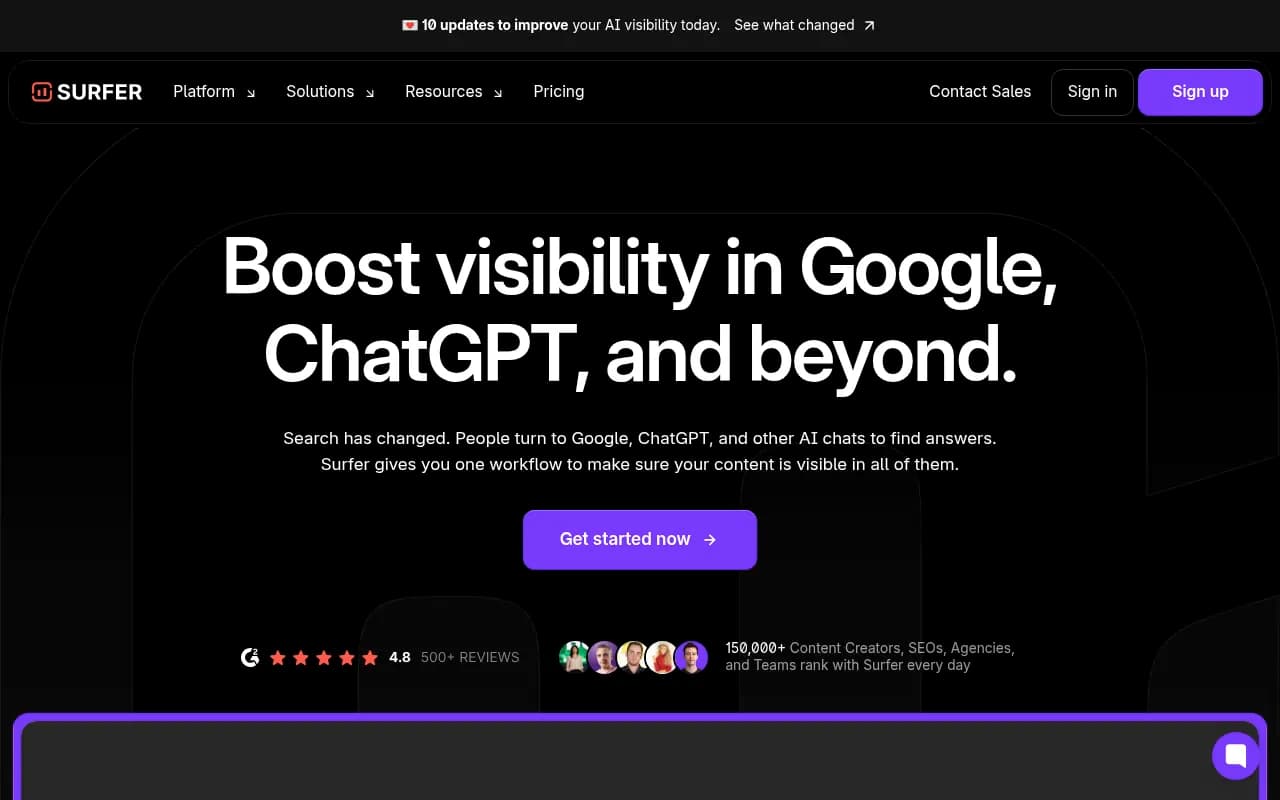
Surfer is the most widely used content optimization tool in this space, and for good reason. You paste in a target keyword, it analyzes the top 20 results, and gives you a content score based on word count, NLP terms, heading structure, and entity coverage. The built-in editor updates your score in real time as you write.
The AI writing features have improved a lot -- you can generate a full draft from a brief, then optimize it within the same interface. It's not the cheapest option, but it's the most complete for teams that produce content at volume.
Clearscope
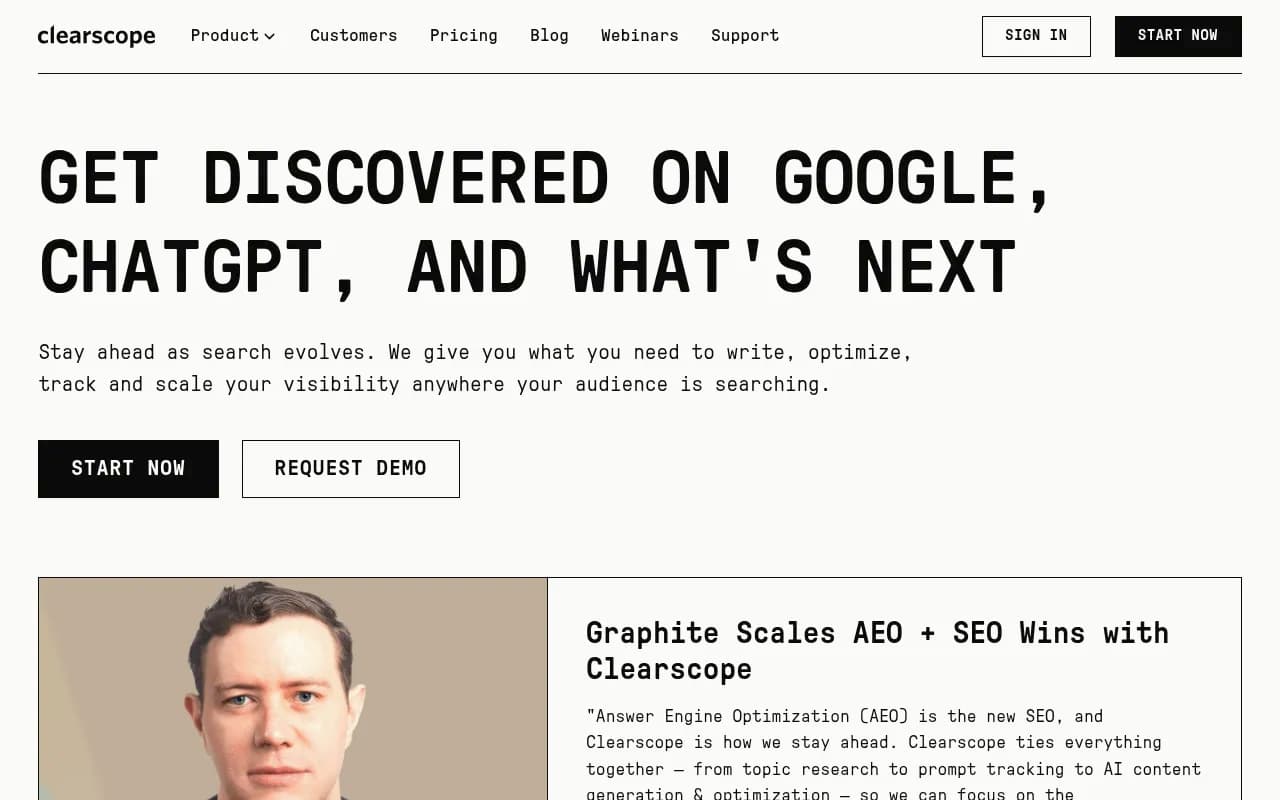
Clearscope takes a cleaner, more focused approach. It's primarily a content grading tool: paste your draft, get a grade (A+ to F), and see which related terms you're missing. Less feature bloat than Surfer, which some writers prefer. The downside is the price -- Clearscope starts at $170/month, which is hard to justify unless you're publishing frequently enough to need the consistency.
MarketMuse
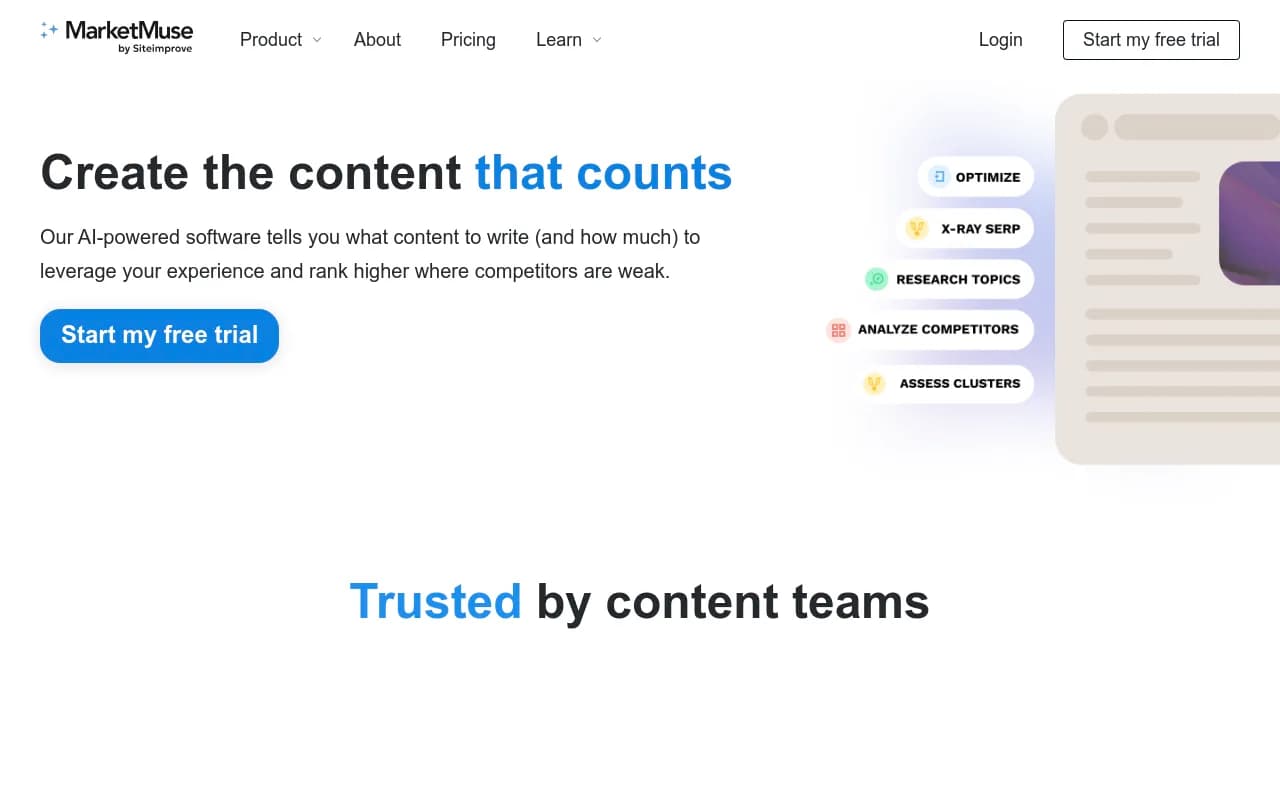
MarketMuse goes deeper on content strategy. Beyond optimizing individual articles, it maps out topical authority -- showing you which topics you have authority in, which you don't, and where writing new content would have the most impact. It's more of a planning tool than a writing tool, which makes it better suited for content strategists than individual writers.
NeuronWriter
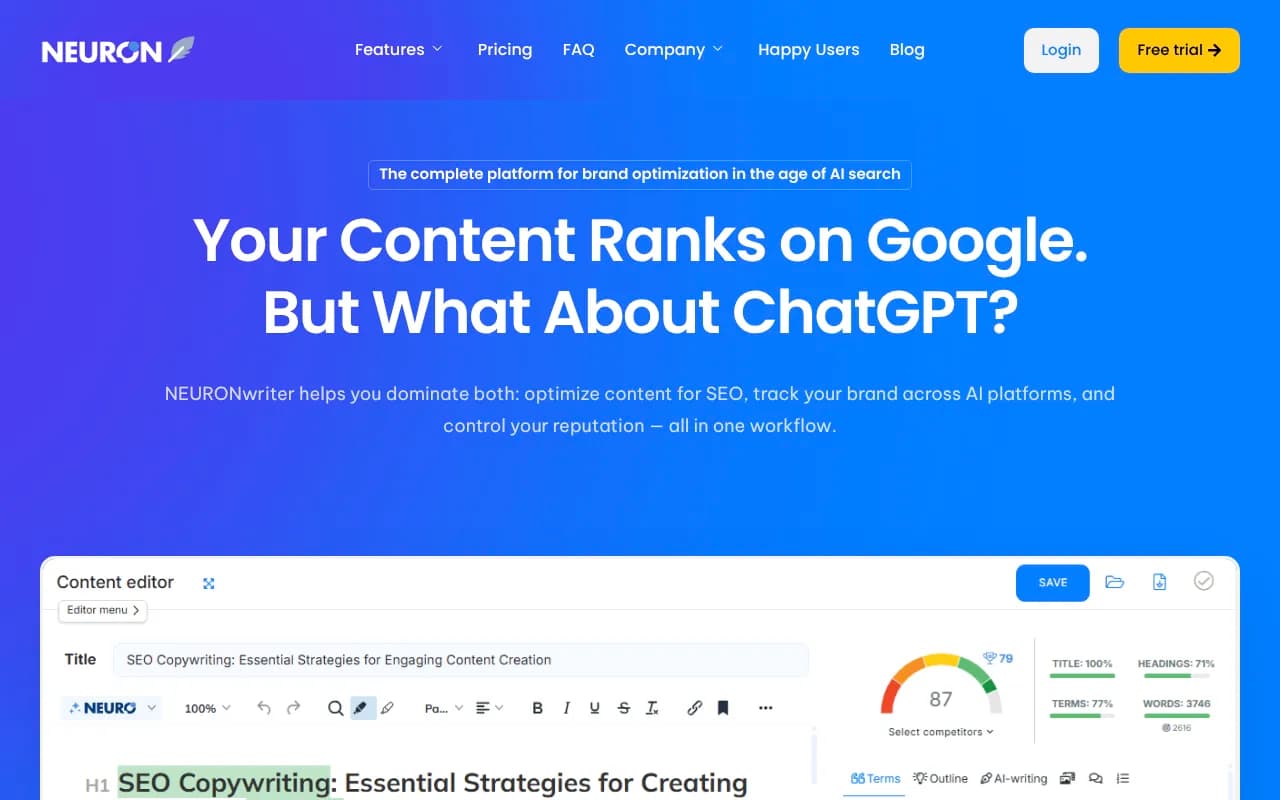
A more affordable alternative to Surfer, NeuronWriter uses SERP analysis and NLP to generate content briefs and score your writing. It lacks some of Surfer's polish but covers the core use case well at a lower price point. Good for smaller teams or freelancers who need content optimization without the enterprise price tag.
Frase
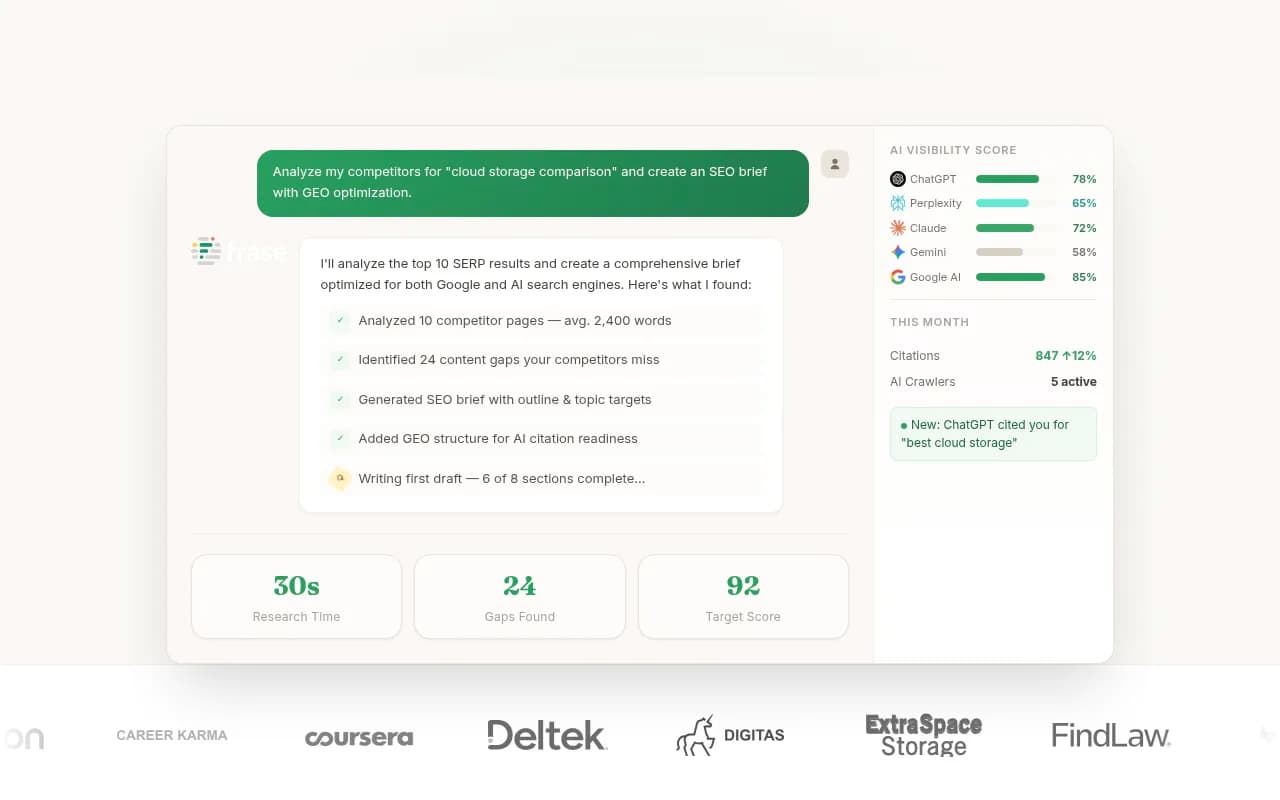
Frase sits between a research tool and an optimizer. It pulls in the top search results for your target keyword, summarizes them, and helps you build a brief or draft from that research. The AI writing is decent but not exceptional. Where Frase shines is in the research phase -- it saves significant time when you need to understand what's already ranking before you write.
Category 2: Keyword research and competitive analysis
These are the tools you use before you write anything. They tell you what people are searching for, how hard it is to rank, and what your competitors are doing.
Semrush
Still the most comprehensive keyword research platform available. The keyword magic tool, position tracking, backlink analysis, and site audit features are all genuinely useful. The AI features (ContentShake, the writing assistant) are decent add-ons, but Semrush's core value is its data depth. If you're running SEO for a mid-to-large site and need reliable keyword data, there's no real substitute.
Ahrefs
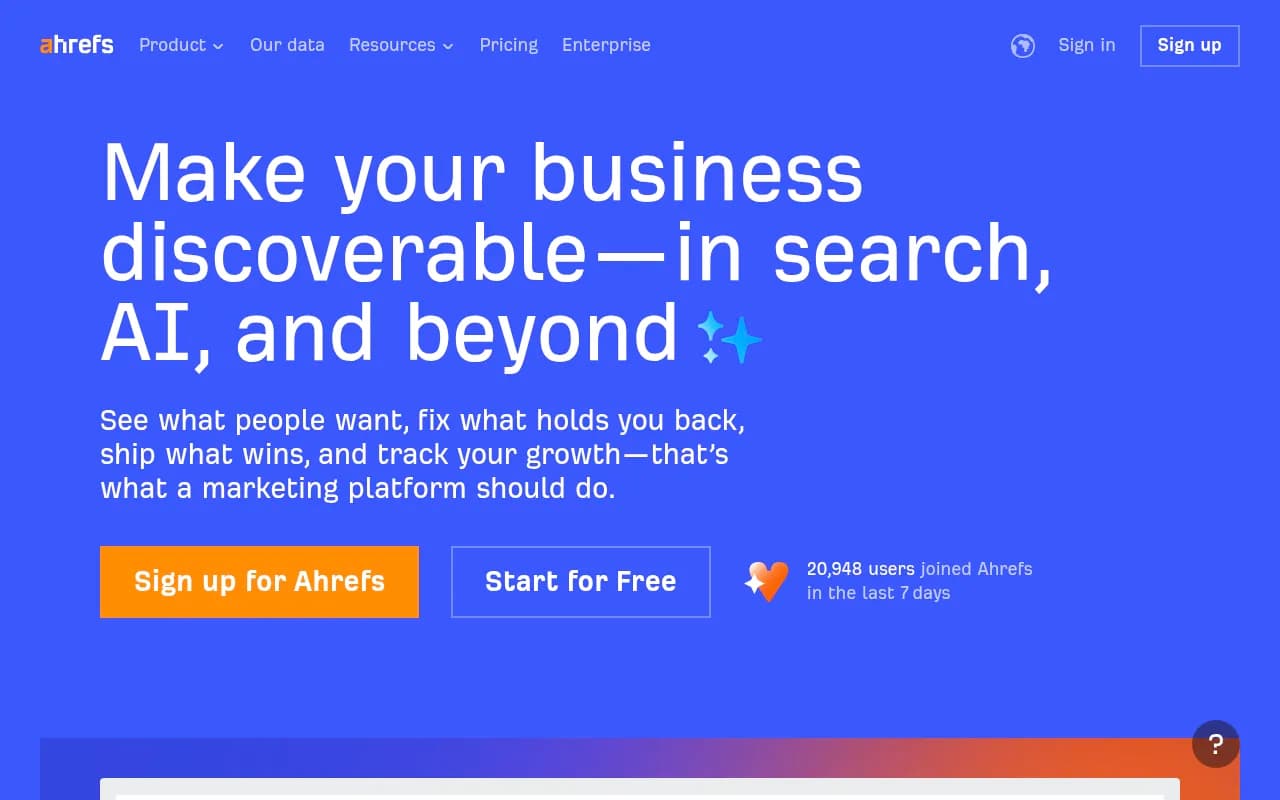
Ahrefs and Semrush are close competitors, and which you prefer often comes down to which interface you learned first. Ahrefs has a slight edge on backlink data; Semrush has a slight edge on keyword volume accuracy. Both are expensive, both are worth it for serious SEO teams. Ahrefs has added Brand Radar for AI search monitoring, though it's limited compared to dedicated GEO tools.
Moz Pro
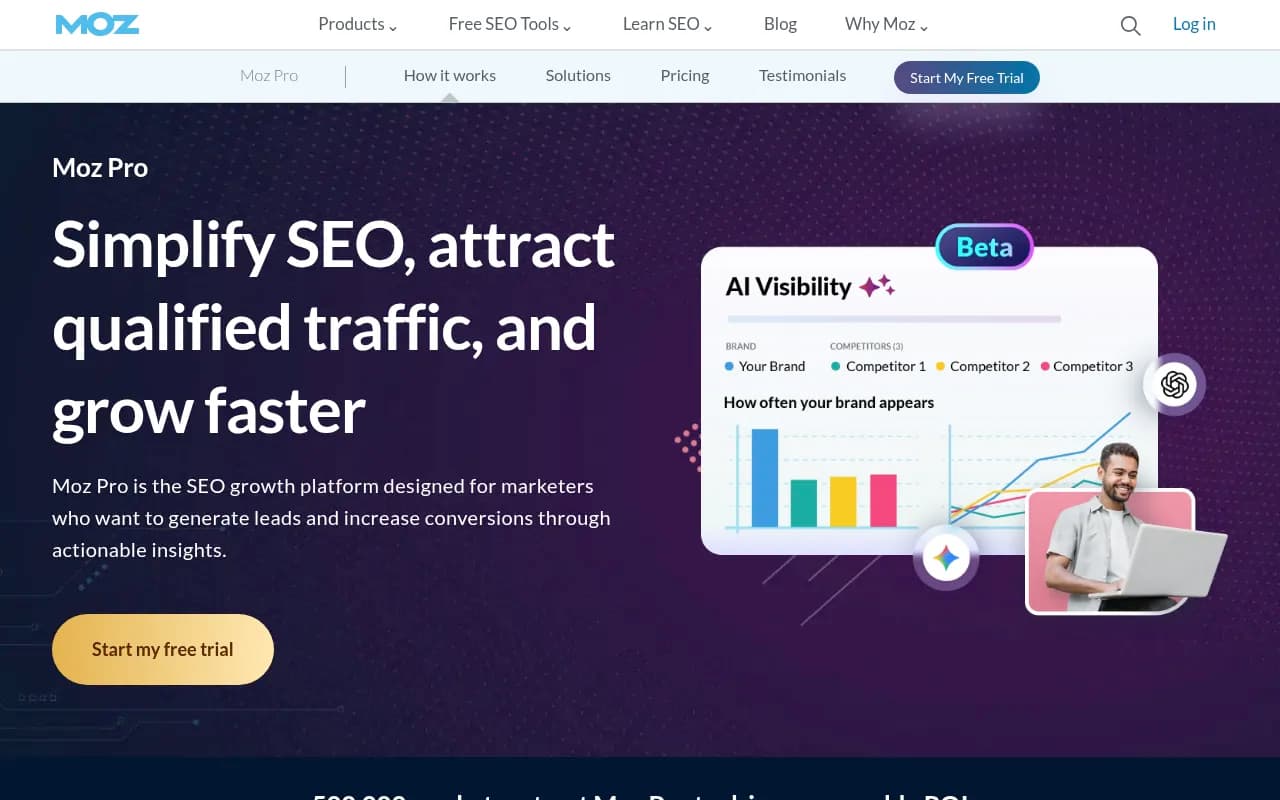
Moz is the original SEO platform, and it's still solid for keyword research, rank tracking, and site auditing. It's generally considered a step below Semrush and Ahrefs in data freshness and feature depth, but the interface is friendlier and the pricing is slightly more accessible. Good for teams that don't need cutting-edge data.
Mangools
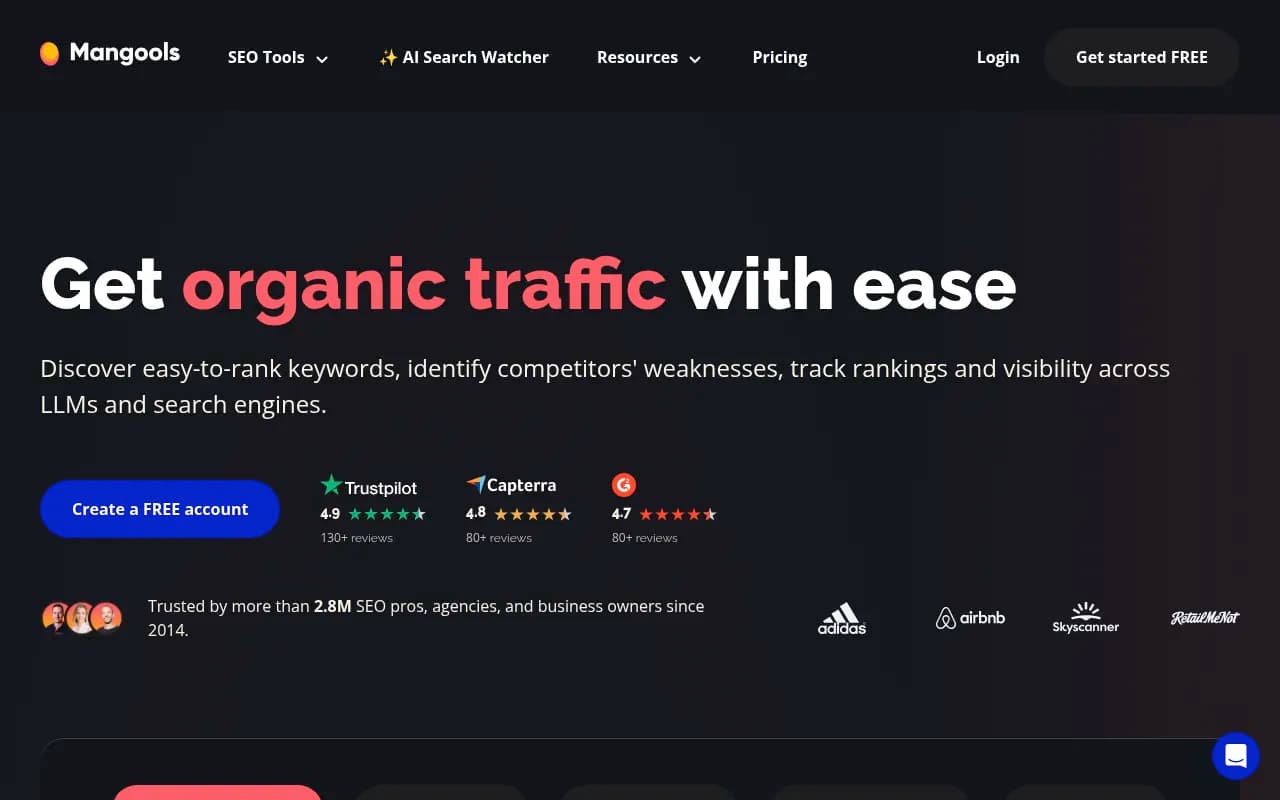
Mangools is the budget-friendly option that actually delivers. KWFinder (part of the Mangools suite) is one of the cleanest keyword research tools available, with accurate difficulty scores and a genuinely pleasant interface. If you're a freelancer or small business that can't justify $100+/month for Semrush, Mangools is the honest recommendation.
Ubersuggest
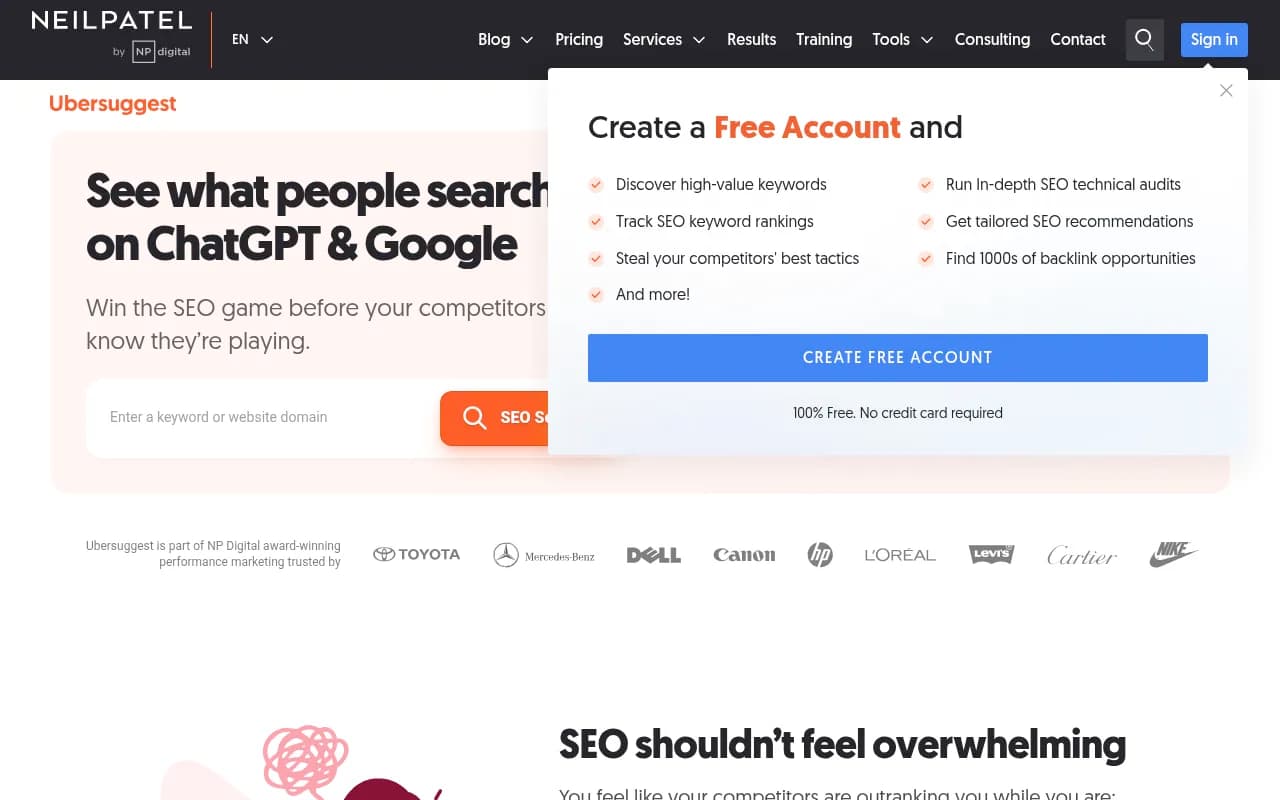
Neil Patel's tool has improved significantly. It covers keyword research, content ideas, backlink data, and site auditing in one place at a price that's hard to argue with. The data quality isn't quite at Semrush/Ahrefs level, but for smaller sites and tighter budgets, it does the job.
Category 3: AI writing and content generation
These tools help you produce content faster. They range from general-purpose AI writers to SEO-specific generators that ground output in keyword data.
Jasper
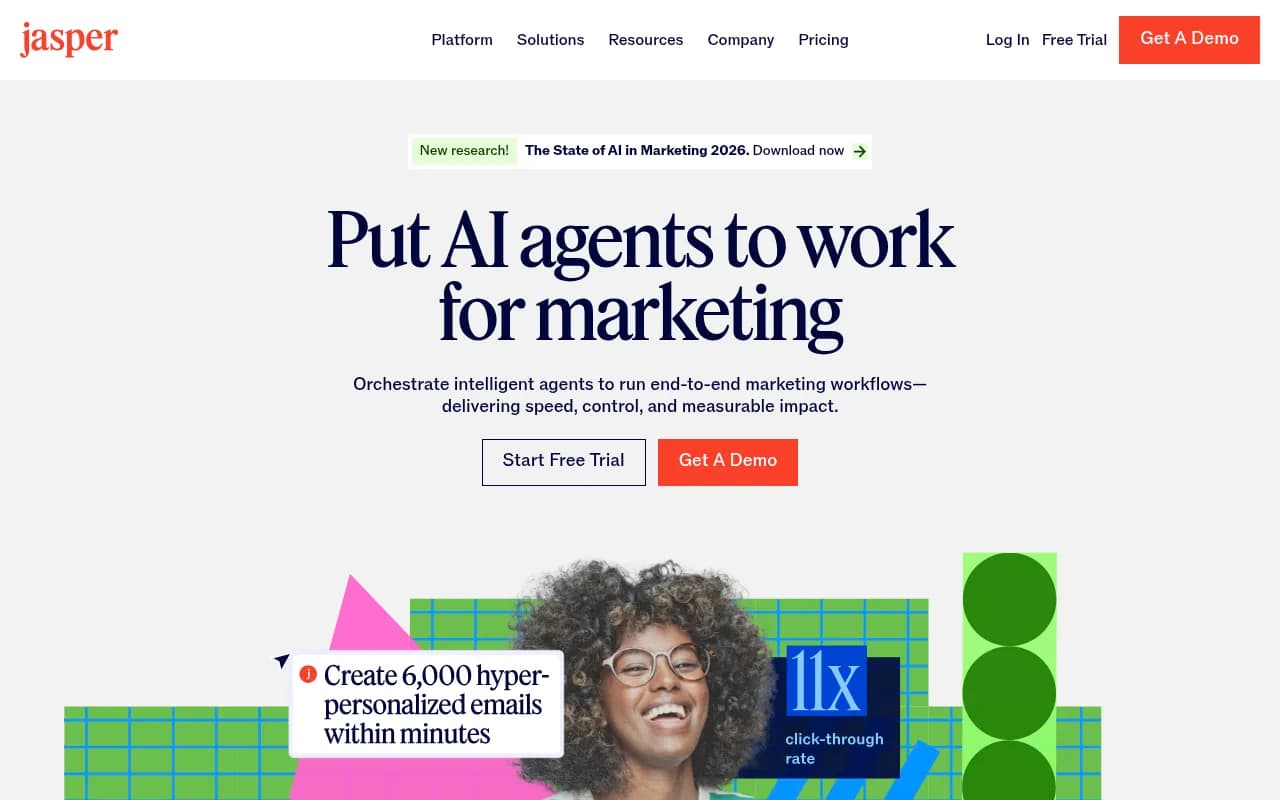
Jasper is the most established AI writing tool for marketing teams. It has templates for blog posts, product descriptions, ads, and more. The SEO mode integrates with Surfer, which is a meaningful advantage -- you can generate and optimize in the same workflow. Jasper is expensive for what it is, but teams that need consistent brand voice across large content volumes find it worth the cost.
Content at Scale
Content at Scale takes a different approach: it's built specifically for producing long-form SEO content at volume. You give it a keyword, it generates a full article (often 2,500+ words) that's structured for search. The output quality is better than most AI writers for SEO purposes because it's trained on ranking content rather than general text. The AI detection bypass feature is a selling point for some, controversial for others.
GrowthBar
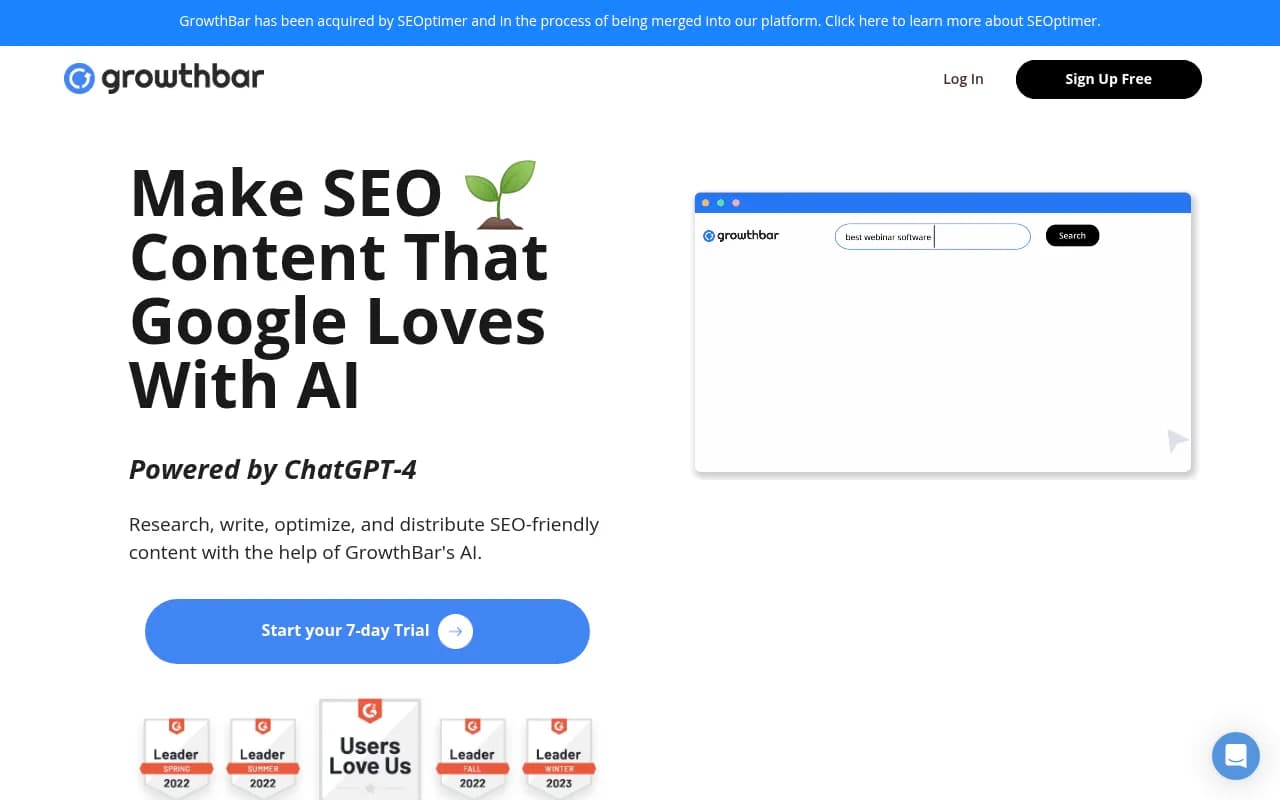
GrowthBar combines keyword research with AI writing in a single, more accessible interface. It's aimed at bloggers and small business owners who want to do both without switching between tools. Not as powerful as Surfer + Jasper, but much simpler and cheaper.
Byword
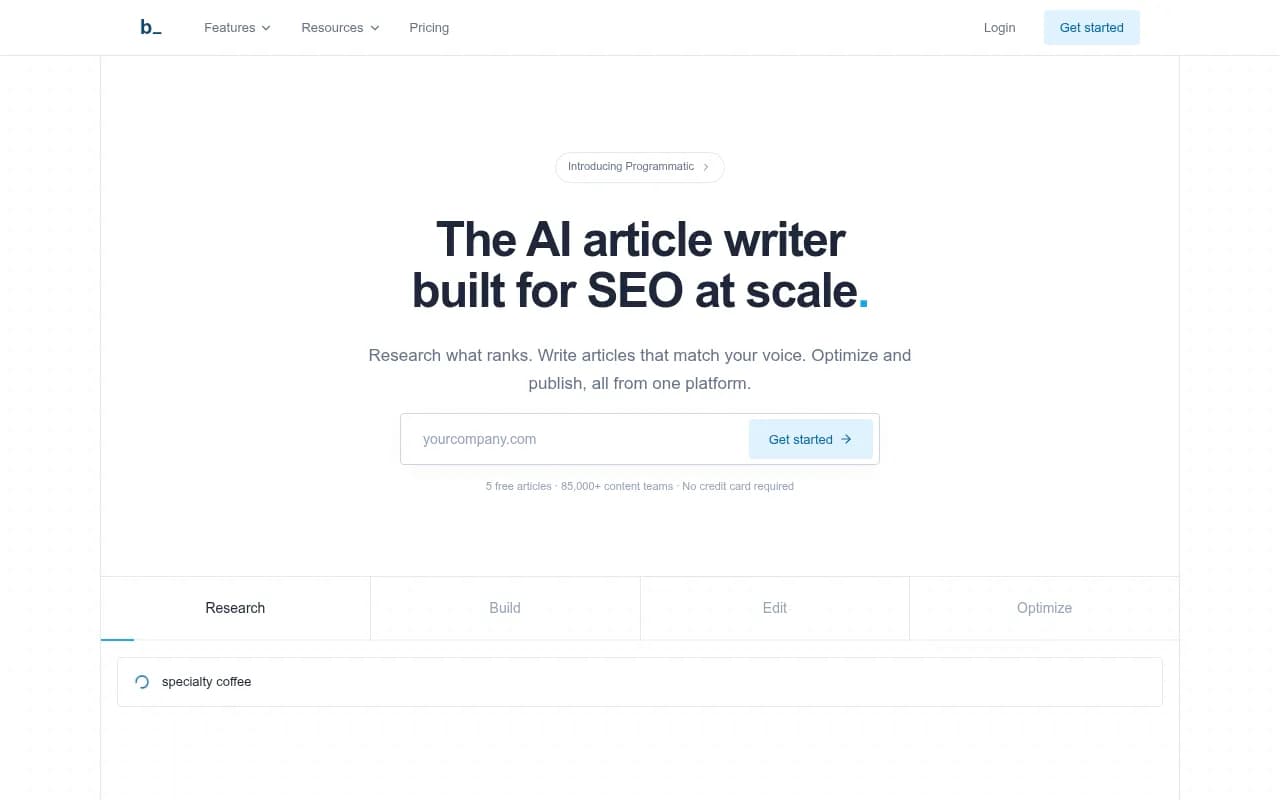
Byword is built for scale. If you need to generate hundreds of SEO articles quickly -- think programmatic SEO for large sites -- Byword is one of the fastest ways to do it. The quality is good enough for informational content, though it needs human editing for anything competitive or nuanced.
Rytr
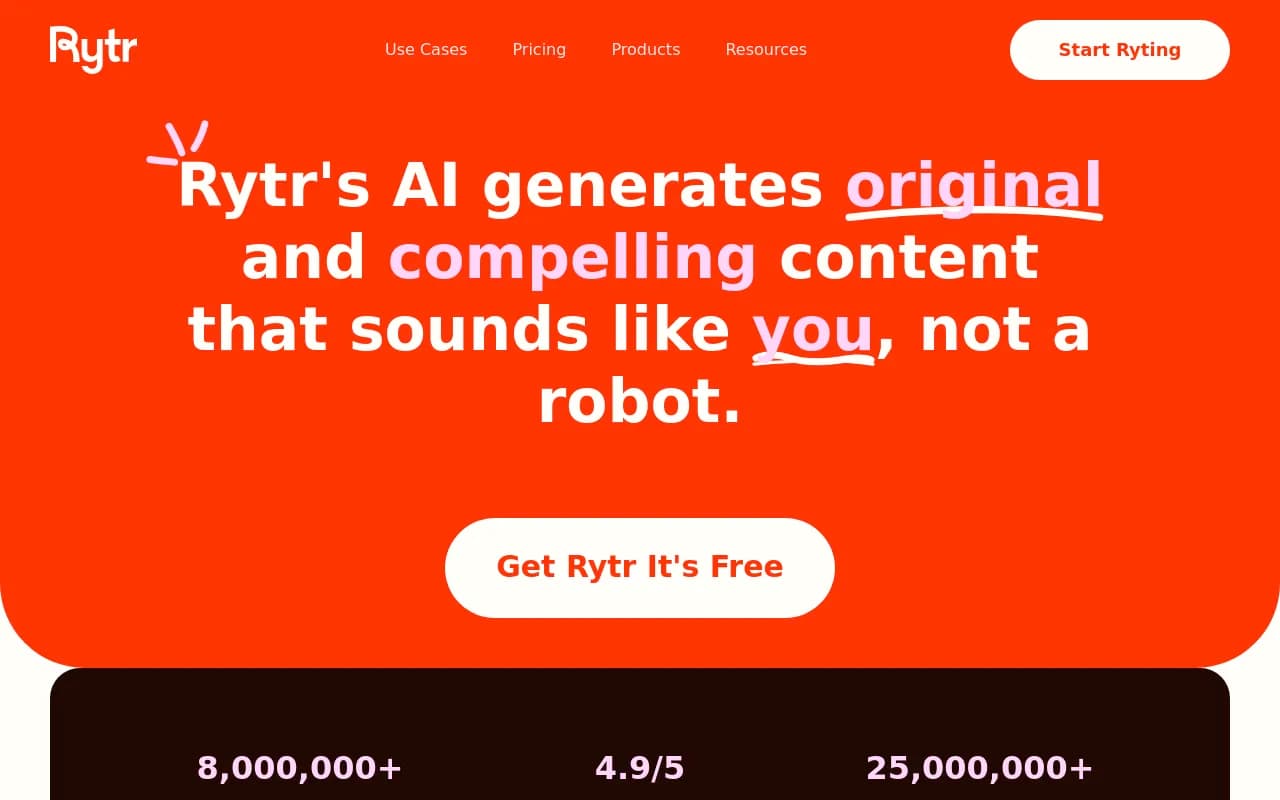
The most affordable AI writing tool on this list. Rytr won't produce content that competes with Jasper or Content at Scale, but for quick first drafts, social copy, or meta descriptions, it's perfectly functional at a fraction of the price.
Category 4: Technical SEO
Technical SEO is often the unglamorous part -- crawl errors, page speed, structured data, indexing issues. These tools surface what's broken so you can fix it.
Screaming Frog
Not in our catalog, but worth mentioning: Screaming Frog is still the go-to for technical site audits. It's a desktop crawler that finds broken links, duplicate content, missing tags, and redirect chains. The free version handles up to 500 URLs; the paid version is £259/year.
Alli AI
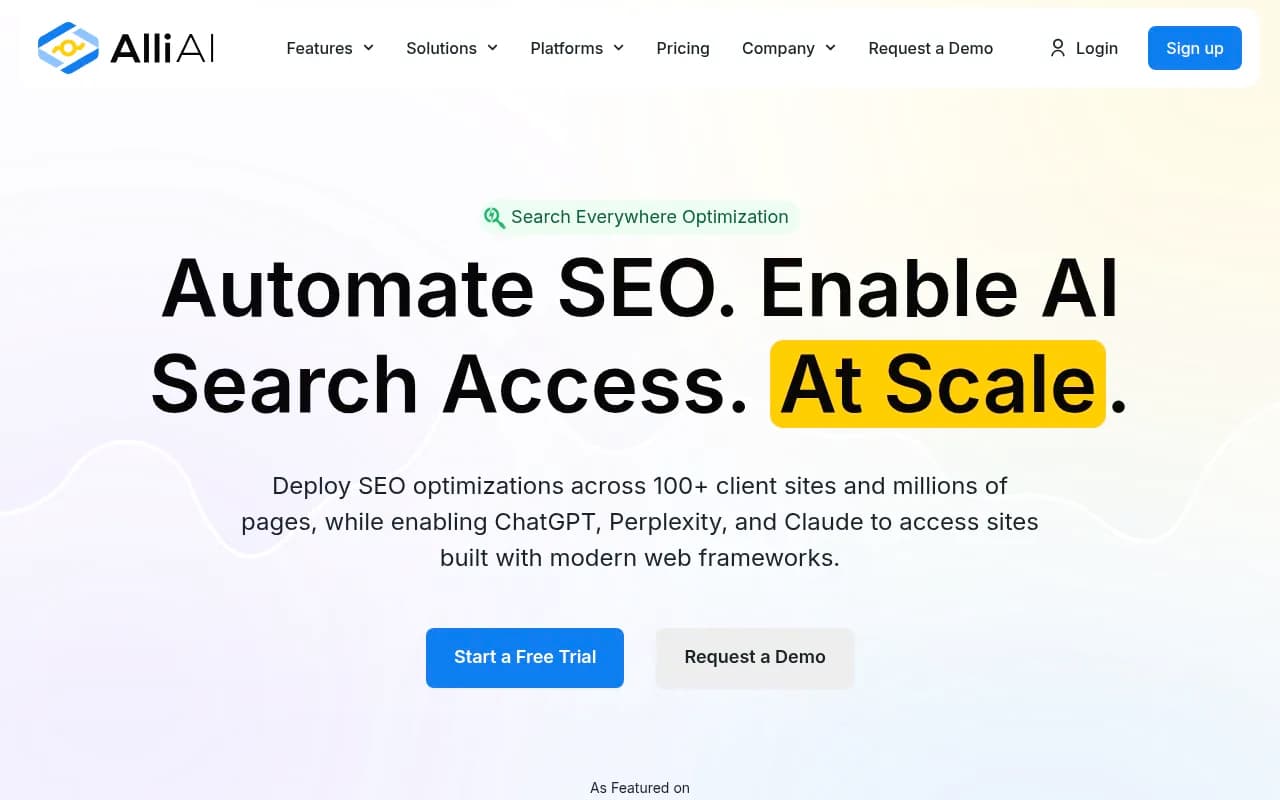
Alli AI takes a different angle on technical SEO -- it doesn't just find issues, it deploys fixes automatically across your site without requiring developer involvement. You connect it to your site, it identifies on-page SEO problems, and you can push changes live from the dashboard. For agencies managing multiple sites, this is a significant time saver.
Botify
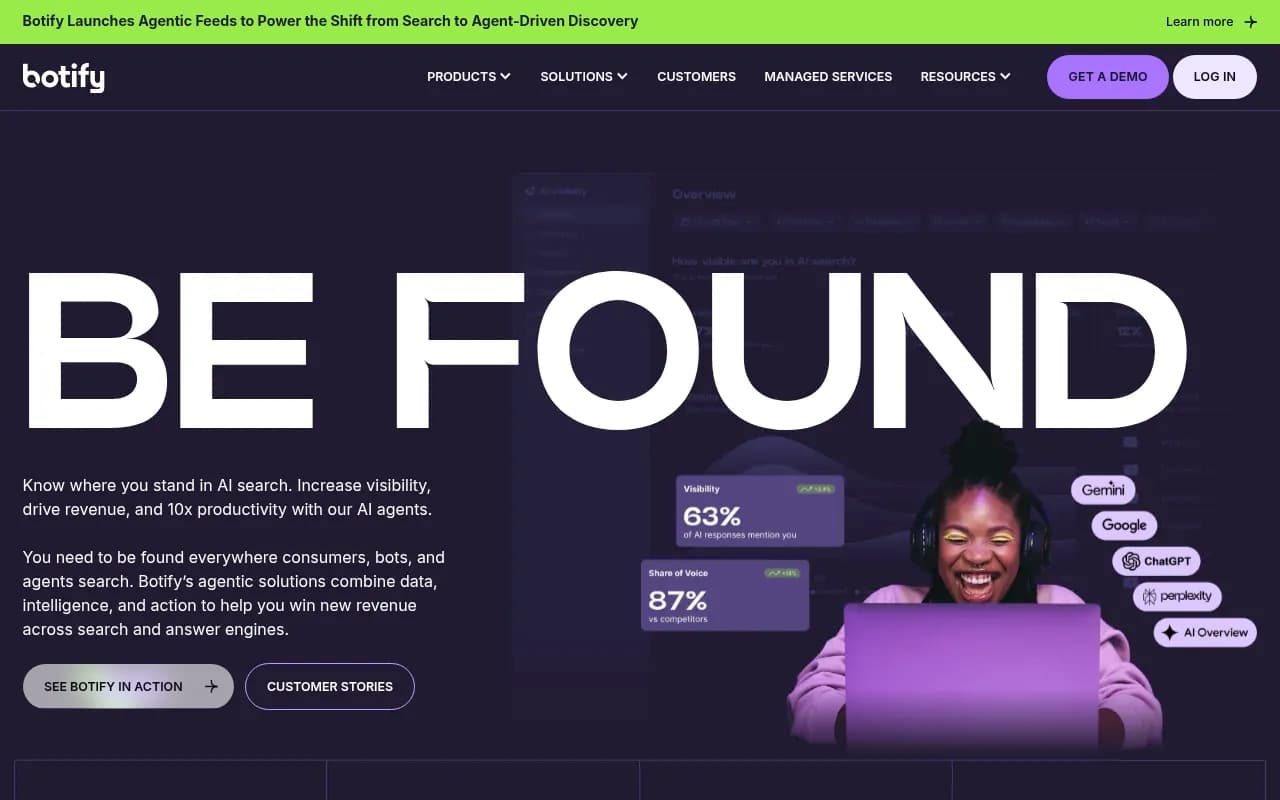
Botify is the enterprise option for technical SEO. It crawls large sites (millions of pages), integrates with log files to show you which pages Google actually crawls vs. which ones it ignores, and has added AI search visibility tracking. It's expensive and built for large organizations with complex sites.
Google Search Console
Free, authoritative, and underused. Google Search Console tells you exactly which queries are driving impressions and clicks, which pages have indexing issues, and how your Core Web Vitals are performing. Every site should have this set up before spending money on any paid tool.
Page Optimizer Pro
Page Optimizer Pro focuses specifically on on-page SEO signals. It analyzes your page against competitors and tells you exactly what to change -- word count, keyword density, internal links, schema. It's more prescriptive than most tools, which some SEOs love and others find overly mechanical.
Category 5: AI search visibility (GEO)
This is the newest category and the one most traditional SEO tools don't cover. These platforms track and improve how your brand appears in AI-generated answers from ChatGPT, Perplexity, Claude, Gemini, and others.
This matters more than most brands realize. AI search isn't a niche -- it's where a growing share of high-intent queries are being answered, and the brands that show up in those answers are getting traffic that never touches a traditional SERP.
Promptwatch
Promptwatch is the most complete platform in this category. What separates it from monitoring-only tools is the full action loop: it finds where you're invisible (Answer Gap Analysis shows which prompts competitors rank for but you don't), generates content designed to get cited by AI models (using data from 880M+ analyzed citations), and tracks whether that content is actually working.
Most GEO tools stop at step one. They show you a dashboard of visibility scores and leave you to figure out what to do next. Promptwatch is built around the fix, not just the finding.
It monitors 10 AI models including ChatGPT, Claude, Perplexity, Gemini, Grok, and Google AI Overviews. The crawler logs feature is particularly useful -- it shows you in real time which AI crawlers are hitting your site, which pages they're reading, and where they're hitting errors. Most competitors don't have this at all.
Pricing starts at $99/month for the Essential plan (1 site, 50 prompts, 5 articles), with Professional at $249/month and Business at $579/month.

Profound
Profound is a strong enterprise option with solid monitoring features and a clean interface. It covers more AI models than most competitors and has good reporting. The gap vs. Promptwatch is on the action side -- Profound shows you where you're invisible but doesn't have the content generation and gap analysis tools to help you fix it.
Otterly.AI
Otterly is one of the more affordable entry points into AI visibility monitoring. It covers the major LLMs and gives you visibility scores and mention tracking. Good for brands that want to start tracking AI search without a large budget commitment. The trade-off is that it's monitoring-only -- no content tools, no crawler logs, no gap analysis.

Writesonic
Writesonic has evolved from a pure AI writer into a broader AI search visibility platform. It now includes GEO tracking alongside its content generation features, which makes it an interesting option for teams that want both in one tool. The GEO tracking isn't as deep as dedicated platforms, but the combination is useful.
SE Ranking
SE Ranking is primarily a traditional SEO platform (rank tracking, site auditing, keyword research) that has added AI visibility features. If you're already using SE Ranking for traditional SEO, the AI visibility add-on is a convenient way to start tracking without adding another tool. For teams that need deep GEO capabilities, it's not a replacement for a dedicated platform.
Comparison table: which tool for which job
| Tool | Best for | Traditional SEO | AI search (GEO) | Content gen | Price range |
|---|---|---|---|---|---|
| Surfer SEO | Content optimization | Yes | No | Yes | $$$ |
| Clearscope | Content grading | Yes | No | No | $$$$ |
| MarketMuse | Content strategy | Yes | No | No | $$$$ |
| Semrush | Keyword research + audits | Yes | Limited | Yes (add-on) | $$$ |
| Ahrefs | Keyword + backlinks | Yes | Limited | No | $$$ |
| Mangools | Budget keyword research | Yes | No | No | $ |
| Jasper | AI writing | No | No | Yes | $$$ |
| Content at Scale | Bulk content production | Partial | No | Yes | $$$ |
| Alli AI | Technical SEO automation | Yes | No | No | $$$ |
| Botify | Enterprise technical SEO | Yes | Partial | No | $$$$ |
| Promptwatch | AI search visibility + GEO | No | Yes (full loop) | Yes | $$ - $$$ |
| Profound | AI visibility monitoring | No | Yes (monitoring) | No | $$$$ |
| Otterly.AI | Budget AI monitoring | No | Yes (monitoring) | No | $ |
| SE Ranking | Traditional + AI combo | Yes | Partial | No | $$ |
How to choose: a practical framework
The honest answer is that most teams need tools from more than one category. Here's a simple way to think about it:
If your main problem is content quality: Start with Surfer SEO or Clearscope. These will have the most direct impact on your rankings if your content is the bottleneck.
If your main problem is not knowing what to write about: Semrush or Ahrefs for keyword research, MarketMuse if you want to go deeper on topical authority.
If your main problem is writing speed: Jasper or Content at Scale, ideally paired with a content optimizer.
If your main problem is technical issues: Run a Screaming Frog crawl first (it's free up to 500 URLs), then Google Search Console. Only pay for Botify or Alli AI if you're managing a large or complex site.
If your main problem is AI search visibility: This is where most teams are underinvested. If you're not tracking how your brand appears in ChatGPT, Perplexity, and Claude, you're flying blind on a growing share of your potential traffic. Promptwatch is the most complete option here, particularly if you want to move from tracking to actually improving your visibility.
The category most teams are ignoring
Traditional SEO tools have been around long enough that most marketing teams have at least one. But AI search visibility is still treated as optional by many brands -- something to "look into later."
The problem with waiting is that AI search is already influencing purchase decisions. When someone asks an AI assistant which CRM to use, which hotel to book, or which supplement to take, the brands that appear in those answers have a significant advantage. The brands that don't appear are simply absent from that conversation.
The good news is that AI search visibility is still early enough that it's not saturated. Getting in now, building the right content, and establishing citation patterns with AI models is meaningfully easier than it will be in 18 months when every competitor has figured this out.
Tools like Promptwatch exist specifically to help with this -- not just to show you the problem, but to help you fix it. That distinction matters more than it might seem.
Bottom line
The "best AI SEO tool" question only makes sense once you know what you're trying to fix. Content quality, keyword gaps, technical issues, and AI search visibility are four different problems that require four different types of tools.
Pick the category that matches your current biggest bottleneck. Get one tool working well before adding another. And if you haven't started tracking your AI search visibility yet, that's probably the most underserved gap in most marketing stacks right now.