Key takeaways
- AthenaHQ is a solid monitoring tool that tracks your brand across 8+ AI models, but stops short of helping you act on what it finds.
- Brandlight.ai targets enterprise teams with a focus on brand sentiment and governance, but lacks content optimization and AI traffic attribution.
- Promptwatch is the only one of the three that closes the loop: it finds where you're invisible, generates content to fix it, and tracks whether that content gets cited.
- If your goal is to actually improve your AI search visibility (not just measure it), Promptwatch is the most complete option in 2026.
The AI brand monitoring space has gotten crowded fast. Two years ago, barely anyone was asking "how does my brand appear in ChatGPT?" Now there are dozens of tools claiming to answer that question, and the differences between them matter a lot.
This comparison focuses on three platforms that come up regularly in the conversation: AthenaHQ, Brandlight.ai, and Promptwatch. They're not identical products chasing the same buyer. They have genuinely different philosophies about what "AI brand monitoring" means -- and that shapes everything from what data you get to what you can actually do with it.
Let's get into it.
What each platform is actually trying to do
Before comparing features, it's worth understanding the core purpose of each tool. Because if you pick the wrong one for your situation, no amount of feature depth will save you.
AthenaHQ
AthenaHQ is built around visibility tracking. You set up your brand, define your prompts, and the platform monitors how you appear across AI models like ChatGPT, Perplexity, Claude, and others. It shows you share of voice, brand mention rates, and how you stack up against competitors in AI responses.
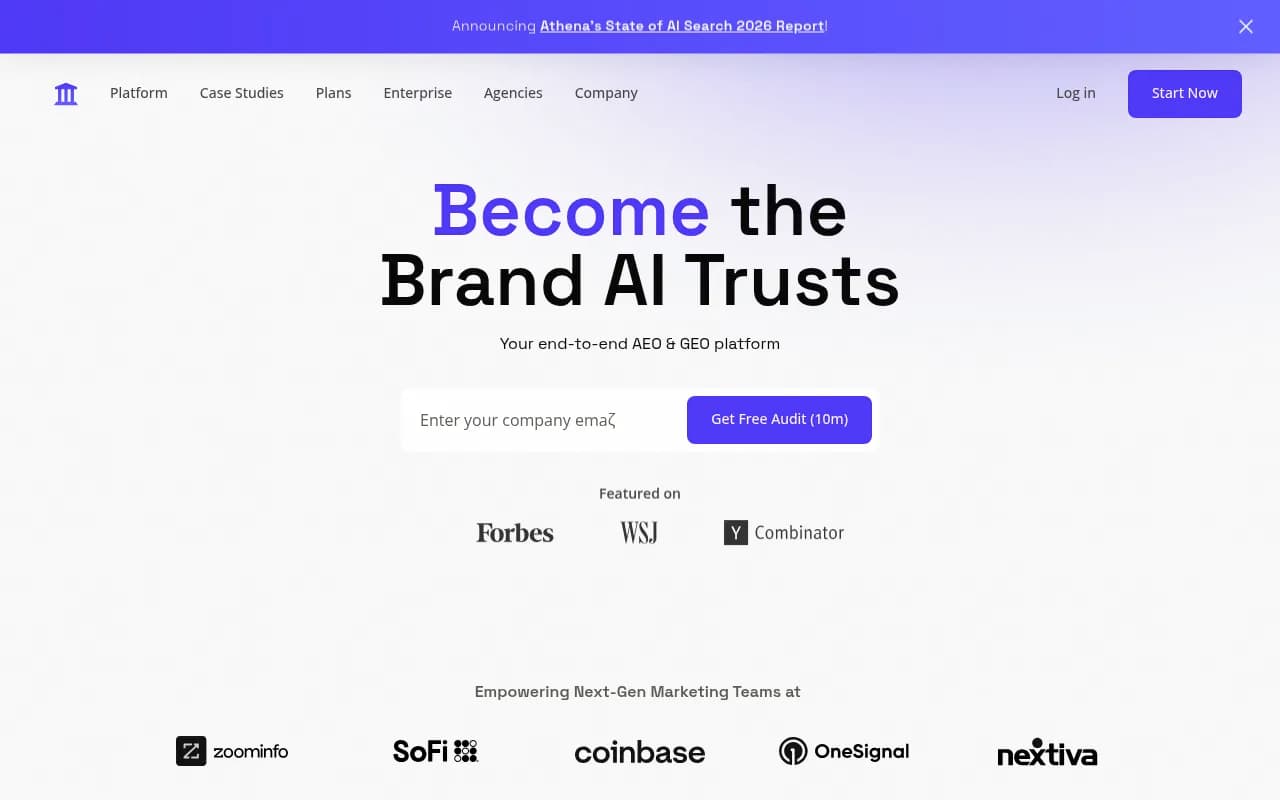
The pitch is clarity: you want to know where you stand in AI search, and AthenaHQ gives you a dashboard to see it. The platform is monitoring-first, which means it's good at telling you what's happening but doesn't have much to offer once you want to change it.
Brandlight.ai
Brandlight.ai comes at this from a brand governance angle. It's positioned as an enterprise platform with a focus on brand sentiment, reputation, and how AI models characterize your brand -- not just whether they mention you.
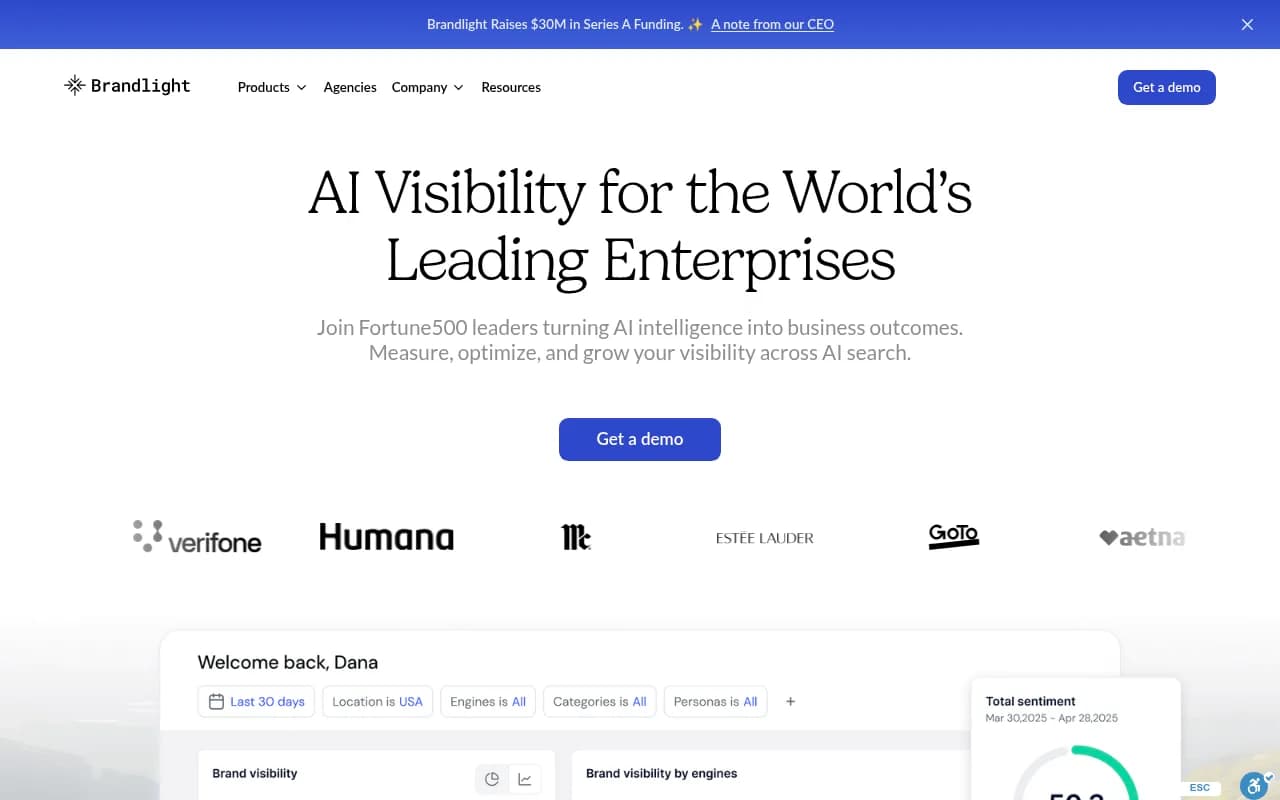
That's a meaningful distinction. Brandlight.ai is less interested in "are we appearing for this prompt?" and more interested in "when we appear, what is the AI saying about us, and is it accurate?" For brands dealing with misinformation in AI outputs or managing complex brand narratives, that framing makes sense. But it comes with trade-offs: the platform is heavier on governance features and lighter on the optimization side.
Promptwatch
Promptwatch is built around a different question entirely: not just "where are we?" but "what do we do about it?"

The platform tracks your visibility across 10 AI models (ChatGPT, Perplexity, Claude, Gemini, Grok, DeepSeek, Copilot, Mistral, Meta AI, and Google AI Overviews), but the monitoring is just the starting point. The real differentiator is what happens after you see the data: an Answer Gap Analysis shows you exactly which prompts competitors are appearing for that you're not, a built-in AI writing agent generates content designed to get cited, and page-level tracking shows whether that content is actually working.
It's the only one of these three that functions as an end-to-end optimization platform rather than a monitoring dashboard.
Feature comparison
Here's a side-by-side look at the capabilities that matter most for AI brand monitoring:
| Feature | AthenaHQ | Brandlight.ai | Promptwatch |
|---|---|---|---|
| AI model coverage | 8+ | Multiple (enterprise) | 10 models |
| Brand mention tracking | Yes | Yes (with sentiment) | Yes |
| Share of voice / competitor comparison | Yes | Yes | Yes (heatmaps) |
| Prompt volume & difficulty scoring | Limited | No | Yes |
| Answer gap analysis | No | No | Yes |
| Content generation for AI search | No | No | Yes (built-in AI agent) |
| AI crawler logs | No | No | Yes |
| Page-level citation tracking | No | No | Yes |
| Reddit & YouTube insights | No | No | Yes |
| ChatGPT Shopping tracking | No | No | Yes |
| AI traffic attribution | No | No | Yes (GSC, code snippet, logs) |
| Multi-language / multi-region | Limited | Yes | Yes |
| Pricing transparency | Limited | Enterprise only | From $99/mo |
| Free trial | No | No | Yes |
The table tells a clear story. AthenaHQ and Brandlight.ai are both monitoring tools. Promptwatch is a monitoring tool that also helps you fix what's broken.
Monitoring depth: how well do they actually track?
All three platforms track brand mentions across AI models, but the depth varies significantly.
AthenaHQ does the basics well. You get prompt monitoring, brand mention rates, and competitor comparisons. For teams that just want a clean dashboard showing AI visibility trends, it works. Where it falls short is in prompt intelligence -- there's limited data on which prompts are worth targeting, how competitive they are, or how to prioritize your efforts.
Brandlight.ai goes deeper on sentiment. If an AI model says something negative or inaccurate about your brand, Brandlight.ai is more likely to surface that than AthenaHQ. For PR teams and brand managers, that's genuinely useful. The trade-off is that the platform is oriented toward large enterprise accounts, and the pricing reflects that.
Promptwatch covers the most ground on the monitoring side. Beyond brand mentions and share of voice, it tracks prompt volumes and difficulty scores, shows query fan-outs (how one prompt branches into sub-queries), and logs which specific pages are being cited by which AI models. The AI crawler logs are a feature neither competitor offers -- you can see exactly when ChatGPT or Perplexity's crawler visits your site, which pages they read, and whether they hit any errors.
That last piece matters more than it might seem. Most brands assume their content is being read by AI crawlers. Promptwatch lets you verify it -- and fix it when it isn't.
The optimization gap: where AthenaHQ and Brandlight.ai stop short
This is the core issue with most AI brand monitoring tools in 2026: they're great at showing you a problem and not much help solving it.
AthenaHQ will tell you that a competitor is appearing for "best project management software for remote teams" and you're not. That's useful information. But then what? You'd need to leave the platform, figure out what content to create, write it, publish it, and then come back to AthenaHQ weeks later to see if anything changed. There's no connection between the insight and the action.
Brandlight.ai has a similar gap. Its governance features are strong, but if you want to improve your AI visibility -- not just monitor your brand sentiment -- the platform doesn't have much to offer. There's no content gap analysis, no content generation, and no way to attribute AI traffic back to specific pages or campaigns.
Promptwatch's Answer Gap Analysis is what makes the difference. It shows you the specific prompts where competitors are visible and you're not, along with the content your site is missing. The built-in AI writing agent then generates articles, listicles, and comparisons grounded in real citation data -- over 880 million citations analyzed -- rather than generic SEO filler. Once you publish, page-level tracking shows whether the new content is getting cited and by which models.
That loop -- find the gap, create the content, track the results -- is what separates an optimization platform from a monitoring dashboard.
Who should use which tool?
These platforms aren't all competing for the same buyer. Here's a practical breakdown:
AthenaHQ makes sense if:
- You want a clean, focused dashboard for tracking AI visibility
- Your team is early in the AI search journey and needs to understand the basics before taking action
- You're not yet ready to invest in content optimization
Brandlight.ai makes sense if:
- Brand sentiment and AI-generated misinformation are your primary concerns
- You're at an enterprise with a dedicated brand governance team
- You need structured visibility reporting for executive stakeholders
Promptwatch makes sense if:
- You want to actually improve your AI search visibility, not just measure it
- You need to show ROI -- connecting AI visibility to real traffic and revenue
- You're managing multiple sites or running an agency with multiple clients
- You want to understand which content is being cited, by which AI models, and why
Pricing reality check
Pricing is where the differences become very concrete.
AthenaHQ doesn't publish pricing publicly, which typically signals enterprise-level costs. Brandlight.ai is similarly opaque -- it's positioned as an enterprise platform, and you'll need to talk to sales to get numbers.
Promptwatch publishes its pricing clearly:
- Essential: $99/month (1 site, 50 prompts, 5 articles)
- Professional: $249/month (2 sites, 150 prompts, 15 articles, crawler logs, city/state tracking)
- Business: $579/month (5 sites, 350 prompts, 30 articles)
- Agency/Enterprise: custom pricing
There's also a free trial, which neither AthenaHQ nor Brandlight.ai offer. For teams that want to evaluate before committing, that's a meaningful difference.
A note on the broader market
It's worth stepping back for a moment. The AI visibility space in 2026 has a lot of tools that are essentially dashboards with different UIs. They pull AI responses, count brand mentions, and show you a score. That's fine as a starting point, but it's not enough if you're trying to grow.
The tools that are actually moving the needle for brands are the ones that connect monitoring to action. That means content gap analysis, content generation grounded in citation data, and traffic attribution that shows whether any of it is working.
AthenaHQ and Brandlight.ai are good at the monitoring part. Promptwatch is the only one of these three that handles the full cycle.
Bottom line
If you're choosing between AthenaHQ, Brandlight.ai, and Promptwatch, the decision comes down to what you actually need to accomplish.
For pure brand sentiment monitoring at enterprise scale, Brandlight.ai has a specific niche. For a clean visibility dashboard without the complexity, AthenaHQ is reasonable. But if you're trying to improve your brand's position in AI search -- and show that the work is paying off -- Promptwatch is the more complete tool.
The monitoring-only approach made sense in 2024 when everyone was just trying to understand what AI search even was. In 2026, the question has shifted. Knowing you're invisible isn't enough. You need a path to fix it.