Key takeaways
- AI search traffic grew 527% in a single year, and Google AI Overviews now reach 2 billion monthly users -- the old playbook for measuring SEO success no longer covers the full picture.
- Features like AI citation tracking, crawler log analysis, content gap analysis, and answer-format optimization have gone from "nice to have" to genuinely necessary.
- Traditional features like exact-match keyword density scoring, raw position tracking, and meta keyword tools haven't disappeared, but their strategic importance has dropped significantly.
- The tools that matter most in 2026 are the ones that help you act on AI visibility data, not just observe it.
- A handful of platforms now combine monitoring and optimization in one place -- the gap between those and pure-monitoring tools is widening fast.
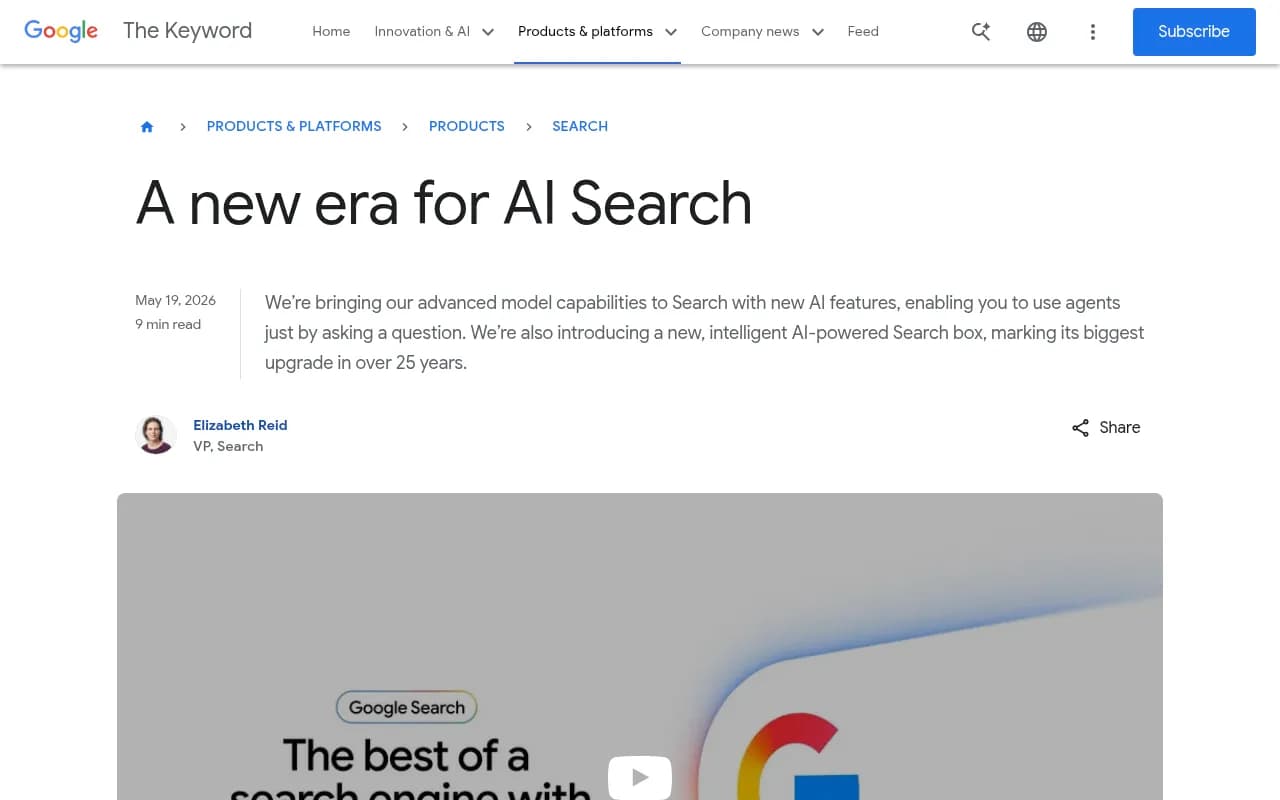
Search has changed more in the past 18 months than in the previous decade. Google's I/O 2026 announcements introduced AI agents directly into the search box -- the biggest upgrade to that interface in over 25 years. ChatGPT now has 700 million weekly active users. AI search traffic is up 527% year over year, according to Semrush's 2026 data. And roughly 60% of searches now end without a click.
All of that changes which SEO tool features are worth paying for. Some capabilities that were already useful have become critical. Others that felt essential two years ago now mostly track signals that AI models don't care about.
Here's a clear-eyed look at both sides.
10 features that became more valuable
1. AI citation tracking
This is the new rank tracking. Instead of asking "where do I appear on page one?", the question is now "do AI models cite my content when users ask relevant questions?"
Tools that show you which pages get cited by ChatGPT, Perplexity, Claude, Gemini, and Google AI Overviews -- and how often -- are giving you data that simply didn't exist two years ago. Without it, you're flying blind on a significant and growing traffic channel.
Promptwatch tracks citations across 10 AI models and connects page-level citation data to actual traffic attribution, so you can see which citations are driving real visits.

2. Answer gap analysis
This is arguably the most actionable feature in the AI search era. The idea: compare what AI models say when users ask questions in your space against what your website actually covers. The gaps are your content opportunities.
Without this, you're guessing what to write. With it, you can see exactly which prompts competitors are visible for that you're not -- and what content your site is missing to close those gaps.
3. AI crawler log analysis
AI crawlers like GPTBot, ClaudeBot, and PerplexityBot are hitting websites constantly. Knowing which pages they read, how often they return, what errors they encounter, and when a crawled page eventually gets cited -- that's a new category of technical SEO data.
Most traditional crawl tools don't capture this. Platforms that do (via Cloudflare integrations, server logs, or tracking snippets) give you a meaningful edge in diagnosing why certain pages aren't being picked up by AI models.
4. Prompt volume and difficulty scoring
Keyword volume has always been a proxy for prioritization. Prompt volume does the same job for AI search -- it tells you how often users are asking a specific question across AI platforms, and how competitive it is to appear in the answer.
Without this, you'd treat every content gap as equally important. With prompt volume data, you can focus on high-traffic, winnable prompts first.
5. Content generation grounded in AI search data
Generic AI writing tools are everywhere. What's become genuinely valuable is content generation that's specifically built around prompt data, citation patterns, and answer gaps -- not just SEO keywords.
The difference is real. Content written to answer the specific questions AI models are already exposing tends to get cited. Content written to hit keyword density targets often doesn't.
6. Multi-model visibility comparison
Different AI models have different citation preferences. Perplexity cites differently than ChatGPT. Google AI Overviews pulls from different sources than Claude. A feature that shows your visibility across all of them -- and lets you compare -- helps you understand where to focus.
A heatmap showing your brand vs. competitors across 8-10 models is far more useful than a single "AI visibility score" that averages everything together.

7. Offsite citation and brand mention tracking
AI models don't only cite your website. They cite Reddit threads, YouTube videos, review sites, industry publications, and third-party listicles. If a competitor is getting cited because they're mentioned in a popular Reddit thread you've never heard of, you won't know that from on-site analytics alone.
Offsite citation tracking shows you the full picture of where AI models are pulling information about your brand -- and where you need to build presence beyond your own domain.
8. Schema and structured data validation
Schema markup has always mattered for rich results. In the AI search era, it matters more. AI models use structured data to understand what a page is about, who wrote it, what it covers, and whether it's authoritative. FAQ schema, HowTo schema, and Article schema all help AI models parse and cite your content correctly.
Tools that validate and suggest structured data improvements have become more useful, not less.
9. Entity and brand tracking in AI responses
There's a difference between being cited as a source and being mentioned as a brand recommendation. ChatGPT's shopping recommendations and entity mentions are a separate signal -- one that matters enormously for e-commerce and brand-building.
Tracking when and how your brand appears as an entity in AI responses (not just as a cited URL) is a capability that barely existed in 2024 and is now a real competitive differentiator.
10. Traffic attribution from AI sources
Knowing you got cited is useful. Knowing that citation drove 400 visits and $12,000 in pipeline is what gets budget approved. Attribution tools that connect AI citations to actual website traffic and revenue are what turn GEO from an interesting experiment into a business case.
5 features that became less relevant
1. Exact-match keyword density scoring
The old advice was to hit a keyword a certain number of times per 1,000 words. AI models don't work that way. They understand semantic meaning, context, and intent. A page that answers a question clearly and completely will outperform one that mechanically repeats a target phrase.
Tools that still surface keyword density as a primary optimization metric are solving a problem that largely no longer exists.
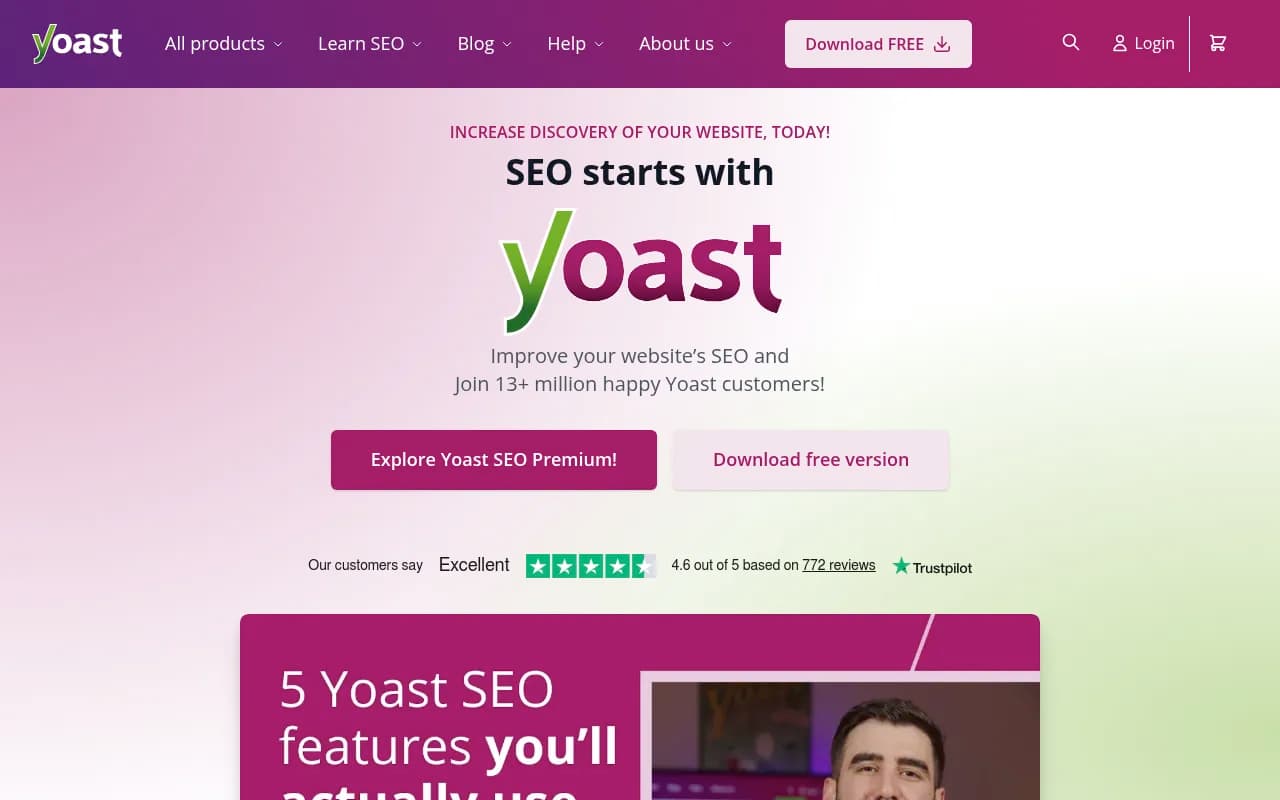
Yoast SEO is still useful for technical on-page basics -- but its keyword density traffic light is a feature you can mostly ignore in 2026.
2. Raw position tracking as a primary KPI
Position 1 on Google still matters. But when 60% of searches end without a click, and AI Overviews appear above organic results for a growing share of queries, "average position" tells an incomplete story.
Rank tracking tools aren't useless -- they're just no longer sufficient on their own. If your reporting still centers on position data without AI visibility data alongside it, you're missing a significant part of what's happening.
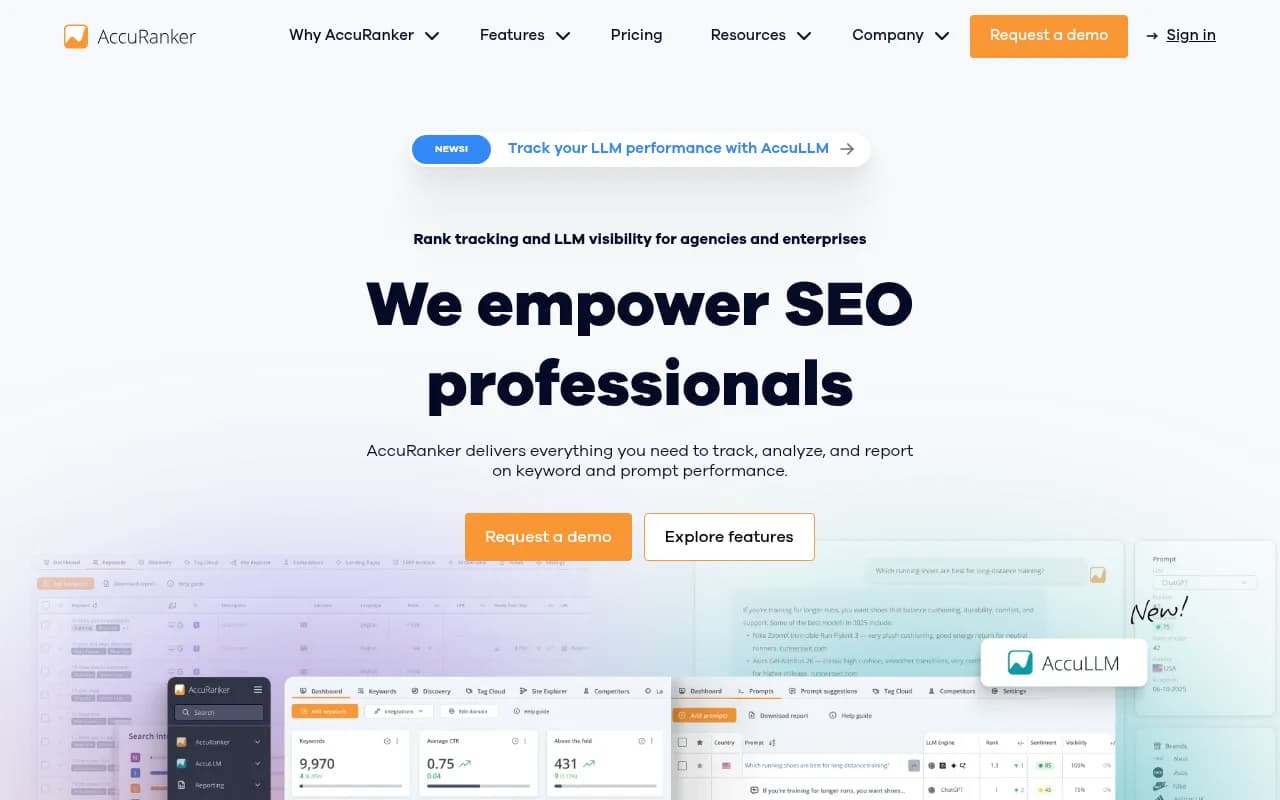
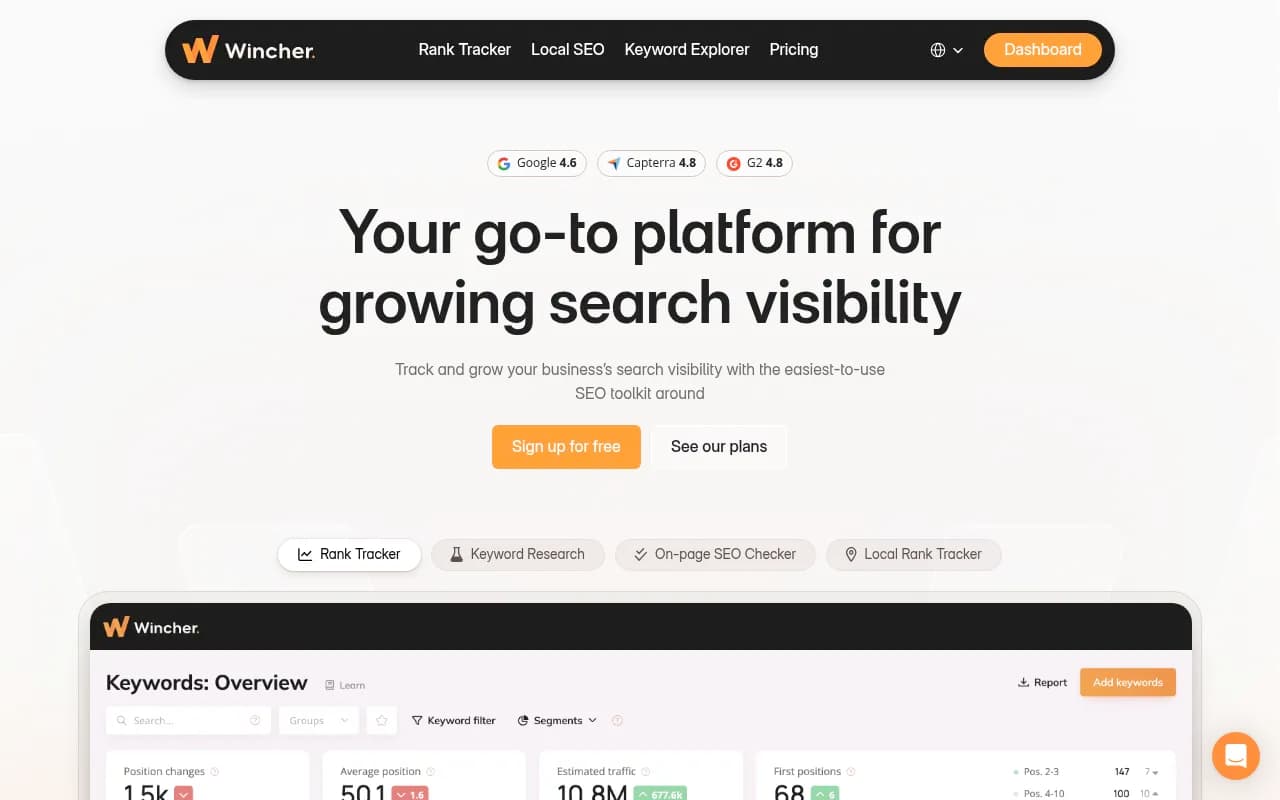
Both are solid rank trackers. Just don't let rank tracking be your only visibility metric anymore.
3. Meta keywords
This one has been dead for years at Google, and AI models don't use it either. Any tool that still prominently features meta keyword optimization is wasting your attention.
4. Exact-match anchor text recommendations
Link building still matters. But the old practice of engineering exact-match anchor text for every backlink has become both less effective and riskier. AI models evaluate authority and relevance holistically -- they're not counting anchor text occurrences. Tools that over-index on anchor text ratios are optimizing for a signal that's declining in importance.
5. Thin content spinning and bulk article generation (without quality controls)
Bulk content generation tools that produce hundreds of low-quality articles quickly were already losing effectiveness before AI search. Now they're actively counterproductive. AI models are good at identifying thin, repetitive, or unhelpful content -- and they don't cite it.
The value has shifted to fewer, better articles that are specifically engineered to answer real questions. Quality controls, factual grounding, and prompt-data alignment matter more than volume.
How the tool landscape maps to these shifts
Here's a quick comparison of how different tool categories handle the features that matter most in 2026:
| Feature | Traditional SEO tools | Monitoring-only GEO tools | Full-stack GEO platforms |
|---|---|---|---|
| AI citation tracking | Rarely | Yes | Yes |
| Answer gap analysis | No | Sometimes | Yes |
| AI crawler logs | No | Rarely | Yes (some) |
| Prompt volume data | No | Sometimes | Yes |
| Content generation for AI | No | No | Yes |
| Multi-model comparison | No | Yes | Yes |
| Offsite citation tracking | No | Rarely | Yes (some) |
| Traffic attribution from AI | No | No | Yes (some) |
| Rank tracking | Yes | No | Sometimes |
| Schema validation | Yes | No | Sometimes |
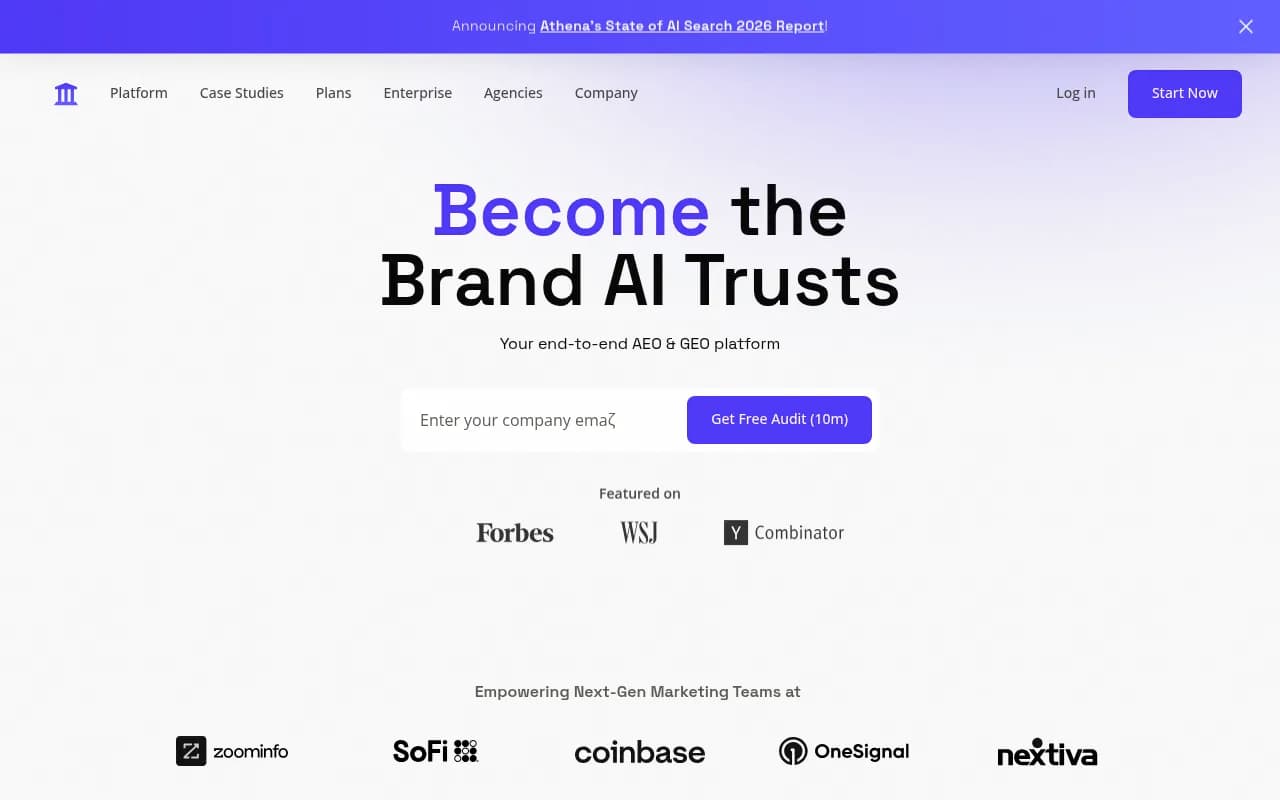
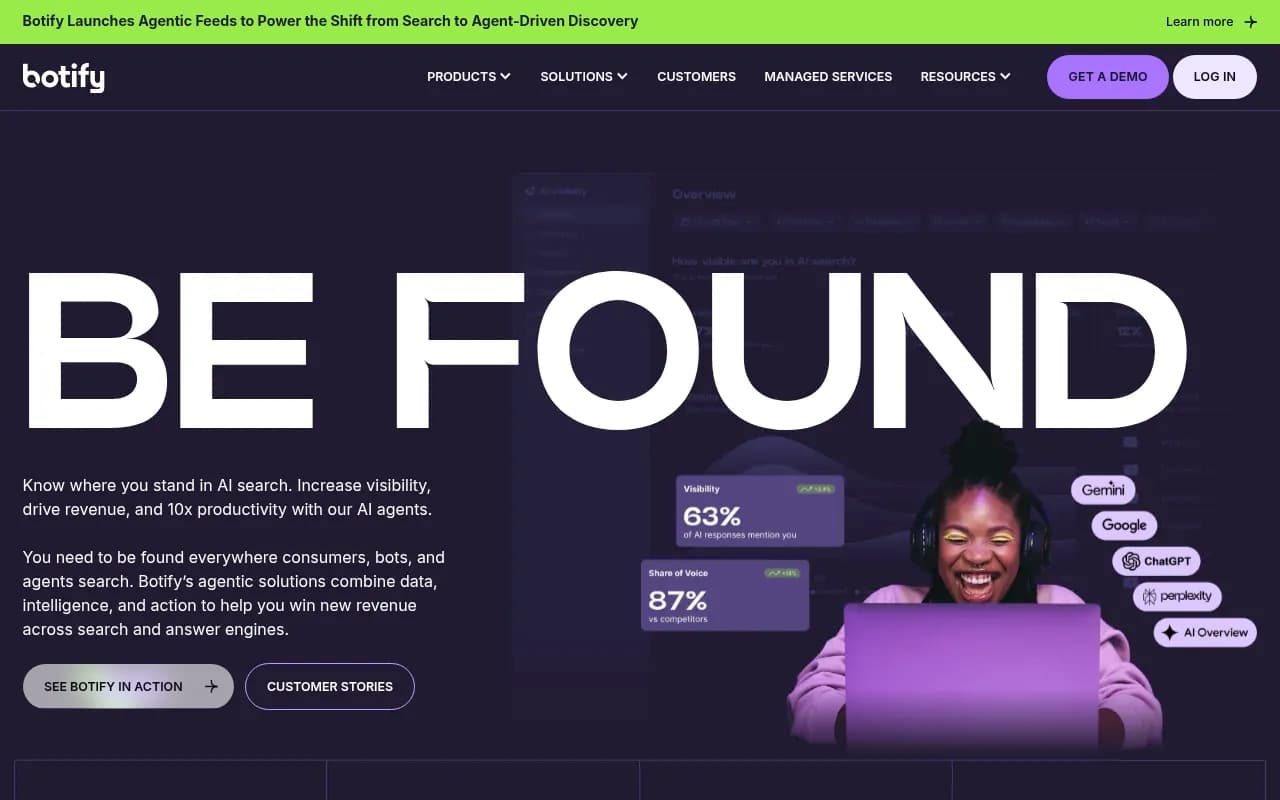
The pattern is clear. Traditional SEO tools (Semrush, Ahrefs, Moz) cover the bottom rows well but are still catching up on the top rows. Monitoring-only GEO tools give you visibility data but leave you figuring out what to do with it. Full-stack platforms that combine monitoring, gap analysis, content generation, and attribution are where the real value is concentrated right now.
These are all solid tools for traditional SEO. The question is whether you're supplementing them with AI-native capabilities.
What this means practically
If you're an SEO or marketing team trying to figure out where to focus in 2026, the honest answer is: you probably need both traditional and AI-native tooling, but the balance is shifting.
Start by auditing what you're currently measuring. If your weekly reports show keyword rankings, organic traffic, and backlink counts -- but nothing about AI citations, prompt coverage, or which AI models are sending you traffic -- you have a visibility gap that's going to become a business problem.
The good news is that the fundamentals haven't changed entirely. Quality content, strong domain authority, good technical SEO, and clear site structure still matter. AI models pull from the web -- they're not ignoring well-built sites. But they're also not automatically citing them. You have to give them a reason to.
That means answering questions directly, structuring content so it's easy to quote, building presence on the platforms AI models trust (Reddit, YouTube, authoritative publications), and tracking whether any of it is working.
The tools that help you do all of that in one place are the ones worth investing in. The ones that only show you a dashboard of where you're invisible -- without helping you fix it -- are a starting point, not a solution.
Platforms like Promptwatch are built around the full loop: find the gaps, generate content to fill them, track whether AI models start citing you. That cycle -- not any single feature -- is what makes AI search optimization actually work in 2026.