Key takeaways
- Query fan-out is the process where AI engines break a single user prompt into multiple sub-queries before generating an answer -- meaning you can be invisible to AI even when you rank for the "main" keyword.
- Tracking fan-out queries exposes the specific sub-topics and angles where competitors are getting cited but you aren't.
- Prioritization should be based on four factors: prompt volume, your current visibility score, competitor coverage, and how closely the sub-query maps to your product or service.
- The most common mistake is tracking only broad "best [category]" prompts and ignoring the informational and instructional sub-queries that actually drive AI citations.
- Tools like Promptwatch surface fan-out data automatically and connect it to content gap analysis, so you can go from "I'm invisible here" to "here's what to write" in one workflow.
What query fan-out actually means (and why it changes everything)
When someone types "what's the best project management software for remote teams" into ChatGPT or Perplexity, they think they're asking one question. The AI engine sees it differently. Before formulating a response, it runs a series of background sub-queries -- things like "project management software comparison 2026," "remote team collaboration tools reviews," "Asana vs Monday.com for distributed teams," and "what features matter most for async work."
This is query fan-out. The AI is essentially doing its own research before answering, pulling from multiple sources across multiple angles. The final citation you see in the response is the output of that whole process, not just a match to the surface-level prompt.
This matters enormously for anyone trying to get their brand cited in AI answers. You can rank #1 on Google for the primary keyword and still be invisible in AI responses, because the AI is also checking a dozen sub-queries where you have no presence. Conversely, a brand that doesn't rank particularly well for the main keyword can dominate AI citations by being the best answer across several of those sub-queries.
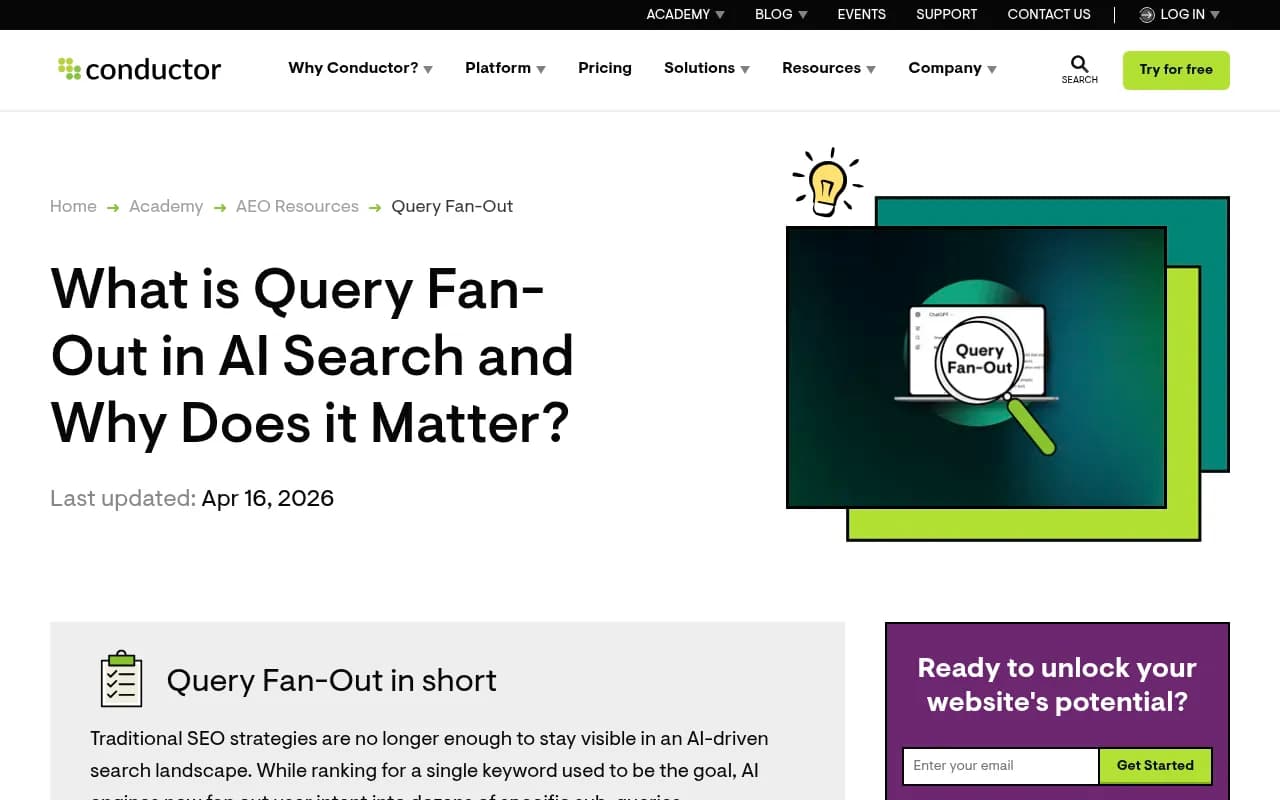
The practical implication: tracking prompts in 2026 isn't just about picking the right keywords. It's about understanding the tree of sub-queries that any given prompt generates, and figuring out which branches you can realistically win.
Why most prompt tracking strategies miss the point
The default approach most teams take is to grab a list of "best [category]" and "top [product type]" prompts, throw them into a tracking tool, and call it a strategy. This covers maybe 10-15% of how buyers actually interact with AI.
The problem is that these broad comparative prompts are also the most competitive. Every brand in your category is tracking them. The AI models are pulling from dozens of established sources. Your chances of breaking through with a single piece of content are low, and even if you do, the citation is shared across many competitors.
The fan-out layer is where the real opportunity sits. Sub-queries tend to be more specific, less contested, and often map directly to content you could plausibly create and own. A brand that answers "what integrations does project management software need for Slack-heavy teams" thoroughly and authoritatively has a real shot at being cited when that sub-query fires -- even if they're not yet winning the top-level "best project management software" prompt.
The other thing most teams miss: AI engines don't just fan out into comparison queries. They also branch into informational questions ("how does X work"), instructional content ("how to set up X for Y use case"), and even entity-level lookups ("who makes X," "what company is behind X"). If your content doesn't address these angles, you're invisible across a significant portion of the fan-out tree.
How to map the fan-out tree for any prompt
Before you can prioritize, you need to see what you're working with. Here's a practical process for mapping fan-out queries for any seed prompt.
Start with your seed prompts
Pick 5-10 prompts that represent how your target buyers would describe their problem to an AI. Don't start with product-centric prompts ("best [your category] tool"). Start with problem-centric ones ("how do I [solve the problem your product solves]").
These are your seed prompts. Each one will generate a fan-out tree.
Expose the sub-queries manually
Take each seed prompt and run it through a few AI engines. Then ask the AI to show its work. In ChatGPT, you can follow up with: "What specific questions did you consider when answering that?" In Perplexity, the sources panel gives you a clue about which sub-queries fired. In Claude, you can ask directly: "What sub-topics did you research to answer this?"
This gives you a rough map of the fan-out tree. It's not exhaustive, but it's a starting point.
Use a tool to get systematic data
Manual exploration gets you maybe 20-30% of the picture. For anything systematic, you need tooling. Promptwatch includes query fan-out data as part of its prompt intelligence layer -- it shows how a given prompt branches into sub-queries, which sub-queries are generating citations, and where your brand appears (or doesn't) across the tree.

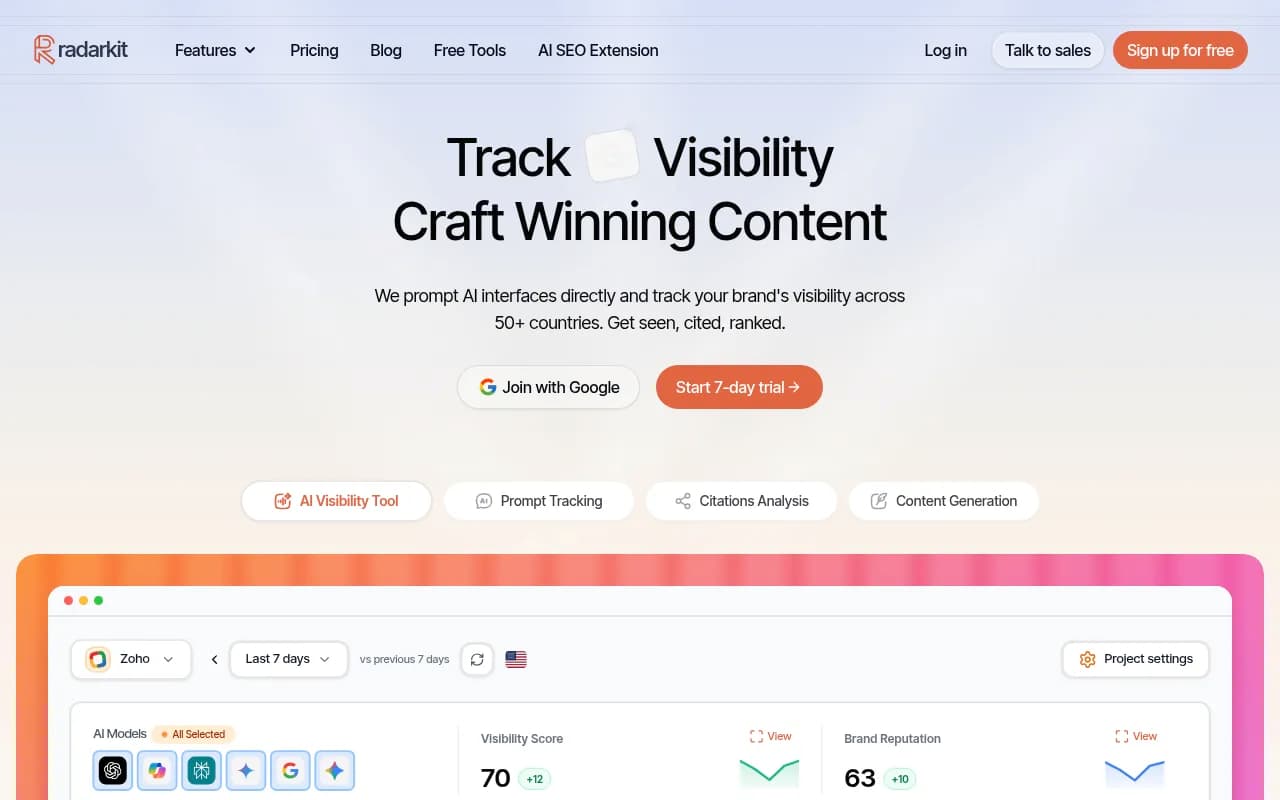
Tools like Radarkit and LLMrefs also surface fan-out data, though with different levels of depth and actionability.
Once you have a fan-out map for each seed prompt, you'll typically end up with 30-80 sub-queries per seed. That's too many to optimize for all at once. This is where prioritization comes in.
The four-factor prioritization framework
Not all sub-queries are worth your time. Here's how to score them.
Factor 1: Prompt volume
How often is this sub-query (or something close to it) being asked? This is harder to measure than traditional keyword volume, but it's not impossible. Some GEO platforms now provide volume estimates for prompts based on their own data. Promptwatch's prompt intelligence layer includes volume estimates and difficulty scores for tracked prompts -- a significant advantage over tools that just show you whether you're cited or not.
High-volume sub-queries are worth more. But volume alone doesn't make a sub-query worth targeting -- you also need to check the other three factors.
Factor 2: Your current visibility score
Are you already being cited for this sub-query? If yes, how often and in which AI models? A sub-query where you have 40% citation rate across ChatGPT and Perplexity is less urgent than one where you have 0% despite it being directly relevant to your product.
The goal is to find sub-queries where you have zero or near-zero visibility but strong relevance. These are your highest-leverage opportunities.
Factor 3: Competitor coverage
Who's winning this sub-query right now? If three well-established competitors are consistently cited and they all have deep, authoritative content on this specific angle, breaking in is hard. If the citations are scattered across random blog posts and Reddit threads, there's a gap you can fill.
Competitor heatmaps -- which show citation rates by brand across a set of prompts -- are useful here. You're looking for sub-queries where the current "winners" are weak sources, not entrenched competitors.
Factor 4: Relevance to your product or service
This sounds obvious but gets ignored. Some sub-queries in a fan-out tree are tangentially related to your product. Winning them might get you a citation, but it won't drive meaningful business outcomes. Prioritize sub-queries where being cited would directly influence a purchase decision or move someone meaningfully closer to your product.
A rough scoring matrix:
| Sub-query | Volume | Your visibility | Competitor strength | Relevance | Priority score |
|---|---|---|---|---|---|
| "how to choose [category] software" | High | 0% | Medium | High | Very high |
| "[category] software for enterprise" | Medium | 15% | High | High | Medium |
| "what is [category] software" | High | 30% | Low | Medium | Medium |
| "[your brand] vs [competitor]" | Low | 5% | Low | Very high | High |
| "history of [category] industry" | Medium | 0% | Low | Low | Low |
Score each factor 1-3, multiply or add, and rank. The sub-queries at the top of your list are where you start.
Matching sub-queries to content types
Once you've prioritized your sub-queries, the next question is what to actually create. Different sub-query types call for different content formats.
Informational sub-queries
These are "what is," "how does," and "why" questions. They fire early in the fan-out tree and often set the context for the AI's overall answer. If you're not cited here, you're starting from behind.
The content format that works: comprehensive explainer articles that answer the question directly, use clear headings, and don't bury the answer in preamble. AI models prefer content that gets to the point.
Comparative sub-queries
"X vs Y," "best X for [use case]," "alternatives to X." These are high-intent and highly competitive. The content format that works: honest, specific comparisons with clear criteria. Generic "X is great for A, Y is great for B" content doesn't get cited. Specific, opinionated takes with real data do.
Instructional sub-queries
"How to set up X," "how to use X for Y," "step-by-step guide to X." These fire when the AI is trying to give the user actionable help. The content format that works: numbered steps, specific details, and content that actually covers the full process rather than stopping at a high level.
Entity sub-queries
"Who makes X," "what company is behind X," "is X trustworthy." These are about your brand specifically. The content format that works: clear, consistent information on your own site and in third-party sources. Wikipedia-style factual coverage. Reviews and mentions on authoritative external sites.
Building a prioritization workflow that doesn't fall apart
The problem with most prioritization frameworks is that they're done once and then ignored. Fan-out tracking needs to be a recurring process because AI models update their behavior, new competitors enter the space, and your content coverage changes over time.
Here's a workflow that holds up:
Weekly: Check your citation rates for the top 20 sub-queries you're actively optimizing. Note any changes. If a sub-query you recently published content for starts showing citations, flag it -- that's signal that the approach is working.
Monthly: Pull a fresh fan-out map for your top 5 seed prompts. Compare it to last month's. New sub-queries appear as AI models evolve. Old ones sometimes disappear. Update your priority list accordingly.
Quarterly: Do a full competitor heatmap review. Who's gaining ground? Which sub-queries have new strong competitors? Which ones have become easier to win because a competitor's content has gone stale?
The teams that do this consistently end up with a compounding advantage. Each piece of content they publish covers more sub-queries. Their citation rates improve. AI models start treating them as a reliable source. That reputation compounds in ways that are hard for competitors to quickly replicate.
Tools that actually help with fan-out tracking
The market for AI visibility tools has grown fast, and the quality varies a lot. Here's an honest breakdown of what's useful for fan-out tracking specifically.
| Tool | Fan-out data | Prompt volume | Content gap analysis | Content generation | Best for |
|---|---|---|---|---|---|
| Promptwatch | Yes (query fan-outs) | Yes (estimates + difficulty) | Yes | Yes (Content Agents) | Full optimization workflow |
| Radarkit | Yes | Limited | No | No | Mapping fan-out queries |
| LLMrefs | Partial | No | No | No | Citation tracking |
| SE Ranking | No | No | Partial | No | Traditional SEO + basic AI tracking |
| Profound | Partial | No | Partial | No | Enterprise monitoring |
| Otterly.AI | No | No | No | No | Basic prompt monitoring |
The meaningful distinction is between tools that show you data and tools that help you do something with it. Fan-out data without content gap analysis just tells you you're invisible -- it doesn't tell you what to write. Promptwatch's approach of connecting fan-out data to content generation is what makes it genuinely useful for prioritization rather than just diagnosis.

Common mistakes to avoid
A few patterns that consistently waste time and budget:
Tracking too many prompts at once. It feels comprehensive but it's not. Fifty prompts tracked shallowly is worse than fifteen tracked deeply with full fan-out mapping. Start narrow and expand as you build coverage.
Optimizing for the wrong level of the tree. Most teams optimize for the top-level prompt and ignore the sub-queries. The sub-queries are where the citations actually get decided. A piece of content that answers three specific sub-queries well will outperform a generic piece targeting the top-level prompt.
Treating fan-out tracking as a one-time exercise. AI models update constantly. A fan-out map from three months ago may not reflect how the model is currently handling that prompt. Build recurring reviews into your process.
Ignoring entity-level sub-queries. If AI models can't find clear, consistent information about your brand, they'll cite competitors even when your product is more relevant. Entity coverage is table stakes, not a nice-to-have.
Publishing content without checking if it gets crawled. AI crawler logs -- available in tools like Promptwatch -- show you whether AI agents are actually visiting and reading your new content. Publishing and hoping is not a strategy. Check the logs, fix crawl errors, and confirm your content is being seen before concluding it's not working.
Where to start if you're doing this for the first time
If fan-out tracking is new to you, don't try to build the full system in week one. Start here:
- Pick three seed prompts that represent your most important buyer use cases.
- Run each through ChatGPT and Perplexity. Ask follow-up questions to surface the sub-queries.
- List every sub-query you find. You'll probably get 15-25 per seed prompt.
- Score each one on the four factors above (volume, your visibility, competitor strength, relevance).
- Pick the top five sub-queries across all three seeds. These are your first targets.
- For each one, check whether you have existing content that addresses it. If yes, assess whether it's actually good enough to get cited. If no, add it to your content backlog.
- Set up tracking so you can see your citation rate for these sub-queries over time.
That's it. Six steps, five target sub-queries, and a tracking setup. From there, you iterate.
The brands winning in AI search right now aren't doing anything mystical. They've mapped the fan-out tree for their most important prompts, identified where they're missing, and published content that fills those gaps. The process is repeatable. The prioritization framework above is how you make sure you're filling the right gaps first.