Key takeaways
- ChatGPT decomposes every query into multiple sub-queries (fan-outs) before retrieving content -- branded and non-branded queries follow different decomposition patterns
- Branded fan-outs tend to be narrower and more direct, pulling specific brand comparisons, reviews, and entity data; non-branded fan-outs are wider and more exploratory
- A December 2025 Surfer SEO study of 173,902 URLs found that 68% of pages cited in AI Overviews were NOT in the top 10 organic results -- traditional SEO rank doesn't predict AI citation
- Most brands are optimizing for the original query but missing the 8-12 sub-queries that actually drive citations
- Tools like Promptwatch can surface exactly which fan-out sub-queries your competitors are winning and you're not
What query fan-out actually means
When you type a question into ChatGPT with web search enabled, ChatGPT doesn't just look up your exact phrase. It breaks the question apart. A single prompt like "best project management tools for remote teams" might trigger sub-queries like "top project management software 2026," "remote team collaboration features comparison," "project management pricing tiers," and "enterprise vs SMB project management tools" -- all fired in parallel before a single word of the answer is written.
This is query fan-out. One input, many retrievals, one synthesized output.
The number of sub-queries varies. Research from Ekamoira's team puts the typical range at 8-12 sub-queries per prompt. Grow and Convert's analysis of ChatGPT's web search behavior found 2-4 fan-outs for simpler queries, with more complex or ambiguous prompts generating significantly more. ChatGPT 5.5 appears to have increased this further -- Seer Interactive's June 2026 research noted quadrupled fan-out rates compared to earlier model versions.
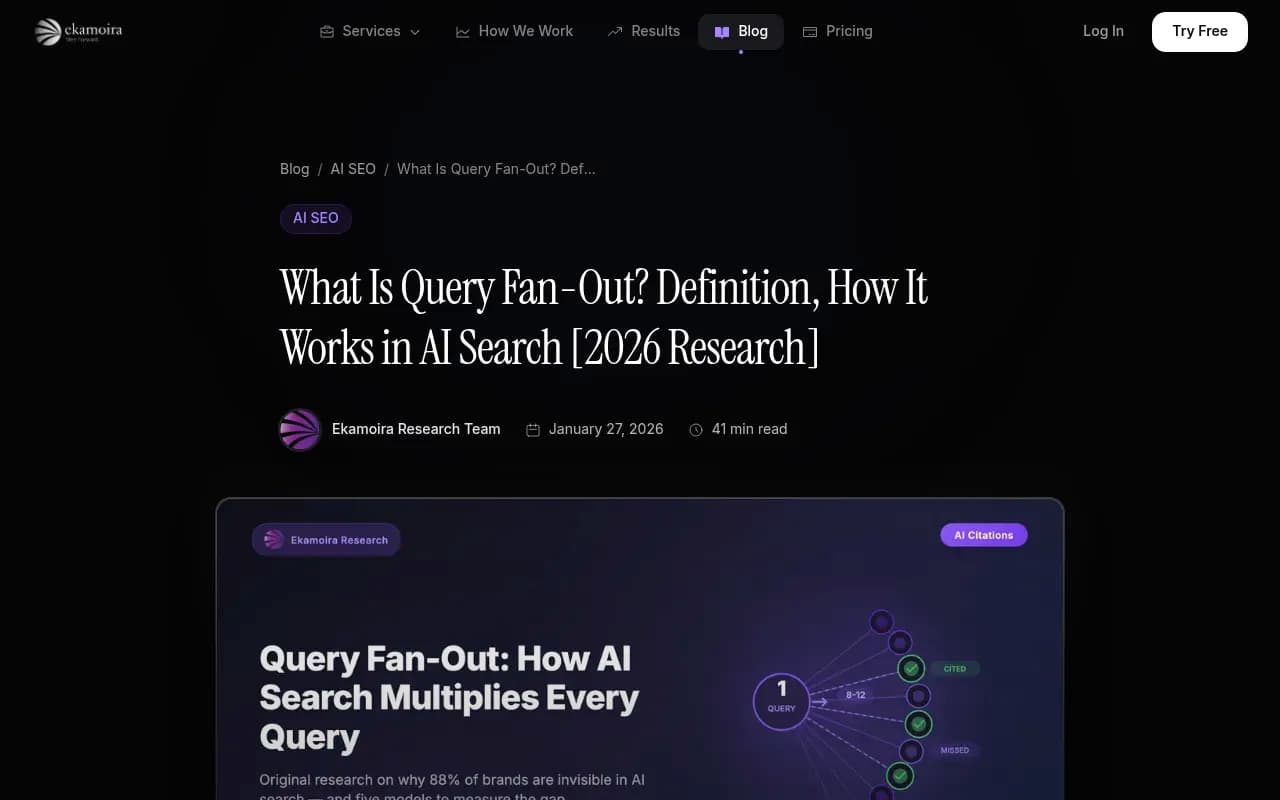
Why does this matter? Because your content might answer the original question perfectly and still never get cited. If it doesn't satisfy the sub-queries ChatGPT fires behind the scenes, you're invisible in the response -- even if you rank #1 on Google for the exact phrase.
How branded fan-outs work
When someone searches a branded query -- "Notion pricing," "HubSpot vs Salesforce," "Nike running shoes review" -- ChatGPT's fan-out pattern looks quite different from a generic informational query.
Branded fan-outs tend to be:
- More targeted. ChatGPT already has an entity anchor (your brand name) and uses it to narrow retrieval rather than explore broadly.
- Comparison-heavy. Peec AI's research on fan-out patterns found that branded queries quickly generate brand-vs-brand sub-queries: "HubSpot vs Salesforce pricing," "HubSpot CRM features 2026," "HubSpot reviews Reddit."
- Review and citation-seeking. ChatGPT actively looks for third-party validation -- G2 reviews, Reddit threads, YouTube comparisons, listicles that include your brand.
- Year-modified. Sub-queries frequently append the current year to find fresh data: "HubSpot pricing 2026," "HubSpot alternatives 2026."
The Seer Interactive research on ChatGPT 5.5 makes a point worth sitting with: brand visibility in fan-outs is now a distinct KPI. It's not just "does ChatGPT mention us?" It's "when someone searches a branded query, do we appear in the sub-queries that ChatGPT fires to validate, compare, and contextualize our brand?"
That's a different question. And most brands aren't tracking it.
One concrete implication: if your brand appears in a ChatGPT response but the supporting citations are all from third-party review sites, Reddit, and competitor comparison pages -- not your own site -- you have a brand authority gap in AI search. ChatGPT is citing you, but it's not citing you.
How non-branded fan-outs work
Non-branded queries are where most of the AI search opportunity lives -- and where most brands are completely invisible.
When someone searches "best CRM for small business" or "how to reduce customer churn," ChatGPT fans out much more aggressively. It's not anchored to any entity, so it explores:
- Category-level sub-queries ("CRM software comparison 2026")
- Use-case sub-queries ("CRM for solo founders," "CRM with email automation")
- Price-tier sub-queries ("affordable CRM tools," "CRM free plan")
- Format-specific sub-queries ("CRM listicle," "CRM buyer's guide")
The pattern Peec AI identified is consistent: AI search starts broad, then progressively narrows. It adds year modifiers, then specificity, then brand comparisons. Your content needs to be present at multiple points in that narrowing funnel -- not just at the top-level query.
This is why the Surfer SEO finding is so striking. 68% of AI-cited pages weren't in the top 10 organic results. Those pages weren't winning on traditional SEO signals. They were winning because they happened to answer a specific sub-query that ChatGPT fired -- a sub-query that doesn't show up in any keyword tool.
85sixty's analysis of fan-out behavior in 2026 makes a related point: because fan-out sub-queries don't appear in standard keyword research tools, most brands aren't competing for them yet. That's a gap, and gaps close.
The structural difference between the two
Here's a direct comparison of how fan-outs typically behave across query types:
| Dimension | Branded queries | Non-branded queries |
|---|---|---|
| Fan-out breadth | Narrow, entity-anchored | Wide, exploratory |
| Sub-query types | Reviews, comparisons, pricing, Reddit | Category lists, use cases, features, guides |
| Third-party sources cited | High (G2, Reddit, YouTube, listicles) | Medium (depends on content coverage) |
| Year modifiers | Common | Common |
| Brand-vs-brand sub-queries | Very common | Rare until narrowing phase |
| Your own site cited | Sometimes | Depends on topical coverage |
| Risk if you ignore it | Competitors define your brand narrative | You're absent from category conversations |
The risk profile is different for each. With branded queries, the danger is that ChatGPT cites your brand but draws on competitor comparison pages, negative Reddit threads, or outdated review data to contextualize it. You're present but not in control of the narrative.
With non-branded queries, the danger is simpler: you just don't exist. ChatGPT never mentions you because none of your content satisfies any of the sub-queries it fires for that topic.
Both are problems. They just need different fixes.
Why "site:" searches matter more now
One finding from Chris Long's LinkedIn analysis of ChatGPT's search behavior deserves attention: ChatGPT uses site: searches -- targeted domain-level queries -- far more than most people realize. This is especially true for branded queries.
When someone asks about your brand, ChatGPT may fire a sub-query like site:yourdomain.com pricing or site:yourdomain.com [product name] to pull authoritative information directly from your site. If your site structure makes those pages hard to find, or if your pricing page is buried behind a login, ChatGPT either can't access it or falls back to third-party sources.
This has a practical implication: your own site's crawlability and content structure directly affects how ChatGPT handles branded fan-outs. It's not just about what you've written -- it's about whether AI crawlers can actually find and read it.
What this means for content strategy
The fan-out model breaks a lot of assumptions about how to win in AI search.
For branded queries, the priority is controlling the narrative across the sources ChatGPT pulls from. That means:
- Publishing comparison content on your own site ("HubSpot vs Salesforce: an honest comparison" written by HubSpot)
- Making sure your pricing, features, and use-case pages are crawlable and structured clearly
- Monitoring which third-party sources ChatGPT cites when someone asks about your brand -- Reddit threads, G2 reviews, YouTube videos -- and understanding whether those sources help or hurt you
For non-branded queries, the priority is topical coverage. ChatGPT's fan-outs for a category query will pull from whichever sources best answer each sub-query. If you only have one blog post about CRM software, you'll satisfy one sub-query at best. If you have content covering pricing comparisons, use-case breakdowns, feature guides, and buyer's guides, you have a chance to appear in multiple sub-queries for the same original prompt.
The 85sixty point about timing is real: the brands building this content coverage now, before fan-out sub-queries show up in mainstream keyword tools, are building a moat. Once everyone figures out what sub-queries to target, the competition gets harder.
Tracking fan-outs: what most tools miss
Most AI visibility tools show you whether your brand appears in a response to a given prompt. That's useful, but it's one layer. It doesn't tell you:
- Which sub-queries ChatGPT fired to generate that response
- Which sub-queries your competitors are winning that you're not
- Which pages on your site (or off it) are being cited in those sub-queries
- How often AI crawlers are visiting your pages and whether they're successfully reading them
Promptwatch is one of the few platforms that goes into this level of detail. Its Answer Gap Analysis shows exactly which prompts competitors are visible for that you're not -- which maps directly to the fan-out sub-queries where you're absent. The AI Crawler Logs show which pages ChatGPT, Claude, and Perplexity are actually hitting, which helps diagnose the crawlability issues that affect branded fan-outs.

For teams that want to understand fan-out behavior at a more granular level, Peec AI has published some of the most detailed public research on fan-out patterns.

And if you want to track which specific pages are being cited across AI models -- including for the sub-queries you didn't know to track -- Profound and Otterly.AI both offer citation-level monitoring, though neither goes as far as full content gap analysis.

A practical checklist for both query types
Before you can optimize, you need to know where you stand. Here's how to approach both sides:
For branded fan-outs:
- Search your brand name in ChatGPT with web search enabled and look at which sources appear in the citations -- are they yours or third-party?
- Check whether your pricing, comparison, and feature pages are indexed and crawlable
- Monitor Reddit, G2, and YouTube for discussions that might be feeding into ChatGPT's branded sub-queries
- Publish your own comparison content for the "brand vs competitor" sub-queries ChatGPT will fire
For non-branded fan-outs:
- Map out the category you want to own and identify all the angles a user might approach it from (use cases, pricing, features, audience segments)
- Check whether you have content covering each angle -- not just the top-level category term
- Look at which pages competitors are getting cited for in non-branded category queries
- Build content that answers the sub-queries, not just the original prompt
The gap analysis work is the hardest part to do manually. That's where tools that track prompt-level and sub-query-level visibility start earning their cost.
The brand vs non-brand interplay
Here's something that doesn't get talked about enough: non-branded visibility feeds branded visibility over time.
When ChatGPT consistently cites you in non-branded category responses -- "best CRM for small business," "top project management tools" -- it builds entity recognition. Your brand becomes associated with that category in the model's training data and in the real-time retrieval patterns. That makes branded fan-outs more favorable over time, because the model has more positive signal about your brand's relevance to the category.
The reverse is also true. If ChatGPT only encounters your brand in the context of negative reviews or competitor comparison pages, that shapes how it contextualizes branded queries.
This is why Wil Reynolds' framing from Seer Interactive resonates: brand visibility in fan-outs isn't a vanity metric. It's a compounding asset. The brands that show up consistently in non-branded category queries today are building the entity authority that will make their branded queries more favorable tomorrow.
The shortcut-heavy tactics that worked in early GEO -- mass listicle generation, low-quality AI content -- are already showing diminishing returns as models get better at quality signals. The durable play is content that genuinely answers the sub-queries ChatGPT is firing, at scale, across both branded and non-branded territory.
That's a harder thing to build. It's also harder to copy once you've built it.
Tools worth knowing for fan-out optimization
Beyond monitoring, a few tools are worth knowing for the actual content work:
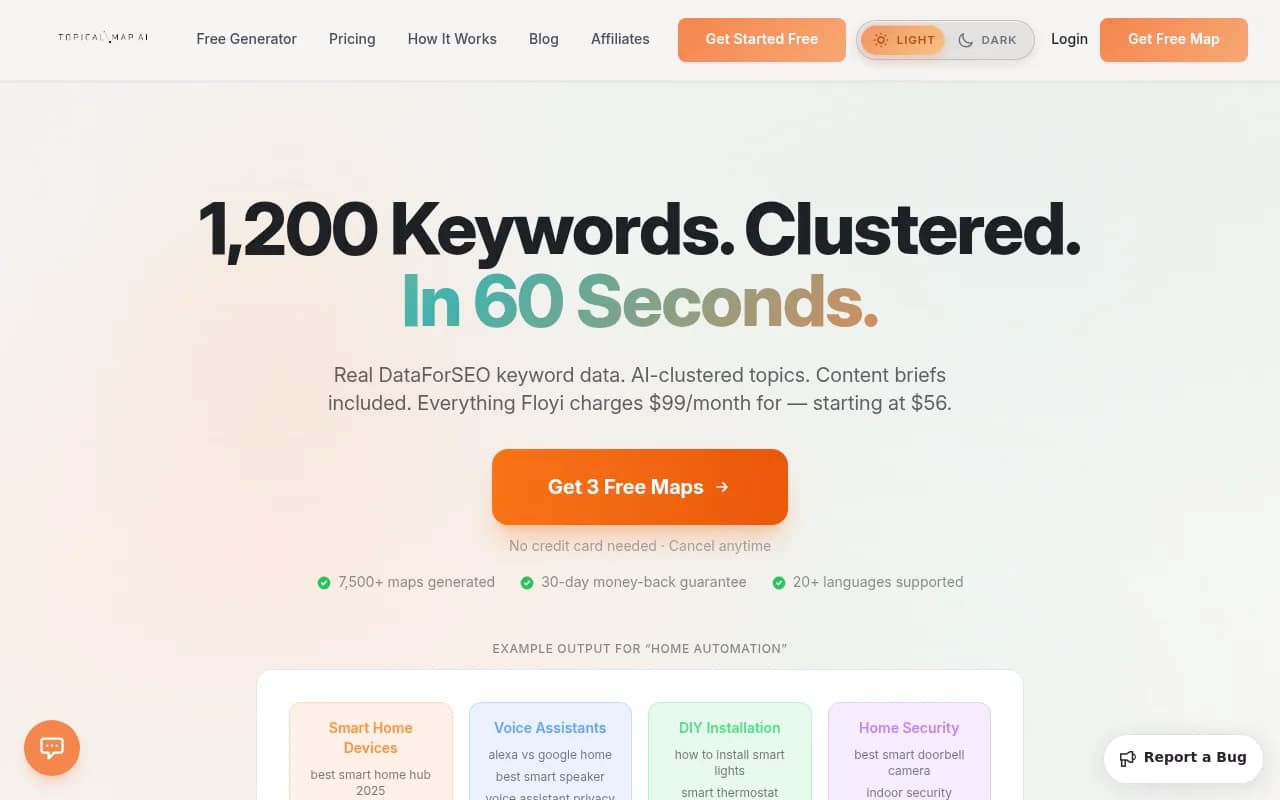
Topical Map AI helps you build out the content coverage that non-branded fan-outs require -- mapping the full topic space so you're not leaving sub-queries unaddressed.
MarketMuse does similar work at a more granular level, showing content gaps relative to what's already ranking and being cited.
Surfer SEO's research on fan-out behavior (the 173,902 URL study) came from their own platform data -- and their content optimization tools are built around the kind of topical depth that AI sub-queries reward.
The honest summary: fan-out optimization is still early enough that the brands paying attention now have a real advantage. Branded and non-branded queries both matter, they just need different strategies -- and most brands are underinvesting in both.