Key takeaways
- When an AI search engine fans out a single prompt into 8-12 sub-queries, each branch has a different competitive profile. Some are wide open; others are locked up by high-authority domains.
- A "fan-out difficulty score" is a composite signal, not a single metric. It combines citation concentration, domain authority of current sources, content freshness, and how well existing answers actually serve the sub-query's intent.
- The easiest branches to win are usually the specific, long-tail, or recency-dependent ones -- not the broad definitional queries that Wikipedia and major publishers already own.
- You can map difficulty manually, but tools that track real AI citations across models save enormous time and reveal which branches your competitors are actually winning.
- Winning a sub-query branch means getting cited, not just ranking. The optimization target has shifted.
Why sub-query difficulty matters more than keyword difficulty
Traditional keyword difficulty scores measure how hard it is to rank on page one of Google. That's still useful, but it's the wrong question for AI search.
When a user types "best CRM for a 10-person sales team" into ChatGPT or Google AI Mode, the model doesn't process that as one query. It fans it out. Behind the scenes, it's running something closer to:
- "CRM comparison small business 2026"
- "CRM pricing per seat"
- "Pipedrive vs HubSpot for small teams"
- "CRM features for outbound sales"
- "CRM ease of use reviews"
Each of those sub-queries pulls from different sources. Some will cite G2 review pages. Some will cite a specific blog post. Some will pull from Reddit threads. And each branch has a completely different competitive landscape.
The mistake most marketers make is treating the parent prompt as the unit of analysis. It isn't. The sub-query branches are. And some of those branches are genuinely easy to win -- if you know which ones to look at.
What goes into a fan-out difficulty score
There's no single industry-standard "fan-out difficulty score" yet -- different platforms calculate it differently, and some don't calculate it at all. But the signal is real, and you can construct a working version from a handful of observable inputs.
Citation concentration
Look at how many unique domains are being cited across AI responses for a given sub-query. If five responses from ChatGPT, Perplexity, and Gemini all cite the same three domains, that branch is concentrated. Concentrated branches are harder to break into because the models have developed strong source preferences.
If citations are spread across 15-20 different domains, the branch is competitive but open. The model hasn't settled on a canonical source, which means a well-optimized page has a real shot.
Domain authority of current sources
This one is familiar from traditional SEO, but it plays differently here. A sub-query dominated by Wikipedia, Investopedia, or the Mayo Clinic is essentially locked. You're not going to out-authority those sources for definitional or factual queries.
But a sub-query where the top citations are mid-tier blogs, niche publications, or even Reddit threads? That's a different story. The model is citing those sources because nothing better exists -- which means you can write something better.
Content freshness requirements
Some sub-queries are inherently time-sensitive. "Best AI tools for X in 2026" or "current pricing for Y" require fresh content. Authority sites often don't update fast enough, which creates a recurring opening. If you publish a well-structured, up-to-date answer, you can displace older content even from higher-authority domains.
Evergreen definitional queries ("what is X") are the opposite. The content that ranks there tends to be stable, and the authority sites update it just enough to stay relevant. These are low-priority targets.
Intent-answer fit
This is underrated. Sometimes a high-authority source is being cited for a sub-query where its content is only a partial match. The model is citing it because it's the best available option, not because it's genuinely good.
If you read the cited content and think "this doesn't actually answer the question well," that's a gap. A page that directly and specifically answers the sub-query intent -- with a clear structure, a direct answer in the first paragraph, and supporting detail -- can displace a partially-relevant page from a stronger domain.
Prompt volume and query frequency
A sub-query branch that almost nobody searches for is easy to win but not worth winning. The difficulty score has to be weighed against the potential upside. High-volume sub-queries with moderate difficulty are the sweet spot.
The difficulty spectrum: what easy vs hard actually looks like
Here's a practical way to think about the spectrum:
| Branch type | Typical difficulty | Why | Winnable? |
|---|---|---|---|
| Definitional ("what is X") | Very high | Wikipedia, encyclopedic sources dominate | Rarely |
| Broad comparison ("X vs Y") | High | Major review sites (G2, Capterra, Forbes) | Hard but possible with depth |
| Specific use-case ("X for [niche]") | Medium | Fewer authoritative sources exist | Yes |
| Recency-dependent ("best X in 2026") | Medium-low | Freshness matters more than authority | Yes |
| Long-tail specific ("how to do X in [tool] without Y") | Low | Almost nobody has written this well | Definitely |
| Pricing/feature specifics | Low-medium | Vendors don't always publish clearly; aggregators lag | Yes |
| Reddit/community-style questions | Low | AI cites Reddit heavily; you can influence this | Yes, via community presence |
The pattern is consistent: the more specific and context-dependent the sub-query, the lower the difficulty. AI models want to cite something specific and helpful. If that doesn't exist, they'll cite something generic. Give them something specific.
How to map fan-out branches and score them
Step 1: Identify the parent prompts that matter to your business
Start with the prompts your customers actually use. Not keyword research -- prompt research. What would someone type into ChatGPT or Perplexity when they're trying to solve the problem your product solves?
Tools like Promptwatch track real prompt data across AI models, including volume estimates and difficulty scores for each prompt. That's useful because it tells you which parent prompts are worth decomposing in the first place.

Step 2: Decompose each prompt into its likely sub-queries
You can do this manually by prompting an LLM directly. Ask ChatGPT: "What sub-queries would you use to research [parent prompt]?" The model will often tell you. It's not perfect, but it gives you a starting map.
For more systematic coverage, platforms that track query fan-outs show you how one prompt branches into sub-queries -- and which of those branches your competitors are currently winning.
Step 3: Pull the current citations for each branch
For each sub-query, check what's actually being cited across 2-3 AI models. You're looking for:
- Which domains appear repeatedly
- Whether the same page is cited across multiple models
- Whether the cited content actually answers the sub-query well
This is tedious to do manually. A GEO platform that tracks citations at the page level across models makes this practical at scale.
Step 4: Score each branch
Apply the difficulty factors above. A simple 1-5 score on each dimension works fine:
- Citation concentration (1 = spread across many domains, 5 = locked to 2-3 sources)
- Domain authority of current sources (1 = mid-tier blogs, 5 = Wikipedia/major publishers)
- Freshness sensitivity (1 = highly time-sensitive, 5 = evergreen)
- Intent-answer fit of current citations (1 = poor fit, 5 = perfect fit)
Lower total scores = easier to win. Higher total scores = harder to displace.
Step 5: Prioritize by difficulty × volume
Sort your sub-query branches by estimated prompt volume (high to low), then filter for branches with low-to-medium difficulty scores. Those are your targets.
Common patterns in easy-to-win branches
After working through this process across different industries, a few patterns show up consistently.
Niche-specific comparisons. "X vs Y for [specific industry]" queries are almost always underserved. The major comparison sites cover the generic version, but the industry-specific angle is usually thin. If you're in B2B SaaS, "HubSpot vs Salesforce for manufacturing companies" is a different sub-query than "HubSpot vs Salesforce" -- and the former is much more winnable.
Process and how-to queries with a specific tool constraint. "How to do X using only [tool]" or "how to set up Y without Z" are almost always low-competition. These are the queries where someone has a very specific situation and needs a direct answer. Almost nobody writes content this specific.
Pricing and packaging questions. Vendors often don't publish pricing clearly. Review sites aggregate it but lag behind updates. If you publish accurate, current pricing information with clear context, you can win these branches -- especially for your own product or category.
Recency-dependent recommendations. Any sub-query that includes a year or references current conditions is an opportunity. The content that was cited last year may already be stale. Publishing fresh, well-structured content on these branches is one of the fastest ways to gain AI citations.
Questions that currently get Reddit citations. When an AI model cites a Reddit thread, it's a strong signal that no authoritative content exists. Reddit is the source of last resort for many AI models. If you can publish a proper answer to that question -- structured, specific, and helpful -- you have a real shot at displacing the Reddit citation.
What "winning" a sub-query branch actually means
This is worth being explicit about. Winning a sub-query branch doesn't mean ranking #1 on Google for that phrase. It means your page gets cited when an AI model processes that sub-query as part of a fan-out.
The mechanics are different. AI models look for:
- A direct, specific answer to the sub-query (ideally in the first 40-60 words of a section)
- Clear structure that makes the answer easy to extract
- Signals of authority and trustworthiness (E-E-A-T signals, citations, author credentials)
- Freshness, especially for time-sensitive sub-queries
- Pages that AI crawlers have actually visited and indexed
That last point matters more than most people realize. If AI crawlers haven't visited your page recently, it doesn't matter how good the content is. Monitoring your crawler logs -- which pages AI bots are hitting, how often, and whether they're encountering errors -- is part of the optimization loop, not an afterthought.
Tools that help with fan-out analysis
A few platforms have built features specifically around this kind of analysis.
Promptwatch tracks prompt volumes, difficulty scores, and query fan-outs across 10 AI models. Its Answer Gap Analysis shows which sub-queries competitors are being cited for that you're not -- which is essentially a pre-built difficulty map. The crawler log feature shows whether AI bots are actually visiting your pages, which closes the loop between content creation and citation tracking.
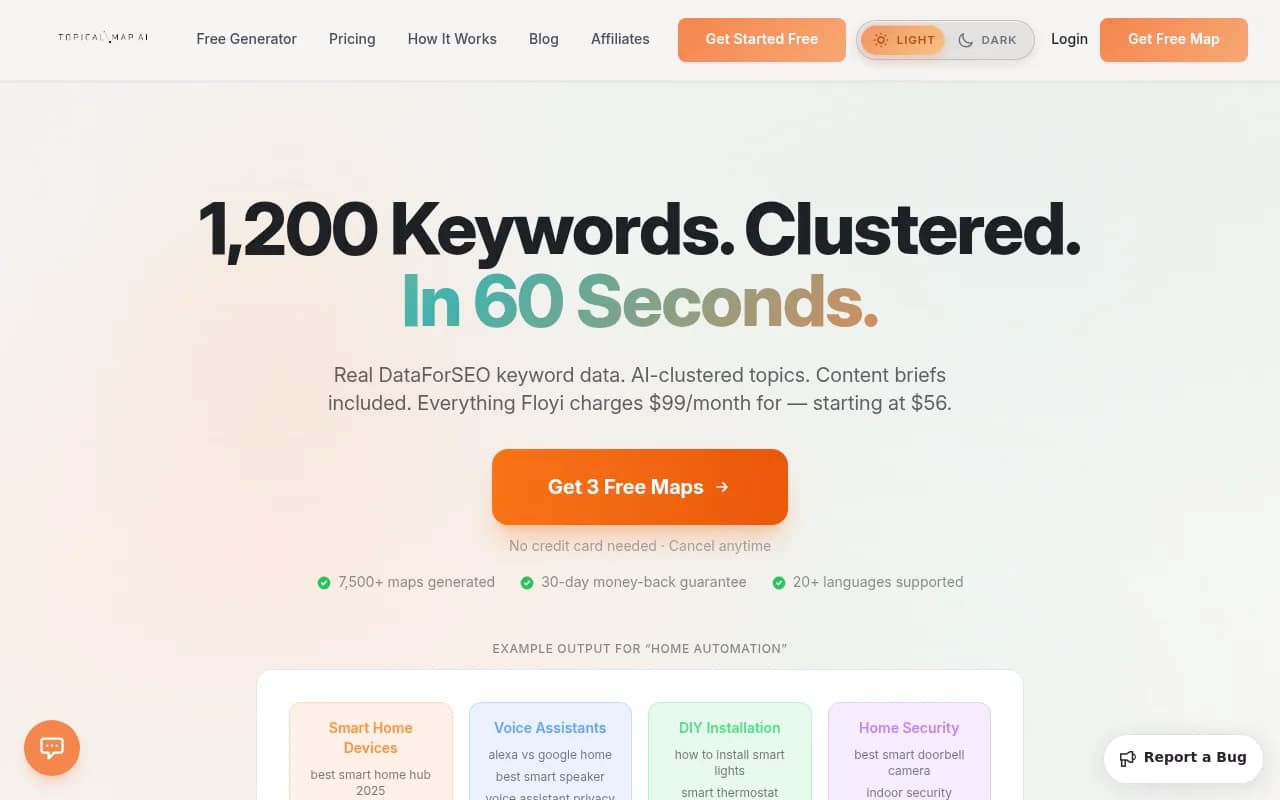
For topical authority mapping -- understanding which topic clusters you need to cover to win a set of related sub-queries -- tools like Topical Map AI can help you build out the content architecture.
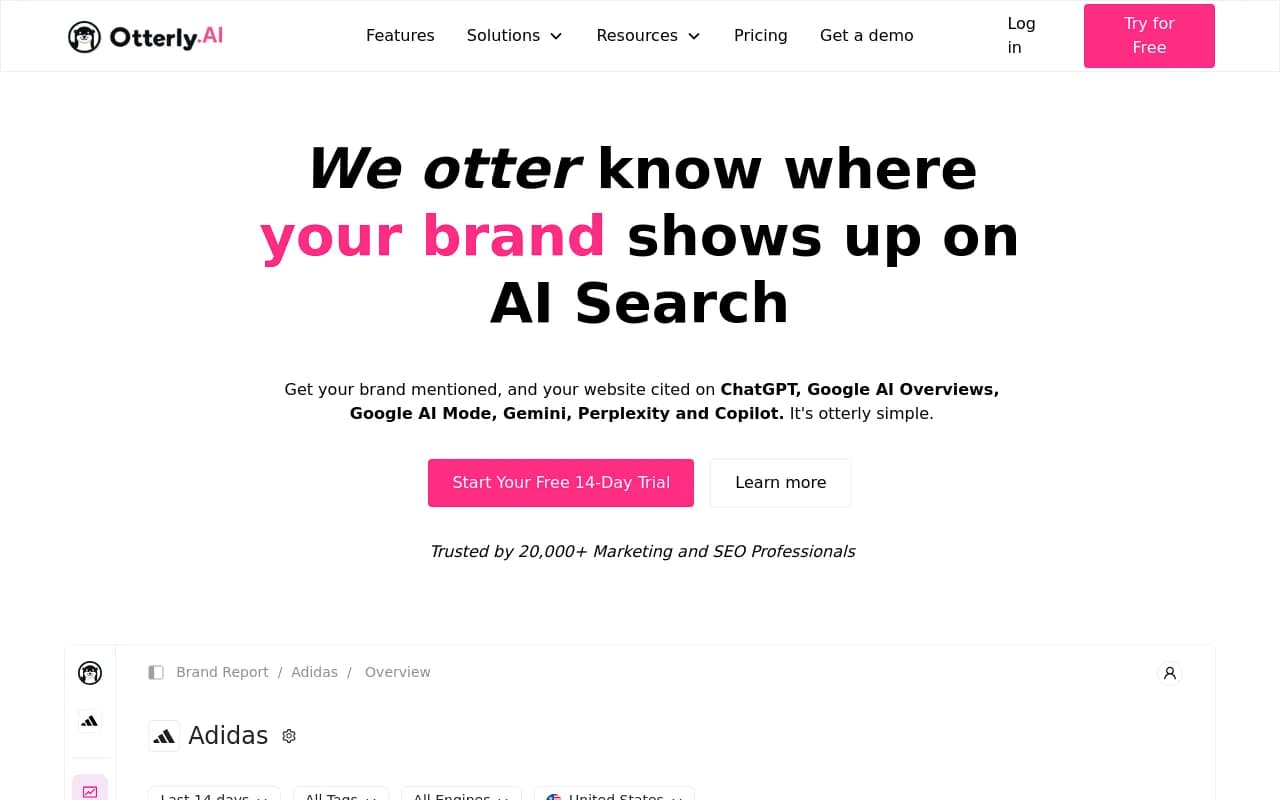
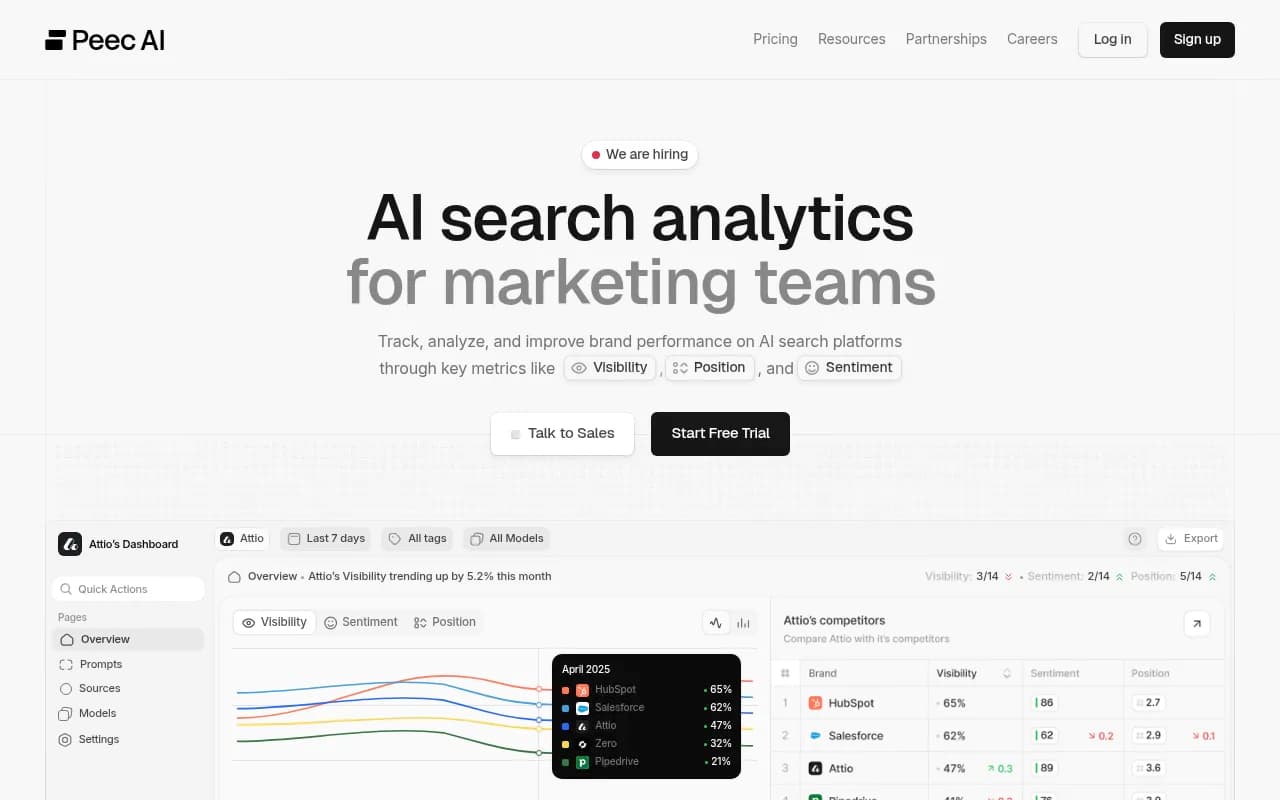
If you want to track how individual pages are performing across AI citations over time, platforms like Otterly.AI and Peec AI offer lighter-weight monitoring.
For content creation once you've identified the winnable branches, the goal is specificity. Generic AI-generated content won't displace existing citations. Content that directly addresses the sub-query intent -- with real depth, structure, and freshness -- is what moves the needle.
A practical prioritization framework
Here's a simple way to prioritize your sub-query targets without overcomplicating it:
- List your top 10-15 parent prompts (the queries your customers actually use)
- Fan each one out into 5-10 sub-queries
- Check current AI citations for each sub-query across at least 2 models
- Flag any branch where: (a) the cited content is thin or a poor fit, (b) the citing domain is mid-tier, or (c) the sub-query has a recency component
- Cross-reference with estimated prompt volume -- prioritize branches that are both winnable and worth winning
- Write content specifically targeting those branches, with direct answers, clear structure, and fresh data
- Monitor AI crawler activity on those pages and track whether citations appear over the following weeks
The cycle from "identify gap" to "get cited" can be as short as 2-4 weeks for low-difficulty branches, assuming your site is already being crawled by AI bots. For harder branches, it takes longer -- and some definitional queries may never be worth pursuing.
The honest reality about difficulty
Some sub-query branches are genuinely not worth fighting for. If Wikipedia owns a definitional query, you're not going to displace it by writing a better definition. The authority gap is too large and the content is already adequate.
The strategic move is to accept this and focus energy on the branches where the playing field is more level. In most industries, there are far more winnable branches than teams have time to pursue. The constraint isn't opportunity -- it's prioritization.
Fan-out difficulty scoring is really just a structured way to stop guessing about where to spend your content budget. The branches that look hard often are hard. The ones that look easy often are easy. The work is in mapping them systematically so you're not accidentally spending three months trying to displace Forbes when you could have spent those three months winning 20 specific sub-queries that nobody else has bothered to answer well.
That's the actual opportunity in AI search right now. Not the broad queries -- the specific ones that the authority sites haven't gotten around to covering properly yet.