Key takeaways
- ChatGPT decomposes a single user prompt into 8 to 12 distinct sub-queries, retrieving information in parallel before synthesizing a response.
- Most content strategies are built around single keywords or topics -- which means they're optimized for how search used to work, not how AI search actually works.
- To get cited by ChatGPT, your content needs to answer not just the primary question but the surrounding sub-questions AI models are already asking on behalf of users.
- Answer gap analysis -- finding which sub-queries competitors rank for but you don't -- is the fastest way to identify what content to create next.
- Tracking which pages get crawled and cited by AI models is now a real discipline, not guesswork.
What actually happens when someone types a prompt into ChatGPT
Most people picture it like a search engine: you type something in, it looks it up, it shows you results. That mental model is wrong, and the gap between the mental model and reality is where most content strategies fall apart.
When a user types "what's the best project management tool for a remote team of 10," ChatGPT doesn't run one search. According to research published by RankDots, the system decomposes that single prompt into 8 to 12 distinct, parallel sub-queries, retrieves information for each simultaneously, then synthesizes everything into one coherent answer.
So that one prompt might actually generate sub-queries like:
- Best project management tools for small teams
- Project management software for remote work
- Asana vs Monday vs Notion for teams under 20 people
- Project management tools with async collaboration features
- What do remote teams need in a project management tool
- Top-rated project management apps 2026
- Project management tools with free tiers
- How to choose project management software
Eight separate information retrieval tasks, all fired at once, all feeding into one answer. The user sees a single clean response. Behind it is a web of parallel lookups.
This is the thing most content teams haven't fully absorbed yet. You're not competing to answer one question. You're competing to show up across a cluster of related sub-queries -- and if your content only addresses the main topic without covering the surrounding questions, you're invisible to most of those retrieval passes.
Why this breaks traditional SEO thinking
Traditional SEO is built around the idea of targeting a keyword. You pick a primary keyword, optimize a page for it, maybe add some related terms, and hope to rank. That logic made sense when search was a single-query, single-result system.
AI search doesn't work that way. The model isn't looking for the page that best matches one query. It's looking for sources that collectively cover the topic well enough to synthesize a trustworthy answer. A page that answers the primary question but ignores the sub-questions gets partially cited at best, ignored at worst.
There's also a structural issue with how AI models process content. As Erlin AI's ChatGPT optimization guide explains, ChatGPT breaks documents into chunks and pulls the parts most relevant to each sub-query being answered. If your content buries the answer three paragraphs down, or wraps it in vague introductory language, the model may not surface it at all. The content that gets cited tends to be direct, specific, and structured so the relevant answer is easy to extract.
This has a practical implication: long-form content that covers a topic comprehensively from multiple angles is more likely to get cited across multiple sub-queries than a tightly focused 500-word post. But only if that long-form content is actually organized so each sub-question gets a clear, direct answer -- not buried in narrative prose.
The anatomy of a query fan-out
"Query fan-out" is the term for this decomposition process -- one prompt branching into multiple sub-queries. Understanding the structure helps you build content that intercepts more of them.
A typical fan-out has a few layers:
The primary intent. What the user is literally asking. "Best CRM for a startup."
Comparative sub-queries. The model wants to compare options, so it retrieves information on specific tools side by side. "HubSpot vs Pipedrive for startups," "Salesforce pricing for small teams," "free CRM options for early-stage companies."
Definitional sub-queries. The model often checks definitions or criteria before making recommendations. "What features does a startup CRM need," "what is a CRM," "CRM vs spreadsheet for sales tracking."
Social proof sub-queries. AI models increasingly pull from review sources, Reddit threads, and community discussions. "Best CRM Reddit 2026," "HubSpot reviews from small businesses," "which CRM do founders actually use."
Recency sub-queries. For topics where freshness matters, the model checks for recent information. "CRM updates 2026," "new CRM tools for startups."
If your content only addresses the primary intent, you're competing for one slot out of a possible eight to twelve. If your content addresses the primary intent, covers comparisons, explains criteria, and references real-world use cases, you're competing for several slots simultaneously.
What this means for your content structure
The practical implication is that content architecture matters more than it used to. Here's what tends to work:
Lead with the direct answer. Don't make the model hunt for it. If your page is about the best CRM for startups, say which one you recommend and why in the first two paragraphs. The model chunks your content and pulls the most relevant sections -- a buried answer is a missed citation.
Use explicit sub-headings for each sub-question. If you know the fan-out for your target prompt includes comparative questions, definitional questions, and use-case questions, structure your page with headings that directly address each one. "What features matter most," "How these tools compare on price," "Which one works best for teams under 10" -- these headings make it easy for the model to find the right chunk for each sub-query.
Cover the comparison layer. AI models almost always generate comparative sub-queries. If your content doesn't include comparisons, you're invisible to that retrieval pass. This doesn't mean you need a separate comparison page for every possible pairing -- it means your main content should at least acknowledge alternatives and explain how your recommendation differs.
Don't ignore the social proof layer. Reddit and YouTube discussions directly influence AI recommendations. A brand that shows up in community discussions gets cited in ways that purely corporate content doesn't. This is worth thinking about as a distribution strategy, not just a content strategy.
Keep content fresh. Recency sub-queries are real. A comprehensive guide from 2023 that hasn't been updated will lose citation slots to a less thorough but more recent piece. Date-stamp your updates and actually update the content, not just the date.
The gap between what AI models want and what most sites publish
Here's the honest problem: most websites are built around what the company wants to say, not around the questions AI models are retrieving answers for. Product pages describe features. Blog posts announce news. Case studies tell success stories. None of that maps cleanly onto the sub-query structure AI models use.
The content that gets cited tends to look more like reference material: specific, structured, comparative, and written to answer a question rather than to promote a product. Think "how to choose X," "X vs Y," "what to look for in X," "common mistakes with X" -- not "why our X is the best."
This is a real shift for marketing teams used to writing content that serves the brand narrative. The content that serves AI retrieval serves the user's question first and the brand second.
Finding your answer gaps
The most actionable thing you can do with this knowledge is run an answer gap analysis -- figure out which sub-queries your competitors are being cited for that you're not. This tells you exactly which content to create next, grounded in real retrieval data rather than keyword guesswork.
Promptwatch does this specifically: it shows you which prompts competitors appear in that you don't, maps the sub-query structure, and helps you generate content briefs targeting those gaps. The platform tracks how AI models actually behave in their user interfaces (not just through APIs, which can return different results), so the data reflects what real users see.

Other tools worth knowing about for tracking AI visibility:

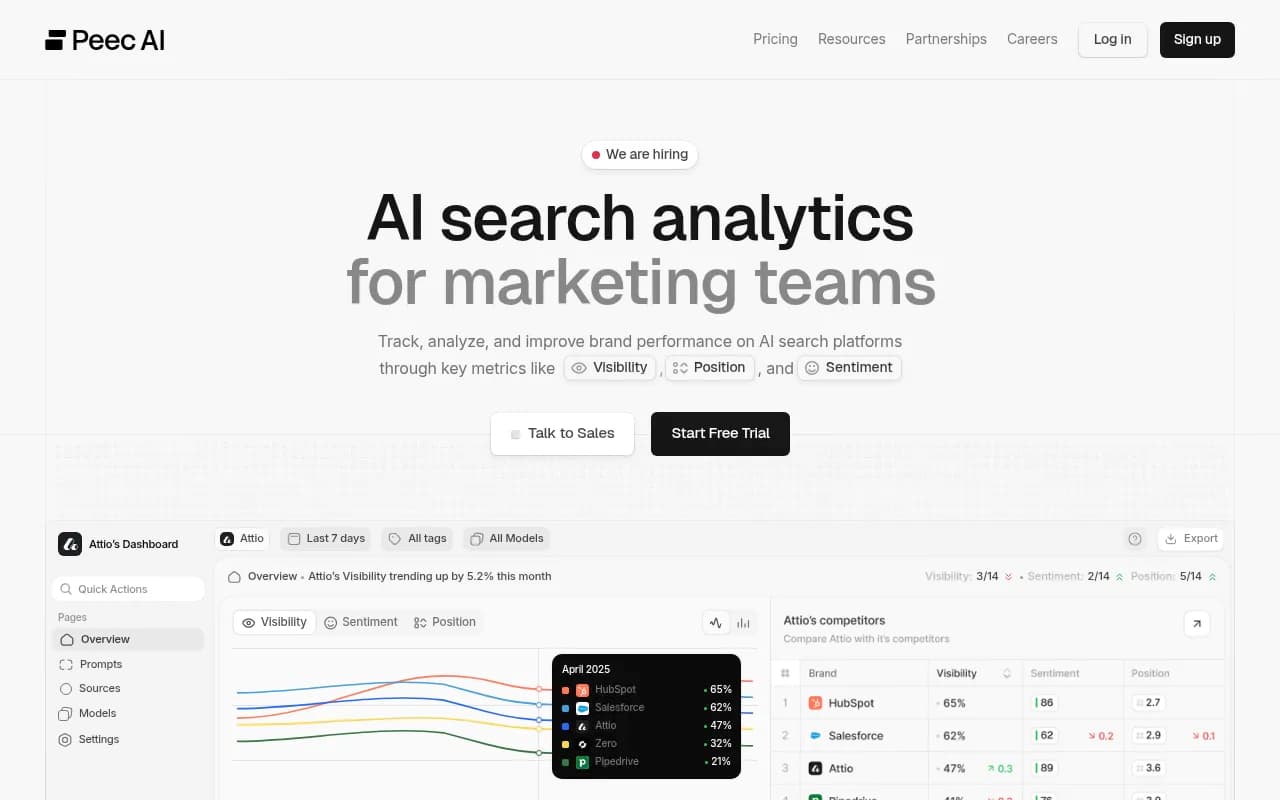
The difference between these tools matters. Most monitoring platforms show you where you're visible -- which is useful -- but stop there. The more valuable workflow is: find the gaps, create content that fills them, then track whether the new content gets crawled and cited. That loop is harder to close with a monitoring-only tool.
How AI crawler behavior affects your strategy
There's another layer here that most content teams haven't started thinking about yet: AI crawlers behave differently from Google's crawler, and understanding that behavior changes how you prioritize content.
AI crawlers from ChatGPT, Perplexity, Claude, and others visit your site, read your pages, and decide what's worth citing. They return to some pages frequently and ignore others entirely. Pages with errors, slow load times, or content that's hard to parse get deprioritized. Pages that directly answer high-volume prompts get revisited more often.
Suganthan Mohanadasan's analysis of two days of ChatGPT's raw network traffic found that the model has clear domain preferences -- some sites get cited repeatedly across many queries while others barely appear. The domains that get cited most tend to have content that's structured for extraction: clear headings, direct answers, specific data, and consistent publishing.
This means technical factors matter for AI visibility, not just content quality. If AI crawlers are hitting your site and encountering errors, or if your JavaScript-heavy pages aren't rendering properly for crawlers, you're losing citation opportunities regardless of how good your content is.
A practical content audit for AI sub-query coverage
Before creating new content, it's worth auditing what you already have against the sub-query structure for your main topics. For each core topic your brand covers:
- Write out the primary prompt a user might ask
- Map the likely fan-out: what comparative, definitional, social proof, and recency sub-queries would the model generate?
- Check your existing content against each sub-query -- does any page directly address it?
- Identify the gaps -- sub-queries with no coverage or thin coverage
- Prioritize by volume and competition: which gaps are worth filling first?
This audit usually surfaces two things. First, there are sub-queries you're completely missing -- topics adjacent to your main content that you've never written about because they didn't fit the traditional keyword strategy. Second, there's existing content that covers a sub-query but buries the answer so deep it's unlikely to get extracted. Both are fixable.
For the first problem, you need new content. For the second, you often just need to restructure what you have -- move the direct answer to the top, add a clear heading, trim the preamble.
Tools that help with sub-query content strategy
| Tool | What it does | Best for |
|---|---|---|
| Promptwatch | Answer gap analysis, AI content generation, crawler logs, citation tracking | Full GEO workflow: find gaps, create content, track results |
| Otterly.AI | AI visibility monitoring across LLMs | Budget-friendly monitoring |
| Peec AI | AI search monitoring | Basic tracking without optimization |
| Profound | Enterprise AI visibility tracking | Large brands with complex monitoring needs |
| Topical Map AI | Builds topical authority maps | Planning content clusters |
| Clearscope | Content optimization for search | Improving existing content coverage |
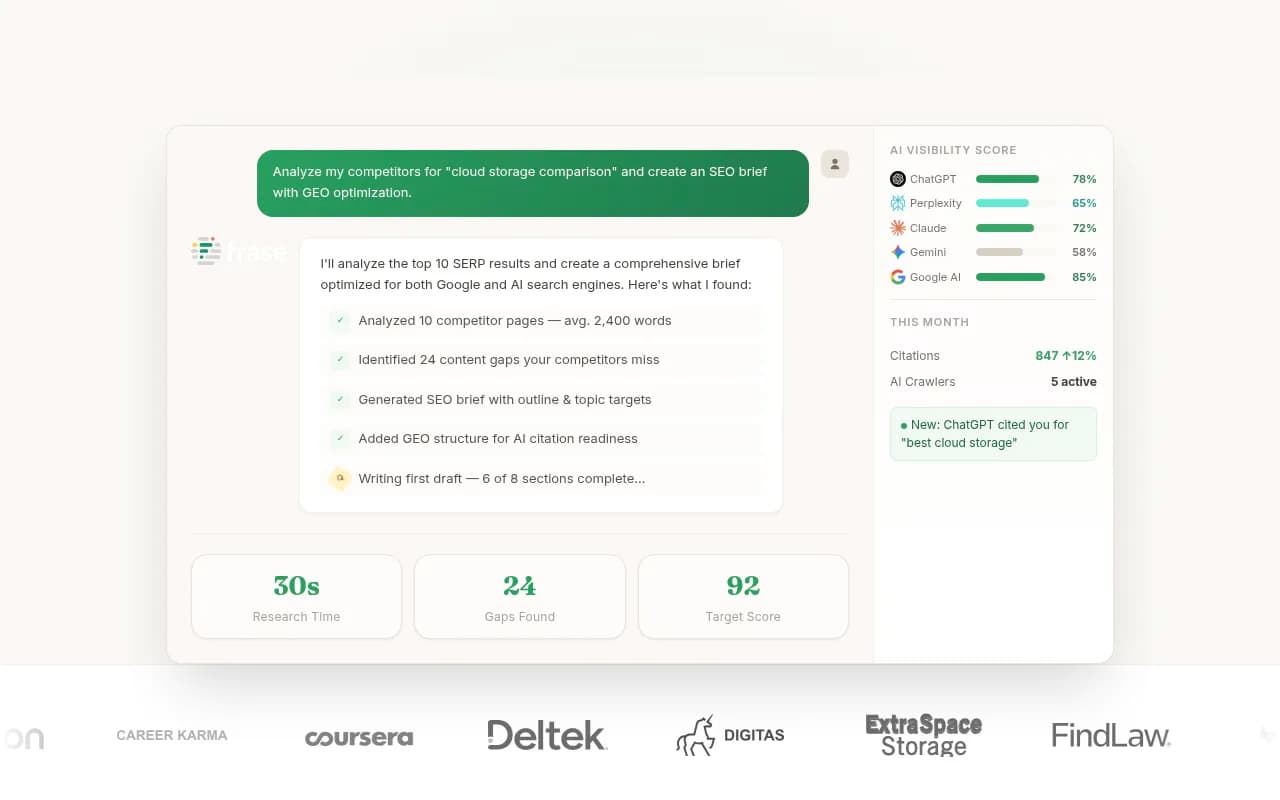
| Frase | AI content research and optimization | Content briefs and topic research |

For content creation once you've identified the gaps, tools like Jasper and Content at Scale can help produce structured content at volume -- but the brief matters more than the tool. If the brief doesn't specify which sub-questions the content needs to answer, the output will default to generic coverage of the main topic.
The competitive reality
Here's where this gets uncomfortable: your competitors are figuring this out too. The brands that show up consistently in AI responses in 2026 aren't there by accident. They've either published enough content over enough time that they've accidentally covered most of the sub-query space, or they've started deliberately mapping and filling gaps.
One commercial lending company cited by ROI Amplified now gets 15% of all sales calls directly from ChatGPT queries -- customers who never touched Google. That's not a small number. It's the kind of shift that happens when a brand systematically covers the sub-query space for its category while competitors are still optimizing for traditional search.
The window to get ahead of this is narrowing. The brands that build comprehensive sub-query coverage now will be harder to displace as AI models develop citation preferences for reliable sources. The brands that wait until AI search is fully mainstream will be fighting for scraps.
The mechanics aren't complicated: understand how prompts fan out into sub-queries, audit your content against that structure, fill the gaps, and track whether the new content gets cited. The execution takes time, but the strategy is clear.
Start with one topic. Map the fan-out. Find the gaps. Write the content. Then check whether it gets picked up.