Key takeaways
- AI search engines like ChatGPT, Perplexity, and Google AI Mode decompose a single user query into 8-12 parallel sub-queries (query fan-out) before generating an answer -- meaning traditional keyword targeting misses most of the actual retrieval surface.
- A December 2025 Surfer SEO study of 173,902 URLs found that 68% of pages cited in AI Overviews were NOT in the top 10 organic results, which shows how badly keyword-rank-focused strategies underserve AI visibility.
- Keyword clustering is still useful for organizing content and building topical authority, but it operates on the surface layer -- what users type -- not the sub-query layer where AI retrieval actually happens.
- Fan-out tracking maps the hidden sub-queries AI models generate, revealing content gaps that keyword research tools simply can't see.
- The strongest approach in 2026 combines both: keyword clustering to build topical coverage, fan-out tracking to find the specific angles AI models need answered.
There's a version of SEO that made perfect sense five years ago. You'd find keywords, group them by intent and topic, build pages around each cluster, and watch your rankings climb. Keyword clustering was the backbone of content strategy, and it worked.
Then AI search arrived and quietly broke the model.
Not because keywords stopped mattering -- they didn't. But because AI search engines don't retrieve content the way Google's blue-link algorithm does. When a user types a question into ChatGPT or Perplexity, the model doesn't look up the top-ranking page for that phrase. It fires a dozen parallel retrieval queries, pulls from multiple sources, and synthesizes everything into one answer. Your keyword-optimized page might rank #1 in traditional search and still get completely ignored by AI.
This is the problem that fan-out tracking was built to solve. And in 2026, understanding the difference between these two methods -- and knowing when to use each -- is one of the more important decisions a content team can make.
What keyword clustering actually does
Keyword clustering is the practice of grouping related search terms together so you can decide which queries belong on the same page. The logic is sound: if someone searches "best project management software" and someone else searches "top project management tools for teams," those two queries share enough intent that a single, well-optimized page can serve both.
Tools like Surfer SEO, Semrush, and Clearscope have made clustering more sophisticated over the years, incorporating semantic similarity, SERP overlap, and NLP analysis to group keywords more accurately.

The output of keyword clustering is typically a content map: a set of pages, each targeting a cluster of related queries. This is genuinely useful. It prevents keyword cannibalization, helps you build topical authority, and gives your content team a clear brief for what to cover on each page.
But keyword clustering has a structural limitation that becomes critical in the AI search era: it works on the query surface. It groups what users type. It doesn't model what AI systems retrieve.
What query fan-out actually does
Query fan-out is the mechanism by which AI search engines decompose a single user query into multiple parallel sub-queries. Research from Ekamoira's team puts the typical range at 8-12 sub-queries per user prompt, though this varies by platform and query complexity.
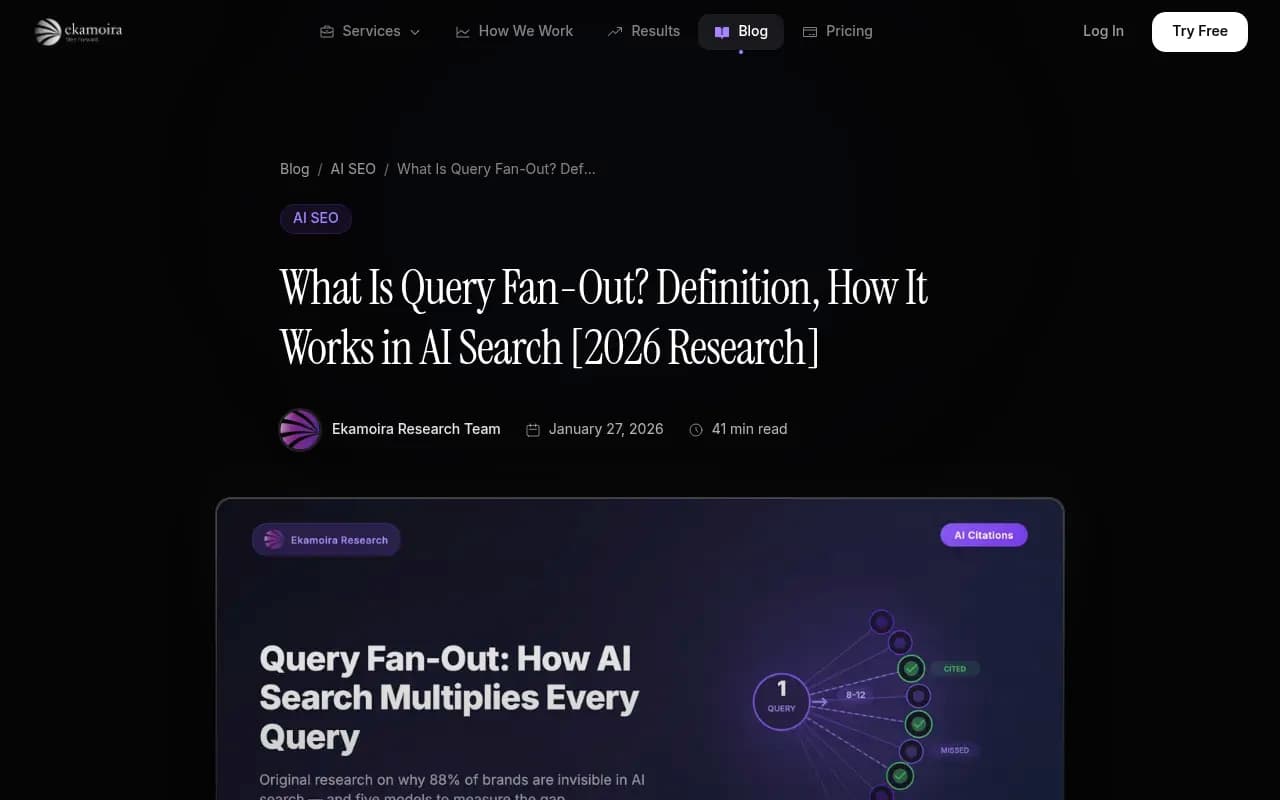
Here's a concrete example. A user asks: "best project management tools for remote teams."
A traditional search engine looks for pages that rank for that phrase or close variants. An AI search engine does something different. It might simultaneously retrieve content for:
- "top project management software 2026"
- "remote team collaboration features comparison"
- "project management pricing tiers"
- "asynchronous work tools for distributed teams"
- "enterprise vs SMB project management software"
- "Notion vs Asana vs Monday.com"
- "project management integrations with Slack"
- "free project management tools for startups"
None of those sub-queries are what the user typed. But they're all what the AI model needs to answer the question well. If your content doesn't address those angles, you won't be cited -- even if you rank #1 for the original query.
The Surfer SEO study mentioned earlier makes this concrete: 68% of pages cited in AI Overviews weren't in the top 10 organic results. That's not a rounding error. That's a fundamentally different retrieval logic.
Fan-out tracking is the practice of mapping these sub-queries -- figuring out which hidden retrieval paths AI models take for any given topic, and identifying which of those paths your content currently covers versus which ones it misses.
The core difference: surface vs. sub-surface
This is the clearest way to frame the comparison:
| Dimension | Keyword clustering | Fan-out tracking |
|---|---|---|
| What it maps | Queries users type | Sub-queries AI models generate |
| Data source | Search volume, SERP overlap, semantic similarity | AI model behavior, citation analysis, retrieval logs |
| Output | Content clusters and page briefs | Hidden retrieval paths and content gaps |
| Best for | Organizing content, avoiding cannibalization | Finding AI citation opportunities |
| Traditional SEO value | High | Low (it's AI-native) |
| AI search value | Moderate | High |
| Tooling maturity | Mature (many options) | Emerging (fewer, newer tools) |
| Difficulty to implement | Low-medium | Medium-high |
Keyword clustering tells you what to write. Fan-out tracking tells you what AI models actually want to read -- which is often a different thing.
Why keyword clustering still matters (but isn't enough)
It would be wrong to dismiss keyword clustering as obsolete. It still does important work:
Topical coverage is one of the strongest signals for AI citation. If your site comprehensively covers a topic from multiple angles, AI models are more likely to treat it as an authoritative source. Keyword clustering, done well, builds exactly that kind of coverage. You're not just targeting individual queries -- you're building a content ecosystem that signals depth.
Keyword clusters also map to real user intent. Even if AI models decompose queries into sub-queries, those sub-queries still need to match what users actually care about. Keyword research grounds your content in real demand.
And practically speaking, keyword clustering tools are mature, affordable, and easy to integrate into existing workflows. Fan-out tracking is newer, more complex, and requires either specialized tools or significant manual effort.
The problem is that keyword clustering alone leaves a large blind spot. It doesn't tell you which specific angles, framings, or sub-topics AI models are pulling from. You can have perfect topical coverage by keyword standards and still be invisible in AI search if your content doesn't address the right sub-query angles.
How fan-out tracking finds opportunities keyword research misses
Let's get specific about what fan-out tracking reveals that keyword clustering can't.
The "invisible" sub-queries
When you do keyword research for "project management software," you'll find obvious clusters: features, pricing, comparisons, reviews. What you won't find is the specific framing that Perplexity uses when it decomposes that query -- the exact angle it retrieves, the specific comparison it makes, the particular use case it emphasizes.
Fan-out tracking surfaces those framings. It shows you that for a given prompt, Perplexity consistently retrieves content about "async-first project management" while ChatGPT pulls more from "enterprise security compliance" angles. Those are content opportunities that no keyword tool would surface, because they're not high-volume search terms -- they're AI retrieval patterns.
Competitor citation gaps
Fan-out tracking also shows you which sub-queries your competitors are being cited for that you're not. This is the AI equivalent of a keyword gap analysis, but it operates at the sub-query level. You might discover that a competitor is consistently cited for the "pricing comparison" sub-query because they have a detailed comparison table that AI models find easy to extract and cite. That's an actionable gap.
Dynamic query behavior
One finding from Ekamoira's research is that approximately 73% of fan-out queries change with every search -- meaning AI models don't always decompose the same prompt the same way. This is actually an argument for broad topical coverage rather than narrow keyword targeting. Fan-out tracking helps you understand the range of sub-queries a topic generates, so you can build content that covers the full distribution rather than just the most common variant.
Tools for each approach
For keyword clustering
The traditional SEO toolkit handles this well. Semrush and Ahrefs both offer keyword grouping features. Surfer SEO clusters keywords by SERP similarity. MarketMuse builds topic models that go deeper into semantic coverage.

For fan-out tracking and AI visibility
This is where the tooling is newer and more specialized. A few platforms have built specific fan-out tracking capabilities:

Promptwatch is worth calling out here because it goes beyond just tracking -- it shows you which prompts competitors are visible for that you're not (Answer Gap Analysis), then helps you create content to close those gaps. That's the full loop: find the sub-query, understand the gap, generate content to fill it, track whether AI models start citing you. Most monitoring tools stop at the first step.
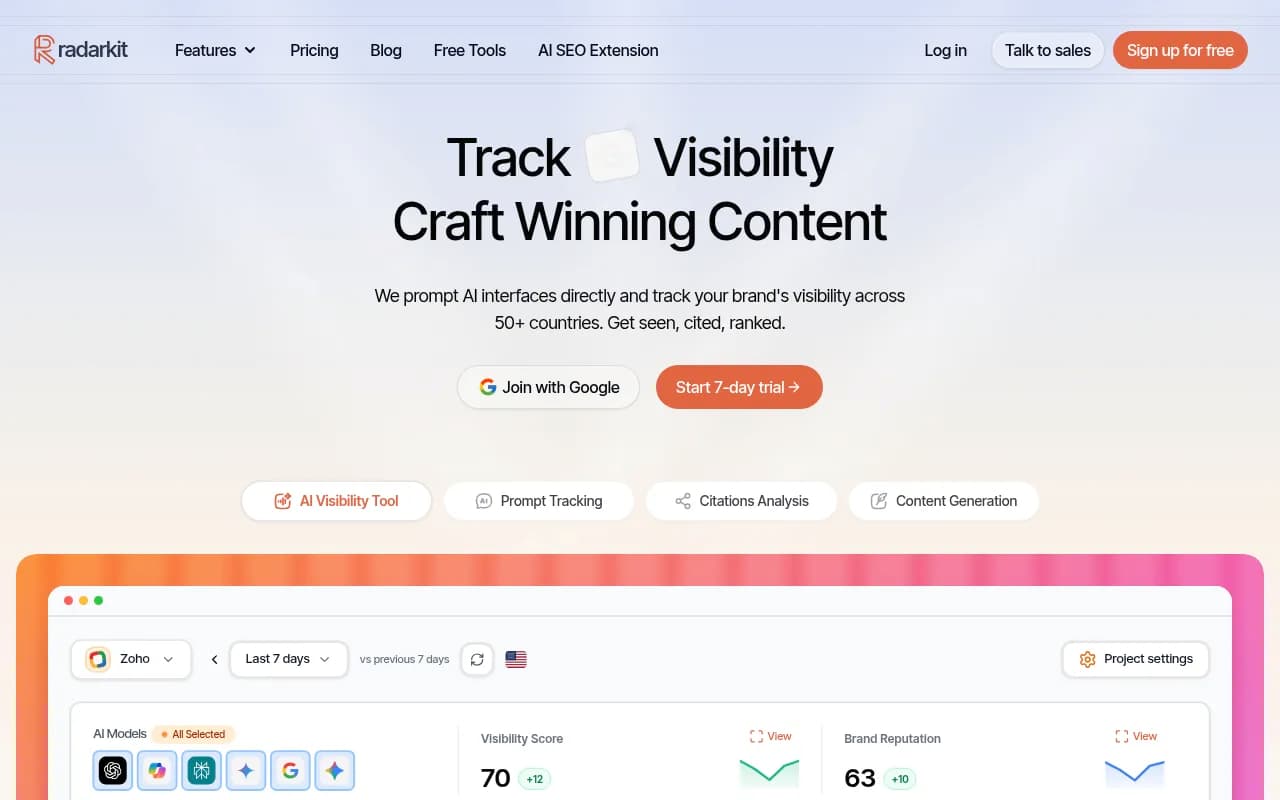

Radarkit specifically focuses on query fanout keyword tracking. Profound and LLMrefs offer broader AI visibility monitoring that includes citation analysis, which is closely related to understanding fan-out behavior.
For teams that want to understand which pages AI crawlers are actually visiting and citing, crawler log analysis is also relevant -- Promptwatch's AI Crawler Logs feature shows exactly which pages AI agents hit, how often, and what errors they encounter.
A practical framework for combining both methods
The strongest content strategy in 2026 doesn't choose between keyword clustering and fan-out tracking -- it uses both in sequence.
Step 1: Build topical coverage with keyword clustering
Start with traditional keyword research to map the full topic space. Group queries into clusters, identify gaps in your current content, and build a content calendar that achieves comprehensive topical coverage. This is the foundation. AI models are more likely to cite sites that demonstrate depth across a topic.
Tools like Surfer SEO, Semrush, or MarketMuse work well here.
Step 2: Map fan-out patterns for your priority topics
For your most important topics, run fan-out analysis to understand how AI models decompose related prompts. Which sub-queries appear consistently? Which angles do competitors get cited for? Which framings does your content currently miss?
This is where Promptwatch's Answer Gap Analysis, Radarkit, or Profound become useful.
Step 3: Create content that addresses sub-query angles
Use the fan-out data to enrich your content briefs. Instead of just targeting "project management software comparison," you now know that AI models also retrieve content about async-first workflows, security compliance, and startup-specific pricing. Build those angles into your content explicitly.
Step 4: Track citations, not just rankings
Traditional rank tracking tells you where you appear in Google's blue links. AI visibility tracking tells you whether AI models are actually citing your pages. These are different metrics, and in 2026, both matter.

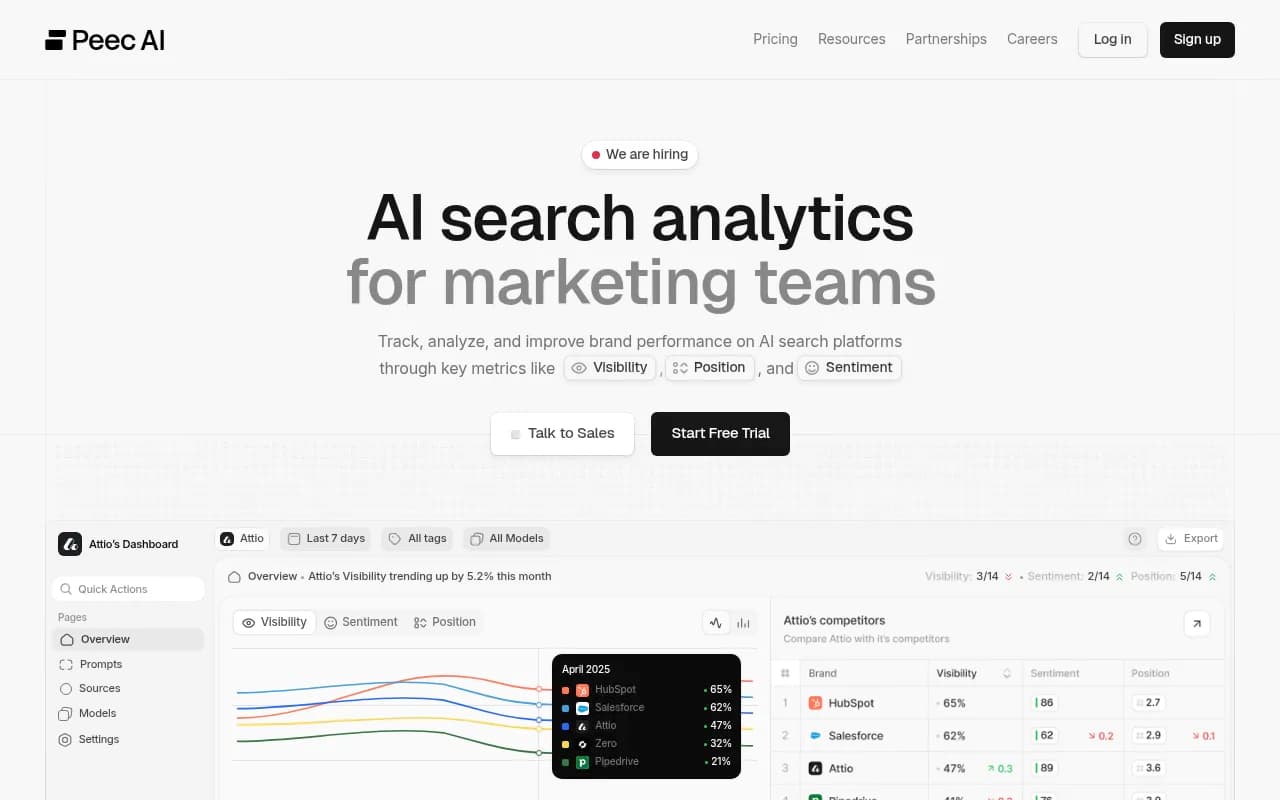

Tools like Otterly.AI, Peec AI, and Athena HQ offer monitoring. The difference between monitoring and optimization is whether you can act on what you find -- which brings you back to platforms that close the loop between insight and content creation.
Which method finds more content opportunities?
Honestly, it depends on what you mean by "opportunities."
If you mean opportunities to rank in traditional search and build topical authority, keyword clustering finds more -- it's designed for that, and the tooling is mature.
If you mean opportunities to be cited in AI-generated answers, fan-out tracking finds more -- because it maps the actual retrieval behavior of AI models, not just the surface-level queries users type.
The uncomfortable truth is that most content teams are still optimizing primarily for keyword clusters, which means they're optimizing for a retrieval mechanism that AI search largely bypasses. The 68% figure from Surfer SEO's research isn't a quirk -- it's a structural feature of how AI search works.
Fan-out tracking is harder to implement, the tooling is less mature, and the data is noisier. But it's the only method that directly maps to how AI models actually decide what to cite.
The practical recommendation: don't abandon keyword clustering, but layer fan-out tracking on top of it. Use keyword clusters to build the topical foundation, then use fan-out analysis to find the specific angles and sub-topics that AI models are pulling from. That combination gives you coverage at both the surface layer (what users search) and the sub-surface layer (what AI models retrieve).
In 2026, that's the difference between a content strategy built for traditional search and one built for the way search actually works now.
What to do this week
If you're starting from scratch, here's a concrete starting point:
- Pick your three most important topic areas and run them through a fan-out analysis tool to see what sub-queries AI models generate.
- Compare those sub-queries against your existing content. How many of those angles do you actually cover?
- For the gaps you find, write content that directly addresses the sub-query -- not just the broad topic.
- Set up AI citation tracking so you can measure whether your new content gets picked up.
The shift from keyword-first to fan-out-aware content strategy isn't a complete overhaul. It's an additional layer of analysis that makes your existing keyword work more effective for the search environment that actually exists in 2026.