Key takeaways
- MCP (Model Context Protocol) is an open standard from Anthropic that lets AI assistants connect directly to external tools -- think Google Search Console, keyword databases, and AI visibility platforms -- without manual data exports.
- For marketing teams, this means an AI agent can run keyword research, pull SERP data, generate content briefs, and track GEO visibility in a single conversation.
- The most useful MCP servers for marketers in 2026 connect to SEO platforms, analytics tools, CMS systems, and AI search visibility trackers.
- GEO (Generative Engine Optimization) is now a first-class use case -- AI agents can query which prompts your brand appears in across ChatGPT, Perplexity, Claude, and others.
- The gap between "monitoring" and "acting" is where most tools fall short. The best setups close that loop automatically.
What MCP actually is (and why it matters for marketers)
Anthropic released the Model Context Protocol in November 2024. By early 2026, it has become the connective tissue of the AI agent ecosystem. The idea is simple: instead of every AI tool building its own custom integration layer, MCP gives you one standard protocol that any AI assistant can use to talk to any compatible data source.
Think of it like USB-C. Before USB-C, every device had its own charger. MCP does the same thing for AI tools -- one connector, thousands of compatible services.
For marketers, the practical effect is significant. Your AI assistant (Claude, ChatGPT, Cursor, or whatever you're using) can now directly call your keyword research tool, pull live data from Google Search Console, check how your brand appears in AI search results, and write content optimized for those results -- all in one conversation, without you touching a single export button.
Burkan Bur, Head of SEO at The Ad Firm, put it plainly: "The normal 15 to 20 minute cycle of exporting CSVs and reformatting spreadsheets is replaced with a single sentence typed into a chat window."
That's the shift. Not AI writing your content for you -- AI actually doing the research, pulling live data, and executing workflows that used to require five open tabs.
How MCP servers work in a marketing context
An MCP server sits between your AI assistant and your marketing tools. When you ask your AI agent a question -- "Which keywords are our competitors ranking for that we're not?" -- the agent doesn't guess. It calls the MCP server for your SEO platform, which fetches real data and returns it to the conversation.
The architecture has three parts:
- The MCP host: your AI assistant (Claude, ChatGPT, etc.)
- The MCP client: the layer inside the AI that handles tool calls
- The MCP server: the service that connects to your actual data (Semrush, GSC, your CMS, your GEO tracker)
Most marketing MCP servers today fall into one of four categories:
- SEO data servers (keyword research, SERP analysis, backlink data)
- Analytics servers (GA4, Google Search Console, attribution data)
- Content servers (CMS connections, content optimization tools)
- AI visibility servers (GEO tracking, LLM citation analysis)
The fourth category is the newest and, for many brands, the most strategically important right now.
The SEO use cases that actually work today
Keyword research without the tab-switching
The classic SEO workflow involves opening Semrush or Ahrefs, running a keyword search, exporting a CSV, opening it in Excel, filtering it, then copying the results somewhere useful. With an MCP server connected to your keyword tool, you describe what you want and the agent does all of that in one step.
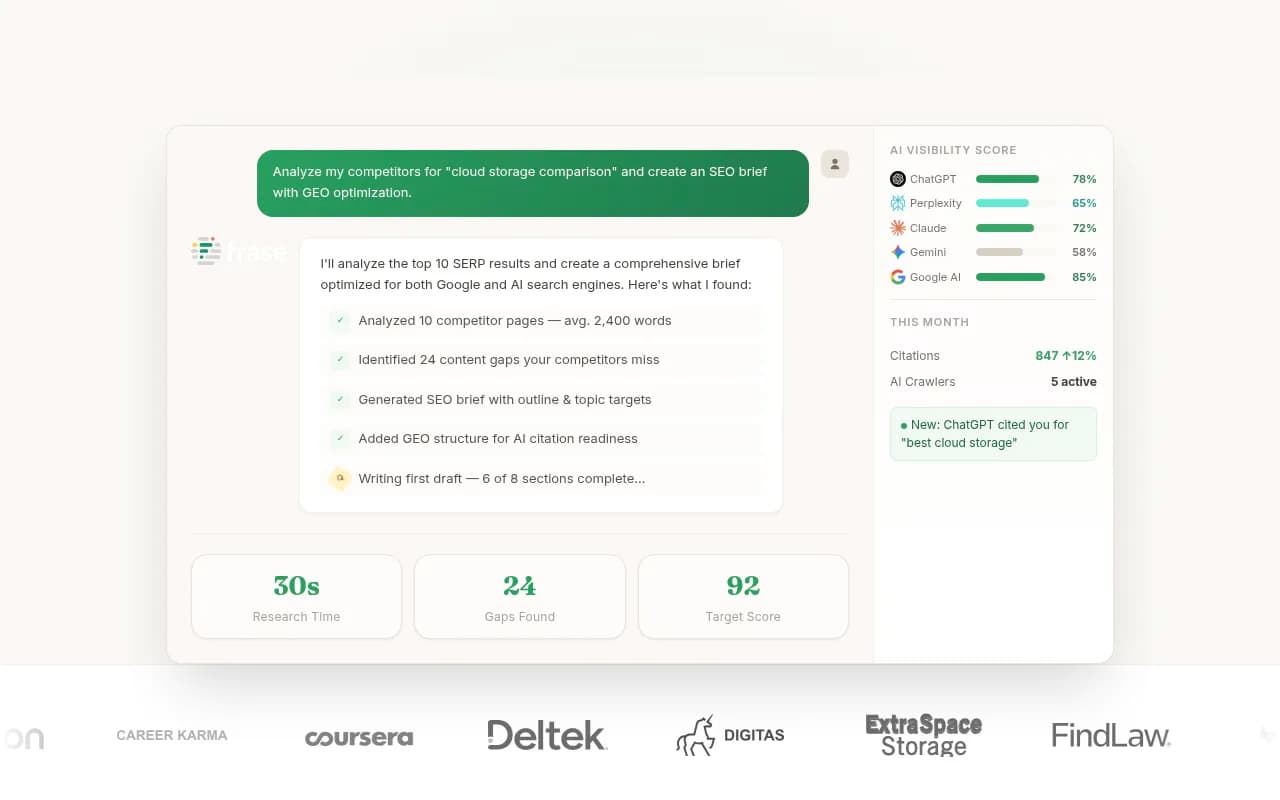
Tools like Frase have MCP servers that let AI agents pull keyword data, analyze top-ranking content, and generate content briefs in a single session.
Surfer SEO similarly exposes its content optimization data through MCP, so an agent can score a draft against top-ranking pages and suggest specific improvements without you leaving your writing environment.
Google Search Console, live
One of the most immediately useful MCP connections for any SEO team is Google Search Console. Instead of logging into GSC, navigating to the performance report, filtering by page or query, and exporting -- you ask your agent "Which pages lost the most clicks in the last 30 days?" and get an answer in seconds.
Competitor analysis on demand
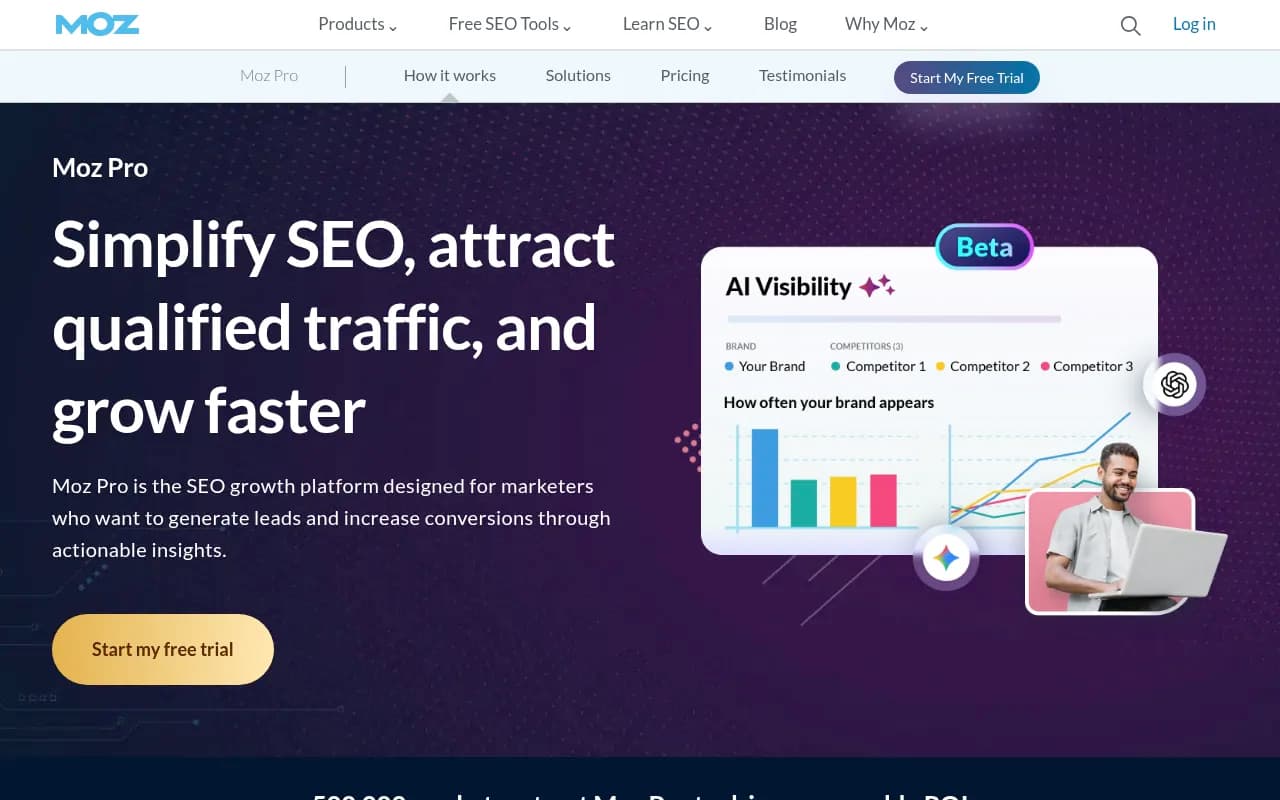
Tools like Semrush and Moz now support MCP connections, meaning an agent can pull competitor keyword gaps, track ranking changes, and surface content opportunities without you doing any manual data work.
GEO and AI visibility: the new frontier for MCP
This is where things get genuinely interesting in 2026. GEO (Generative Engine Optimization) is the practice of optimizing your brand to appear in AI-generated answers -- in ChatGPT, Perplexity, Claude, Gemini, and similar platforms. And MCP is starting to reshape how brands track and act on that visibility.
The challenge with GEO has always been that AI search is opaque. You can't just check a ranking position. You have to actually query the AI models, analyze their responses, track which sources they cite, and figure out why your brand is or isn't appearing.
MCP servers for GEO platforms let AI agents do exactly that -- query multiple LLMs, pull citation data, identify which prompts your competitors appear in that you don't, and surface the content gaps that explain the difference.
Conductor, for example, has built an MCP server specifically designed to bridge AI agents with visibility data -- so an agent can pull your brand's AI search performance and recommend actions based on what it finds.
For brands that want a dedicated GEO platform with MCP-compatible data access, Promptwatch tracks visibility across 10 AI models (ChatGPT, Perplexity, Claude, Gemini, Grok, DeepSeek, and more) and surfaces the specific prompts where competitors appear but you don't. That kind of structured data is exactly what an AI agent needs to take meaningful action.

The best MCP servers for marketing teams in 2026
Here's a practical breakdown of the most useful MCP server categories and the tools worth connecting:
Content creation and optimization
| Tool | MCP use case | Best for |
|---|---|---|
| Frase | Content briefs, SERP analysis, optimization scoring | Content teams running research-to-draft workflows |
| Surfer SEO | Real-time content scoring against top-ranking pages | Writers who want live feedback inside their editor |
| Clearscope | Semantic keyword coverage analysis | Teams focused on topical authority |
| MarketMuse | Content strategy, topic modeling | Enterprise content planning |
| NeuronWriter | NLP-based content optimization | Mid-market SEO teams |

SEO data and research
| Tool | MCP use case | Best for |
|---|---|---|
| Semrush | Keyword research, competitor analysis, site audits | Full-service SEO teams |
| Moz Pro | Domain authority, keyword tracking | Agencies managing multiple clients |
| Ahrefs Brand Radar | Brand monitoring in AI search | Teams tracking AI visibility alongside traditional SEO |
| SE Ranking | AI visibility with rank tracking | Mid-market teams wanting both SEO and GEO data |
| Botify | Enterprise crawl data, technical SEO | Large sites with complex technical needs |
AI visibility and GEO tracking
| Tool | MCP use case | Best for |
|---|---|---|
| Promptwatch | Multi-LLM visibility tracking, answer gap analysis, content generation | Brands wanting to monitor and act on AI search visibility |
| Profound | Enterprise AI visibility data | Large brands with dedicated GEO programs |
| Otterly.AI | Lightweight AI mention monitoring | Teams just starting with GEO |
| Conductor | AEO platform with MCP bridge for AI agents | Enterprise teams with existing Conductor workflows |
| Writesonic | AI search visibility with content creation | Teams wanting monitoring and writing in one place |

Analytics and attribution
| Tool | MCP use case | Best for |
|---|---|---|
| HubSpot | CRM data, campaign performance, contact activity | Marketing teams on HubSpot |
| HockeyStack | Multi-touch attribution, revenue analytics | B2B teams connecting marketing to pipeline |
| Usermaven | Product analytics, funnel analysis | SaaS teams tracking user behavior |
| Similarweb | Traffic intelligence, competitive benchmarking | Teams researching competitor traffic sources |
Workflow automation (the glue layer)
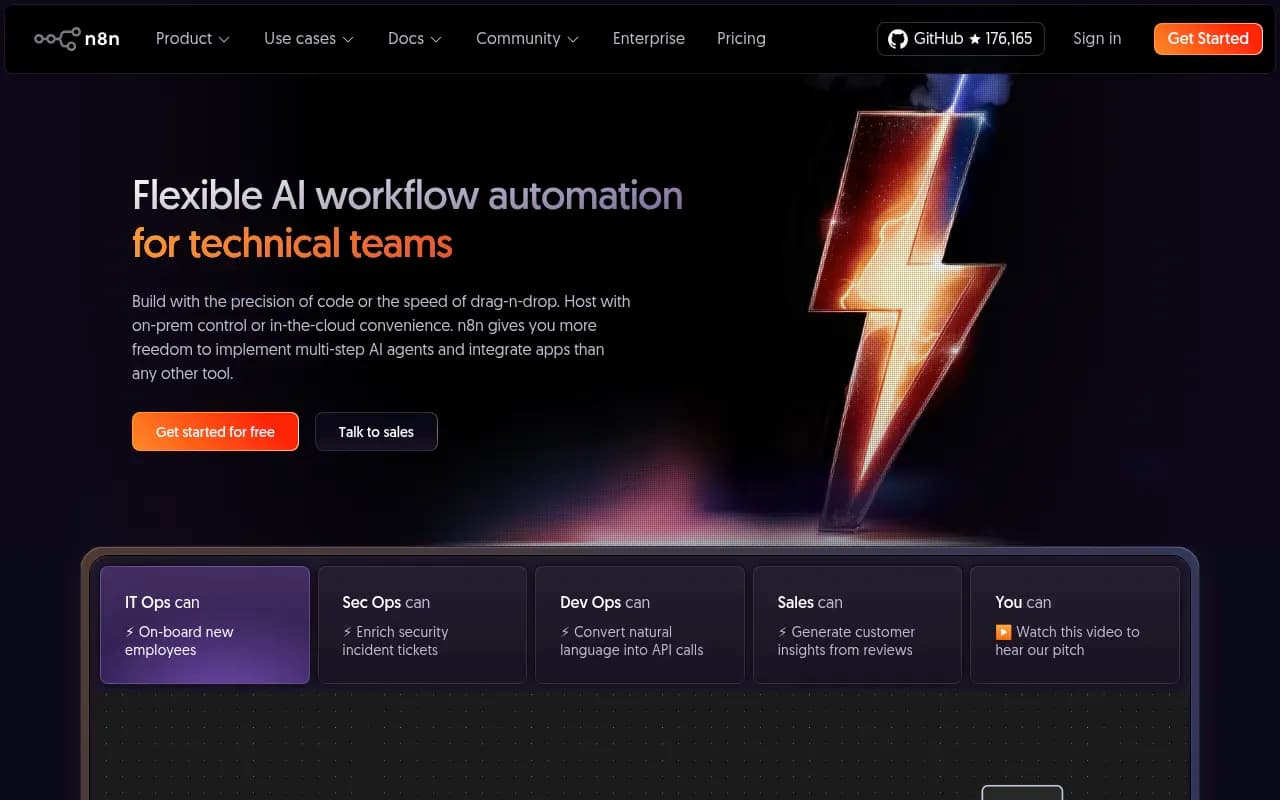
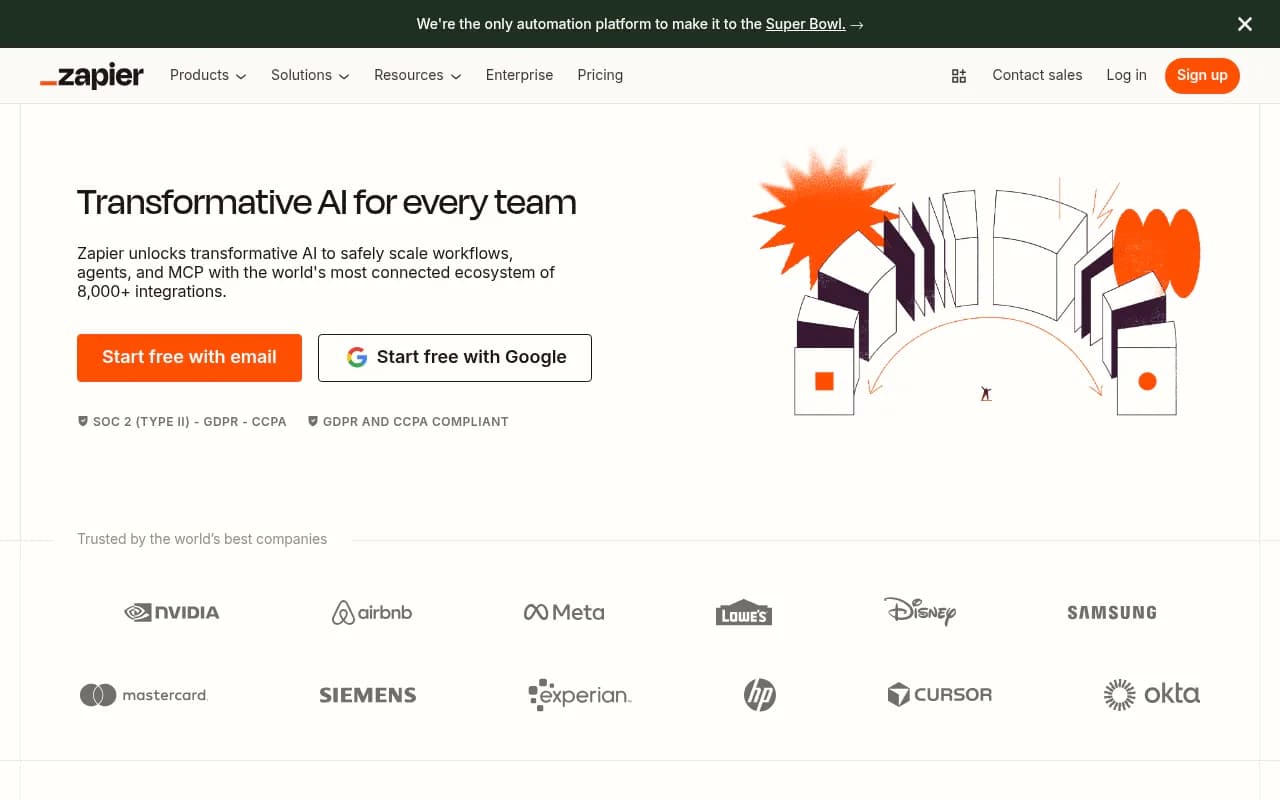
MCP servers don't exist in isolation. Tools like Workato, n8n, and Zapier are building MCP-compatible automation layers that let you chain multiple tool connections together -- so an agent can pull keyword data, generate a content brief, write a draft, score it, and push it to your CMS in one automated sequence.
What a real MCP-powered GEO workflow looks like
Here's a concrete example of what's now possible when you connect an AI agent to the right MCP servers:
Step 1 -- Identify the gap: The agent queries your GEO platform (via MCP) and asks: "Which prompts is [competitor] appearing in that we're not?" It gets back a list of specific questions and topics where your brand is invisible.
Step 2 -- Understand why: The agent pulls citation data to see which pages, Reddit threads, or third-party sources the AI models are citing when they answer those prompts. It identifies what content exists that you're missing.
Step 3 -- Create the content: The agent uses your content tool's MCP server to generate a brief, then writes a draft optimized for both traditional SEO and AI citation patterns -- grounded in real data, not generic templates.
Step 4 -- Publish and track: The draft goes to your CMS (via MCP), and your GEO tracker starts monitoring whether the new content gets cited by AI models over the following weeks.
This is the loop that matters. Most tools let you do step 1. The best setups automate all four.

WebMCP and the emerging "agent-ready web" standard
One development worth watching: WebMCP. This is a proposed standard that makes websites directly executable by AI agents -- essentially giving AI crawlers a structured way to interact with your site's content and data, not just read it.
Google has been paying attention to this space, and AEO (Answer Engine Optimization) is gaining traction as a discipline alongside GEO. The idea is that your website shouldn't just be readable by AI crawlers -- it should be queryable by AI agents. WebMCP is an early attempt at making that happen.
For marketers, this means technical optimization for AI agents is becoming a real thing. It's not just about what you write -- it's about how your site's data is structured and exposed to AI systems that are increasingly acting as intermediaries between users and content.
What to actually do with this information
A few practical recommendations based on where things stand in 2026:
Start with your existing tools. Check whether the SEO and analytics platforms you already use have MCP servers available. Semrush, Moz, Frase, and Surfer SEO all have them. Connecting them to Claude or another AI assistant takes minutes and immediately changes how your team works with data.
Add a GEO tracking layer. If you're not monitoring how your brand appears in AI search results, you're flying blind on a channel that's growing fast. Tools like Promptwatch give you the structured data an AI agent needs to identify gaps and take action -- not just a dashboard to look at.
Think about the full loop, not just monitoring. The most common mistake right now is treating GEO as a monitoring problem. The brands winning in AI search are treating it as a content and optimization problem. That means closing the loop: find the gap, create the content, track the result.
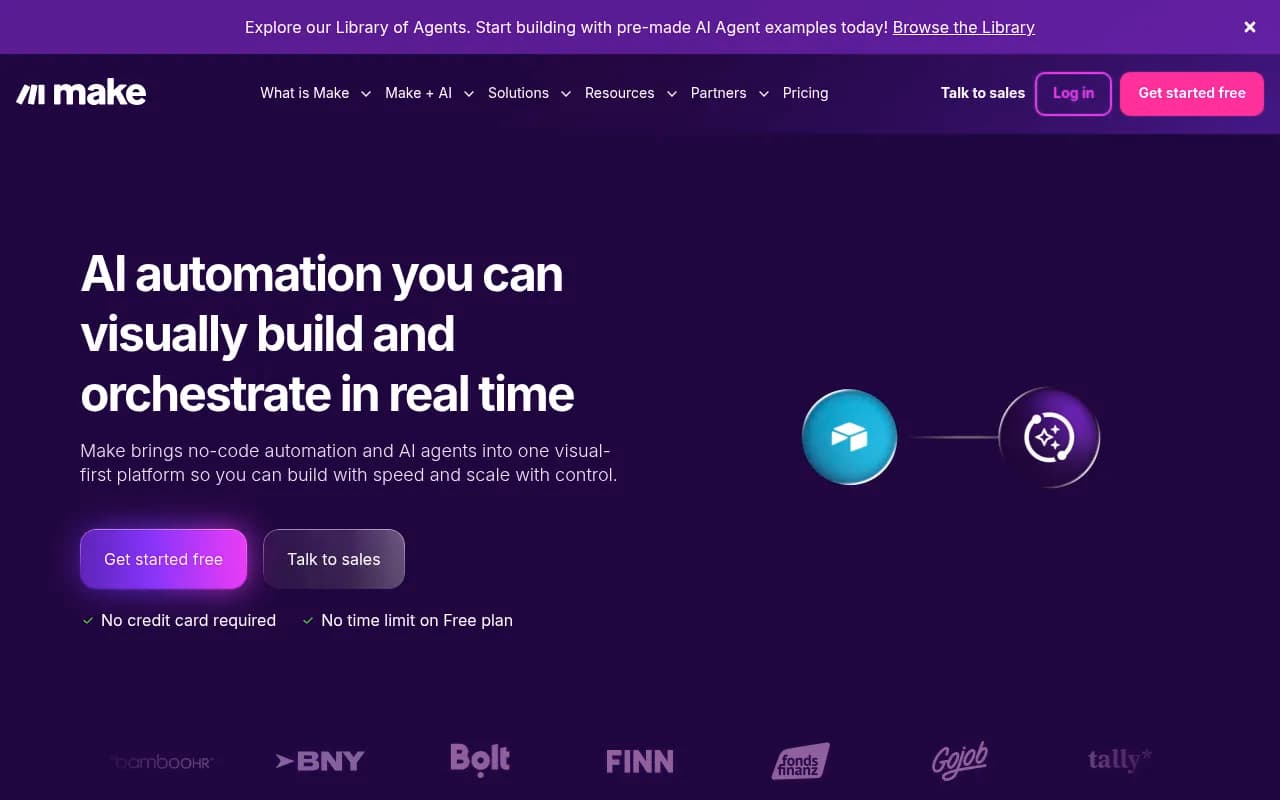
Use automation tools to chain it together. Workato, n8n, and Make can connect multiple MCP servers into a single workflow. An agent that can pull data from five tools and act on it is dramatically more useful than one that can only query one at a time.
The honest state of MCP for marketing in 2026
MCP is genuinely useful, but it's also still early. Not every tool has a polished MCP server. Some servers are read-only, which limits what an agent can actually do. The quality of the data you get out depends entirely on the quality of the tool you're connecting to.
The category that's moving fastest is AI visibility and GEO. That makes sense -- it's a new enough discipline that the tools being built for it are designed with agent-readiness in mind from the start, rather than retrofitting MCP onto legacy infrastructure.
The SEO tools that have been around for years are catching up, but the integration depth varies. Some give your agent rich, structured data it can reason about. Others give it a watered-down version of what you'd get from the UI.
The bottom line: MCP is not magic. It's a protocol that makes your AI assistant as good as the data sources you connect it to. Connect it to good data, and it becomes genuinely powerful. Connect it to shallow or stale data, and you get a faster version of the same mediocre insights you had before.
The teams getting real value from this in 2026 are the ones who've been deliberate about which data sources they connect, what workflows they're trying to automate, and how they close the loop between insight and action.