Key takeaways
- Peec AI is a solid monitoring tool for brands that need transparent, affordable AI visibility tracking — but it stops at diagnosis and won't help you fix what it finds.
- Qwairy is a newer GEO platform focused on AI search visibility with a clean interface, but its optimization and content capabilities are limited compared to more mature platforms.
- Promptwatch is the only platform of the three that closes the full loop: find gaps, generate content, track results — making it the strongest choice for teams that want to actually improve their AI search presence, not just watch it.
- If your team's goal is to appear more often in ChatGPT, Perplexity, Claude, and Google AI Overviews, monitoring alone won't get you there. You need content and optimization tools too.
- Pricing varies significantly: Peec AI starts around $100/mo, Promptwatch at $99/mo, with Qwairy's pricing less publicly documented.
The GEO platform market has gotten crowded fast. In early 2025, you could count the serious AI visibility tools on one hand. By mid-2026, there are dozens — and most of them look similar at first glance. Dashboards, brand mention counts, share of voice charts. It's easy to pick the wrong one.
This guide focuses on three platforms that come up frequently in buyer conversations: Peec AI, Qwairy, and Promptwatch. They're not identical products, and the differences matter more than the similarities. Let's get into it.
What these platforms are actually trying to do
Before comparing features, it's worth being clear about what problem each platform is built to solve.
AI search visibility is the question of how often your brand appears when someone asks ChatGPT, Perplexity, Claude, or another AI model a question relevant to your category. Unlike traditional SEO, where you can check your Google ranking for a keyword, AI search is probabilistic and opaque. The model decides what to cite. You can't just "rank" for a prompt.
That creates two distinct problems:
- Knowing where you stand (monitoring)
- Doing something about it (optimization)
Most platforms in this space were built to solve problem one. A smaller number are genuinely built to solve both. That distinction is the core of this comparison.
Peec AI: what it does well and where it stops
Peec AI launched as one of the earlier dedicated AI visibility trackers. It uses UI scraping to simulate real user queries across ChatGPT, Perplexity, and Google AI Overviews, then records whether your brand appears, how often, and in what context.

The core value proposition is straightforward: you set up a list of prompts relevant to your category, Peec AI runs them on a schedule, and you get a dashboard showing citation frequency, source URLs, and competitive share of voice. For a B2B marketing team that's never had any visibility into how AI models talk about their brand, this is genuinely useful.
A few things Peec AI does well:
- Transparent pricing (starts around $100/month, which is honest compared to competitors that hide pricing behind demo requests)
- Clean share-of-voice reporting across multiple AI engines
- Competitive benchmarking that shows where rivals are appearing and you're not
- Relatively fast setup — you don't need a long onboarding call to get data flowing
The limitation is real, though. Peec AI tracks mentions but doesn't write content, build authority signals, or suggest what to do when your numbers are low. Multiple independent reviews note this explicitly: it's a diagnostic tool, not a treatment. If your citation rate is 12% and a competitor's is 34%, Peec AI will show you that gap clearly. It won't tell you how to close it.
For teams with a dedicated content and SEO function that just needs the data layer, that's fine. For teams that want the platform to drive action, it's a ceiling.
Qwairy: the newer entrant worth watching
Qwairy is a GEO platform focused on AI search visibility tracking and optimization. It's newer to the market than Peec AI and Promptwatch, which means it's still building out its feature set.
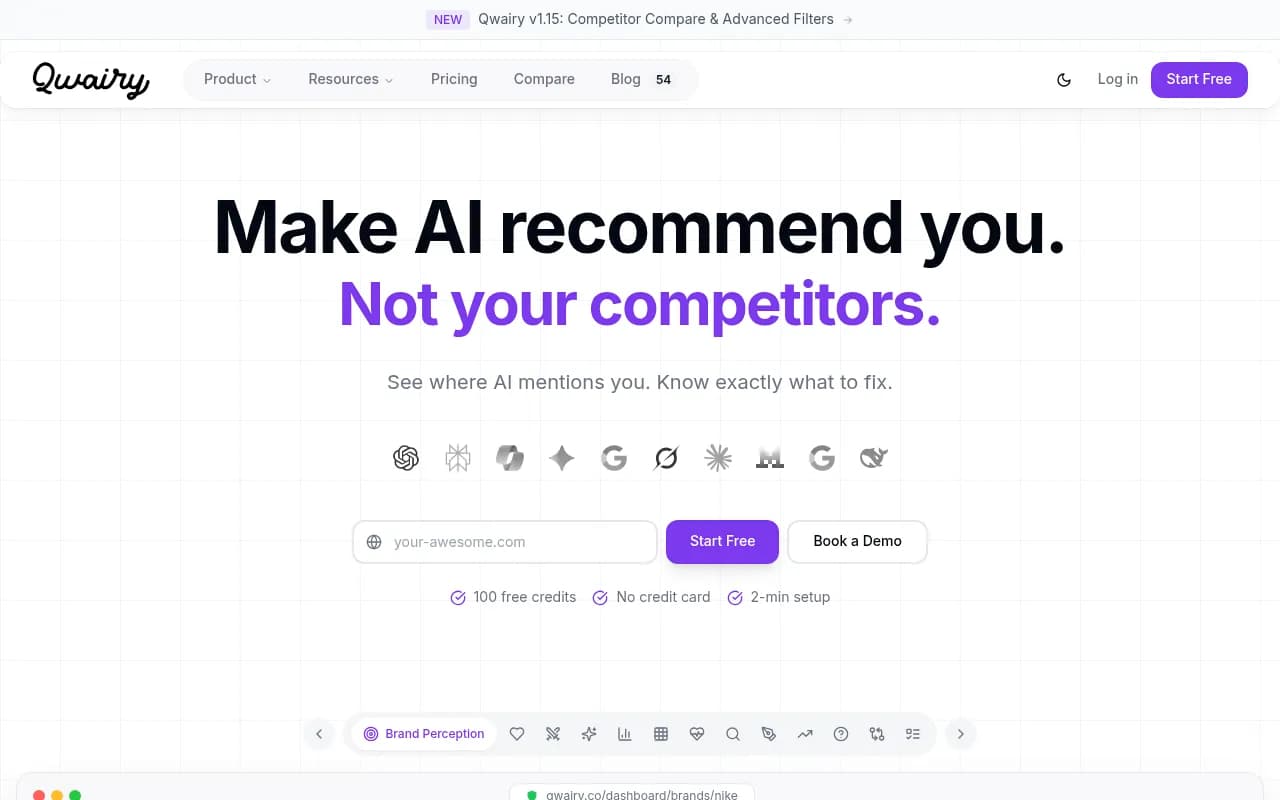
From what's publicly available, Qwairy covers the core monitoring use cases: prompt tracking, brand mention detection, and competitor visibility comparisons across major AI engines. The interface is clean, and the platform appears to be aimed at marketing teams and agencies that want a modern, purpose-built GEO tool rather than a legacy SEO platform bolted onto AI tracking.
Where Qwairy gets harder to evaluate is on the optimization side. The platform's content generation and gap analysis capabilities aren't as well-documented or as mature as what you'd find in Promptwatch. Pricing is also less transparent, which makes it harder to compare on a like-for-like basis.
Qwairy is worth watching if you're evaluating the space and want to include a newer player in your shortlist. But for teams that need proven optimization workflows today, it's a riskier bet than more established platforms.
Promptwatch: monitoring plus the full optimization loop
Promptwatch takes a different approach from both Peec AI and Qwairy. It's built around the idea that knowing your AI visibility score is only useful if you can do something with it.

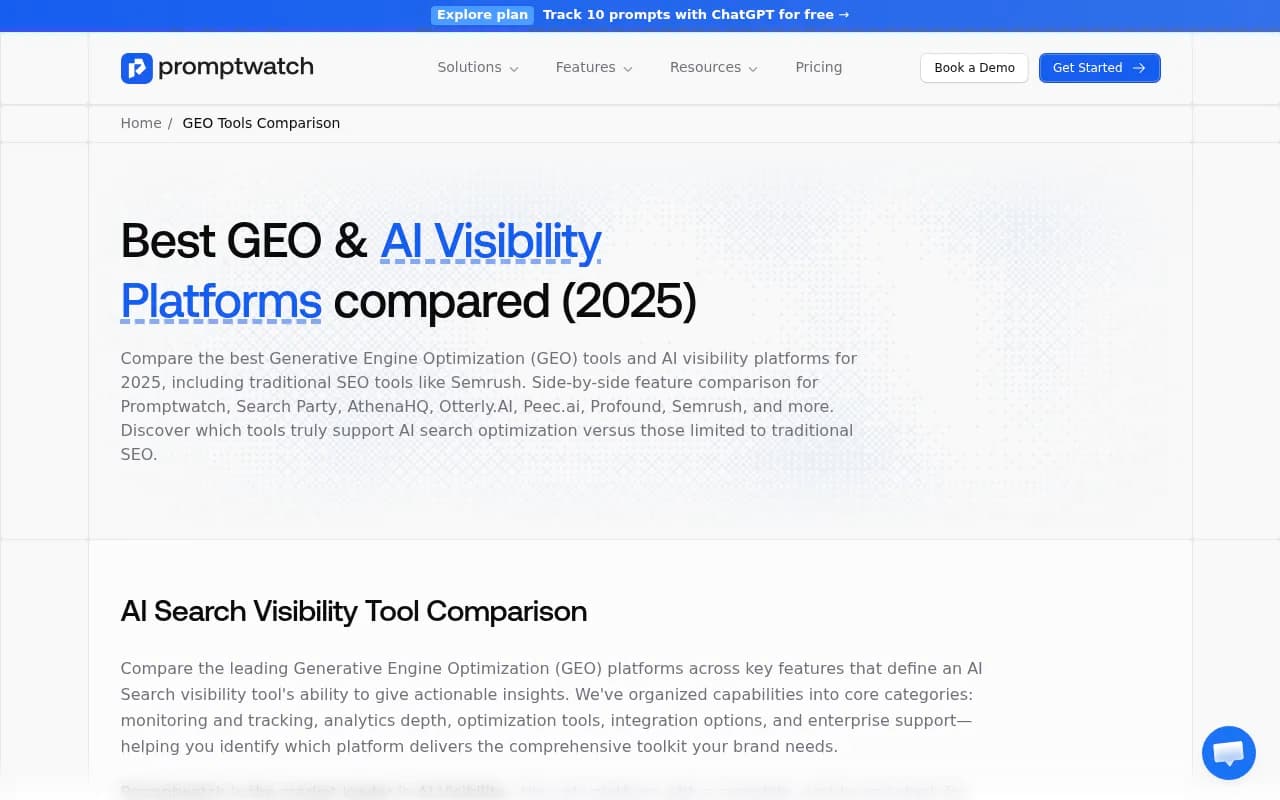
The platform covers monitoring across 10 AI models (ChatGPT, Claude, Perplexity, Gemini, Google AI Overviews, Grok, DeepSeek, Copilot, Meta AI, and Mistral), but that's the starting point, not the product. What makes it different is what happens after you see the data.
The Answer Gap Analysis shows you exactly which prompts competitors are appearing for that you're not — not as a vague "you're missing coverage here" note, but as specific questions and topics your site doesn't currently address. From there, Promptwatch's built-in AI writing agent generates articles, listicles, and comparison pages grounded in real citation data from over 880 million citations analyzed. This isn't generic content — it's engineered around the specific prompts and angles that AI models are actually citing.
Then you track whether the new content moves the needle. Page-level tracking shows which pages are being cited, how often, and by which models. Traffic attribution (via code snippet, Google Search Console integration, or server log analysis) connects visibility changes to actual revenue.
That loop — find gaps, create content, track results — is what separates Promptwatch from monitoring-only tools.
A few other capabilities worth noting:
- AI crawler logs that show when ChatGPT, Claude, and Perplexity bots are crawling your site, which pages they read, and what errors they hit
- Prompt volume and difficulty scores so you can prioritize winnable prompts instead of spreading effort thin
- Reddit and YouTube tracking to surface discussions that directly influence AI recommendations
- ChatGPT Shopping tracking for brands that sell products
- Competitor heatmaps showing who's winning for each prompt and why
Promptwatch is used by 6,700+ brands and agencies including Booking.com and Center Parcs, and its data has been cited in the Wall Street Journal and Axios.
Feature comparison: Peec AI vs Qwairy vs Promptwatch
| Feature | Peec AI | Qwairy | Promptwatch |
|---|---|---|---|
| AI model coverage | ChatGPT, Perplexity, Google AIO | Multiple AI engines | 10 models incl. Claude, Grok, DeepSeek, Mistral |
| Brand mention tracking | Yes | Yes | Yes |
| Competitive share of voice | Yes | Yes | Yes |
| Answer gap analysis | No | Limited | Yes (core feature) |
| AI content generation | No | No | Yes (built-in writing agent) |
| Page-level citation tracking | No | Limited | Yes |
| AI crawler logs | No | No | Yes |
| Prompt volume & difficulty scores | No | No | Yes |
| Reddit & YouTube tracking | No | No | Yes |
| ChatGPT Shopping tracking | No | No | Yes |
| Traffic attribution | No | No | Yes (GSC, code snippet, server logs) |
| Pricing transparency | Yes (~$100/mo) | Limited | Yes ($99-$579/mo) |
| Free trial | Yes | Unknown | Yes |
The table makes the positioning clear. Peec AI and Qwairy are monitoring tools. Promptwatch is an optimization platform that includes monitoring.
Who should use each platform
Peec AI is a good fit if:
- You're a B2B marketing team that needs to answer "are we visible in AI search?" for internal stakeholders
- Budget is a constraint and you want a no-frills monitoring tool
- You have a separate content team that will act on the data independently
- You're just starting to track AI visibility and want to establish a baseline before investing in optimization
Qwairy is worth considering if:
- You want to evaluate a newer platform with a modern interface
- You're an agency looking to add GEO tracking to your service stack
- You're comfortable with a product that's still maturing and want to grow with it
Promptwatch is the right choice if:
- Your goal is to actually improve your AI visibility, not just measure it
- You want content generation built into the same platform as your tracking
- You need to justify GEO investment with revenue attribution data
- You're managing multiple brands or client sites (the agency and enterprise tiers support this)
- You want crawler log data to understand how AI bots are interacting with your site
The monitoring-only trap
One thing worth saying directly: a lot of teams buy a monitoring tool, get their share-of-voice dashboard, and then... don't know what to do next. The data shows you're at 15% citation rate. Your competitor is at 40%. Now what?
This is where monitoring-only platforms leave you stuck. You can export the data and hand it to a content team, but without knowing which specific prompts to target, which angles AI models prefer, and what citation patterns look like for your category, the content effort is largely guesswork.
The platforms that solve this are the ones that connect the data to the action. That's a short list in 2026, and Promptwatch is the most complete version of it.
Pricing overview
| Platform | Entry price | What you get |
|---|---|---|
| Peec AI | ~$100/mo | Monitoring across ChatGPT, Perplexity, Google AIO |
| Qwairy | Not publicly listed | AI visibility tracking, limited optimization |
| Promptwatch Essential | $99/mo | 1 site, 50 prompts, 5 articles/mo |
| Promptwatch Professional | $249/mo | 2 sites, 150 prompts, 15 articles, crawler logs |
| Promptwatch Business | $579/mo | 5 sites, 350 prompts, 30 articles |
Promptwatch's entry price is competitive with Peec AI, but the gap in capability is significant. At $99/month, you're getting monitoring plus content generation plus gap analysis — not just a dashboard.
Other platforms worth knowing about
If you're doing a thorough evaluation, a few other tools are worth including in your shortlist:

Otterly.AI is a lightweight, affordable monitoring tool similar in scope to Peec AI. Good for teams that want basic tracking without complexity.
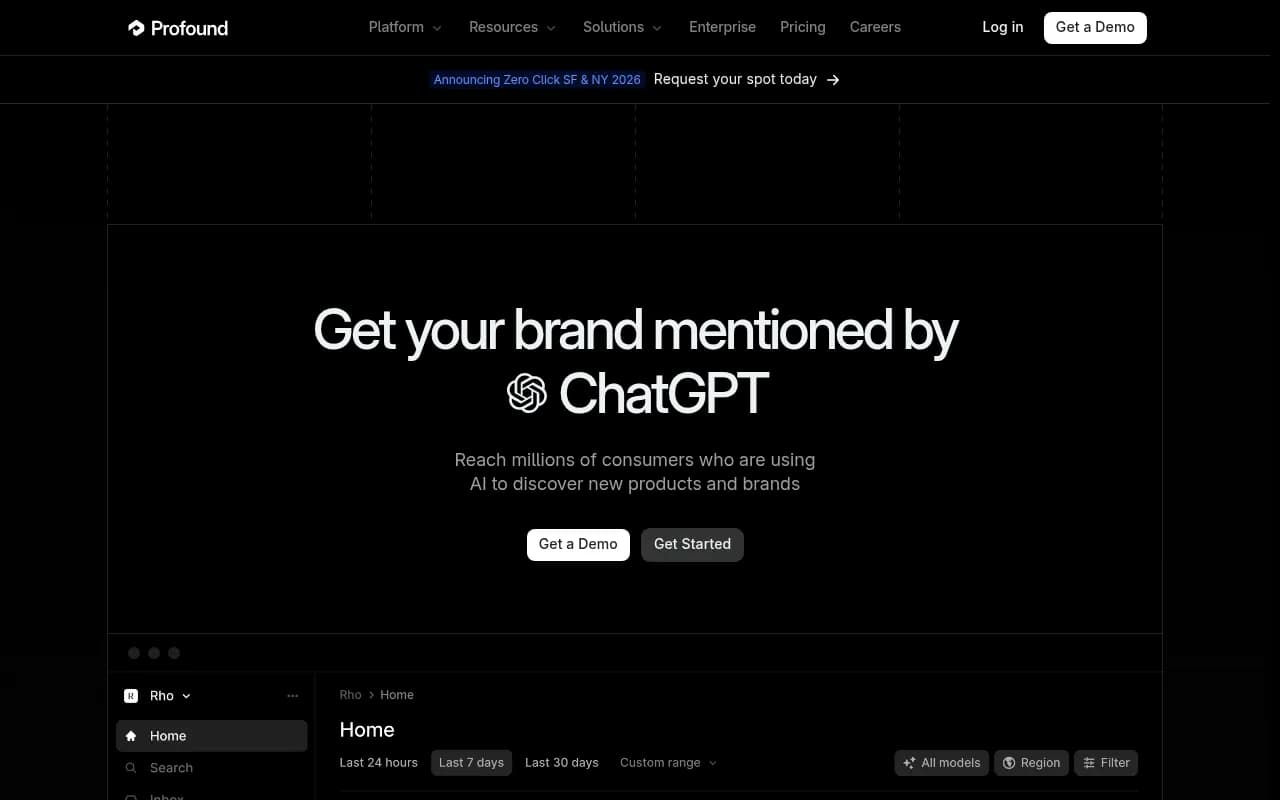
Profound AI is an enterprise-grade platform with strong analytics depth. It's positioned at larger organizations and comes with a higher price point to match.
Scrunch AI covers broad AI engine monitoring with clean reporting. It's strong for ongoing brand tracking but, like Peec AI, is more diagnostic than prescriptive.

Athena HQ focuses on monitoring and competitive benchmarking. It lacks the content generation and optimization tools that Promptwatch offers.
The bottom line
Peec AI is a legitimate tool for what it does. If you need a clean, affordable way to track brand mentions across AI search engines and report on competitive share of voice, it delivers that. The limitation is the ceiling — it shows you the problem but doesn't help you solve it.
Qwairy is a newer option with potential, but it's not yet at the feature depth of the more established platforms. Worth watching, but probably not the right choice if you need proven optimization workflows now.
Promptwatch is the platform to use if your actual goal is to improve your AI search visibility. The monitoring is there, but the real value is in the gap analysis, content generation, and attribution loop that turns data into results. For most marketing teams in 2026, that's the difference between a reporting exercise and a growth channel.