Key takeaways
- Peec AI is a solid monitoring-first tool with strong multilingual support (115+ languages) and transparent pricing from $100/month -- good for teams that just need visibility data.
- Knowatoa is a lightweight tracker suited for smaller brands or individuals who want a simple, low-friction way to see where they appear in AI search.
- Promptwatch is the only platform of the three that closes the full loop: it finds gaps, generates content to fix them, and tracks whether that content actually gets cited -- making it the stronger choice for teams that want to act on their data, not just read it.
- If your goal is to improve AI visibility (not just measure it), the monitoring-only approach of Peec AI and Knowatoa will leave you staring at dashboards without a clear path forward.
The AI search monitoring space has exploded in 2026. Every few weeks, a new tool appears claiming to track how your brand shows up in ChatGPT, Perplexity, Claude, or Google AI Overviews. Most of them do roughly the same thing: run prompts, check if your brand appears, and show you a score.
But "roughly the same thing" hides real differences in depth, usability, and -- most importantly -- what you can actually do with the data.
This comparison focuses on three platforms that come up frequently in the conversation: Peec AI, Knowatoa, and Promptwatch. They sit at different points on the spectrum from "lightweight tracker" to "full optimization platform." Understanding where each one sits will save you from buying the wrong tool.
What we're actually comparing
Before getting into the tools, it's worth being clear about what matters in an AI visibility platform. There are two fundamentally different things a tool can do:
- Tell you where you stand (monitoring)
- Help you improve where you stand (optimization)
Most tools in this space only do the first. That's not nothing -- you can't improve what you don't measure. But if your goal is to actually show up more often when prospects ask ChatGPT for vendor recommendations, monitoring alone gets you to the starting line, not the finish.
With that framing in mind, here's how the three platforms compare.
Peec AI
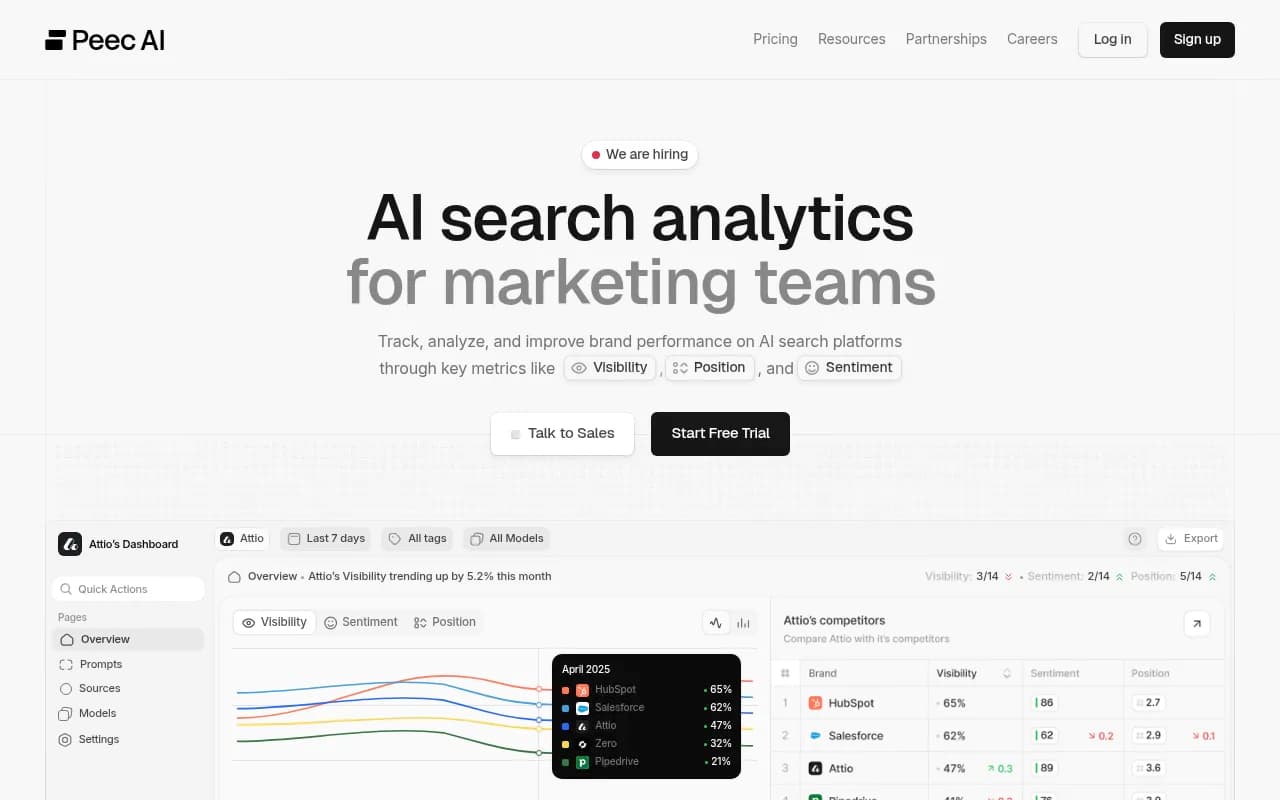
Peec AI was one of the earlier purpose-built tools for tracking brand visibility inside large language models. It treats prompts as the core tracking unit -- you define the questions your prospects might ask, and the platform runs those prompts across AI engines to measure how often your brand appears.
What it does well
The headline number for Peec AI is its language coverage: 115+ languages across 10 AI engines. For global brands tracking visibility across markets, that's genuinely useful and not something every competitor matches.
Setup is relatively quick. The platform offers suggested prompts to help you get started, which reduces the friction of building a prompt library from scratch. Reviews consistently describe it as user-friendly -- you don't need a technical background to get the dashboards running.
Pricing starts at around $100/month, which is transparent and reasonable for a monitoring tool. That clarity is worth something in a market where many platforms hide pricing behind "contact sales."
The core metrics Peec AI surfaces are share of voice, citation frequency, and source URLs -- the basics you'd expect. You can see which competitors are getting cited alongside (or instead of) you, and track how that changes over time.
Where it falls short
Peec AI is a monitoring tool. It tells you what's happening; it doesn't help you change it. There's no content generation, no gap analysis that surfaces specific topics you're missing, no crawler logs showing how AI engines are reading your site, and no traffic attribution connecting visibility data to actual revenue.
For a B2B marketing team that needs to show ROI, "we appear in 23% of relevant ChatGPT responses" is a data point -- but it doesn't tell you what to do next. You'd need to take that information elsewhere and figure out the content and optimization strategy yourself.
One review from Discovered Labs, based on testing across multiple client implementations, put it plainly: Peec AI stops at diagnosis. It tracks mentions but doesn't write content, build authority signals, or implement technical optimizations needed to improve your numbers.
That's not a fatal flaw if you have an in-house team or agency handling execution. But it's a real limitation if you're looking for one platform to cover the full workflow.
Knowatoa
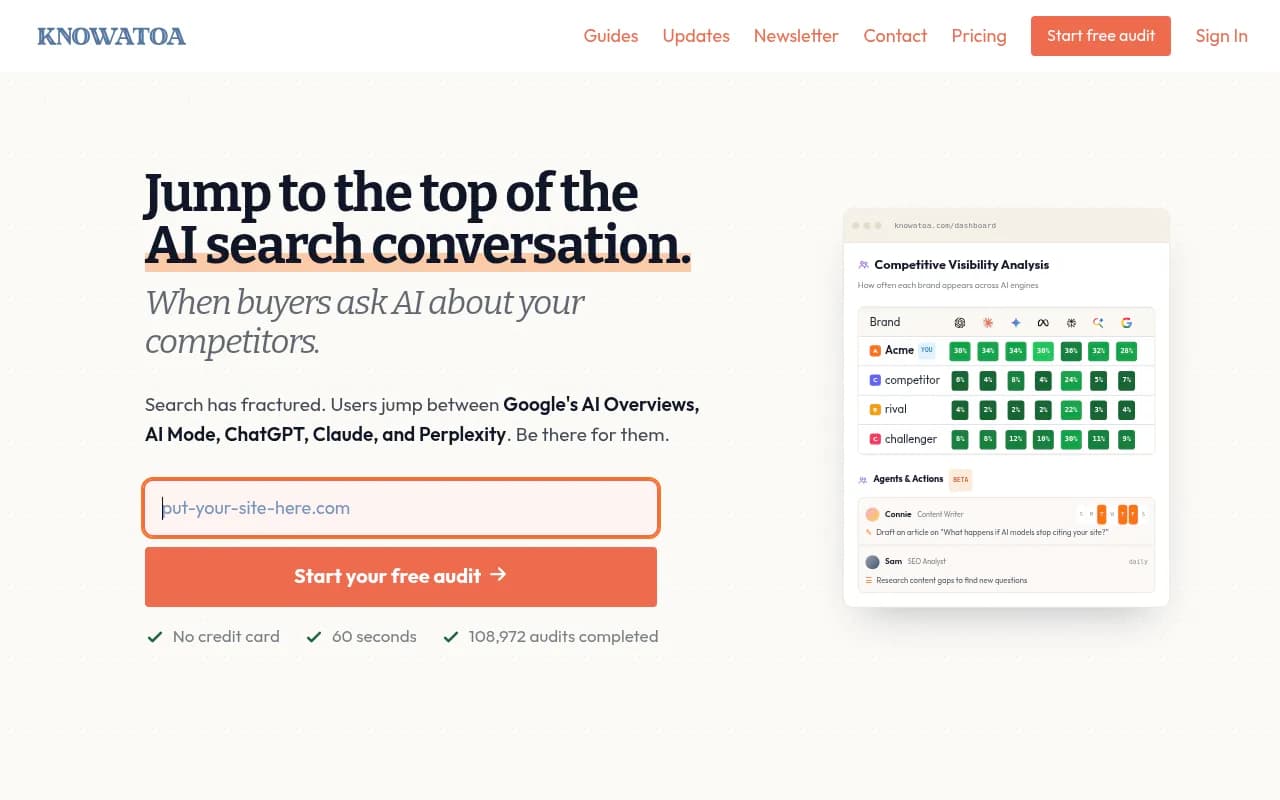
Knowatoa is a lighter-weight AI brand monitoring and search visibility tracker. It's less prominent in the market than Peec AI, which reflects both its newer status and its more limited scope.
What it does well
Knowatoa's main appeal is simplicity. For smaller brands, solo marketers, or anyone who just wants a quick read on whether they're appearing in AI search without committing to a complex setup, it offers a low-friction entry point.
The interface is clean and the learning curve is minimal. If you're new to AI visibility monitoring and want to understand the basics -- are we being cited, by which models, for which types of queries -- Knowatoa can answer those questions without overwhelming you.
Where it falls short
Knowatoa lacks the depth that more serious use cases require. Prompt volume data, difficulty scoring, competitor heatmaps, crawler logs, content generation -- none of these are part of the picture. It's a tracker, not an intelligence platform.
For agencies managing multiple clients, or marketing teams at companies where AI visibility is becoming a strategic priority, Knowatoa's feature set will feel limiting fairly quickly. It's a starting point, not a long-term solution for teams that need to move the needle.
Promptwatch
Promptwatch takes a different approach from both Peec AI and Knowatoa. Where those tools answer "are we visible?", Promptwatch is built around the question "how do we become more visible?" -- and then actually helps you do it.

The core difference: monitoring vs. optimization
Promptwatch's architecture is built around a three-step loop that most competitors skip entirely:
First, it finds the gaps. The Answer Gap Analysis shows exactly which prompts competitors are visible for that you're not. You see the specific topics, angles, and questions AI models want answers to but can't find on your site. This is more actionable than a share-of-voice score -- it tells you precisely what content you're missing.
Second, it helps you create content that gets cited. The built-in AI writing agent generates articles, listicles, and comparisons grounded in real citation data (880M+ citations analyzed), prompt volumes, persona targeting, and competitor analysis. This isn't generic content -- it's engineered around what AI models actually cite.
Third, it tracks whether it worked. Page-level tracking shows which specific pages are being cited, how often, and by which AI models. Traffic attribution (via a code snippet, Google Search Console integration, or server log analysis) connects that visibility to actual revenue.
That loop -- find gaps, generate content, track results -- is what separates Promptwatch from monitoring-only tools.
Additional capabilities worth knowing about
Beyond the core loop, Promptwatch covers several areas that Peec AI and Knowatoa don't touch:
AI Crawler Logs give you real-time visibility into which AI crawlers (ChatGPT, Claude, Perplexity, etc.) are hitting your website, which pages they're reading, and what errors they encounter. Most competitors lack this entirely, and it's genuinely useful for diagnosing why certain pages aren't getting cited.
Prompt Intelligence includes volume estimates and difficulty scores for each prompt, plus query fan-outs that show how one prompt branches into sub-queries. This lets you prioritize high-value, winnable prompts instead of guessing.
Reddit and YouTube Insights surface discussions that directly influence AI recommendations -- a channel most competitors ignore. AI models frequently cite Reddit threads and YouTube content, so knowing what's being discussed there is strategically important.
ChatGPT Shopping Tracking monitors when your brand appears in ChatGPT's product recommendations and shopping carousels -- relevant for e-commerce and consumer brands.
The platform monitors 10 AI models: ChatGPT, Perplexity, Google AI Overviews, Google AI Mode, Claude, Gemini, Meta/Llama, DeepSeek, Grok, Mistral, and Copilot. It also supports multi-language and multi-region monitoring with customizable personas.
Pricing
- Essential: $99/month (1 site, 50 prompts, 5 articles)
- Professional: $249/month (2 sites, 150 prompts, 15 articles, crawler logs, state/city tracking)
- Business: $579/month (5 sites, 350 prompts, 30 articles)
- Agency/Enterprise: custom pricing
A free trial is available, and annual billing comes with a discount.
Side-by-side comparison
| Feature | Peec AI | Knowatoa | Promptwatch |
|---|---|---|---|
| AI models tracked | 10 | Limited | 10 |
| Language support | 115+ languages | Basic | Multi-language |
| Prompt tracking | Yes | Yes | Yes |
| Share of voice / citation rate | Yes | Yes | Yes |
| Competitor analysis | Yes | Basic | Yes (heatmaps) |
| Answer gap analysis | No | No | Yes |
| AI content generation | No | No | Yes |
| AI crawler logs | No | No | Yes |
| Prompt volume & difficulty scores | No | No | Yes |
| Query fan-outs | No | No | Yes |
| Reddit & YouTube tracking | No | No | Yes |
| ChatGPT Shopping tracking | No | No | Yes |
| Traffic attribution | No | No | Yes (GSC, snippet, logs) |
| Page-level citation tracking | No | No | Yes |
| Starting price | ~$100/mo | Lower tier | $99/mo |
| Free trial | Yes | Yes | Yes |
| Best for | Global monitoring, multilingual brands | Small brands, beginners | Teams that need to improve visibility, not just track it |
Who should use which tool
Choose Peec AI if...
You need strong multilingual coverage and your primary goal is monitoring -- tracking share of voice across markets, seeing citation trends, and reporting on competitive position. It's a reasonable choice for global brands with a separate content and SEO team handling optimization, or for companies in the early stages of building an AI visibility practice who just need baseline data.
Choose Knowatoa if...
You're a small brand, a solo marketer, or an early-stage company that wants a simple, low-cost way to understand whether you're appearing in AI search at all. It's a starting point, not a strategic platform.
Choose Promptwatch if...
You want to actually improve your AI visibility, not just measure it. If you're a marketing team, SEO team, or agency that needs to show results -- more citations, more AI-driven traffic, measurable impact on pipeline -- Promptwatch is the only platform of the three that gives you the tools to do that. The combination of gap analysis, content generation, crawler logs, and traffic attribution means you can run a complete optimization program from one place.
It's also worth noting that Promptwatch's Essential plan at $99/month is competitive with Peec AI's entry pricing, so the cost difference between "monitoring only" and "full optimization platform" is smaller than you might expect.
The monitoring-only trap
There's a pattern worth naming directly. A lot of teams buy an AI visibility monitoring tool, get excited about the dashboards, and then... don't know what to do next. They have a share-of-voice score. They can see that a competitor appears more often than they do. But the tool doesn't tell them why, and it certainly doesn't help them fix it.
This is the monitoring-only trap. The data is real, but it doesn't translate into action without significant additional work -- content audits, keyword research, content production, technical SEO for AI crawlers, and so on.
Promptwatch is built specifically to break that pattern. The Answer Gap Analysis tells you exactly which content you're missing. The AI writing agent helps you create it. The crawler logs help you fix technical issues. And the traffic attribution shows you whether it's working.
That's a fundamentally different value proposition from a tool that shows you a dashboard and leaves the rest to you.
A note on the broader landscape
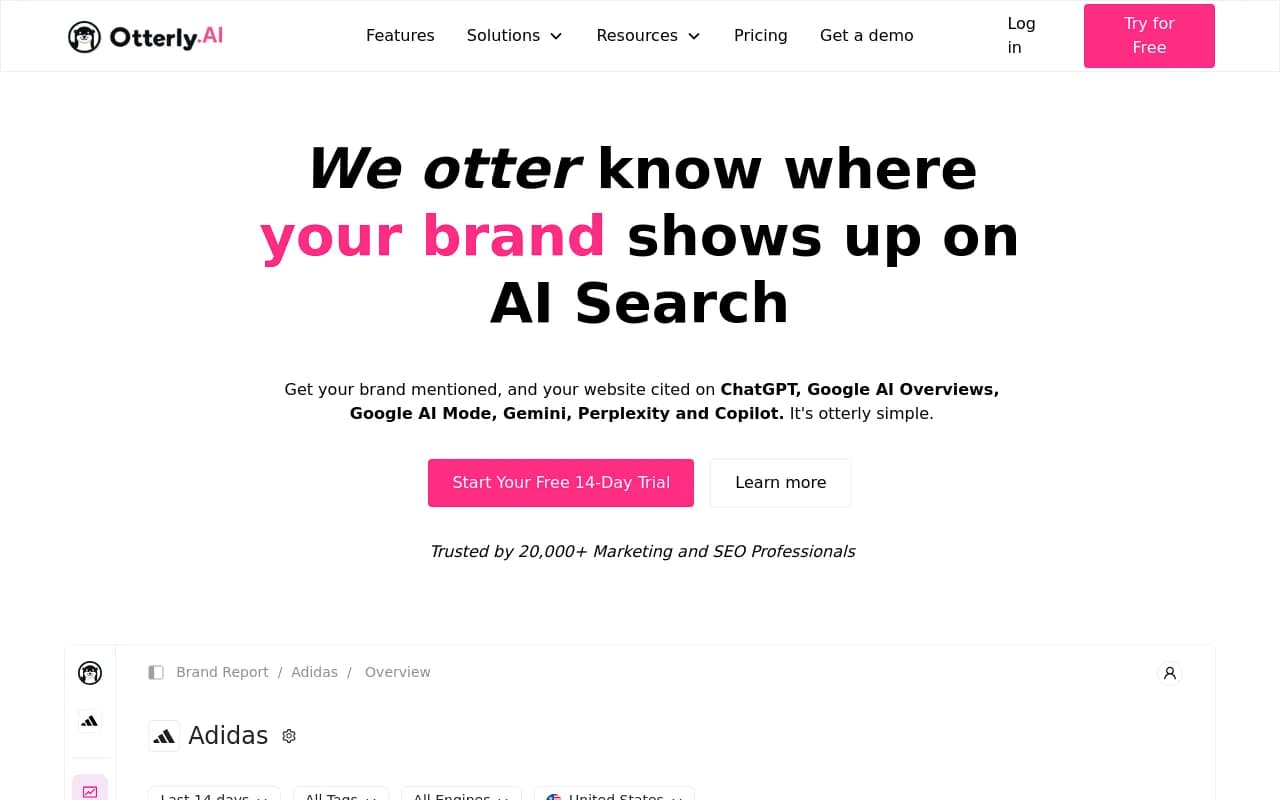
Peec AI and Knowatoa are two tools in a crowded field. If neither feels like the right fit, there are other monitoring-focused options worth considering -- Otterly.AI, Peasy, Mentions.so, and Trakkr.ai all sit in a similar tier. For enterprise-grade monitoring with more depth, Profound and Scrunch offer stronger feature sets, though at higher price points.
But if the goal is optimization rather than just monitoring, Promptwatch remains the most complete platform in the market right now -- the only one that covers the full cycle from gap identification through content creation to traffic attribution.
Bottom line
Peec AI is a competent monitoring tool with real strengths in multilingual coverage. Knowatoa is a lightweight option for teams just getting started. Promptwatch is what you use when you're ready to stop watching your competitors win AI citations and start doing something about it.
The right choice depends on where you are in your AI visibility journey -- but if you're past the "we should probably track this" stage and into "we need to improve this," the monitoring-only tools will hold you back.