Key takeaways
- Traditional SEO tools alone no longer cut it -- agencies that won in 2025 combined classic rank tracking with dedicated AI visibility platforms
- The biggest shift was moving from keyword rankings to citation tracking: which pages does ChatGPT actually quote, and why?
- Content gap analysis (finding what competitors rank for in AI but you don't) became the most valuable agency deliverable
- The agencies that got results fastest used tools that could both identify gaps AND generate optimized content -- not just monitoring dashboards
- AI crawler logs emerged as a critical diagnostic tool: if ChatGPT's crawler can't read your page, you won't get cited regardless of content quality
The year AI search stopped being optional
Something shifted in 2025. It wasn't a single announcement or algorithm update -- it was a slow accumulation of client questions that agencies couldn't ignore anymore. "Why isn't my brand showing up when people ask ChatGPT for recommendations?" "Our traffic is down but our Google rankings look fine -- what's happening?" "A competitor I've never heard of keeps appearing in Perplexity results."
These questions forced agencies to confront a reality: a meaningful chunk of discovery was happening outside of Google's traditional blue links. ChatGPT, Perplexity, Google's AI Overviews, and a growing list of other AI-powered answer engines were reshaping how users found products, services, and brands. And most agency tool stacks weren't built for any of it.
The agencies that figured it out first didn't abandon their existing SEO workflows. They layered new tools on top -- tools designed specifically for what's now being called Generative Engine Optimization (GEO) or Answer Engine Optimization (AEO). This guide breaks down exactly which tools they used, what each one does, and where it fits in a modern agency workflow.
Why ChatGPT rankings work differently from Google rankings
Before getting into the tools, it's worth being clear about what "ranking in ChatGPT" actually means. There's no position 1 through 10. There's no keyword density formula. What there is: a large language model that, when answering a question, pulls from sources it has indexed, crawled, and deemed credible enough to cite.
Getting cited by ChatGPT (or Claude, or Perplexity) depends on a few things that traditional SEO only partially addresses:
- Whether AI crawlers can actually access and parse your content
- Whether your content directly and clearly answers the kinds of questions users are asking AI models
- Whether your brand or domain appears in enough third-party sources (Reddit threads, review sites, YouTube, industry publications) that AI models treat you as a legitimate authority
- Whether your content is structured in a way that makes it easy for an LLM to extract and quote
The agencies that won in 2025 built workflows around all four of these factors. Here's the tool-by-tool breakdown of how they did it.
Phase 1: Diagnosing the visibility gap
The first thing any agency needs to know is: where does the client actually stand in AI search right now? Not in Google -- in ChatGPT, Perplexity, Gemini, and the rest.
This is harder than it sounds. You can't just Google your client's name and see where they appear. You need to run hundreds of relevant prompts across multiple AI models and track which ones surface the client, which surface competitors, and which return no mention at all.
AI visibility tracking platforms
This is where dedicated GEO platforms come in. A few that agencies used heavily in 2025:
Promptwatch became a go-to for agencies managing multiple clients, largely because it goes beyond just showing you visibility scores. Its Answer Gap Analysis identifies the specific prompts where competitors appear but your client doesn't -- which is exactly the kind of actionable data you can build a content strategy around.

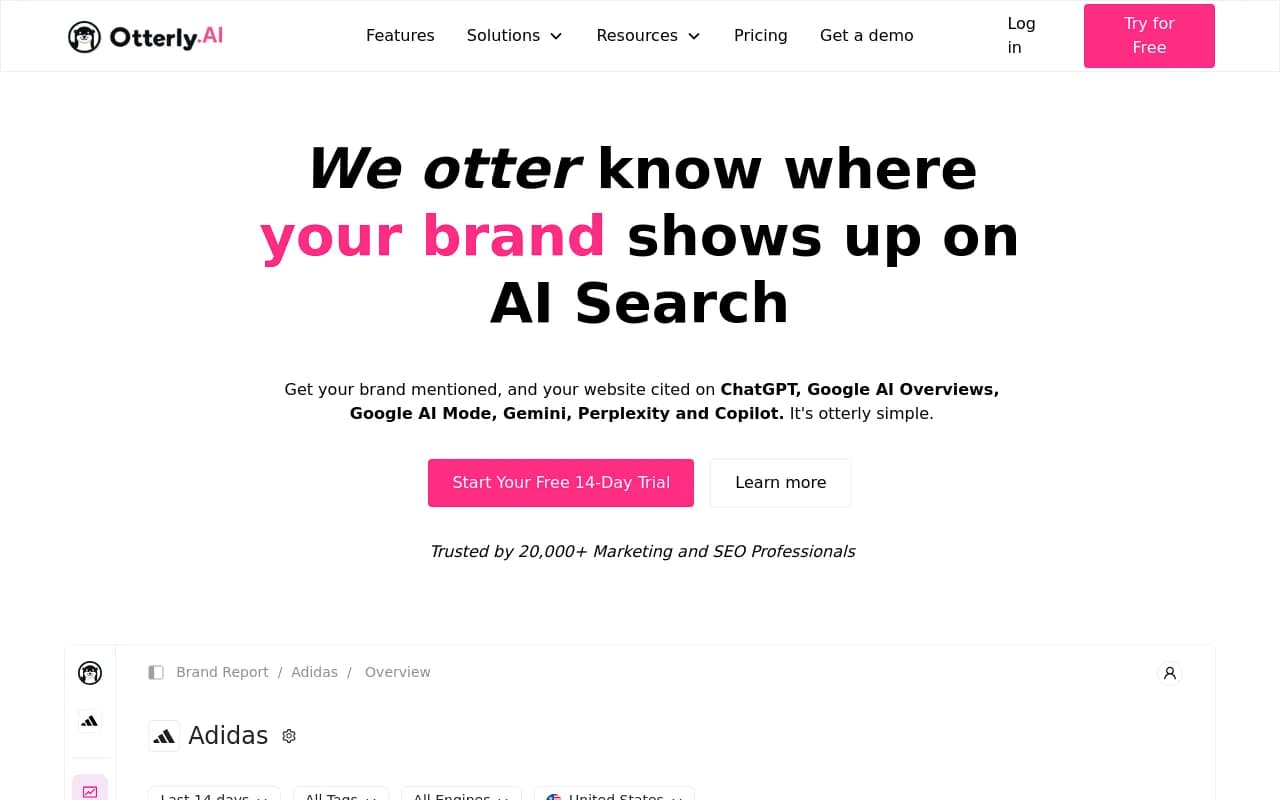
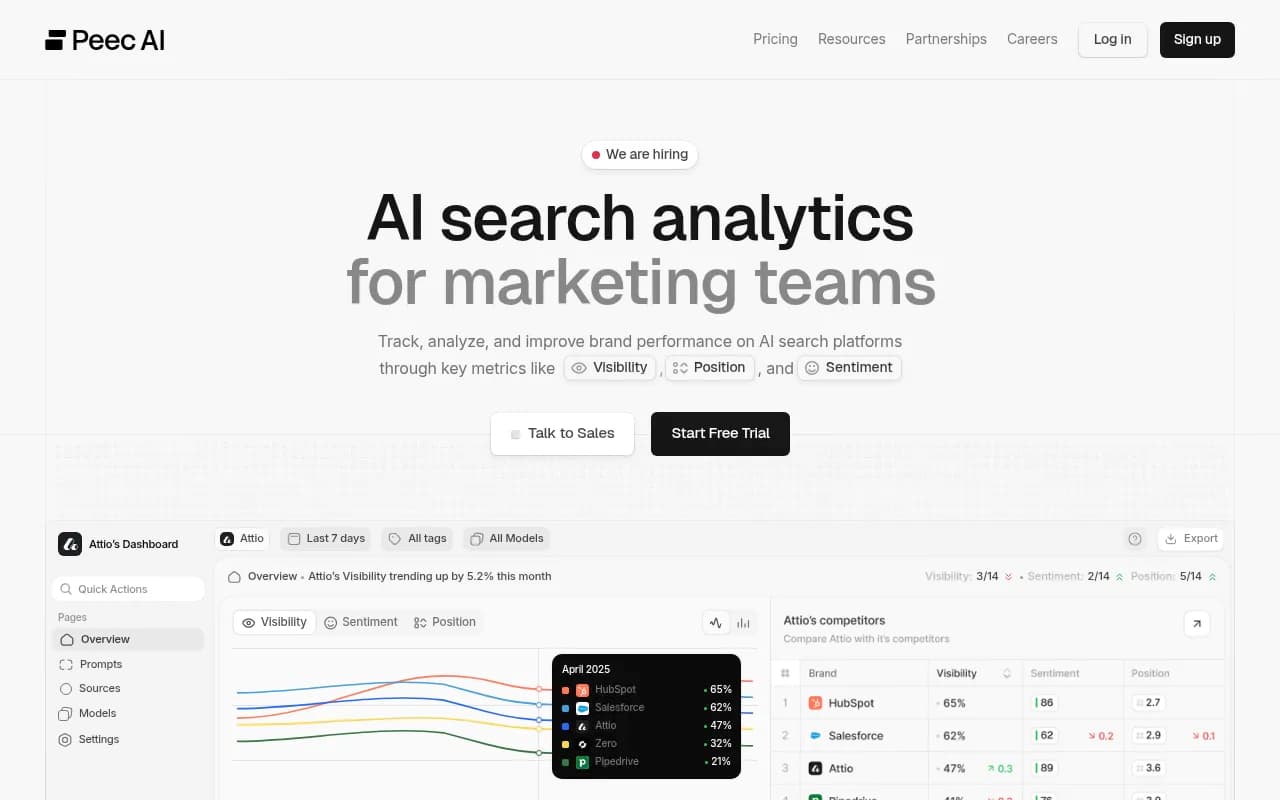
For agencies that needed something more budget-friendly to start with, tools like Otterly.AI and Peec AI offered basic monitoring across multiple LLMs. They're solid for getting a baseline read on visibility, though they stop short of telling you what to do about it.
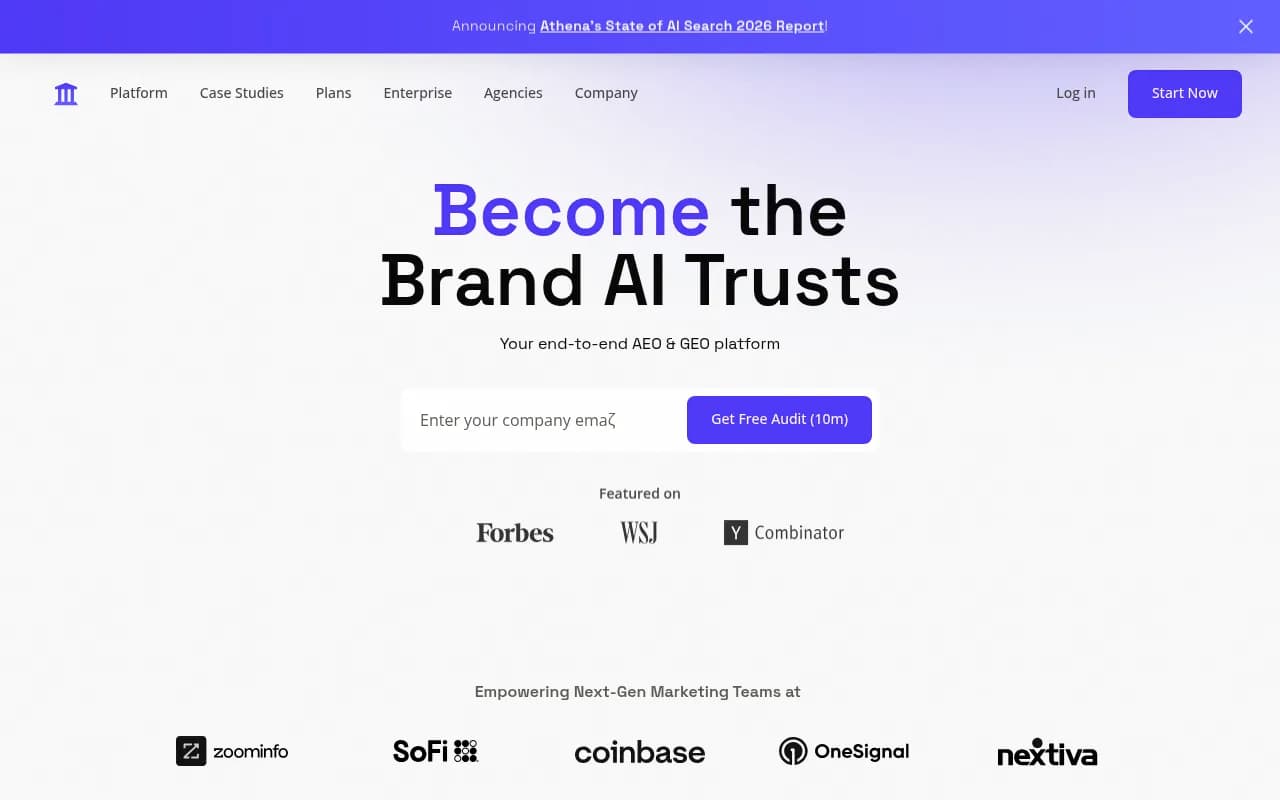
Scrunch and Athena HQ also appeared frequently in agency stacks, particularly for clients in competitive verticals where tracking sentiment (not just mentions) mattered.
The honest assessment: most monitoring-only tools are useful for reporting to clients but leave the actual strategy work to the agency. The platforms that generated the most value were the ones that connected visibility data to content action -- more on that below.
Traditional SEO tools still matter (but differently)
Agencies didn't throw out Semrush or Ahrefs. They kept using them for what they're genuinely good at: backlink analysis, keyword research, technical audits. But they stopped treating Google rankings as a proxy for overall visibility.
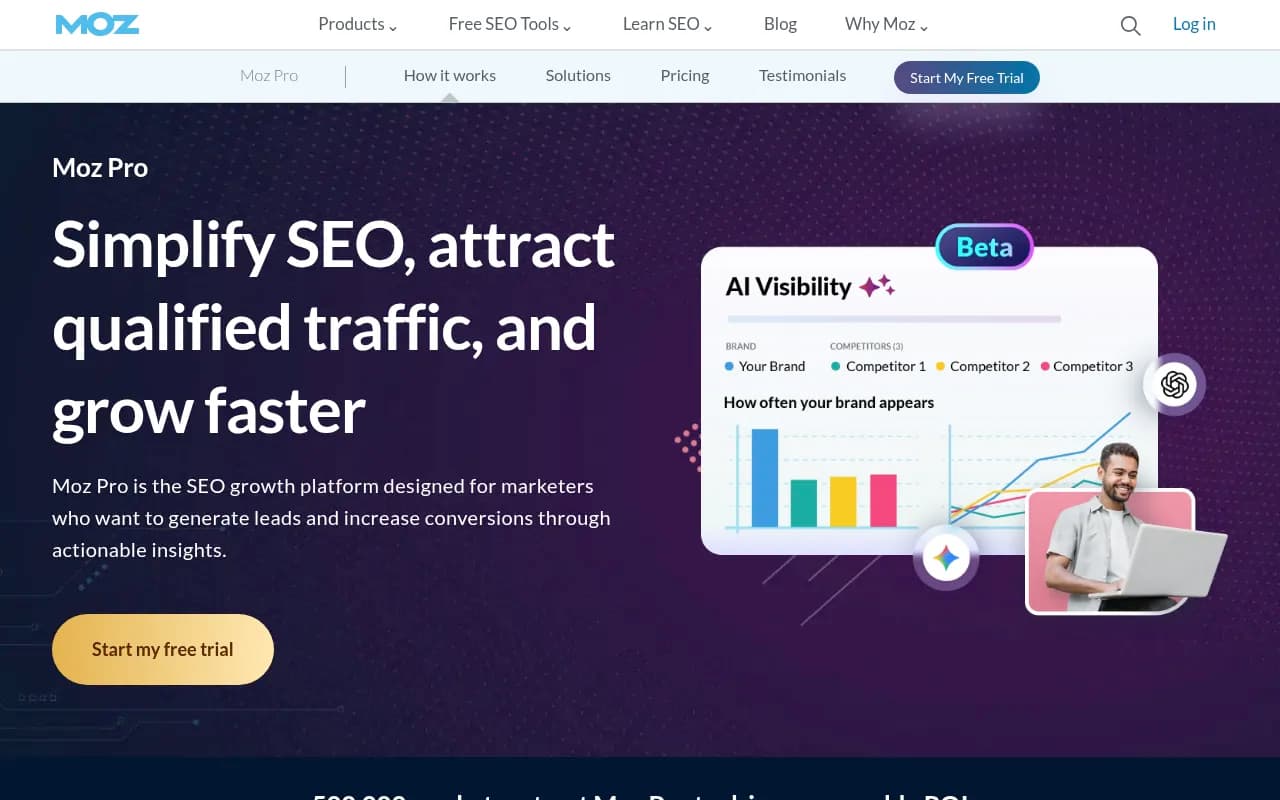
One important nuance: 52% of sources cited in Google AI Overviews already rank in the top 10 traditional results. So traditional SEO still feeds AI visibility -- it's just not sufficient on its own. Agencies that maintained strong Google rankings while adding AI-specific optimization saw the best results.
SE Ranking also expanded its AI visibility features significantly in 2025, making it a reasonable middle-ground option for agencies that wanted one platform to cover both traditional and AI search tracking.
Phase 2: Finding the content gaps
Once you know where a client is invisible, the next question is: what content would fix it?
This is where the real agency value-add happened in 2025. The agencies that just said "you need more content" lost clients. The ones that said "here are the 23 specific questions ChatGPT answers for your competitors that it can't answer for you, and here's why" kept them.
Answer gap analysis
The core workflow: run a set of prompts relevant to the client's category across multiple AI models, record which competitors get cited, identify the topics and angles those competitors cover that the client doesn't, and build a content roadmap from that gap list.
Promptwatch's Answer Gap Analysis automates most of this. It surfaces competitor-visible prompts, shows the content that's driving those citations, and helps prioritize which gaps are worth closing first based on prompt volume and difficulty scores.
For agencies doing this manually or with lighter-weight tools, the process is more time-consuming but the logic is the same: treat AI citations like backlinks -- figure out who's getting them and why, then reverse-engineer the content strategy.
Topical authority mapping
One pattern that emerged clearly in 2025: AI models tend to cite sources that cover a topic comprehensively, not just sources that have one good article. Agencies that helped clients build topical authority -- a cluster of interlinked content covering a subject from multiple angles -- saw better citation rates than those focused on individual pieces.
Topical Map AI was useful here for visualizing content clusters and identifying gaps in coverage.
MarketMuse served a similar function for agencies that needed more granular content intelligence -- it shows not just what topics to cover but how thoroughly to cover them relative to what's already ranking.
Content Harmony was another strong choice for agencies building content briefs at scale, particularly for teams where the strategy work and the writing work happen separately.
Phase 3: Creating content that actually gets cited
This is where a lot of agencies got stuck in 2025. They could identify the gaps. They couldn't fill them fast enough to matter.
The agencies that scaled successfully used AI writing tools -- but not indiscriminately. The key distinction: AI-generated content that's grounded in real citation data and structured to answer specific questions performs very differently from generic AI content that just hits keyword targets.
AI content generation for GEO
The best content for AI citation tends to be direct, specific, and structured. Clear headings, direct answers to questions, concrete data points. This is actually where AI writing tools can shine -- they're good at producing well-structured prose when given a clear brief.
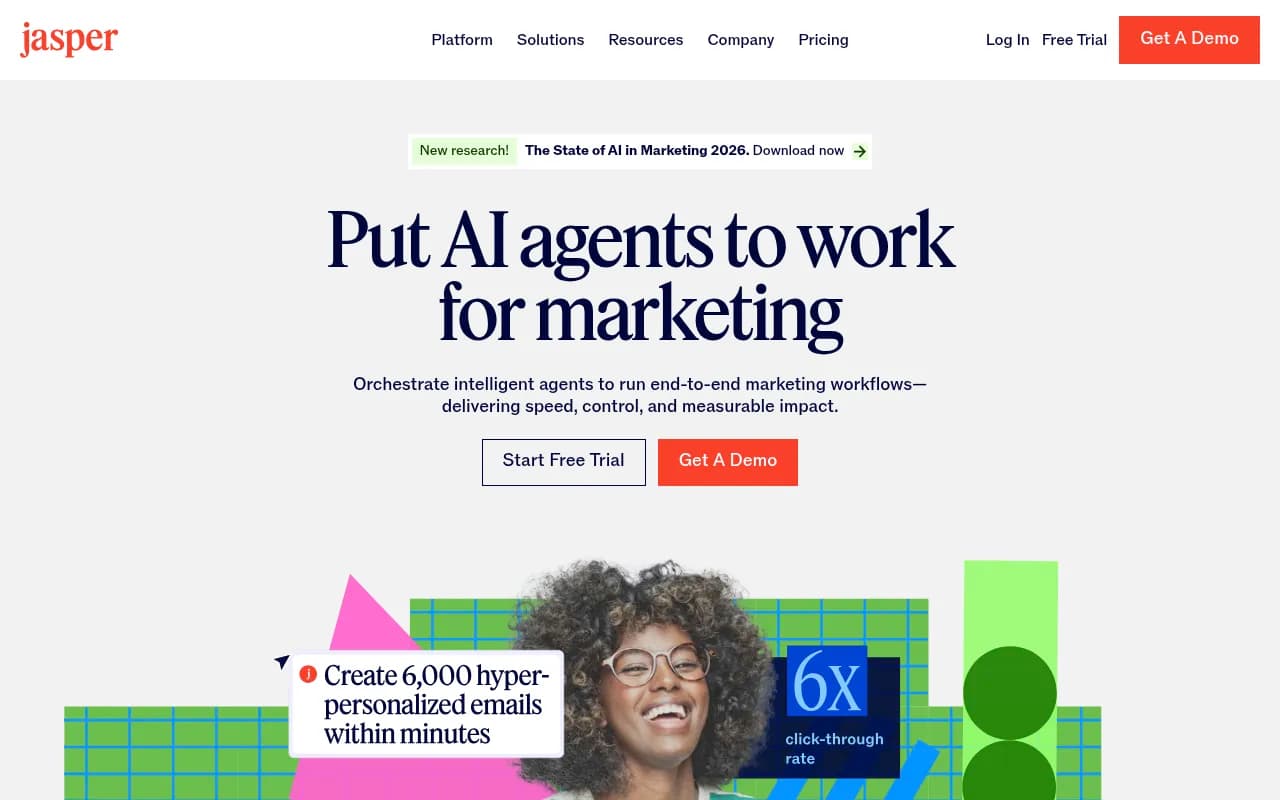
Jasper AI was widely used for long-form content, particularly for agencies that needed to produce high volumes of optimized articles across multiple client accounts.
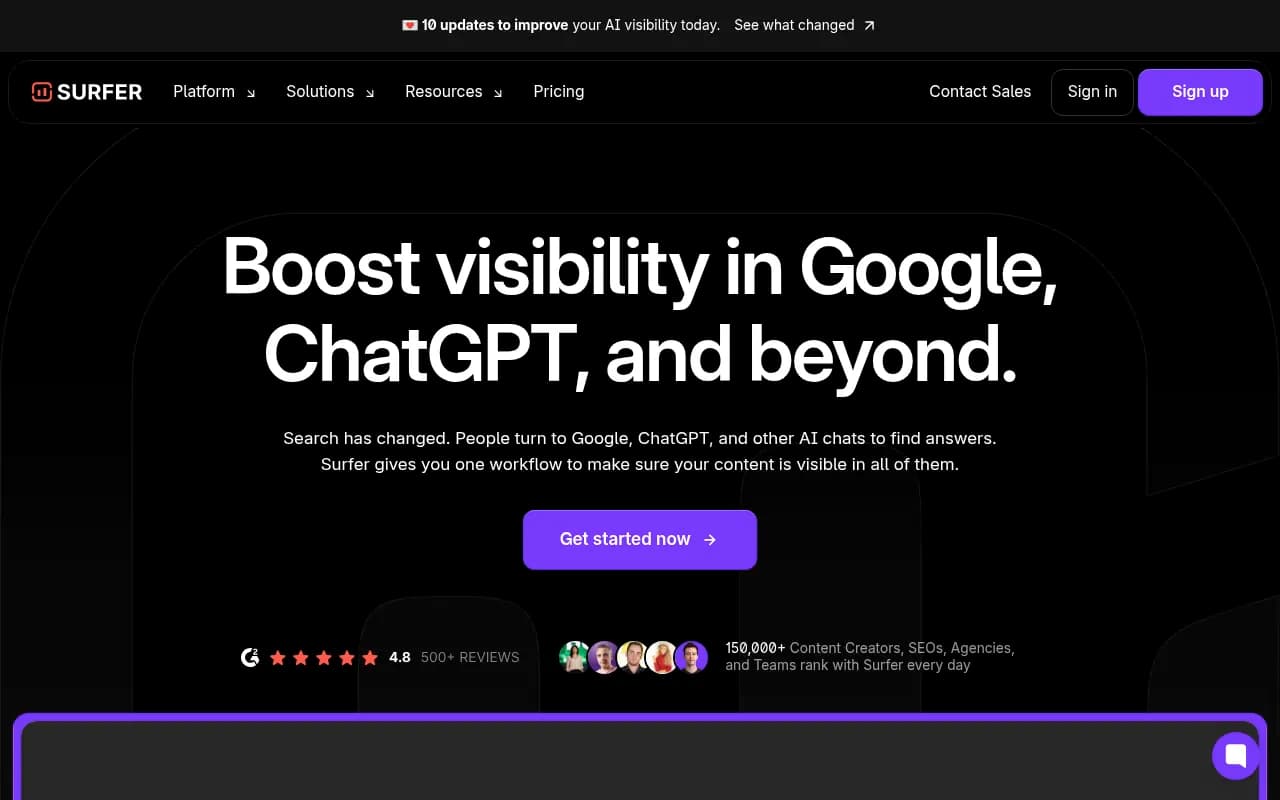
Surfer SEO remained a staple for content optimization -- its real-time feedback on semantic coverage helped writers ensure content was comprehensive enough to compete.
For agencies that wanted content generation tied directly to AI visibility data, Promptwatch's built-in AI writing agent was notable because it generates content grounded in citation analysis rather than just keyword data. The articles it produces are engineered around what AI models actually cite, which is a meaningfully different brief than "write a 1,500-word article about X."
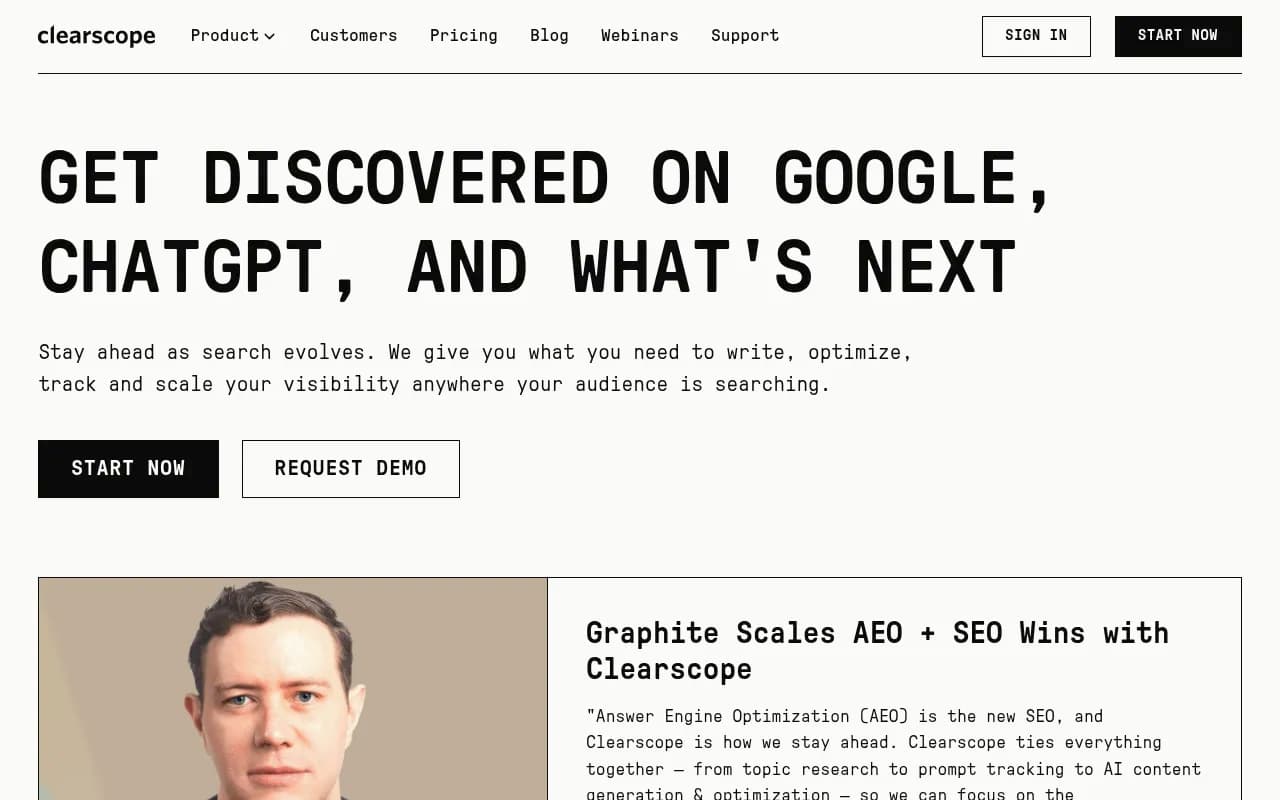
Clearscope was another strong choice for content optimization, particularly for agencies that wanted detailed term-frequency analysis to ensure topical completeness.
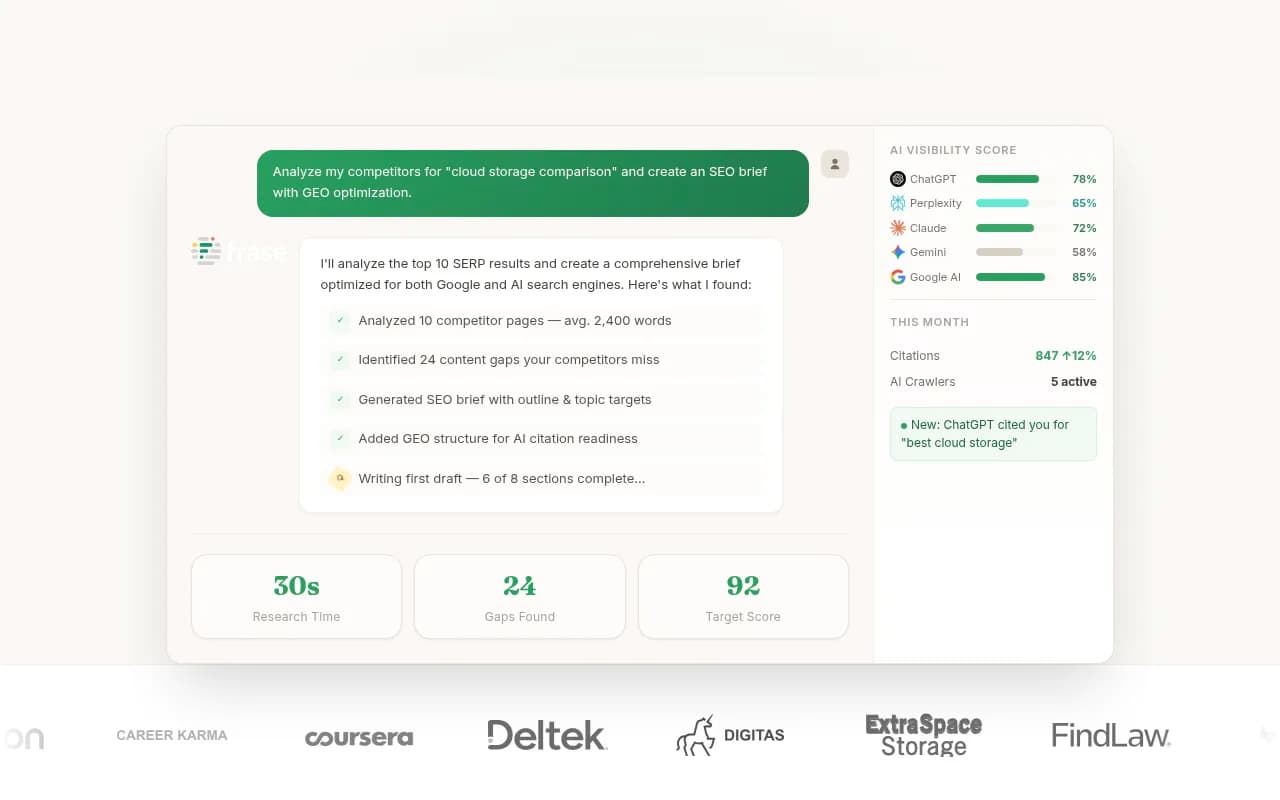
Frase handled the research-to-brief pipeline well, pulling together what's currently ranking and generating structured briefs that writers could execute against.
Comparison of key content tools for AI-optimized writing
| Tool | Best for | AI citation focus | Content briefs | Pricing starts at |
|---|---|---|---|---|
| Surfer SEO | On-page optimization | Moderate | Yes | $99/mo |
| Jasper AI | Long-form content at scale | Low | No | $49/mo |
| Clearscope | Semantic term coverage | Moderate | Yes | $189/mo |
| Frase | Research + brief generation | Moderate | Yes | $45/mo |
| MarketMuse | Topical authority strategy | High | Yes | $149/mo |
| Promptwatch | GEO-native content generation | High | Integrated | $99/mo |
The "AI citation focus" column is the one that mattered most in 2025. Tools that were built for traditional SEO content can still produce good output, but they're optimizing for Google's ranking signals -- not for what makes an LLM want to quote a page.
Phase 4: Technical access for AI crawlers
Here's the thing most agencies missed until mid-2025: you can have perfect content and still not get cited if AI crawlers can't access your pages.
ChatGPT, Perplexity, and Claude all send their own crawlers to index web content. These crawlers behave differently from Googlebot. They have different user-agent strings, different crawl patterns, and different reactions to JavaScript-heavy pages. A site that Google can index perfectly might be returning errors to AI crawlers without anyone noticing.
AI crawler log analysis
Promptwatch's AI Crawler Logs feature became one of its most-used capabilities among agencies in 2025 -- it shows in real time which AI crawlers are hitting a client's site, which pages they're reading, what errors they're encountering, and how often they return. This kind of diagnostic data is genuinely hard to get elsewhere.
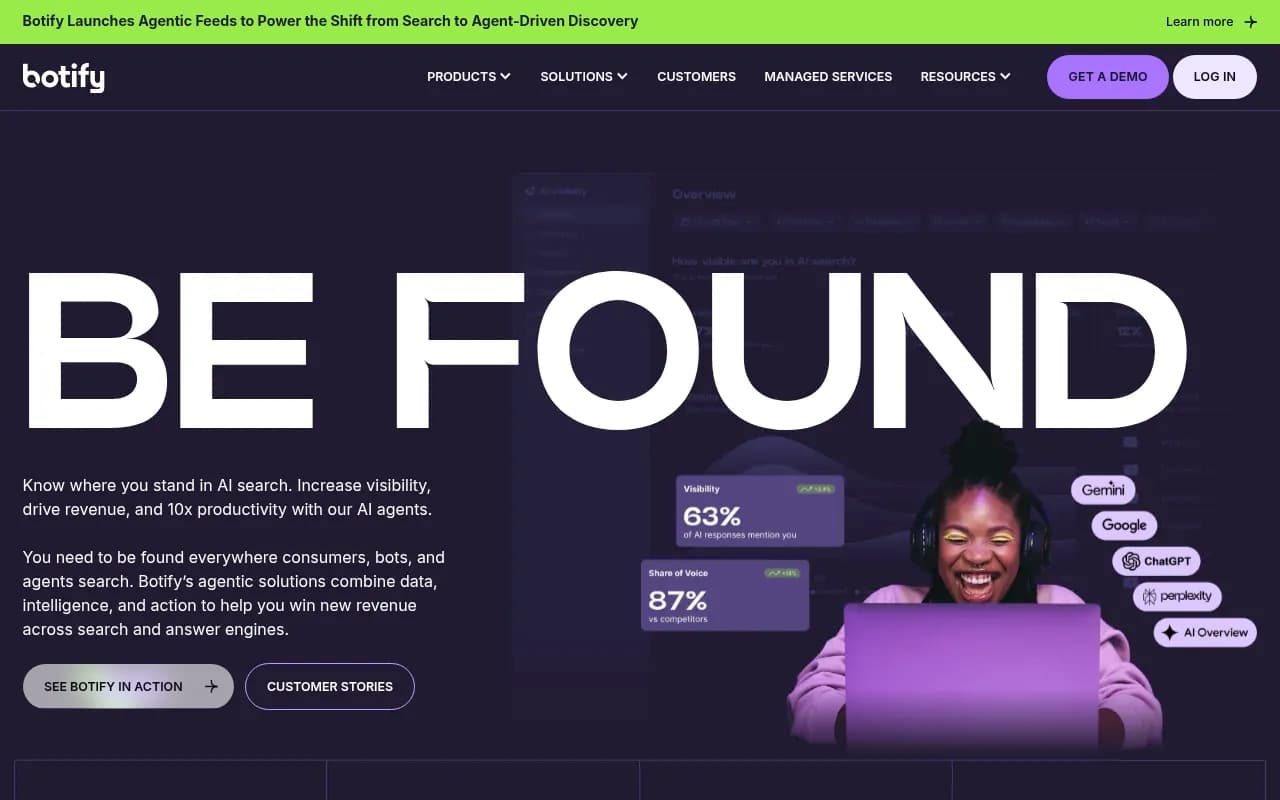
Botify also offered enterprise-level crawl analysis that could be configured to track AI crawler behavior, though it's priced for larger clients.
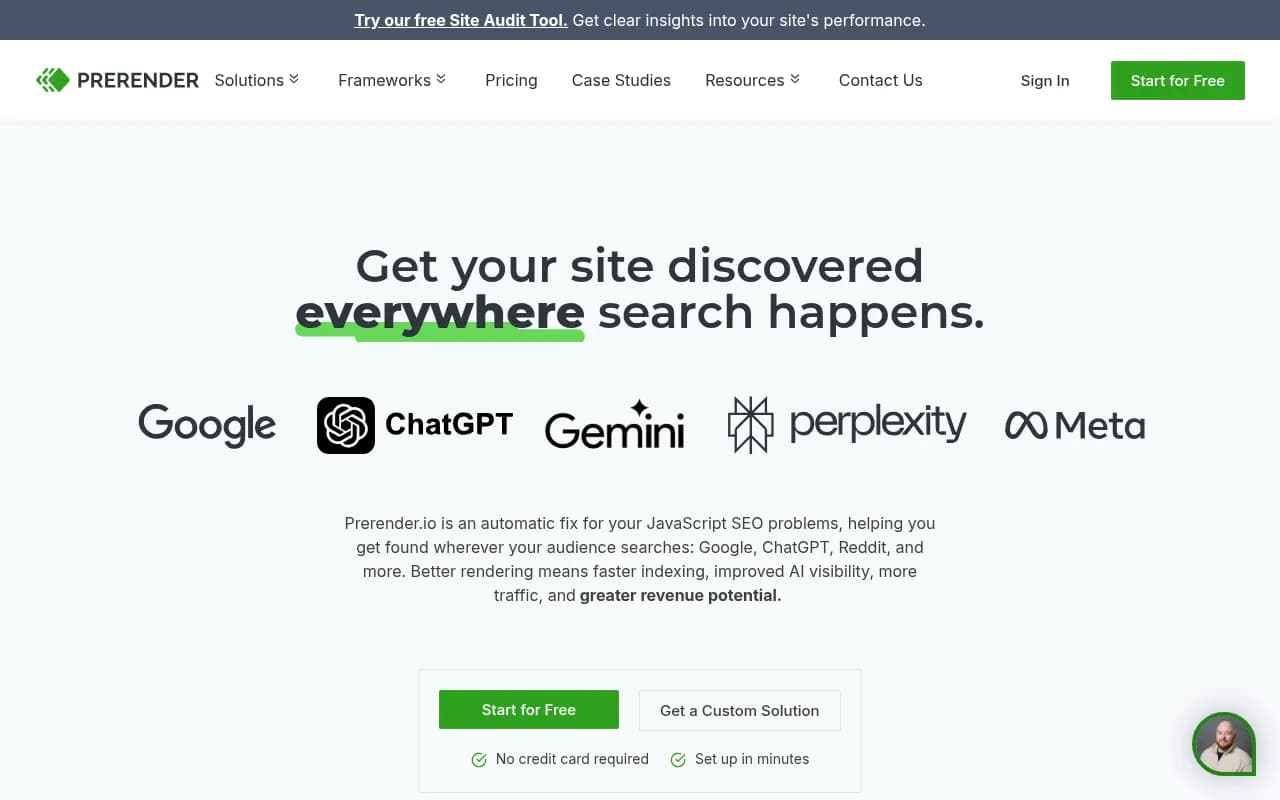
For agencies working with clients on JavaScript-heavy sites, Prerender.io addressed the rendering problem directly -- it ensures that AI crawlers see fully rendered HTML rather than blank pages waiting for JavaScript to execute.
Google Search Console remained essential for understanding how Google's crawlers (including the AI Overview crawler) were accessing content, even if it doesn't cover non-Google AI models.
Phase 5: Third-party signals and off-site presence
AI models don't just cite brand websites. They cite Reddit threads, YouTube videos, review platforms, industry publications, and comparison sites. Agencies that understood this built off-site strategies alongside on-site content.
Monitoring where AI models actually pull from
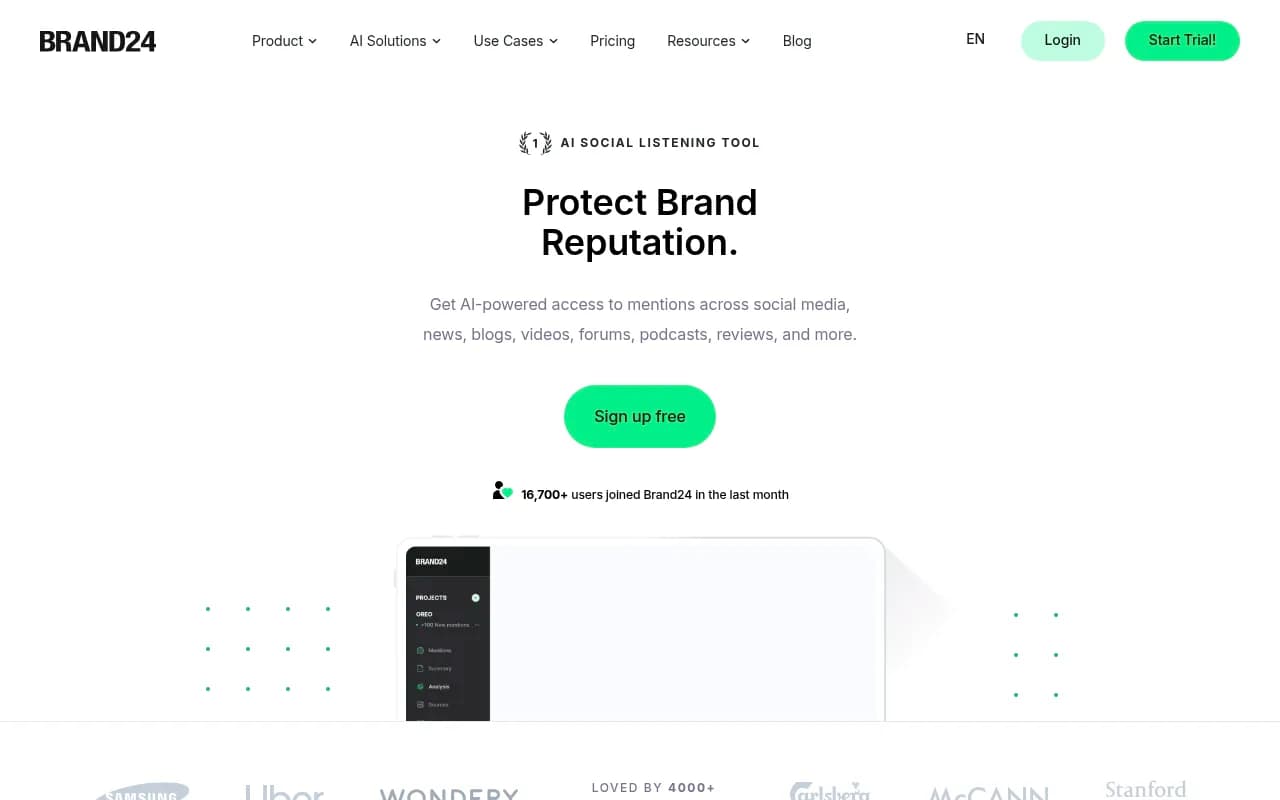
Brand24 was useful for tracking brand mentions across the web, including on platforms that AI models frequently cite.
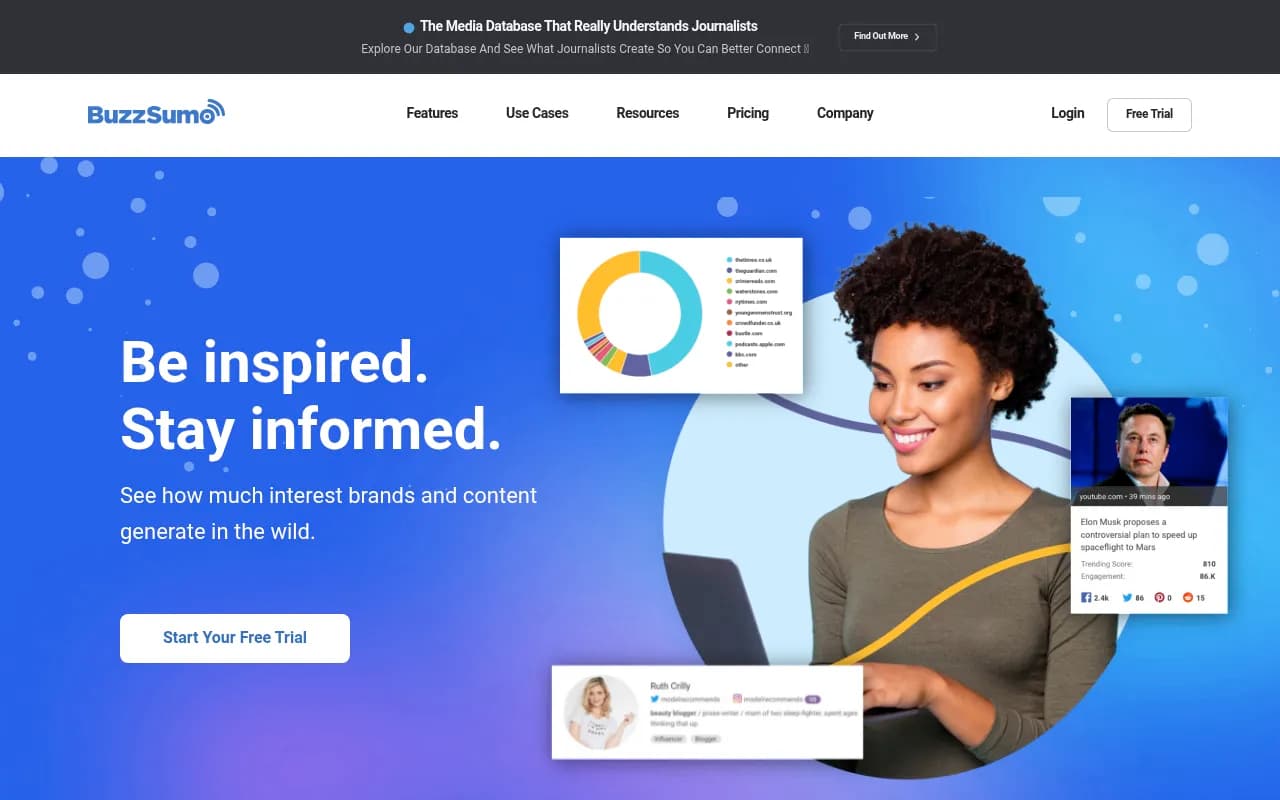
BuzzSumo helped agencies identify which content formats and publications were generating the most AI citations in a given category -- useful for deciding where to pitch guest content or earn coverage.
Promptwatch's Citation and Source Analysis feature showed agencies exactly which pages, Reddit threads, and YouTube videos AI models were citing in responses about a client's category. This made off-site strategy much more targeted -- instead of guessing where to build presence, agencies could see exactly which sources were influencing AI recommendations.
The Reddit insight in particular was underutilized by most agencies early in 2025. AI models cite Reddit heavily for product recommendations and comparisons. Brands that had genuine presence in relevant subreddits -- not spam, but actual participation and mentions -- showed up in AI responses more consistently than brands that ignored the platform entirely.
Phase 6: Tracking results and reporting to clients
The final piece of the puzzle: proving it's working.
This was a genuine challenge in 2025 because AI visibility doesn't map neatly onto traditional reporting metrics. You can't show a client a position-1 ranking. What you can show: visibility scores across AI models, citation frequency by prompt, and -- most importantly -- whether AI-driven traffic is converting.
Connecting AI visibility to revenue
Agencies that could tie AI citations to actual traffic and conversions retained clients. Those that could only show visibility scores struggled to justify the investment.
Promptwatch's traffic attribution tools (via a code snippet, Google Search Console integration, or server log analysis) helped agencies close this loop -- connecting AI visibility improvements to actual sessions and conversions. This was one of the more differentiating capabilities in the market, since most monitoring tools stop at the visibility layer.
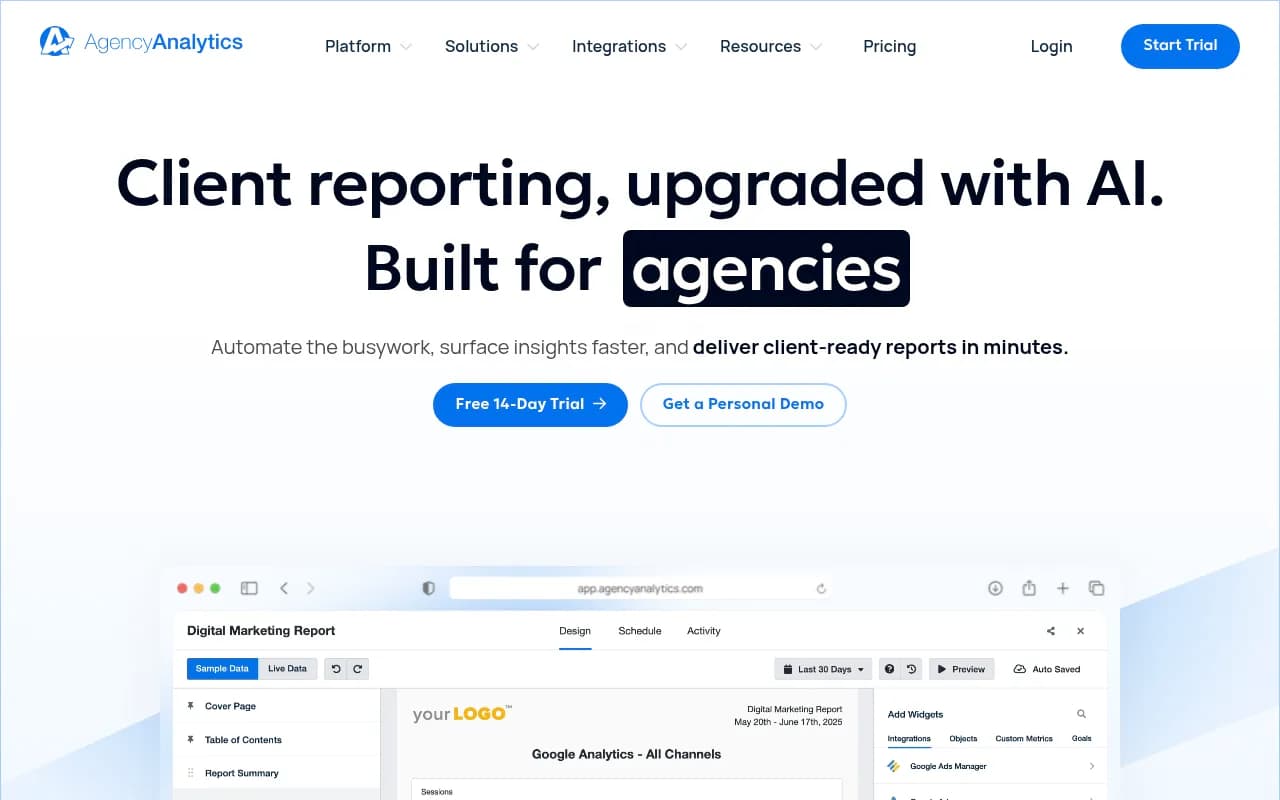
AgencyAnalytics was widely used for pulling together multi-channel reporting into client-facing dashboards, though it required manual integration of AI visibility data from other tools.
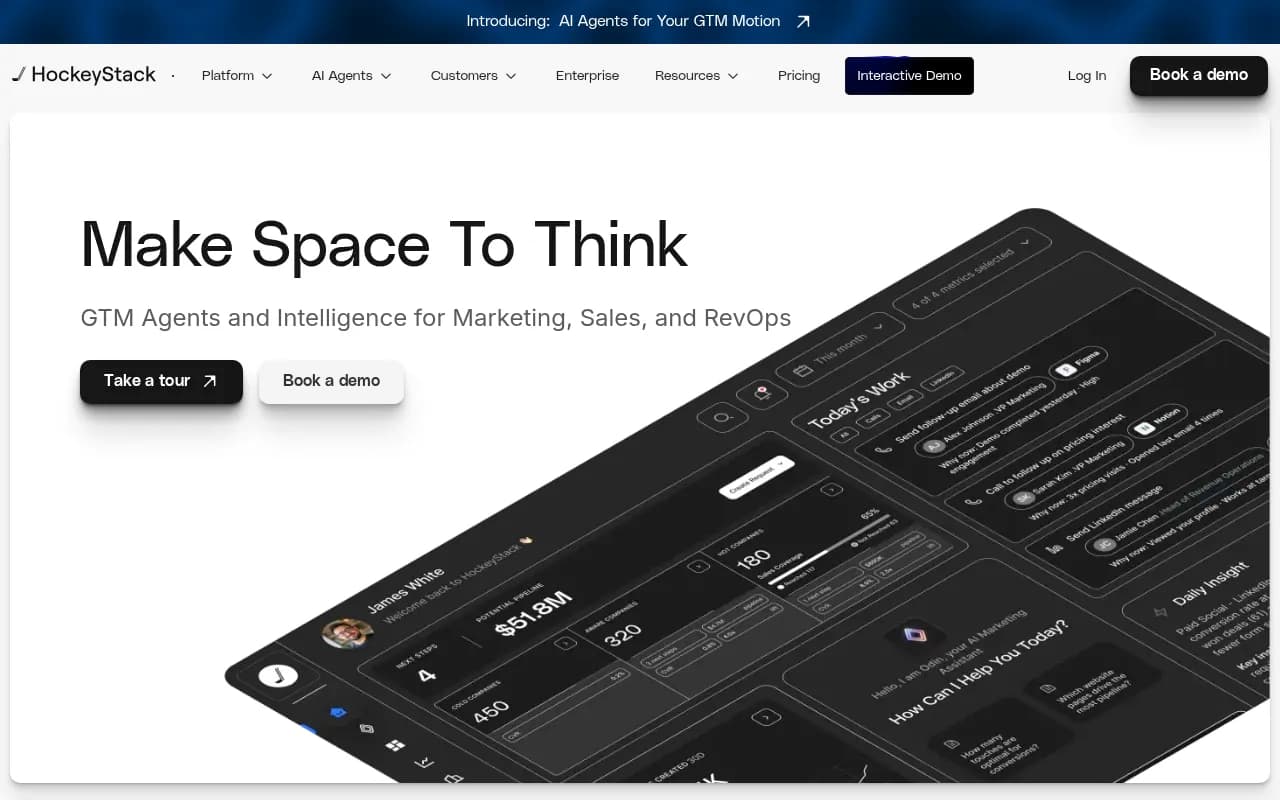
HockeyStack handled more sophisticated attribution for agencies with clients running multi-touch campaigns, where AI-driven discovery was one of several touchpoints before conversion.
The full agency tool stack: a practical summary
Here's how the pieces fit together for an agency running a full GEO workflow in 2025:
| Workflow stage | What you need | Tools that work |
|---|---|---|
| Baseline visibility audit | Track client mentions across AI models | Promptwatch, Otterly.AI, SE Ranking |
| Competitor gap analysis | Find prompts competitors win that client doesn't | Promptwatch, MarketMuse |
| Content strategy | Map topical gaps, prioritize by prompt volume | Topical Map AI, Content Harmony, Frase |
| Content creation | Write AI-citation-optimized articles | Surfer SEO, Jasper AI, Clearscope, Promptwatch |
| Technical access | Ensure AI crawlers can read the site | Promptwatch Crawler Logs, Prerender.io, GSC |
| Off-site signals | Build presence where AI models actually cite | Brand24, BuzzSumo |
| Reporting | Connect visibility to traffic and revenue | Promptwatch, AgencyAnalytics, HockeyStack |
The agencies that ran this full loop -- not just one or two stages -- were the ones reporting meaningful results by Q3 2025. The ones that only added a monitoring tool to their existing stack saw visibility data but struggled to move the needle.
What actually worked: honest conclusions
A few things that became clear by the end of 2025:
Monitoring alone doesn't move the needle. Plenty of agencies bought AI visibility trackers, showed clients impressive dashboards, and then watched the numbers stay flat because they didn't change the underlying content strategy.
Content quality still matters more than content volume. AI models are remarkably good at identifying thin, generic content. A single well-structured, specific, authoritative article on a topic outperformed five mediocre ones in citation tests.
The agencies that treated GEO as a separate discipline from SEO got confused. The ones that treated it as an extension -- same fundamentals, new distribution channel, new optimization signals -- built workflows that actually scaled.
And the tools that delivered the most value weren't the ones with the most features. They were the ones that connected insight to action: here's where you're invisible, here's why, here's what to write, here's whether it worked. That loop is what separates a useful platform from an expensive dashboard.
The agencies running that loop for clients in 2025 have a meaningful head start. The ones still figuring it out have a clear roadmap -- and the tools to execute it exist today.