Key takeaways
- AI search now accounts for over 40% of searches, and traditional SEO tools can't tell you if ChatGPT, Claude, or Perplexity is recommending your brand.
- Most AI visibility platforms are monitoring-only dashboards. The ones worth paying for help you close the loop: find gaps, create content, and track results.
- The right platform depends on your team size, budget, and whether you need to act on data or just report on it.
- Manual testing (typing prompts into ChatGPT yourself) is not a strategy. AI responses shift with phrasing, geography, and time -- you need automated, repeatable tracking.
- Before you buy, get clear on what you're actually trying to measure: brand mentions, citation sources, competitor gaps, or traffic attribution.
Why this decision suddenly matters
A year ago, most marketing teams treated AI search visibility as a nice-to-have. Something to keep an eye on. Now it's a budget line item.
The shift happened fast. ChatGPT crossed 1 billion weekly active users. Perplexity became the default research tool for a meaningful chunk of B2B buyers. Google's AI Overviews now appear on the majority of commercial queries. And according to data cited by Frase.io, AI-powered search experiences account for more than 40% of searches overall.
The problem: your existing SEO stack tells you nothing about this. Google Search Console shows you clicks from traditional results. Semrush tracks keyword rankings. Neither one tells you whether ChatGPT is recommending your product, whether Claude cites your blog, or whether Perplexity is sending buyers to a competitor instead of you.
That's the gap AI visibility platforms are built to fill. But the market has exploded -- there are now dozens of tools claiming to solve this, and they vary wildly in what they actually do.
This guide is about helping you make a smart buying decision, not just listing features.
The core problem with most AI visibility tools
Here's the honest version of the market: most platforms are dashboards. They show you data. They tell you your "AI visibility score" went up or down. They surface mentions and citations. Then they stop.
That's useful if you just need to report upward -- "here's our AI share of voice this quarter." It's not useful if you're trying to actually improve.
The tools that are worth the investment in 2026 do something different. They help you understand why you're invisible for certain prompts, show you what content is missing, and give you a path to fix it. That's a fundamentally different product from a monitoring dashboard.
When you're evaluating platforms, this is the first question to ask: does this tool help me act, or does it just help me observe?
What to define before you start evaluating tools
Most of the confusion in this buying process comes from skipping this step. Before you open a single demo, get clear on what you're actually trying to learn.
Are you tracking brand mentions or content citations?
These are different things. Brand mention tracking tells you whether your company name appears in AI responses. Citation tracking tells you which specific pages on your site (or competitor sites) are being referenced as sources. If you're a content team trying to improve organic AI visibility, you need citation data. If you're a brand team trying to monitor reputation, mentions might be enough.
How many prompts do you actually need to track?
Pricing for most platforms scales with prompt volume. A 50-prompt plan is fine for a focused campaign. If you're tracking a full product category across multiple competitors, you'll need hundreds. Be realistic about this before you start comparing tiers.
Do you need multi-model coverage?
ChatGPT and Google AI Overviews get the most attention, but your buyers might be using Perplexity, Claude, Gemini, or Grok. If you're in a B2B tech category, Perplexity is disproportionately popular. If you're in e-commerce, ChatGPT Shopping matters. Know which models your audience actually uses before you pay for coverage of all ten.
Do you need to show ROI?
If your CMO wants to connect AI visibility to revenue, you need traffic attribution -- not just visibility scores. That means looking for platforms that offer a tracking snippet, Google Search Console integration, or server log analysis. Many tools don't offer this at all.
The five capabilities that separate good platforms from great ones
1. Multi-model tracking (not just ChatGPT)
The minimum bar in 2026 is tracking across ChatGPT, Google AI Overviews, Perplexity, and Claude. Platforms that only cover one or two models are leaving you with a partial picture. The better platforms cover 8-10 models and let you filter by model to see where you're winning and where you're not.
2. Prompt intelligence
Not all prompts are equal. Some drive a lot of AI queries; others are niche. Some are easy to rank for; others are dominated by major publications. A good platform gives you volume estimates and difficulty scores so you can prioritize instead of guessing. Even better: query fan-outs, which show how a single prompt branches into related sub-queries -- useful for content planning.
3. Content gap analysis
This is where most platforms fall short. Gap analysis means showing you which prompts your competitors appear in that you don't. It's the difference between knowing you're invisible and knowing where you're invisible and why. Without this, you're flying blind on content strategy.
4. AI crawler logs
This one is underrated. AI crawler logs show you which pages on your site are being crawled by ChatGPT, Claude, Perplexity, and other AI engines -- how often, which errors they encounter, and whether they're actually reading your content. If an AI model can't crawl your pages, it can't cite them. Most platforms don't offer this at all.
5. Traffic attribution
Visibility scores are a leading indicator. Revenue is the lagging indicator. The platforms that close this loop -- connecting AI citations to actual site traffic and conversions -- are the ones that will survive budget reviews. Look for GSC integration, a JavaScript snippet, or server log analysis.
How to read the market: three tiers of platforms
The AI visibility tool market roughly breaks into three tiers right now.
Monitoring-only tools
These platforms track mentions and citations but don't help you act on the data. They're useful for reporting and competitive benchmarking, but if your goal is to improve visibility, you'll hit a ceiling fast. Many of the newer, cheaper tools fall into this category.
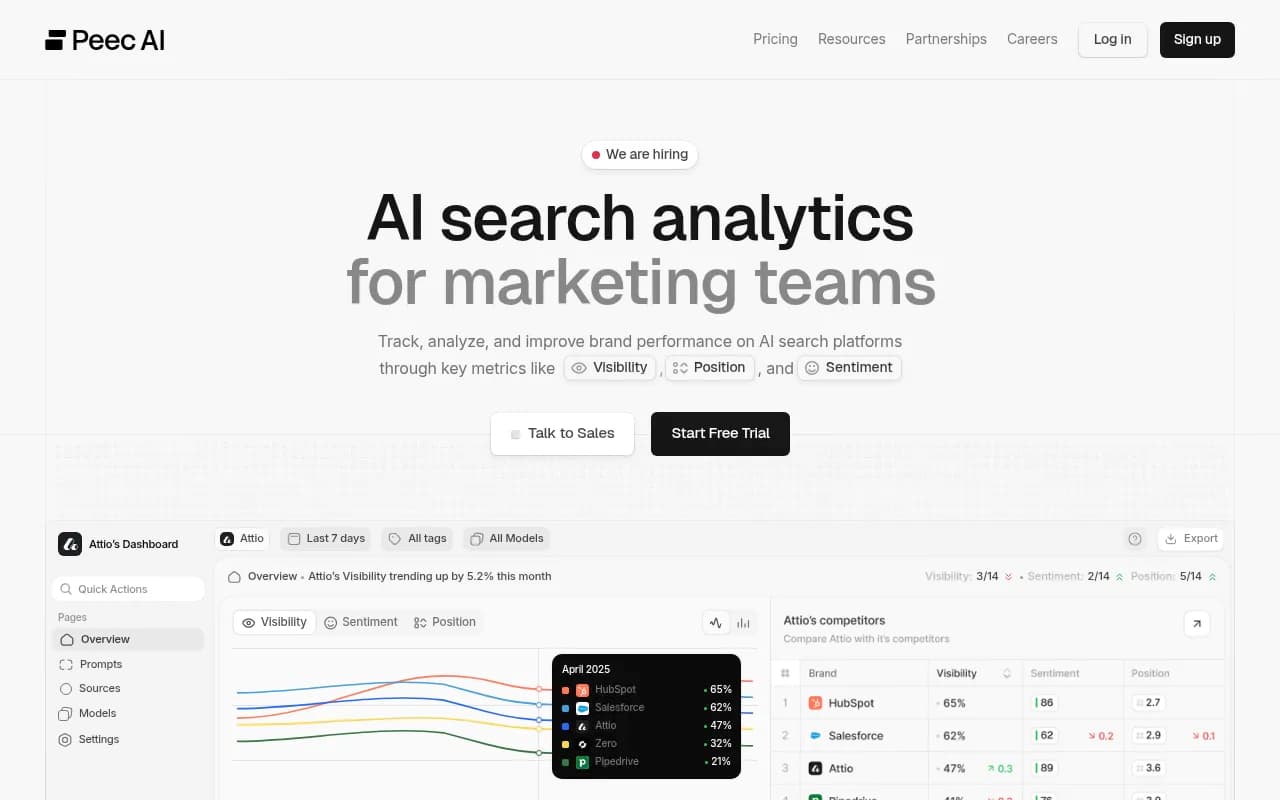
Examples include tools like Otterly.AI and Peec AI -- solid for basic tracking, but limited when you need to move from insight to execution.

Mid-market platforms with some optimization features
These tools go beyond monitoring and offer some content guidance, competitor analysis, or prompt recommendations. They're a reasonable choice for teams that have a content operation in place and just need better signal on where to focus.
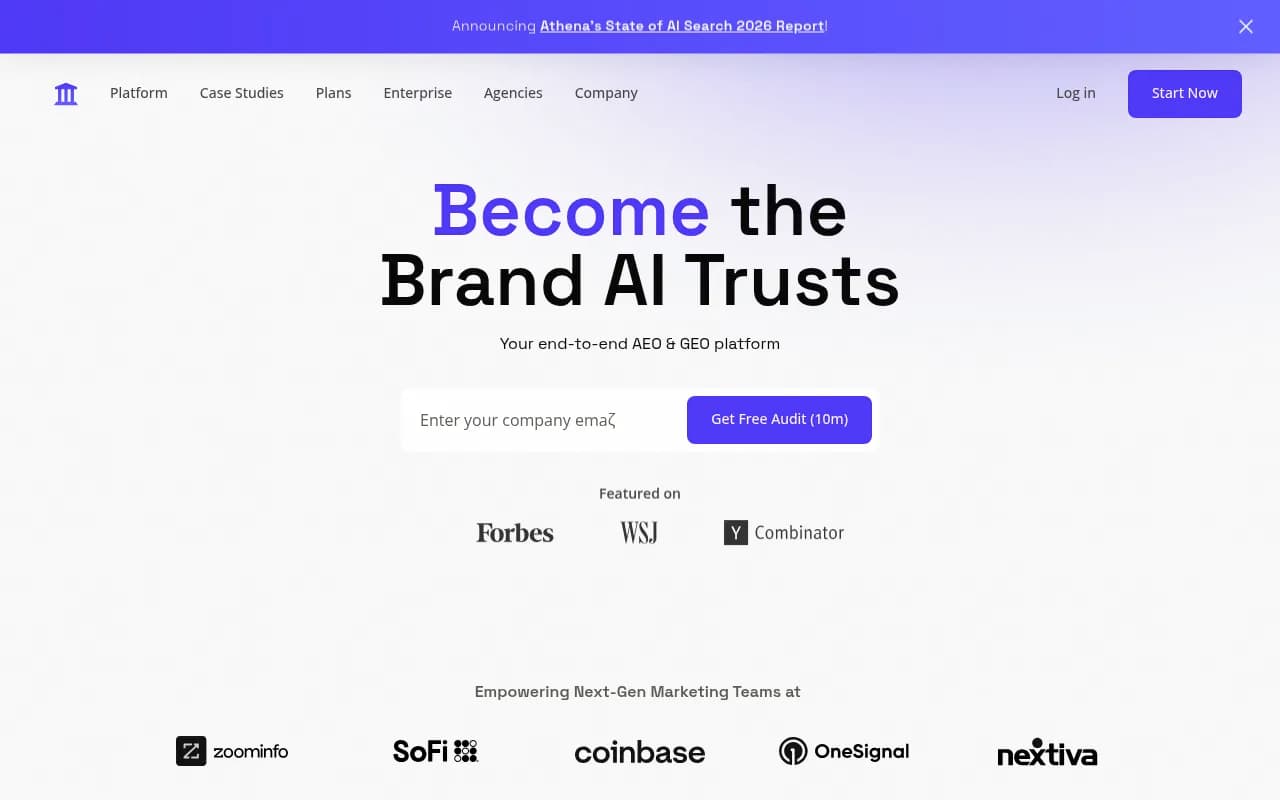
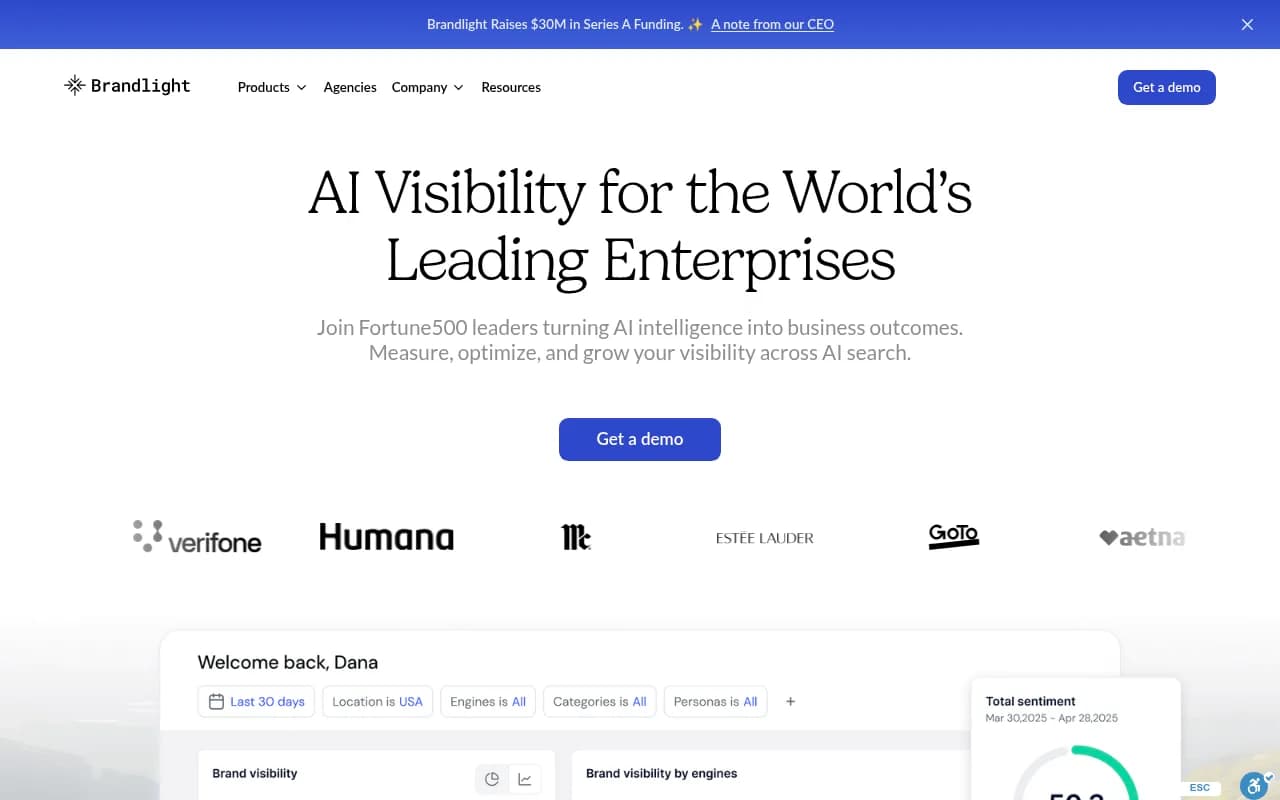
Tools like Athena HQ, Scrunch, and Brandlight.ai sit in this tier -- more capable than pure monitoring tools, but still primarily oriented around data rather than execution.
Full-cycle optimization platforms
These are the platforms that complete the loop: find gaps, generate content, track results. They're more expensive, but they're also the ones that can show measurable ROI. If you're a marketing team that needs to justify spend, this tier is where the conversation should start.
Promptwatch is the clearest example of this category. It's built around what it calls the "action loop" -- Answer Gap Analysis to find which prompts competitors rank for that you don't, a built-in AI writing agent that generates content grounded in real citation data, and page-level tracking that shows which pages are being cited by which models. It also includes AI crawler logs (rare in this market), Reddit and YouTube citation tracking, ChatGPT Shopping monitoring, and traffic attribution via GSC integration or a code snippet.

Profound AI is another platform in this tier, with strong enterprise features and an agency mode that's worth looking at if you're managing multiple clients.
A practical comparison of leading platforms
| Platform | Monitoring | Content gap analysis | Content generation | Crawler logs | Traffic attribution | Starting price |
|---|---|---|---|---|---|---|
| Promptwatch | 10 models | Yes | Yes (AI writing agent) | Yes | Yes (GSC + snippet) | $99/mo |
| Profound AI | 8+ models | Partial | No | No | Limited | Higher |
| Athena HQ | 8 models | Limited | No | No | No | Mid-range |
| Otterly.AI | 5 models | No | No | No | No | Low |
| Peec AI | 4 models | No | No | No | No | Low |
| Scrunch AI | 6 models | Limited | No | No | No | Mid-range |
| Semrush (AI features) | Limited | No | Partial | No | Partial | Varies |
| Ahrefs Brand Radar | Limited | No | No | No | No | Varies |
A few notes on this table. Semrush and Ahrefs are included because many teams already pay for them and wonder if they're enough. The short answer: they're not, for AI visibility specifically. Semrush uses fixed prompts (you can't customize them), and Ahrefs Brand Radar has no traffic attribution. They're fine as supplements but not as primary AI visibility tools.
Questions to ask in every demo
If you're running vendor demos, here are the questions that will separate real capability from marketing copy:
"Show me the content gap analysis for [my brand] vs [competitor]." If they can't show you specific prompts where a competitor appears and you don't, they don't have real gap analysis.
"How do you handle prompt variability?" AI responses shift with small phrasing changes. Ask how they normalize this -- do they run multiple variants of each prompt? How often do they re-run prompts?
"Can you show me which specific pages on my site are being cited?" Page-level citation data is much more actionable than domain-level data. If they can only show you domain-level, that's a limitation.
"How do I connect visibility to traffic?" If they go quiet here, they don't have traffic attribution. That's fine if you don't need it, but you should know upfront.
"Do you have crawler logs?" Most platforms don't. If you have technical SEO issues preventing AI crawlers from reading your pages, you'll never know without this.
Common mistakes teams make when buying
Buying based on the number of models tracked. Coverage breadth matters, but only if the data is reliable. A platform that tracks 10 models with shallow data is worse than one that tracks 5 models with deep, repeatable data.
Underestimating prompt volume needs. The 50-prompt entry tier sounds like enough until you realize you need to track your brand, three competitors, and 15 product categories. Map out your actual prompt list before you sign up.
Choosing a monitoring tool when you need an optimization tool. If your goal is to improve AI visibility (not just measure it), a monitoring-only dashboard will frustrate you within 60 days. You'll have data but no path forward.
Ignoring the content creation question. Some platforms track visibility but leave you to figure out what to do about it. If your team doesn't have bandwidth to produce content based on gap analysis, look for a platform with built-in content generation.
Not testing multi-language or multi-region support. If you operate in multiple markets, check whether the platform can run prompts in different languages and from different geographic locations. Many can't, or charge extra for it.
How to structure your evaluation process
A practical three-step process:
Step 1: Define your use case in writing. One paragraph: what are you trying to measure, for which brands/products, across which AI models, and what will you do with the data? Share this with every vendor before the demo.
Step 2: Run a proof of concept on a real prompt set. Most platforms offer a free trial or a limited pilot. Don't evaluate on demo data -- bring your own prompts and your own competitors. See if the data matches your manual testing.
Step 3: Test the content workflow end-to-end. If you're evaluating a platform with content generation, actually generate a piece of content and check whether it's grounded in real citation data or just generic AI output. The quality difference is significant.
The right tool for different team types
Not every team has the same needs. Here's a rough guide:
Small marketing team (1-3 people), limited budget: Start with a monitoring-only tool to get baseline data. Otterly.AI or Peec AI work here. Once you have data and can make a case for investment, move up.
Mid-size team with a content operation: You need gap analysis and content guidance. Promptwatch's Essential or Professional tier ($99-$249/mo) is the right range -- you get monitoring, gap analysis, and content generation without enterprise pricing.
Agency managing multiple clients: You need multi-site support, white-label reporting, and ideally an agency mode. Promptwatch's Business tier ($579/mo for 5 sites) or custom agency pricing covers this. Profound AI's agency mode is also worth evaluating.
Enterprise brand with a dedicated SEO team: You need crawler logs, traffic attribution, multi-region support, and API access. Promptwatch's Business or Enterprise tier, or Profound AI at the enterprise level.
One thing most guides won't tell you
The tool you choose matters less than whether you actually use it. The teams getting results from AI visibility platforms in 2026 are the ones that have a weekly workflow: check gap analysis, assign content, publish, track. The teams that aren't getting results bought a platform, looked at the dashboard a few times, and moved on.
Before you sign a contract, ask yourself: who owns this? Who will check it weekly? Who will act on the gap analysis? If you can't answer those questions, the most sophisticated platform in the market won't help you.
The technology is good. The process is the hard part.
Where to go from here
If you're early in your evaluation, the best first step is to run a manual audit: pick 10-15 prompts that reflect how your buyers search, run them in ChatGPT, Perplexity, and Google AI Overviews, and note where you appear and where competitors appear. That gives you a baseline to compare against when you start trialing platforms.
From there, shortlist two or three tools based on your use case and budget, run pilots with your own data, and make the decision based on what the data actually shows you -- not the demo.
The market is moving fast. The teams that build a repeatable AI visibility workflow now will have a meaningful advantage over those that wait another year to figure it out.