Key takeaways
- Most AI visibility platforms are monitoring-only dashboards. They show you where you're invisible but don't help you fix it.
- The features that matter most in 2026 go beyond brand mention tracking: prompt intelligence, content gap analysis, crawler logs, and traffic attribution separate serious tools from noise.
- Multi-model coverage is table stakes. If a tool only tracks one or two AI engines, it's not giving you a real picture.
- The best platforms close a loop: find gaps, generate content, measure results. Most tools only do step one.
- Before buying, ask vendors specifically about content generation, crawler log access, and traffic attribution. These are the features that separate action from observation.
There's a pattern playing out right now across marketing teams. Someone gets burned by a competitor showing up in ChatGPT responses. Leadership asks why. The team scrambles to find a tool that tracks "AI visibility." They pick something that looks impressive in a demo. Six months later, they have beautiful charts showing they're invisible — and no clearer idea of what to do about it.
This is dashboard theater. And in 2026, the market is full of it.
The category has exploded. There are now dozens of platforms claiming to track your brand across AI search engines. Some are genuinely useful. Many are monitoring tools dressed up as optimization platforms. The difference matters a lot, especially if you're paying $250-$600/month and expecting results.
This guide breaks down the eight features that actually separate the serious tools from the rest. Not a feature checklist — a framework for thinking about what you actually need.
1. Multi-model coverage that's actually comprehensive
This one sounds obvious, but it's worth being specific. "Multi-model coverage" in a vendor pitch can mean anything from tracking two AI engines to ten. The AI search landscape in 2026 includes ChatGPT, Perplexity, Google AI Overviews, Google AI Mode, Claude, Gemini, Grok, DeepSeek, Meta AI, Mistral, and Copilot. That's a lot of surfaces.
Why does it matter? Because different AI models cite different sources, weight different signals, and recommend different brands for the same query. Your brand might be well-cited in Perplexity but completely absent from Google AI Overviews. If your tool only tracks three models, you're making decisions based on an incomplete picture.
The practical test: ask any vendor to show you side-by-side visibility scores across at least six models for the same prompt. If they can't, you're getting partial data.
Promptwatch monitors ten AI models — ChatGPT, Perplexity, Google AI Overviews, Google AI Mode, Claude, Gemini, Meta/Llama, DeepSeek, Grok, Mistral, and Copilot — which is about as comprehensive as the category gets right now.

2. Prompt intelligence, not just brand mentions
Most tools track whether your brand gets mentioned. That's useful, but it's the floor, not the ceiling.
What you actually need to know: which prompts are driving AI responses in your category, how often those prompts are being asked, and how hard it is to get cited for them. Without this, you're optimizing blind. You might be pouring effort into prompts that almost nobody asks, while missing high-volume queries where a single piece of content could get you cited thousands of times a month.
Prompt intelligence means:
- Volume estimates for each prompt (how often is this actually being asked?)
- Difficulty scores (how competitive is this prompt?)
- Query fan-outs: how one prompt branches into related sub-queries
That last one is underrated. When someone asks "best project management software for remote teams," AI models don't just answer that exact question — they fan out into sub-queries about pricing, integrations, team size, and use cases. A good platform shows you this branching structure so you can understand the full content surface you need to cover.
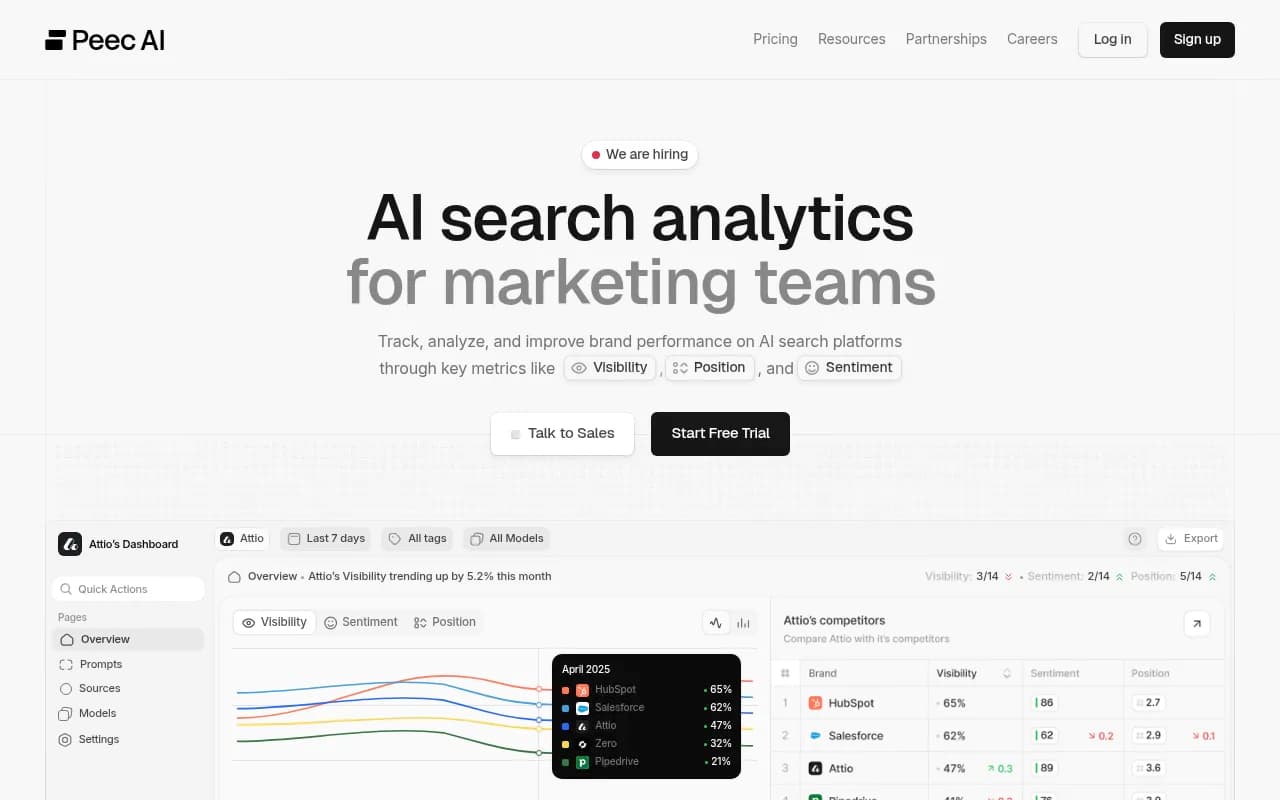
Tools like Peec AI and Otterly.AI offer basic prompt tracking, but without volume estimates or fan-out analysis, you're still guessing at priorities.

3. Answer gap analysis (the feature most tools skip)
This is the one that separates monitoring from optimization.
Answer gap analysis shows you the specific prompts where your competitors are being cited but you're not. Not "you have low visibility" — that's useless. The actual prompts, the actual competitors, the actual content gaps on your site that explain why AI models aren't citing you.
Think of it like a keyword gap analysis in traditional SEO, but for AI citations. You can see exactly which questions ChatGPT or Perplexity is answering by citing a competitor's page, and then figure out what content you'd need to publish to compete for that citation.
Without this feature, you're left guessing at what to create. With it, you have a prioritized list of content opportunities grounded in real citation data.
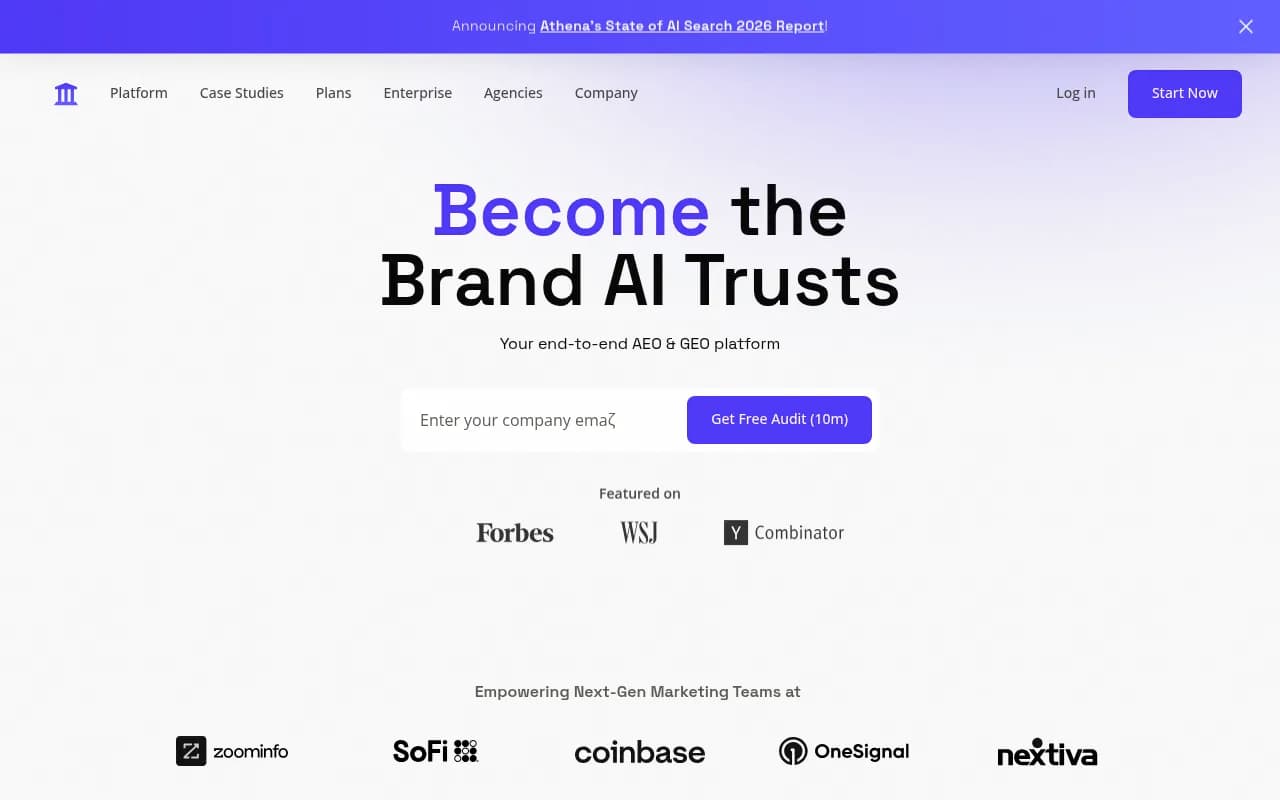
Most monitoring-focused tools — Otterly.AI, Peec AI, AthenaHQ — don't offer this. They show you your visibility score going up or down but leave the "why" and "what to do" entirely to you.
4. Content generation that's actually grounded in citation data
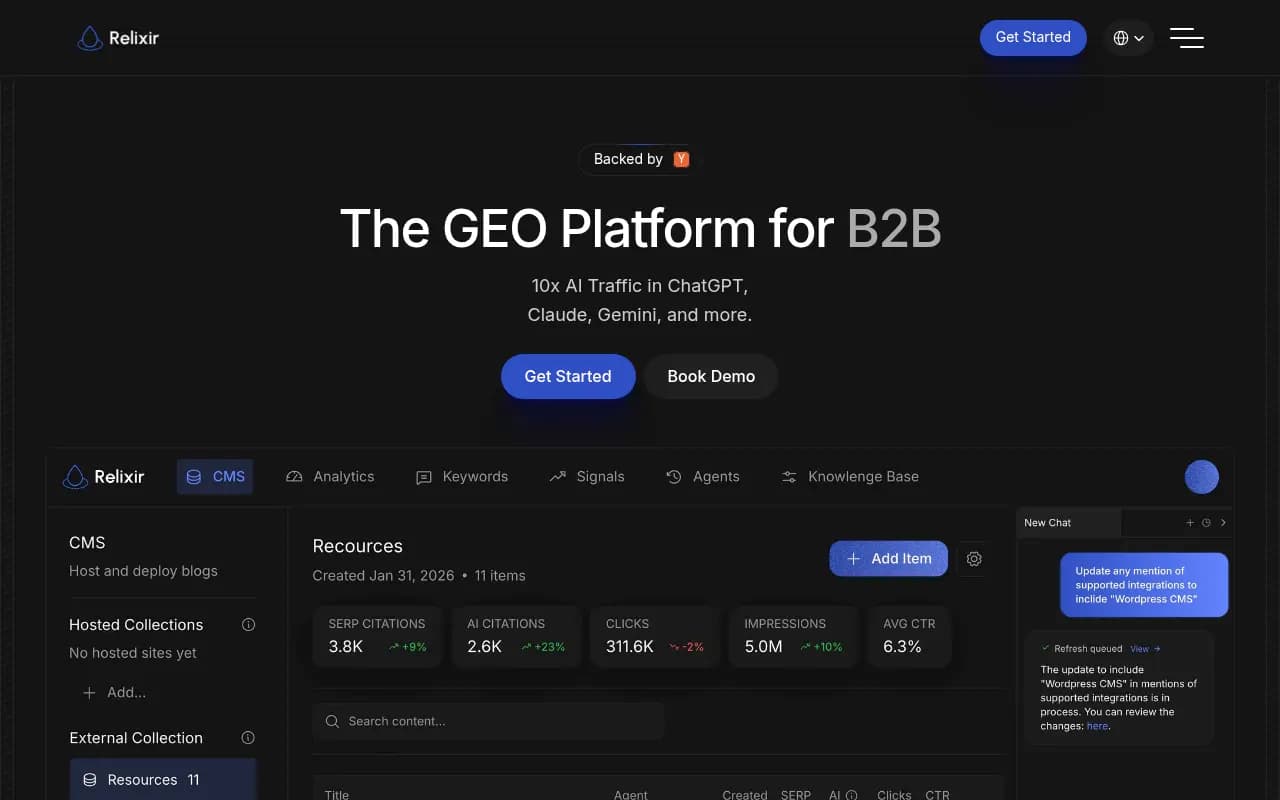
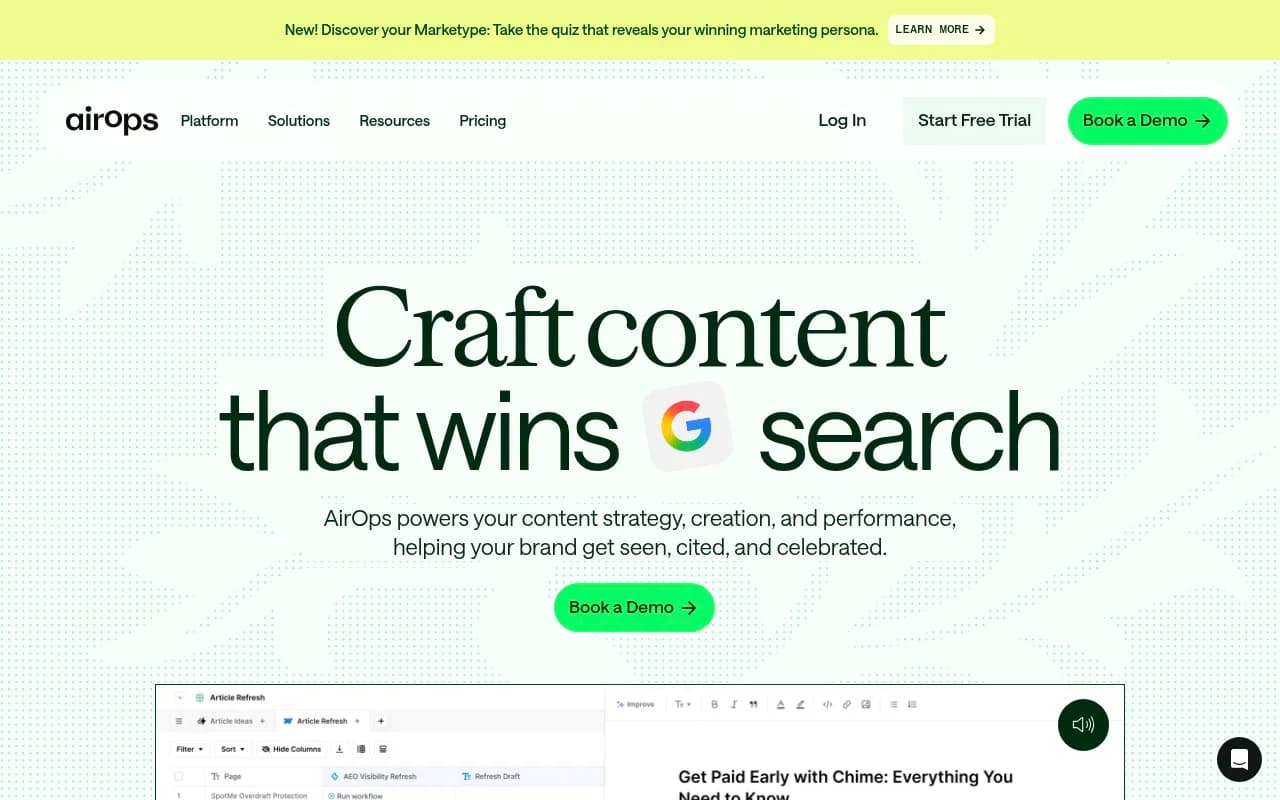
Here's where a lot of platforms make a promise they can't keep. "AI-powered content generation" in 2026 often means a generic writing assistant bolted onto a monitoring dashboard. The content it produces isn't meaningfully different from what you'd get from any general-purpose AI writer.
What you want is content generation that's grounded in real citation data. That means:
- The tool knows which sources AI models actually cite for a given topic
- It understands the structure, depth, and angle of content that gets cited
- It generates articles, listicles, and comparisons that are specifically engineered to be cited, not just to rank in traditional search
This is a much harder problem than it sounds. It requires a large dataset of actual AI citations — not just keyword data. The difference in output quality between citation-grounded content and generic AI writing is significant.
If a vendor offers content generation, ask them specifically: what data is the content based on? If the answer is "our AI analyzes top-ranking pages," that's traditional SEO content, not GEO-optimized content.
5. AI crawler logs
This feature is almost completely absent from monitoring-only tools, which is a shame because it's genuinely useful.
AI crawler logs show you in real time which AI crawlers (ChatGPT's GPTBot, Claude's ClaudeBot, Perplexity's PerplexityBot, etc.) are visiting your website, which pages they're reading, how often they return, and what errors they encounter. This is the AI equivalent of Google Search Console's crawl stats.
Why does this matter? Because if an AI model's crawler can't access your content — due to robots.txt blocks, slow load times, JavaScript rendering issues, or server errors — it can't cite you. You could have the best content in your category and still be invisible simply because the crawler is hitting a 403 error on your most important pages.
Most platforms have no visibility into this at all. They can tell you whether you're being cited, but not whether you're being crawled. That's like knowing your organic traffic is low without being able to check whether Google has indexed your pages.
6. Citation and source analysis
Understanding why AI models cite certain sources is as important as knowing whether they cite you.
Citation analysis goes beyond "your brand was mentioned X times." It shows you:
- Which specific pages on your site are being cited, and for which prompts
- Which external sources (Reddit threads, YouTube videos, third-party domains) AI models are pulling from in your category
- The sentiment and framing of citations — are you being recommended, compared, or criticized?
The external source piece is particularly valuable. AI models don't just cite brand websites. They cite Reddit discussions, YouTube reviews, industry publications, and forum threads. If you don't know which of these are influencing recommendations in your category, you're missing a major optimization channel.
Some tools track Reddit and YouTube citations specifically. Most don't. This is worth asking about directly.
7. Traffic attribution
This is the feature that connects AI visibility to actual business outcomes, and it's where most platforms fall completely short.
Knowing your AI visibility score went up is nice. Knowing that increase drove 3,000 additional visits and contributed to $40,000 in pipeline is what gets budget approved and strategies continued.
Traffic attribution for AI search is genuinely hard. AI models don't always send referral traffic with clean UTM parameters. But there are ways to do it: a JavaScript snippet that captures AI-referred sessions, Google Search Console integration that surfaces AI-driven clicks, and server log analysis that identifies AI-sourced traffic patterns.
A platform that offers all three gives you a much more complete picture than one that just shows visibility scores. Without attribution, you're essentially running a campaign with no conversion tracking — you can see impressions but not outcomes.
This is one of the clearest dividing lines between platforms built for marketing teams who need to show ROI and platforms built for SEO analysts who just want data.
8. Competitor heatmaps and multi-region support
Two features that often get lumped together in demos but are worth evaluating separately.
Competitor heatmaps show you, at a glance, which AI models your competitors are winning on and for which prompts. This is different from knowing your own visibility score — it's competitive intelligence that helps you prioritize. If a competitor is dominating Perplexity but weak on Google AI Overviews, that tells you something about where to focus.
Multi-region and multi-language support matters more than most teams realize. AI models give different answers depending on the country and language of the query. A brand that's well-cited in US English responses might be invisible in German or Spanish. If you operate in multiple markets, you need a platform that can monitor each one independently.
The persona layer is related: different types of users ask questions differently. A CFO asking about enterprise software uses different language than a developer evaluating APIs. Good platforms let you configure personas that match how your actual customers prompt, so you're tracking the right queries for the right audience.
How the major platforms stack up
Here's a practical comparison across the features that matter most:
| Feature | Promptwatch | Profound | Otterly.AI | Peec AI | AthenaHQ | Semrush |
|---|---|---|---|---|---|---|
| Models tracked | 10+ | 6+ | 4 | 4 | 8 | Limited |
| Prompt volume/difficulty | Yes | Yes | No | No | No | No |
| Answer gap analysis | Yes | Partial | No | No | No | No |
| AI content generation | Yes | Yes | No | No | No | No |
| AI crawler logs | Yes | No | No | No | No | No |
| Citation/source analysis | Yes | Yes | No | No | No | No |
| Reddit/YouTube tracking | Yes | No | No | No | No | No |
| Traffic attribution | Yes | Partial | No | No | No | No |
| Competitor heatmaps | Yes | Yes | Basic | Basic | Yes | No |
| Multi-language/region | Yes | Yes | Limited | Limited | No | No |
| Starting price | $99/mo | Higher | $49/mo | $49/mo | Custom | Add-on |
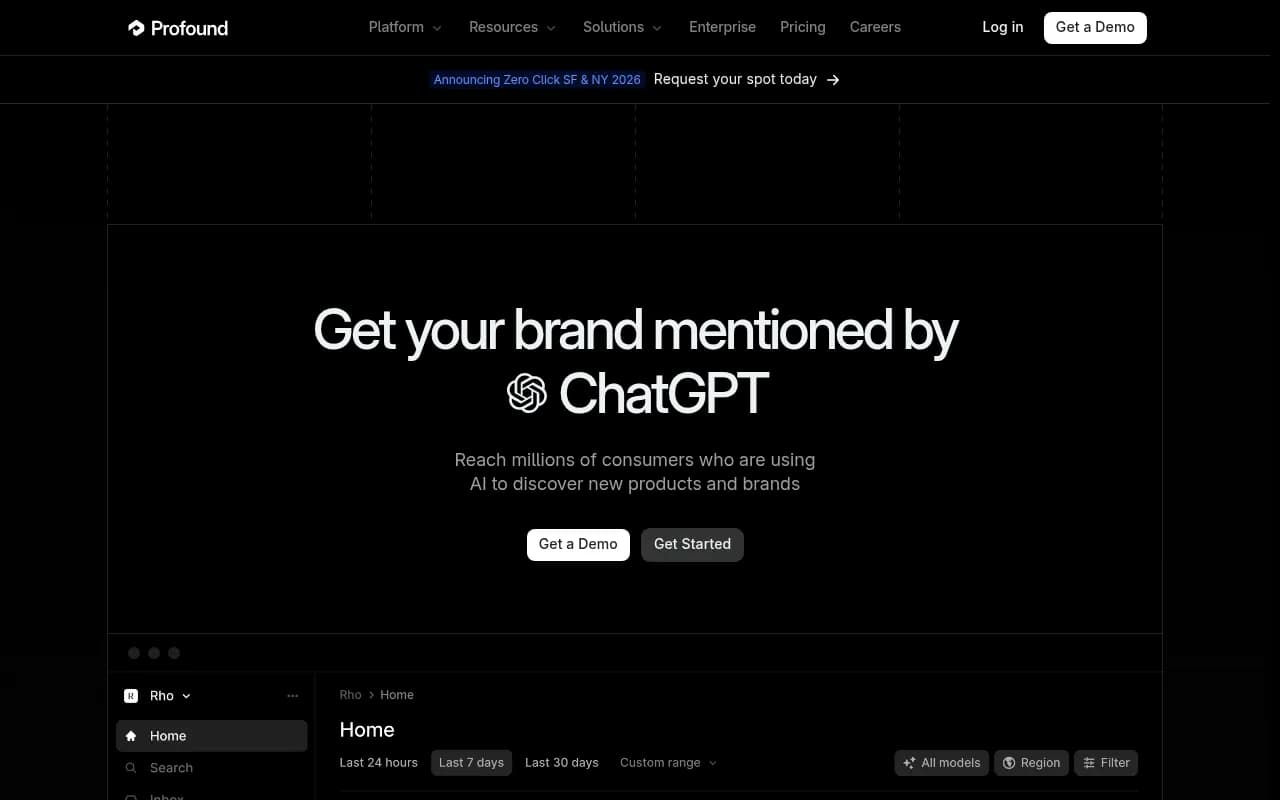
A few things jump out from this table. The monitoring-only tools (Otterly.AI, Peec AI) are cheap and easy to start with, but they leave you with data and no direction. The enterprise platforms (Profound, Evertune) have strong feature sets but come with higher price points and, in some cases, missing capabilities like crawler logs or Reddit tracking.
The question to ask before buying anything
Before signing up for any AI visibility platform, ask this: "After I see my visibility score, what does your platform help me do about it?"
If the answer is "you can export the data and take it to your content team," that's a monitoring tool. Useful, but limited.
If the answer walks you through a specific workflow — here's the gap analysis, here's the content the AI recommends you create, here's how we track whether that content gets cited, here's how we connect citations to traffic — that's an optimization platform.
The category is maturing fast. In 2024, just having any AI visibility data was novel. In 2026, the bar is higher. The teams winning in AI search aren't just watching their scores. They're running a continuous cycle: find the gaps, create content engineered for AI citation, measure the results, repeat.
The platform you choose should support that cycle end-to-end, not just show you a dashboard and leave you to figure out the rest.