Key takeaways
- Evertune starts at $3,000/month with no public pricing, no free trial, and no self-serve signup -- every engagement requires a sales call
- The platform runs 1M+ custom prompts per brand monthly and tracks both foundational model knowledge and consumer app responses, which most competitors skip
- Core strengths: AI Brand Index, Consumer Preferences analysis, Content Studio, and the EverPanel (25M real users) for AI usage measurement
- The $19M Series A (led by Felicis Ventures) and Trade Desk alumni team signal serious enterprise intent, but smaller brands will find the price hard to justify
- If budget is a constraint, there are capable alternatives at a fraction of the cost -- including platforms that go beyond monitoring to help you actually fix your AI visibility
What Evertune actually is
Evertune is a Generative Engine Optimization (GEO) platform built specifically for large enterprise brands. Founded in 2024 by veterans from The Trade Desk and backed by $19M in Series A funding led by Felicis Ventures, it's designed to answer one question: how does your brand appear when consumers ask AI models for recommendations?
That sounds simple, but the execution is genuinely complex. AI models like ChatGPT, Claude, Gemini, and Perplexity don't rank pages -- they synthesize answers. Traditional SEO tools have no visibility into this. Evertune was built from scratch to fill that gap for brands that can't afford to guess.
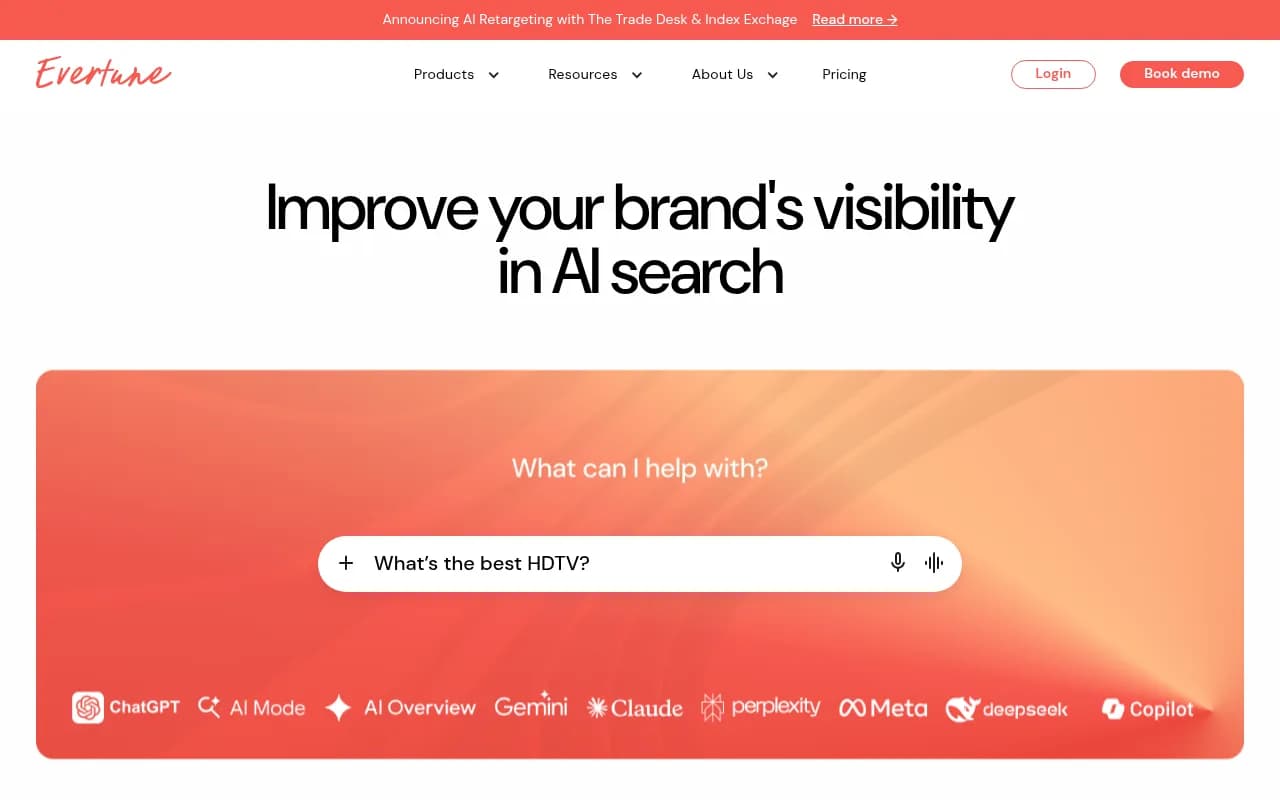
The platform tracks brand visibility across seven major AI models and, importantly, distinguishes between two very different things: what the model "knows" from its training data (foundational knowledge) versus what it returns in a live consumer app response (real-time results). Most GEO tools only show you the latter. Evertune shows both, which matters if you're trying to understand whether a visibility problem is a content issue or a training data issue.
Core features, broken down honestly
AI Brand Index
This is Evertune's flagship metric -- a 0-100 score that weights both how often your brand appears in AI responses and where it appears (position matters). It's a proprietary metric, which is useful for internal tracking but makes external benchmarking harder. You can't easily compare your AI Brand Index to a competitor using a different tool.
That said, having a single number that moves when your strategy works is genuinely useful for executive reporting. Marketing teams spend a lot of time explaining AI visibility to stakeholders who don't want to read dashboards.
Consumer Preferences
This module tests your brand against dozens of buyer preference topics to identify where competitors are getting recommended and you aren't. It's essentially a structured gap analysis -- you can see which product attributes or use cases AI models associate with competitors but not with you.
This is where Evertune gets interesting. Most GEO tools tell you your visibility score. Consumer Preferences tells you why you're losing and what to fix.
Word Association and sentiment
Aided awareness analysis that shows which terms AI models associate with your brand, with sentiment scoring layered on top. Useful for brand perception work, less useful if you're purely focused on driving traffic.
Content Analytics and Content Studio
Content Analytics maps your content footprint against competitors across authoritative domains and surfaces "opportunity URLs" -- pages that influence AI recommendations in your category but don't mention your brand. That's a genuinely actionable output.
Content Studio then generates blog copy designed to improve AI visibility on those specific topics. It's not a generic AI writer -- it's supposed to be grounded in the gap analysis, which is the right approach.
AI Usage (EverPanel)
This is one of the more unusual features. EverPanel is a panel of 25 million real internet users, demographically weighted to reflect the broader internet. It shows you the scale of users who visit both AI models and sites in your product category -- essentially, how much AI is actually influencing your audience's behavior, not just how often your brand appears in AI responses.
For brands trying to justify GEO investment internally, this kind of data is valuable. It moves the conversation from "AI search is growing" (vague) to "X% of your category's buyers are using AI before visiting a product page" (concrete).
Prompt Volumes
High-level insight into how popular specific topics are in AI-generated prompts. Useful for prioritization -- you want to fix visibility for prompts that actually get asked, not obscure edge cases.
What Evertune tracks
| AI Model | Covered |
|---|---|
| ChatGPT | Yes |
| Claude | Yes |
| Google Gemini | Yes |
| Perplexity | Yes |
| Microsoft Copilot | Yes |
| Meta AI | Yes |
| DeepSeek | Yes |
Seven models is solid coverage. Google AI Overviews is notably absent from the public feature list, which is worth asking about in a demo if that's a priority for your team.
Pricing: the elephant in the room
Evertune starts at $3,000/month. There's no pricing page, no free trial, and no self-serve option. You go through a sales process, get a custom quote, and sign a contract before you can even start monitoring.
For a Fortune 500 brand with a $500K+ marketing tech budget, this is a non-issue. For everyone else, it's a significant barrier.
The $3,000/month figure comes from third-party sources (LLM Pulse's alternatives roundup puts it at "$3,000+/month"). Scrunch AI's comparison notes Evertune positions itself at "$2.40 per thousand prompts" -- which sounds cheap until you realize that's 1.25 million prompts per month to hit $3,000.
There's no public documentation on what's included at different tiers, whether there are annual discounts, or what the enterprise ceiling looks like. You have to talk to sales to find out.
Who Evertune is genuinely built for
Based on the platform's feature set and price point, Evertune makes sense for:
- Enterprise marketing teams at brands where AI visibility is a board-level concern (automotive, pharma, financial services, B2B software)
- Brand managers who need statistically significant data, not directional estimates
- Teams that already have the budget and need to justify GEO investment to leadership with hard numbers
- Organizations with complex competitive landscapes where knowing why competitors are winning in AI matters as much as knowing that they're winning
It's probably overkill if you're a mid-market brand, a digital agency managing multiple clients, or a team that needs to move fast without a sales cycle.
How Evertune compares to the broader GEO market
The GEO platform market has split into two camps: monitoring-only tools and platforms that help you take action on what you find. Evertune sits in the second camp, at least in theory -- the Content Studio and Consumer Preferences gap analysis are meant to close the loop between "here's your problem" and "here's how to fix it."
But at $3,000/month with no self-serve access, the comparison set gets complicated. Here's how the main players stack up:
| Platform | Starting price | Free trial | Self-serve | Content generation | AI models tracked | Best for |
|---|---|---|---|---|---|---|
| Evertune | $3,000+/mo | No | No | Yes (Content Studio) | 7 | Fortune 500 enterprise |
| Promptwatch | $99/mo | Yes | Yes | Yes (AI writing agent) | 11 | Brands, agencies, SMBs |
| Profound | $99/mo | Yes | Yes | Limited | 5+ | Healthcare/compliance |
| Scrunch AI | $300/mo | Demo only | No | No | 6+ | Enterprise product teams |
| LLM Pulse | €49/mo | 14 days | Yes | No | 5 (10+ enterprise) | Agencies, SEOs |
| AthenaHQ | Custom | Demo only | No | No | 6+ | Monitoring-focused enterprise |

The gap between Evertune and most alternatives isn't just price -- it's the depth of the statistical methodology and the EverPanel data. Running 1M+ prompts per brand monthly to achieve statistical significance is expensive infrastructure. That's part of what you're paying for.
But for teams that need to move from "we know we have an AI visibility problem" to "we've published content that's getting cited," there are platforms that handle the full workflow at a fraction of the cost. Promptwatch is worth looking at here -- it covers 11 AI models, includes an AI writing agent grounded in citation data, and starts at $99/month with a free trial. The Answer Gap Analysis does something similar to Evertune's Consumer Preferences module: it shows you which prompts competitors rank for that you don't, then helps you create content to close those gaps.
What's missing from Evertune
A few things stand out as gaps, especially compared to newer platforms:
No AI crawler logs. Understanding which pages AI crawlers are actually reading -- and which they're ignoring or hitting errors on -- is increasingly important for GEO. Evertune doesn't appear to offer this.
No Reddit or YouTube tracking. AI models frequently cite Reddit threads and YouTube videos. Knowing which discussions are influencing recommendations in your category is useful context that Evertune doesn't surface.
No ChatGPT Shopping tracking. As ChatGPT's product recommendation and shopping carousel features grow, tracking when your brand appears there is becoming a separate discipline. Not on Evertune's public feature list.
No traffic attribution. Connecting AI visibility to actual website traffic and revenue requires either a code snippet, GSC integration, or server log analysis. Evertune doesn't appear to offer this, which makes it harder to close the ROI loop.
No self-serve access. This deserves repeating because it affects more than just pricing. The inability to sign up, explore the product, and run your own prompts without a sales call slows everything down. For teams that need to move quickly, this is a real friction point.
The programmatic ad angle
One genuinely interesting development: Evertune launched a feature that lets advertisers run programmatic ad campaigns directly on the sites and pages most often cited by AI chatbots (covered by AdExchanger). This is a creative use of their citation data -- if you know which URLs AI models pull from when answering questions in your category, you can target ads there.
It's a smart product extension that turns GEO data into media buying intelligence. Whether it's worth $3,000/month on its own is a different question, but it shows the platform is thinking beyond pure analytics.
Alternatives worth considering
If Evertune's price or sales-only model doesn't fit your situation, here are platforms worth evaluating:
For full-cycle GEO (monitoring + content generation + traffic attribution):
Promptwatch covers 11 AI models, includes Answer Gap Analysis, an AI writing agent, crawler logs, Reddit/YouTube tracking, and ChatGPT Shopping monitoring. Starts at $99/month with a free trial.
For enterprise teams that want monitoring depth without the Evertune price:
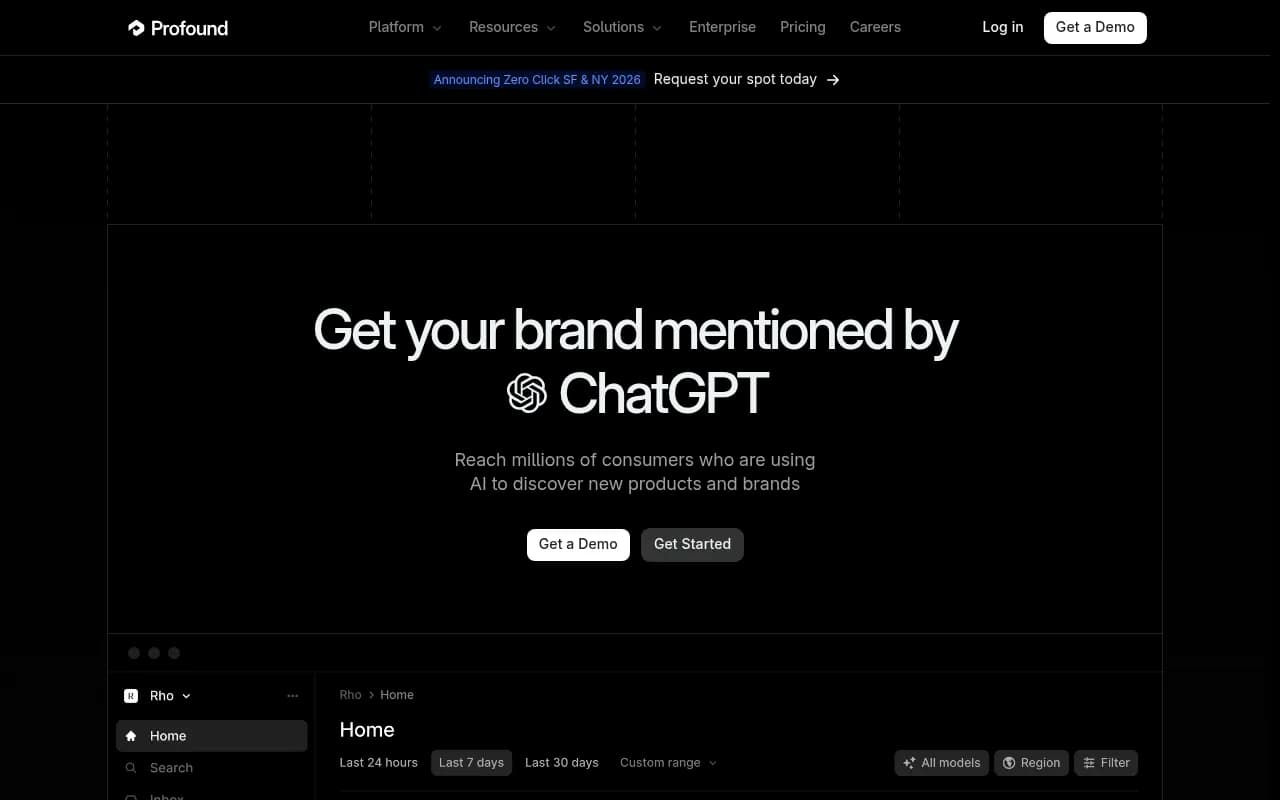
Profound focuses on enterprise AI visibility with strong compliance features -- particularly relevant for healthcare and regulated industries.
For agencies managing multiple clients:
Scrunch AI is SOC 2 certified and built around what they call "agent experience" -- how AI agents interact with your content. Demo-only access, but $300/month is a meaningful step down from Evertune.
For budget-conscious teams that need solid monitoring:
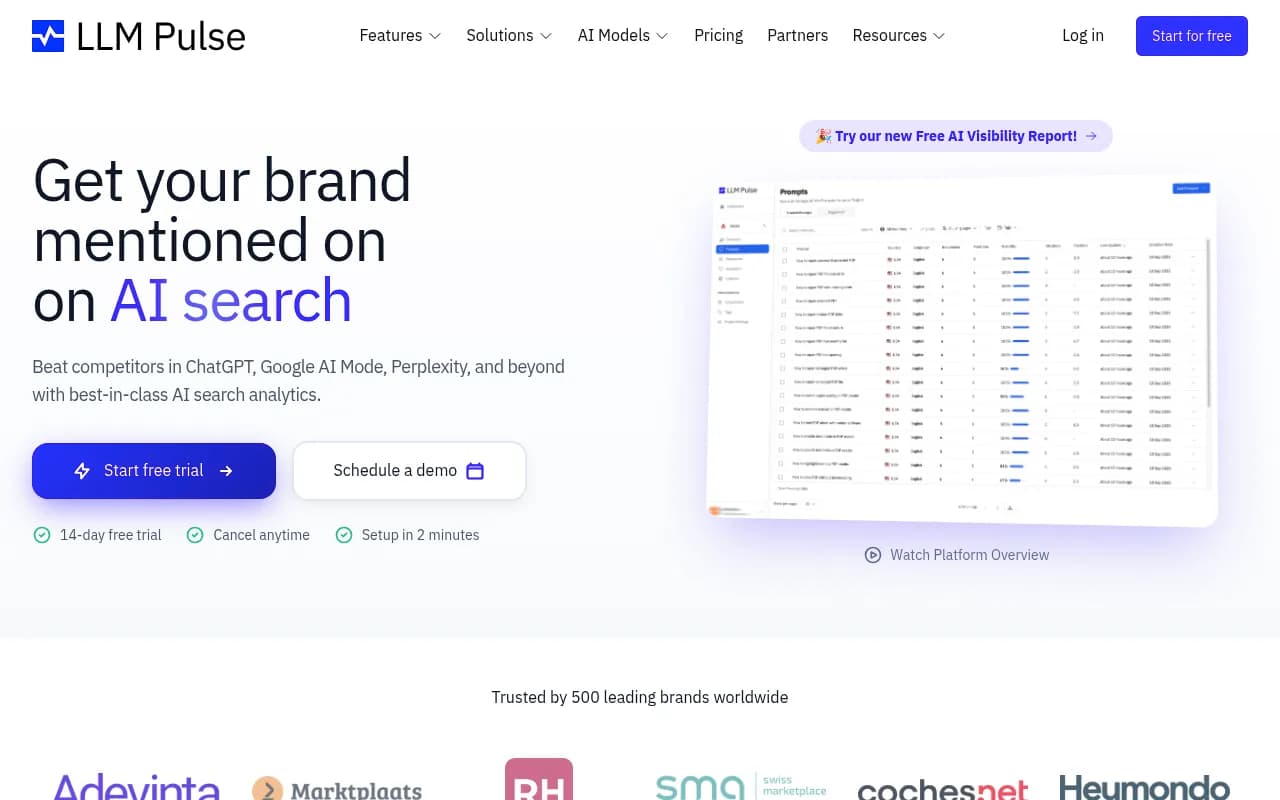
LLM Pulse starts at €49/month, includes query fan-out analysis, white-label options, and API access. No content generation, but strong monitoring fundamentals.
For teams that want monitoring plus SEO integration:

AthenaHQ tracks 8+ AI models with prompt volume analytics. Monitoring-focused, but the prompt volume data helps with prioritization.
The honest verdict
Evertune is a serious platform built by people who understand both enterprise marketing and AI infrastructure. The statistical rigor (1M+ prompts/brand/month), the EverPanel data, and the Consumer Preferences gap analysis are genuinely differentiated. If you're a large brand where AI visibility is a strategic priority and you need data that will hold up in a board presentation, Evertune is worth the demo.
But the $3,000/month floor, the absence of a free trial, and the gaps in crawler logs, traffic attribution, and Reddit/YouTube tracking mean it's not the right fit for most organizations. The GEO market has matured enough that you don't have to pay enterprise prices to get enterprise-quality insights -- especially if you need a platform that helps you act on what you find, not just report on it.
If you're evaluating GEO platforms and Evertune's price is a sticking point, run a parallel evaluation. The category has moved fast in 2026, and the gap between Evertune and well-funded alternatives has narrowed considerably.