Key takeaways
- Franchises need two layers of tooling: an AI visibility platform to track and improve brand-level answers, and a local layer (listings, reviews, location pages) that decides which location gets recommended.
- Most GEO tools were built for single-domain SaaS brands. Check for location-level tracking, geo-targeted prompts, and reporting that rolls up by region before you buy.
- Third-party sources dominate AI answers. Promptwatch Data shows 47.6% of ChatGPT responses with citations cite 10 or more domains, so franchisors can't rely on their own site alone.
- Thin, templated location pages are the biggest self-inflicted risk. Scale content carefully and keep each location page genuinely different.
- Pricing changes fast. Confirm every number on the vendor's own page before you commit.
Why franchises need a different GEO approach
A SaaS company has one product, one domain, and one brand to track. A franchise has a corporate site, maybe 300 location pages, hundreds of Google Business Profiles, thousands of reviews, and franchisees who each do their own marketing. AI assistants pull from all of it.
When someone asks ChatGPT "best pizza delivery near me" or Perplexity "which gym franchise has the cleanest locations in Denver," the answer is built from a mix of listings, reviews, local directories, and editorial roundups. The brand-level mention matters. The location-level recommendation matters more, because that's where the customer actually walks in.
Birdeye, a vendor that sells local and review software (so read it as vendor positioning), makes the same argument in its multi-location content: stop optimizing for brand-level mentions and manage data, sentiment, and reviews per location. I think that's directionally right, even if you discount the sales angle.
There's also a second problem. Most franchise brands share organic answers with a crowd. Promptwatch Data's analysis of unique domains per ChatGPT response (Sep 28 to Oct 4, 2026) found 52.5% of unbranded prompts cite 10 or more domains. For brand-specific prompts, only 21.3% do, and the most common count is five. So for branded queries, your own pages and a handful of review sites shape the answer. For "best X near me" queries, you need to show up in third-party lists and reviews.
What to look for in a GEO tool as a franchise
Before comparing vendors, write down what you actually need. Here's the checklist I'd use.
- Geo-targeted prompt tracking. Can you track the same prompt from different cities or regions, and see which results change?
- Brand versus location reporting. Can you separate corporate visibility from individual franchisee performance?
- Competitor benchmarking. Other franchise brands in your category are your real competition, not just local independents.
- Citation source analysis. You need to see which review sites, directories, Reddit threads, and listicles AI actually cites.
- Crawler visibility. If AI bots can't read your location pages, nothing else matters.
- Action layer. Monitoring alone leaves you with a dashboard and no plan.
- Agency or multi-seat support, because franchise marketing is rarely one person.
The two-layer stack
I'd split the tooling into two categories and buy from both.
- AI visibility and GEO platforms: they measure and improve how AI engines talk about your brand.
- Local presence platforms: they keep listings, reviews, and location data accurate and consistent across every location.
People tend to buy only the first or only the second. Franchises that win do both.
Layer one: AI visibility and GEO platforms
Promptwatch
Promptwatch is the one I'd shortlist first for franchise networks that want more than a dashboard. It tracks the real user interfaces of ChatGPT, Google AI Overviews, Google AI Mode, Gemini, Perplexity, and Copilot, with country tracking on every paid plan and state and city tracking from the Business plan. That matters when "near me" prompts are your revenue.

What makes it useful for franchises specifically: IP-verified crawler logs show whether AI bots are actually reading your location pages or hitting errors. Citation analytics show which third-party sources AI trusts in your category, including Reddit, YouTube, and LinkedIn. The Action Board turns that into a prioritized to-do list, and the Content Agent can draft and publish content to WordPress, Webflow, or Framer. Agency plans (Kick-off at $199/mo, Growth at $399/mo, Scale at $799/mo) offer unlimited projects, which helps if you're an agency running a franchise portfolio. Business is $579/mo with 350 prompts. Check promptwatch.com/pricing for current numbers.
The honest caveat: it isn't a listings manager or a review-response tool. You still need the local layer below.
Profound and Scrunch
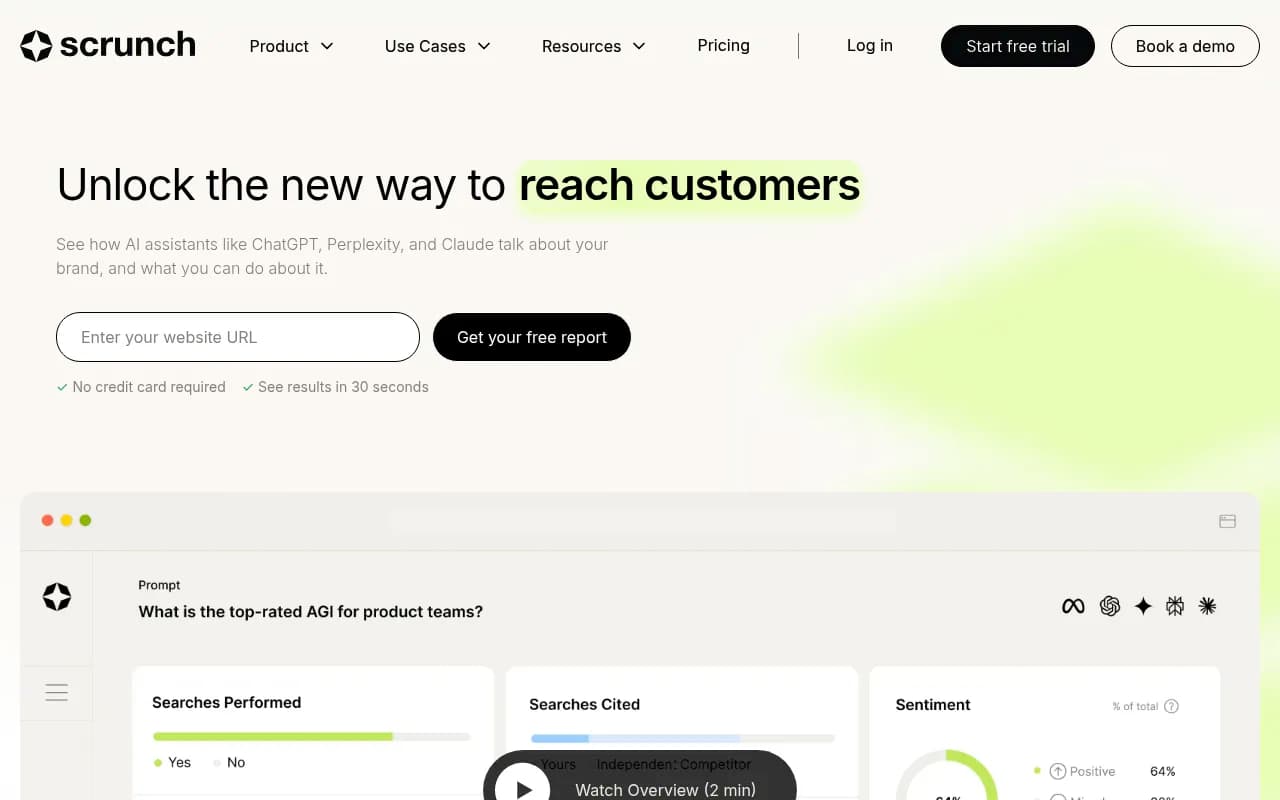
Profound and Scrunch are the enterprise-flavored picks. Both do strong prompt-level monitoring and citation analysis, and both are usually priced via sales conversations. They fit larger franchisors with budget and a dedicated analyst. Neither is where I'd start if you want the tool to do the optimization work, but both are credible for benchmarking against competing franchise brands.

Conductor, BrightEdge and seoClarity
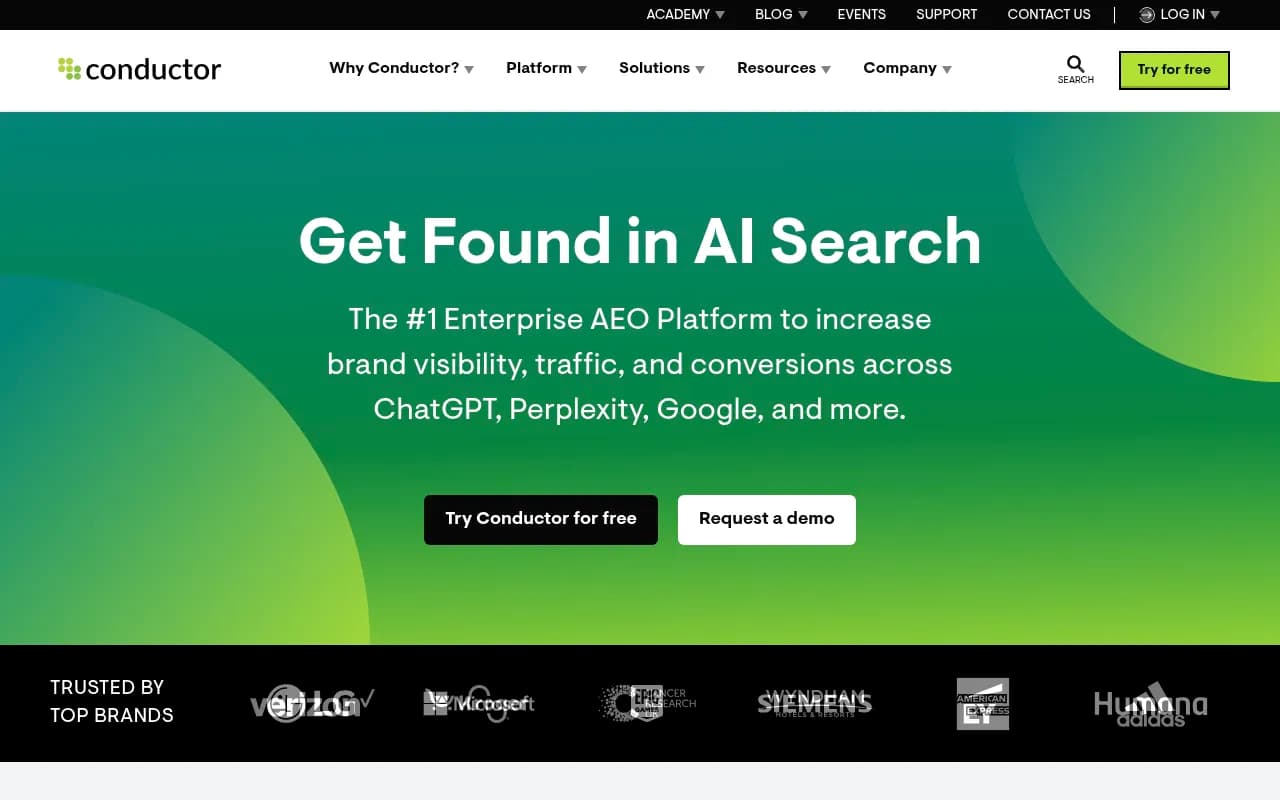
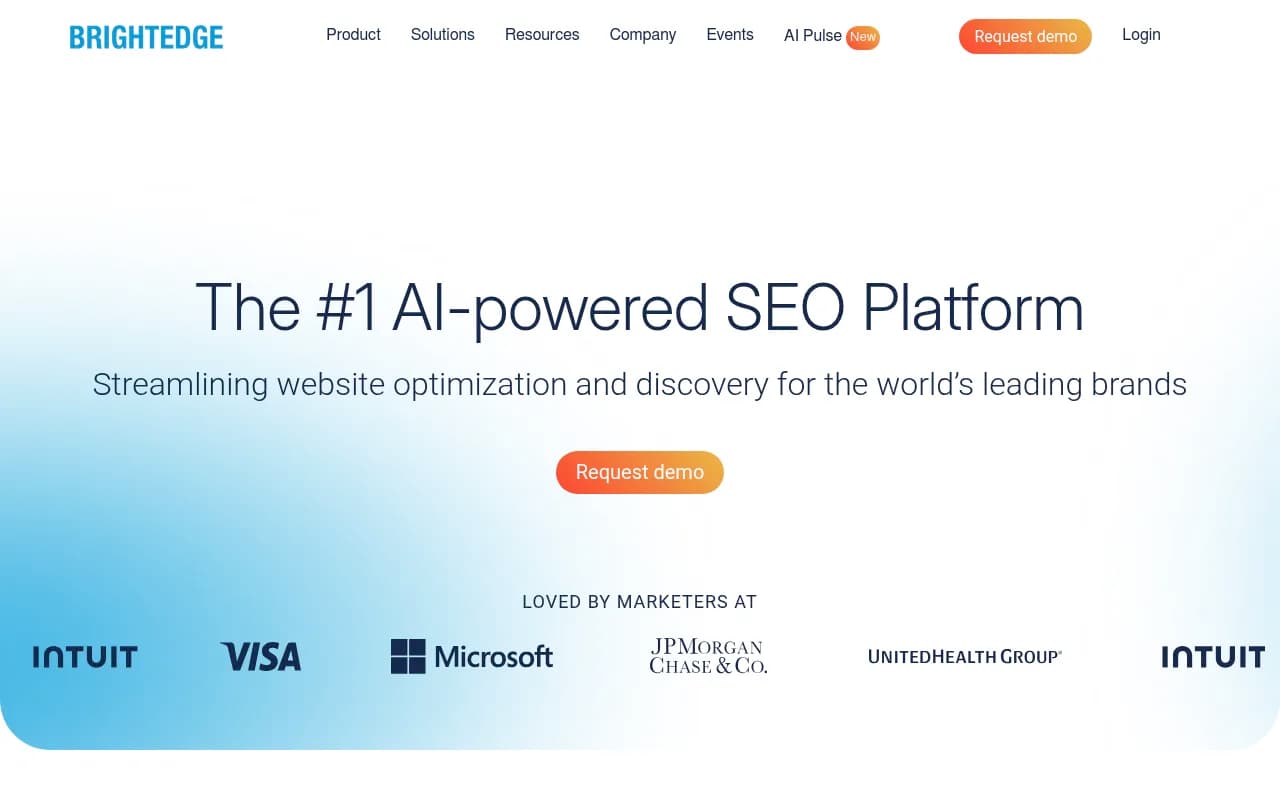
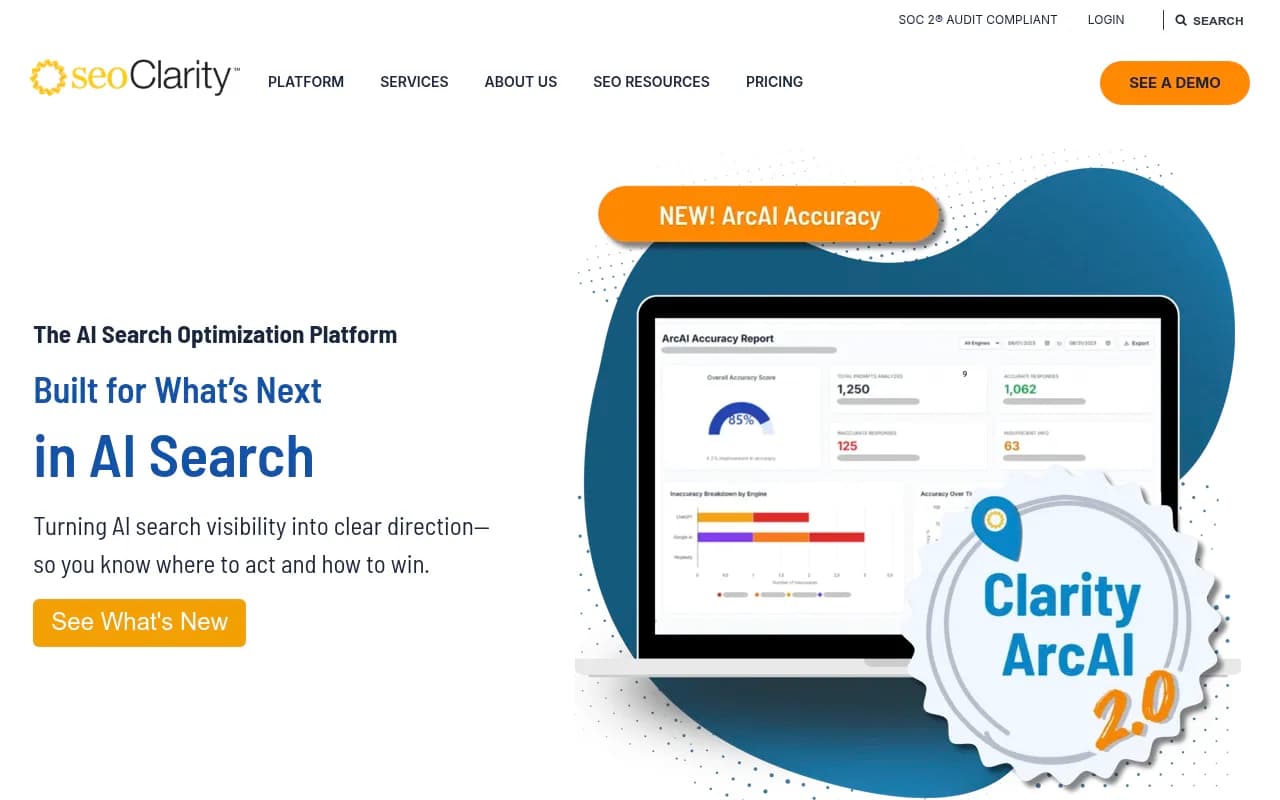
If your corporate SEO team already lives in an enterprise suite, adding AI visibility from the same vendor reduces friction. Conductor, BrightEdge, and seoClarity all have AI search modules layered on traditional SEO workflows. The trade-off is that they're built around keywords and pages first, so geo-level AI tracking varies. Ask for a demo using your own location-specific prompts.
Goodie AI and Bluefish AI
NoGood's enterprise roundup names Goodie AI the top pick for enterprise GEO, which is worth noting with the usual caveat that the publisher owns the product. Bluefish AI also targets large brands. Both are worth a demo if you're a national franchisor with a heavy brand-governance requirement.
Budget monitoring tools
Otterly.AI (listed from $29/month in ReachLLM's comparison) and Peec AI are monitoring-first tools. They're fine for a regional franchise with a few dozen locations that mainly wants to know whether the brand shows up. They won't tell you why, and they won't fix anything.


Tibly positions itself around local businesses, which is worth a look if you're a small multi-unit operator rather than a national brand.

Comparison: AI visibility layer
| Tool | Best for | Geo tracking | Takes action for you | Pricing approach |
|---|---|---|---|---|
| Promptwatch | Franchisors and agencies wanting tracking plus optimization | Country on all paid plans, state/city from Business | Yes (Action Board, Content Agent) | Public tiers, free tier available |
| Profound | Enterprise benchmarking | Verify in demo | Limited | Custom |
| Scrunch | Prompt and citation analysis | Verify in demo | Limited | Custom |
| Conductor | Teams in an enterprise SEO suite | Verify in demo | Workflow-based | Custom |
| Otterly.AI | Low-cost monitoring | Verify | No | From $29/mo per vendor comparisons |
| Peec AI | Clean dashboards | Verify | No | Contact sales |
Pricing and geo features change often. I couldn't verify franchise-specific feature sets for most of these tools, so treat the table as a starting point for demo questions, not a final verdict.
Layer two: local presence, listings and reviews
AI assistants pull from the same local data sources people always used. If your hours are wrong on a directory or one location has a 2.8-star rating, no GEO platform fixes that. These tools do.
Birdeye, Yext, Uberall and Chatmeter
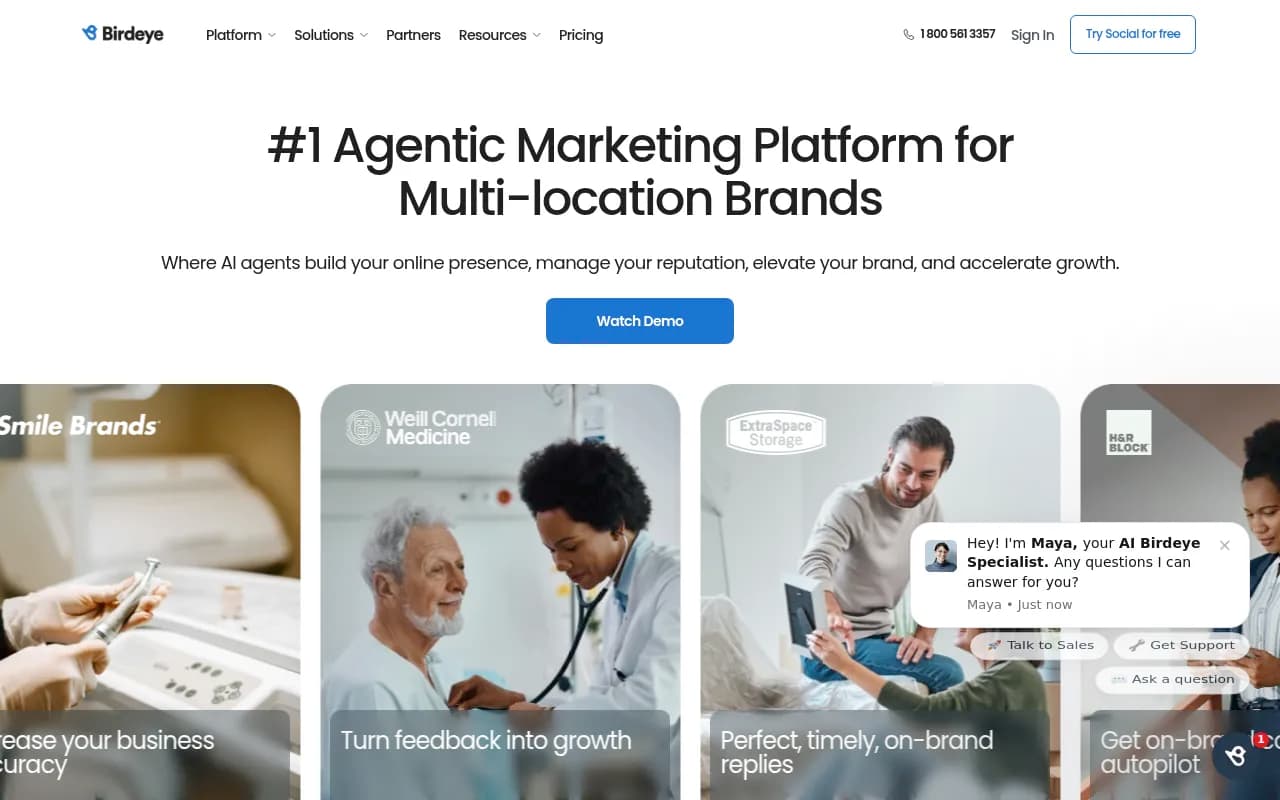
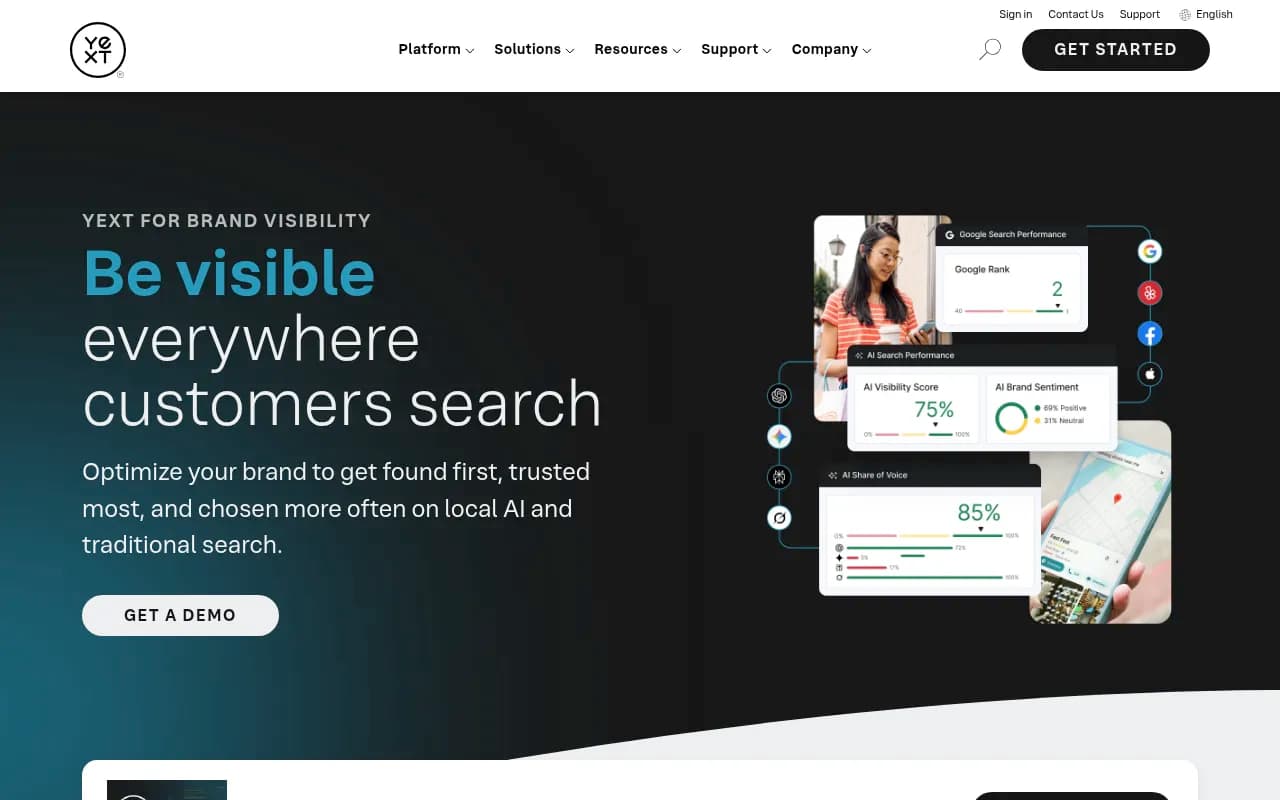
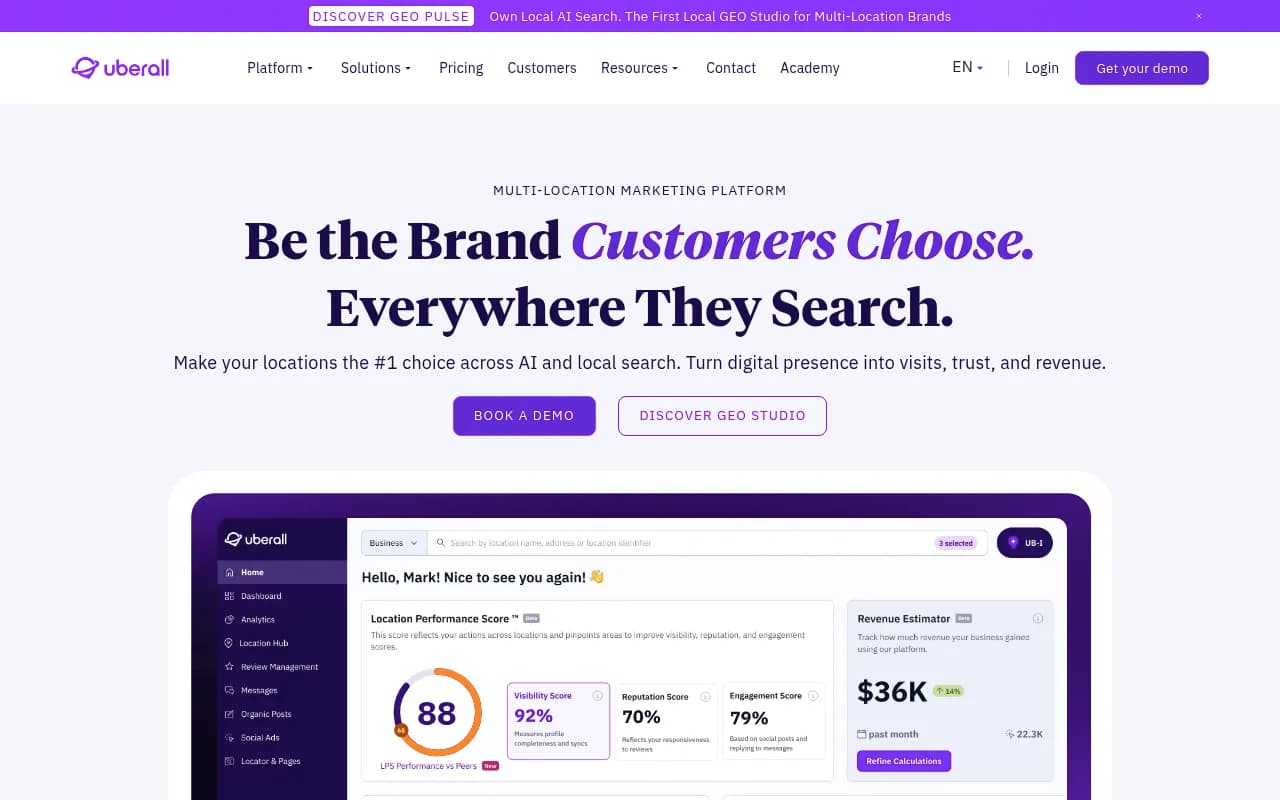
These four are built for multi-location brands. Birdeye leans toward reviews and messaging, Yext toward listings and structured location data, Uberall toward location marketing across many markets, and Chatmeter toward reputation and listings management. Pick by your biggest pain: dirty listings (Yext, Uberall) or review volume and response (Birdeye, Chatmeter).
Synup, BrightLocal and Moz Local
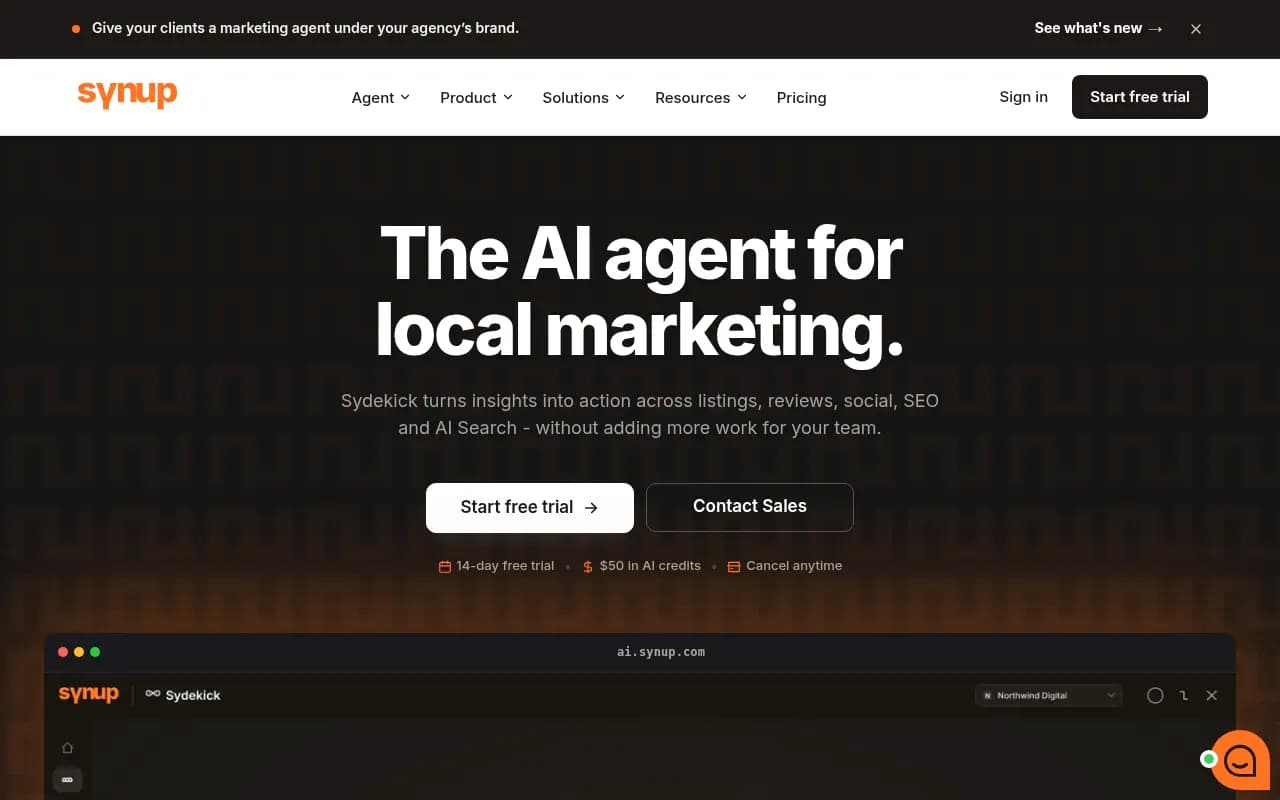
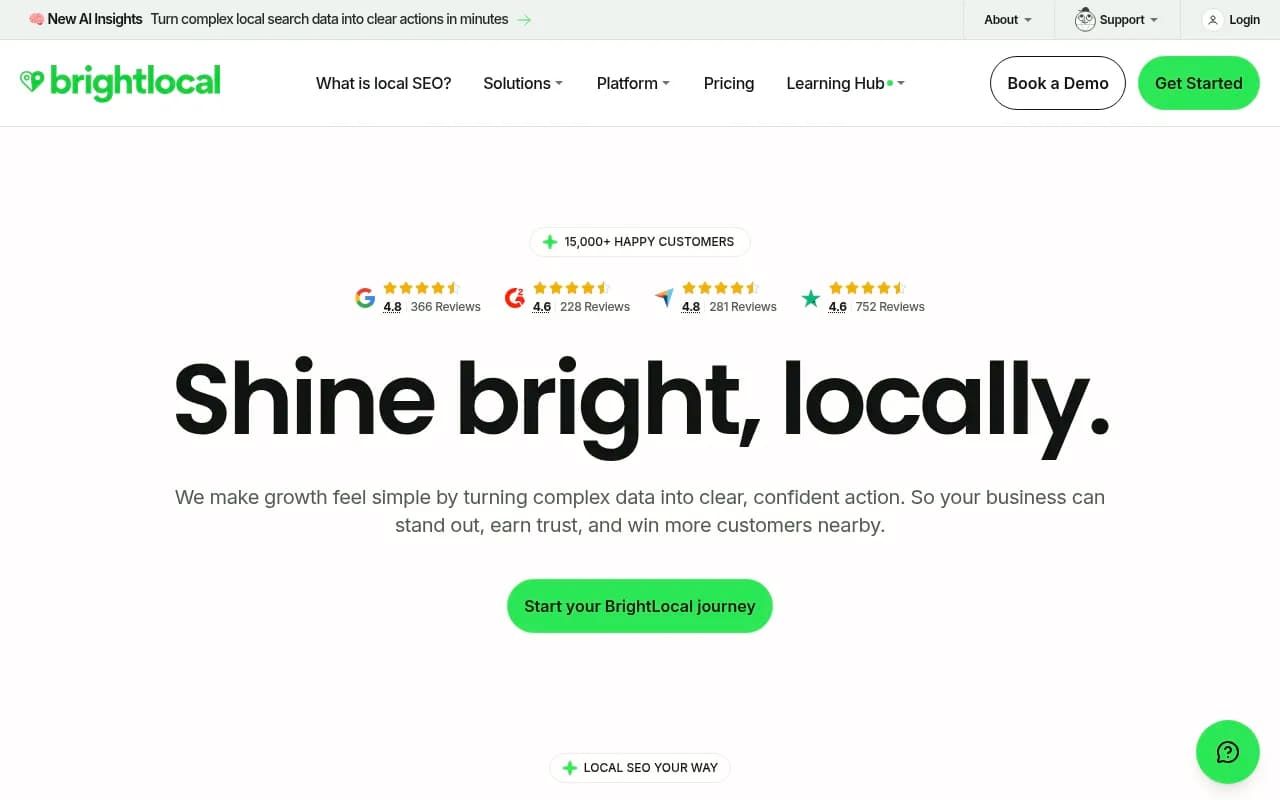
Synup runs listings, reviews, and local visibility with an AI agent layer, and suits mid-size networks. BrightLocal is a strong local SEO platform, particularly if an agency manages many franchise clients. Moz Local is the simpler listings-sync option.
Reviews and reputation
Reputation.com and ReviewTrackers turn review streams into per-location reporting. Reviews carry real weight in AI answers. Promptwatch Data's content type report (Sep 28 to Oct 4, 2026) shows reviews are 5.6% of ChatGPT citations for branded prompts, more than three times their 1.7% share across all prompts. Branded questions like "is [franchise] any good" lean on review content.

Social at scale
Franchisee social accounts feed a lot of local signals. SOCi is built for localized social marketing at scale, with approval workflows that suit corporate-franchisee relationships.
Comparison: local layer
| Tool | Core strength | Best fit |
|---|---|---|
| Yext | Structured location data and listings | National networks with messy data |
| Uberall | Location marketing across many markets | Multi-country franchisors |
| Birdeye | Reviews, messaging, reputation | Review-heavy categories (dental, fitness, home services) |
| Chatmeter | Reputation and listings | Mid-to-large multi-location brands |
| Synup | Listings, reviews, AI agent | Mid-size networks |
| BrightLocal | Local SEO reporting | Agencies managing franchise clients |
| SOCi | Local social at scale | Brands with active franchisee social |
What the data says about winning citations
A few findings from Promptwatch Data are worth building a franchise strategy around.
First, product and landing pages are the most cited content types in ChatGPT, at 22.4% and 16.8% of citations respectively (Sep 28 to Oct 4, 2026). The report doesn't mention franchises, but location pages are a kind of landing page, so I'd read it as a reason to make each one complete: services, prices, hours, staff, and specifics. That link is my inference, not a finding.
Second, for commercial prompts like "best X for...", listicles and comparisons add up fast. Product pages, landing pages, listicles, and comparisons make up almost 70% of citations. Getting into third-party "best of" lists in your category and city is worth real effort.
Third, industry matters a lot. In Promptwatch's healthcare data, government and public health sites earn almost half of citations. In travel, booking and search sites earn more than half of the listed share. In automotive, marketplaces like Autotrader and Cars.com outrank every car brand. A dental franchise, a hotel franchise, and a car dealership group each need different third-party targets. Look at your category before you pick tactics.
Fourth, Reddit is volatile. Promptwatch Data found reddit.com's share of ChatGPT citations fell from about 4% to 0.5% on August 14, 2026, per its Reddit citations report. Don't build a franchise strategy on one platform. ChatGPT drew only 0.46% of citations from social platforms in late September, while Google AI Overviews drew 12.2%, per the social media citations report. Which AI engine your customers use changes where you should invest.
The templated content trap
This is the part franchises get wrong most often. You have 400 locations, so you generate 400 near-identical pages with the city name swapped. It's fast, cheap, and exactly what Google's spam policies target. Birdeye reports that updated Google spam policies now apply to AI Overviews and can penalize multi-location brands using thin, templated content or scaled automation. I haven't independently verified that claim, but it matches how Google has treated doorway pages for years.
A safer pattern:
- Give each location page unique facts: real staff, local photos, service area details, parking notes, local reviews.
- Use shared templates for structure, not for the actual copy.
- Add LocalBusiness schema with accurate data per location.
- Check crawl access. If AI bots hit errors on location pages, a crawler log tool will show it.
- Refresh pages on a schedule instead of publishing once and forgetting.
For technical crawling and schema work, Screaming Frog and Schema App are practical additions to a franchise stack.
How to choose: three common franchise setups
National franchisor with 500+ locations
Combine an enterprise visibility platform (Profound, Scrunch, or Promptwatch Business/Enterprise) with Yext or Uberall for data and Birdeye or Reputation.com for reviews. Budget for a demo of each, and bring your own location prompts.
Regional brand with 20 to 100 locations
Promptwatch Professional or Business covers tracking and content action. Add Synup or Birdeye for the local layer. This is the sweet spot where one lean team can run the whole stack.
Agency managing multiple franchise clients
Look at agency plans with unlimited projects and white-label reporting. Promptwatch's agency tiers and BrightLocal both fit here. If you'd rather have a specialist partner run the program, 1001 SEO Media offers GEO and local SEO services and uses Promptwatch for AI visibility work.
A practical 30-day rollout
- Week one: audit. Run a free AI visibility scan, check crawler access to location pages, and pull your Google Business Profile data into one sheet.
- Week two: set up tracking. Build a prompt set mixing branded, unbranded, and "near me" queries, tagged by region. Add three to five competing franchise brands.
- Week three: fix the basics. Clean listings, respond to unanswered reviews, repair broken location pages.
- Week four: publish and measure. Update your top 10 location pages with unique content, then watch whether they get crawled and cited.
For more tools beyond this list, the GEO software directory is a good place to compare options by category.
Questions to ask every vendor
- Can I track the same prompt from different cities, and is that included in my plan?
- Do you show which third-party sources AI cites in my category?
- Can I report by region or franchisee, and give franchisees limited access?
- Do you track AI crawler activity on my site?
- What does the tool do after it finds a gap?
- What happens to pricing when I add 100 more locations?
The last one catches people out. Per-location pricing can look cheap at 10 locations and brutal at 300.
Bottom line
Pick one visibility platform that can see your category at the city level and tell you what to do next, then pair it with a listings and reviews tool that keeps every location's data clean. Skipping either half leaves a gap. If I had to start with one purchase, I'd begin with the visibility platform, because it tells you which local fixes matter first.