Key takeaways
- Days 1-14 are for setup, baseline, and a first action plan. Do not promise movement in this window. Vendor guides like Wellows say initial onboarding takes 2-4 weeks, with meaningful insights in the first 30 days.
- Check AI crawler access in the first week. If a major AI crawler is blocked by robots.txt, a CDN, or a WAF, nothing else you do matters.
- Build the prompt set from the client's real buyers, then split it by intent (commercial, informational, branded), because ChatGPT cites different content types for each.
- Audit product and landing pages first. In Promptwatch Data for Sep 28 to Oct 4, 2026, they made up about 39% of ChatGPT citations.
- End day 14 with a baseline report, a prioritized action list, and a written agreement on what month one, three, and six should look like.
Why the first 14 days matter
Most agency-client problems start with how the partnership is set up, not with the work. Search Engine Land's piece on SEO onboarding makes the same point: onboarding is where trust is built and expectations are set. AI visibility makes it worse, because clients often arrive with a screenshot of ChatGPT not mentioning them and an expectation that you will fix it by Friday.
You will not. What you can do in 14 days is get access, measure where they stand, find the technical blockers, and hand over a plan they believe in. That is a good two weeks.
The other cost is internal. A US Tech Automations worked example claims coordination drops from about 6 hours to 1.5 hours per client with automated kickoff tasks. I would treat that as a vendor illustration, not measured data. But the direction is right: if onboarding lives in one person's head, you lose days to chasing logins.
Before day 1: the handoff
Sales promised something. Find out what. Before the kickoff, the person who closed the deal should write down the promises, the stated goals, the competitors the client mentioned, and any red flags. Put it in the project folder.
Then send a short intake form. Keep it to what you cannot find yourself:
- Who owns the website, the CMS, and the development resource?
- Which markets, languages, and countries matter?
- Who are the top 3-5 competitors, in the client's own words?
- What has been tried before in SEO, PR, or content, and what happened?
- What does success look like in month one, three, and six?
That last question is the one most teams skip. Misaligned timeline expectations are behind most of the frustration in agency relationships.
Days 1-2: kickoff and access
The kickoff call
Cover the team, what gets delivered in the first two months, how you will communicate, and what you need from them. Send a written recap within 24 hours and ask them to confirm it. Store it somewhere both sides can see.
Say this out loud on the call: AI visibility moves on a different clock from paid media. Crawling, indexing, and citation pickup take weeks.
Access checklist
Ask for all of this on day one, because each item has a different internal owner and approval speed.
- Google Search Console and Bing Webmaster Tools
- Analytics (GA4 or equivalent) with permission to create reports
- CMS login with a publishing role, or a named developer contact
- CDN or hosting access for crawler logs (Cloudflare, Vercel, Fastly, Netlify, CloudFront, or raw server logs)
- Brand guidelines, tone of voice documents, and product catalog or feed
- Social and review profiles you need to monitor (LinkedIn, YouTube, Reddit accounts, G2, Trustpilot)
Log requests in your project tool. Wrike, Notion AI, or whatever you already use is fine. The tool matters less than having one owner per request and a due date.
If you track the pipeline from signed contract to kickoff in a CRM, HubSpot or Pipedrive can trigger the onboarding tasks automatically.
If your stack is a patchwork, a connector like Zapier can create the same task list every time a deal closes.
Days 3-4: set up measurement
Pick the monitoring platform and set up the project. This is where the choice of tool starts to shape what you can promise the client.
There are two broad kinds of platform. Prompt trackers tell you whether the brand was mentioned. Optimization platforms also tell you why, show where AI finds the content, connect it to traffic, and help you act. For agency work I lean toward the second kind, because a client who sees a dashboard of red numbers with no plan attached gets nervous fast.
Promptwatch is what we would reach for here, since it combines real-UI prompt tracking, IP-verified crawler logs, visitor analytics, and a to-do list of actions in one workspace, and it has white-label reports and a client portal for agencies.

Other options worth knowing, depending on budget and client size:
| Platform type | Examples | Good for | Watch out for |
|---|---|---|---|
| Optimization platform with crawler logs and content actions | Promptwatch | Agencies that need to show cause and fix | Setup takes real time on day 3-4 |
| Monitoring-first trackers | Otterly.AI, Peec AI, LLM Pulse | Cheap baseline tracking | No crawler logs or content workflow |
| Enterprise monitoring | Profound, Scrunch, Bluefish AI | Large brands with big budgets | Higher price points |
| SEO suites with AI add-ons | Semrush, Ahrefs Brand Radar | Teams that want one login | Shallower AI-specific data |
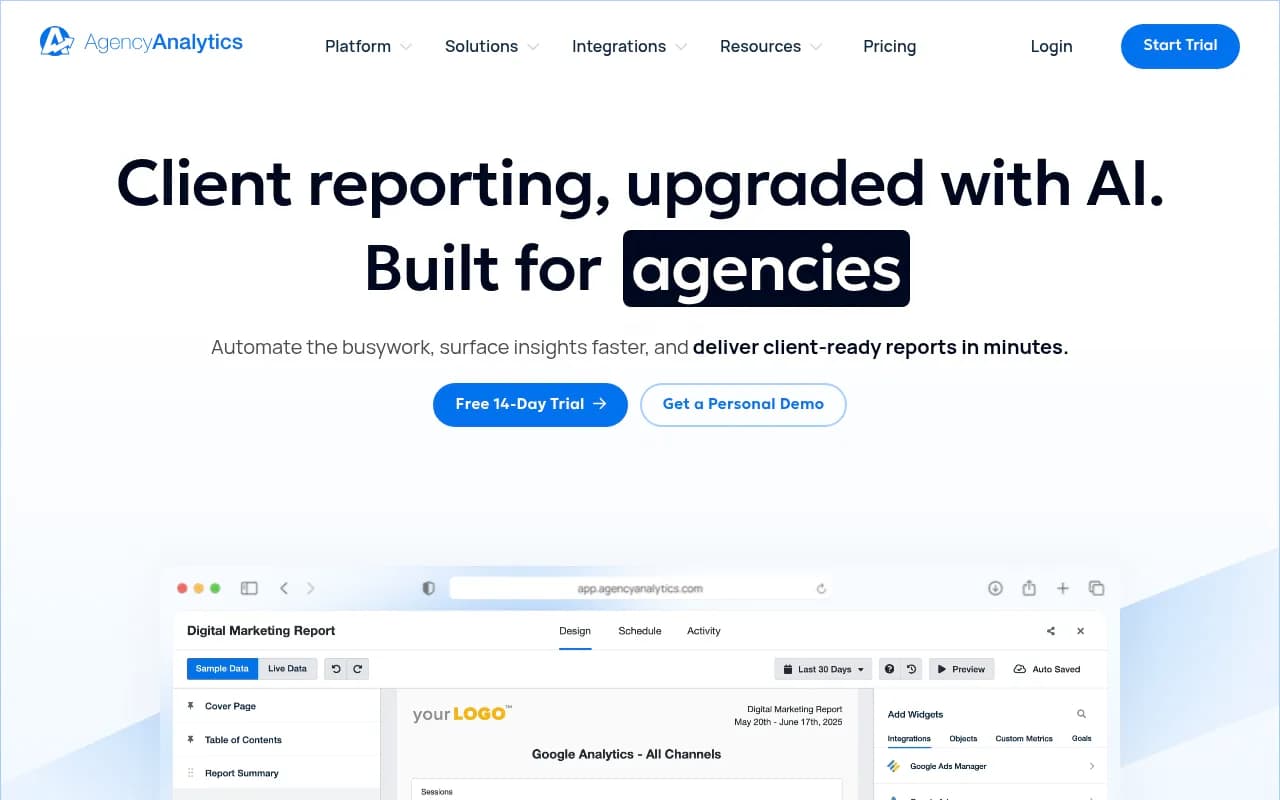
| Reporting layer | AgencyAnalytics | Client dashboards across channels | Not an AI visibility tool itself |


If you want to compare more options, the GEO software directory at bestgeosoftware.com lists a lot more than fit in a table.
Connect the data sources
Connect Search Console and Bing, then analytics, then crawler logs. Bing matters more than people expect. Promptwatch Data on Copilot suggests making sure Bing indexes your key pages, and Copilot's source counts have swung widely, so judge it on monthly trends, not daily ones.
Days 5-6: technical access for AI crawlers
This is the step that saves accounts. Check whether AI crawlers can actually reach the site.
- Read robots.txt and look for blanket disallows or rules aimed at GPTBot, OAI-SearchBot, ChatGPT-User, ClaudeBot, PerplexityBot, and Google-Extended.
- Check CDN and WAF rules. Bot protection often blocks AI crawlers without anyone deciding to.
- Confirm key pages render without JavaScript, or are prerendered.
- Check that pages are in the sitemap and not orphaned.
- Switch on crawler logging.
Then compare the client's logs to the market. In Promptwatch's AI crawler traffic report (June 8 to September 6, 2026), OpenAI accounted for 79.8% of IP-verified AI crawler requests in the week of Aug 31 to Sep 6, down from 94.8% in early June. See the full data in Promptwatch's AI crawler traffic report. If a provider is large in that report but near zero in your client's logs, the site is probably blocked or unreachable for that provider.
Only IP-verified requests count in that data, so spoofed user agents are excluded. Do the same in your client's logs or you will chase ghosts. Meta is also worth watching: Promptwatch Data on Meta-WebIndexer shows it growing from about 2% to nearly 38% of tracked AI crawler requests between mid-July and August 9, 2026.
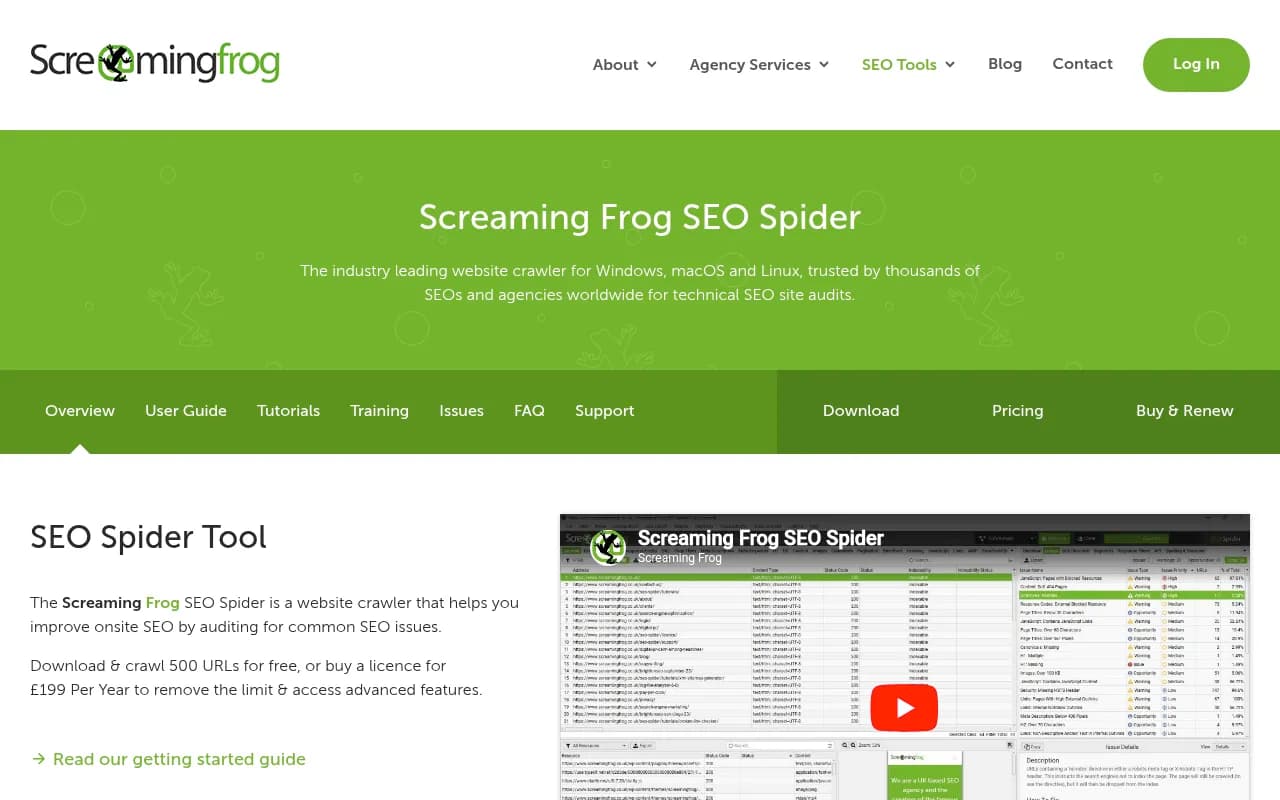
For a classic crawl alongside this, Screaming Frog is still the fastest way to find broken links, redirects, and thin pages.
Days 7-8: build the prompt set
A prompt set is the list of questions you will track. It is the single biggest lever on whether your baseline means anything.
Start from real sources: Search Console queries, People Also Ask, sales call notes, support tickets, and competitor comparison pages. Then tag each prompt by intent.
| Intent | Example prompt | What ChatGPT tends to cite (Sep 28 to Oct 4, 2026) |
|---|---|---|
| Commercial | best [category] software for [use case] | Product pages 26.0%, landing pages 20.6%, listicles 15.0% |
| Informational | how do I [solve problem] | Product pages 19.1%, landing pages 13.9%, listicles 13.6%, how-tos 10.7% |
| Branded | is [brand] good / [brand] reviews | Product pages 23.3%, landing pages 22.8%, reviews 5.6%, FAQ 4.8% |
Those figures come from Promptwatch's ChatGPT citation share by content type report. The takeaway is practical: for branded prompts, the client's own pages and review presence decide the answer, while commercial prompts are a fight over listicles and comparisons you do not control.
Two more things to set up now:
- Persona and country tags, so you can report by market without rebuilding the set.
- Query fan-outs. ChatGPT runs several web searches per response, and since August 8, 2026 it uses the site: operator far more, per Promptwatch Data on ChatGPT site: fanouts. That makes the client's own domain structure and page titles matter more.
Aim for 50-150 prompts to start. More is not better if half are noise.
Days 9-10: baseline and competitor benchmark
Run the first full scan across ChatGPT, Google AI Overviews, AI Mode, Perplexity, Gemini, and Copilot. Use tools that monitor the real user interface, not only API calls, since user-facing answers and citations can differ from API outputs.
Record these baseline numbers:
- Visibility score or mention rate per engine
- Share of voice against the 3-5 named competitors
- Average position in the answer
- Sentiment
- Which of the client's pages get cited, and which domains get cited instead
Read the numbers together. Low share of voice is a coverage problem. Late position is a prominence problem. Mentions without citations to the client's own pages usually point to a content or crawlability problem.
Keep source behavior per engine in mind when you explain the baseline to the client. According to Promptwatch Data on average sources per response (published Sept 2025), ChatGPT cites about 5 sources per web-search answer, while Google AI Overviews and Perplexity cite about 10. And in Promptwatch's social media citations report, ChatGPT drew 0.46% of its citations from social platforms from Sep 28 to Oct 4, 2026, versus 12.2% for Google AI Overviews. So a Reddit or YouTube strategy that helps in AI Overviews may do very little in ChatGPT. Reddit's share of ChatGPT citations fell from about 4% to 0.5% on August 14, 2026, per Promptwatch's Reddit citations data.
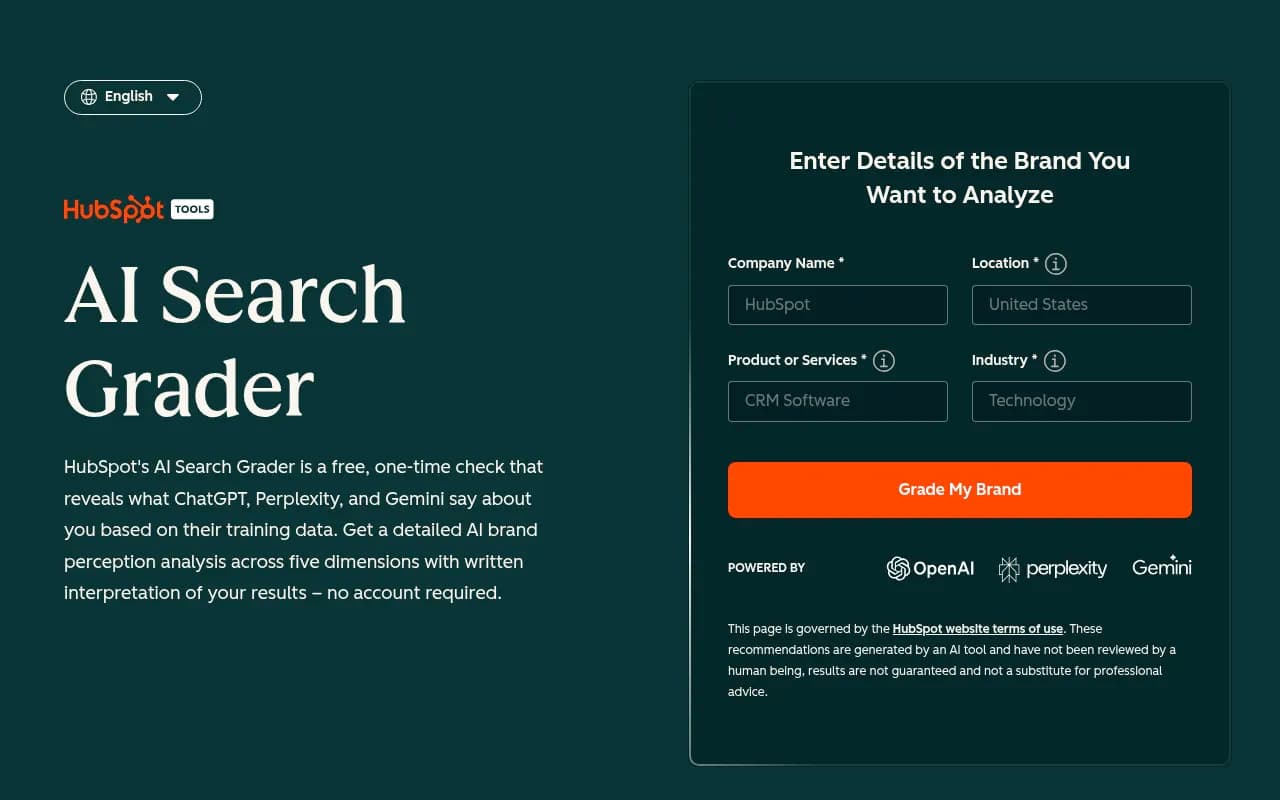
For clients who want a free first look before they commit, a no-login scan from tools like HubSpot AI Search Grader or the free AI visibility report from Promptwatch works as a conversation starter, not a baseline.
Days 11-12: content and page audit
Start with the pages that carry the most citation weight. Product pages and landing pages together made up about 39% of ChatGPT citations in the Sep 28 to Oct 4, 2026 data. Editorial formats made up about 43%.
A practical audit order:
- Product and service pages: clear facts, pricing or pricing logic, specs, comparisons, and structured data.
- Landing pages: do they answer the commercial prompts in your set directly?
- FAQ and how-to content: is there something to cite for informational prompts?
- Review presence: G2, Trustpilot, and similar sites for branded prompts.
- News and blog posts: lowest priority for durability. According to Promptwatch's content half-life report, news lost half its pages within about 36 days, while landing pages and docs stayed cited for months.
That last point changes how you spend a content budget. Evergreen landing pages and docs outlast news posts in ChatGPT citations, so do not let the client fill your first month with press-release-style posts.
If your industry has its own citation pattern, check it. Promptwatch publishes sector reports for software, travel, healthcare, and automotive. In automotive, for example, marketplaces outrank every car brand, which changes whether you pitch for owned content or third-party placements.
For on-page content scoring, tools like Surfer SEO or Clearscope can help with briefs, though they do not tell you what AI engines actually cite.

Day 13: the action plan
Turn the baseline and audit into a short, ranked list. Five to ten actions is plenty. Each should have an owner, an expected effort, and the evidence behind it.
A decent first list usually includes:
- Fix crawler blocks (if found)
- Rewrite the 5-10 highest-intent landing and product pages
- Publish content for the biggest prompt gaps
- Fill review and listing gaps
- Add FAQ and structured data where it is missing
- Set up offsite mentions work for third-party pages AI already cites
This is where platforms with an action layer earn their keep. Promptwatch's Action Board, content gap analysis, and Content Agent turn gaps into prioritized tasks and drafts, and track whether each published page gets crawled and cited. If you are doing this by hand, a spreadsheet and discipline work too, just more slowly.
If the client's team will publish on a schedule, automation tools can reduce handoffs. For smaller content ops, options like AirOps exist, but they lack the monitoring data to ground what to write.
Day 14: baseline report and expectations meeting
Present three things: where they stand, what is blocking them, and what you will do in the next 60 days. Keep it short. A 10-slide deck beats a 40-page PDF.
Be honest about timing. Wellows and others suggest meaningful insights within 30 days, and I think that is fair. The 14-day deliverable is a baseline and a plan, not a result.
Agree on the following in writing:
- Reporting cadence (weekly digest, monthly report, or both)
- The three or four metrics that count: visibility, share of voice, citations to owned pages, and AI-referred traffic or conversions
- Month one, three, and six expectations
- Who approves content and how fast
If you are an agency that needs a partner for the GEO side of an engagement, 1001 SEO Media runs technical SEO, content, and AI search work and uses Promptwatch for AI visibility tracking.
The 14-day checklist at a glance
| Days | Focus | Output |
|---|---|---|
| Pre-kickoff | Sales handoff, intake form | Written promises and goals |
| 1-2 | Kickoff call, access requests | Recap sent, access tracker live |
| 3-4 | Platform setup, data connections | Project live with GSC, Bing, analytics |
| 5-6 | Crawler access and technical checks | robots.txt, CDN, WAF review, logging on |
| 7-8 | Prompt set | 50-150 tagged prompts |
| 9-10 | Baseline scan, competitor benchmark | Visibility, share of voice, citations |
| 11-12 | Content and page audit | Ranked page list |
| 13 | Action plan | 5-10 owned actions |
| 14 | Baseline report, expectations meeting | Agreed metrics and timeline |
Common mistakes
Tracking too many prompts before checking crawler access. Reporting mentions without citations. Promising a ranking-style outcome from a probabilistic system. Using one engine as the proxy for all of them. And skipping the question about who owns the website, which is how a one-line fix sits in a developer's queue for six weeks.
If you want a wider list of tools to evaluate for the monitoring stage, the AI rank tracking directory at ai-rank-tools.com is a good place to compare them side by side. Whatever you pick, run the 14 days the same way every time. The consistency is what makes the second client faster than the first.