Key takeaways
- Product pages and landing pages together earn about 39% of ChatGPT citations, so your catalog is your biggest AI visibility asset.
- Most platforms only monitor. For a Shopify store, the useful ones connect findings to product, collection, schema and content work.
- Shopify-native tools (Vizby) and revenue-attribution tools (AthenaHQ) suit different teams than cross-channel platforms like Promptwatch.
- Shopping cards in ChatGPT are still rare, so don't build your whole strategy around them. Citations in normal answers matter more today.
- Pick on three things: ecommerce depth, whether it helps you fix things, and whether it ties visibility to traffic and revenue.
Why Shopify brands need to care about AI visibility
A shopper used to type "running shoes flat feet" and open ten tabs. Now they ask ChatGPT for the best running shoes under $150 for flat feet, and the answer names three or four brands. If you are not one of them, you were not in the running, and you will never see that lost visit in your analytics.
That is the problem AI visibility platforms are meant to solve. They run buyer-style prompts across ChatGPT, Gemini, Perplexity, Claude and Google's AI surfaces, then report which brands get mentioned, which pages get cited, and where you are missing.
A word of caution before the list. Much of what you will read on this topic comes from vendors ranking themselves first. The Vizby guide calls Vizby "best overall", and the Ranketta guide ranks Ranketta near the top. That is normal marketing, but treat any "best overall" claim as a starting hypothesis. I have tried to organize this guide around what fits which kind of store rather than a single winner.
What the data says about where ecommerce wins citations
Before picking a tool, it helps to know what you are optimizing for. Promptwatch Data tracked ChatGPT citations from Sep 28 to Oct 4, 2026, and the split is very favorable to stores:
- Product pages were the most cited content type at 22.4% of classified citations.
- Landing pages came next at 16.8%.
- Listicles took 13.6%, how-tos 8.7%, comparisons 5.9% and reviews 1.7%.
For commercial prompts, which is where buyers live, product pages hit 26.0% and landing pages 20.6%. Those two plus listicles and comparisons make up almost 70% of citations. For branded prompts ("is Brand X any good?"), reviews jump to 5.6%, more than three times their overall share.
The practical read: your product and collection pages are doing real work in AI answers, but only if they are easy to compare (clear price, specs, who it is for). You also want to appear in the "best of" roundups ChatGPT cites, and to collect reviews on sites trusted in your category.
One more thing worth knowing. Promptwatch's ChatGPT shopping data shows product cards and shopping features appear in only a low single-digit percentage of web-search responses, and the rate moves in steps, which suggests OpenAI tunes it. So complete Product schema, accurate price and availability, and a clean merchant feed are worth doing, but ordinary citations still drive most of your exposure.
And ads are now part of the picture. Promptwatch's ChatGPT ads data shows ads went from zero before May 27, 2026 to appearing in about 20% of web-search responses on average over the following 90 days, and above 30% in recent weeks. Organic-style prompts account for most ad-bearing responses. If you sell in competitive categories, expect paid placements next to the organic recommendations you are chasing.
What to look for in a platform for a Shopify store
A generic brand-mention tracker will tell you "you appeared in 12% of answers". That is not enough for a store with 800 SKUs. These are the capabilities that matter:
- Prompt tracking that reflects how shoppers ask. Comparison, price-bound and use-case prompts, not only brand terms.
- Product and collection level views. Which items show up and which never do.
- Citation sources. Which of your URLs get cited, and which third-party pages (review sites, roundups, Reddit) AI trusts in your category.
- Crawler and traffic data. Whether AI bots can read your pages, and whether AI referrals convert.
- An execution path. Fixes for structured data, product copy, FAQs and comparison content, ideally without a separate agency project.
- Reasonable pricing per tracked response, since shopping prompts multiply fast across products and countries.
Comparison at a glance
| Platform | Best for | Ecommerce focus | Helps you fix things | Notes |
|---|---|---|---|---|
| Promptwatch | Brands that want tracking, crawler data, traffic and content execution in one place | General, with AI Shopping tracking | Yes (Content Agent, Action Board) | Free tier, paid from $95/mo |
| Vizby | Shopify and Shopify Plus teams wanting Shopify-native work | Yes, Shopify-first | Yes | Vendor-reported; best fit only on Shopify |
| AthenaHQ | Revenue attribution with Shopify and GA | Product-level views | Recommendations and agents | Free Essential tier, Starter $295/mo (per Ranketta) |
| Profound | Large enterprise AI search programs | General | Yes | Higher price point |
| Scrunch | Enterprise visibility and agent experience | General plus shopping | Yes | Enterprise oriented |
| Peec AI | Lightweight competitive monitoring | General | Recommendations | Monitoring-focused |
| Otterly.AI | Affordable basic tracking | General | Limited | Good for testing |
| Semrush | Teams already living in Semrush | General SEO suite | Partly | AI features added to an SEO suite |
Treat the "helps you fix things" column as a rough guide. Check each vendor's current plan before you commit.
The platforms, one by one
Promptwatch
Promptwatch is the one I would look at first if your store has both a content team and a technical person. The reason is that it connects the dots a Shopify merchant actually struggles with: whether AI crawlers can read the store at all, which pages get cited, what traffic that sends, and what to publish next.
IP-verified crawler logs show GPTBot, OAI-SearchBot, ChatGPT-User, PerplexityBot and others hitting your pages, including errors. Visitor analytics tie AI referrals to real sessions. Prompt Intelligence gives volumes, difficulty scores and the query fan-outs AI runs behind a single answer, which tells you what a shopper's one question really turns into. The Content Agent plans and writes content against your gaps and can publish through Webflow, Framer or WordPress. Note that Shopify is not on that CMS publishing list, so for product-page edits you will apply changes in Shopify yourself, using the Action Board's prioritized to-do list as your guide.
It also tracks AI Shopping (ChatGPT shopping carousels and Alexa product results, where you can upload your own catalog) and Ads Radar, which shows which advertisers bid on your prompts. For a Shopify brand, those two are directly relevant.
Pricing starts free (Explore, 10 prompts, ChatGPT only). Essential is $95/mo with 50 prompts and all AI models, Professional is $245/mo, and Business is $579/mo with the automated Content Agent and state/city tracking. Agencies have separate Kick-off, Growth and Scale plans. Confirm current prices at promptwatch.com/pricing.

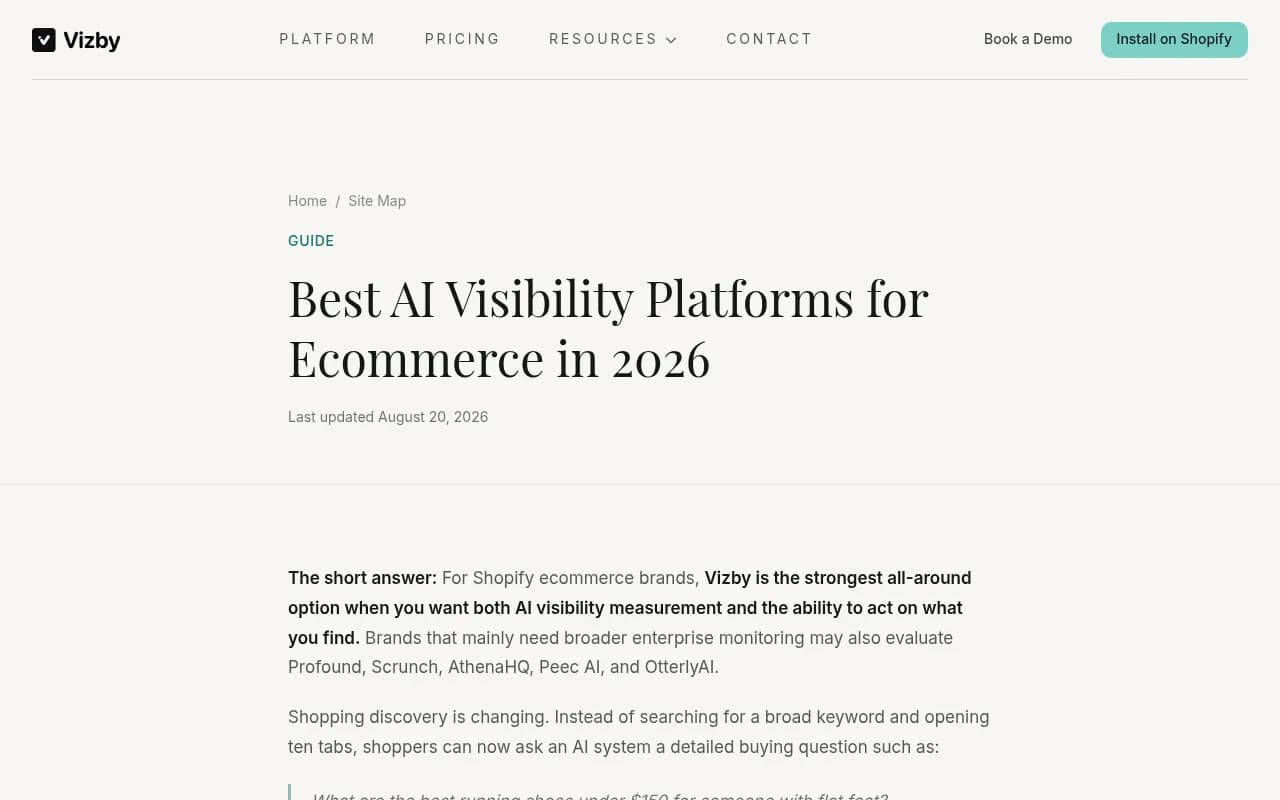
Vizby
Vizby is built around the Shopify workflow. It tests shopper-style questions, shows which competitors appear instead of you, which URLs get cited, and which products and collections have gaps. Then it ties those gaps to Shopify work: product and collection optimization, structured data, FAQs and content.
It is the most Shopify-native option in this list, and that is its pitch. The honest caveat is that almost everything I can say about it comes from Vizby's own guide, and I did not find independent reviews or pricing. If you run Shopify Plus with a big catalog, it deserves a trial. If you are not on Shopify, skip it.
AthenaHQ
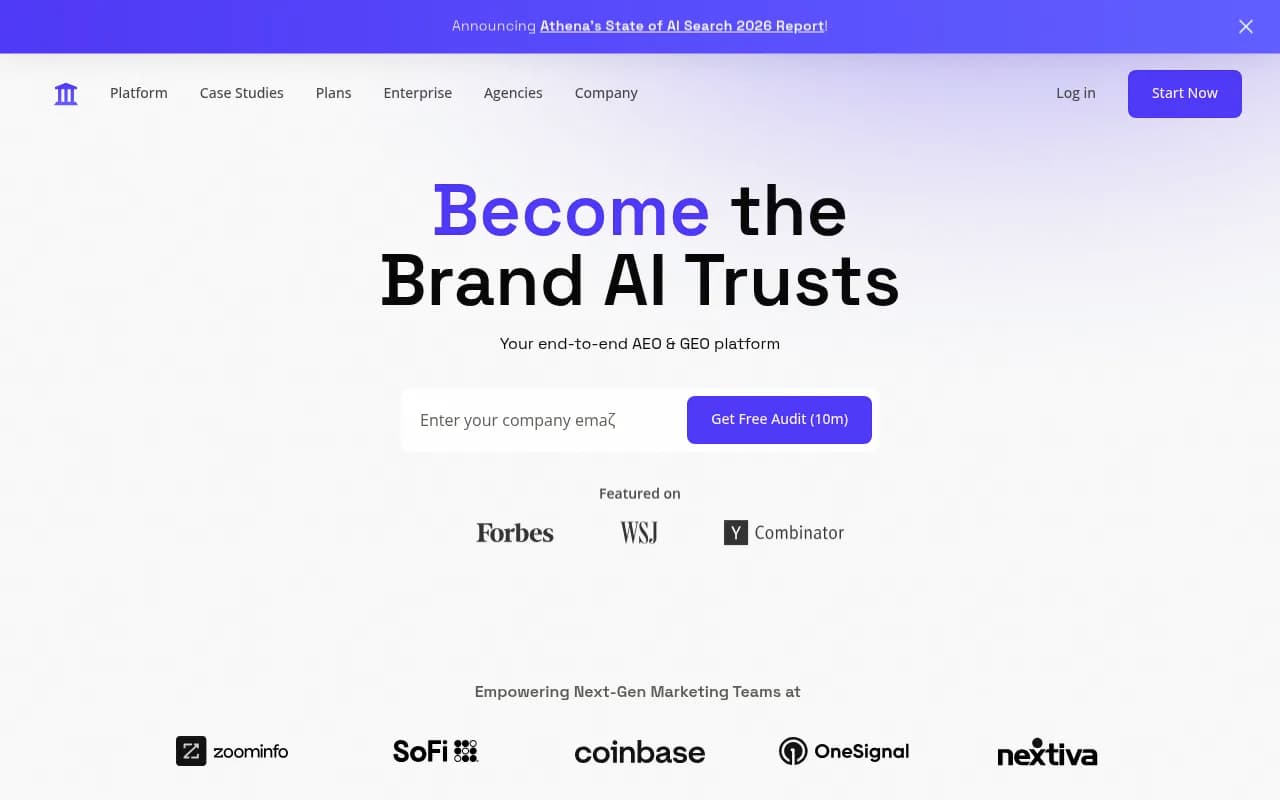
AthenaHQ treats commerce as a first-class use case. Per Ranketta's write-up, it offers product-level visibility views, Shopify and Google Analytics integrations, and revenue attribution that correlates AI visibility with sales. Agents in its Action Center draft content optimizations. The same source notes the gap: it will not audit your product feed or rewrite titles for Google Merchant.
Pricing reported by Ranketta is a free Essential tier (300 credits across ChatGPT, Perplexity, AI Overviews, Gemini and Claude) and a $295/month Starter plan covering nine LLMs. If you mostly want to know which AI channel drives revenue, it is a sensible shortlist item.
Profound and Scrunch
Both are strong monitoring platforms aimed at larger organizations. They make sense if you are an enterprise brand with dedicated AI-search budget. For a typical Shopify store the price and complexity are harder to justify, and neither is specifically built around Shopify catalogs.


Peec AI and Otterly.AI
These are the lightweight end. Good for answering "are we mentioned and how do we compare?" without a big commitment. Neither goes deep on crawler logs, AI traffic attribution or content production, so you will need other tools for the fixing part.


Semrush
If your team already runs SEO in Semrush, its AI visibility features are convenient. ECORN Agency lists it first in its Shopify AI SEO roundup for exactly that reason: it extends an established toolkit. The tradeoff is that AI-specific depth is shallower than in dedicated platforms.
Shopify's own AI SEO helpers
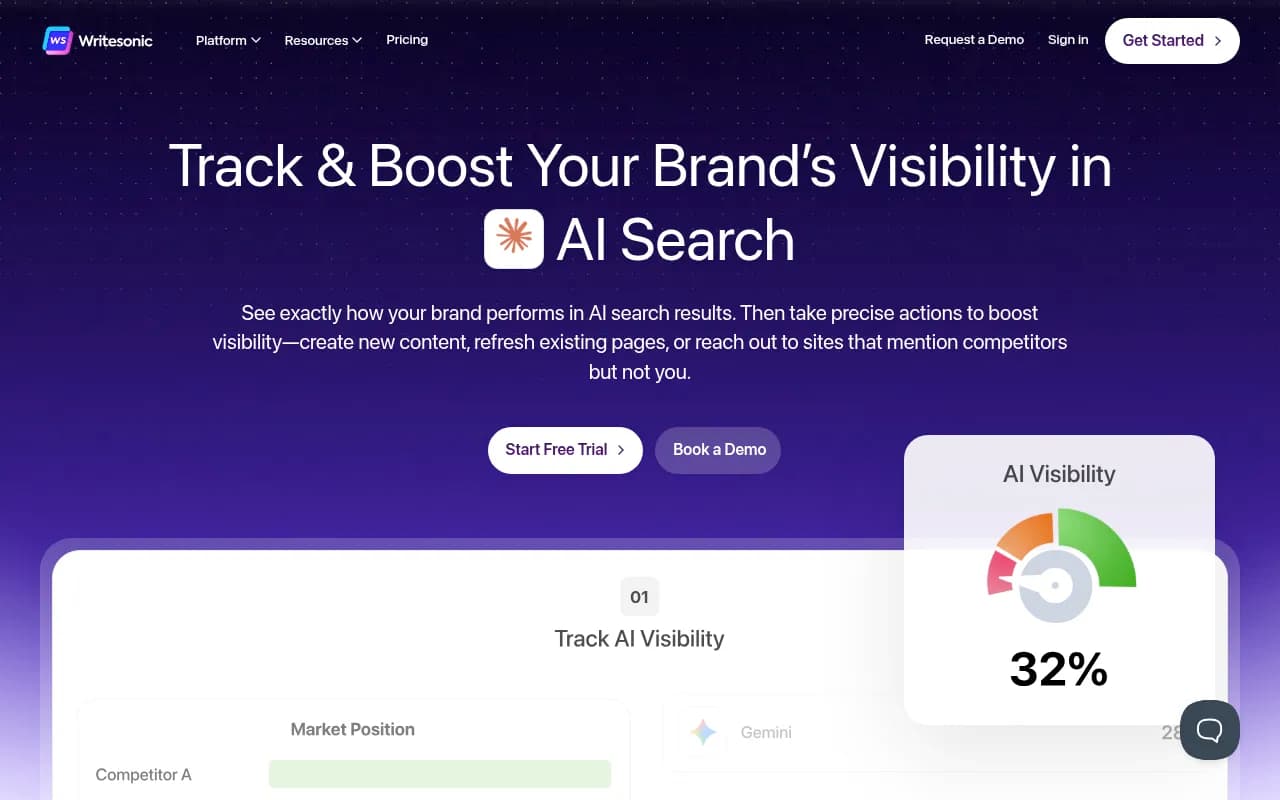
Shopify's own guide to AI SEO tools covers a different job: producing content. Shopify Sidekick generates product descriptions and images inside the admin, and apps like Shogun help build pages, while Writesonic is listed for automating SEO workflows and tracking product visibility in AI search. These help you make better pages, but they do not tell you whether AI engines actually cite those pages. Pair them with a visibility tracker.
How to choose by store type
| Your situation | Start with |
|---|---|
| Small store, tight budget, want to test | Promptwatch Explore (free) or Otterly.AI |
| Mid-size Shopify brand with a content team | Promptwatch Essential or Professional |
| Shopify Plus, big catalog, wants Shopify-native fixes | Vizby trial alongside Promptwatch |
| Revenue attribution is the main question | AthenaHQ |
| Enterprise with a dedicated AI-search budget | Profound or Scrunch |
| Agency running several Shopify clients | Promptwatch agency plans (from $199/mo) |
A practical 30-day plan
Week 1: Baseline
Write 30 to 50 prompts that sound like real shoppers: "best [product] under $X", "[your brand] vs [competitor]", "which [category] is best for [use case]". Run them across ChatGPT, Gemini, Perplexity and AI Overviews. Record who appears, in what position, and which URLs get cited.
Week 2: Technical check
Confirm AI crawlers can reach your store. Review robots.txt, make sure product pages render without heavy client-side scripts, and verify Product schema carries correct price, availability and reviews. Check your crawler logs for 403s and timeouts if your tool provides them.
Week 3: Fix the pages that matter
Take the five collections and ten products you most want recommended. Make specs, pricing and audience explicit. Add a brand FAQ. Build one comparison page against your closest competitor.
Week 4: Go off-site
Look at which third-party pages AI cites for your category. If it is a listicle on a review site, pitch inclusion. If it is a forum thread, check whether your brand is represented fairly. Social citations vary a lot by engine: Promptwatch's Sep 28 to Oct 4, 2026 data shows ChatGPT got just 0.46% of its citations from social platforms, while Google AI Overviews got 12.2%. So community presence matters more for Google than ChatGPT.
If you would rather hand this to specialists, an agency such as 1001 SEO Media covers technical SEO, content and GEO, and uses Promptwatch for AI visibility measurement.
Mistakes I see in ecommerce AI visibility work
- Tracking only brand-name prompts. They flatter you. The money is in non-branded comparison and use-case prompts.
- Treating a visibility score as the goal. A mention without a cited page of yours is a weak win, and mentions without self-citations usually point to a content or crawlability problem.
- Ignoring freshness. Promptwatch's half-life data shows landing pages and docs stay cited longest while news loses half its pages within 36 days, so evergreen product and collection pages are the safer investment.
- Chasing shopping carousels. They are a small slice for now.
- Buying a tracker and stopping there. Monitoring tells you the problem exists. You still have to rewrite pages.
Where to look for more options
If none of the above fits, the GEO software directory at bestgeosoftware.com lists many more platforms with reviews and comparisons.
Bottom line
For most Shopify brands in 2026, I would shortlist Promptwatch for the full loop of crawl data, citations, traffic and content work, add Vizby if Shopify-native execution is the priority, and look at AthenaHQ if revenue attribution is your sticking point. Use the free tiers first. Run the same 30 prompts through each for a week and see which one shows you something you can actually fix on Monday morning.