Key takeaways
- HR tech and staffing buyers increasingly ask ChatGPT, Gemini and Perplexity for shortlists before they ever open a review site. You need to know whether your brand is on those shortlists.
- Promptwatch's data shows that product pages and landing pages together earn about 39% of ChatGPT citations. For commercial prompts like "best ATS for small agencies", product pages, landing pages, listicles and comparisons make up almost 70%.
- Monitoring-only dashboards tell you that you are missing. Platforms that also show crawler activity, citation sources and content gaps tell you what to fix.
- For software prompts, vendor sites and docs earn roughly three times the citation share of review sites like G2 and Capterra, so owned content matters more than most HR marketers assume.
- Our pick for most staffing and HR tech teams is Promptwatch. Wellows, Profound, Otterly.AI and Peec AI suit narrower needs, covered below.
Why staffing and HR tech brands have a specific AI visibility problem
HR software is a crowded, comparison-heavy category. A buyer searching for an applicant tracking system, a payroll tool or an AI sourcing product does not want a single answer. They want a shortlist, and AI assistants are very good at producing one in seconds.
Staffing agencies have a related but different problem. Candidates and hiring managers ask AI tools questions like "best IT staffing agency in Chicago" or "which recruiting firms specialise in healthcare locum roles". If the model has no clear, consistent picture of your niche, geography and specialities, you do not appear. A competitor with a cleaner entity footprint does.
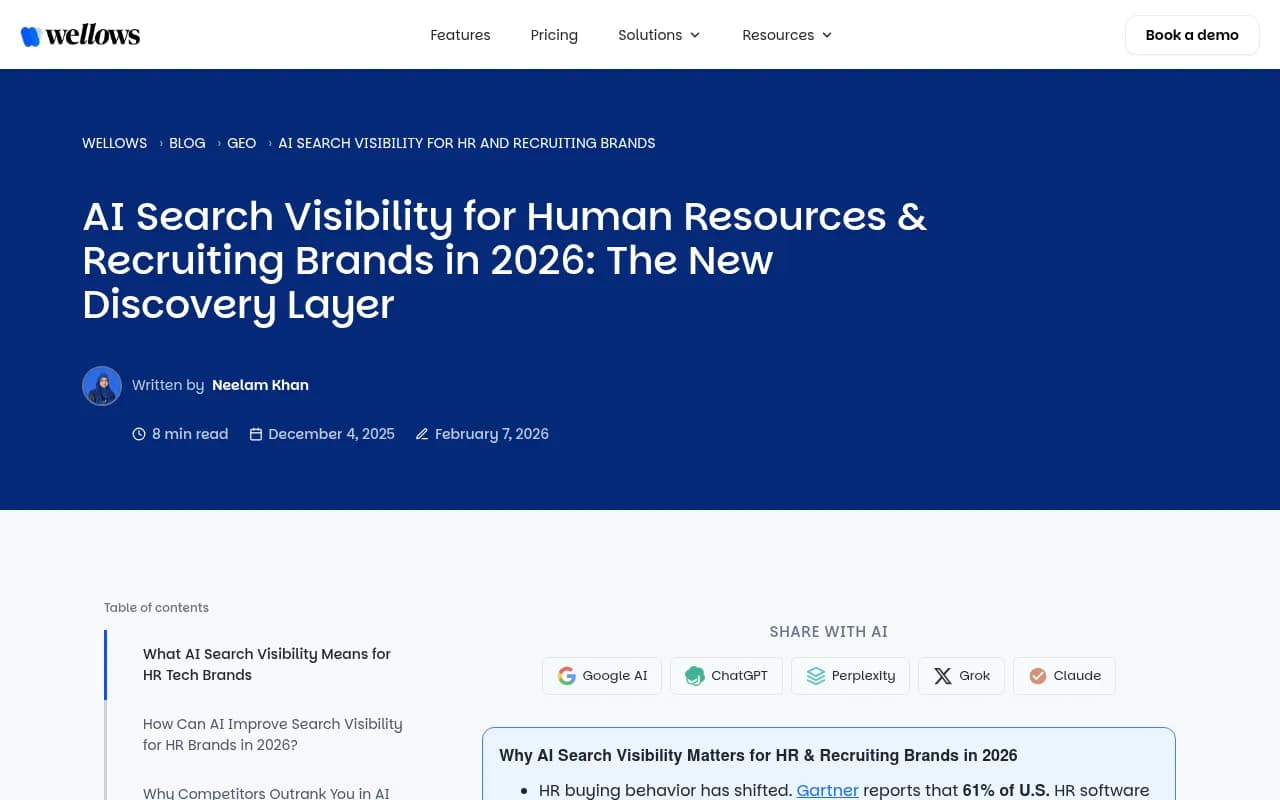
A Wellows article on this topic quotes Gartner, Pew and Forrester figures about how many HR buyers and job seekers use generative AI. None of those statistics link to a source study, so I would not repeat them in a board deck. The direction is plausible. The exact percentages are unverified.
What we can lean on instead is measured data about what AI engines cite. That is what shapes the evaluation criteria below.
What ChatGPT actually cites when buyers compare software
The closest public proxy for HR tech is software prompts. Promptwatch Data analysed organic software prompts from Sep 28 to Oct 4, 2026. A few findings matter for HR vendors:
- GitHub (1.2%), Microsoft Learn (0.98%) and G2 (0.73%) led the list, with Gartner, Capterra, Intercom and Zapier also in the top group.
- Docs and help centers earned 2.64% of citations, vendor sites 2.01%, and review sites and analysts (G2, Gartner, Capterra, Software Advice) combined 1.57%.
- Vendor sites and docs together earn about three times what review sites and analysts do.
The content type report for the same week is more directly useful. Product pages took 22.4% of ChatGPT citations, landing pages 16.8%, listicles 13.6%, how-to guides 8.7% and comparisons 5.9%. For commercial prompts, the type a buyer uses when comparing tools, product pages rose to 26.0%, landing pages to 20.6%, listicles 15.0% and comparisons 7.9%.
For branded prompts such as "is [your product] good for enterprise recruiting", reviews jump to 5.6%, more than three times their overall share. Candidates and buyers checking you out will often be fed review content.
The practical read for a staffing or HR tech marketer:
- Your product and pricing pages need to be complete. Who it is for, integrations, pricing, compliance claims.
- You need to be in the "best ATS" and "best recruiting software" roundups AI engines pull from.
- Your own comparison pages are worth writing, since comparisons punch above their weight for commercial prompts.
- Your G2 and Capterra profiles should be current, and docs should be public and crawlable.
- News content decays fast. Promptwatch's content half-life study found news lost half its cited pages within 36 days, while landing pages and docs held on for months.
Note that there is no HR-specific Promptwatch report yet. The software report is the nearest stand-in, so treat the numbers as directional for your vertical.
What to look for in an AI visibility platform
Before comparing vendors, decide which of these you actually need. Many HR tech teams buy a prompt tracker and discover three months later that they still do not know what to change.
Tracking that reflects what real users see
Answers from a model API often differ from what the ChatGPT or AI Overviews interface shows. If the tool only uses APIs, its numbers may not match reality. Ask vendors how they collect responses, and whether they track by country, since staffing agencies are usually local.
Citation and source analysis
Knowing you were not mentioned is the start. Knowing which third-party pages AI cites for "best staffing software" tells you where to pitch, list or publish.
Crawler visibility
If AI bots cannot read your career-tech product pages, because of JavaScript rendering, robots rules or errors, no amount of content will fix it. Crawler logs are rare among competitors and very useful for sites built on heavy front-end frameworks.
Traffic and conversion attribution
HR and staffing sales cycles are long. You need to see whether AI-referred visitors book demos or submit job orders, not just whether they exist.
Action, not just reporting
The question to ask is who writes the fix. Some tools hand you a dashboard. A few give you prioritised tasks and content generation tied to your visibility gaps.
Comparison table
| Platform | Strength | Weak spot | Best for |
|---|---|---|---|
| Promptwatch | Tracking plus crawler logs, citation analysis, AI traffic and content creation | More depth than a casual user needs | HR tech vendors and staffing firms that want to act on the data |
| Wellows | Citation gap and entity signal analysis for marketing teams | Narrower than a full optimization stack | Small teams focused on entity consistency |
| Profound | Enterprise monitoring | Higher price, less execution | Large HR suites with big budgets |
| Otterly.AI | Affordable prompt tracking | Basic, no crawler or traffic data | Small agencies testing the waters |
| Peec AI | Clean monitoring | Monitoring only | Teams that already have content resources |
| Semrush / Ahrefs Brand Radar | Familiar suites with AI tracking added | Shallower AI-specific data | Teams already living in those suites |
The platforms worth shortlisting
Promptwatch
Promptwatch is the one I would start with for HR tech and staffing, mostly because the problem for these companies is rarely just measurement. A typical case: you find that ChatGPT recommends three competitors for "best recruiting CRM", you want to know why, and then you want content that closes the gap.
It tracks ChatGPT, Google AI Overviews, AI Mode, Gemini, Perplexity, Copilot and others through their real interfaces, by country and language. Beyond that, it logs AI crawler visits to your site, shows which pages get cited, tracks AI-referred visitors, and includes a Content Agent that plans, writes and publishes content against your gaps to WordPress, Webflow or Framer. The Action Board turns findings into a prioritised to-do list. For a lean marketing team at a 50-person HR SaaS company, that last part is what matters.
Pricing starts free for a single project and 10 prompts on ChatGPT, with paid plans from $95 per month. Agency plans (Kick-off at $199, Growth at $399, Scale at $799) suit staffing marketing agencies running several client brands. Confirm current numbers at promptwatch.com/pricing.

Wellows
Wellows is the platform the HR visibility article in our research comes from, and it is built around citation gaps and entity consistency, which fits the staffing use case well. If your problem is that AI describes your agency's niche inconsistently across directories, its category-consistency focus is relevant. I would want to see how it handles crawler data and execution before choosing it as the only tool.
Profound
Profound is a strong enterprise monitoring product. It makes sense if you run a large HR platform with a dedicated GEO team and budget to match. Compared with Promptwatch, it costs more and does less on the execution side.

Otterly.AI and Peec AI
Both are lighter prompt trackers. They are fine for a staffing agency that wants to see whether it is named in answers to a few local queries. Neither gives crawler logs or traffic attribution, so you will end up with a chart and no clear next step.


Semrush and Ahrefs Brand Radar
If your SEO team already pays for Semrush or Ahrefs, the add-on AI tracking is a convenient first look. Expect fixed prompt sets and less AI-specific depth.
Other options in the catalog
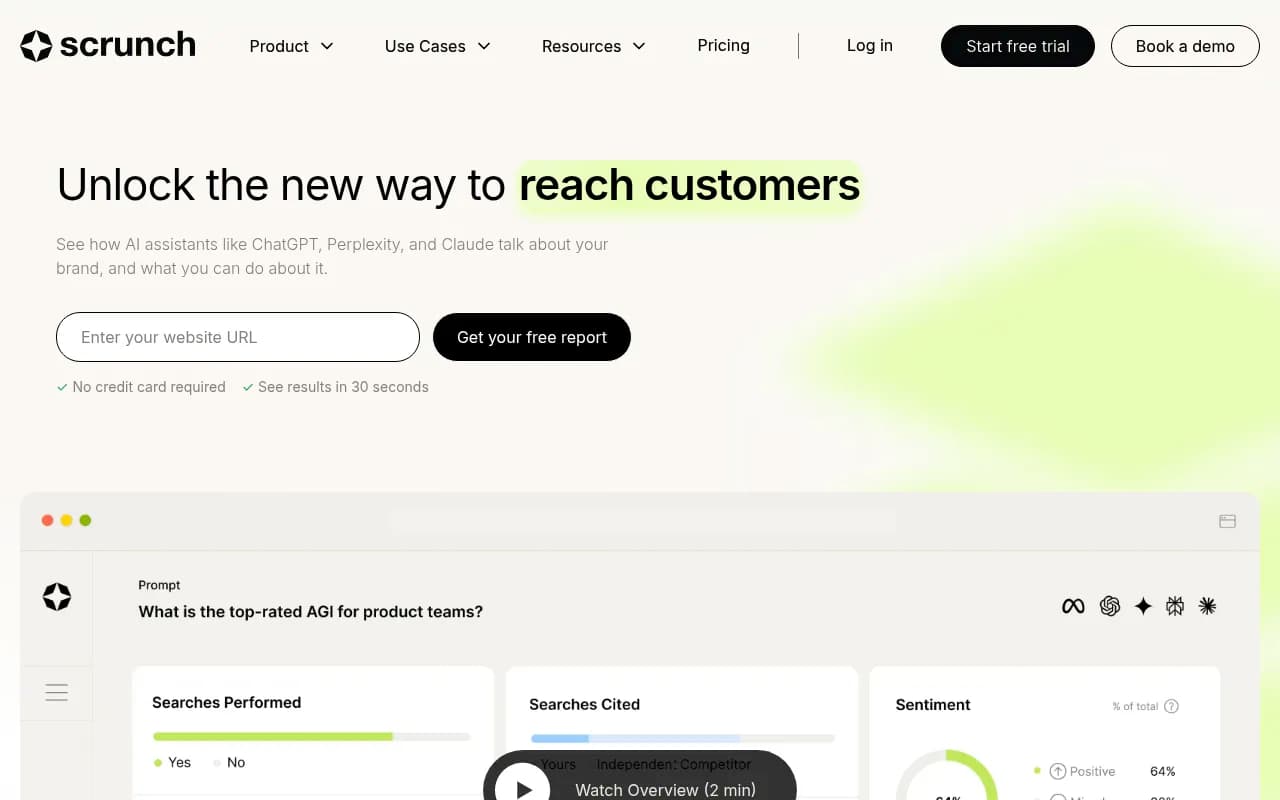
If you want to browse further, Scrunch, AthenaHQ, Qwairy and LLM Pulse all lean toward monitoring. You can compare more of them in the GEO software directory at bestgeosoftware.com.
Matching the platform to your type of company
HR tech SaaS (ATS, HRIS, payroll, sourcing)
You compete in listicles and comparisons. Prioritise a tool that shows which roundups cite your competitors and lets you track G2, Capterra and Software Advice presence. Build comparison pages and keep docs public. Promptwatch or Profound fit, depending on budget.
Staffing and recruiting agencies
Geography and specialism drive your prompts. Look for country and city-level tracking, and keep Google Business Profile, directory and LinkedIn data consistent. Promptwatch's state and city tracking arrives on the Business plan. Smaller shops can start with Otterly.AI or the free Promptwatch tier to see whether you appear at all.
Agencies serving HR clients
You need multi-project workspaces and white-label reporting. Promptwatch's agency plans cover this, and 1001 SEO Media is an example of an SEO and GEO agency that runs this kind of work for clients, if you would rather outsource it than hire in-house.
A practical 30-day plan
- Pick 30 to 50 prompts your buyers really ask. Include commercial ones ("best applicant tracking system for staffing agencies"), branded ones ("is [your brand] worth it") and informational ones ("how to reduce time to fill").
- Run a baseline in your chosen platform, by country if you sell regionally.
- Check the cited sources. Note which roundups, review sites and Reddit or YouTube threads appear. Be aware that social citations vary heavily by engine. Promptwatch Data found ChatGPT drew only 0.46% of citations from social platforms for Sep 28 to Oct 4, 2026, versus 12.2% for Google AI Overviews.
- Fix your product and landing pages first. Add pricing, integrations, compliance details and a clear "who it is for".
- Publish two or three comparison pages and an FAQ.
- Check the crawler logs for errors and blocked pages.
- Re-measure at 30 days and compare share of voice, not just mentions.
For general guidance on the wider category, the GEO software directory lists tools beyond the ones above.
Final recommendation
If you only buy one tool, buy the one that closes the loop from finding a gap to publishing a fix. For most staffing firms and HR tech vendors, that is Promptwatch, with the free tier a sensible place to test. Choose Wellows if entity consistency is your main concern, Profound if you are an enterprise with a large team, and Otterly.AI or Peec AI if all you need is a cheap pulse check. Whatever you pick, start with your product pages and comparison content, because that is where the citation data says the weight sits.