Key takeaways
- AI visibility platforms track whether ChatGPT, Gemini, Perplexity, Claude and Google AI Overviews mention your firm. They are a different category from AEC software like Procore, Autodesk Forma or TestFit.
- I found no AEC-specific citation data. Treat any industry-specific claim you read with suspicion, including from vendors, and lean on cross-industry evidence instead.
- Promptwatch's October 2026 data shows ChatGPT cites product and landing pages most (about 39% combined), so your service and project pages matter more than blog volume.
- Entry pricing runs from about $29 to $295 per month. Check the price and the model count before you commit, because the cheap plans often cover only 3 or 4 models.
- For multi-office firms and developers working in specific cities, city-level tracking and crawler logs are worth paying for.
Why architects, builders and developers should care
The buying journey in this industry is long and expensive. A developer picking an architect, a hospital system choosing a general contractor, a landowner looking for a feasibility partner: all of them now start part of that research by asking an AI assistant. Questions like "best architecture firms for mixed-use projects in Austin" or "top general contractors for healthcare construction" get a short list back. If you are not on it, you never get the call.
There is a wrinkle that makes AEC different from, say, SaaS. Most of your best work is invisible to a crawler. Project PDFs, award submissions behind forms, case studies that say "confidential client." AI systems can only cite what they can read.
I should be upfront about what this guide can and cannot do. The research behind it found no published AI citation study for architecture, construction or real estate development. So I will not tell you that ChatGPT cites a specific directory 14% of the time for contractor queries, because nobody has shown that. What exists is cross-industry data, plus a clear picture of what the tools do and cost.
Two categories people confuse
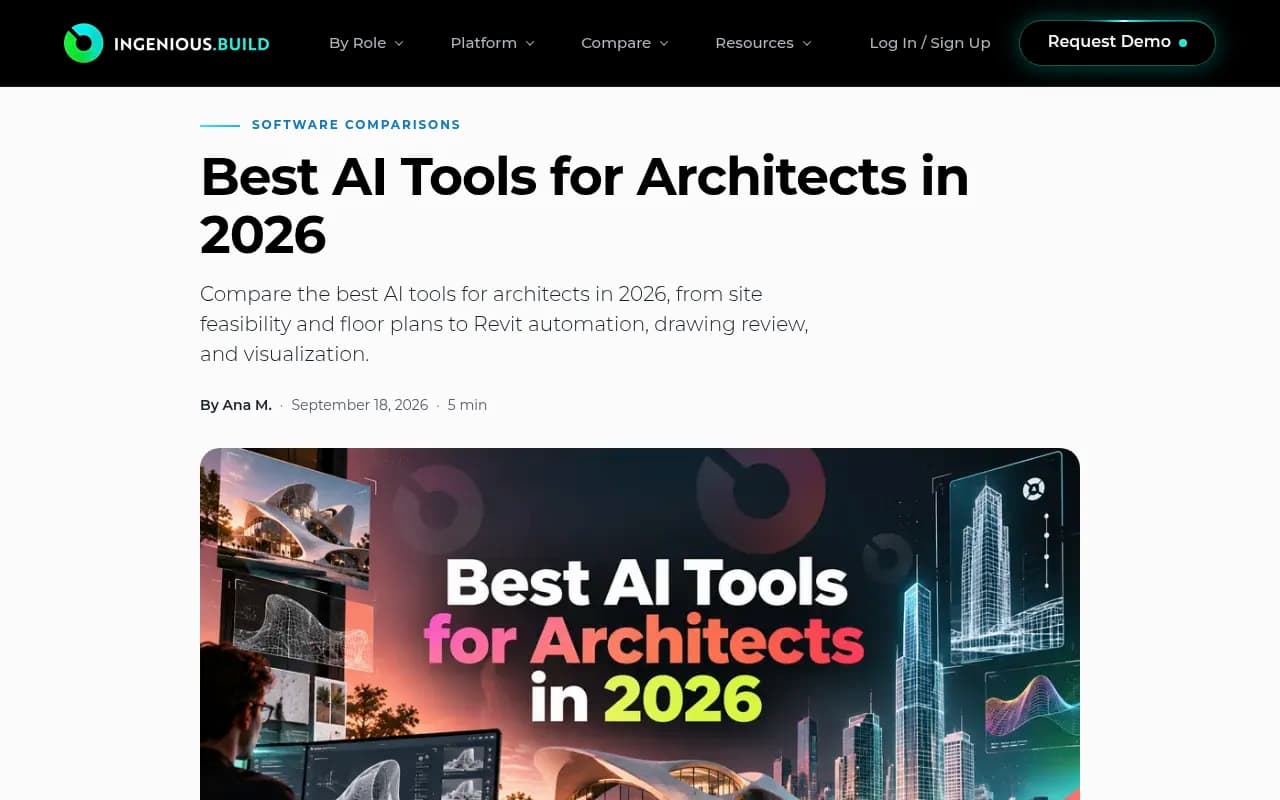
Search for "AI tools for architects" and you get Autodesk Forma, TestFit, Finch 3D, Maket, OpenSpace, Buildcheck, Procore. Those are tools for doing the work. Roundups like the one at ingenious.build cover them well.
AI visibility platforms do something else entirely. They measure and improve how AI search engines talk about your company. Different buyer (marketing or business development), different budget line, different data.
| Category | Example tools | Question it answers | Who buys it |
|---|---|---|---|
| Design and feasibility AI | TestFit, Autodesk Forma, Archistar, ArchiWise | What can we build on this site? | Architects, developers |
| Construction management AI | Procore, OpenSpace, Buildots, Buildcheck | Is the project on track? | Contractors, owners |
| AI visibility platforms | Promptwatch, Profound, Peec AI, Otterly.AI | Do AI assistants recommend us? | Marketing and BD teams |
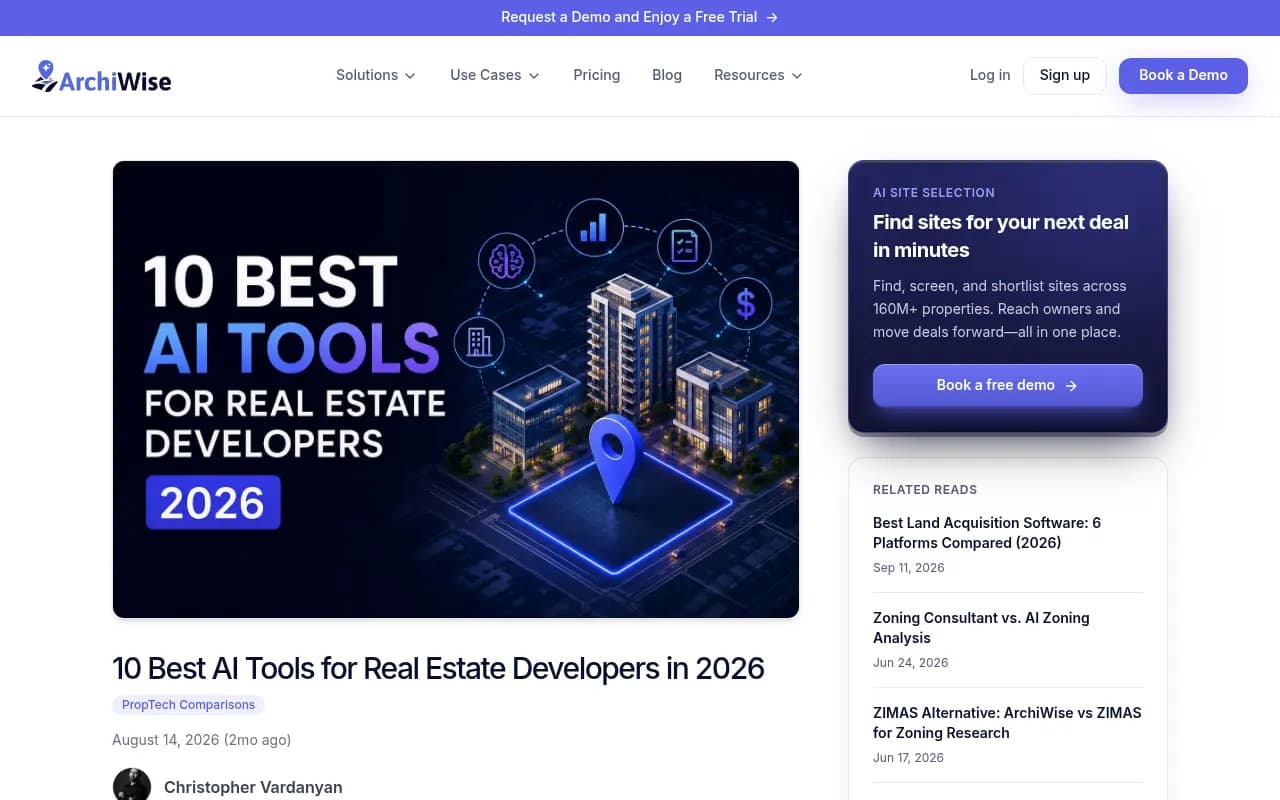
The real estate developer roundup from ArchiWise makes a similar point about developer tools: they are numbered by stage, because none of them compete with each other. The same logic applies here.
What the cross-industry data says
Promptwatch Data is the best first-party source I could find on what ChatGPT cites. In its content-type citation report (Sep 28 to Oct 4, 2026), product pages made up 22.4% of classified ChatGPT citations and landing pages 16.8%. That is about 39% going to pages that describe what a company sells.
For commercial prompts, the "best X" type that a developer would type when shopping for a firm, product pages hit 26.0%, landing pages 20.6%, listicles 15.0% and comparisons 7.9%. Together that is almost 70%.
For an architecture or construction firm, the translation is awkward but useful. Your "product page" is your service page: healthcare construction, adaptive reuse, multifamily design. Thin pages that say "we do great work" will not get cited. Pages with specifics will: project types, size ranges, regions, delivery methods, certifications.
A few other points from the same data:
- Branded prompts (someone asking about your firm by name) pull reviews at 5.6%, more than three times their overall share. Reviews on trusted sites matter when buyers are vetting you.
- Informational prompts favor how-tos (10.7%) and documentation (8.5%), so a plainly written guide to, say, design-build versus CM at risk can earn citations.
- Listicles are the third biggest format. Getting into "best architecture firms in [city]" roundups is worth the outreach.
The software citation report is relevant if you sell AEC software or proptech. There, vendor sites plus docs earn roughly three times what review sites and analysts do. Keep documentation public.
A caveat: these are cross-industry numbers over a one-week window. Your sector may differ. Run your own prompts before betting a budget on them.
What to look for in a platform
I would rank these in order of how much they matter for an AEC firm.
- Real interface tracking. Answers in the ChatGPT app can differ from API outputs. If a tool only calls APIs, you are measuring something your buyers never see.
- Location targeting. Construction and development are local. "Best general contractor in Denver" and the same query in Phoenix produce different answers. City-level tracking usually costs more.
- Crawler logs. If your portfolio is built in heavy JavaScript or hidden behind a gallery plugin, AI bots may never read it. Logs tell you.
- Citation sources. You want to see which third-party pages AI draws from: ENR lists, local business journals, Houzz, Clutch-style directories, Reddit threads.
- Action, not just reporting. A dashboard that says you are invisible is only half useful for a firm with a two-person marketing team.
- Price per prompt, and how many models you get for it.
The platforms worth considering
Prices below come from vendor pages and a vendor-authored comparison, so verify them before buying. Plans, especially at Profound, changed recently.
Promptwatch
Promptwatch is the one I would start with for firms that want to act on the data rather than just look at it. It tracks ChatGPT, Google AI Overviews, AI Mode, Gemini, Perplexity, Copilot, Claude and others through their real interfaces, and adds IP-verified AI crawler logs, visitor analytics, citation analysis and a content workflow that plans and publishes pages to WordPress, Webflow or Framer. Business plans add city-level targeting, which is the feature local developers and contractors will care about most.

Pricing at the time of writing: Essential is $95 a month (50 prompts, all models), Professional is $245 (150 prompts, crawler logs, automated content) and Business is $579 (350 prompts, state and city tracking, Shopping Insights). There is a free Explore tier with 10 prompts on ChatGPT only, which is enough to see what you are dealing with. Confirm current numbers at promptwatch.com/pricing.
Its weakness for a small firm: Professional and Business are real money, and you will not use all of it if you have one office and one service line.
Profound
Profound is the enterprise-leaning name most often mentioned in this space. It restructured plans in September 2026: brand plans were removed, agency workspaces run $399 per client, and enterprise pricing is custom. That suits a large national contractor with a dedicated team more than a 20-person architecture practice.

Peec AI
Peec AI is a clean monitoring tool. Starter is $95 for 50 prompts across 3 models, Pro is $245 for 150 prompts, and extra models cost add-on fees. It tracks well but does not do much beyond monitoring, so you will need a separate plan for fixing what it finds.

Otterly.AI
Otterly.AI Lite is about $29 a month for 15 prompts across 4 models. It is the cheapest way to start, and fine for a sole practitioner checking a handful of queries. API and MCP access do not arrive until the $189 tier.

Scrunch
Scrunch Core starts at $250 a month for 125 prompts and 4 models, and it is owned by Sitecore, which may matter if your firm already runs on that stack.

Semrush and Ahrefs Brand Radar
If your marketing team already lives in Semrush, its AI Visibility Toolkit is $99 for 25 prompts, priced per domain and seat, with extra prompts at $60 per 50. Ahrefs Brand Radar lands around $328 combined once you add the base plan and an index. These are SEO suites adding AI tracking, so the data tends to be shallower on crawlers and traffic attribution.
Others to know
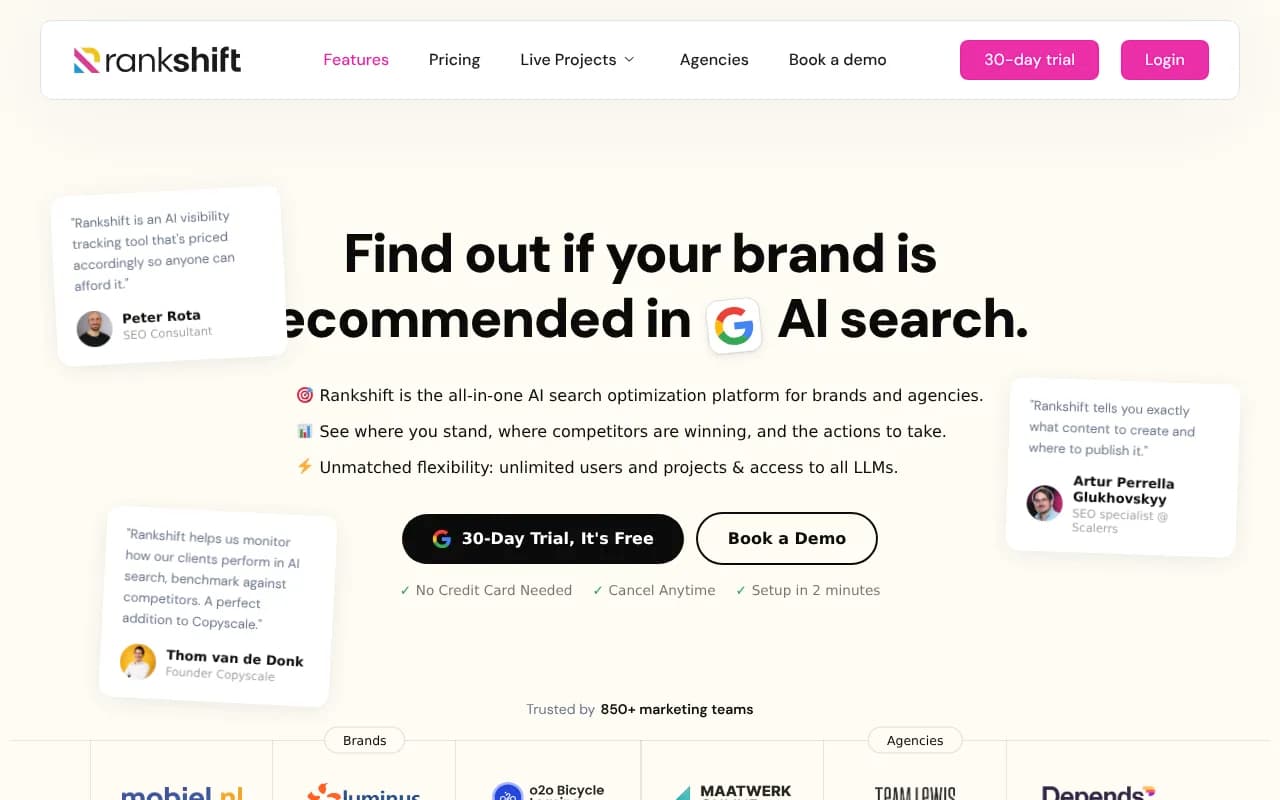
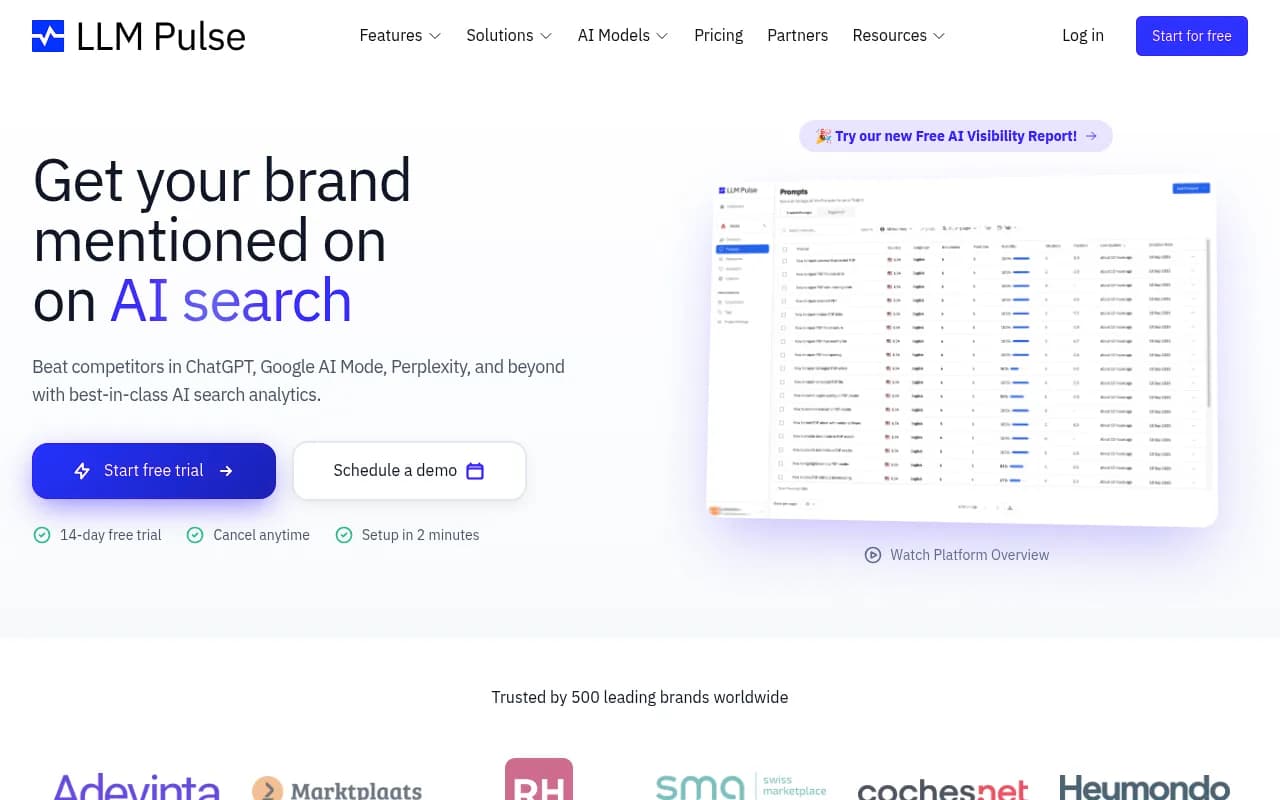
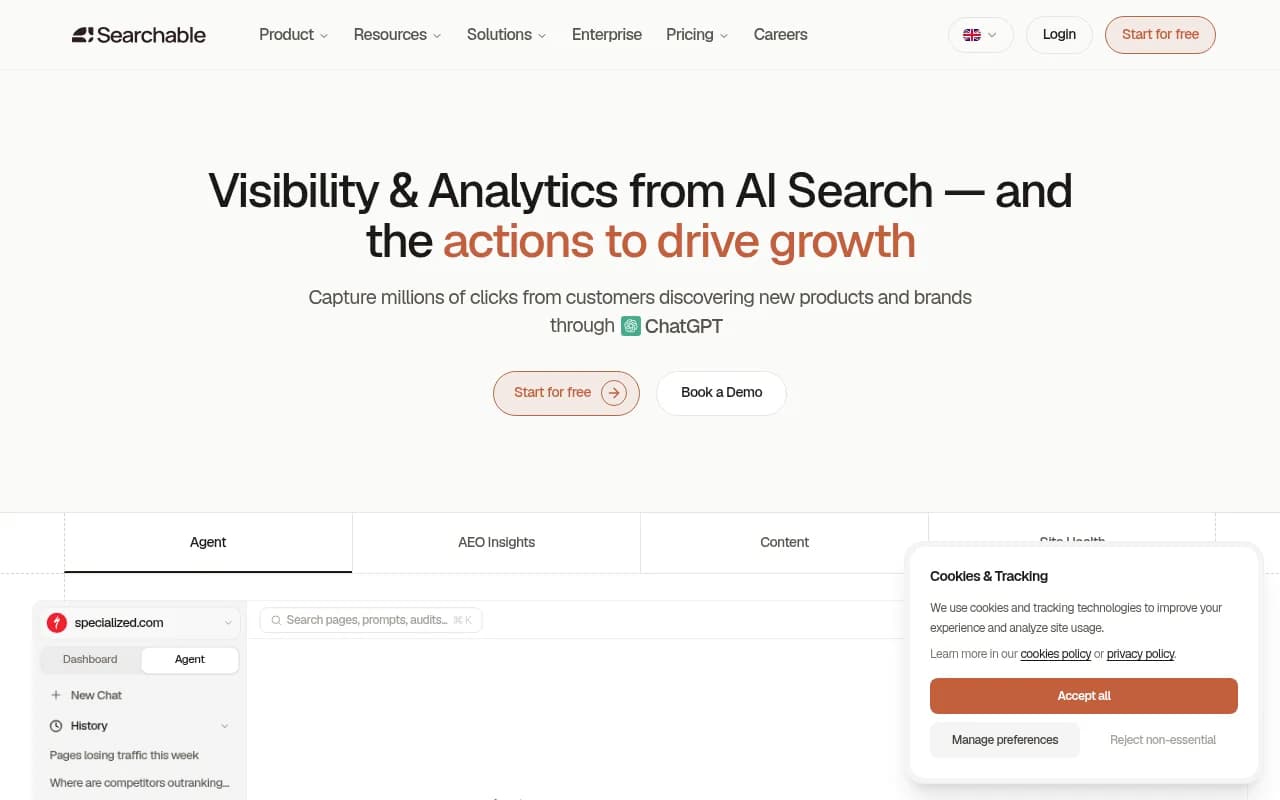
AthenaHQ starts at $295 on credits, Rankshift at $92 for 150 prompts, LLM Pulse at $60 with weekly tracking only, and Searchable at $125 (where Claude, Copilot and Grok cost extra).
Side-by-side comparison
| Platform | Entry price/mo | Prompts | Models | Notes |
|---|---|---|---|---|
| Promptwatch Essential | $95 | 50 | All engines | City tracking on Business; crawler logs from Professional |
| Peec AI Starter | $95 | 50 | 3 | Add-ons for more models |
| Otterly.AI Lite | $29 | 15 | 4 | No API below $189 |
| Scrunch Core | $250 | 125 | 4 | Sitecore-owned |
| Semrush AI Toolkit | $99 | 25 | Varies | Per domain and seat |
| Rankshift Starter | $92 | 150 | 8 | Good prompt count |
| LLM Pulse Starter | $60 | 50 | Several | Weekly tracking only |
| Profound | Custom or $399 per agency client | Varies | Many | Plans changed Sept 2026 |
Cost per prompt matters, but so does what you get besides prompts. Paying $29 for 15 prompts and then hiring someone to work out what to do about the results is not cheaper.
Picking by firm type
Boutique architecture practice
Start free or near free. Use the Explore tier or Otterly.AI Lite, track 10 to 15 prompts about your specialty and city, and see whether you show up at all. Most will find they do not. That alone tells you where to spend the next hour.
Regional general contractor or multi-office firm
City targeting is the deciding factor. If you work in four metros, you need to see four different answer sets. That points to Promptwatch Business or an enterprise quote elsewhere. Crawler logs help too, because project galleries are often unreadable to bots.
Real estate developer
Developers have two audiences: capital partners and tenants or buyers. Track prompts for both. "Best multifamily developers in Nashville" is one. "New apartments in East Nashville" is another. Shopping-style and local result tracking can matter more on the leasing side.
Agency serving AEC clients
Look at agency plans with pitch projects and white-label reporting. Promptwatch Kick-off is $199 a month for 10,000 responses and unlimited projects. Peec's agency tiers start at $245. If you would rather hire a team than buy a tool, 1001 SEO Media runs technical SEO, content and generative engine optimization programs for brands, and works on Promptwatch.
A practical setup that takes a week
- Write 25 prompts the way buyers actually ask. Mix "best [type] firm in [city]," "who should I hire for [project type]," comparisons with named competitors, and branded questions about you.
- Run them through a tracker and note three things: do you appear, where, and which sources get cited.
- Look at the cited sources. If the answers pull from a local business journal or a ranking site, that is an outreach target. If they pull from competitors' service pages, those pages have specifics yours lack.
- Check crawler access. Make sure robots.txt is not blocking AI bots and that project pages render without JavaScript tricks. Free tools like Promptwatch's AI crawler inspector make this quick.
- Rewrite your five most important service pages with concrete details: project types, square footage, regions, delivery methods, named credentials.
- Add FAQ sections and one or two comparison pages (for instance, design-build versus design-bid-build). Promptwatch's own advice from the content-type data is to keep specs complete, publish comparison pages, add FAQs and keep documentation crawlable.
- Re-run the same prompts monthly. AI answers shift. Promptwatch's Reddit citation data is a good example: reddit.com fell from about 4% to 0.5% of ChatGPT citations on August 14, 2026, which would have wrecked any strategy built on forum seeding.
Mistakes I see in this industry
Treating the portfolio as the strategy. Beautiful image galleries with no text are close to invisible to AI.
Hiding the numbers. Firms are shy about project values and sizes. AI systems cannot recommend you for a $50M hospital project if no page says you built one.
Buying software for the wrong category. Autodesk Forma and Procore will not make an AI assistant mention you. Different job.
Trusting one week of data. Citation patterns move. Track for at least a month before drawing conclusions.
Where to explore further
If you want to compare more options, the GEO software directory at bestgeosoftware.com lists dozens of platforms, and the broader category of trackers is covered at ai-rank-tools.com. For the underlying research on what AI engines cite, the Promptwatch Data hub is the place to start.
Bottom line
For most AEC firms in 2026, a free or low-cost tracker is enough to learn whether you are invisible. If you are, and you operate in specific cities, a platform with location targeting, crawler logs and a content workflow will earn its price faster than a monitoring-only tool. Start with 25 real buyer prompts, fix your service pages, and re-measure in 30 days.