Key takeaways
- Manufacturers have a different AI visibility problem from SaaS brands. Buyers ask ChatGPT for suppliers, specs, and certifications, and the answer comes from product pages, datasheets, distributors, and trade media.
- Prompt trackers tell you whether you were mentioned. For a manufacturer with long buying cycles and a small web footprint, you also need to know whether AI crawlers can read your PDFs and spec pages, and what to fix.
- Product pages and landing pages earn about 39% of ChatGPT citations, according to Promptwatch Data for Sep 28 to Oct 4, 2026. Your catalog is your best asset.
- Most listicles online are written by vendors ranking themselves. Treat the scores with suspicion, including ours.
- Pick a platform that covers crawler logs, citations, and content action, not only monitoring. Start with a free scan before paying for anything.
Why manufacturing is a strange case for AI search
I keep seeing AI visibility advice written for B2B SaaS and pasted onto industrial companies. It doesn't fit well. A SaaS buyer asks "best CRM for a 50-person team." An procurement engineer asks "which suppliers make 316L stainless sheet with ISO 13485 certification" or "blow molding machine for 5-gallon HDPE containers, European manufacturers." Those are narrow, technical, high-value questions, and the volume is small.
That changes what you need from a tool. Prompt volume is low, so a platform that charges by prompt count can feel wasteful. The answers lean on documents manufacturers are bad at publishing: datasheets locked in PDFs, spec tables rendered as images, catalogs behind a login. And the sources AI trusts often are not your site at all. They are distributors, marketplaces, trade publications, and standards bodies.
The research for this guide backs that up. One trust-signals analysis of B2B manufacturing technology companies argues that automation giants like Siemens, Rockwell, and Honeywell dominate AI answers through decades of trade media coverage, and that mid-market vendors cannot match that scale quickly. It is an opinion piece from a vendor-adjacent source, so take it as a hypothesis, but it matches what I would expect. Epicor, for example, shows up for manufacturing ERP queries largely because trade publications have covered it for years.
The practical takeaway: for manufacturers, AI visibility is half technical (can the bots read your catalog) and half reputational (do trusted third parties name you).
What the data says about content that gets cited
Promptwatch Data's ChatGPT citation share by content type report covers Sep 28 to Oct 4, 2026. The shares of classified ChatGPT citations:
| Content type | Share of ChatGPT citations |
|---|---|
| Product pages | 22.4% |
| Landing pages | 16.8% |
| Listicles | 13.6% |
| How-to guides | 8.7% |
| Documentation | 7.5% |
| General articles | 6.1% |
| Comparisons | 5.9% |
| News | 5.7% |
| FAQ pages | 3.3% |
| Reviews | 1.7% |
For commercial prompts like "best X for Y," product pages hit 26.0% and landing pages 20.6%. Branded prompts lean even harder on product and landing pages.
There is no manufacturing-specific Promptwatch report, so the mapping to your world is my inference: spec sheets, datasheets, product pages, and public documentation line up with the content types that earn the most citations. If your product pages are three lines and a "request a quote" button, you are giving AI very little to cite.
Two more data points matter here. Promptwatch's content half-life report found that landing pages and docs stay cited longest, while news loses half its pages within 36 days. Evergreen product and application pages beat press releases. And almost half of ChatGPT responses cite 10 or more unique domains, so you have room to be one of many sources, but you have to be on the list.
What manufacturers should look for in a platform
Before comparing tools, decide what you need. I would score any platform on these:
- Crawler visibility. Can you see whether GPTBot, OAI-SearchBot, ClaudeBot, and PerplexityBot actually reach your product pages and PDFs? Many industrial sites block bots by accident through a WAF or CDN rule. Promptwatch's AI crawler traffic data shows OpenAI at 79.8% of verified AI crawler requests in the week of Aug 31 to Sep 6, 2026. If a provider is large in that mix but near zero in your logs, you are probably blocked.
- Citation and source tracking. Which pages, distributors, and trade sites does AI cite for your category? This tells you where to pitch and what to publish.
- Technical prompt handling. Can you track long, spec-heavy prompts, in multiple languages and countries? Manufacturers sell globally.
- Action layer. Does the tool tell you what to fix and help you fix it, or does it hand you a dashboard?
- Revenue connection. Can you see AI-referred visits and tie them to RFQs? Most mid-market manufacturers get a few hundred qualified leads a month, so every one counts.
- Budget fit. Industrial marketing teams are often two or three people. Enterprise pricing doesn't make sense for them.
The platforms worth considering
Promptwatch
Promptwatch is the one I would put first for manufacturers who want to act on the data rather than just watch it. Full disclosure: 1001 SEO Media, which publishes this site, uses it. That is a reason I know it well, not a reason to claim it is perfect for everyone.
What suits industrial companies is the diagnostic chain. IP-verified crawler logs show whether AI bots reach your spec pages and where they hit errors. Citation analytics show which of your pages get cited and which third-party sources, including Reddit, YouTube, and LinkedIn, show up in your category. Weekly site audits catch technical problems like orphaned product pages. Then the Action Board and Content Agent turn gaps into content, with publishing to WordPress, Webflow, or Framer. TreeHouse, the company behind Pararius, grew AI search to about 25% of organic conversions partly by fixing crawler access and publishing proprietary data, which is the same playbook a manufacturer with proprietary test data or application notes could follow.
Pricing starts free (Explore, one project, 10 prompts, ChatGPT only), then Essential at $95/mo for 50 prompts across all models, and Professional at $245/mo. Check promptwatch.com/pricing for current numbers. The free AI Visibility Report is a no-login way to see where you stand first.

Profound
Profound is an enterprise-focused monitoring platform. It suits large industrial groups with budget and a team to interpret the output. It costs more and, in my reading of the market, focuses on monitoring rather than execution.

Peec AI and Otterly.AI
Both are straightforward prompt trackers. If you only want to know "are we mentioned for these 30 supplier queries, and how do we compare to two competitors," they do that at a lower price. They stop there: no crawler logs, no content generation. Fine as a first step, and cheap enough to test.


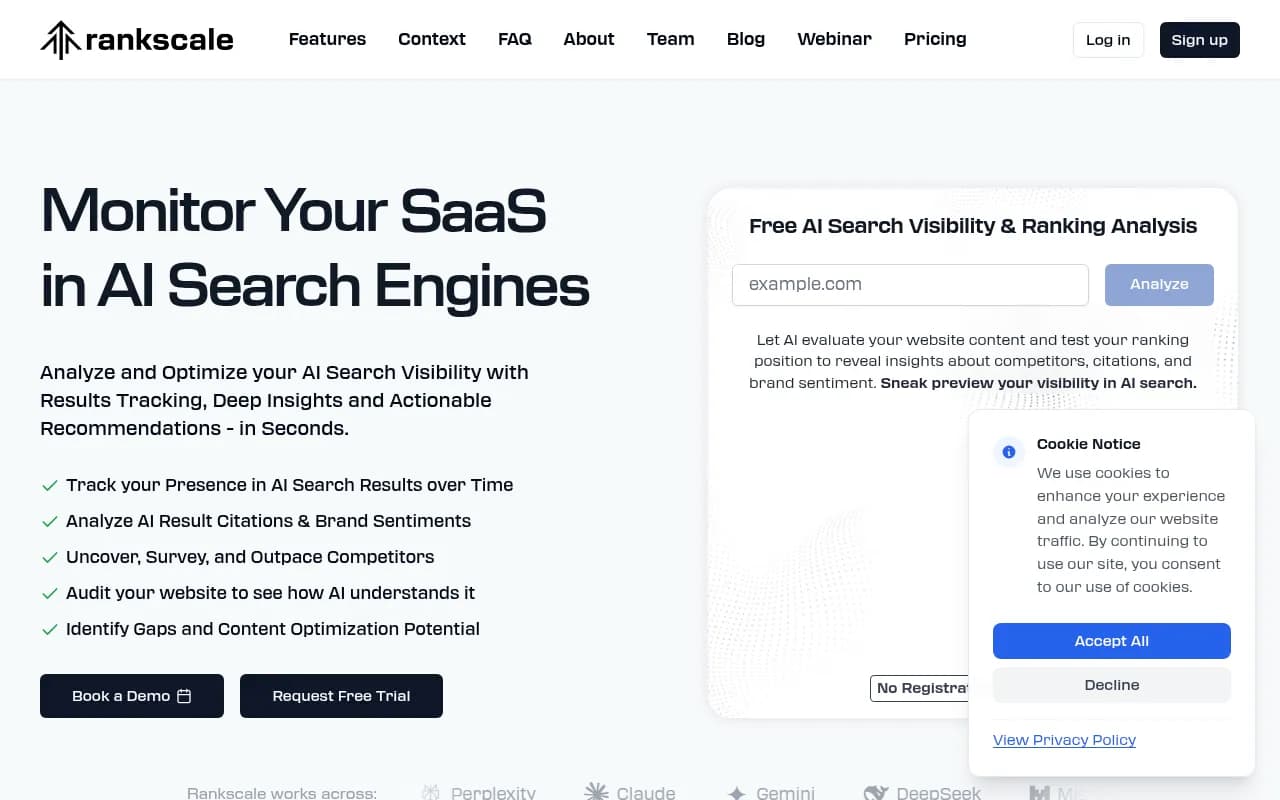
Rankscale
Rankscale tracks 17+ AI engines at an entry-level price, per the VisibilityStack roundup, including page audits for crawlability. A reasonable option for broad coverage on a budget, though that comparison is from another vendor, so verify before you buy.
Wellows, AthenaHQ, and Gauge
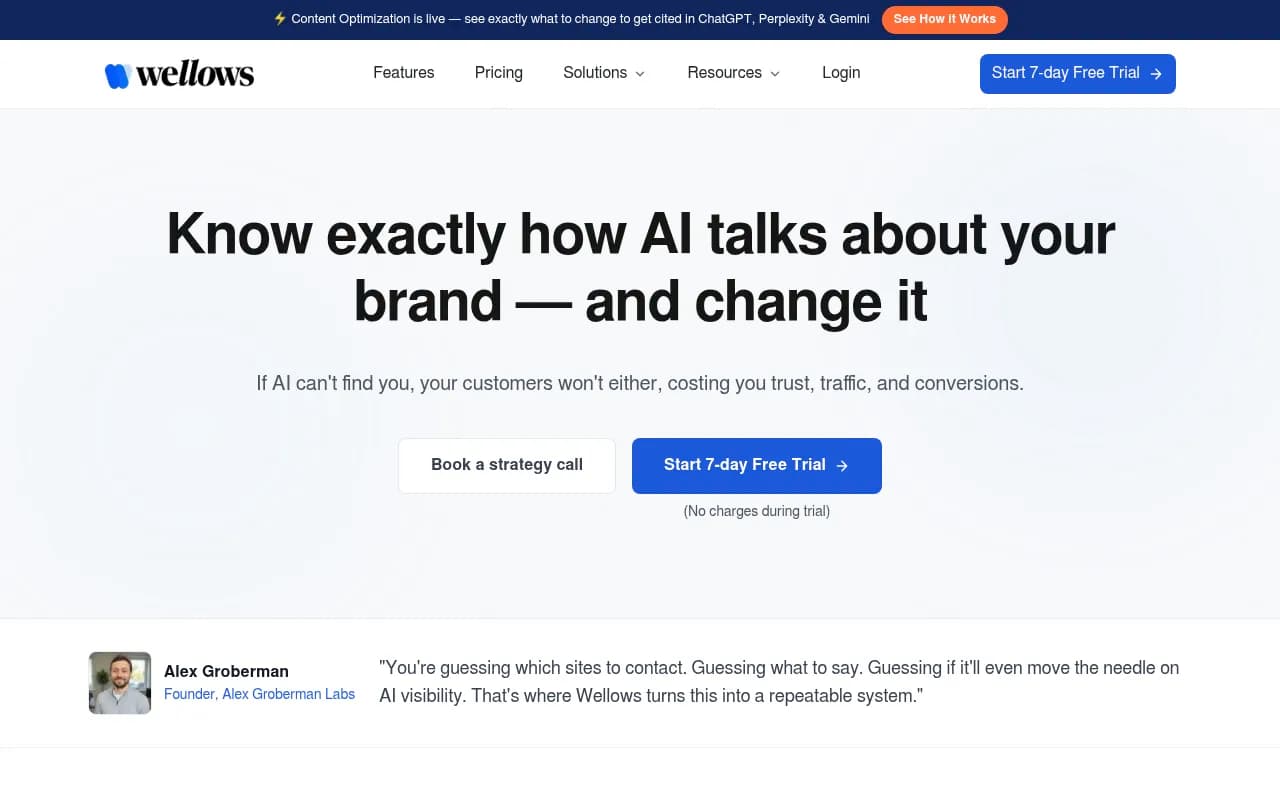
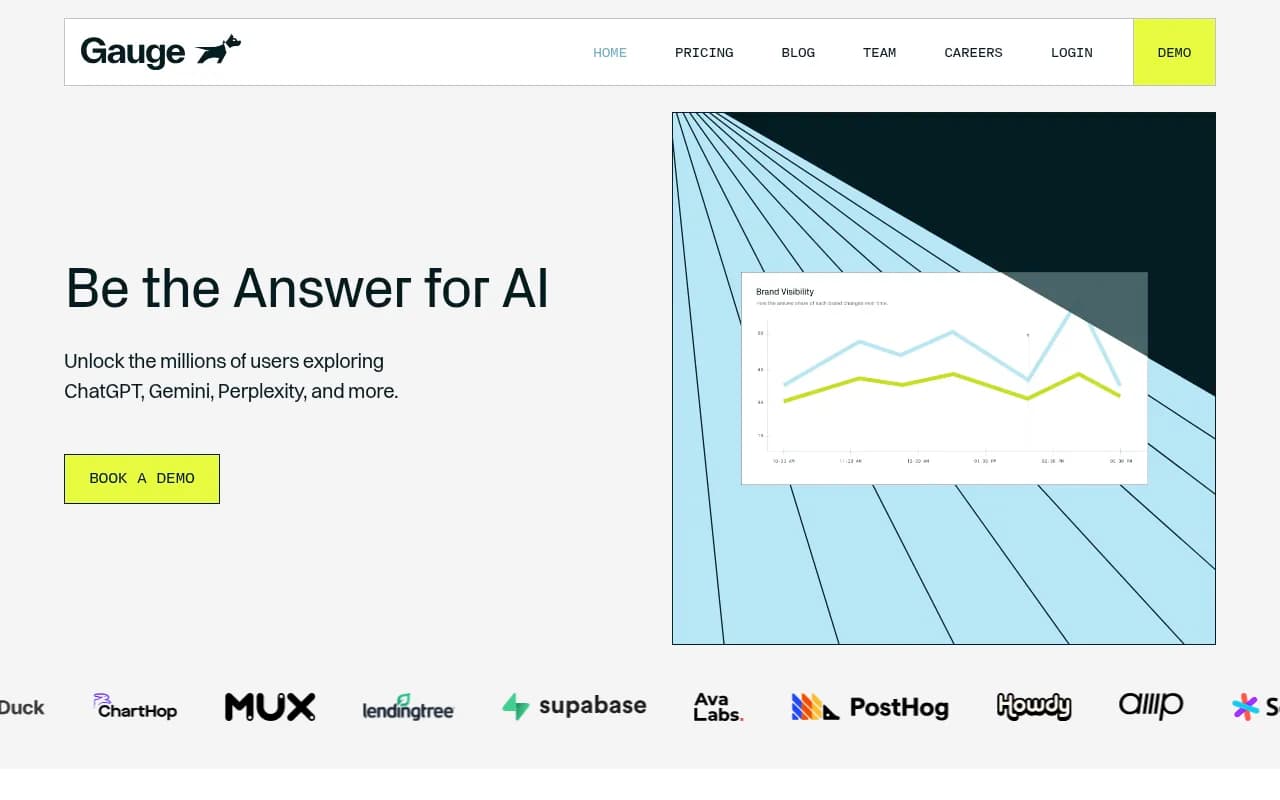
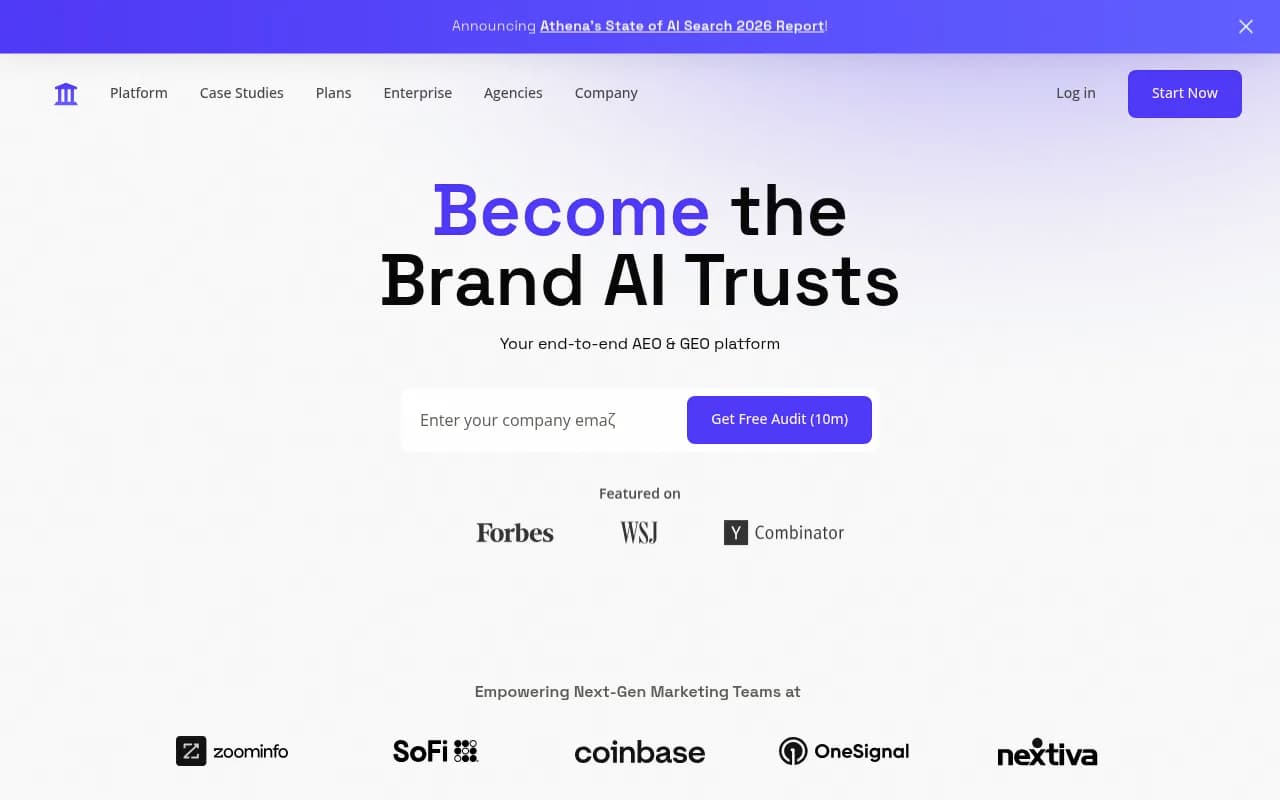
Wellows positions itself for B2B teams and tracks citations across ChatGPT, Gemini, Perplexity, and AI Overviews. Its own list of the 12 best AI visibility tools ranks Wellows first, so there is the same self-ranking issue. Gauge is described in the VisibilityStack roundup as monitoring-only with custom pricing. AthenaHQ is similar in focus.
Enterprise SEO suites
If you already pay for BrightEdge, seoClarity, Conductor, or Semrush, check what AI tracking they have added before buying something new. These suites usually have fixed prompt sets and shallower AI-specific data, but one login and one invoice matter to some procurement departments.
Side-by-side comparison
| Platform | Type | Crawler logs | Content action | Best for |
|---|---|---|---|---|
| Promptwatch | End-to-end GEO | Yes, IP-verified | Content Agent, Action Board, CMS publishing | Manufacturers who want to fix issues, not only see them |
| Profound | Enterprise monitoring | Limited | Limited | Large industrial groups with analyst capacity |
| Peec AI | Prompt tracker | No | No | Cheap baseline tracking |
| Otterly.AI | Prompt tracker | No | No | Small teams testing the category |
| Rankscale | Multi-engine tracker | Page audits only | No | Broad engine coverage on a budget |
| Wellows | AI visibility analytics | Not documented | Some outreach support | B2B marketing teams |
| Gauge | Monitoring | No | No | Model-level visibility checks |
| BrightEdge / seoClarity | SEO suite | Varies | Varies | Teams already on the suite |
Capabilities change quickly in this category, so confirm on each vendor's pricing and features page.
A note on agency rankings
A lot of the search results for this topic are agency listicles. The WebFX list of seven AI SEO agencies for manufacturers gives WebFX 84/100 and ranks it first, using a methodology that WebFX wrote. SearchEye's list is by a vendor that says it is a product platform and not an agency, and it ranks itself first for a certain use case. I'm not saying the agencies are bad. WebFX reports 300 in-house manufacturing experts and a 4.9 Clutch rating, and MacRAE'S has a dedicated industrial GEO line with clients from sheet metal fabrication to sensor manufacturing. But a score from the company being scored is marketing. Ask for manufacturing references with a similar sales model and verify directly.
If you are weighing software against hiring help, an agency that does technical SEO, content, and GEO together can make sense when you have no in-house team. 1001 SEO Media is one such agency, and it is also the publisher of this site, so weigh that accordingly. The rest of this guide assumes you are choosing software.
How to run a 30-day evaluation
- Build a prompt list of 25 to 40 real buyer questions. Pull them from RFQ emails, sales calls, and Search Console queries. Include spec-heavy ones, certification queries, and "X vs Y supplier" comparisons.
- Run a free scan first. The no-login reports from Promptwatch, Amplitude, and HubSpot's AI Search Grader give you a baseline for nothing.

- Check bot access. Review robots.txt, CDN, and WAF rules for every major AI crawler. Manufacturing sites often sit behind aggressive bot protection.
- Audit your product pages. Are specs in HTML text or buried in image-based PDFs? Add complete, factual specs, pricing ranges where possible, and an FAQ. Keep documentation public and crawlable. Publish comparison pages, and get listed in relevant "best of" and supplier roundups.
- Map the third-party sources. Note which distributors, marketplaces, and trade publications AI cites. For software-like products, Promptwatch's software citation report shows documentation and help centers earning the largest share of citations, with vendor sites and docs together earning about three times as much as review sites and analysts. It is a software report, not an industrial one, but the lesson transfers: your own factual pages beat third-party commentary.
- Connect to leads. Tag AI-referred sessions and track RFQ submissions from them. If your CRM is Salesforce or HubSpot, route the source field through.
- Re-measure at day 30 and day 90. Content takes time to get crawled and cited.
Mistakes I see manufacturers make
Blocking bots by default. A security team adds a blanket rule, nobody tells marketing, and the catalog vanishes from AI answers.
Publishing news instead of evergreen pages. Per the half-life data above, news fades fast. Application pages and product docs last.
Ignoring distributors. If your distributor's listing is thin or wrong, AI may cite it instead of you. Coordinate listing data.
Chasing social. Promptwatch's October 2026 social citation data shows ChatGPT drawing just 0.46% of citations from social platforms, while Google AI Overviews draws 12.2%. For most industrial queries, a LinkedIn strategy won't move ChatGPT much, though it may matter for AI Overviews.
Buying a tracker and stopping there. A dashboard that says you're invisible isn't a plan.
Which one should you pick
- Tight budget, just testing: start with Promptwatch's free Explore tier or Otterly.AI, and run the baseline scan.
- Small marketing team that needs to fix content and crawler issues: Promptwatch Essential or Professional.
- Global industrial group with analysts: Profound or Promptwatch Business, depending on whether you want monitoring only or execution.
- Already on an enterprise SEO suite: test its AI module first, then compare.
If you want to browse beyond this shortlist, the GEO software directory at bestgeosoftware.com lists more options by category.
The one thing I would do this week regardless of tool: open your logs or CDN settings and confirm that AI crawlers can reach your top 20 product pages. Everything else depends on that.