Key takeaways
- ChatGPT's cited sources differ a lot by vertical: government sites in healthcare, docs and GitHub in software, marketplaces and booking sites in travel and automotive. One generic prompt set will mislead you.
- Agencies need multi-client workspaces, white-label reporting and per-client prompt sets before they need any fancy feature.
- Monitoring-only tools tell you a client is invisible. Platforms that also write, publish and measure content are what you can actually sell on a retainer.
- Most "best tools for agencies" lists are written by vendors who rank themselves first. Treat them as input, not verdicts.
- Match the platform to the vertical: commerce-native for retail, crawler logs for software, listing and review tools for local.
Why a vertical approach matters
Running AI visibility for one brand is one job. Running it for a dental group, a SaaS startup, a car dealer network and a regional hotel chain is four different jobs that happen to share a dashboard.
The reason is simple. AI models pull from different places depending on the topic. Promptwatch Data tracked ChatGPT citations by industry in autumn 2026, and the results look almost nothing alike.
| Vertical | Who ChatGPT cites most | Period | Report |
|---|---|---|---|
| Healthcare | NIH (5.46% of citations), PubMed Central, PubMed, FDA, NHS | Sep 9 to Oct 8, 2026 | Healthcare report |
| Software | GitHub (1.2%), Microsoft Learn, G2, AWS and Google Cloud docs | Sep 28 to Oct 4, 2026 | Software report |
| Travel | Skyscanner, Going, Tripadvisor; booking and search sites earn over half | Sep 28 to Oct 4, 2026 | Travel report |
| Automotive | Autotrader and Cars.com outrank every car brand; Chevrolet is the top manufacturer site | August 2026 | Automotive report |
A few details are worth sitting with. In healthcare, NIH earns more than the FDA, NHS, CMS and SAMHSA combined, and the most cited non-government sites are medical associations like the American Society of Plastic Surgeons (0.64%). In software, vendor sites and docs together earn about three times what review sites and analysts do. In automotive, a manufacturer's own site is not even the main prize.
That changes what you tell a client. The healthcare client needs its claims linked to PubMed and aligned with FDA, CDC or NHS guidance. The software client needs crawlable docs and a live GitHub presence. The travel client has to show up on the booking sites that AI trusts. A tool that only reports a visibility score would hide all of this.
There is also a content-type angle. In the same period, product pages were 22.4% of ChatGPT citations and landing pages 16.8%, per Promptwatch's content type data. For commercial prompts, those two plus listicles and comparisons made up almost 70% of citations. Reviews were 5.6% of citations on branded prompts, more than three times their overall share. So for retail and local clients, review collection is a visibility lever, not just a reputation one.
What agencies need from a platform
Before picking by vertical, check the table stakes. I would not shortlist anything that fails more than one of these.
- Separate client workspaces with their own prompts, competitors and regions.
- Pitch or prospect environments, so you can audit a lead the night before a call without burning a client seat.
- White-label PDF reports and a client portal.
- Real-interface data rather than API-only answers, since user-facing answers and citations can differ from API outputs.
- Some way to act on findings: content creation, a prioritized to-do list, or CMS publishing.
- Pricing that does not explode when you add the tenth client.
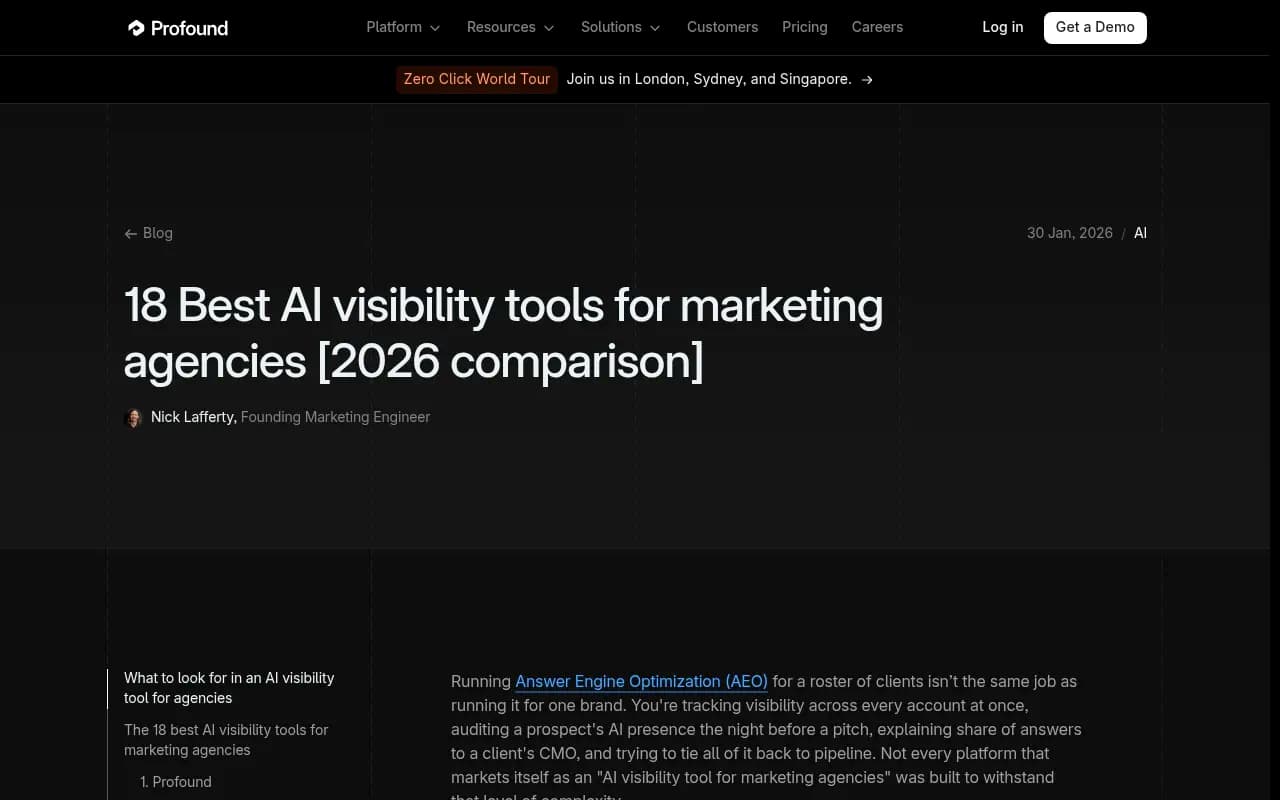
The Profound agency roundup (30 Jan 2026) scores 18 tools on roughly these lines: client account handling, data source, content capability, reporting and partner program. It is a useful checklist even though the author's own product sits at the top.
The main platforms, compared for agency use
Pricing changes often, so confirm everything on each vendor's site. The notes below are about fit, not a ranking.
| Platform | Agency angle | Watch out for |
|---|---|---|
| Promptwatch | Agency plans with unlimited projects, pitch projects and prompts, white-label reports and client portal; content agent and crawler logs | Broader than a pure score tracker, so smaller teams may not use everything |
| Profound | Agency Mode with client workspaces and pitch environments | Higher price point, can be more than a lightweight need |
| Scrunch | Referral commission and partner economics | Prompts are configured rather than pulled from real conversations |
| Otterly.AI | Low-cost setup for small agencies | No in-platform content generation |
| Peec AI | Clean interface, friendly entry pricing | Monitoring focus; a Reddit-sourced $99/mo figure may be stale |
| AthenaHQ | Action Center with prescriptive next steps | Content often needs heavy editing |
| BrightEdge | Entity and knowledge-graph strength for enterprise clients | Coverage skews to a few engines |
Promptwatch for multi-vertical agencies
Promptwatch is the platform 1001 SEO Media uses, so factor that bias in. What matters for a vertical playbook is that it tracks the actual interfaces of ChatGPT, AI Overviews, AI Mode, Gemini, Perplexity and Copilot by country and language, then lets you slice by topic, persona and region. Citation Trends classify every citation by content type and source type, which is exactly what you need to build the healthcare-versus-travel contrast above for your own clients.

The agency tiers run Kick-off at $199/mo, Growth at $399/mo and Scale at $799/mo, each with unlimited projects and prompts and ten seats; check promptwatch.com/pricing for current numbers. The practical difference from monitoring-only tools is the loop: gap analysis, the Content Agent publishing to WordPress, Webflow or Framer, and page-level tracking of whether the new page got crawled, cited and clicked.
Profound and Scrunch
Profound is the obvious enterprise comparison, with Agency Mode for pitch audits and brand environments. Scrunch leans on a partner program and an approach that serves AI-optimized pages to crawlers.
Budget and lightweight options
Otterly.AI, Peec AI and a long tail of cheap trackers suit an agency that is just starting and wants a visibility number for each client. They are fine for proof of concept. The gap shows up when a client asks why, and what to do next.


For more options, the GEO software directory at bestgeosoftware.com lists a wider set of platforms by category.
Vertical by vertical: what to prioritize
Healthcare and regulated industries
The data says AI leans on government and research sources. NIH, PubMed, the FDA and the NHS lead, and government and public health sites make up 7.06% of citations in a top-20 that totals 15.54%. Hospitals and clinics are 0.89%.
What that means for the platform choice:
- Source-type tracking matters more than raw mentions. You want to see whether PubMed or a medical association is the citation you are missing.
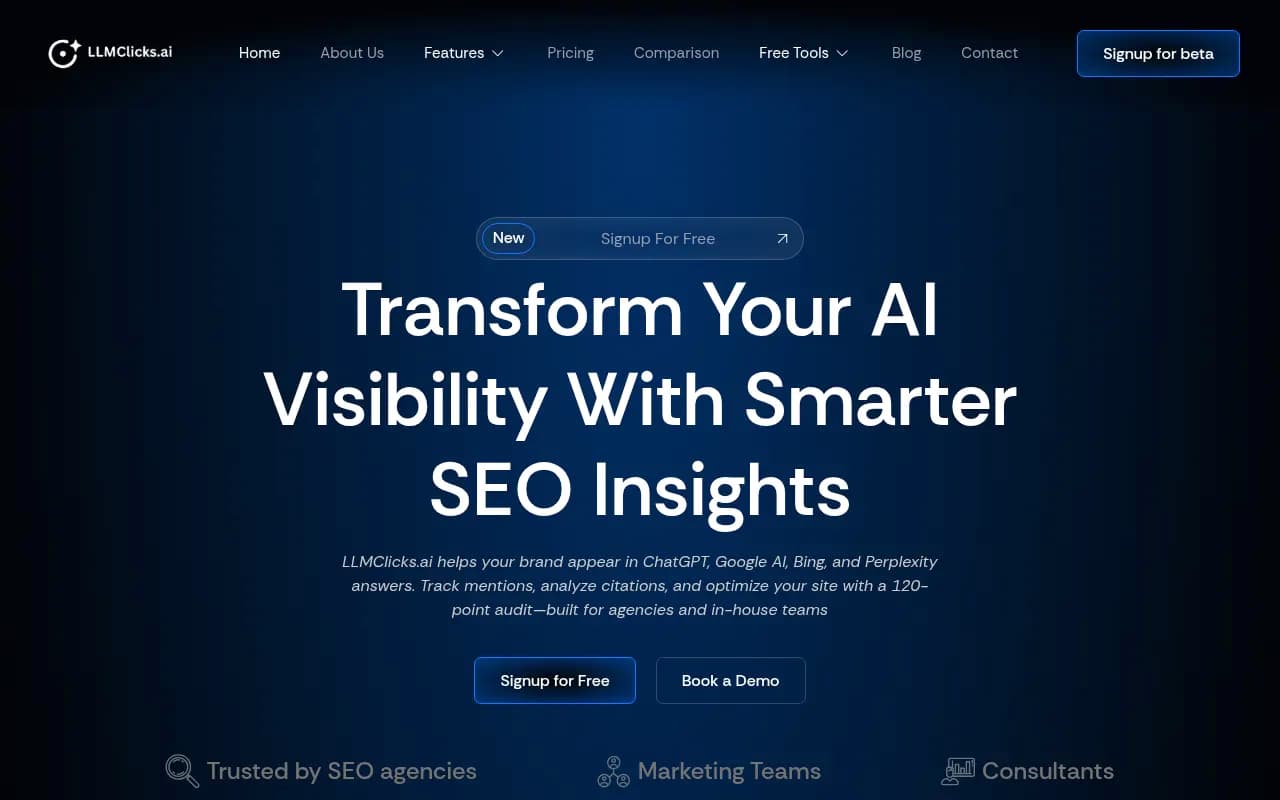
- Brand-accuracy checks matter. A platform with hallucination detection, such as LLMClicks, is worth a look for compliance-minded clients.
- Reports should be exportable for compliance review, since regulated clients often need sign-off.
Practical moves: cite PubMed Central or PubMed in claims, align pages with current guidance, work with specialty associations, and keep doctor profiles on Doctify and WebMD complete (the only review and directory sites in the chart, at 0.23% each).
SaaS and developer tools
Software is the easiest vertical to measure and the one where technical access decides everything. GitHub is the top domain at 1.2%, learn.microsoft.com 0.98% and G2 0.73%. Docs and help centers are the largest group at 2.64%.
Pick a platform with IP-verified AI crawler logs, because the first question is whether GPTBot and OAI-SearchBot can read the docs at all. Coding-agent visibility (Codex, Claude Code, OpenCode) also matters if the client sells an API or SDK. Keep G2 and Capterra profiles current, too.
For SaaS-only niches, tools like BrandViz.AI and Siftly position themselves around B2B SaaS, though I would test them against a real prompt set before committing.


Retail and DTC
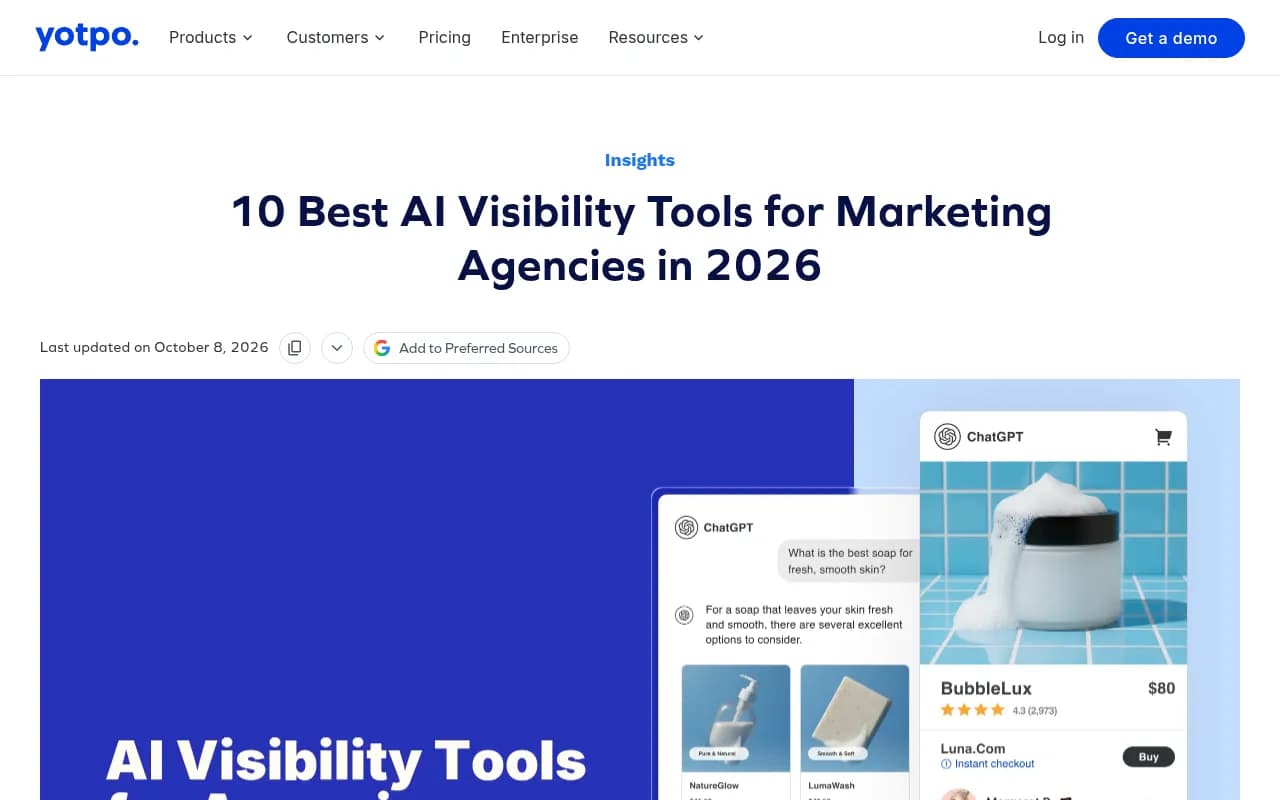
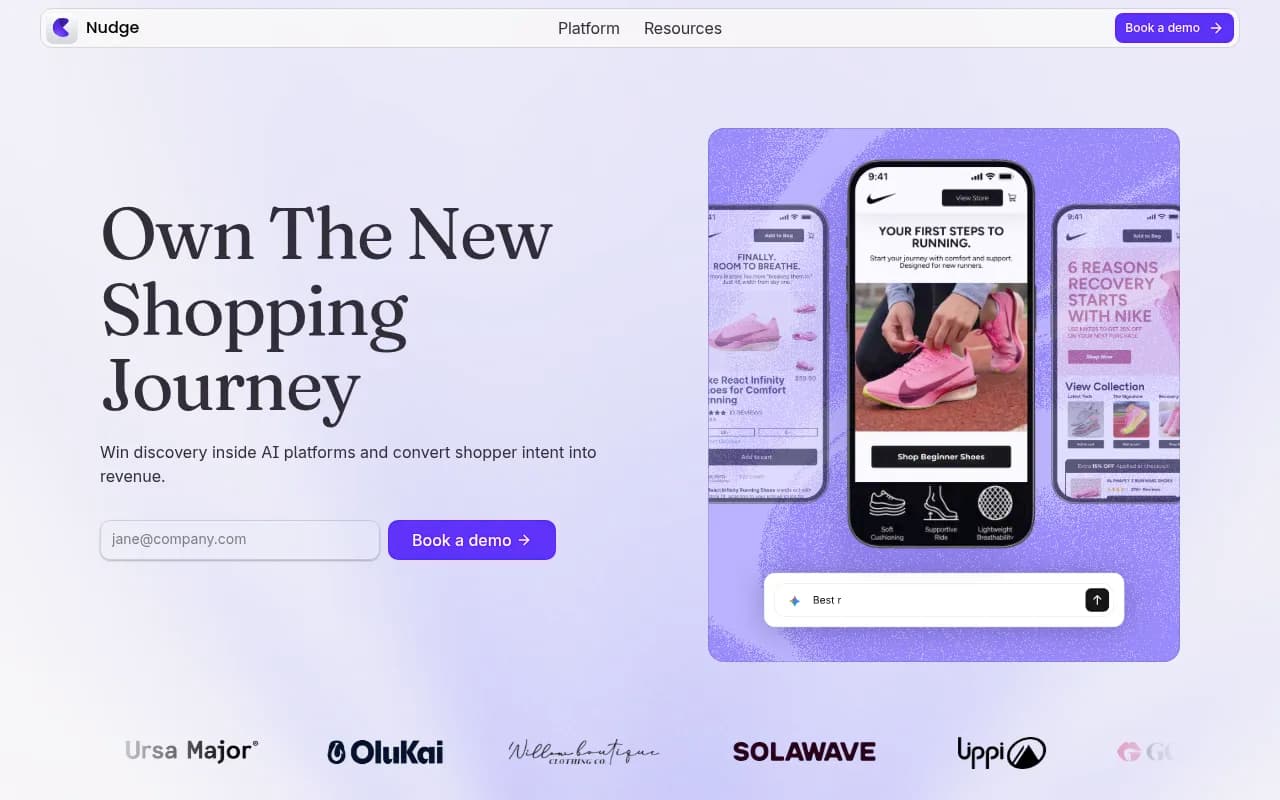
Commerce clients live and die on product pages, shopping carousels and reviews. Yotpo's own agency roundup, which puts its Discover product first, makes the case for a commerce-native platform and cites Adobe Analytics data showing AI-referred traffic to US retail sites grew 138% year over year in May 2026. It is a vendor claim, but the direction matches the product-page numbers above.
For retail, check that your platform covers shopping results and not only text answers. Promptwatch tracks ChatGPT shopping carousels and Alexa product results from an uploaded catalog.
Travel and automotive
Both verticals share a pattern: intermediaries beat brands. Booking and search sites earn more than half of travel citations; Autotrader and Cars.com outrank every car brand. So the agency job often becomes getting the client listed, reviewed and accurately described on the marketplaces, not just optimizing its own site.
Look for offsite mention tracking and a citation-source report that shows exactly which third-party pages AI cites. Per-region tracking is also close to mandatory, since a dealer network or hotel group sells in specific cities.
Local and multi-location businesses
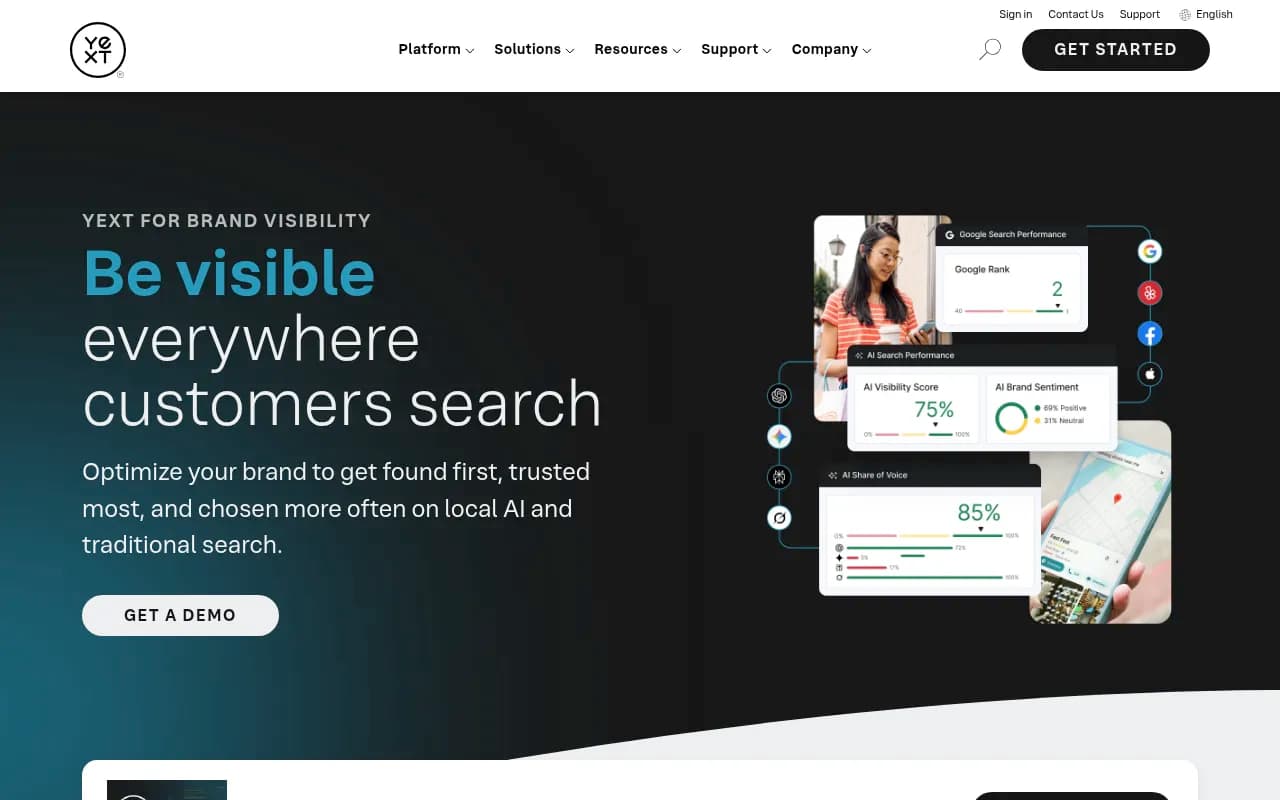
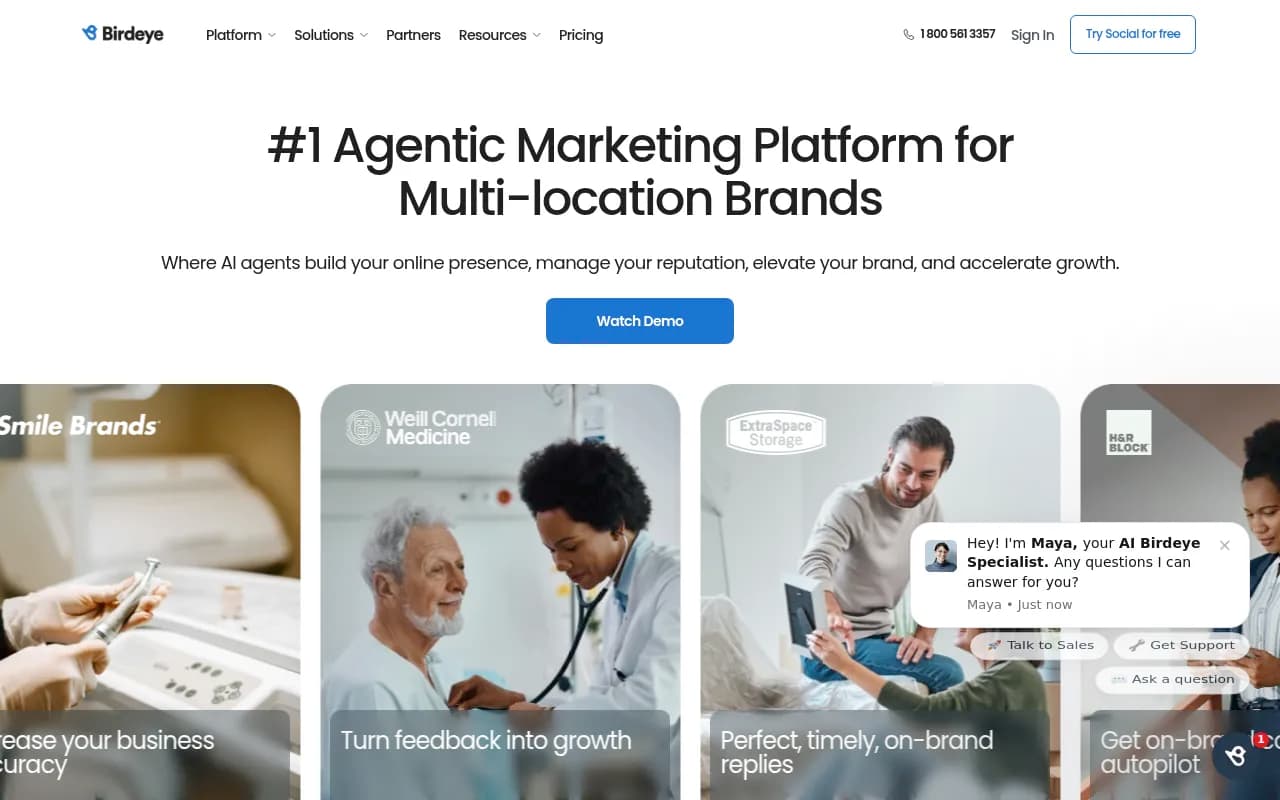
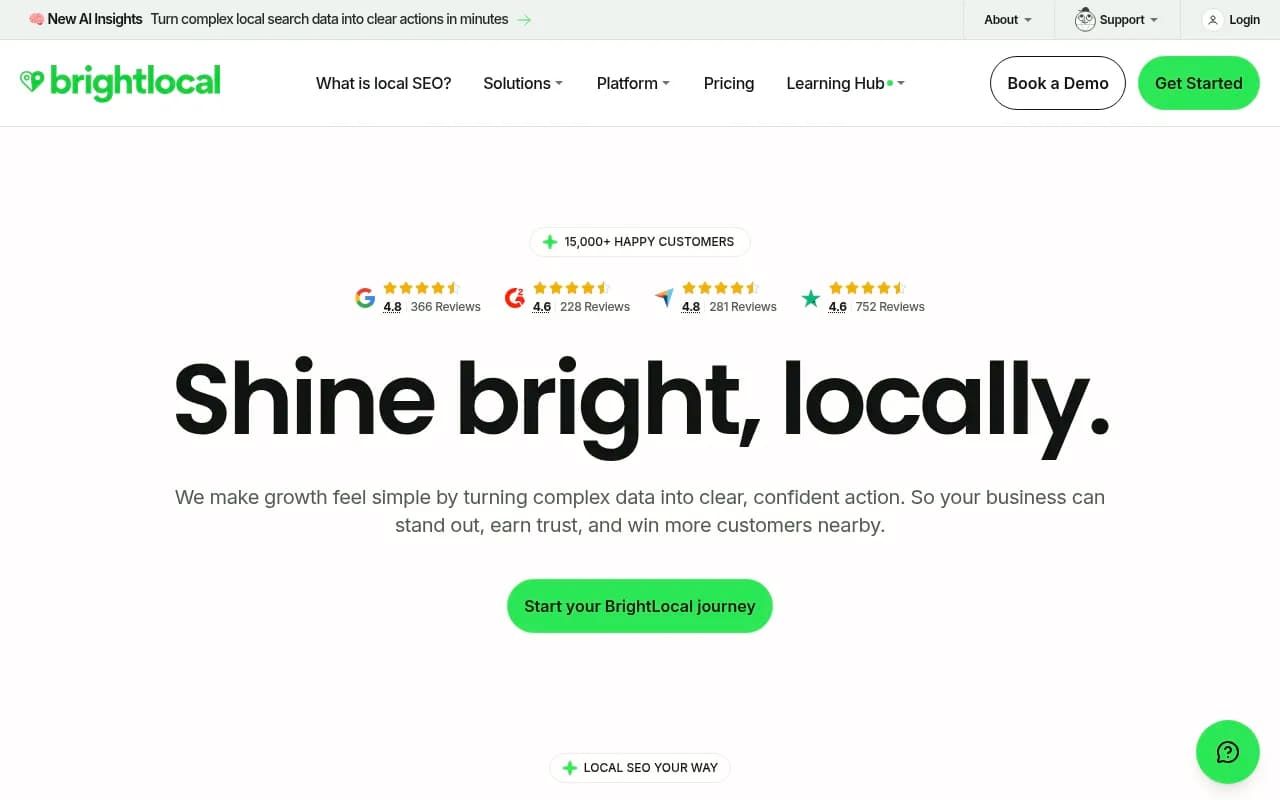
Franchise and local clients need listings, reviews and AI visibility tied together. Tools built for that include Yext, Birdeye, Synup and Uberall, with BrightLocal for local SEO reporting. Pair one of these with a dedicated AI visibility tracker rather than expecting a listings tool to be a full GEO platform.
B2B enterprise and entity-heavy brands
When the client is a large enterprise with complex product lines, entity and schema work matter. BrightEdge and Conductor come from the enterprise SEO side, and Schema App handles structured data.
How to build a vertical playbook
- Pull the cited-source mix for the vertical first. Use the Promptwatch Data vertical reports as a baseline, then confirm with your client's own prompt set.
- Build prompt sets per client by intent. Commercial, informational and branded prompts cite different content types, so keep them separate.
- Audit the sources AI cites, not just your client's pages. In travel and automotive, that is where the gap usually sits.
- Check crawler access. If AI bots hit errors, nothing else matters.
- Publish content that matches the prompt intent, then track whether each page gets crawled and cited. Underperformers go back on the list.
- Report on traffic and conversions, not just visibility scores. Clients stop caring about mentions quickly.
Packaging it as a service
Frase's agency playbook (April 2026) cites retainer ranges of roughly $1,500 to $5,000 a month for boutique and SMB clients, $5,000 to $10,000 for mid-market and $10,000 to $50,000 or more for enterprise. Those are one source's numbers and your market may differ, but they show why the platform cost is a rounding error against the retainer, and why vertical depth is the thing that justifies the higher tier.
Agencies that do not want to build a full stack in-house can also look at partners; if you want a team to handle this for you, 1001 SEO Media runs GEO and AI search programs alongside technical SEO and content.
A note on vendor listicles
Most of the roundups I read while researching this (Profound, Yotpo, Frizerly and similar) rank their own product first. That is normal, and the checklists in them are still useful. Just do not treat any of them as neutral. Run a two-week trial with three clients from different verticals and see which tool surfaces something you did not already know.
For agencies also tracking rankings and reporting, the rank-tracker directory at ai-rank-tools.com is a handy next step.
Bottom line
Pick the platform for the vertical mix on your roster. If your clients are all in one industry, a specialist tool may be enough. If you serve several, you need per-client source tracking, crawler logs and a way to turn findings into published content. Start with a trial across your three most different clients, and compare what each tool tells you about where AI is actually getting its answers.