Key takeaways
- Decide first whether you need to watch (monitoring) or act (content, fixes, publishing). That choice removes about half the market from your shortlist.
- Industry matters because AI engines cite different source types per vertical. Healthcare leans on government sites, travel on booking sites, software on docs. Your tool needs to show you that.
- Score every vendor on the same six criteria: engine coverage, real-interface data, prompt intelligence, explainability, action loop and longitudinal tracking.
- Most "best tool" lists are written by vendors who rank themselves first. Run a two-week trial on your own prompts instead.
- Prompt caps, not sticker price, are the real cost lever. Check them before comparing plans.
Why the industry question comes first
There are now more than 30 products calling themselves AI visibility platforms. Most buyer's guides treat them as interchangeable and tell you to compare features. I think that's the wrong starting point, because the thing you're trying to influence (which sources AI engines pull from) changes sharply by industry.
Look at what Promptwatch Data shows for ChatGPT citations in recent industry reports:
- Healthcare (Sep 9 to Oct 8, 2026): NIH, the FDA and the NHS lead, and government and public health sites earn almost half of citations. See the healthcare citation report.
- Travel (Sep 28 to Oct 4, 2026): Skyscanner, Going and Tripadvisor lead, and booking and search sites earn more than half. See the travel citation report.
- Software (Sep 28 to Oct 4, 2026): GitHub, Microsoft's docs and G2 lead, and documentation and help centers take the largest share. See the software citation report.
- Automotive (August 2026): marketplaces like Autotrader and Cars.com outrank every car brand, with Chevrolet the top manufacturer site. See the automotive citation report.
A car maker and a SaaS company need very different answers to "why aren't we cited?" The first needs marketplace and listing presence. The second needs documentation and review-site coverage. A platform that only tells you "your mention rate is 12%" helps neither.
Step 1: Decide whether you need to watch or act
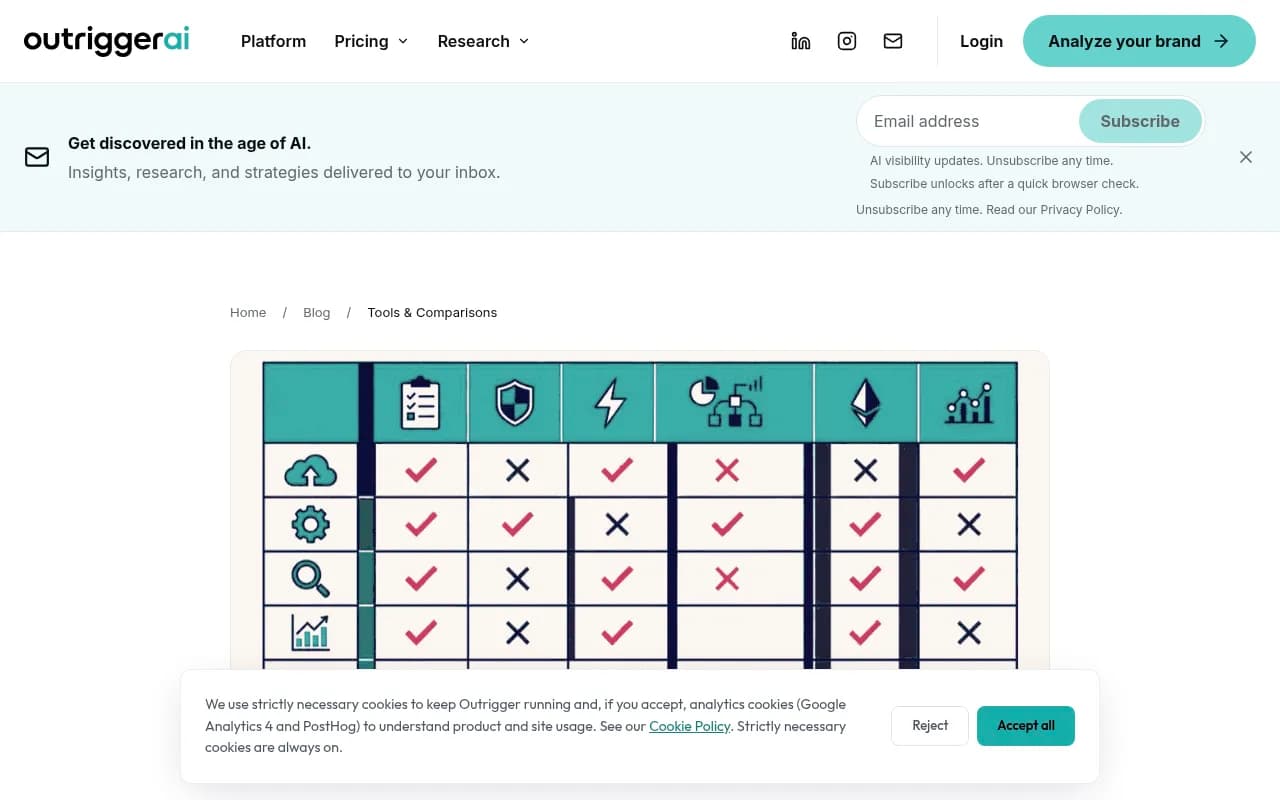
The Outrigger comparison draws the cleanest line in the market: monitoring tools versus action platforms. I'd add a third bucket, enterprise suites with compliance and simulation features.
| Goal | What you need | Typical tools |
|---|---|---|
| Know if you appear | Prompt tracking, share of voice | Otterly.AI, Peec AI, Rankscale |
| Know why you do or don't | Citation analysis, crawler logs, page-level data | Promptwatch, Profound, Scrunch |
| Fix it | Content gap analysis, content generation, CMS publishing | Promptwatch, AirOps, Writesonic |
| Run it for regulated or global brands | Compliance, SSO, multilingual, attribution | Profound, Evertune, Conductor, BrightEdge |
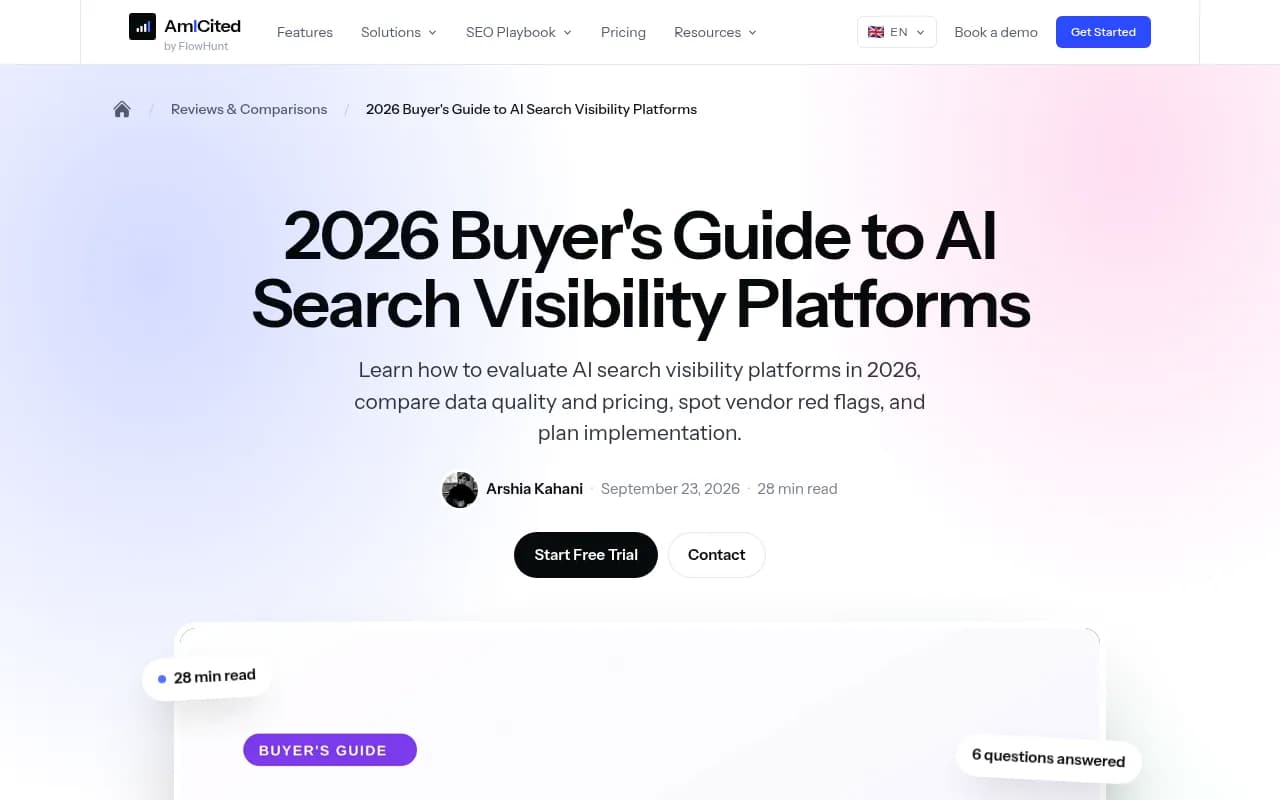
If you already have a team publishing GEO content and just need a scoreboard, a cheap monitor is fine. If nobody on your team has time to act on a dashboard, you will end up with the dust-collector the Am I Cited guide warns about.
Otterly.AI and Peec AI sit squarely in the monitoring camp, and that is a fine place to be if monitoring is the job.


Step 2: Score vendors on six criteria
GeoSuite's framework is a useful base, and I've merged it with what the other buyer's guides emphasize. Score every candidate 0 to 5 on each.
Engine coverage and real-interface data
ChatGPT, Gemini, Claude and Perplexity are the minimum. Google AI Overviews and AI Mode, Copilot and Grok matter more for some industries. Just as important is whether the tool queries the actual user interface or only the API. Answers, citations and shopping results can differ between the two.
Engines also differ in how many citation slots they give you. Promptwatch's average sources per response data shows ChatGPT citing about 5 sources per web-search answer, while Google AI Overviews and Perplexity sit near 10. Copilot swung from under 2 to nearly 17 within weeks. A good platform reports per engine and does not blend everything into one score.
Prompt intelligence
Who chooses the prompts? Some tools make you invent 50 prompts. Better ones give you volumes, difficulty and query fan-outs, meaning the actual web searches the engine runs behind your question. Fan-out behavior moves: ChatGPT started using the site: operator at scale on August 8, 2026, jumping from about 0.4% to about 17% of fan-out queries overnight. A tool that does not capture fan-outs will miss shifts like that.
Also look for segmentation by intent. The content type report (Sep 28 to Oct 4, 2026) shows product pages at 26.0% of citations on commercial prompts, but only 19.1% on informational ones, where how-tos and docs gain ground. Branded prompts lean on reviews, which are over 3x their overall share. If your tool cannot split commercial, informational and branded prompts, you will average away the signal.
Explainability
Per-citation drivers, not a raw source list. Can the tool tell you which of your pages were cited, which were crawled but ignored, and which were never visited? IP-verified AI crawler logs are the clearest way to answer that, and few platforms have them.
Action loop
Does the platform turn gaps into briefs, drafts and published pages, then check whether they worked? Or does it stop at measurement? Be honest about your own capacity here. A tool with a content agent you never switch on is the same as a monitor.
Freshness of recommendations
This one rarely appears in buyer's guides. Engine behavior changes fast. In Promptwatch's October 2026 social citation data, social platforms made up just 0.46% of ChatGPT citations versus 12.2% in Google AI Overviews. ChatGPT's Reddit share collapsed from roughly 4% to 0.5% on August 14, 2026. Any vendor still telling you "get on Reddit to win ChatGPT" is running on stale logic. Ask how quickly their recommendations adapted.
Longitudinal tracking
One snapshot is a pitch deck. Month-over-month on a versioned prompt set is how you learn whether anything worked. Ask whether you can keep history when you edit your prompt list.
Step 3: Match the platform to your industry
Here is how I would approach each vertical. These are my recommendations, based on the citation patterns above, not vendor claims.
| Industry | What AI cites most | What to demand from a tool | Worth shortlisting |
|---|---|---|---|
| Healthcare, pharma | Government and public health sites | Compliance (HIPAA, SOC 2), accuracy checking, sentiment | Profound, Evertune, Promptwatch |
| Travel | Booking and search sites, aggregators | Third-party mention tracking, multi-country prompts | Promptwatch, Profound |
| SaaS and developer tools | Docs, GitHub, review sites | Docs-page tracking, coding agent visibility, citation by page | Promptwatch, Siftly, BrandViz.AI |
| Ecommerce and retail | Product pages, marketplaces | Shopping carousel tracking, catalog upload | Promptwatch, Profound, Nudge |
| Automotive | Marketplaces over brands | Offsite mention discovery, source-type breakdown | Promptwatch, Evertune |
| Local and multi-location | Listings, reviews, directories | Listing and review integration | Yext, Birdeye, Tibly, Uberall |
| Agencies | Varies by client | White-label reports, many projects, pitch mode | Promptwatch agency plans, Slate, Profound Agency Mode |
| Publishers and media | News, editorial | Editorial dashboards, citation decay | DeepSeeQ, Promptwatch |
Healthcare and regulated industries
The real gating factors are compliance and accuracy. Profound has publicized HIPAA compliance and SOC 2 Type II, and its FactCheck feature measures what AI says about you that is wrong. That matters more here than in other verticals. Because government sites dominate citations, you also want a tool that surfaces which third-party sources shape answers about you, since you can't out-publish the NHS.
Travel and automotive
In both, aggregators and marketplaces beat the brands themselves. So the useful feature is offsite mention tracking: finding the third-party pages AI cites that name you, with or without a link. A plain mention counter will tell you that you lose without telling you to whom.
SaaS and developer tools
Documentation earns the biggest share of software citations, which makes page-level data critical. You want to know which doc pages get cited and which AI crawlers fetch them. If developers find you through coding assistants, check whether the tool covers Codex, Claude Code and similar agents. Promptwatch tracks those and also ties crawler logs, citations and Search Console data to each page, which is handy when you ask "which pages rank in Google but never get cited by AI?"

Ecommerce
Profound's research found shopping surfaces appear in fewer than 10% of ChatGPT prompts, so you need to know when and where they fire for your category. Look for catalog upload, shopping carousel tracking and product-feed visibility. Skip tools that only count text mentions.
Local and multi-location
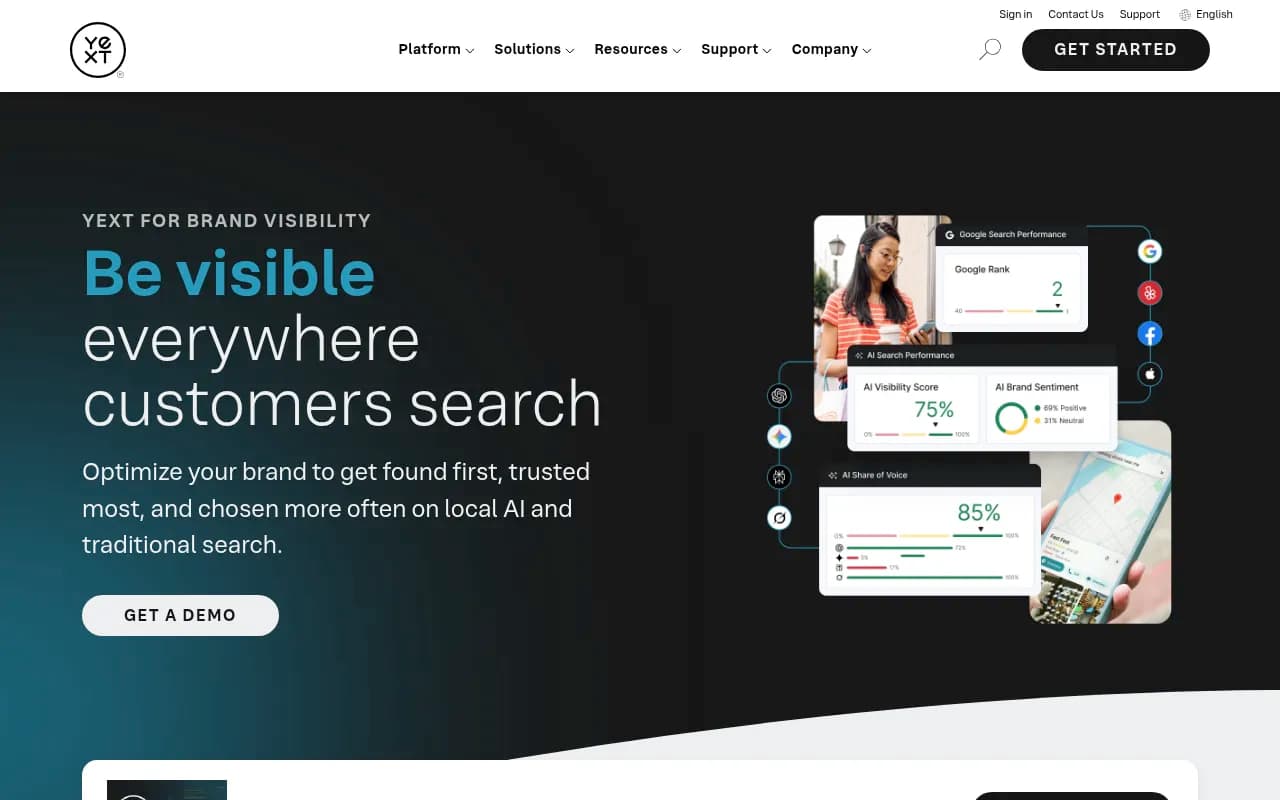
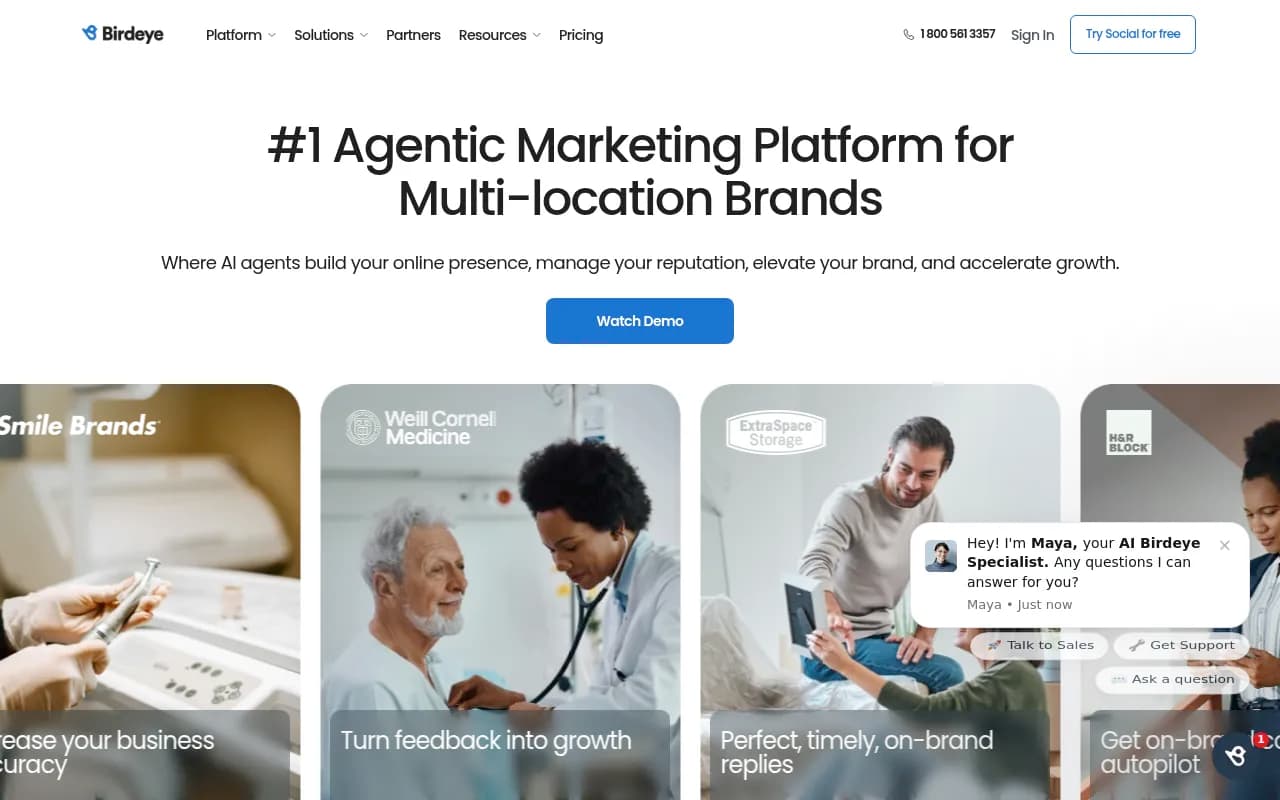
Local is different enough that AI visibility trackers alone are not the answer. Citation sources are listings and reviews, so listing-management platforms like Yext and Birdeye belong in the stack, with a lighter AI tracker on top.
Agencies
Prompt caps and seat limits kill agency margins. Look for unlimited projects, white-label reports, a pitch mode for prospects, and a client portal. Compare cost per response, not monthly price.
Step 4: Know the monitoring-heavy and suite options
If you already live inside a big SEO suite, the add-on is tempting. It is fine for a first look, but expect fixed prompt sets and shallower AI-specific data.
| Tool | Type | Strength | Watch out for |
|---|---|---|---|
| Promptwatch | End-to-end GEO platform | Crawler logs, citation data, content agent, Action Board, AI traffic attribution | More to learn than a simple tracker |
| Profound | Enterprise AEO | Compliance, agent workflows, deep research datasets | Higher price, built for larger teams |
| Scrunch | Monitoring and optimization | Solid monitoring | Less execution than agentic platforms |
| Otterly.AI | Monitor | Low entry price | No crawler logs or content generation |
| Peec AI | Monitor | Competitor benchmarking, about 89 EUR per month entry | Limited backend depth |
| Semrush | SEO suite add-on | Familiar interface | Fixed prompt sets |
| Ahrefs Brand Radar | SEO suite add-on | Large brand database | Monitoring only |
| BrightEdge | Legacy SEO suite | Existing customers | Data freshness lag reported |
| AirOps | Content workflow | Content generation | No visibility monitoring of its own |


For a wider scan of the field, the GEO software directory lists dozens more.
Step 5: Run a trial that actually tests something
Vendor demos use friendly prompts. Do this instead.
- Pick 20 to 30 prompts across commercial, informational and branded intent, in your real industry vocabulary.
- Include 3 or 4 prompts where you know a competitor wins.
- Run two tools side by side for 7 to 14 days. Most mid-tier plans have free trials. Promptwatch offers 7 days on its monthly plans and a free Explore tier.
- Ask each tool one hard question: "Why aren't we cited for X, and what do I change?" Judge the answer on specificity.
- Check the data against the live interface. Open ChatGPT yourself and compare.
- Price the real workload. Entry plans often cap at 15 to 50 prompts, and Promptwatch's tiers run from 50 prompts on Essential ($95 per month) to 350 on Business ($579 per month). Confirm current pricing at promptwatch.com/pricing.
A free check before you spend anything is also worthwhile. Amplitude AI Visibility and HubSpot AI Search Grader both give a rough baseline.

Beware the self-ranked listicle
Two of the sources I read while researching this are good examples. Evertune's "10 best AI visibility tools" ranks Evertune first. Another roundup ranks Profound first and ends with a sales CTA. Neither is lying, but neither is neutral. Treat any ranking written by a vendor, including this site's own mentions, as a lead to check, not a verdict. The pattern holds even for claims like "7x citations in 90 days" from a single client. Ask for the method and the time window.
A short decision tree
- Single brand, tight budget, no content team: start with a monitor like Otterly.AI or Peec AI, and revisit in a quarter.
- Content team that can publish weekly: choose a platform with gap analysis and a content agent, so the dashboard produces work.
- Regulated industry or global enterprise: shortlist Profound and Evertune for compliance, and compare with an end-to-end platform on execution.
- Developer tools or API company: require coding agent tracking and docs-level citation data.
- Agency: compare cost per response and white-label support before features.
- Multi-location local business: pair a listings platform with a light AI tracker.
Owning the visibility work internally is not always realistic. If you would rather hand the strategy and execution to specialists, an agency such as 1001 SEO Media, which runs technical SEO, content and generative engine optimization, is a reasonable route. It uses Promptwatch as its own visibility platform.
The bottom line
Pick by goal first, industry second, feature list last. The sources AI cites in your vertical tell you what to measure, and your team's capacity to act tells you whether you need a monitor or an optimizer. Run two tools on the same 25 prompts for two weeks, and keep the one that tells you what to change on Monday morning.