Key takeaways
- Google AI Overviews appear in roughly 25% of searches and are generated by Gemini pulling from indexed pages -- meaning traditional SEO is still the foundation, not the enemy
- The biggest overlap between AI Overview optimization and traditional SEO is topical authority: cover a subject deeply and both systems reward you
- A few targeted adjustments (quotable first sentences, structured data, direct answers early in content) get you most of the AI Overview benefit without rebuilding your whole workflow
- Tracking whether your content is actually being cited in AI responses requires different tooling than rank tracking -- standard GSC data won't tell you the full story
- The brands winning in 2026 aren't running two separate strategies; they've found the shared signals and built one content process that serves both
There's a version of this conversation that makes everything sound catastrophic. AI is eating search. Rankings don't matter anymore. You need to throw out your SEO playbook and start over.
That's not really what's happening. But something genuinely has shifted, and ignoring it is just as bad as panicking about it.
Google AI Overviews now appear in roughly 25% of searches, according to Search Engine Land's April 2026 analysis. That's not a niche feature anymore -- it's a mainstream part of how people interact with Google results. When someone searches "best ERP for mid-market manufacturing," they may read an AI-generated summary before they ever look at a ranked page. If your brand isn't in that summary, you've lost visibility even if you're ranking #2.
At the same time, traditional organic rankings still drive the majority of clicks. The ten blue links aren't dead. Featured snippets still exist. People still click through. So the question isn't "SEO or AI Overviews?" -- it's "how do I get both without running two completely separate content programs?"
The good news: there's more overlap than you might think. The bad news: the parts that don't overlap require real attention.
How Google AI Overviews actually work (and why it matters for your strategy)
AI Overviews are generated by Gemini, Google's large language model. When a user submits a query, Google uses natural language processing to understand intent, searches its index for relevant content, and then Gemini synthesizes a response from those sources.
The key word there is "synthesizes." Gemini isn't just pulling the top-ranked page and quoting it. It's drawing from multiple indexed sources, cross-referencing them, and constructing an answer. Your page doesn't need to rank #1 to be cited -- but it does need to be indexed, crawlable, and trusted.
This means the technical foundation of traditional SEO (crawlability, indexing, page speed, structured data) is still completely relevant. You can't get cited in an AI Overview if Google can't read your page. That part of the job hasn't changed.
What has changed is what Gemini looks for once it can read your page. It's not just asking "does this page rank for this keyword?" It's asking "does this page contain a clear, trustworthy answer to this question?"
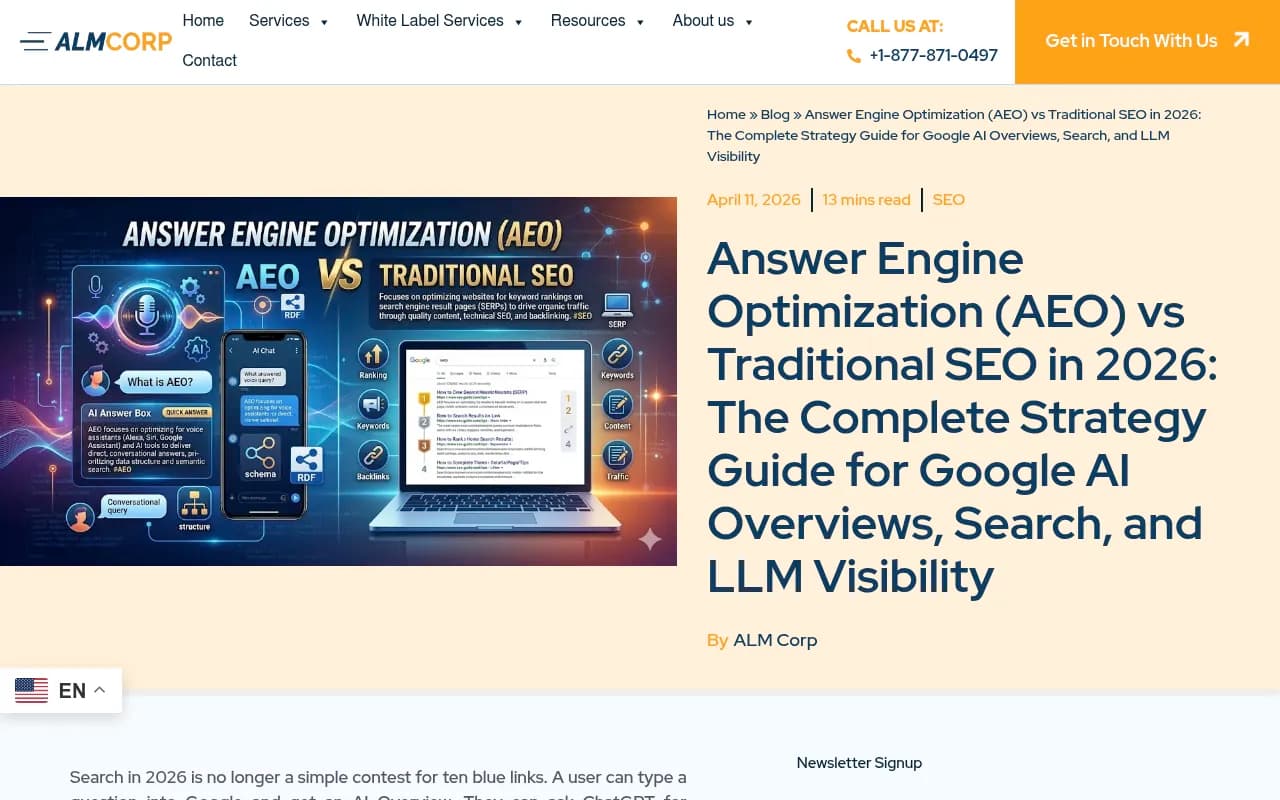
Where traditional SEO and AI Overview optimization genuinely overlap
Before getting into the differences, it's worth being clear about how much common ground exists. If you're already doing solid SEO, you're probably closer to AI Overview visibility than you realize.
Topical authority
In 2026, AI systems care less about whether a single page ranks for a keyword and more about whether your site consistently demonstrates expertise across a topic. This is something SEOs have been building toward for years through content clusters and pillar pages. That work directly translates to AI Overview eligibility.
If you've built a comprehensive hub around, say, "project management for construction firms," and you have supporting articles covering scheduling, budget tracking, subcontractor communication, and compliance -- Gemini sees a site that genuinely knows this topic. That's exactly the kind of source it wants to cite.
Tools like Topical Map AI can help you audit whether your content coverage is deep enough to signal authority to both traditional search and AI systems.
E-E-A-T signals
Experience, Expertise, Authoritativeness, and Trustworthiness have been Google ranking factors for years. They're also exactly what Gemini looks for when deciding which sources to include in an AI Overview. Author bios, original research, cited sources, clear publication dates, and accurate factual claims all matter for both.
Technical SEO
Fast pages, clean crawl paths, proper canonicalization, and structured data markup all help both traditional rankings and AI Overview inclusion. Schema markup in particular -- FAQ schema, HowTo schema, Article schema -- makes it easier for Gemini to extract structured answers from your content.
Screaming Frog SEO Spider remains one of the most reliable ways to audit technical issues that could block either type of visibility.
Where the strategies actually diverge
This is where most guides get vague. Let's be specific.
Answer-first content structure
Traditional SEO content often builds toward the answer. You introduce the topic, provide context, explore nuances, and then deliver the key insight. That structure works for readers who are engaged and reading linearly.
AI Overviews don't read linearly. Gemini scans for quotable, direct answers. According to practitioners discussing this on Reddit's r/digital_marketing in 2026, whether your first line of every paragraph is quotable strongly affects whether you appear in AI Overviews.
The practical fix: lead with the answer, then explain it. Don't bury your key point in paragraph four. This doesn't ruin the content for human readers -- most people prefer getting the answer first anyway.
Conversational query coverage
Traditional keyword research focuses on search volume and competition for specific terms. AI Overviews respond to conversational, multi-part queries that don't always have measurable search volume in standard tools.
Someone might ask: "What's the difference between a content audit and a content gap analysis, and which should I do first?" That's not a keyword anyone's bidding on. But it's exactly the kind of question that triggers an AI Overview -- and if your site has a clear, direct answer, you might be cited.
This is where query fan-out matters. AI systems take a single prompt and branch it into multiple sub-queries to cross-check information. A question about "best accounting software for freelancers" might fan out into queries about pricing, integrations, tax features, and user reviews. If your content covers those angles, you're more likely to be included in the synthesized response.
Promptwatch tracks this kind of prompt fan-out behavior and shows you which sub-queries your content is and isn't covering -- useful if you want to close gaps systematically rather than guessing.

Citation tracking vs rank tracking
Standard rank tracking tells you where your pages appear in organic results. It doesn't tell you whether your content is being cited in AI Overviews or other AI search engines. These are different data points, and conflating them leads to bad decisions.
You might be ranking #4 for a keyword but getting cited in the AI Overview for that same query. Or you might be ranking #1 but never appearing in the AI summary. Without tracking both, you're flying partially blind.
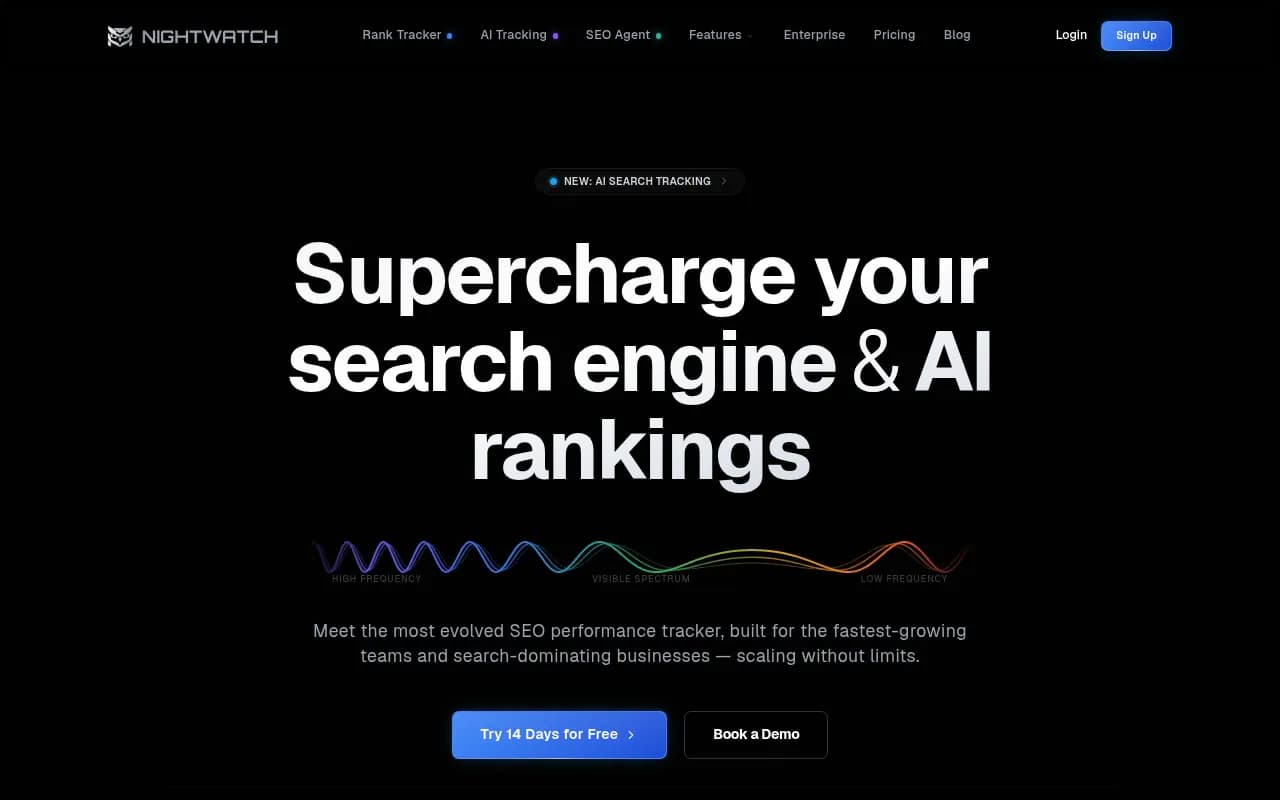
Tools like SE Ranking and Nightwatch have added AI visibility tracking alongside traditional rank tracking, which makes it easier to see both signals in one place.
The practical workflow: one content process that serves both
Here's the part that actually saves you time. Instead of running two separate content programs, build one process with a few extra steps.
Step 1: Research with both lenses
When you're doing keyword research, also ask: "What conversational questions does this topic generate?" Use your standard SEO tools for volume and competition data, then manually test related queries in Google, Perplexity, and ChatGPT to see what AI Overviews and AI answers look like. Note which sources are being cited -- those are your real competitors for AI visibility.
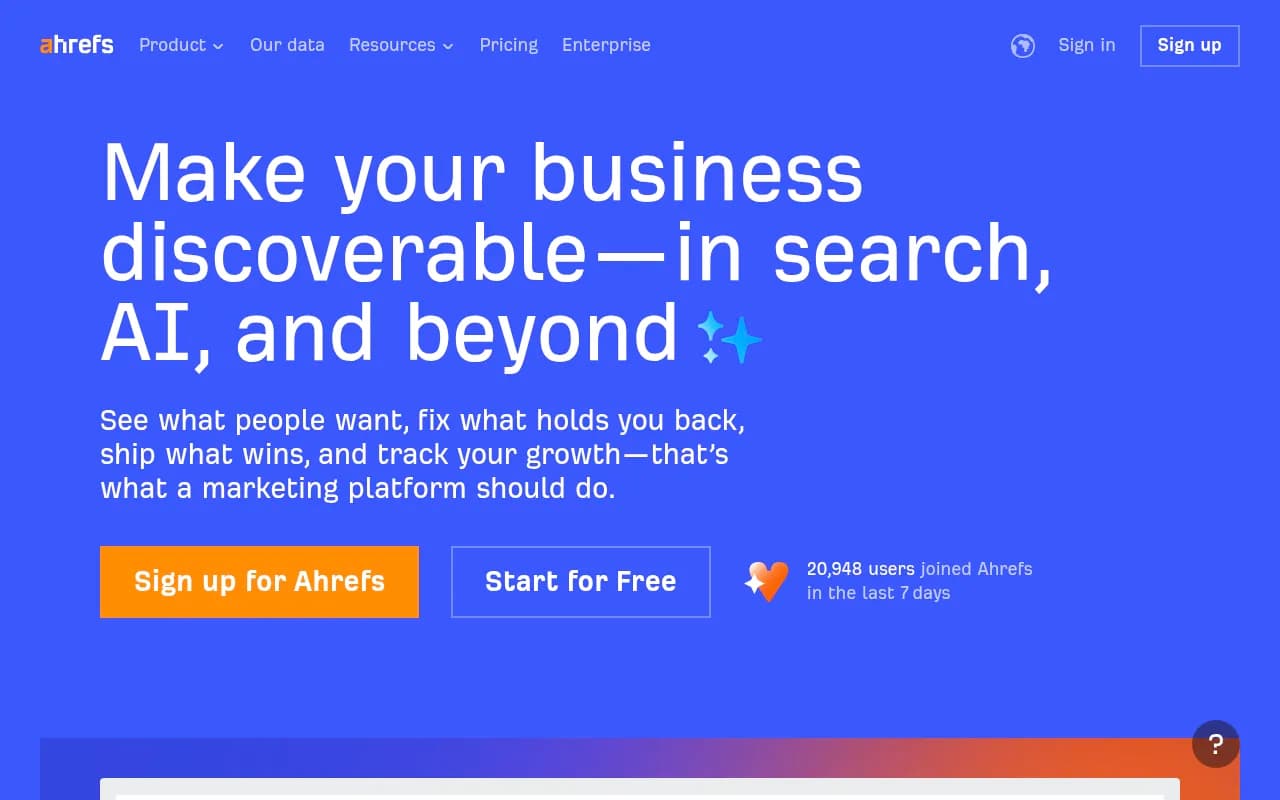
Semrush and Ahrefs Brand Radar cover the traditional keyword side well. For the AI visibility side, you need something purpose-built.
Step 2: Write with quotable structure
When drafting content, apply this rule: every major section should have at least one sentence that could stand alone as a complete, accurate answer to a question. This is the "quotable first sentence" principle from the Reddit discussion above.
It sounds simple, but it changes how you write. Instead of "There are several factors to consider when choosing project management software," you write "The most important factor when choosing project management software for small teams is ease of onboarding, not feature count." The second version is quotable. The first is filler.
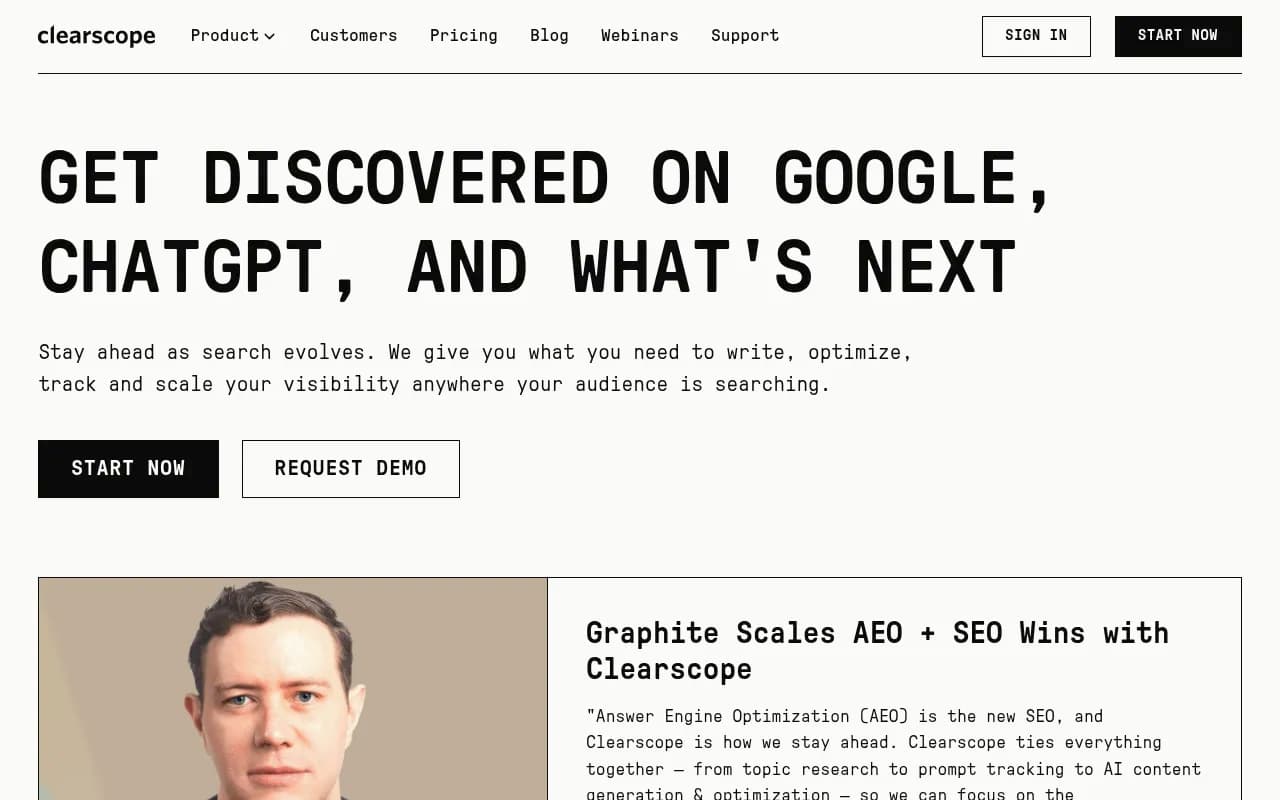
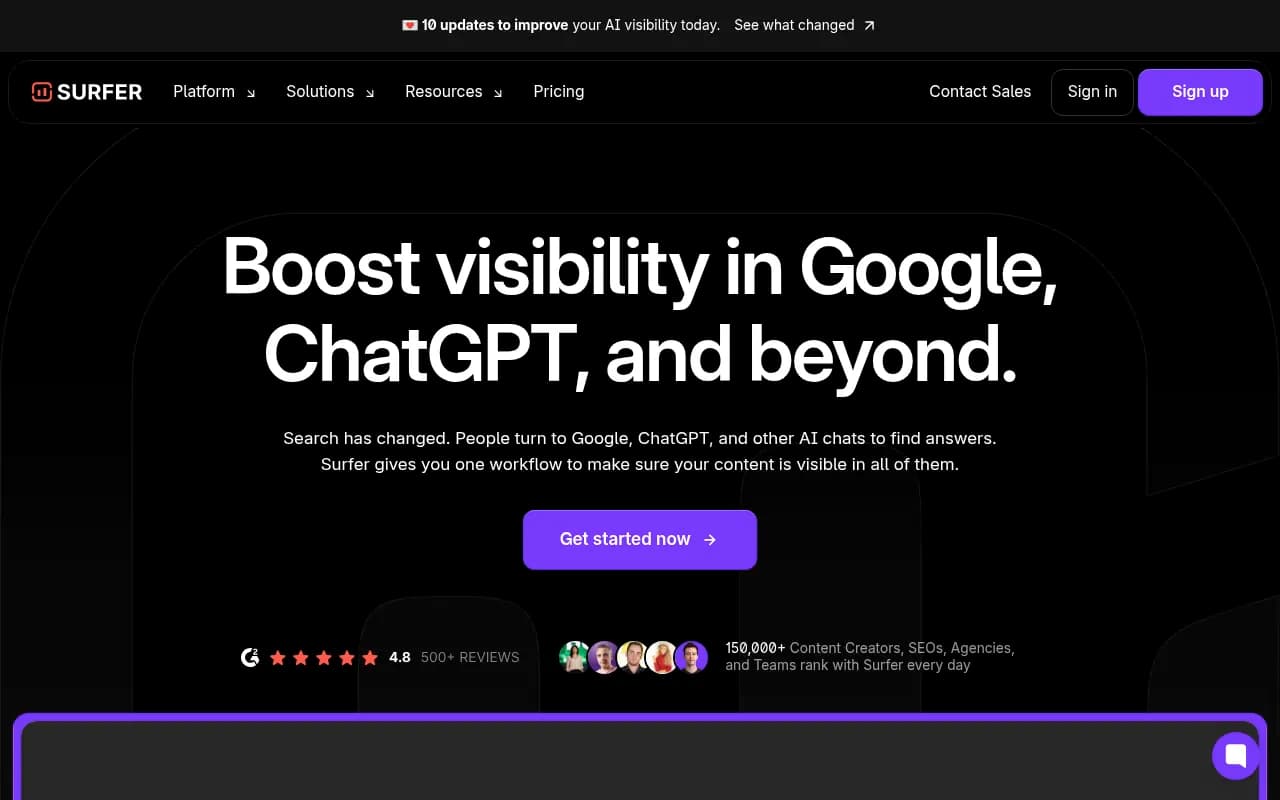
Content optimization tools like Clearscope and Surfer SEO help you cover the right topics and terms. They won't tell you if your sentences are quotable, but they'll make sure you're covering the right ground.
Step 3: Add structured data (don't skip this)
FAQ schema, HowTo schema, and Article schema give Gemini explicit signals about what your content contains. This is one of the highest-leverage technical changes you can make for AI Overview visibility, and it also supports featured snippets in traditional results.
If you're on WordPress, Yoast SEO handles most of this without custom development. For more complex implementations, Botify offers enterprise-level structured data management alongside broader technical SEO.
Step 4: Build entity clarity
AI systems understand the web through entities -- brands, people, places, concepts -- and the relationships between them. If Google isn't sure what your brand does, who it serves, or what category it belongs to, you're less likely to be cited.
This means: consistent NAP (name, address, phone) data, a well-maintained Google Business Profile, clear "About" and "Services" pages, and mentions in authoritative third-party sources. Wikipedia entries, industry directories, and press coverage all help establish entity clarity.
Step 5: Track both types of visibility
Once content is published, track it in two ways. Use Google Search Console for traditional impressions, clicks, and position data. Use an AI visibility tool to track whether your pages are being cited in AI Overviews and other AI search engines.
The gap between these two data sources often reveals your biggest opportunities. A page with strong rankings but zero AI citations probably needs structural changes. A page with AI citations but weak rankings might need more backlinks or internal linking.
Comparison: traditional SEO signals vs AI Overview signals
| Signal | Traditional SEO | AI Overviews | Shared? |
|---|---|---|---|
| Crawlability & indexing | Critical | Critical | Yes |
| Page speed | Important | Moderate | Partial |
| Backlink authority | High weight | Moderate weight | Partial |
| Topical depth | Important | Very important | Yes |
| E-E-A-T signals | Important | Very important | Yes |
| Keyword density | Moderate | Low | No |
| Structured data / schema | Helpful | Very helpful | Yes |
| Answer-first structure | Not required | Important | No |
| Conversational query coverage | Optional | Important | No |
| Entity clarity | Moderate | High | Partial |
| Citation tracking | N/A (rank tracking) | Required | No |
The table makes the point clearly: most of the foundation is shared. The divergence is mostly about content structure and measurement, not about building entirely different content.
What to prioritize if you're starting from scratch
If you're trying to figure out where to spend your time, here's a rough priority order:
- Fix any crawl or indexing issues first. Nothing else matters if Gemini can't read your pages.
- Audit your topical coverage. Find the questions in your niche that don't have clear answers on your site.
- Rewrite your most important pages to lead with direct answers. Don't rebuild everything -- pick your top 10 pages and update the structure.
- Add FAQ schema to pages that answer specific questions. This is a one-time implementation that pays dividends for both traditional and AI search.
- Set up AI visibility tracking alongside your rank tracker. You need both data streams to make informed decisions.
For the content gap piece specifically, MarketMuse is strong for identifying topical holes in your existing content. For understanding which gaps are specifically hurting your AI visibility, Promptwatch's Answer Gap Analysis shows you the exact prompts competitors are visible for that you're not.
The measurement problem most teams ignore
Here's something that doesn't get discussed enough: even if you're doing everything right, you might not know it's working.
Traditional SEO has clear feedback loops. Rankings go up, clicks go up, revenue goes up. AI Overview visibility is murkier. You might be cited in an AI Overview but get zero direct clicks from it -- the user got their answer and moved on. Or you might be cited and get a flood of branded searches as a result.
Connecting AI visibility to actual business outcomes requires either a tracking pixel, server log analysis, or GSC integration that captures AI-referred traffic. Most teams haven't set this up yet, which means they're making content decisions without knowing what's actually driving results.
This is genuinely hard to solve, but it's worth investing in. The teams that figure out their AI visibility attribution in 2026 will have a significant advantage in 2027 when the channel is even more competitive.
The honest bottom line
You don't need two separate content strategies. You need one content strategy that's been updated to account for how AI systems read and cite content.
The core work -- building topical authority, earning trust signals, maintaining technical health -- is the same. The adjustments are mostly structural: write answers first, cover conversational queries, add schema markup, and track AI citations alongside traditional rankings.
The teams that are struggling are the ones treating AI Overviews as a completely separate channel that requires a completely separate program. The teams that are winning built a unified process and made targeted changes where the signals actually diverge.
Start with your most important pages. Make them more quotable. Add structured data. Then measure whether your AI visibility improves. That's a workload you can actually sustain.