Key takeaways
- Ahrefs Brand Radar is convenient if you already pay for Ahrefs, but it uses fixed prompts and has no AI traffic attribution -- making it hard to act on what you find.
- Peec AI offers clean reporting and is genuinely affordable, but it stops at monitoring. No content generation, no crawler logs, no gap analysis.
- Profound has strong enterprise analytics and a polished interface, but it's expensive and still primarily a data dashboard rather than an optimization tool.
- Promptwatch is the only platform of the four that closes the loop: it finds your gaps, helps you create content to fill them, and tracks whether that content actually gets cited.
- If you're serious about improving your AI visibility (not just measuring it), the platform you choose matters a lot more than most teams realize.
The AI search monitoring space has gotten crowded fast. Eighteen months ago, most marketing teams were still debating whether ChatGPT and Perplexity would meaningfully affect their traffic. Now they're scrambling to understand why competitors keep showing up in AI answers and they don't.
Four platforms come up constantly in those conversations: Ahrefs Brand Radar, Peec AI, Profound, and Promptwatch. They all track AI visibility in some form. But they're built around very different ideas of what "tracking" should actually accomplish.
This guide breaks down each one honestly -- what they do well, where they fall short, and which type of team should use which tool.
What we're actually comparing
Before getting into specifics, it's worth naming the thing that separates these platforms at a fundamental level.
Some tools are built to answer "where do we appear in AI search?" That's monitoring. It's useful, but it's a starting point, not a solution.
Other tools try to answer "why aren't we appearing, what do we do about it, and is it working?" That's optimization. It requires more data, more infrastructure, and a different product philosophy.
Every tool in this comparison sits somewhere on that spectrum. Where they land determines whether you walk away with a dashboard full of numbers or an actual plan.
Ahrefs Brand Radar
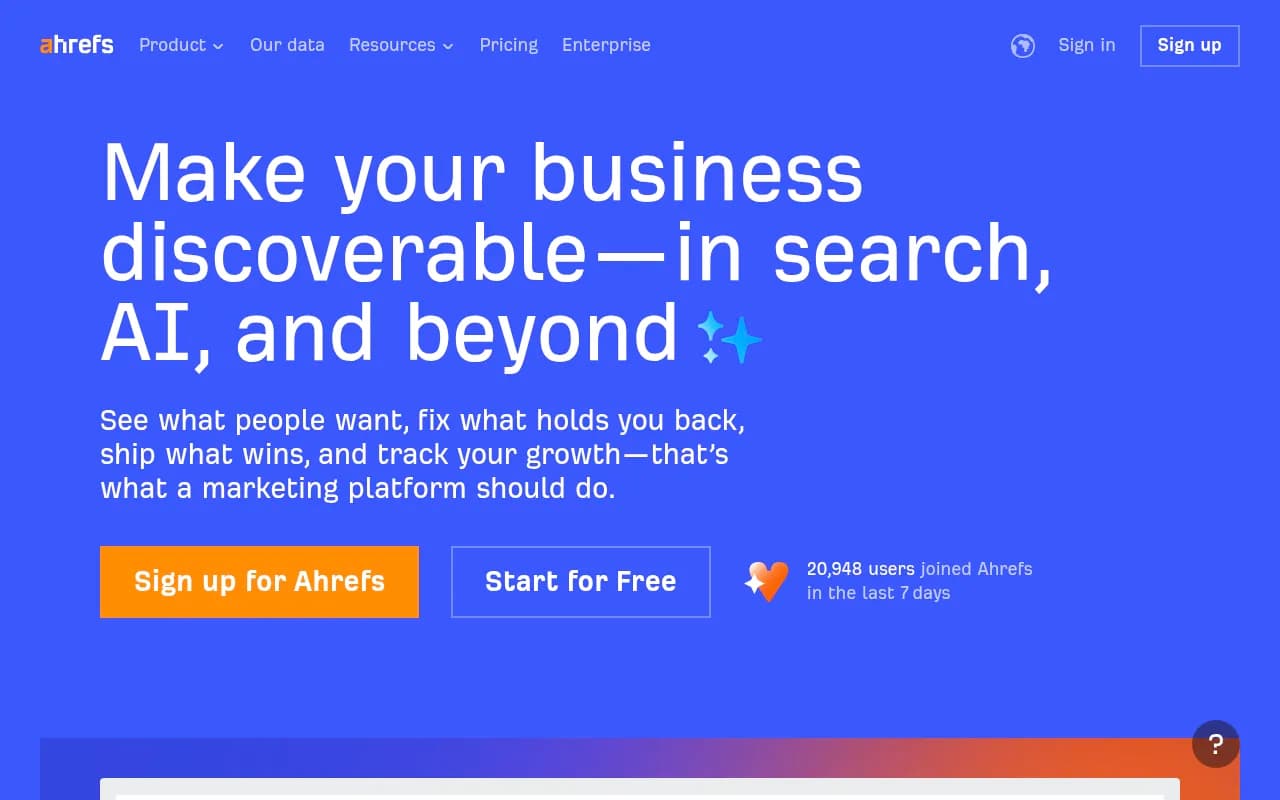
Ahrefs added Brand Radar to its existing suite as an AI visibility layer on top of its traditional SEO toolset. If you're already an Ahrefs subscriber, it's a natural first stop.
What it does well
The pitch is zero setup. You don't have to define prompts from scratch -- Ahrefs pulls from a large existing prompt database and maps your brand against AI-generated answers across platforms like ChatGPT, Perplexity, and Google AI Overviews.
The interface is familiar to anyone who already uses Ahrefs. You can see brand mentions in AI responses, drill into specific prompts, and get a rough sense of where competitors appear.
Where it falls short
The fixed prompt model is a real limitation. You're working with Ahrefs' prompt library, not your own. That means you can't track the specific questions your customers are actually asking, and you can't add prompts based on competitive intelligence or content gaps you've identified.
There's also no AI traffic attribution. You can see that your brand appeared in a response, but you can't connect that appearance to actual website visits or revenue. For a team trying to justify investment in AI search, that's a significant gap.
Reddit from the r/DigitalMarketing community put it bluntly: "The difference in data we saw between Ahrefs Brand Radar and Profound/Promptwatch was crazy." That tracks with what multiple independent reviewers have found -- Brand Radar is a solid bolt-on for existing Ahrefs users, but it's not purpose-built for teams who need depth.
No content generation, no gap analysis, no crawler logs. It monitors. That's it.
Best for
Teams already paying for Ahrefs who want a quick read on AI visibility without adding another tool to their stack. Not the right choice if AI search is a serious strategic priority.
Peec AI
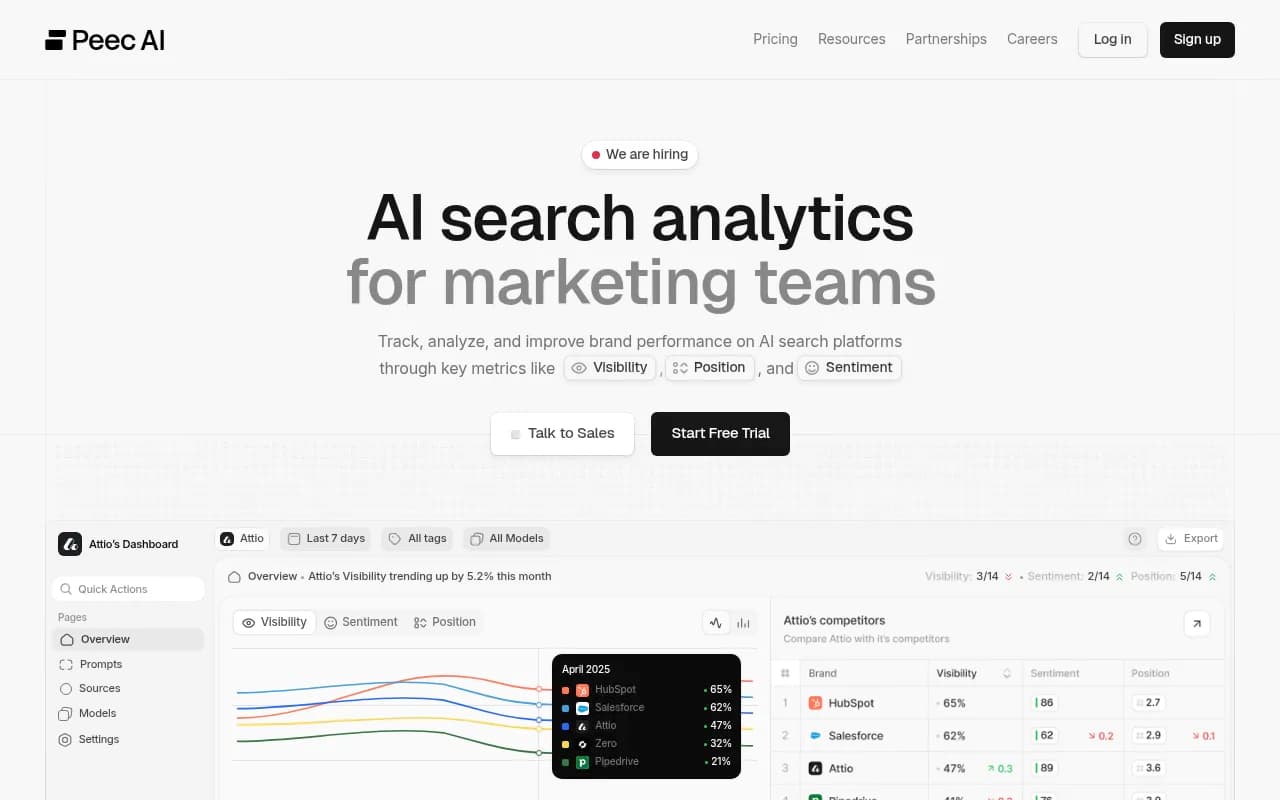
Peec AI is a cleaner, more focused product. It's built specifically for AI visibility monitoring, with a straightforward interface and multi-language support that makes it genuinely useful for international teams.
What it does well
The reporting is clean and easy to read. You can see how your brand appears across AI platforms, compare against competitors, and share reports with clients or stakeholders without a lot of configuration overhead.
At $89/month, it's one of the more affordable options in this space. For agencies managing multiple clients who just need a visibility snapshot, that price point makes sense.
The multi-language support is a real differentiator at this price. If you're tracking AI visibility in German, French, or Spanish markets, Peec handles that reasonably well.
Where it falls short
Peec is monitoring-only. There's no content generation, no answer gap analysis, no crawler logs, and no traffic attribution. You can see that you're invisible for certain prompts, but the tool won't tell you why or what to do about it.
For a team that just needs to report on AI visibility to a client or an executive, that's fine. For a team that wants to actually improve their visibility, Peec leaves you to figure out the next steps on your own.
Best for
Agencies and small teams that need clean, affordable AI visibility reporting. Not the right fit if you need to move from insight to action.
Profound
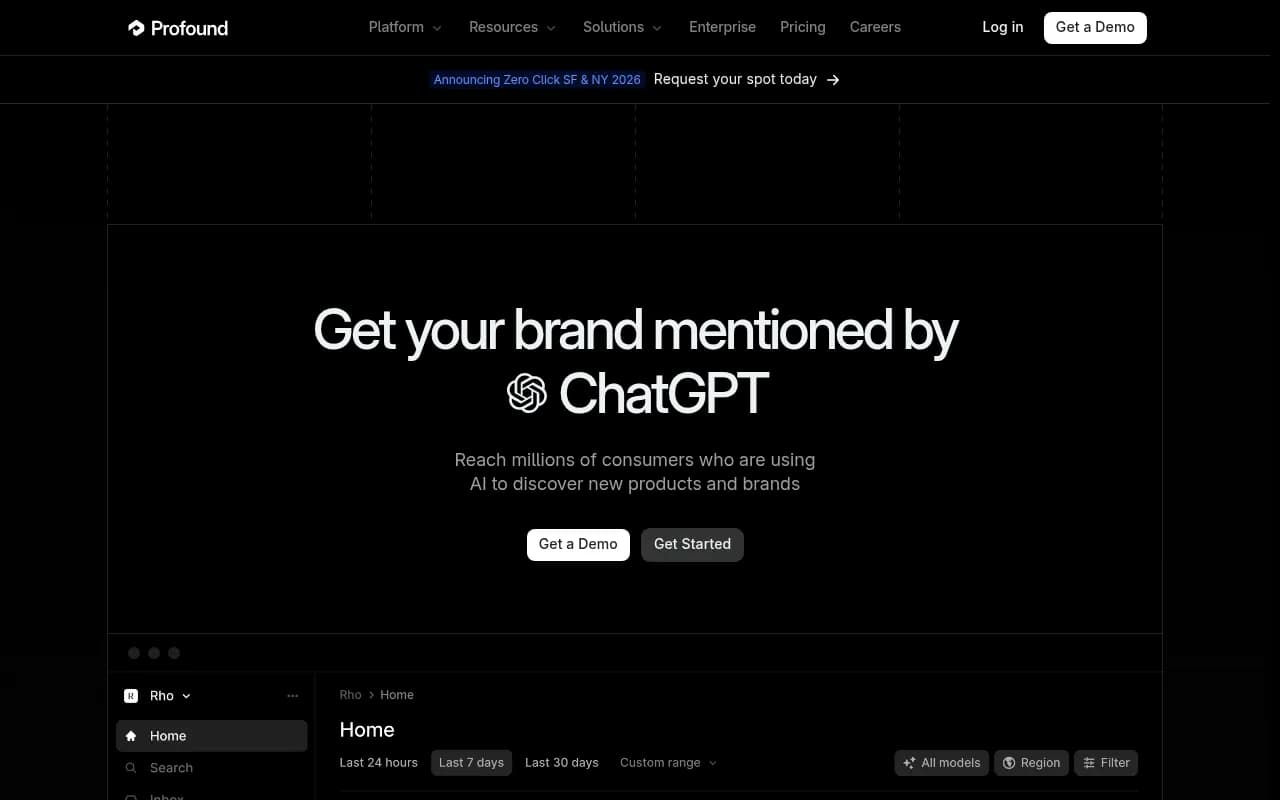
Profound is the enterprise option in this comparison. It's polished, data-rich, and clearly built for larger organizations with dedicated analytics resources.
What it does well
Profound's analytics depth is genuinely impressive. You get detailed breakdowns of how your brand appears across AI models, competitor comparisons, and trend data that helps you understand movement over time.
The platform covers a solid range of AI models and gives you enough granularity to have meaningful conversations about what's driving visibility changes. Enterprise teams with analysts who can dig into the data will find a lot to work with.
Where it falls short
The price is the obvious issue. Profound starts at $499+/month, which puts it out of reach for most mid-market teams. You're paying for analytics sophistication, but the platform is still fundamentally a monitoring and reporting tool.
Like Peec, Profound shows you the data but doesn't help you act on it. There's no built-in content generation, no gap analysis that surfaces specific content you should create, and no Reddit or YouTube tracking to understand where AI models are actually pulling their citations from.
One reviewer on Orchly.ai noted that Profound fits "large enterprises" with "limited workflows" -- which is a polite way of saying it's a dashboard, not an optimization engine.
Best for
Large enterprises with dedicated analytics teams and budget to match. If you need deep reporting and have the internal resources to translate data into action, Profound is solid. If you need the platform to help you take action, look elsewhere.
Promptwatch
Promptwatch takes a different approach from all three competitors above. The core idea is that monitoring alone isn't enough -- you need to find your gaps, create content to fill them, and then verify that the content is actually getting cited.

What it does well
The Answer Gap Analysis is the feature that separates Promptwatch most clearly from the field. It shows you the specific prompts where competitors are appearing and you're not -- and more importantly, it tells you what content your site is missing that would make AI models more likely to cite you.
That gap analysis feeds directly into a built-in AI writing agent that generates articles, listicles, and comparisons grounded in real citation data. Promptwatch has processed over 880 million citations, so when it generates content, it's working from actual data about what AI models cite and why -- not generic SEO templates.
The AI Crawler Logs are another capability that most competitors simply don't offer. You can see in real time which AI crawlers (ChatGPT, Claude, Perplexity, etc.) are hitting your site, which pages they're reading, and whether they're encountering errors. That kind of technical visibility is rare and genuinely useful for diagnosing why certain pages aren't getting cited.
Traffic attribution closes the loop. Through a code snippet, Google Search Console integration, or server log analysis, you can connect AI visibility to actual website traffic and revenue. That's the thing most teams are missing when they try to justify investment in AI search.
Additional capabilities worth noting: Reddit and YouTube tracking (which surfaces discussions that directly influence AI recommendations), ChatGPT Shopping tracking, prompt volume and difficulty scoring, query fan-outs, and competitor heatmaps that show who's winning for each prompt across different LLMs.
Promptwatch monitors 10 AI models: ChatGPT, Perplexity, Google AI Overviews, Google AI Mode, Claude, Gemini, Meta/Llama, DeepSeek, Grok, Mistral, and Copilot.
Where it falls short
The Essential plan ($99/month) limits you to 50 prompts and 5 articles per month, which may feel tight for teams with broad topic coverage. You'll likely need the Professional plan ($249/month) or higher to get meaningful coverage across multiple topics and markets.
It's also a more complex platform than Peec or Brand Radar. There's more to learn and more decisions to make about how to configure your monitoring. That's a reasonable tradeoff for the depth it offers, but it's worth acknowledging.
Best for
Marketing and SEO teams that want to actually improve their AI visibility, not just measure it. Agencies managing clients who need to show results, not just reports. Any brand for which AI search is becoming a meaningful traffic and revenue channel.
Feature comparison
| Feature | Ahrefs Brand Radar | Peec AI | Profound | Promptwatch |
|---|---|---|---|---|
| AI model coverage | ChatGPT, Perplexity, Google AIO, others | Multiple LLMs | Multiple LLMs | 10 LLMs incl. Grok, DeepSeek, Mistral |
| Custom prompts | No (fixed library) | Yes | Yes | Yes |
| Answer gap analysis | No | No | Limited | Yes |
| AI content generation | No | No | No | Yes (built-in agent) |
| AI crawler logs | No | No | No | Yes |
| Traffic attribution | No | No | No | Yes (GSC, snippet, server logs) |
| Reddit/YouTube tracking | No | No | No | Yes |
| ChatGPT Shopping tracking | No | No | No | Yes |
| Prompt volume/difficulty | No | No | Limited | Yes |
| Multi-language | Limited | Yes | Yes | Yes |
| Starting price | Included w/ Ahrefs | $89/mo | $499+/mo | $99/mo |
| Free trial | No | Yes | Yes | Yes |
| Best for | Existing Ahrefs users | Agencies, small teams | Large enterprises | Teams focused on optimization |
The monitoring vs. optimization gap
This is the thing worth sitting with before you make a decision.
Every platform in this comparison will tell you whether your brand appears in AI search results. That's table stakes in 2026. The question is what happens after you see the data.
With Ahrefs Brand Radar, Peec AI, and Profound, you see the data and then you're on your own. You need to figure out what content to create, write it, publish it, and then come back to the dashboard weeks later to see if anything changed.
With Promptwatch, the platform tells you what to create, helps you create it, and then tracks whether it worked. That's a fundamentally different product -- and for teams that are serious about AI search as a channel, it's the difference between a reporting tool and an actual growth lever.
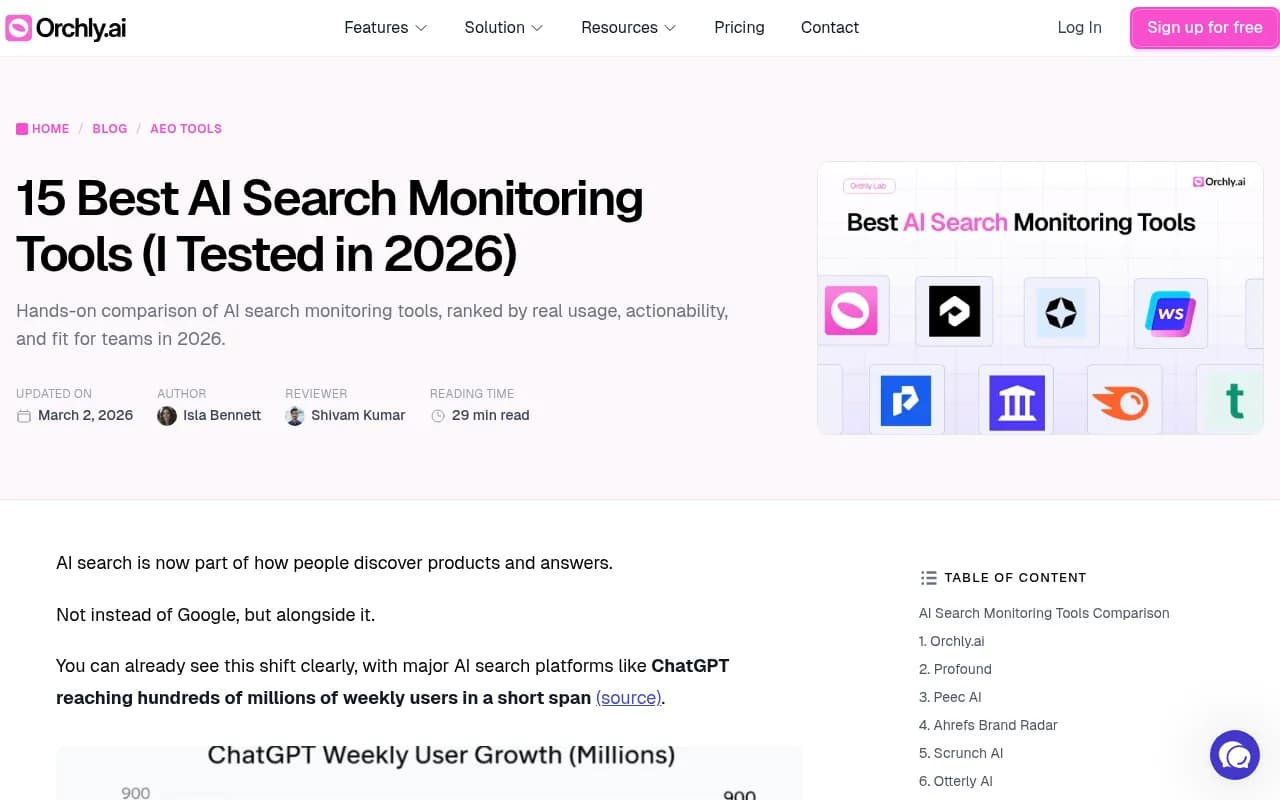
The independent comparison from Orchly.ai captures this well: Profound gets categorized as "limited workflows" despite strong analytics, while monitoring-only tools like Peec are explicitly flagged as "reporting only." The distinction matters.
Which tool should you choose?
The honest answer depends on what you're actually trying to accomplish.
If you're already an Ahrefs subscriber and just want a quick sense of your AI visibility without adding another tool, Brand Radar is the path of least resistance. Don't expect it to drive meaningful improvement, but it's a reasonable starting point.
If you're an agency that needs clean, affordable reporting to show clients where they stand, Peec AI is a solid choice. The price is right and the interface is easy to share.
If you're a large enterprise with a dedicated analytics team and budget to match, Profound gives you the depth of data to run serious analysis. Just be prepared to do the strategy work yourself.
If you want to actually improve your AI visibility -- find the gaps, create the content, track the results -- Promptwatch is the only platform in this comparison built to do that end-to-end. The 6,700+ brands using it (including Booking.com and Center Parcs) aren't there for the dashboards. They're there because the platform helps them show up where their customers are looking.
Most teams in 2026 don't have the luxury of monitoring without acting. If that's where you are, the platform you choose should be able to do both.