Key takeaways
- Google AI Overviews now appear on 48% of all queries (up from 31% a year ago), and organic CTR drops 34-61% when they do
- 76% of AI Overview citations come from pages already ranking in the top 10, but 46.5% of cited URLs rank outside the top 50 -- so ranking alone doesn't determine citation
- Content freshness matters more than most people expect: pages under 3 months old are 3x more likely to be cited
- "Extractable" content structure (clear answers, schema markup, direct formatting) is a stronger predictor of citation than domain authority alone
- Cited brands earn 35% more clicks than uncited ones, and AI Overview traffic converts at roughly 5x the rate of standard organic traffic
Google's AI Overviews have been live long enough now that the panic has settled and the data has started to tell a clearer story. The early days were messy -- sources rotated constantly, citations felt almost random, and nobody could quite figure out what Google was optimizing for. In 2026, that picture has sharpened considerably.
What the citation patterns reveal is both reassuring and inconvenient. Reassuring because there are real, learnable signals that predict citation. Inconvenient because some of those signals have nothing to do with traditional SEO.
Let's go through what we actually know.
How big AI Overviews have become (and why it matters now)
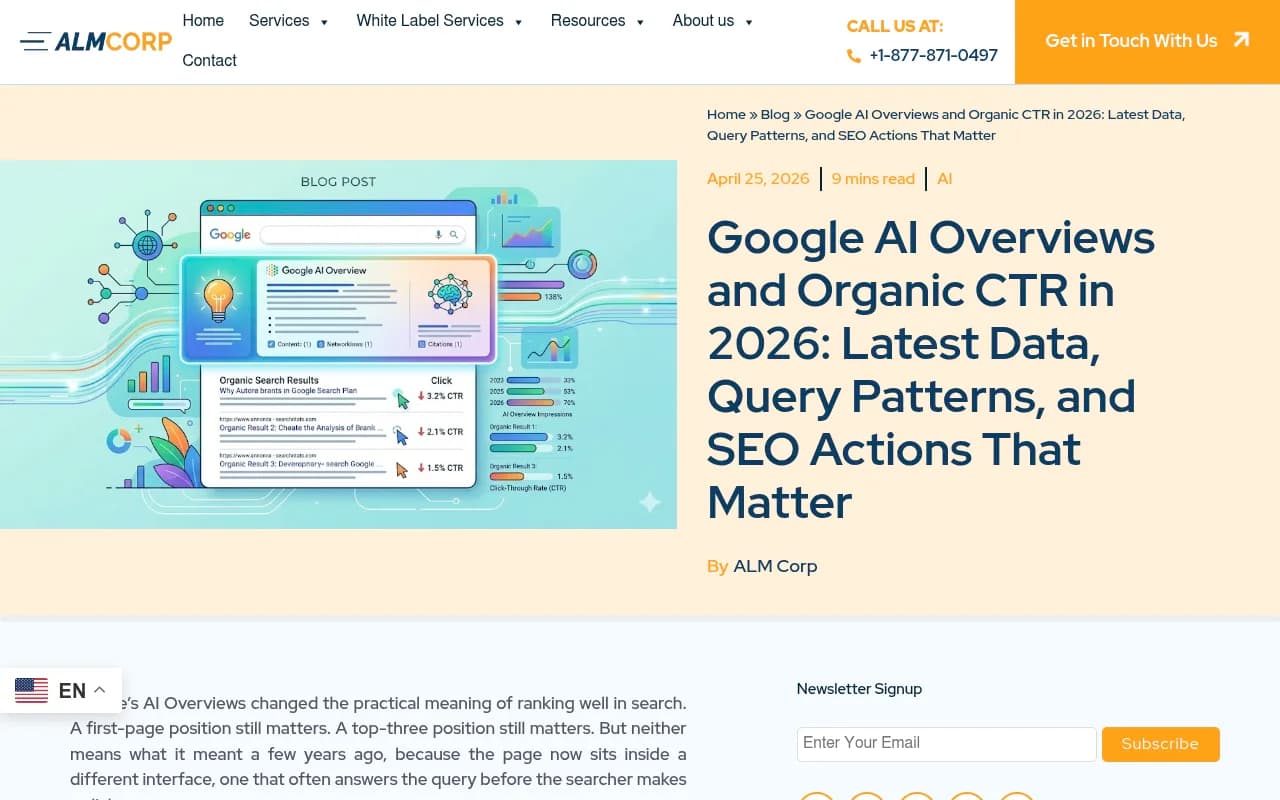
AI Overviews appear on 48% of all Google queries as of April 2026, up from 31% in February 2025. That's a 58% increase in twelve months. They reach roughly 2 billion users monthly.
On desktop, AI Overviews consume about 42% of screen space. On mobile, it's 48%. That means for nearly half of all searches, the traditional blue links have been pushed below the fold before a user even starts scrolling.
The traffic math is brutal for uncited pages. Organic CTR drops between 34.5% and 61% when an AI Overview appears. A study from Seer Interactive analyzing 53 brands, 5.47 million tracked queries, and 2.43 billion organic impressions found this effect is consistent across industries, though the severity varies by query type.
The flip side is real too. Brands cited inside AI Overviews earn 35% more clicks than uncited competitors. And the traffic quality is striking: AI Overview visitors convert at 14.2% compared to 2.8% for standard organic traffic. That's a 5x conversion premium.
So the question isn't whether to care about AI Overview citations. It's how to earn them.
The citation selection logic: what Google is actually doing
Google's AI Overview system doesn't work like a ranking algorithm in the traditional sense. It's synthesizing an answer from multiple sources, then deciding which sources to surface as citations. Those are two different decisions, and understanding both matters.
Ranking helps, but it's not sufficient
The data here is genuinely surprising. 76% of AI Overview citations come from pages already ranking in the top 10 for that query. That sounds like "just rank well and you'll be cited." But 46.5% of cited URLs rank outside the top 50. Nearly half of citations go to pages that traditional ranking metrics would have written off.
What this tells you: Google is pulling from a broader pool than your organic rank suggests. A page that ranks 60th for a query can still be cited if it answers a specific sub-question better than anything in the top 10.
"Extractable" content is the real differentiator
This is the concept that keeps coming up in 2026 research, and it's worth sitting with. Google's AI system needs to pull a clean, usable answer from your page. If your content buries the answer in three paragraphs of preamble, or structures information in a way that's hard to parse programmatically, you won't be cited -- even if you rank first.
Extractable content has a few consistent characteristics:
- Direct answers appear early in the section, not after lengthy context-setting
- Headers accurately describe what follows (not clever or vague)
- Lists and tables are used where the content is genuinely list-like or comparative
- Each section can stand alone as an answer to a specific question
- Schema markup is present to reduce ambiguity about what the content means
Schema.org markup in particular has become more important than it was two years ago. When you tell Google's AI exactly what type of content a section contains -- a FAQ, a how-to, a definition -- you reduce the interpretive work the model has to do. That speeds up citation decisions and reduces the chance your content gets misread.
Freshness as a ranking signal for citations
Content under 3 months old is 3x more likely to be cited in AI Overviews than older content. This is a bigger deal than it sounds.
Traditional SEO has always valued freshness for certain query types, but a 3x citation premium for recent content is a strong signal. Google's AI system appears to be actively preferring sources that reflect current information, possibly because it's been burned by citing outdated content in the past.
The practical implication: regularly updated pages (not just "last updated" timestamp changes, but actual content refreshes) have a real citation advantage. If you have a page that was authoritative two years ago but hasn't been touched since, it's losing ground to newer competitors.
Real-time fact verification and authority signals
According to research from Wellows, content with verifiable, accurate facts gets cited at significantly higher rates. Google's AI cross-checks claims against authoritative databases in real time, and content that passes those checks earns citations at a rate roughly 89% higher than content with unverifiable or inaccurate claims.
This has a direct implication for how you write. Vague claims ("many experts believe," "studies suggest") are harder to verify than specific, sourced statements. Citing primary sources, including data with clear provenance, and making falsifiable claims all improve your citation probability.
Which query types trigger AI Overviews (and which don't)
Not all queries get AI Overviews, and the distribution matters for how you prioritize your content strategy.
Informational queries ("how does X work," "what is Y," "why does Z happen") trigger AI Overviews most frequently. These are also the queries where organic CTR takes the biggest hit, because the AI Overview often fully answers the question without requiring a click.
Comparison queries ("X vs Y," "best tools for Z") trigger AI Overviews at a high rate too, but the citation behavior is different. Google tends to cite multiple sources for comparison queries, which means more opportunities to be included. The content format that wins here is structured comparison content -- tables, clear criteria, specific tradeoffs.
Transactional queries ("buy X," "X pricing," "X near me") trigger AI Overviews less frequently, and when they do, the format is often different (product carousels, local results). These queries are less affected by the CTR drop.
The queries where AI Overviews appear least: navigational queries (people looking for a specific site), highly specific long-tail queries with low volume, and queries where Google doesn't have enough confident source material.
The citation concentration problem
Only 274,455 domains have appeared in AI Overviews out of 18.4 million indexed domains. That's a striking concentration -- roughly 1.5% of indexed domains are getting any AI Overview visibility at all.
This isn't entirely surprising. Google's AI system is conservative about which sources it trusts, and it's drawing heavily from established, authoritative domains. But it does mean that most websites are currently invisible in AI Overviews, not because their content is bad, but because they haven't done the work to signal trustworthiness in the ways the AI system recognizes.
The signals that seem to matter for getting into that 1.5%:
- Consistent topical coverage (not one-off articles, but genuine depth on a subject area)
- External citations and links from authoritative sources
- Clear authorship signals (named authors, author bios, credentials)
- Technical cleanliness (fast pages, proper indexing, no crawl errors)
- Schema markup that accurately describes content type and authorship
How citation patterns have stabilized in 2026
Early AI Overview results were notoriously volatile. Sources rotated frequently, and a page that was cited one week might disappear the next. According to research from Stackmatix, citation patterns have become more predictable in 2026, with sources staying cited for longer periods once they earn a spot.
This stabilization is good news for content investment. If you do the work to get cited, the citation is more likely to stick. The flip side: if a competitor earns a citation for a key query, they're harder to displace than they were in 2025.
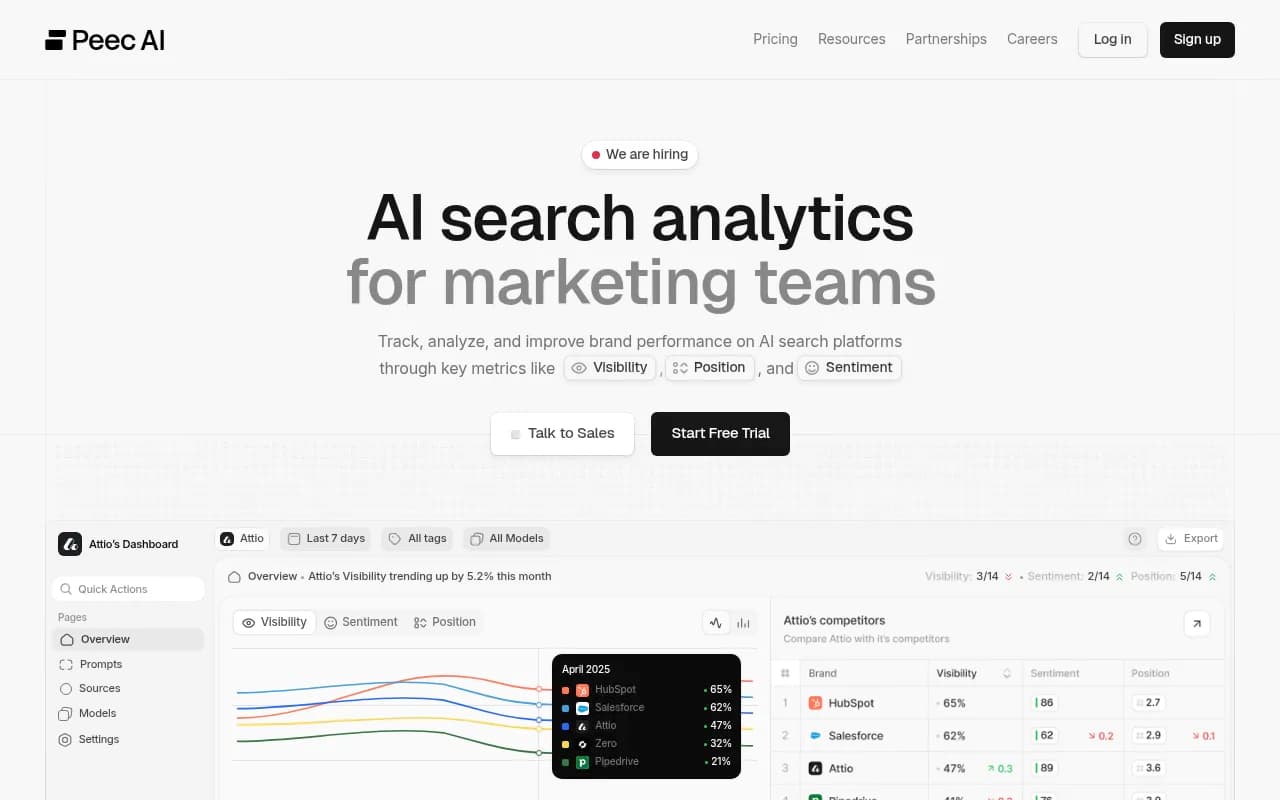
The stabilization also means that monitoring your citation status has become more meaningful. You can now track which pages are being cited, for which queries, and by which AI models -- and use that data to understand what's working and what isn't. Tools like Promptwatch are built specifically for this kind of tracking, showing you page-level citation data across multiple AI models and helping you identify which content gaps to close.

What the data says about content structure
The research consistently points to a few structural patterns that correlate with citation:
Direct answer format
Pages that lead with a direct answer to the query question, then expand with supporting detail, get cited more often than pages that build to the answer. This is the "inverted pyramid" structure that journalists have used for a century, and it turns out AI systems prefer it too.
Appropriate use of lists and tables
Lists work well for enumerable content (steps, features, options). Tables work well for comparisons. But overusing these formats -- turning everything into a bullet list regardless of whether the content is actually list-like -- doesn't help and may hurt. Google's AI appears to read formatting as a signal about content type, so mismatched formatting creates noise.
Question-based headers
Headers phrased as questions ("What does X do?", "How does Y work?") perform better for citation than declarative headers ("Overview of X," "Y Explained"). This makes sense: the AI system is trying to match content to user questions, and question-format headers make that matching easier.
Appropriate length
There's no magic word count for AI Overview citations. Cited pages range from 500-word focused answers to 5,000-word comprehensive guides. What matters more than length is whether the relevant section is self-contained and extractable. A 500-word page that directly answers a specific question will outperform a 3,000-word page where the answer is buried.
The competitive reality: what this means for your strategy
The data paints a clear picture of where the opportunity is and where it isn't.
Where traditional SEO still matters: Transactional queries, navigational queries, and long-tail informational queries with low AI Overview rates. For these, ranking well in organic results still drives meaningful traffic.
Where GEO (Generative Engine Optimization) is now essential: High-volume informational and comparison queries where AI Overviews appear consistently. For these, ranking without citation is increasingly a losing position.
The content gap opportunity: Because only 1.5% of indexed domains are currently cited in AI Overviews, there's a real first-mover advantage for brands that invest in citation-optimized content now. The domains that build citation authority in 2026 will be harder to displace as patterns stabilize further.
The practical workflow that's emerging looks like this: identify which queries in your space trigger AI Overviews, find the specific sub-questions those overviews are answering, check whether your content addresses those sub-questions in an extractable format, and create or update content where gaps exist.
For tracking which queries you're being cited for (and which you're missing), platforms built for AI visibility monitoring are useful here. Promptwatch, for example, tracks citations across 10 AI models including Google AI Overviews, and its Answer Gap Analysis shows exactly which prompts competitors are visible for that you're not.
Comparison: what drives traditional rankings vs. AI Overview citations
| Signal | Traditional SEO weight | AI Overview citation weight |
|---|---|---|
| Domain authority / backlinks | High | Moderate |
| Keyword placement | High | Low-moderate |
| Content freshness | Moderate | High (3x citation premium for <3 months) |
| Schema markup | Low-moderate | High |
| Answer extractability | Low | Very high |
| Factual accuracy / verifiability | Moderate | High |
| Topical depth / authority | High | High |
| Page speed / technical health | Moderate | Moderate |
| Named authorship / E-E-A-T signals | Moderate | High |
| Query-specific answer format | Low | High |
The divergence between these two columns is what makes AI Overviews a genuinely different optimization challenge. You can rank first and still not be cited. You can rank 60th and be cited. The signals that matter are different enough that treating AI Overview optimization as just another SEO task will leave you underperforming.
Tools worth knowing for AI Overview optimization
If you're taking this seriously, a few categories of tools are relevant:
For tracking AI visibility and citations across models:

For content optimization and structure:
For technical SEO and crawl health (which affects whether AI crawlers can read your pages at all):
The bottom line
The 2026 citation data makes one thing clear: Google's AI Overview system is selecting sources based on a different set of criteria than traditional organic ranking. Freshness, extractability, factual verifiability, and schema markup matter more than they ever did. Domain authority and keyword placement matter less than they used to.
The brands winning citations right now are the ones that have figured out how to write content that answers specific questions directly, structures information in ways that AI systems can parse cleanly, and keeps that content current. That's not a fundamentally different approach to content -- it's a more disciplined version of what good content has always been.
The 48% query coverage number will keep growing. The brands that build citation authority now will have a structural advantage as that coverage expands. The ones waiting for the dust to settle may find the patterns have hardened against them by the time they start.