Key takeaways
- AI search engines now account for roughly 15% of website traffic, with ChatGPT alone responsible for 56% of AI referral visits -- yet most brands have zero visibility into how they appear in these results.
- Enterprise monitoring tools vary wildly: some only show you data, others help you fix the gaps. Knowing which category a tool falls into before you buy matters a lot.
- The metrics that matter in AI search are different from traditional SEO: "share of model," citation frequency, sentiment score, and answer inclusion rate are replacing click-through rate as the primary KPIs.
- 93.7% of links in Google AI Overviews come from pages outside the top 10 organic results, which means your traditional SEO wins don't automatically translate to AI visibility.
- The most valuable platforms close the full loop: find gaps, generate content to fill them, then track whether AI models start citing you.
Something shifted in 2024 and most marketing teams didn't notice until their organic traffic started behaving strangely. Users weren't clicking through to websites anymore -- they were getting answers directly from ChatGPT, Perplexity, or Google's AI Overview. The full story, synthesized and delivered, no click required.
By 2026, that shift is no longer subtle. AI search engines process billions of queries daily. ChatGPT alone drives 56% of AI referral traffic. Gemini accounts for 18%, Perplexity 8%. And if your brand isn't showing up in those AI-generated answers, you're effectively invisible to a growing chunk of your audience -- even if you rank #1 on Google.
The problem is that traditional analytics won't tell you this is happening. Your rank tracker shows green. Your traffic looks fine. But your brand is being omitted from AI responses, or worse, described inaccurately, while a competitor gets cited every time someone asks the question you should own.
That's the gap enterprise AI search monitoring tools are built to close.
What enterprise AI search monitoring actually means
AI search monitoring is the practice of tracking how your brand, products, and content appear in AI-generated responses across platforms like ChatGPT, Claude, Gemini, Perplexity, Google AI Overviews, Grok, and others.
It's not the same as traditional rank tracking. There are no fixed positions. AI models produce probabilistic outputs -- the same query asked twice might yield different answers, different citations, different framing. Monitoring this requires running prompts repeatedly, across models, across geographies, and across personas.
For enterprise teams, the stakes are higher. You're managing multiple products, multiple markets, multiple languages, and often multiple brands. You need data that's consistent, comparable, and actionable -- not just a dashboard that tells you your "AI score" went up 3 points last week.
The tools that actually serve enterprise needs tend to do several things well:
- Run prompts at scale across multiple LLMs simultaneously
- Track citation sources (which pages, which domains, which third-party content AI models pull from)
- Monitor competitor visibility alongside your own
- Flag sentiment issues and inaccurate brand descriptions
- Provide some path to fixing what they find, not just reporting it
Let's look at the landscape.
The monitoring-only vs. optimization divide
Before comparing specific tools, it's worth naming the most important fault line in this market: the difference between tools that monitor and tools that optimize.
Most platforms in this space are monitoring dashboards. They show you where you appear, how often, and how that compares to competitors. That's genuinely useful data. But it leaves your team to figure out what to do next -- which prompts to target, what content to create, how to fix the gaps.
A smaller group of platforms go further. They analyze the gaps between your visibility and your competitors', generate content recommendations or actual content, and track whether those changes lead to improved citation rates. That full loop -- find gaps, fix them, track results -- is what separates an optimization platform from a tracker.
This distinction matters enormously for enterprise buyers. If you're a team of one trying to improve AI visibility for a single brand, a monitoring-only tool might be fine. If you're running a marketing team at a company with multiple product lines, you need something that helps you prioritize and act, not just observe.
How to evaluate these tools: the five dimensions that matter
When assessing any AI search monitoring platform for enterprise use, these are the questions worth asking:
Platform coverage: Does it monitor all the LLMs your customers actually use? ChatGPT, Perplexity, Google AI Overviews, Gemini, Claude, Grok, and Copilot are the minimum bar for 2026. Tools that only cover two or three are leaving blind spots.
Prompt depth: Can you define custom prompts that match how your customers actually search? Fixed prompt libraries are a shortcut that often miss the queries that matter most to your specific business.
Monitoring freshness: Daily updates are the minimum for enterprise use. Some tools run weekly or on-demand, which is too slow when AI model behavior changes frequently.
Actionability: Does the tool tell you what to do, or just what's happening? Look for gap analysis, content recommendations, or content generation built into the platform.
Reporting and integrations: Enterprise teams need data they can share. Looker Studio integrations, API access, and white-label reporting matter for agencies and larger organizations.
The leading enterprise platforms in 2026
Full-stack optimization platforms
These tools go beyond monitoring to help you actually improve your AI visibility.
Promptwatch is the platform most enterprise teams end up landing on when they need the full picture. It monitors 10 AI models (ChatGPT, Perplexity, Google AI Overviews, Google AI Mode, Claude, Gemini, Meta/Llama, DeepSeek, Grok, Mistral, Copilot), but the differentiator is what happens after the monitoring. Answer Gap Analysis shows exactly which prompts competitors rank for that you don't -- not as a vague summary, but as specific content gaps your site is missing. Content Agents then generate articles, listicles, and briefs grounded in that prompt data. And AI Crawler Logs show you in real time which pages AI crawlers are reading, how often they return, and when a crawled page moves to an actual citation. Most competitors don't have this last piece at all.

Profound takes a similar enterprise-first approach, with strong historical data and competitive benchmarking. It's a capable platform, though it sits at a higher price point and lacks some of the content generation and Reddit/YouTube tracking that Promptwatch covers.
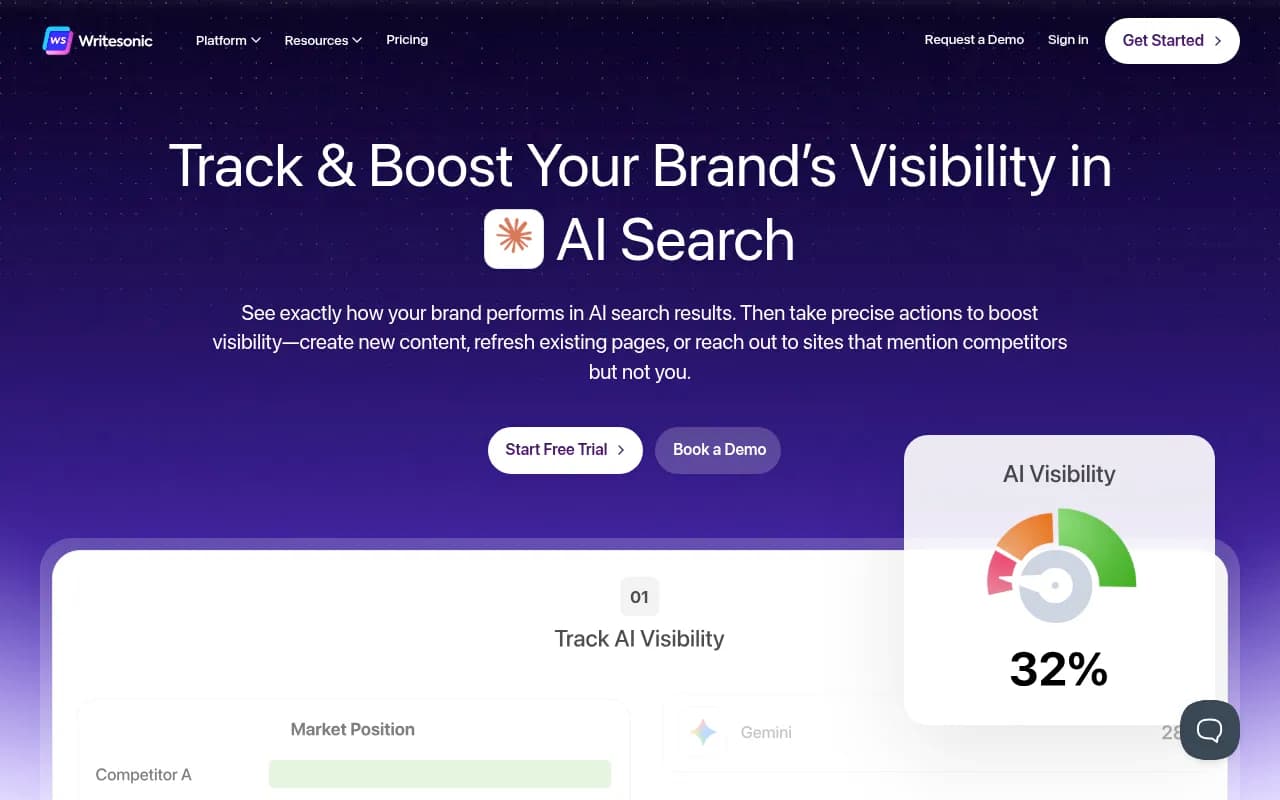
Writesonic has expanded from its AI writing roots into a full AI search visibility platform. It tracks, optimizes, and ranks across multiple LLMs, making it a reasonable option for teams that want content creation and monitoring in one tool.
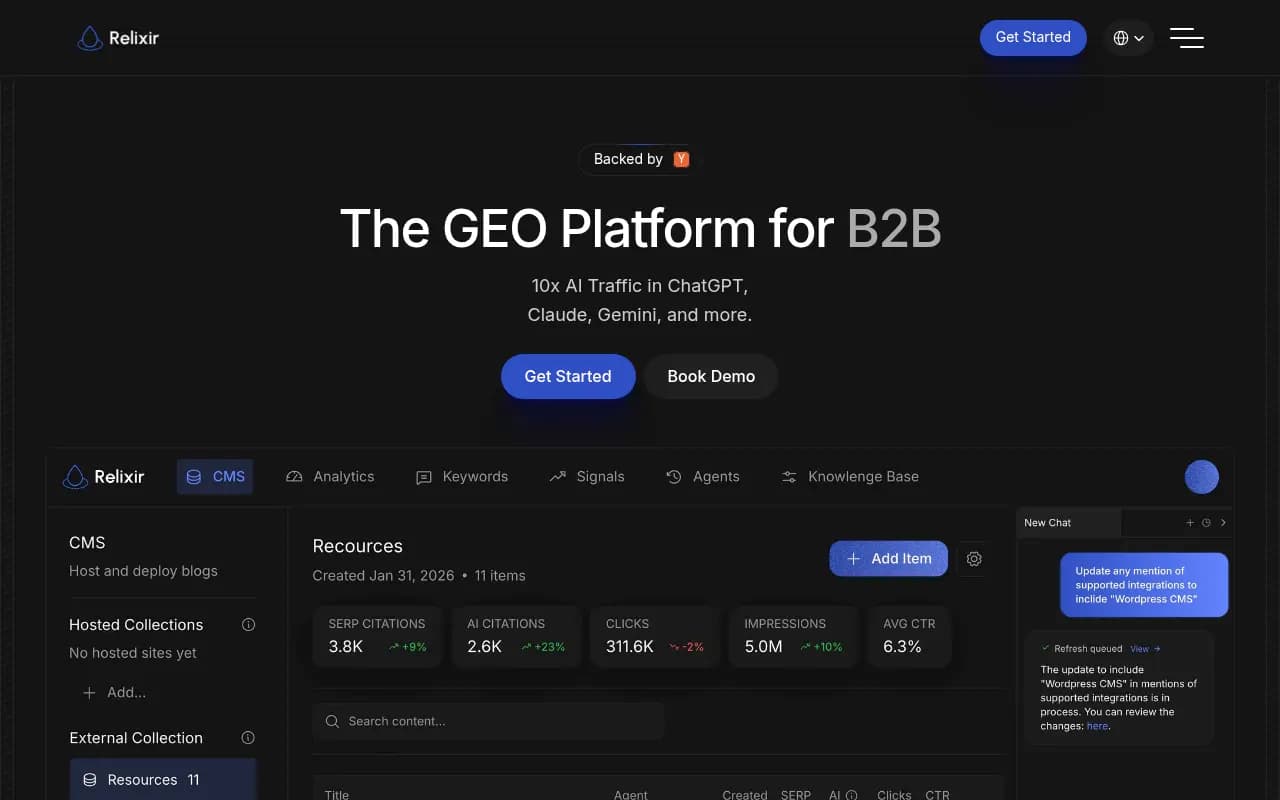
Relixir is an all-in-one GEO platform with AI content generation built in, worth considering for teams that want a newer entrant with strong content automation.
Monitoring-focused platforms
These tools are strong at tracking and reporting, but leave the optimization work to your team.
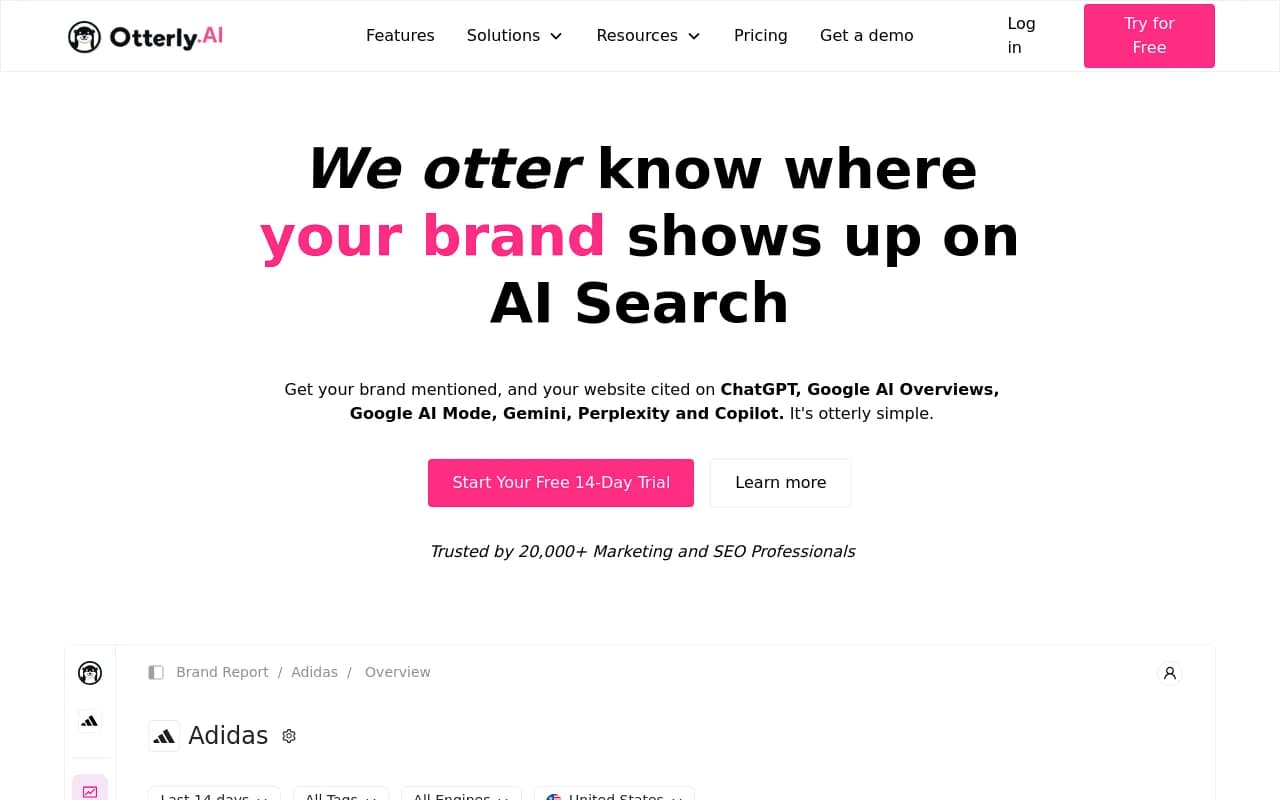
Otterly.AI was one of the first purpose-built AI search monitoring tools and remains a solid choice for teams that want clean, accessible monitoring without a steep learning curve. It covers the major LLMs, tracks brand mentions and citations, and works well for smaller teams or those just starting to build an AI visibility practice.
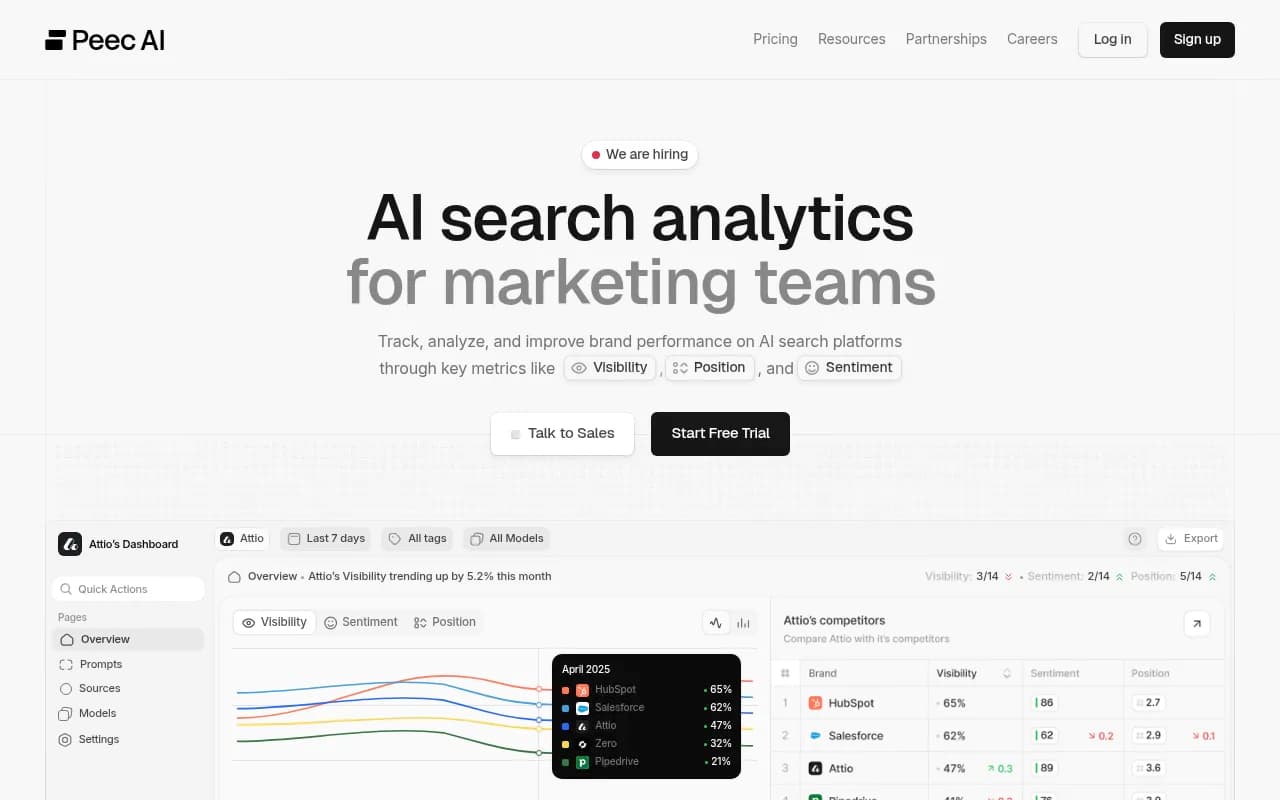
Peec AI is another monitoring-first platform. It's straightforward and affordable, but doesn't offer content gap analysis or generation capabilities.
Athena HQ covers 8+ AI search engines and provides solid competitive benchmarking. Like Peec AI, it's monitoring-focused -- useful for understanding where you stand, less useful for knowing what to do about it.
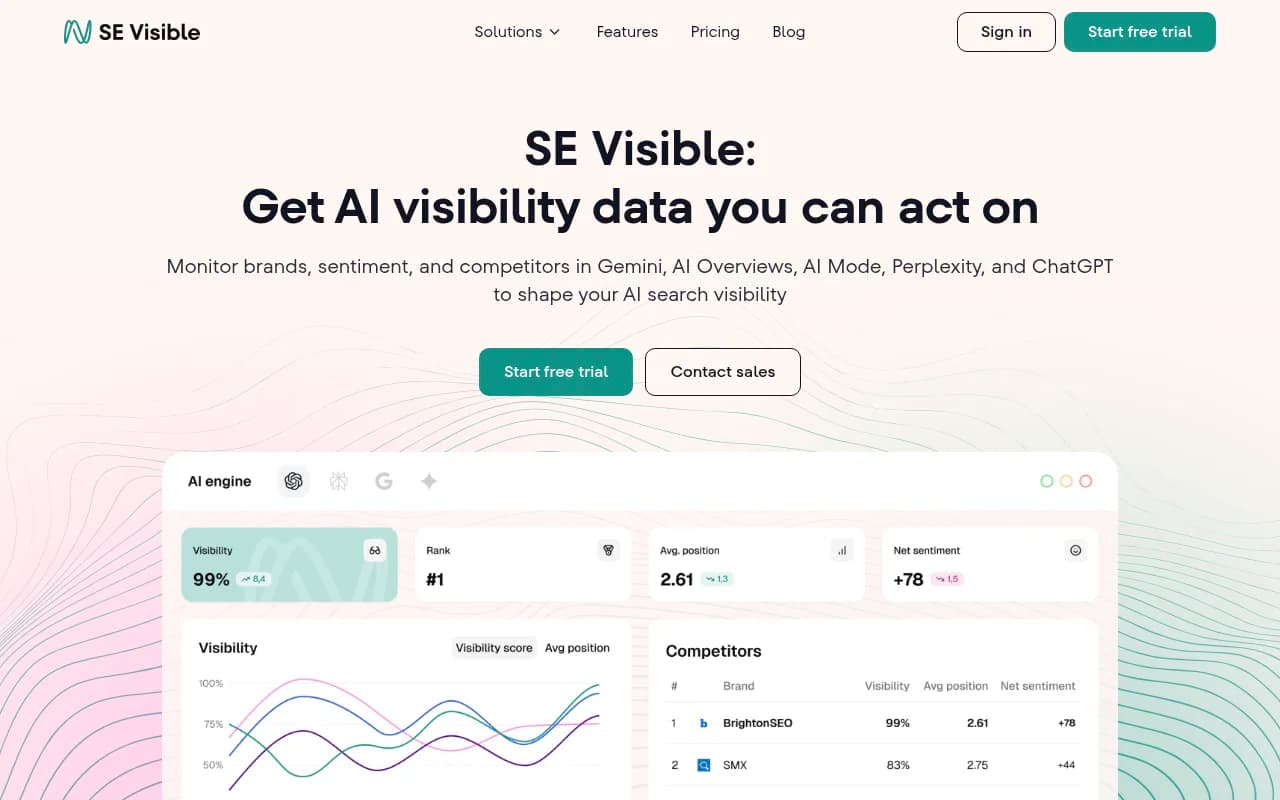
SE Ranking's AI visibility module (SE Visible) is worth mentioning for teams already in the SE Ranking ecosystem. It adds AI search tracking to a traditional SEO workflow without requiring a separate tool.
Nightwatch combines traditional SEO rank tracking with LLM monitoring, which makes it a practical choice for teams that don't want to manage two separate platforms.
Enterprise SEO platforms with AI visibility add-ons
Several established SEO platforms have added AI visibility features to their existing suites.
BrightEdge and Conductor both offer AI search visibility tracking as part of their broader enterprise SEO platforms. If your organization is already deeply invested in one of these tools, the AI visibility module is worth activating. But neither was built from the ground up for AI search, and it shows in the depth of their prompt customization and gap analysis.
Semrush has added AI overview tracking, but uses fixed prompts rather than custom ones -- a significant limitation for enterprise teams with specific product categories or niche queries.
Ahrefs Brand Radar tracks brand mentions in AI search, but similarly relies on fixed prompts and doesn't offer AI traffic attribution.
Specialized and niche tools
Brand24 is primarily a social listening tool, but its AI-powered mention tracking across 25M+ sources can complement a dedicated AI search monitoring platform, particularly for tracking how your brand is discussed in the sources AI models pull from.
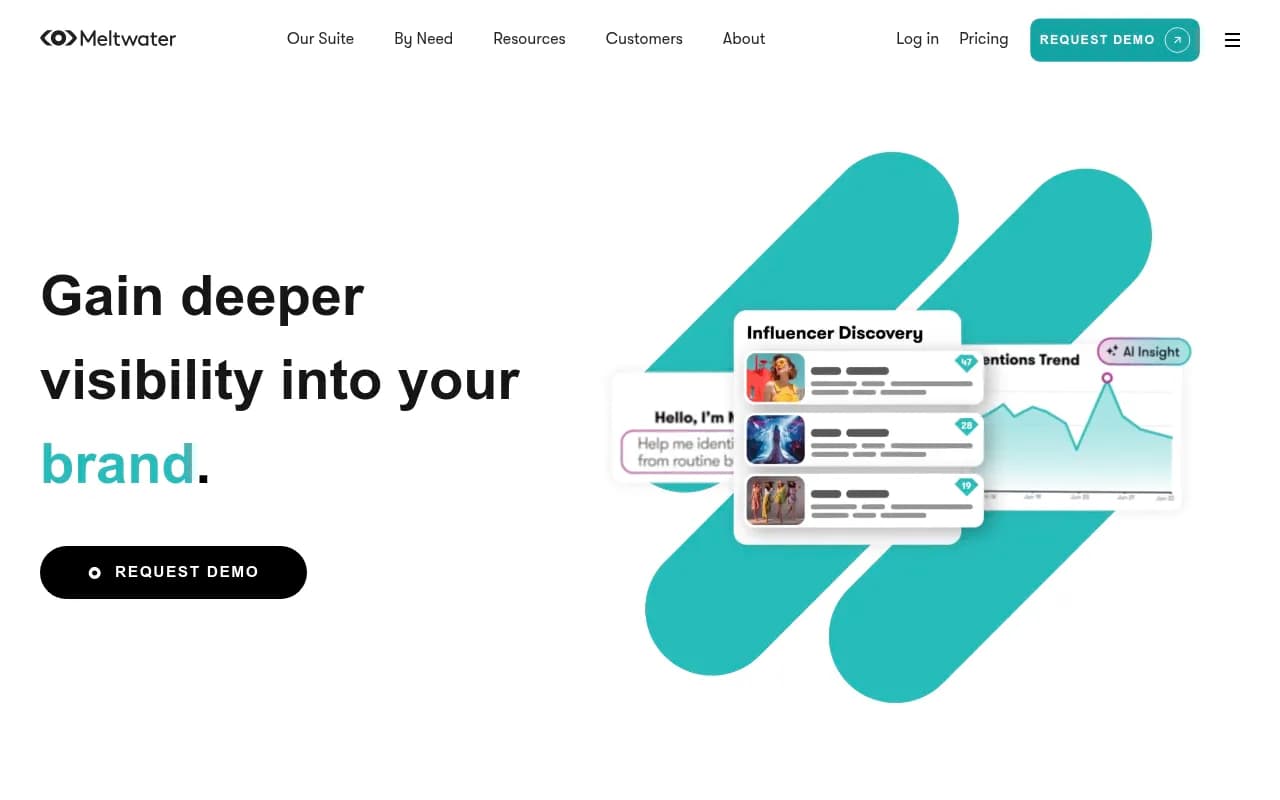
Meltwater offers broad media and consumer intelligence, including some LLM tracking capabilities, and works well as a complement to a dedicated GEO platform for enterprise teams that need comprehensive brand monitoring across all channels.
Scrunch AI focuses specifically on tracking and optimizing how AI assistants describe and recommend your brand.
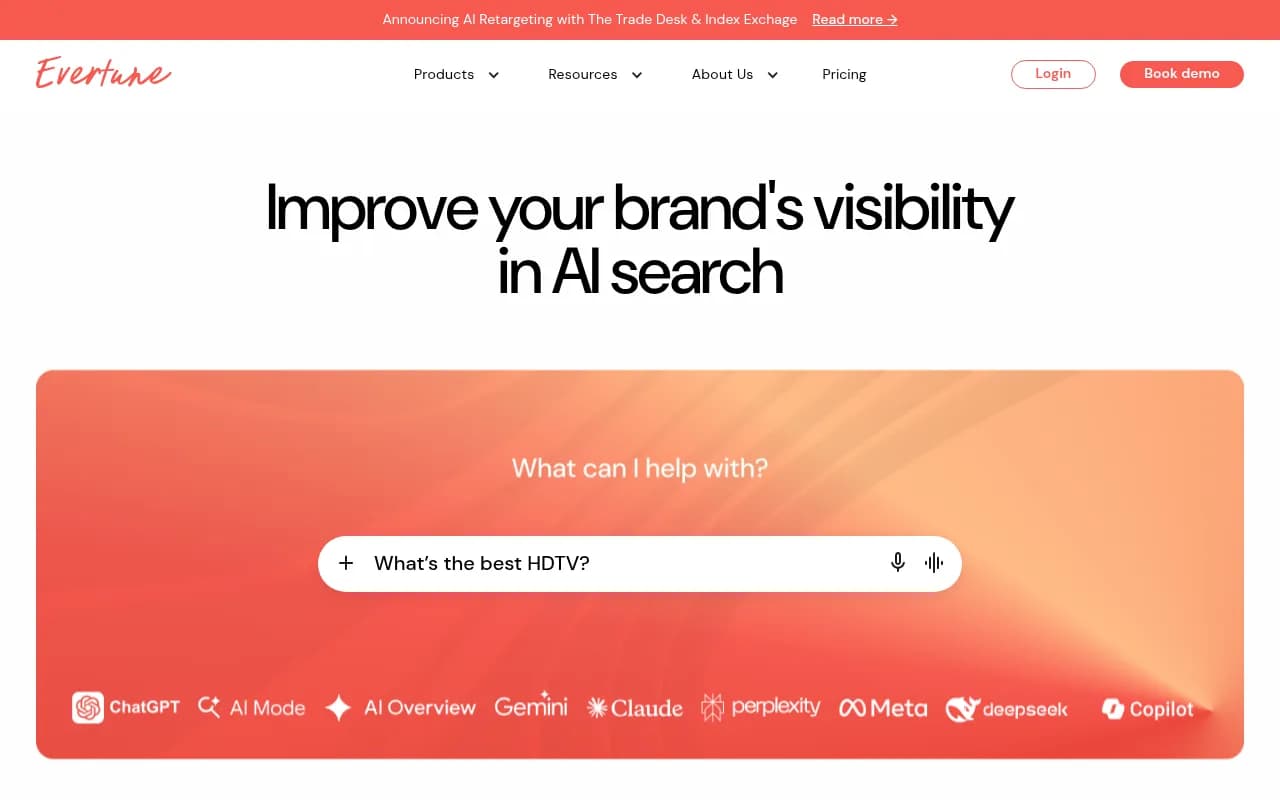
Evertune positions itself as an enterprise GEO platform trusted by larger brands, with a focus on controlling how AI models describe your company.
Feature comparison: what each tier actually offers
| Capability | Full-stack (e.g. Promptwatch) | Monitoring-only (e.g. Otterly, Peec AI) | Enterprise SEO add-ons (e.g. Semrush, BrightEdge) |
|---|---|---|---|
| Multi-LLM coverage (10+ models) | Yes | Partial (4-6 models) | Partial |
| Custom prompt tracking | Yes | Yes | Fixed prompts only |
| Answer gap analysis | Yes | No | No |
| Content generation | Yes | No | No |
| AI crawler logs | Yes | No | No |
| Citation source tracking | Yes | Partial | Partial |
| Reddit/YouTube insights | Yes | No | No |
| ChatGPT Shopping tracking | Yes | No | No |
| Traffic attribution | Yes | No | No |
| Multi-language/region | Yes | Partial | Partial |
| API access | Yes | Limited | Yes |
| Pricing (entry point) | ~$99/mo | ~$49-99/mo | Bundled with SEO suite |
The metrics you should actually be tracking
Traditional SEO metrics -- rankings, CTR, impressions -- don't map cleanly to AI search. Here's what to measure instead:
Share of model: What percentage of relevant prompts does your brand appear in, across each AI platform? This is the AI equivalent of share of voice.
Citation frequency: How often do AI models cite your specific pages? Which pages get cited most, and which are being ignored despite ranking well in traditional search?
Answer inclusion rate: When a user asks a question your brand should answer, does the AI include you in the response? This is different from citation -- you can be cited without being recommended.
Sentiment score: When AI models mention your brand, is the framing positive, neutral, or negative? Inaccurate or negative AI descriptions can be more damaging than simply being absent.
Competitor gap: Which prompts are competitors visible for that you're not? This is where the actual optimization work starts.
Crawl-to-citation lag: How long does it take for AI crawlers to discover new content and start citing it? Tools with crawler log access (like Promptwatch) can show you this timeline explicitly.
How to build an enterprise AI search monitoring program
Getting the tool is step one. Using it effectively is a different challenge. Here's a practical framework:
Step 1: Define your prompt universe
Start by mapping the questions your customers actually ask. These aren't keywords -- they're full natural-language queries. "What's the best project management software for remote teams?" not "project management software." Work with your sales and customer success teams to surface the real questions buyers ask before they purchase.
For enterprise teams, this prompt universe might run to hundreds of queries across multiple product lines, personas, and geographies.
Step 2: Baseline your current visibility
Run your prompt set through your monitoring platform and establish a baseline. Where do you appear? Where don't you? How does that compare to your top three competitors? Document this before you make any changes -- you need a before state to measure against.
Step 3: Prioritize gaps by business impact
Not all gaps are equal. A prompt with high query volume in a category where you have a strong product but no AI visibility is a high-priority target. A prompt in a category you don't compete in is noise. Use prompt volume data and difficulty scores (available in platforms like Promptwatch) to prioritize where to focus first.
Step 4: Create content that fills the gaps
This is where most teams get stuck. They have the data but not the bandwidth to act on it. The most efficient approach is to use AI-assisted content generation grounded in your prompt data -- not generic SEO content, but articles and pages that directly answer the specific questions AI models are exposing as gaps. Some platforms generate this content for you; others give you briefs that your team or agency executes.
Step 5: Track the results
After publishing new content, monitor how long it takes for AI crawlers to discover it, and whether citation rates improve for the targeted prompts. This feedback loop is what turns monitoring into optimization. Expect a lag of several weeks to a few months before new content starts appearing in AI responses -- AI models don't update in real time.
What to watch for in enterprise contracts
A few things that often get overlooked when enterprise teams evaluate these platforms:
Prompt limits: Most tools price by the number of prompts you can track. Enterprise teams often underestimate how many prompts they need once they start mapping their full product portfolio. Check whether prompt limits apply per check or per unique prompt.
Frequency of checks: A tool that checks each prompt daily is very different from one that checks weekly. For fast-moving categories, daily is the minimum.
Data ownership and export: Make sure you can export your historical data if you switch platforms. Some tools make this difficult.
Multi-seat access: Enterprise teams need multiple users. Check whether the pricing includes team seats or charges per user.
White-label reporting: Agencies managing AI visibility for clients need white-label options. Not all platforms offer this.
The bottom line
AI search monitoring is no longer optional for enterprise marketing teams. The traffic is real, the citations influence purchasing decisions, and the brands that understand how they appear in AI-generated answers will have a meaningful advantage over those that don't.
The tool choice comes down to what you need to do with the data. If you need to understand your current position and report on it, a monitoring-only platform gets you there. If you need to actually improve your position -- and most enterprise teams do -- you need a platform that closes the loop from gap identification to content creation to citation tracking.
The gap between those two categories is where most enterprise teams end up frustrated: they have dashboards full of data and no clear path to acting on it. Picking a platform that helps you act, not just observe, is the decision that actually moves the needle.